Tag:

Myanmar

Flowers of the Myanmar Himalaya — 604 species recorded from northern Myanmar (Burma) and the eastern Himalayan borderlands, a biodiversity hotspot linking the Himalaya to the mountains of Yunnan and Southeast Asia. The region’s forests and alpine slopes hold a rich flora of rhododendrons, orchids, balsams and gentians. Every page gives a botanical description, distribution, habitat and flowering time with the original photograph.

Ser.

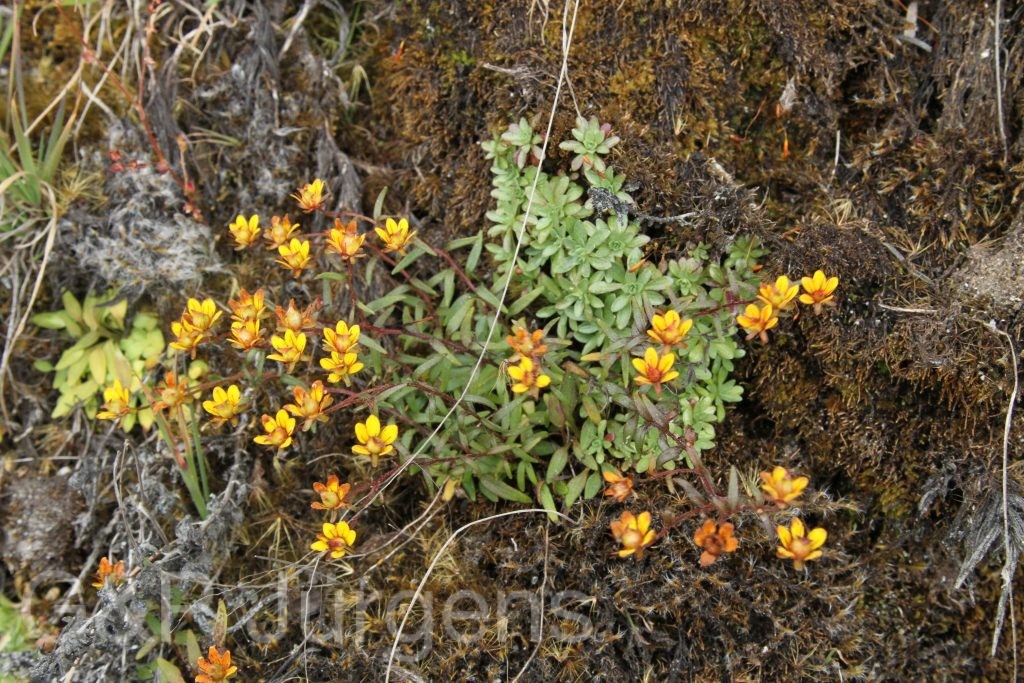
Sikkim2003 222 P308
Sikkim Dzongri 3900m 08.2003
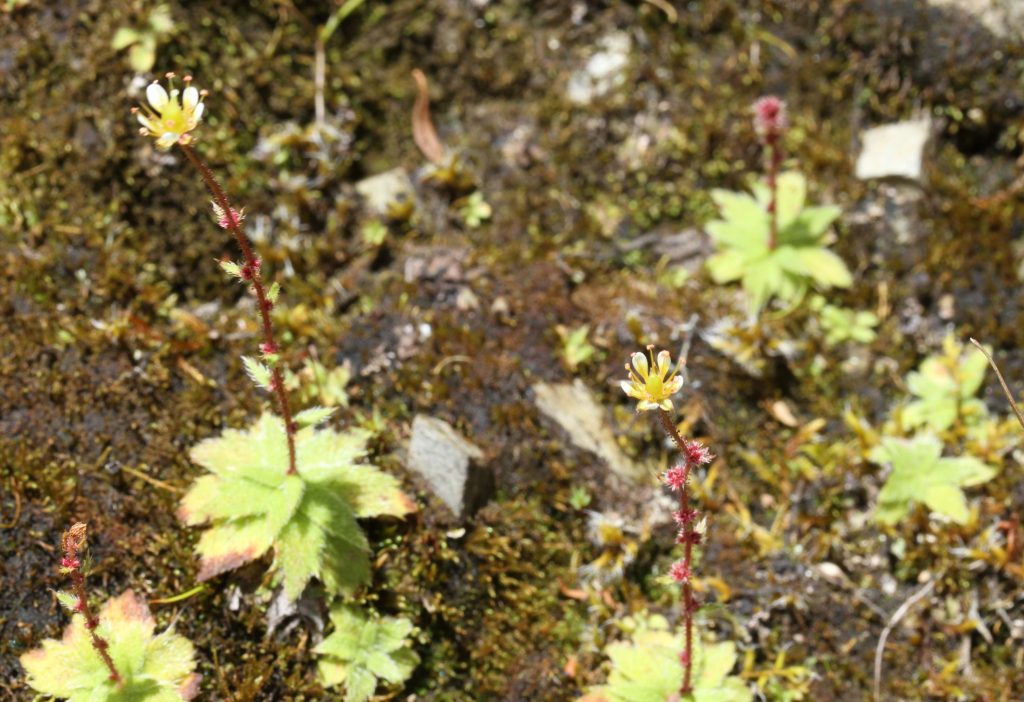
Sikkim2003 269 P371
Sikkim Dzongri 4200m August
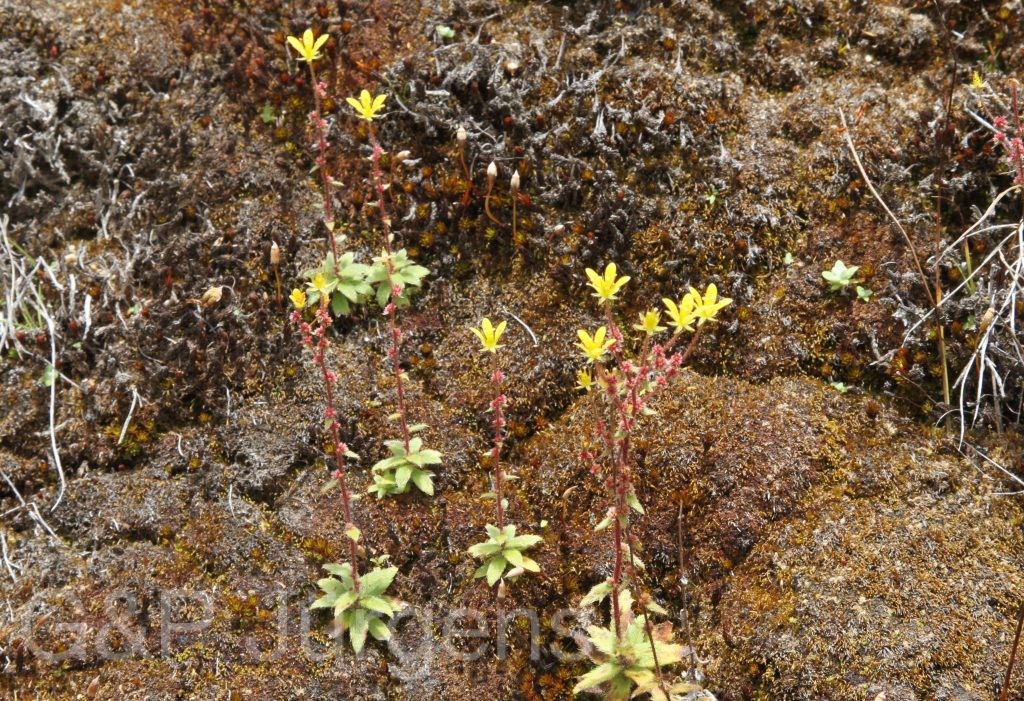
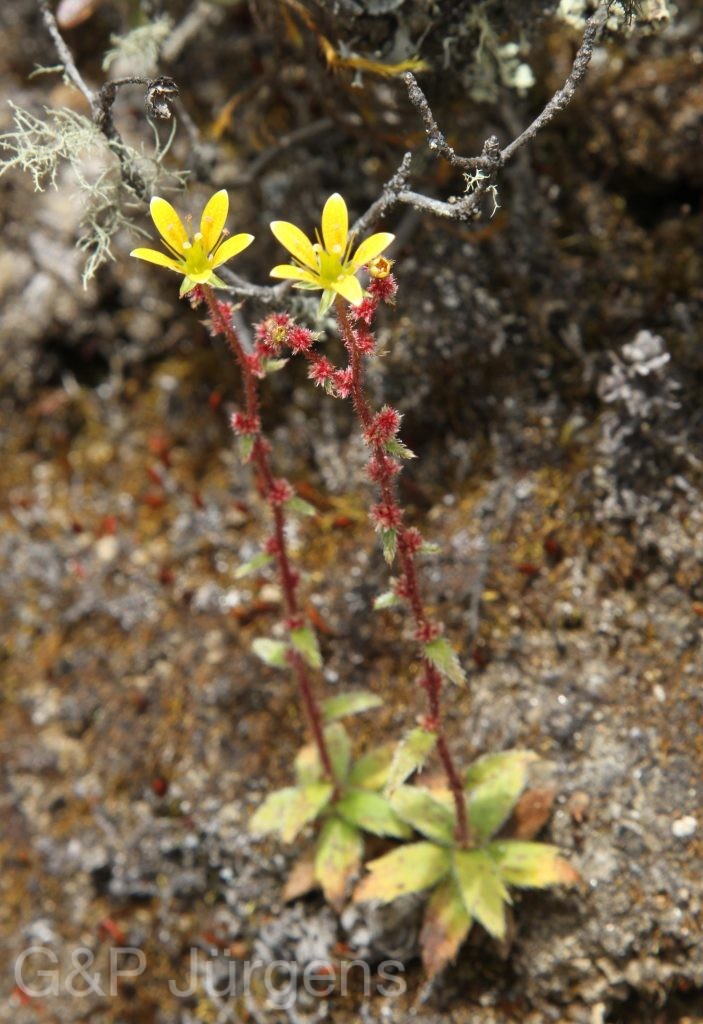
Sikkim2003 271 P373
Sikkim Dzongri 4200m August

Description

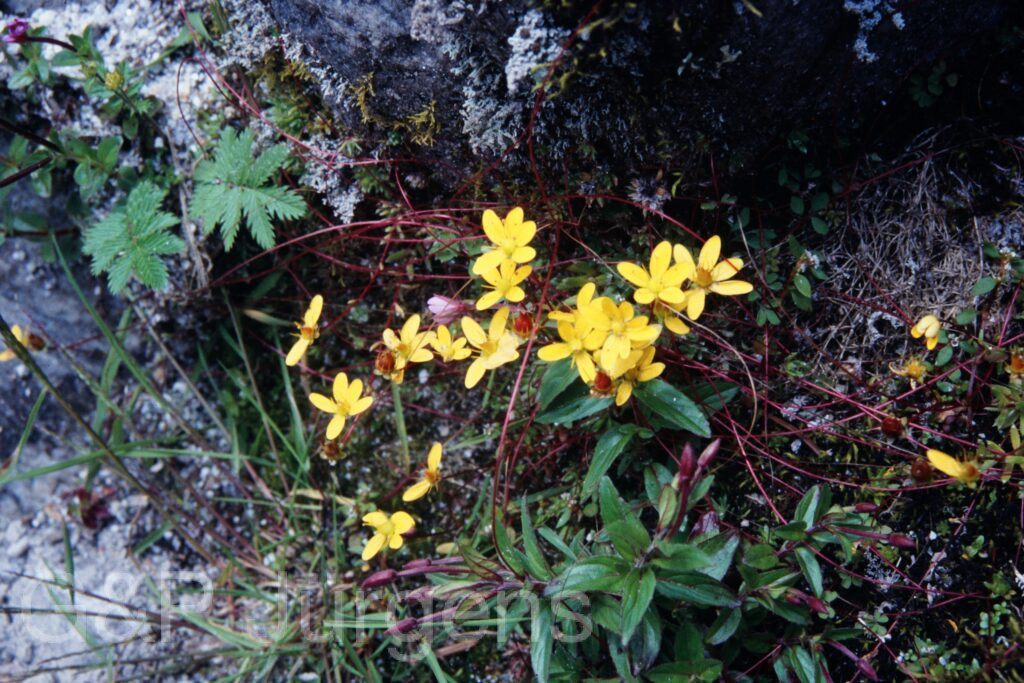
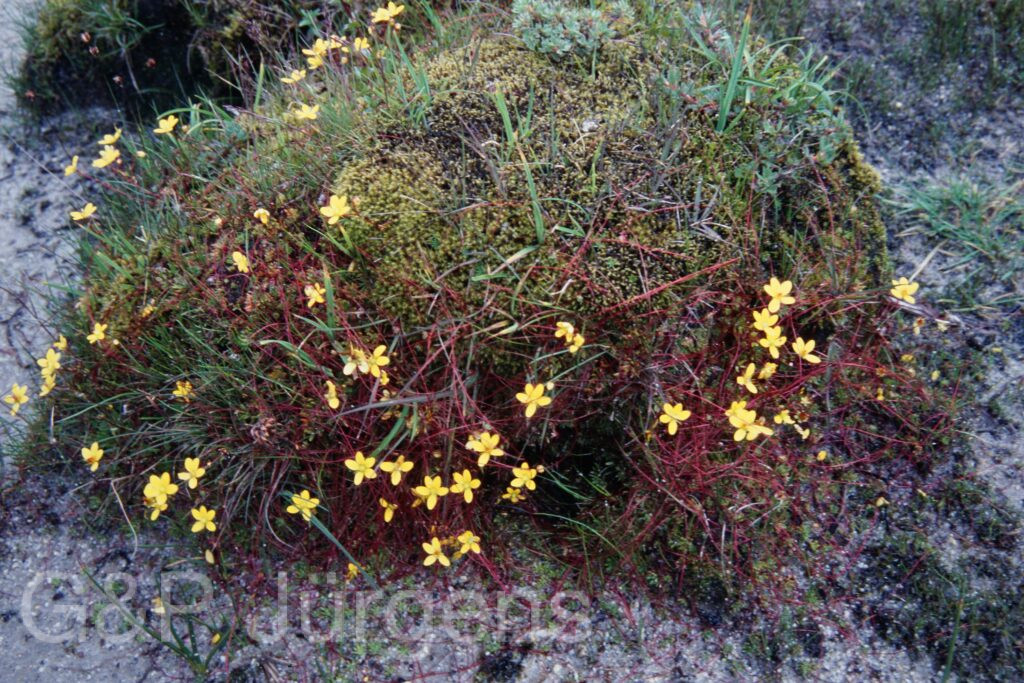
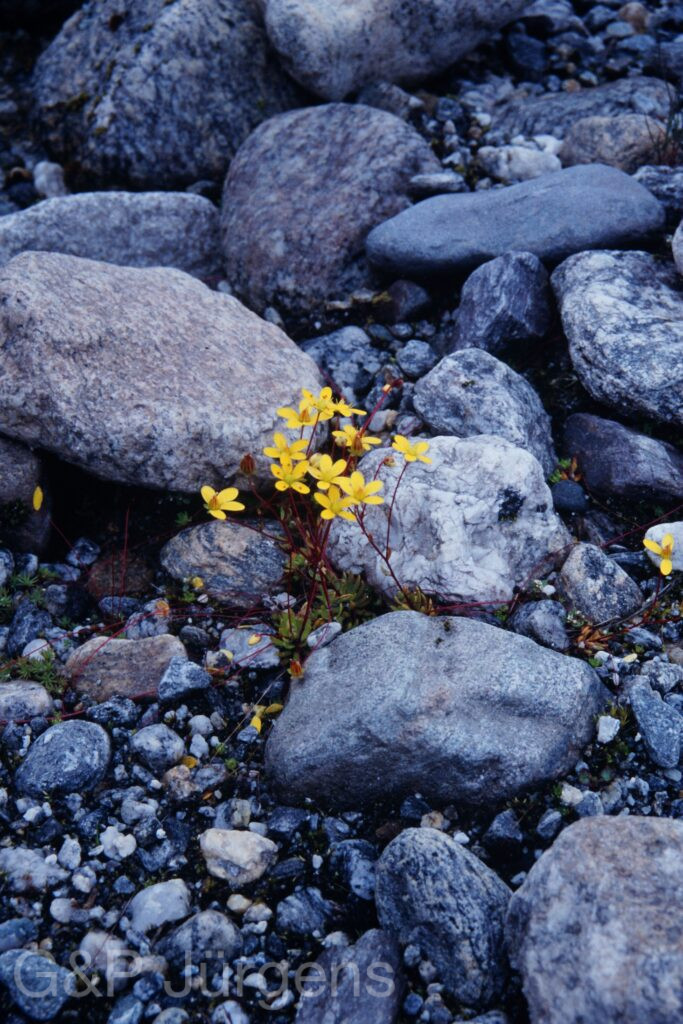
Saxifraga brunonis is a high-alpine cushion-forming herb of the Himalaya and adjacent Tibetan ranges. GBIF records confirm its distribution through Nepal, India, China, Bhutan, Bangladesh, Myanmar and Pakistan, with around 332 occurrences concentrated in the eastern Himalayan high mountains. It is a plant of moist rock ledges, cliff crevices, mossy banks and stable scree at the upper limits of the alpine zone, often where seepage keeps the substrate cool and damp through the growing season. The photographed material from Dzongri in Sikkim at 3900–4200 m, collected in August, is characteristic of its preferred habitat in the summer-monsoon-watered alpine belt, where it flowers at the height of the brief growing season.

It forms low, spreading mats by means of slender, reddish, filiform stolons that root at the nodes to give rise to new rosettes. The leaves are small, oblong to spathulate, entire, fleshy and ciliate-margined, crowded into dense basal rosettes. The flowering stems are short and few-flowered, bearing bright yellow flowers with five free, spreading petals, ten stamens and a half-inferior to nearly superior bicarpellate ovary. The fruit is a two-beaked capsule dehiscing to release numerous minute seeds.

Within the large and taxonomically complex genus Saxifraga, S. brunonis is placed in section Ciliatae, a predominantly Sino-Himalayan group of stoloniferous and rosette-forming alpines. Its runner-mediated clonal spread is an effective strategy for colonising unstable rock surfaces, while seed reproduction allows dispersal to fresh sites. As a strictly high-altitude endemic of the central and eastern Himalaya, the species is potentially sensitive to the upward shift of alpine vegetation belts driven by climate warming.

Author: Ser. · Sources: POWO (Kew), GBIF, Flora of Bhutan, Flora of China (Saxifragaceae), Saxifrages of the World (Webb & Gornall)
Wall. & Ser.

Nepal 95 134 P227 ergebnis
Nepal south of Rupien La 3600m October
Bhutan2012 501
Bhutan Pele-La 3100m, September
Bhutan2012 500
Bhutan Wangdi 3100m, September

Description

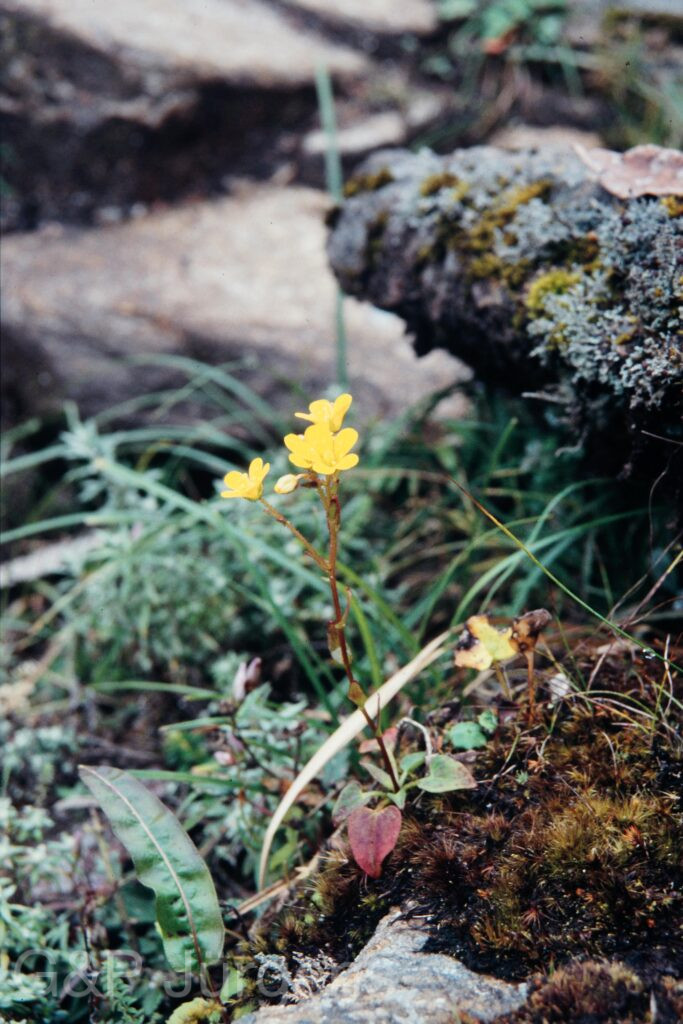
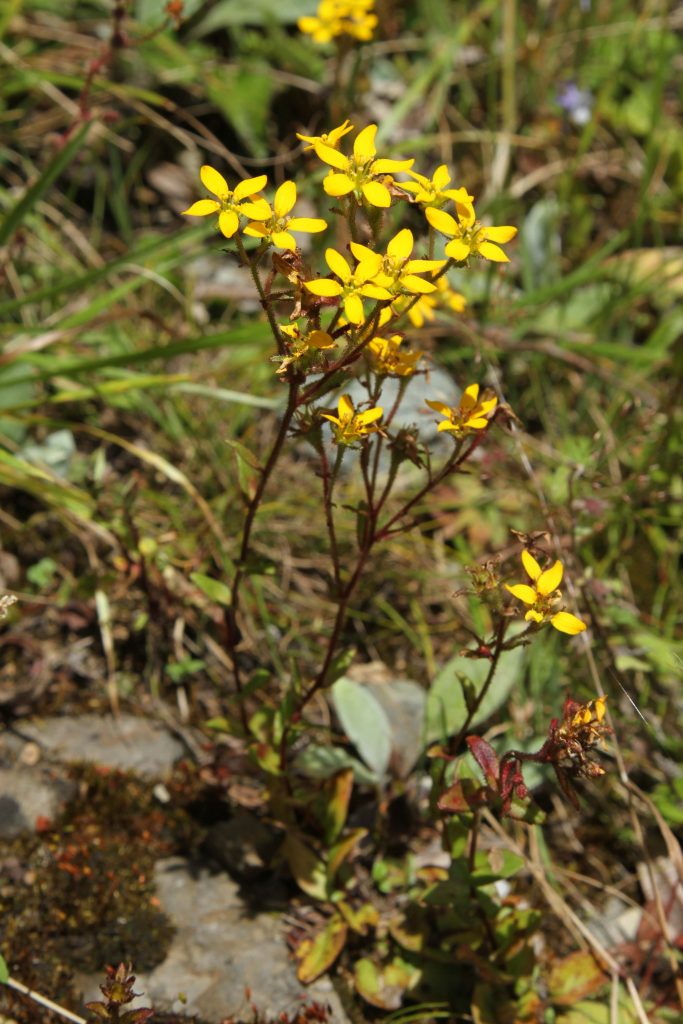
Saxifraga diversifolia Wall. & Ser. is a Sino-Himalayan alpine herb with GBIF recording 742 occurrences across China, Nepal, India, Myanmar, Bhutan and Pakistan. It is a plant of subalpine and alpine meadows, open slopes, shrubberies and damp grassy banks, typically growing between about 3000 and 4500 m. The cited collections — south of the Rupien La in Nepal at 3600 m in October, and from the Pele-La and Wangdi areas of Bhutan around 3100 m in September — show its broad occurrence through the central and eastern Himalaya and its autumn flowering at the close of the monsoon season.

The species is a tufted perennial arising from a short rhizome, with erect, leafy flowering stems. As the epithet diversifolia implies, the foliage is dimorphic: the basal leaves are long-petiolate with cordate to reniform blades, whereas the cauline leaves are progressively sessile and amplexicaul, clasping the stem. The inflorescence is a terminal cyme of several yellow flowers; each flower has five spreading petals, ten stamens, and a bicarpellate, partly inferior ovary. The fruit is a two-beaked capsule splitting between the divergent styles to release numerous small seeds.

Within the very large genus Saxifraga, this species is placed in the yellow-flowered section Hirculus, a predominantly Asian alpine group well represented in the Himalaya and on the Qinghai-Tibetan plateau. Several Himalayan species of this section are morphologically close and have been variously circumscribed. The species is pollinated by alpine insects and is not considered threatened, being locally common across its extensive montane range, where it forms part of the diverse high-elevation meadow flora of the eastern Himalaya.

Author: Wall. & Ser. · Sources: POWO (Kew), GBIF, Flora of China, Flora of Bhutan, Flora of Nepal, Webb & Gornall monograph of Saxifrages

Harry Sm.

Sikkim2003 201 G281 ergebnis
Sikkim Dzongri 3900m, August

Description

Saxifraga engleriana is a high-alpine perennial of the eastern Himalaya and adjacent southwestern China, recorded from China, Nepal, Bhutan, India and Myanmar; its roughly 51 GBIF occurrences are concentrated in the alpine zone of the Sino-Himalayan ranges. It is a plant of cool, humid altitudes, as exemplified by the collection above Dzongri in Sikkim at about 3900 m in August, when flowering coincides with the late-monsoon growing season. It grows in moist alpine turf, on rock ledges and in cliff crevices kept damp by snowmelt and cloud condensation, within the cushion-plant and dwarf-herb communities of the subnival belt.

The plant forms low, tufted to loosely matted growth from a branched caudex, the slender stems bearing small, somewhat fleshy leaves that may carry lime-secreting chalk glands at their margins, a trait of the encrusted silver saxifrages. The glandular-hairy flowering stems carry few-flowered cymes of small flowers with five free, usually white to pale petals, five sepals, ten stamens and a bicarpellate, semi-inferior ovary. The fruit is a two-beaked capsule splitting between persistent styles to release numerous minute seeds.

Saxifraga is a large, predominantly arctic-alpine genus whose Himalayan species are partitioned among sections distinguished by leaf encrustation and indumentum; S. engleriana belongs among the lime-encrusted alpines centred on the high mountains of central Asia. As a narrowly distributed orophyte of a cold, fragmenting habitat, it is potentially sensitive to climate-driven upslope contraction of the alpine zone, though its remoteness affords protection from direct disturbance.

Author: Harry Sm. · Sources: POWO (Kew), GBIF, Flora of China Vol. 8, Flora of Bhutan Vol. 1, Flora of Nepal, Saxifrages of the World (Webb & Gornall)
D.Don

Bhutan2012 236
Bhutan Haar-Valley, 4000m September

Description

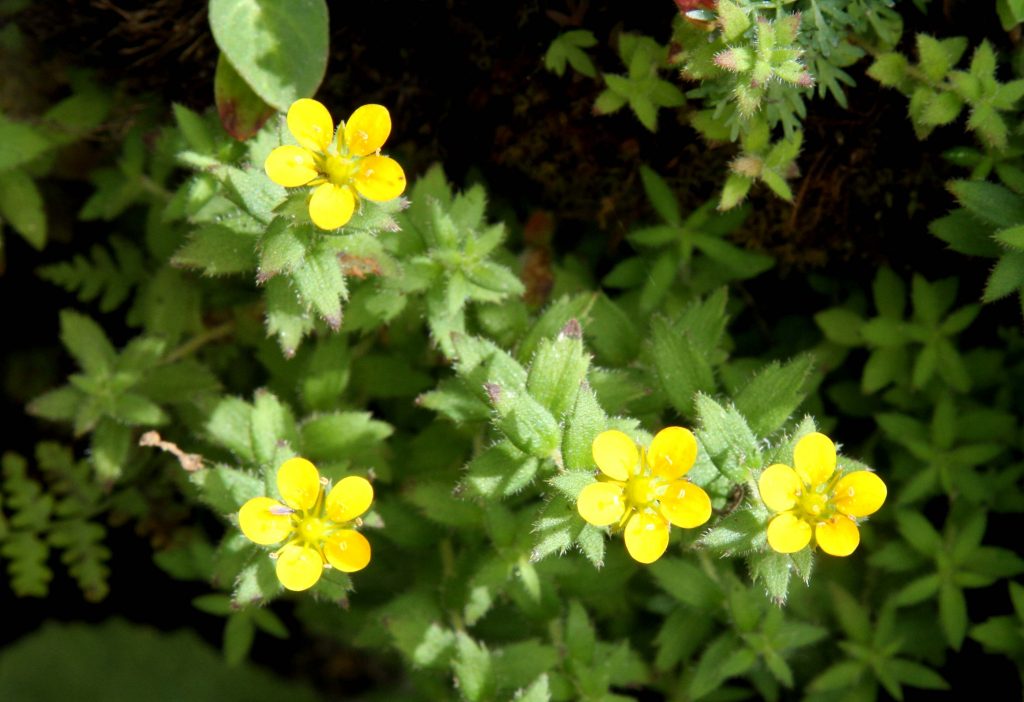
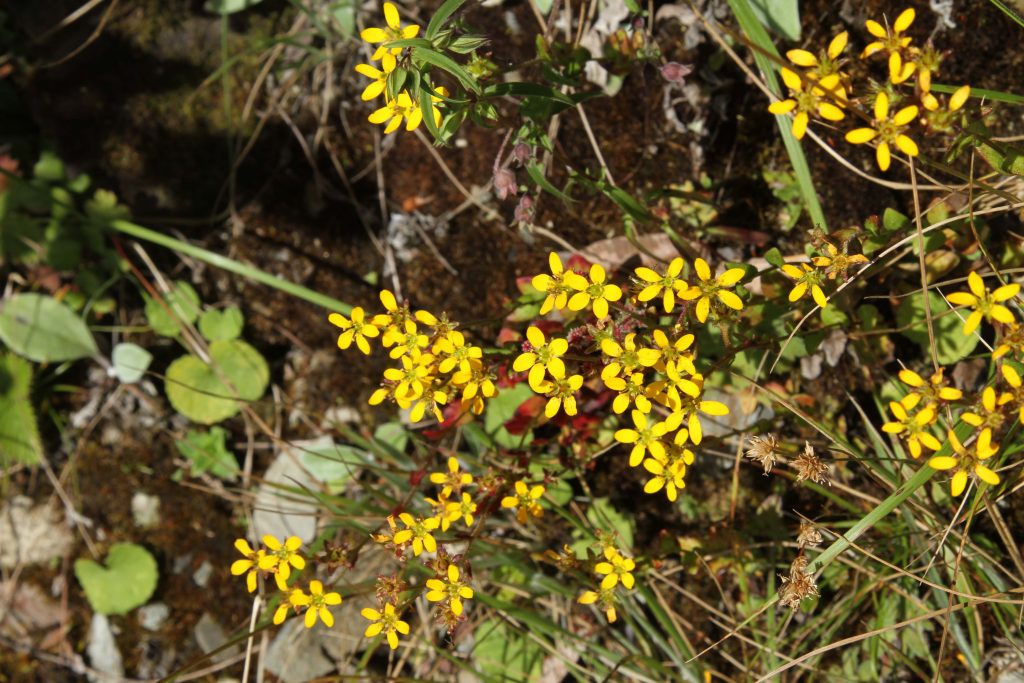
Saxifraga hispidula D.Don is a small alpine herb of the Himalaya and southern China, recorded from China, Nepal, Bhutan, India and Myanmar, with around 460 GBIF occurrences. It grows on damp rock ledges, mossy cliffs, boulder crevices, stream banks and shaded alpine turf, mostly between about 3000 and 4500 m. It was recorded in Bhutan in the Haa (Haar) Valley at 4000 m in September, a high alpine setting where it occupies moist, sheltered niches among rocks at the end of the growing season when the autumn-flowering shoots are conspicuous.

It is a delicate, trailing to ascending perennial forming loose mats, the slender stems clothed in spreading hispid or glandular hairs, as the epithet hispidula indicates, and frequently producing thread-like stolons or runners that root at the nodes. The leaves are small, orbicular to obovate, crenate to few-lobed at the apex, and likewise hairy. The flowers are solitary or few in lax cymes; the five free petals are yellow, often spotted with orange or red toward the base, alternating with the calyx lobes, surrounding ten stamens and a bicarpellate ovary. The fruit is a two-beaked capsule splitting between the persistent styles to shed numerous minute seeds.

Within the immense genus Saxifraga, S. hispidula belongs to section Irregulares (Diptera), a Sino-Himalayan group of stoloniferous, spotted-flowered species adapted to moist montane and alpine rock habitats. Its trailing runners allow vegetative spread across damp substrates, complementing seed dispersal, and the spotted petals serve as insect nectar guides. The species is widespread within its altitudinal band and not considered threatened, though it is restricted to specialised high-elevation microhabitats sensitive to alpine warming.

Author: D.Don · Sources: POWO (Kew), GBIF, Flora of China, Flora of Bhutan, Flora of Nepal, Saxifraga monograph (Webb & Gornall, Saxifrages of Europe; Pan revision of Asian Saxifraga)

Harry Sm.

Nepal 99 592 ergebnis
West-Nepal, Grabung-Khola, July
Nepal 99 593 ergebnis
West-Nepal, Grabung-Khola, July

Nepal 99 824 ergebnis
West-Nepal Baga-La-Phedi 4200m, July

Description

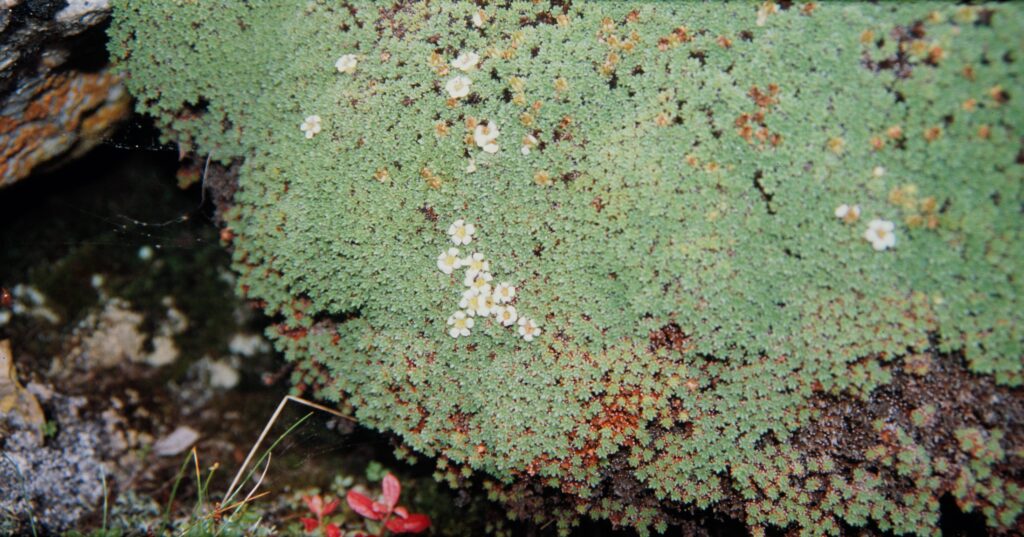
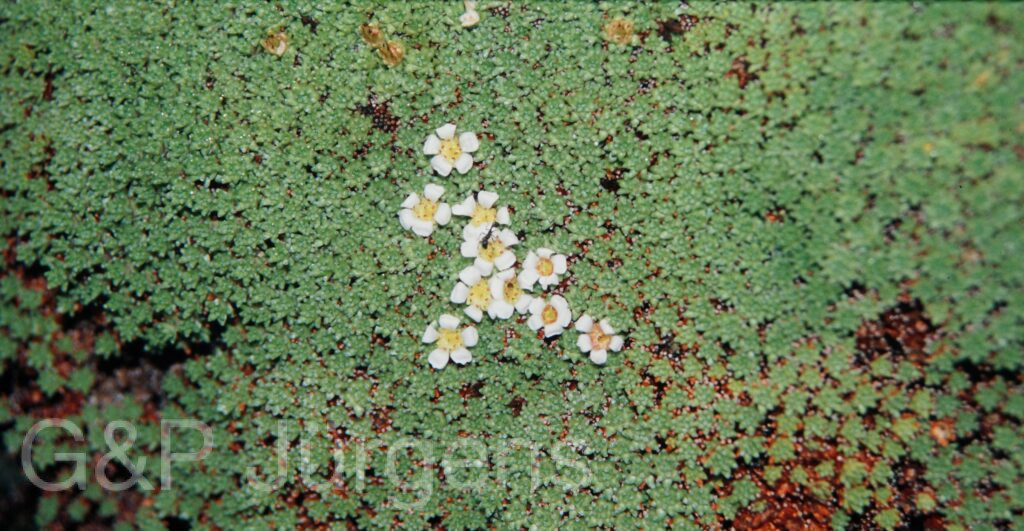
Saxifraga pulvinaria is a high-alpine cushion saxifrage of the Himalaya and adjacent Central Asia, recorded from Pakistan, India, Nepal, Bhutan and southern Tibet (China), extending into Tajikistan, Myanmar and the Russian mountains; GBIF holds about 287 occurrences. It is a plant of the upper alpine and subnival zone, colonising stony slopes, moraine, rock crevices and exposed fellfield, as documented in West Nepal at the Grabung-Khola and at Baga-La-Phedi at 4200 m. At these elevations the cushion habit is an adaptation to wind, frost, desiccation and intense radiation, and flowering is restricted to the brief summer window (July) following snowmelt.

It is a perennial forming a dense, compact, hemispherical cushion (the epithet "pulvinaria" denoting this pulvinate growth form) composed of crowded, columnar leaf rosettes. The leaves are minute, sessile, narrowly oblong to spathulate, often somewhat fleshy, imbricate and persistent, frequently bearing chalk-secreting hydathode lime pits along the margin characteristic of the encrusted saxifrages. The flowers are solitary and nearly sessile, set just above the cushion surface; they are small and 5-merous, with white to pinkish or pale yellow petals, ten stamens and a half-inferior to nearly superior ovary of two carpels. The fruit is a small two-beaked capsule releasing numerous minute seeds.

Described by the saxifrage specialist Harry Smith, the species belongs to Saxifraga sect. Porphyrion, the large group of cushion- and crust-forming alpine saxifrages centred on the high mountains of Asia and Europe. The compact cushion architecture buffers internal temperature and humidity and traps wind-blown debris, an ecological strategy shared with many subnival plants. The flowers are pollinated by the few flies and bees active at such heights. Widespread though confined to extreme habitats, the species is not regarded as threatened, but its cold, high-elevation niche makes it a sensitive indicator of alpine climate change.

Author: Harry Sm. · Sources: POWO (Kew), GBIF, Flora of Pakistan, Flora of China, Webb & Gornall's monograph of the Saxifrages

Harry Sm.

Bhutan2015 386
  Bhutan Tumching-La 3900m, October

Description

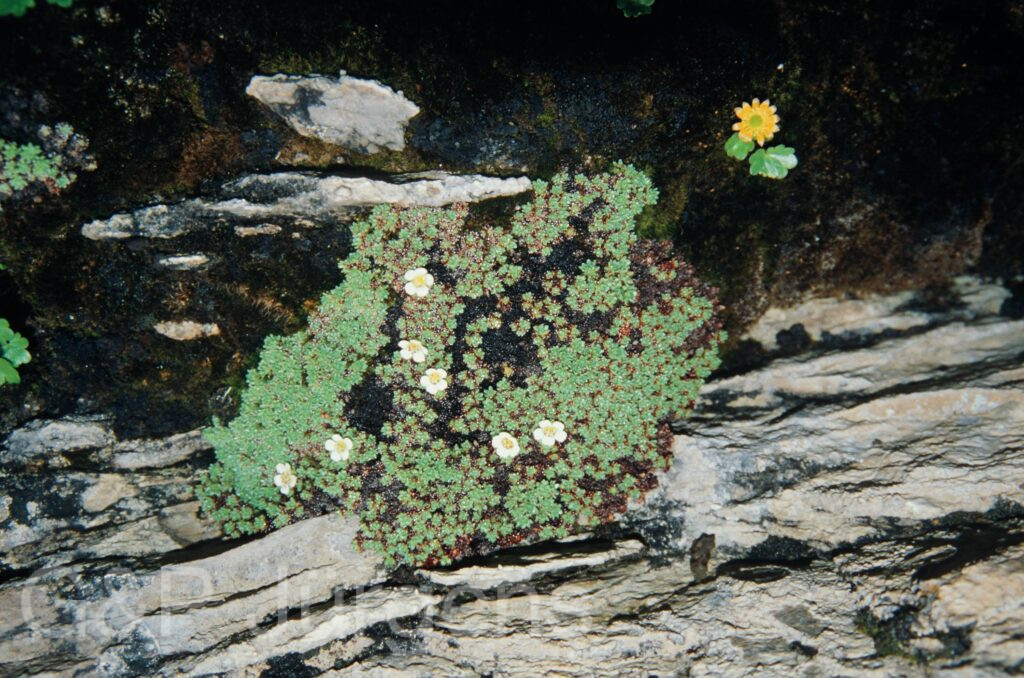
Saxifraga serrula is a high-alpine saxifrage of the eastern Himalaya, documented from Nepal, Bhutan and northern Myanmar, with a small body of records (c. 12 in GBIF) reflecting both its restricted range and the remoteness of its terrain. It is a plant of the upper alpine zone, growing among damp rock crevices, on moist screes, turfy ledges and seepage slopes, generally between about 3500 and 4500 m. The photographed individual from Tumching-La in Bhutan, at 3900 m and still in flower in October, exemplifies its tolerance of late-season cold at the margins of the snowbed environment.

The species is a small, perennial, cushion- or rosette-forming herb arising from a branched caudex, the foliage frequently forming low, compact tufts. The leaves are crowded in basal rosettes, oblanceolate to spathulate, and conspicuously serrate to serrulate along the margins—a feature reflected in the epithet—often somewhat fleshy and glabrous to sparsely glandular. The flowering stems are short and few-flowered, bearing actinomorphic flowers with five free, spreading petals (yellow to cream, sometimes red-dotted), five sepals, ten stamens, and a semi-inferior to inferior ovary of two carpels. The fruit is a many-seeded capsule dehiscing between the persistent styles.

Saxifraga is a very large, predominantly arctic-alpine genus, and the Sino-Himalayan region is one of its principal centres of diversification, with numerous narrowly endemic species concentrated in sections adapted to high elevations. Saxifraga serrula belongs to this radiation of eastern Himalayan alpines. Its narrow distribution and specialised habitat make it potentially vulnerable to climate-driven upward shifts of the alpine zone, although it has not been formally assessed; populations appear naturally fragmented across isolated high passes and ridges.

Author: Harry Sm. · Sources: POWO (Kew), GBIF, Flora of Bhutan, Flora of Nepal, Saxifrages of the World (Webb & Gornall)
Wall. ex Ser.

Bhutan2012 499
Bhutan Pele-La 3100m, September
Bhutan2012 888
Bhutan Ura 3200m, October
Bhutan2012 890
Bhutan Ura 3200m, October

Description

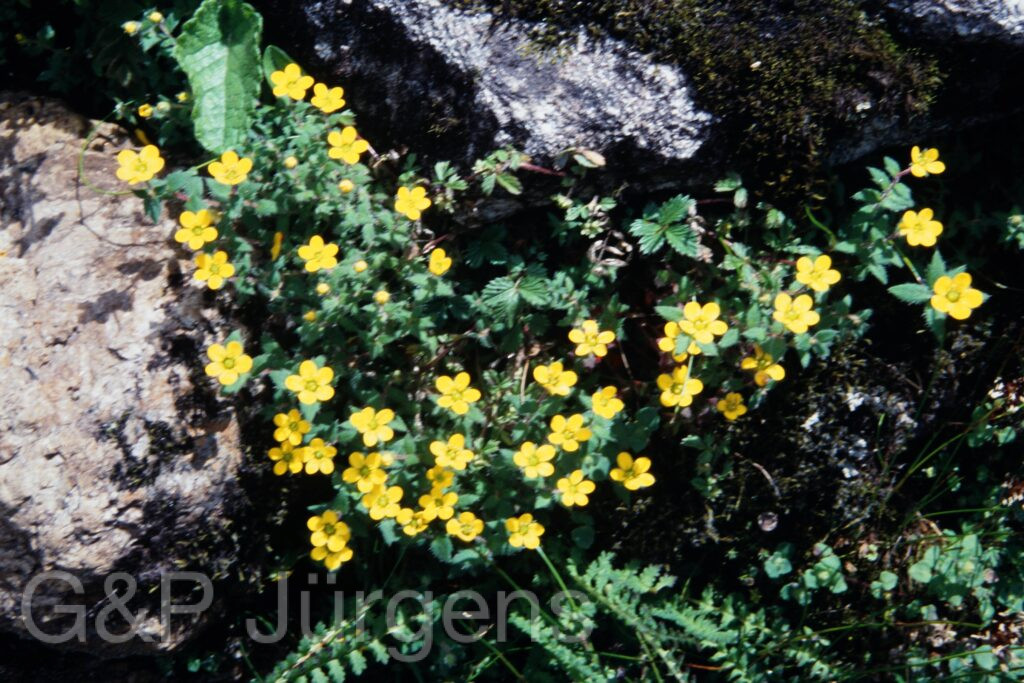
Saxifraga strigosa is a Sino-Himalayan herb distributed through China (including Xizang and Yunnan), Nepal, Bhutan, the Indian Himalaya and northern Myanmar, with several hundred georeferenced records. It occupies cool, damp temperate to subalpine habitats, growing on shaded mossy banks, rock ledges, streamsides and moist forest floors. In Bhutan it has been recorded at Pele-La around 3100 m in September and at Ura near 3200 m in October, its late-season flowering coinciding with the post-monsoon period in well-watered montane terrain.

The plant is a slender annual or short-lived perennial herb with weak, often reddish, strigose-hairy stems that may root at the lower nodes. The basal and lower leaves are petiolate with ovate to orbicular, coarsely toothed or shallowly lobed blades, becoming smaller and sessile upward. The inflorescence is a lax, few- to several-flowered cyme of small flowers on filiform pedicels. Each flower has five spreading, reflexed sepals, five white petals frequently marked with yellow basal spots and reddish dots, ten stamens with clavate filaments, and a bicarpellate ovary that is half-inferior. The fruit is a two-beaked capsule splitting between the divergent styles to release numerous minute seeds.

Saxifraga is a large, predominantly arctic-alpine genus, and S. strigosa belongs to the small-flowered annual element formerly placed in section Diptera (genus Hydatica of some authors). It was described by Seringe from Wallich's collections. Adapted to ephemeral moist microhabitats, it relies on small insects for pollination and on abundant seed for persistence. Common and widespread across the eastern Himalaya, it is of no particular conservation concern.

Author: Wall. ex Ser. · Sources: POWO (Kew), GBIF, Flora of China, Flora of Bhutan, Gornall's classification of Saxifraga (Saxifragaceae)

()DC.) Choisy

Bhutan2014 769
Bhutan Wangdi Punaka 1400m, May
Bhutan2014 769
Bhutan Wangdi Punaka 1400m, May
Nepal 1994 322 ergebnis
Ost-Nepal Chainpur 1300m May 

Description

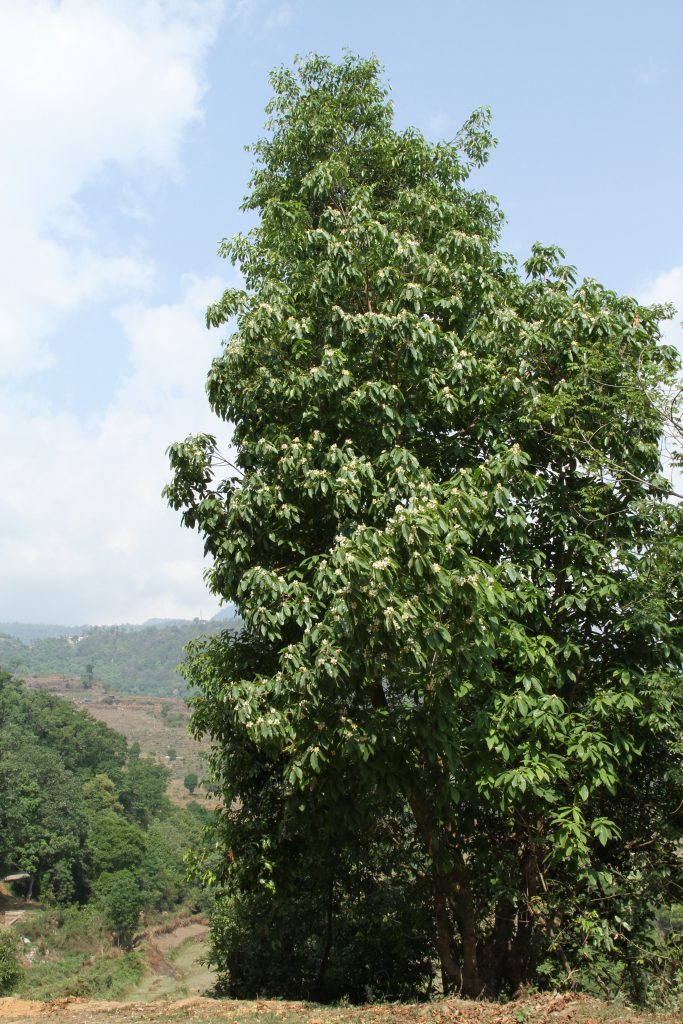
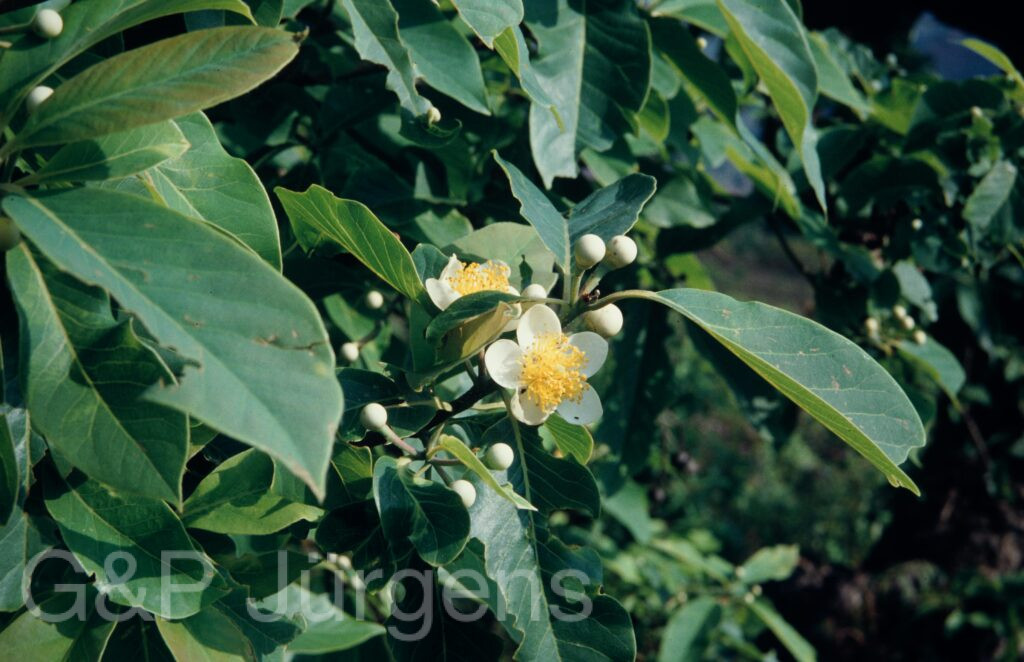
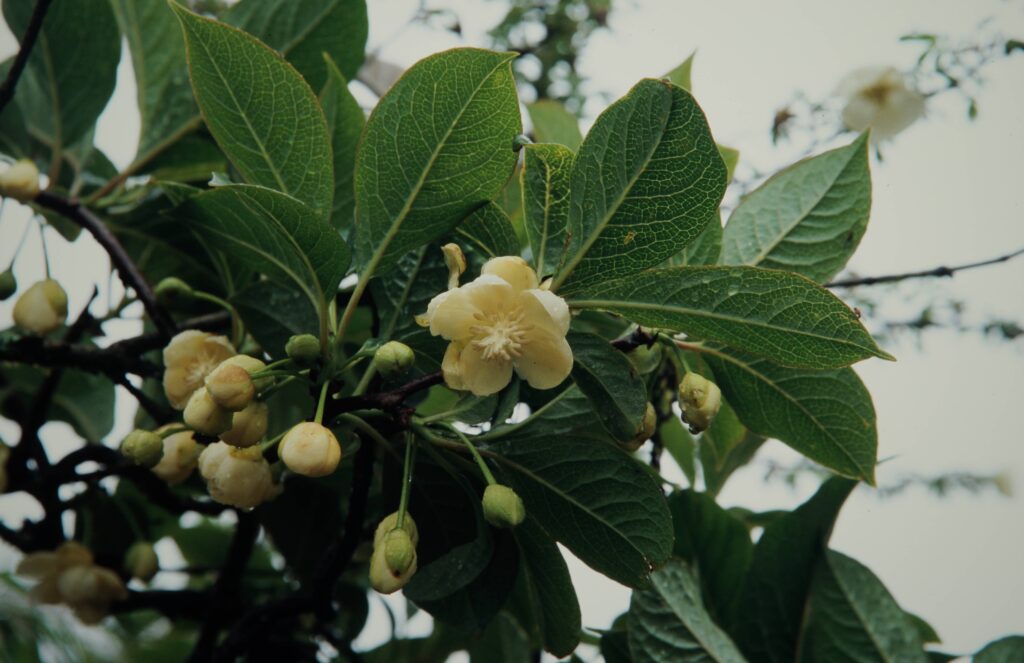
Schima wallichii is a large evergreen tree distributed across the eastern Himalaya and Southeast Asia, with GBIF records from China, Indonesia, Malaysia, Thailand, India, Nepal, Myanmar, Vietnam, Laos, Bhutan, the Philippines, Cambodia and Bangladesh among others, totalling around 3706 occurrences. It is a dominant or co-dominant canopy element of subtropical and lower montane broadleaved forest, frequently a pioneer that colonises forest gaps, secondary woodland and abandoned cultivation on humid hill slopes. The trees photographed at Wangdi-Punakha in Bhutan at about 1400 m and at Chainpur in eastern Nepal at about 1300 m, both in May, illustrate its prevalence in the warm subtropical mid-hill forests of the southern Himalayan front, where it often forms extensive stands with oaks and laurels.

It is an evergreen tree with grey, longitudinally fissured bark and reddish young shoots. The leaves are alternate, coriaceous, elliptic to oblong-lanceolate, entire or obscurely serrate, glabrous and glossy above and somewhat paler beneath. The flowers are solitary or few in the upper leaf axils, large and showy, with five white petals surrounding a dense central mass of numerous yellow stamens, the whole subtended by silky sepals and bracteoles and emitting a sweet fragrance. The fruit is a woody, globose, loculicidal capsule that splits into valves to release flattened, broadly winged seeds adapted to wind dispersal.

A member of the tea family (Theaceae), Schima wallichii is an ecologically important successional and timber species, its hard wood widely used in construction, while the bark and other tissues contain irritant saponins. Its winged seeds and gap-colonising habit make it an effective coloniser of disturbed montane forest, contributing to forest regeneration and watershed protection. Broadly distributed and often abundant, the species is not of conservation concern; rather it is silviculturally valued and frequently retained or planted in mixed broadleaved forestry across its range.

Author: ()DC.) Choisy · Sources: POWO (Kew), GBIF, Flora of China Vol. 12, Flora of Bhutan Vol. 1, Flora of Nepal, Bloembergen A Critical Study in the Complex-Polymorphous Genus Schima (Theaceae)

(Wall.) Hook.f. & Thomson

Sikkim2011 189
Sikkim Lachung 2800m, June
Bh09 249 G417
Bhutan Pele-La, 3100m June
Sikkim 2006 7 ergebnis
India West-Bengal Maneybhajang 2000m, May

Description

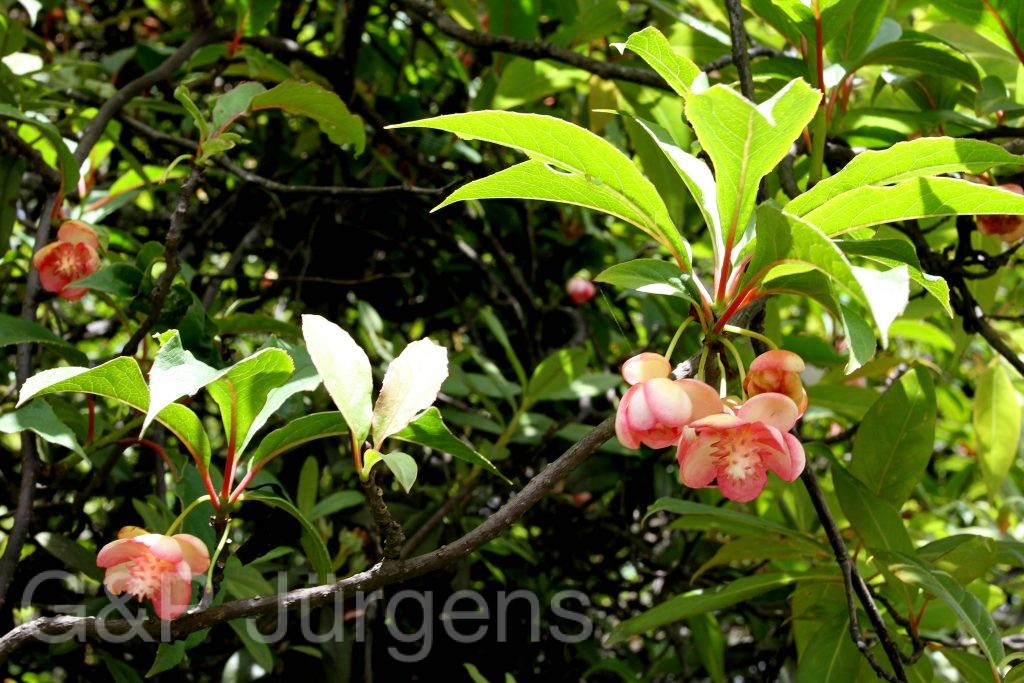
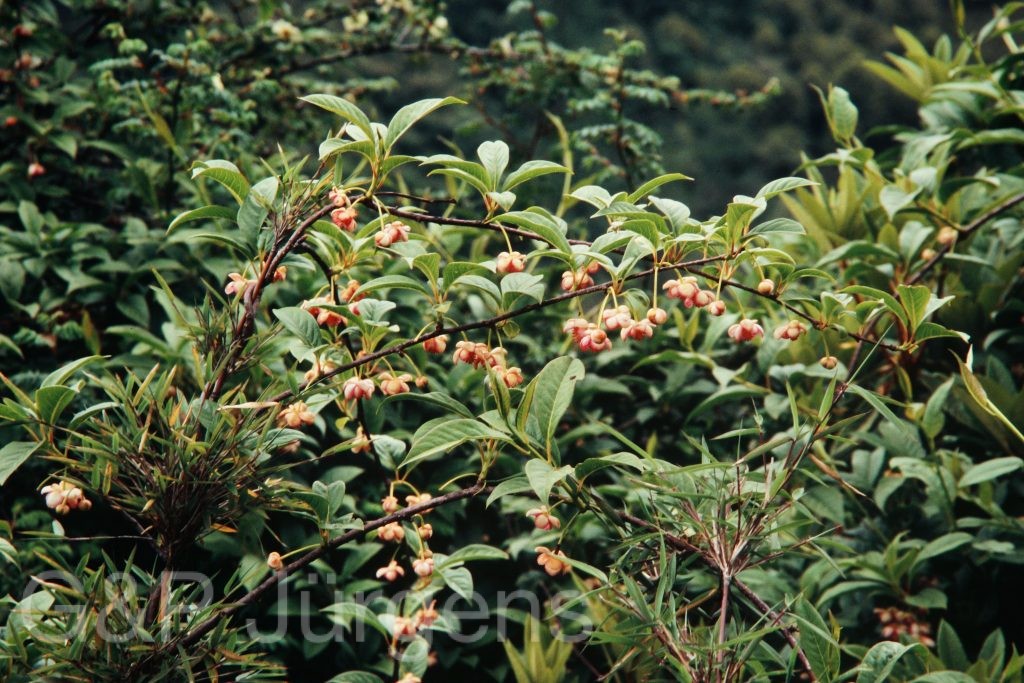
Schisandra grandiflora (Wall.) Hook.f. & Thomson is a deciduous, woody climber of the eastern Himalaya, recorded by GBIF from China, India, Nepal, Bhutan and Myanmar. It is a plant of cool, humid temperate forest, growing in mixed broad-leaved and conifer woodland, along forest margins and ravines, where it scrambles over shrubs and into the canopy, generally between about 2,000 and 3,500 m. The cited collections span Lachung in Sikkim at 2,800 m and Pele-La in Bhutan at 3,100 m in June, and Maneybhajang in West Bengal at 2,000 m in May, illustrating its broad occurrence across the moist temperate forest belt of the eastern Himalayan arc.

The plant is a glabrous, twining liana with slender woody stems and alternate, simple leaves that are elliptic to obovate, with serrulate margins and an acuminate apex, borne on reddish petioles. As in all Schisandraceae the flowers are unisexual, the species being dioecious or monoecious; they are solitary and pendulous on slender pedicels, comparatively large for the genus (hence grandiflora), with several white to creamy or pink-tinged perianth segments not differentiated into sepals and petals. The numerous free carpels of the female flower, borne on an elongating receptacle, ripen into a pendent, spike-like aggregate of red, fleshy berries.

Schisandraceae, together with the related Illiciaceae, occupy a basal position among the angiosperms in the order Austrobaileyales, making the family of major significance in studies of early flowering-plant evolution. Several Schisandra species, notably S. chinensis, are renowned medicinal plants, and the aromatic fruits of S. grandiflora are likewise used locally. Its disjunct Sino-Himalayan distribution reflects the ancient, relictual biogeography characteristic of this lineage.

Author: (Wall.) Hook.f. & Thomson · Sources: POWO (Kew), GBIF, Flora of China Vol. 7, Flora of Bhutan Vol. 1, Saunders: Monograph of Schisandra (Systematic Botany Monographs)

Wall.

Bhutan2015 296
Bhutan Zhemgang 910, October

Description

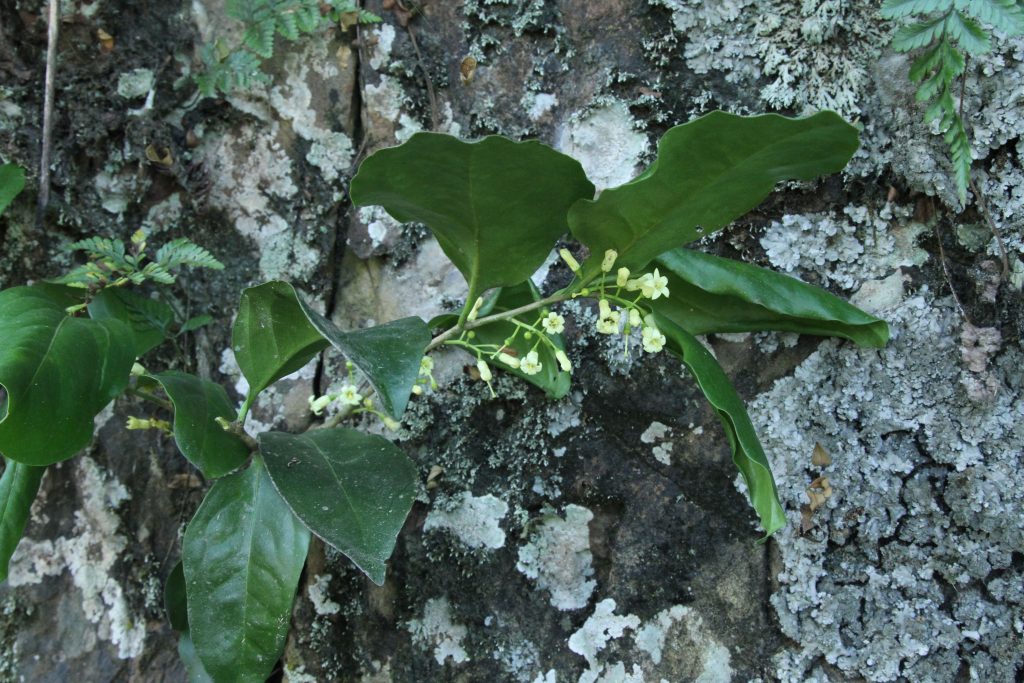
Schoepfia fragrans is a small tree or shrub of subtropical and tropical Asia, distributed across SW China, NE India, Nepal, Bhutan, Bangladesh and continental Southeast Asia (Myanmar, Thailand, Vietnam, Laos, Cambodia, Malaysia, Indonesia, Korea), with GBIF recording some 464 occurrences. It grows in evergreen and semi-evergreen broadleaved forest and forest margins at low to moderate elevations. The photographed plant from Zhemgang in south-central Bhutan at 910 m (October) typifies its occurrence in the warm subtropical hill forest of the southern Himalayan foothills.

It is an evergreen shrub or small tree with alternate, simple, entire, leathery ovate to lanceolate leaves that are acuminate and glabrous, with the lateral veins faint or obscure. The flowers are small, fragrant as the epithet records, and borne in short axillary spikes or racemes; the perianth is a tubular, funnel-shaped corolla with short recurved lobes, the stamens adnate to the corolla tube, and the ovary partly inferior, sunk in a fleshy disc. The fruit is a small ellipsoid drupe crowned by the persistent perianth remains and partly enclosed by the accrescent calyx.

Schoepfia was long placed in Olacaceae but is now segregated, with its relatives, into the family Schoepfiaceae (as given here) within the sandalwood order Santalales, a placement supported by molecular phylogenetics. Members of the order are characteristically hemiparasitic, and Schoepfia is understood to be a root hemiparasite drawing on neighbouring woody hosts while remaining photosynthetic. As a widespread forest species it is not of conservation concern, though it depends on the persistence of intact subtropical broadleaved forest.

Author: Wall. · Sources: POWO (Kew), Flora of Bhutan Vol. 1, GBIF, Flora of China Vol. 5, Nickrent: Santalales (Schoepfiaceae) phylogeny and classification