
(Wall.) Hook.f. & Thomson
Description
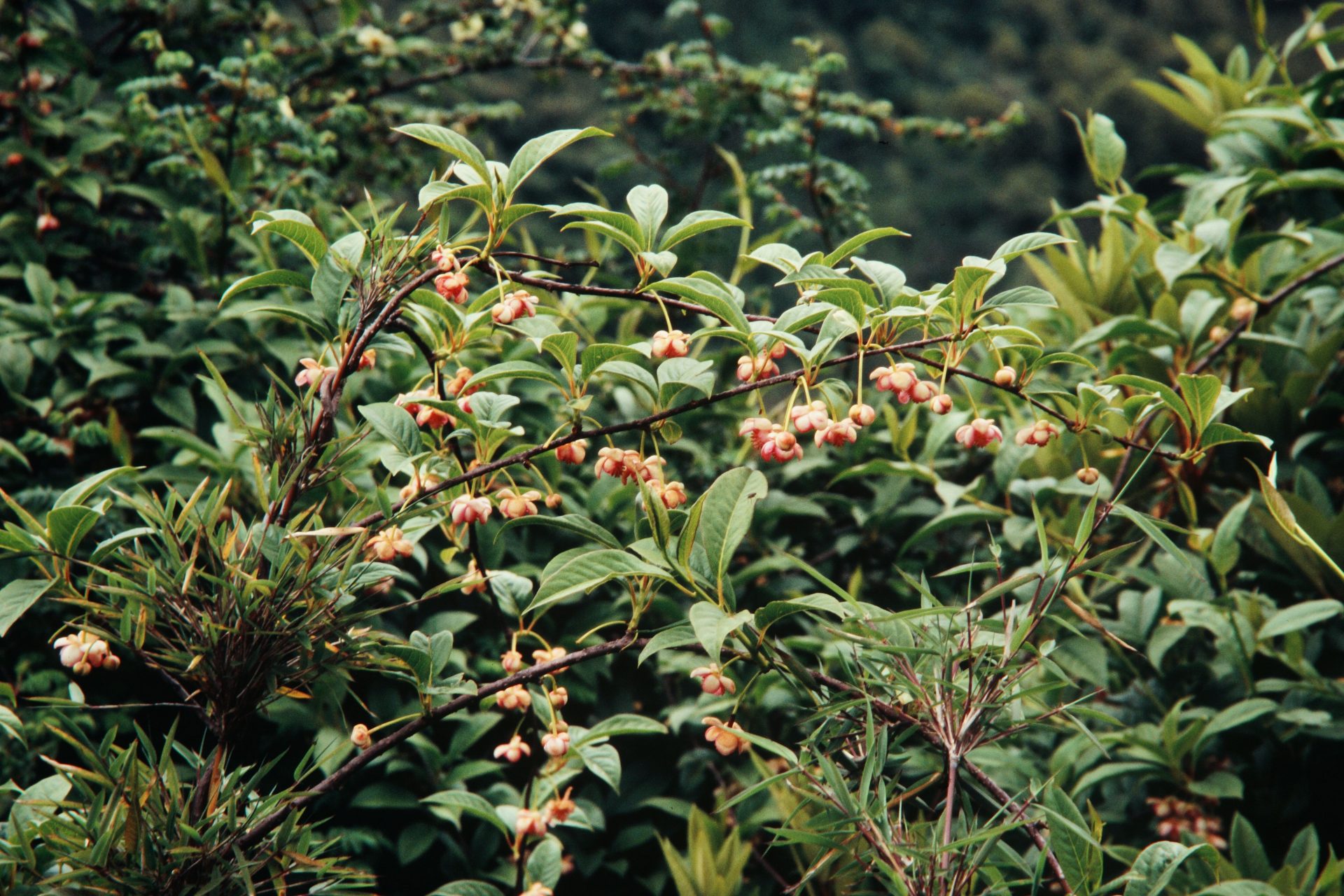
Schisandra grandiflora (Wall.) Hook.f. & Thomson is a deciduous, woody climber of the eastern Himalaya, recorded by GBIF from China, India, Nepal, Bhutan and Myanmar. It is a plant of cool, humid temperate forest, growing in mixed broad-leaved and conifer woodland, along forest margins and ravines, where it scrambles over shrubs and into the canopy, generally between about 2,000 and 3,500 m. The cited collections span Lachung in Sikkim at 2,800 m and Pele-La in Bhutan at 3,100 m in June, and Maneybhajang in West Bengal at 2,000 m in May, illustrating its broad occurrence across the moist temperate forest belt of the eastern Himalayan arc.
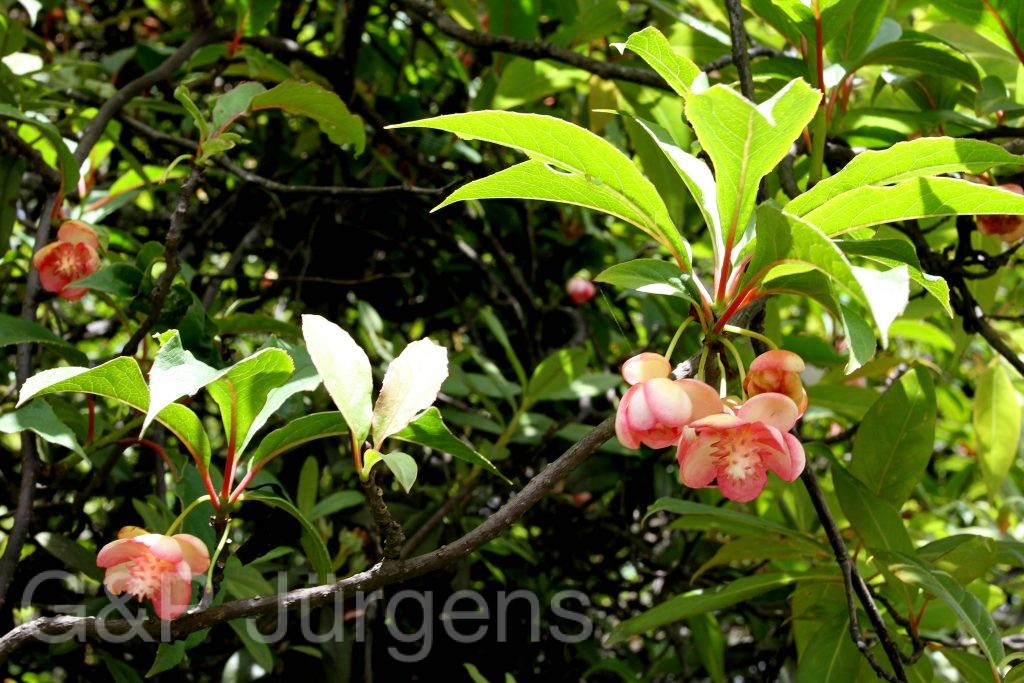
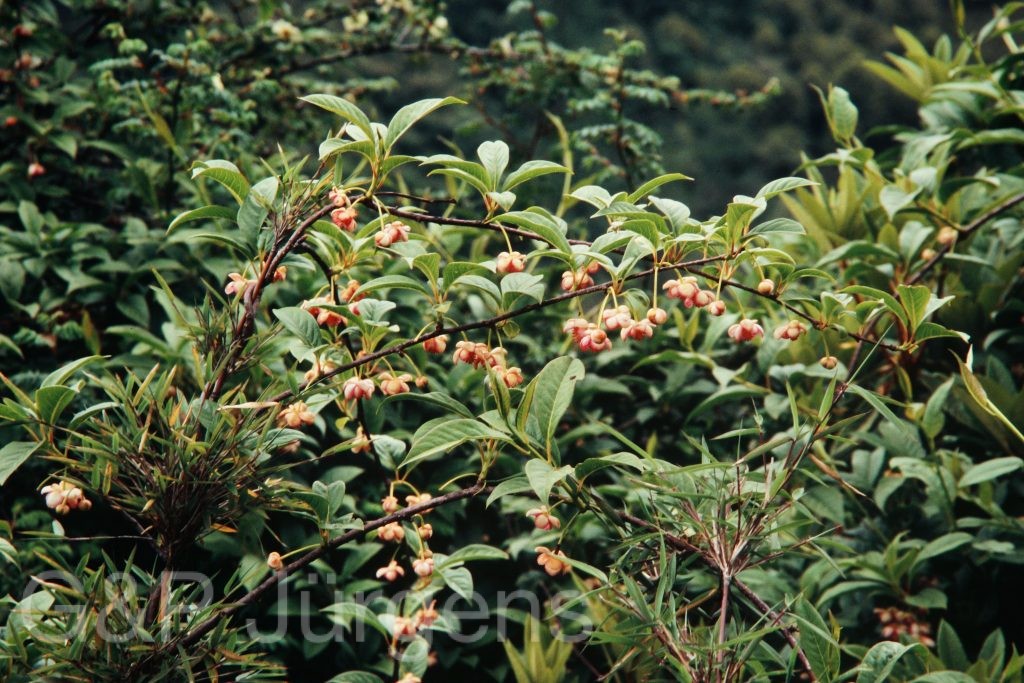
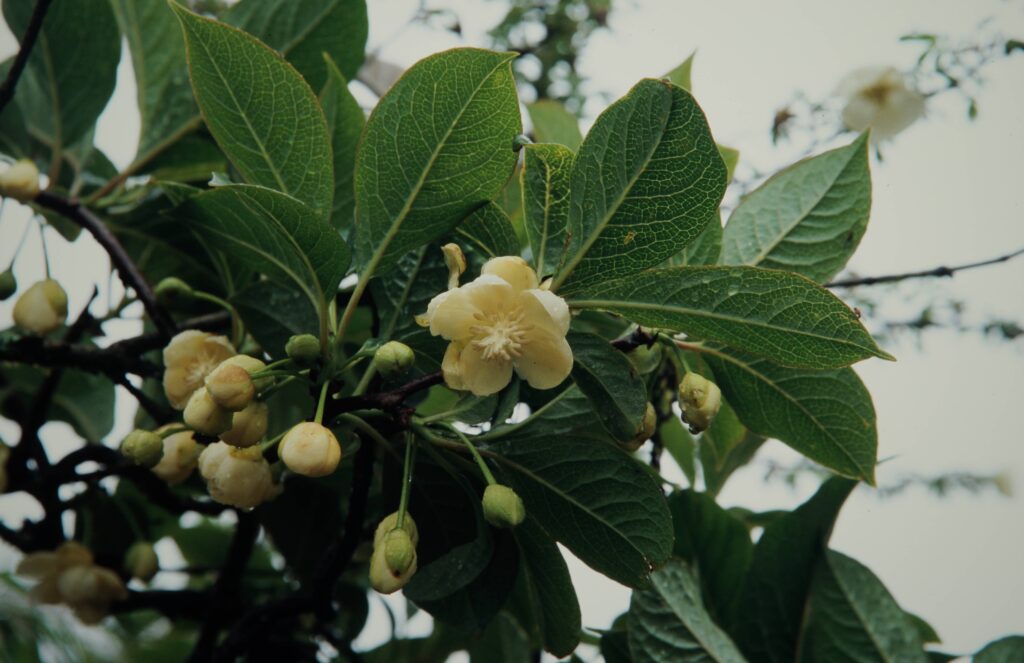
The plant is a glabrous, twining liana with slender woody stems and alternate, simple leaves that are elliptic to obovate, with serrulate margins and an acuminate apex, borne on reddish petioles. As in all Schisandraceae the flowers are unisexual, the species being dioecious or monoecious; they are solitary and pendulous on slender pedicels, comparatively large for the genus (hence grandiflora), with several white to creamy or pink-tinged perianth segments not differentiated into sepals and petals. The numerous free carpels of the female flower, borne on an elongating receptacle, ripen into a pendent, spike-like aggregate of red, fleshy berries.
Schisandraceae, together with the related Illiciaceae, occupy a basal position among the angiosperms in the order Austrobaileyales, making the family of major significance in studies of early flowering-plant evolution. Several Schisandra species, notably S. chinensis, are renowned medicinal plants, and the aromatic fruits of S. grandiflora are likewise used locally. Its disjunct Sino-Himalayan distribution reflects the ancient, relictual biogeography characteristic of this lineage.
Author: (Wall.) Hook.f. & Thomson · Sources: POWO (Kew), GBIF, Flora of China Vol. 7, Flora of Bhutan Vol. 1, Saunders: Monograph of Schisandra (Systematic Botany Monographs)