Tag:

Nepal

Flowers of Nepal — 1313 wild plant species documented from the Nepalese Himalaya, from subtropical foothills to high alpine meadows above 4,000 m. Nepal’s dramatic elevation gradient makes it one of the richest botanical regions on Earth, home to rhododendrons, primulas, gentians and the famed blue poppies (Meconopsis). Every entry gives a botanical description, native distribution, habitat and flowering season, alongside the original field photograph and the location where it was taken.

(Lindl.) D.K.Liu & Ming H.Li
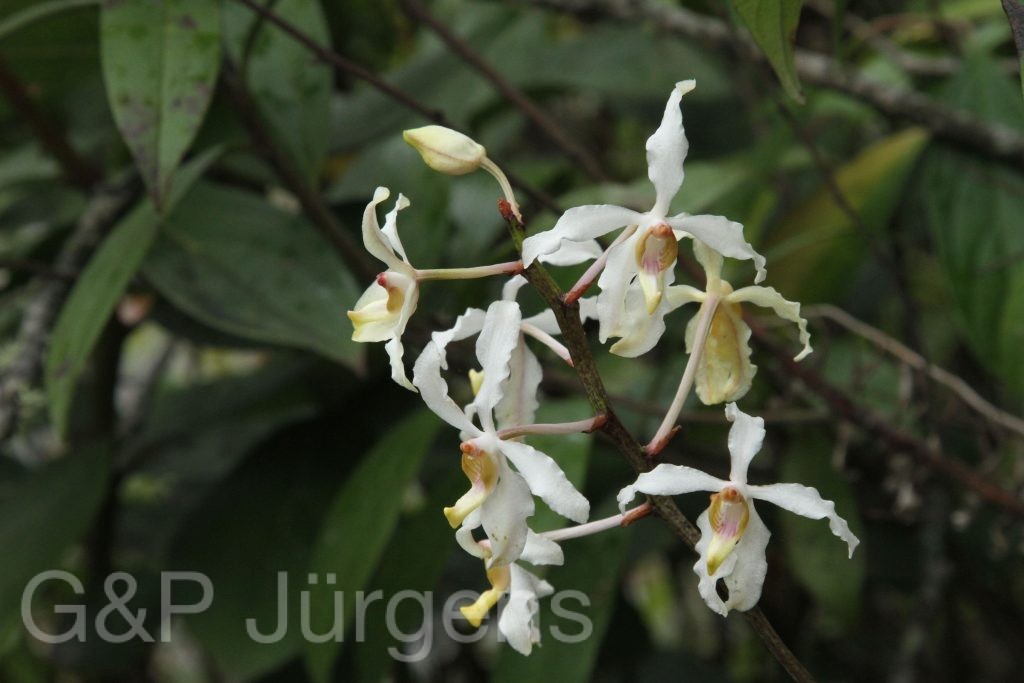
Bhutan2014 39
Bhutan Trashigang 1100m, May
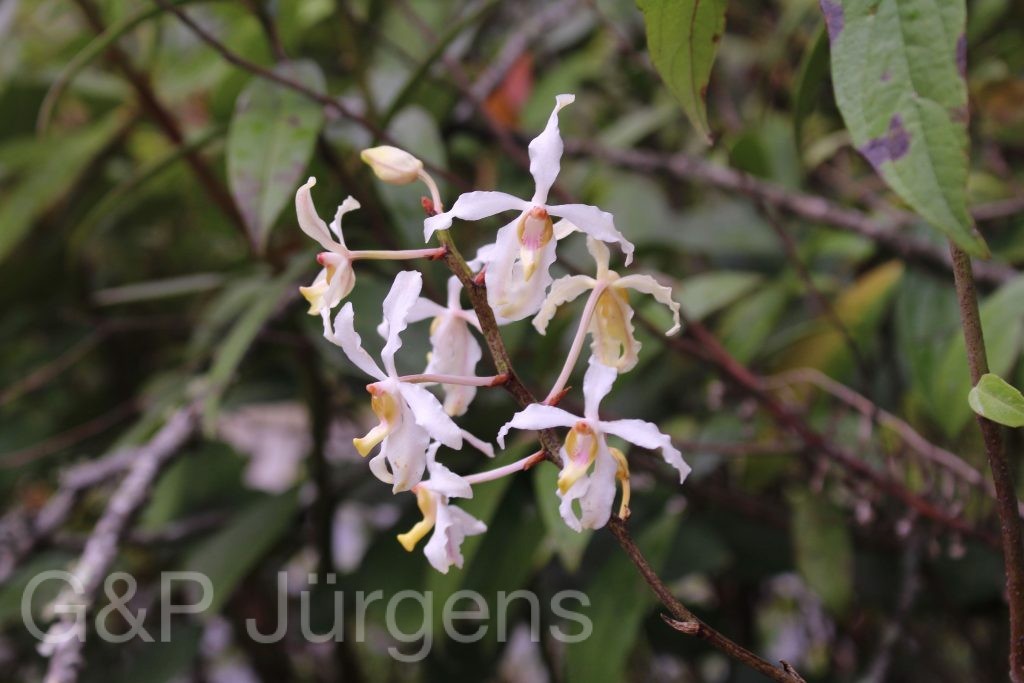
Bhutan2014 40
Bhutan Trashigang 1100m, May

Description

Cymbilabia undulata (formerly placed in Vandopsis) is an epiphytic orchid of the eastern Himalaya and adjacent areas, recorded from Nepal, north-east India, Bhutan, Myanmar and south-west China across some 129 georeferenced occurrences. It grows as an epiphyte on the trunks and larger limbs of trees in warm, humid subtropical to lower montane forest, favouring bright, well-drained positions. The Bhutan collection at Trashigang at about 1100 m reflects its preference for the warm subtropical belt, typically between roughly 700 and 1600 m, where seasonal monsoon rainfall and high humidity prevail.

It is a robust monopodial epiphyte with a stout, leafy stem and thick, fleshy roots. The leaves are distichous, ligulate to strap-shaped, coriaceous and unequally bilobed at the apex. The inflorescence is an axillary, branching raceme or panicle bearing numerous fleshy, long-lived flowers; these are yellowish marked with reddish-brown blotches, with spreading, undulate-margined sepals and petals. The lip is small, fleshy, three-lobed and saccate at the base, a diagnostic feature, and the column is short and stout bearing a waxy pollinarium.

The transfer from Vandopsis to Cymbilabia reflects molecular reassessment of the Aeridinae (subtribe of Vandeae), in which generic limits have been substantially revised. As with many Vandoid orchids, the showy resupinate flowers are adapted to insect pollination, and the dust-like seeds are wind-dispersed. Although fairly widespread, populations are vulnerable to habitat loss and orchid collecting; like all orchids the species is listed on CITES Appendix II, regulating international trade.

Author: (Lindl.) D.K.Liu & Ming H.Li · Sources: POWO (Kew), GBIF, Flora of Bhutan, Flora of China, The Orchids of Bhutan (Pearce & Cribb), Genera Orchidacearum (Pridgeon et al.)
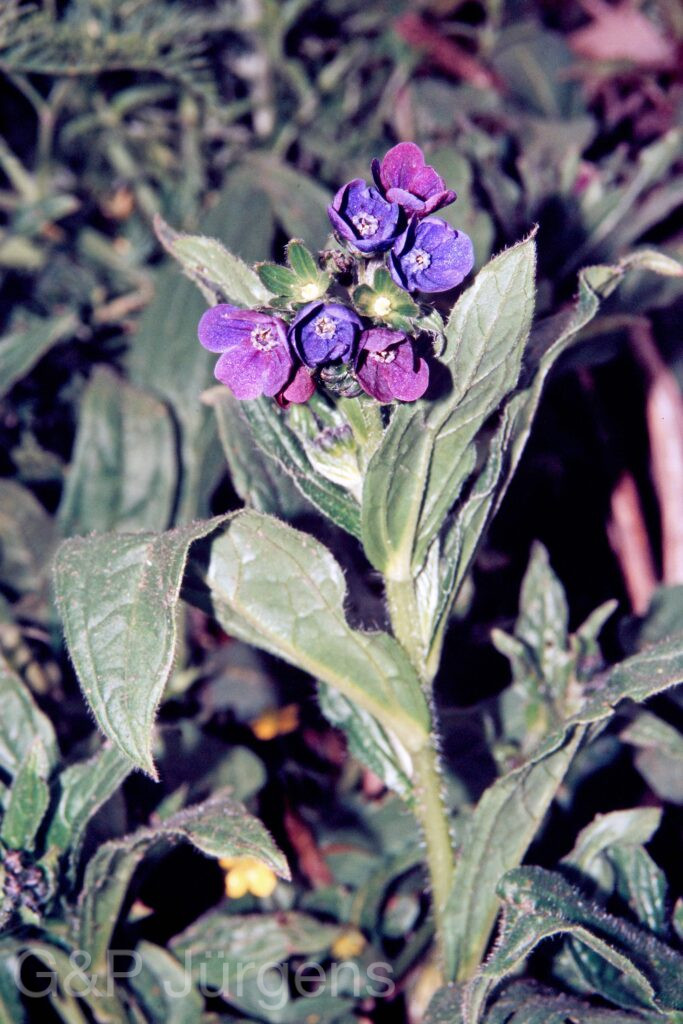
Benth.

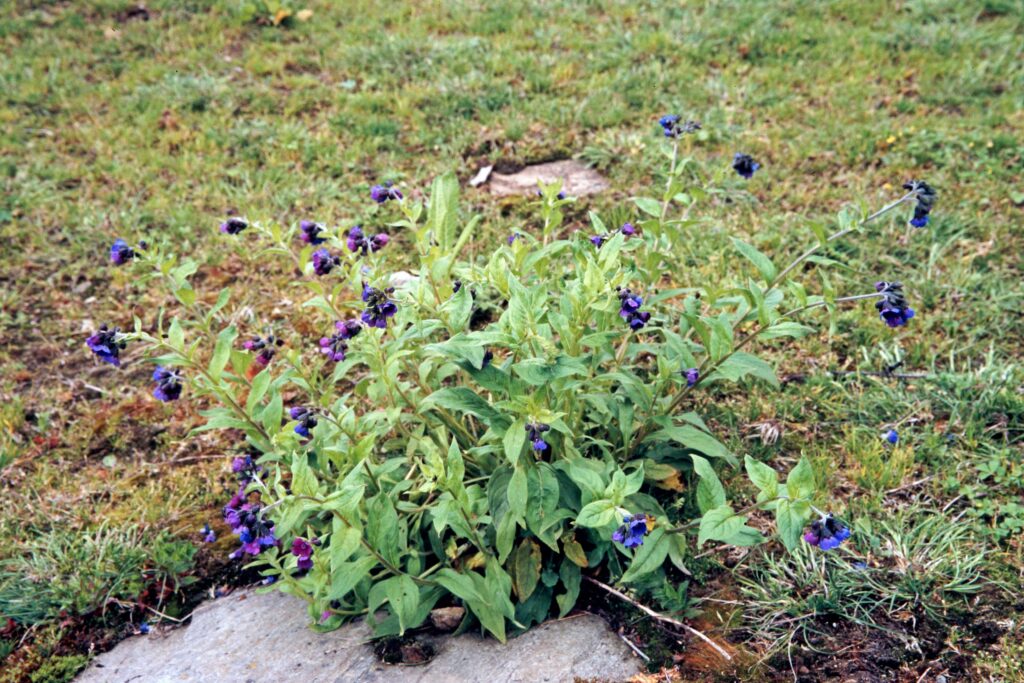
Garh 07 558 ergebnis
India Garhwal Sena 3760m,

Description

Cynoglossum microglochin is a high-altitude species of hound's-tongue distributed across the western and central Himalayas, from Afghanistan and Pakistan through northwest India (Kashmir, Himachal Pradesh, Uttarakhand) to Nepal, Bhutan, and into southwestern China. GBIF records document 209 occurrences across its range. The species typically inhabits open alpine meadows, grassy slopes, and disturbed ground along trails at elevations of 2,800–4,200 m, where it grows in well-drained, often stony soils among other subalpine and alpine herbaceous communities.
The plant is an erect or ascending perennial herb, 20–50 cm tall, with stems covered in appressed or spreading hairs. Basal leaves are oblanceolate to spatulate, 5–15 cm long, petiolate, with entire margins and a dense indumentum of short, stiff hairs on both surfaces. Cauline leaves are progressively smaller, sessile, and semi-amplexicaul. The inflorescence consists of terminal, ebracteate, scorpioid cymes that elongate considerably in fruit. Flowers are small, 3–5 mm in diameter, with blue to violet corollas; the tube is short, with rounded fornices closing the throat. The nutlets, typically four per flower, are ovoid, 2–3 mm long, and densely covered with short, glochidiate (barbed) prickles — notably smaller than those of congeners such as C. zeylanicum, a character reflected in the epithet 'microglochin' (small barb).
This species is distinguished from the widespread Cynoglossum glochidiatum by its smaller nutlet spines and generally more compact inflorescence. It was photographed at Sena in Garhwal at 3,760 m, near the upper limit of its elevational range. Though not currently assessed by the IUCN, its preference for undisturbed alpine habitats makes it potentially sensitive to grazing pressure and climate-driven upward shifts in vegetation zones. Its biogeographical range, extending from the Hindu Kush to the eastern Himalayas, indicates a broadly adapted yet montane-restricted taxon.

Author: Benth. · Sources: POWO (Kew), GBIF, Flora of British India Vol. 4, Flora of Pakistan (Boraginaceae), Kazmi (1970) — Revision of Boraginaceae

G.Don

Garh 07 107 ergebnis
India Garhwal Mandakini 2900m, June
Garh 07 56 ergebnis
India Garhwal Mandakini 2900m, June

Description

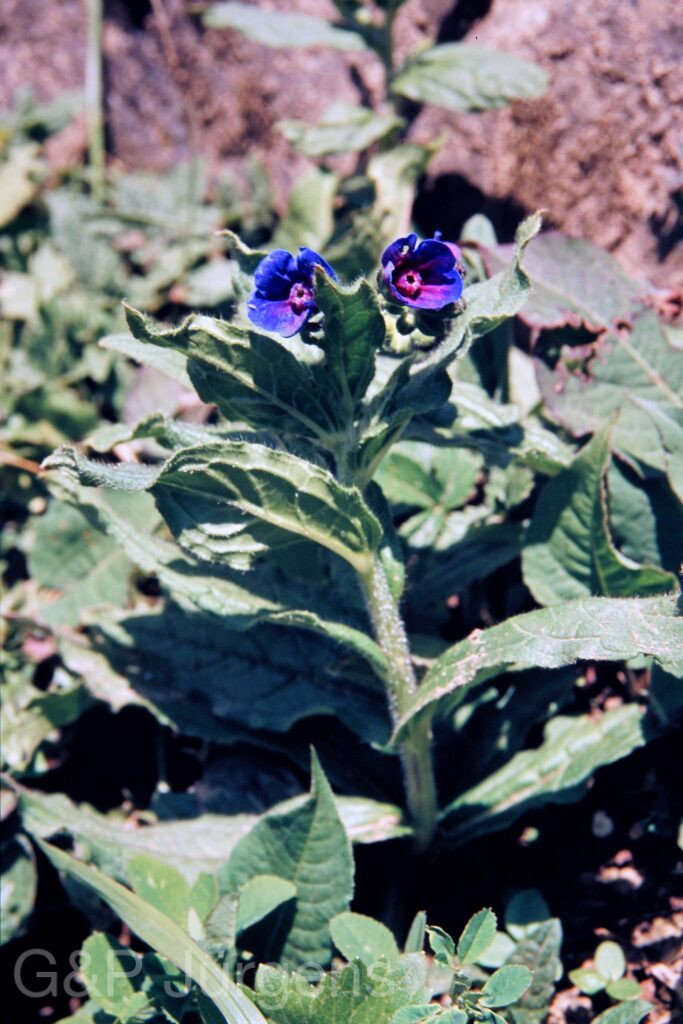
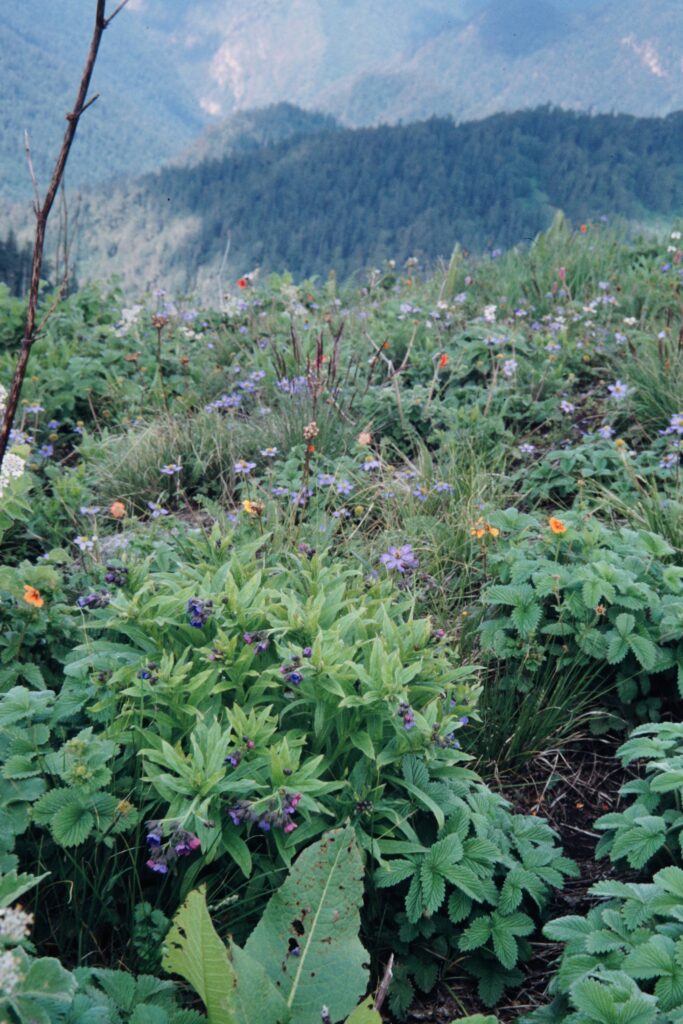
Cynoglossum wallichii is a widespread Asian herb recorded across China, India, Nepal, Pakistan, Bhutan and Afghanistan, with naturalised or casual occurrences in the United States and parts of Europe. GBIF treats the name as a synonym, with Cynoglossum wallichii accepted under that combination. It occupies open hill slopes, forest margins, grassy clearings, fallow ground and roadside banks from about 1500 to 3500 m. The depicted plant from the Mandakini valley in Garhwal, India, at around 2900 m and flowering in June, is characteristic of its preference for disturbed, sunny temperate slopes during the early monsoon.

The plant is an erect annual or biennial herb, the stems simple or branched above and clothed, like the foliage, in appressed to spreading hispid hairs. The leaves are alternate, the lower oblanceolate and narrowed to a petiole, the upper sessile, lanceolate and somewhat clasping. The inflorescence consists of elongating, ebracteate scorpioid cymes bearing small, pale to bright blue, salverform to funnelform flowers with prominent fornices closing the throat. The fruit separates into four ovoid nutlets densely covered with glochidiate (barbed) bristles, an epizoochorous adaptation that promotes dispersal on animal fur.

The epithet honours Nathaniel Wallich, the Danish botanist whose Himalayan collections underpin much early taxonomy of the region. Within Cynoglossum the species belongs to a critical complex whose delimitation has prompted segregation into related genera such as Lindelofia and Paracaryum. The barbed nutlets account for its readiness to colonise trampled and grazed ground, and its weedy tendencies explain the scattered extra-Asian records; it is of no conservation concern.

Author: G.Don · Sources: POWO (Kew), GBIF, Flora of China Vol. 16, Flora of Pakistan, Flora of Nepal, A Revision of Cynoglossum (Boraginaceae) (Brand)

(Sw. ex Lehm.) Thunb. ex Brand

Nepal 99 361 ergebnis
Nepal Kalomura 4050m, July
Nepal 99 556 ergebnis
Nepal Churta-Khola 3800m, July

Description

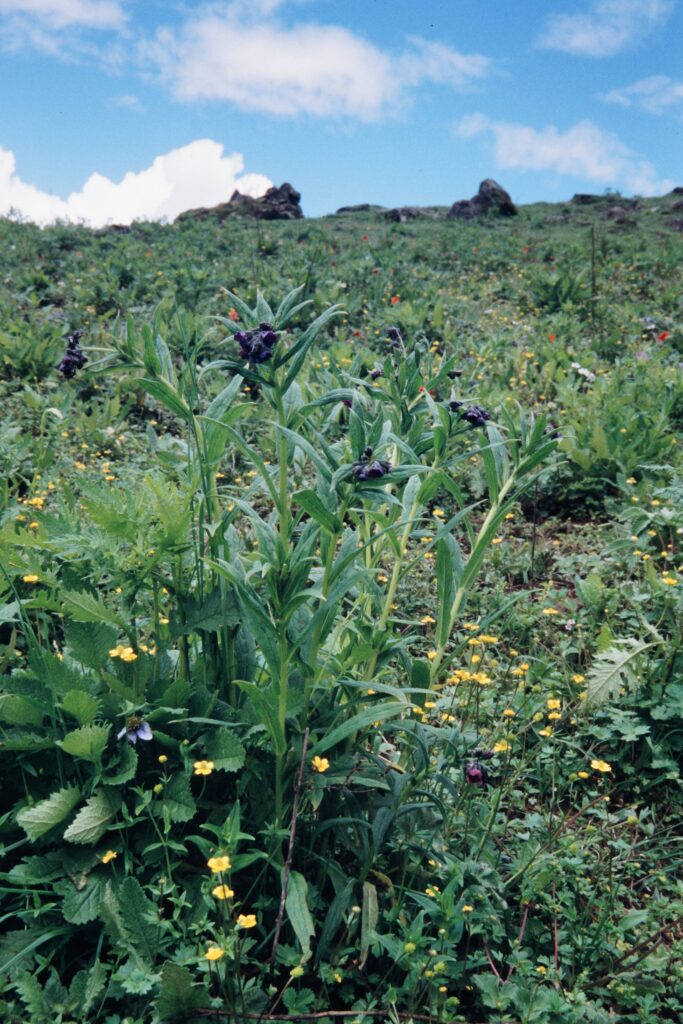
Cynoglossum zeylanicum (Sw. ex Lehm.) Thunb. ex Brand is a widely distributed herb of the borage family, ranging across tropical and warm-temperate Asia and now widely naturalised elsewhere. GBIF documents a very large number of records (c. 2,637) from China, India, Nepal, Sri Lanka, the Philippines, Japan, Korea and beyond, with introduced populations in the Americas and the Caucasus. In the Himalaya it ascends from foothill grasslands to subalpine meadows; the photographed material from west Nepal at Kalomura (c. 4,050 m) and Churta-Khola (c. 3,800 m), both flowering in July, shows it reaching the upper limits of its altitudinal range on open, disturbed slopes during the monsoon.

The plant is an erect biennial or short-lived perennial herb, 30–80 cm tall, clothed throughout in appressed to spreading hispid hairs. The leaves are alternate, the basal ones petiolate and oblong-lanceolate, the cauline leaves sessile and progressively reduced upward. The inflorescence is a scorpioid, bracteate cyme. Flowers are small with a five-lobed campanulate corolla, blue to pale blue with white fornices closing the throat. The fruit is a schizocarp splitting into four ovoid nutlets densely covered with glochidiate (barbed) bristles, an epizoochorous adaptation aiding dispersal on animal fur.

The species has at times been treated under Cynoglossum or segregated genera within tribe Cynoglosseae, and the glochidiate nutlets are diagnostic for the group. Its wide ecological amplitude and effective animal dispersal explain its near-cosmopolitan, often weedy distribution; it is of no conservation concern and is locally regarded as a minor pasture weed.

Author: (Sw. ex Lehm.) Thunb. ex Brand · Sources: POWO (Kew), Flora of China Vol. 16, Flora of Nepal, Flora of Pakistan, GBIF, Brand: Das Pflanzenreich – Borraginaceae

D.Don

Nepal 99 86 ergebnis
West-Nepal Bhulbhule 3200m, June
Nepal 99 383.JPG ergebnis
West-Nepal Linji-Khola 3200m, June
Garh 07 213 ergebnis
India Garhwal Panwali 3200m, June

Description

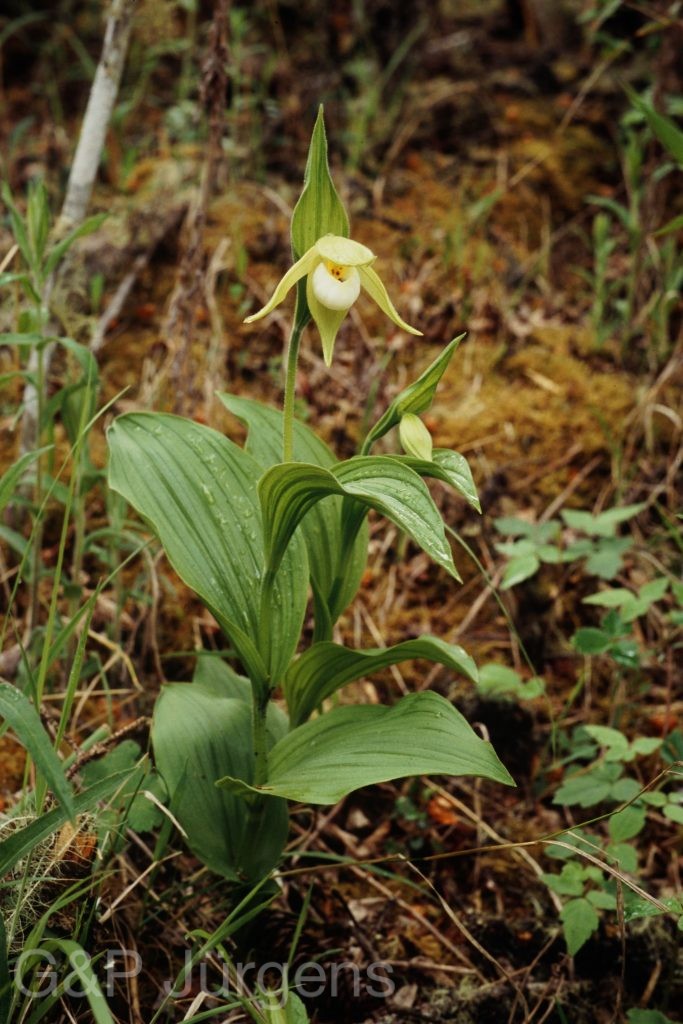
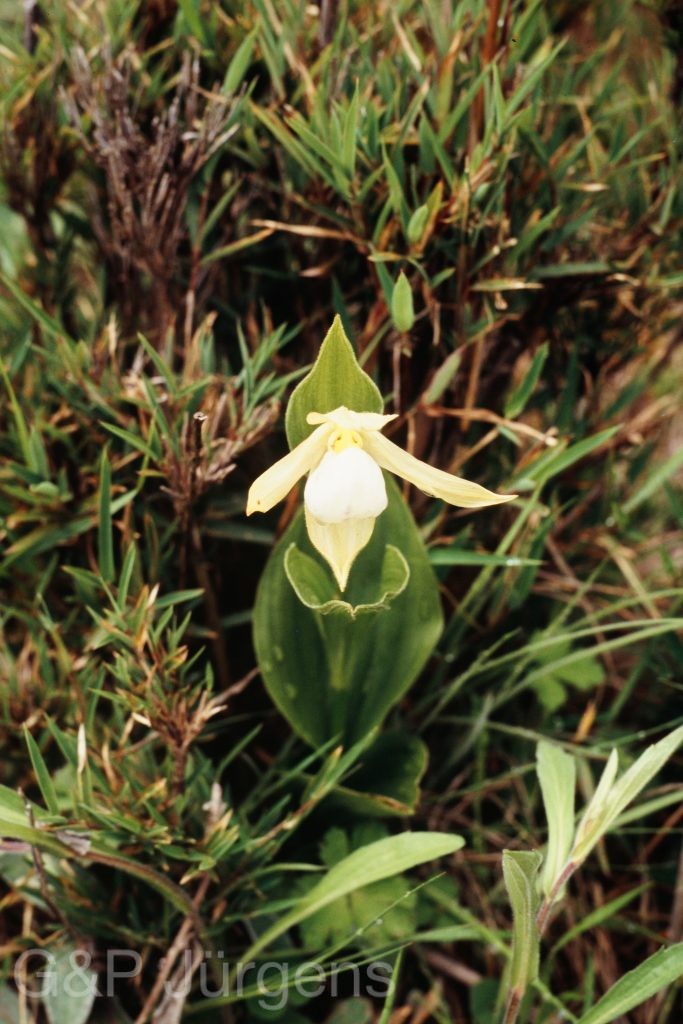
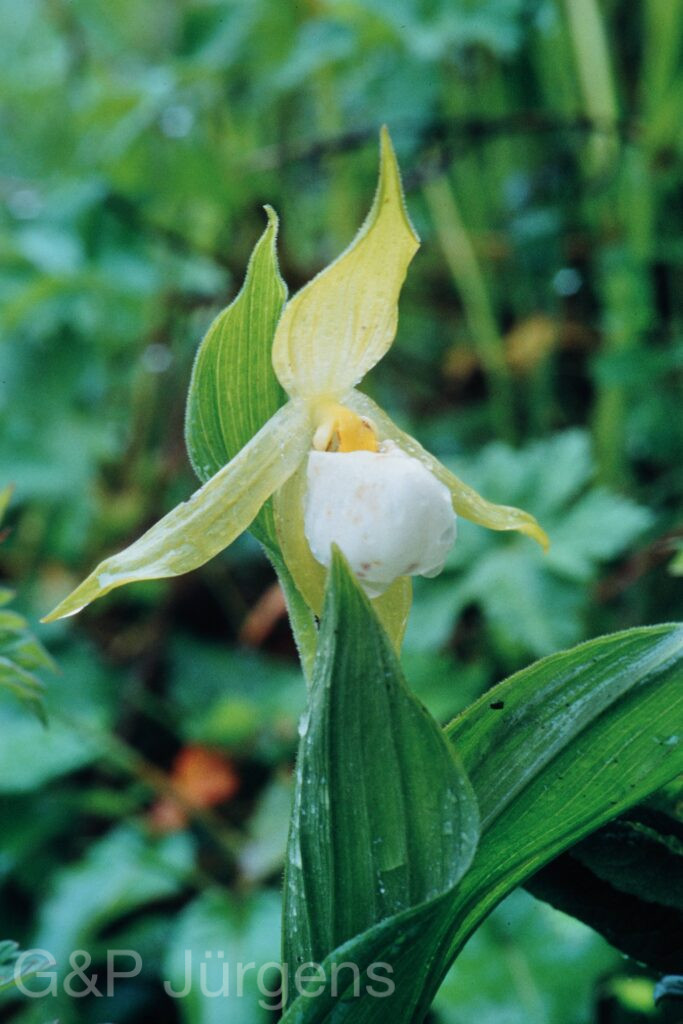
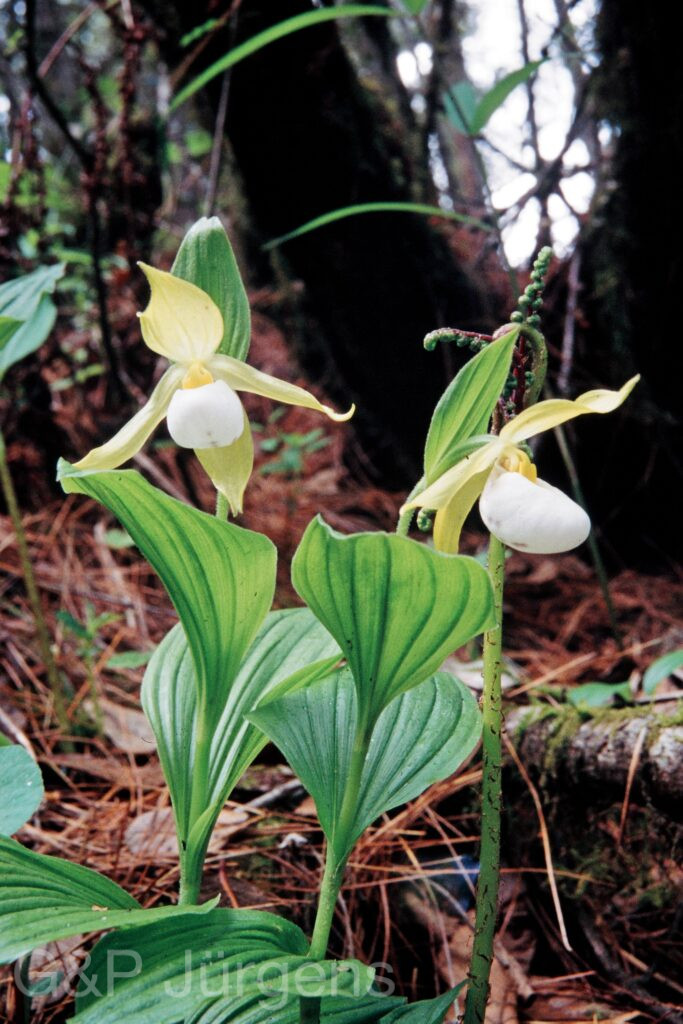
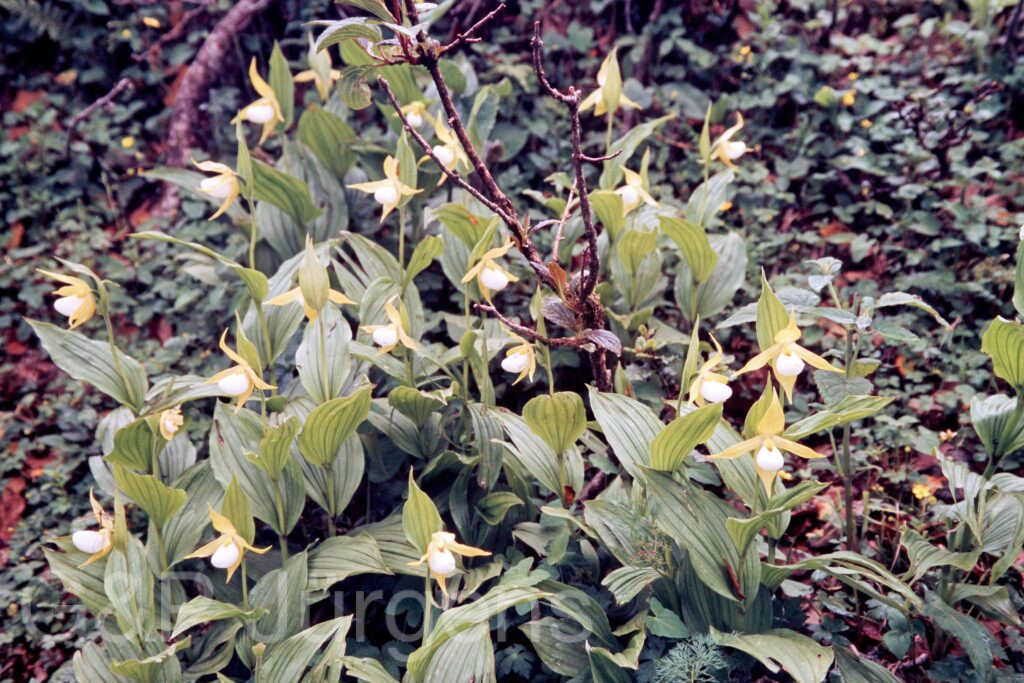
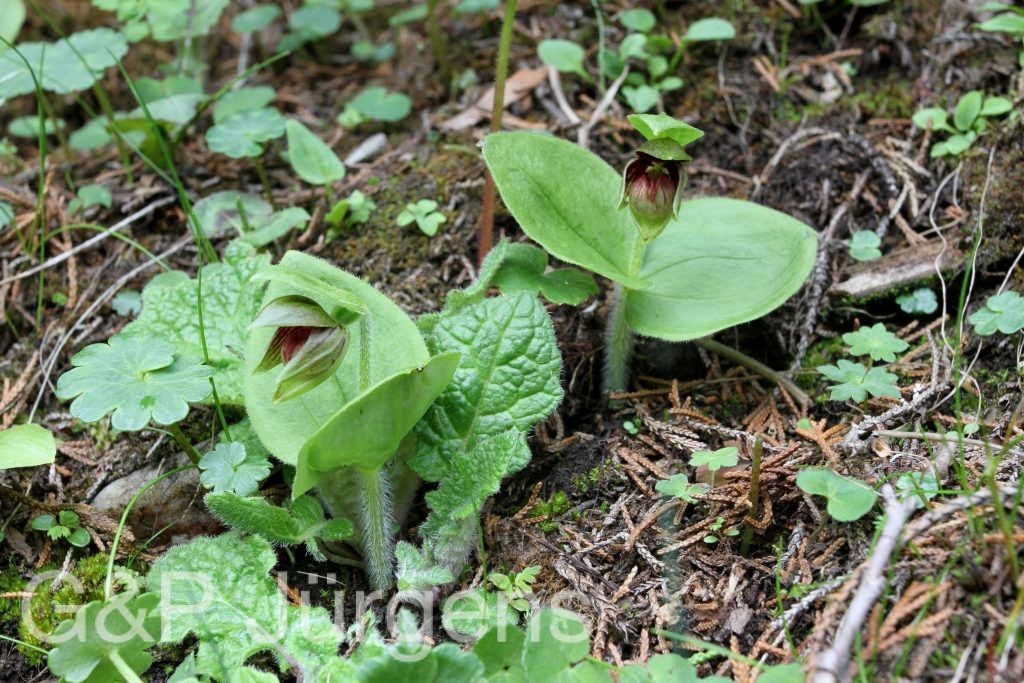
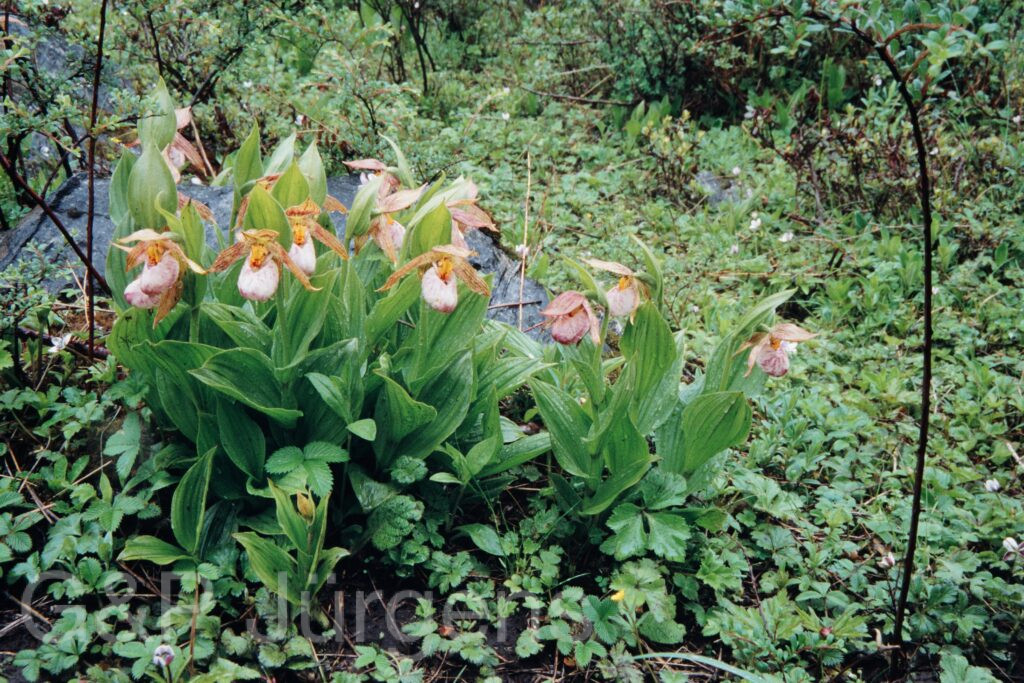
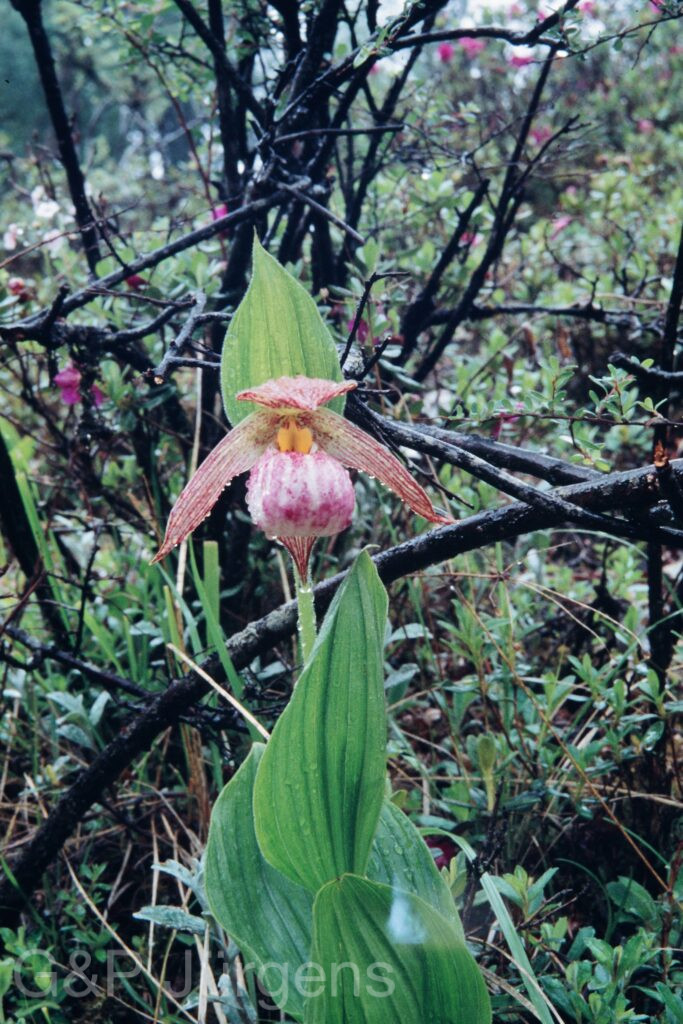
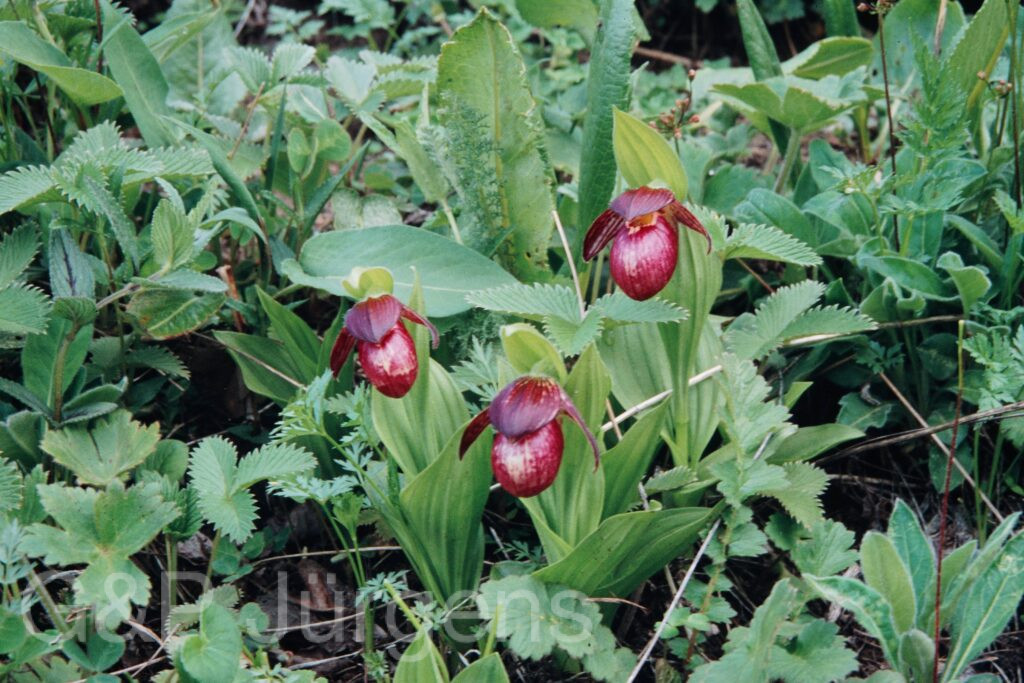
Cypripedium cordigerum, the Himalayan slipper orchid, ranges along the temperate Himalaya from Pakistan through India, Nepal and Bhutan into adjacent China, with 190 occurrences in GBIF. It grows in cool, humus-rich habitats: open coniferous and mixed forest, forest clearings, shrubberies and grassy alpine slopes, generally between 2700 and 4000 m. The gatherings figured span this band, from Bhutan's Yetong-La at 3000 m through West Nepal (Bhulbhule, Linji-Khola, 3200 m) to Garhwal's Panwali at 3200 m, all in June, illustrating its early-summer flowering on moist, partly shaded mountain soils as the growing season opens.

The plant arises from a short, creeping rhizome bearing thick fleshy roots, producing an erect, pubescent leafy stem 20-45 cm tall. The leaves are several, alternate, broadly elliptic to ovate, plicate (longitudinally folded) and clasping at the base. The flower is usually solitary and terminal, subtended by a leafy bract; the sepals and lateral petals are greenish to yellowish-white, lanceolate and somewhat twisted, while the labellum forms the characteristic inflated, slipper-shaped pouch, white often flushed pink within. The fertile anthers flank a shield-like staminode; the fruit is an erect, ribbed dehiscent capsule containing innumerable dust-like seeds.

Cypripedium (Orchidaceae, subfamily Cypripedioideae) comprises the temperate lady's-slipper orchids, employing deceptive trap-pollination whereby insects enter the pouch and exit past the anthers. The input family is given as "Orchideaceae"; the accepted family is Orchidaceae. Like its congeners, C. cordigerum depends on mycorrhizal associations and is slow to establish, making it vulnerable to collection and habitat loss; it is listed on CITES Appendix II and warrants conservation attention across its Himalayan range.

Author: D.Don · Sources: POWO (Kew), GBIF, Flora of Bhutan, Flowers of the Himalaya, The Genus Cypripedium (A Monograph)

Rchb.f.

BhutanPG2011 228
Bhutan Tsochenchen, 3600m June

Description

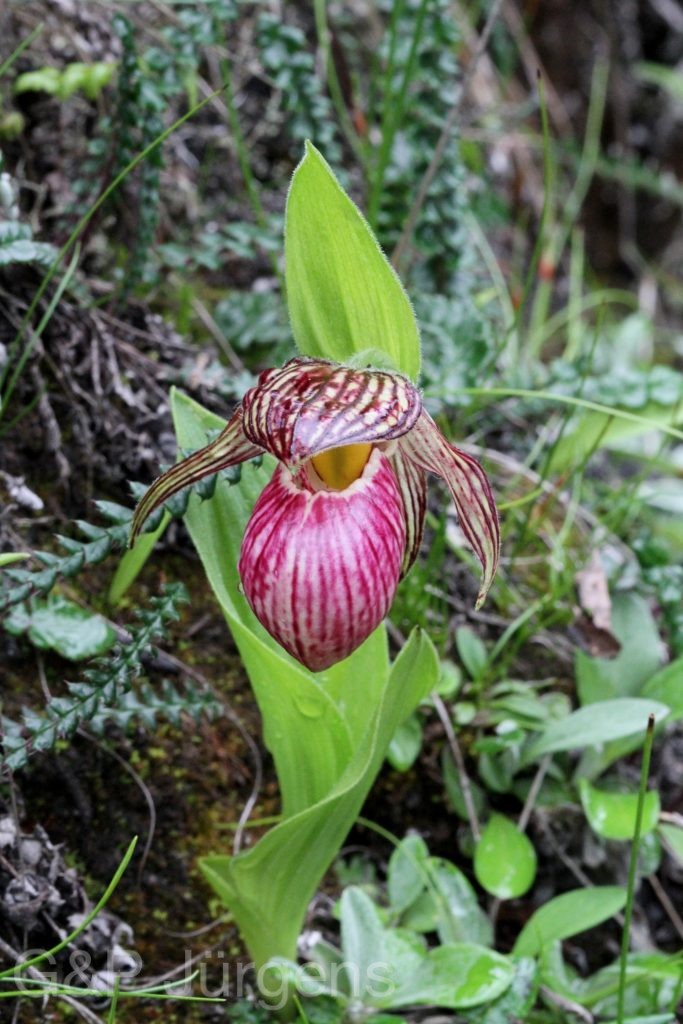
Cypripedium elegans Rchb.f. is a diminutive lady's-slipper orchid of the eastern Himalaya, recorded by GBIF from India, Nepal, Bhutan and China across some 59 occurrences. It is a plant of cool, humid high-altitude habitats, growing in mossy alpine and subalpine scrub, beneath Rhododendron and dwarf bamboo, and on shaded humus-rich banks, generally between about 3000 and 4000 m. The individual photographed at Tsochenchen in Bhutan at around 3600 m in June, early in the alpine season, reflects its preference for sheltered, perennially moist sites with deep leaf litter and a stable cool microclimate.

The plant arises from a short creeping rhizome and produces a slender, low erect stem bearing usually two broadly elliptic to ovate, plicate, prominently veined leaves that are held more or less opposite or subopposite near the top of the stem. The single nodding flower is small for the genus; the dorsal sepal and the synsepal (the fused lateral sepals) are ovate and the petals narrow, the whole pale yellowish-green to greenish, often faintly marked. The labellum is modified into the characteristic inflated, slipper-shaped pouch that traps and temporarily detains pollinating insects, which exit past the staminode and stigma, effecting pollination.

Cypripedium belongs to subfamily Cypripedioideae, the slipper orchids, marked by their two fertile anthers and saccate lip. Cypripedium elegans is one of the smallest and most delicate Himalayan members of the genus. It is uncommon, slow to establish, and like all Cypripedium it is highly sensitive to collection and habitat disturbance; the genus is listed on CITES Appendix II and several species are of conservation concern. Its restricted high-Himalayan range makes it a notable narrow-altitude alpine specialist.

Author: Rchb.f. · Sources: POWO (Kew), GBIF, Flora of Bhutan, Flora of China, Cribb monograph The Genus Cypripedium, Pearce and Cribb Orchids of Bhutan

Rolfe ex. Hemsl.

BhutanPG2011 188
Bhutan Tsochenchen, 3600m June
BhutanPG2011 794
Bhutan Chele-La, 3850m July
Nepal 99 48 ergebnis
West-Nepal Nyor Gaad 2700m, June
Nepal 99 51 ergebnis
West-Nepal Nyor Gaad 2700m, June
Nepal 99 370 ergebnis
West-Nepal Nyor Gaad 2700m, June

Description

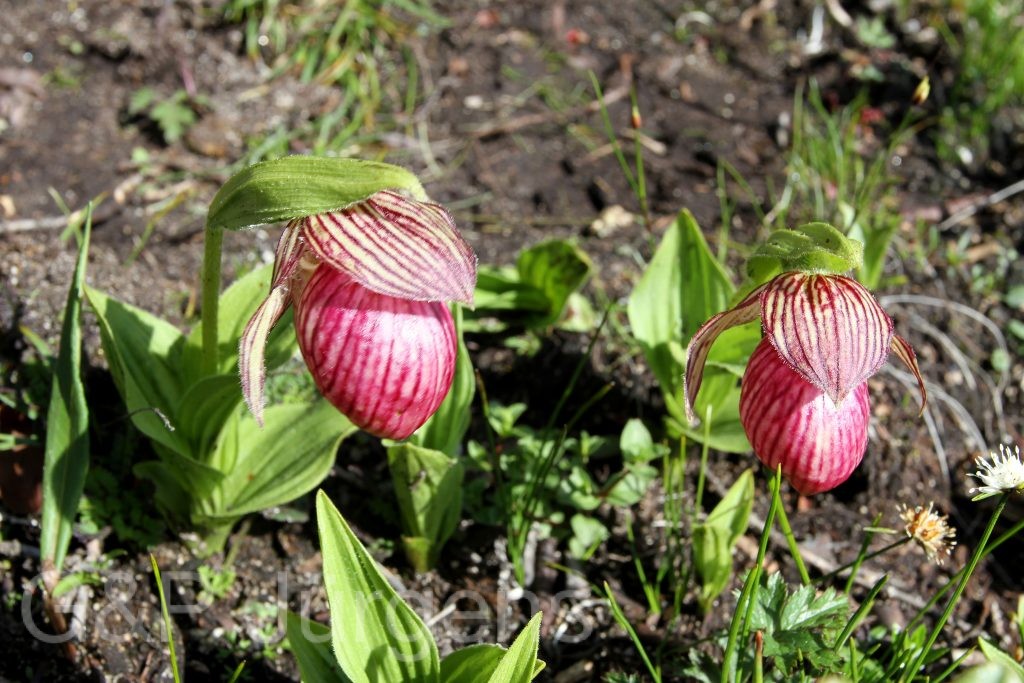
Cypripedium himalaicum is a terrestrial slipper orchid native to the eastern Himalayas, found in Bhutan, Nepal, Sikkim, and southern Tibet. It grows in alpine meadows and open forests at elevations of 3,000 to 4,500 m.

The plant reaches 15–35 cm in height, bearing one or two broadly elliptic leaves. The solitary flower is distinctive: the dorsal sepal is greenish-white with purple veins, the petals are narrow and twisted, and the lip forms a large inflated pouch, pale yellowish-green with purple spotting. Flowering occurs from May to July.

Cypripedium himalaicum is one of the highest-altitude slipper orchids in the world. It is classified as vulnerable due to habitat loss and overcollection. All Cypripedium species are listed under CITES Appendix II.

Author: Rolfe ex. Hemsl. · Sources: POWO (Kew), Flora of Bhutan, CITES Checklist

Hook.f. & Thomson

Sikkim 2006 306 ergebnis
Sikkim Ringi-Chu Tolung Gompa 2410m, May
Sikkim 2006 477 ergebnis
Sikkim Ringi-Chu Tolung Gompa 2410m, May
Sikkim 2006 475 ergebnis
Sikkim Ringi-Chu Tolung Gompa 2410m, May

Description

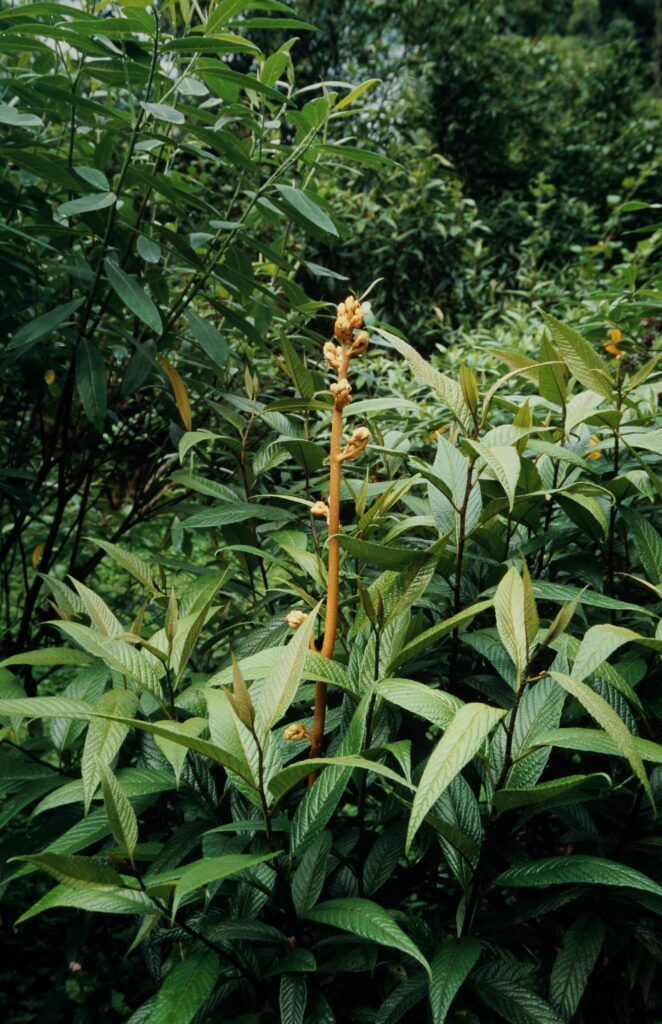
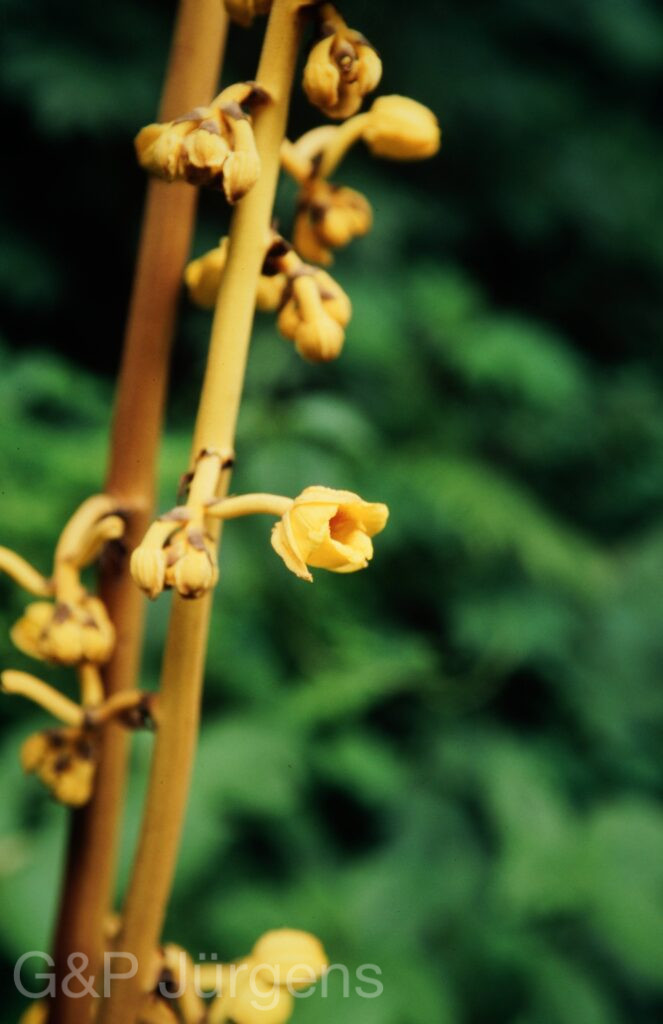
Cyrtosia lindleyana Hook.f. & Thomson is a leafless, mycoheterotrophic orchid of the tribe Vanilleae, distributed across the eastern Himalaya and into mainland and insular Southeast Asia. Its range, documented through some 400 georeferenced records, spans Nepal, northeast India, Bhutan, southern China, Taiwan, Myanmar, Vietnam and Indonesia. The species favours the deep humus and leaf litter of shaded, humid broad-leaved and mixed forests, where it depends on a mycorrhizal fungal partner for its entire nutrition. It typically occurs at montane elevations between roughly 1,500 and 2,800 m, consistent with the photographed population at Ringi-Chu near Tolung Gompa in Sikkim, recorded at 2,410 m in May.

Lacking chlorophyll, the plant emerges only to flower and fruit, arising from a stout, fleshy, coralloid rhizome that ramifies through the substrate. The erect, brownish to ochre, scale-clad inflorescence bears a loose raceme or panicle of comparatively large flowers. These are fleshy and yellowish, often suffused with brown or russet tones, with spreading sepals and petals and a concave, somewhat saccate lip bearing internal ridges. The fruit is distinctive among orchids: a large, fleshy, berry-like, indehiscent capsule, red at maturity, containing hard-coated seeds rather than the typical dust-fine orchid seed.

The genus Cyrtosia, together with allied Galeola, exemplifies the repeated evolution of full mycoheterotrophy within Vanilleae and is of considerable interest for studies of orchid–fungus associations. Because the plants are inconspicuous and only briefly visible, the species is easily overlooked and under-recorded. As an obligate forest-floor mycoheterotroph it is highly sensitive to logging and disturbance of soil mycota, and like all orchids is afforded protection under CITES Appendix II.

Author: Hook.f. & Thomson · Sources: POWO (Kew), GBIF, Flora of China Vol. 25, Flora of Bhutan Vol. 3, Pearce & Cribb: The Orchids of Bhutan (2002)

(D.Don) Hutch.

Bhutan2012 477
Bhutan Pele-La 3300m, June

Description

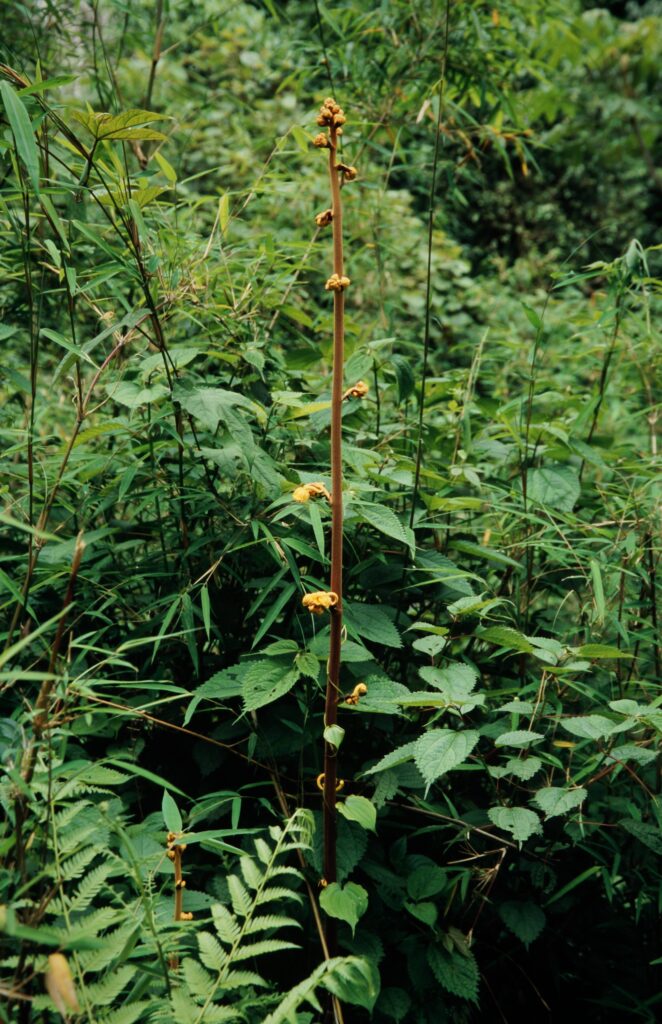
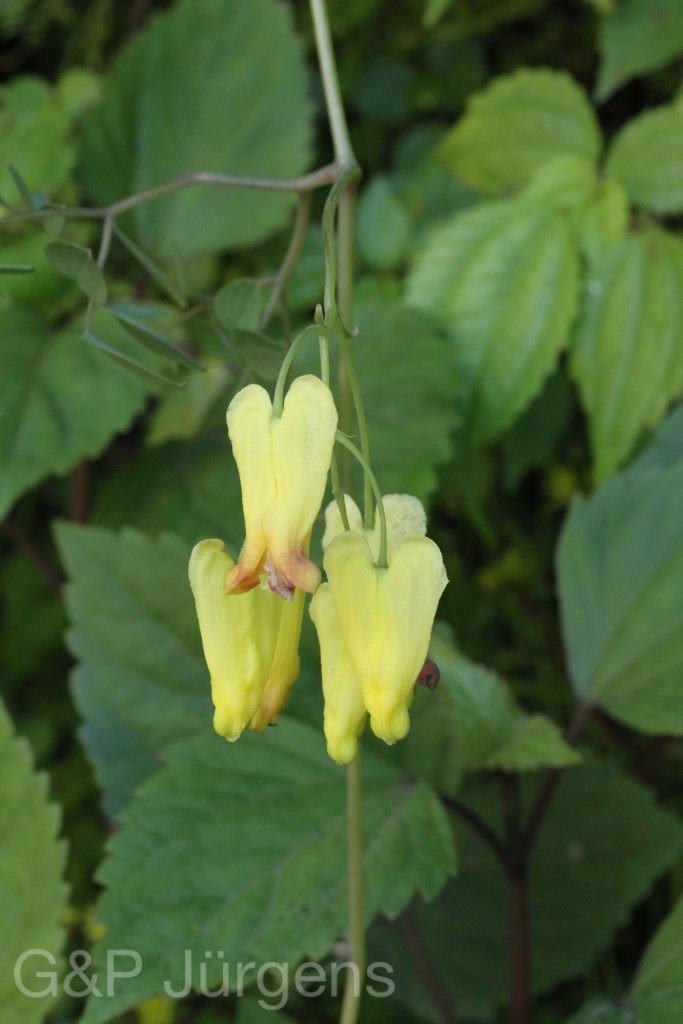
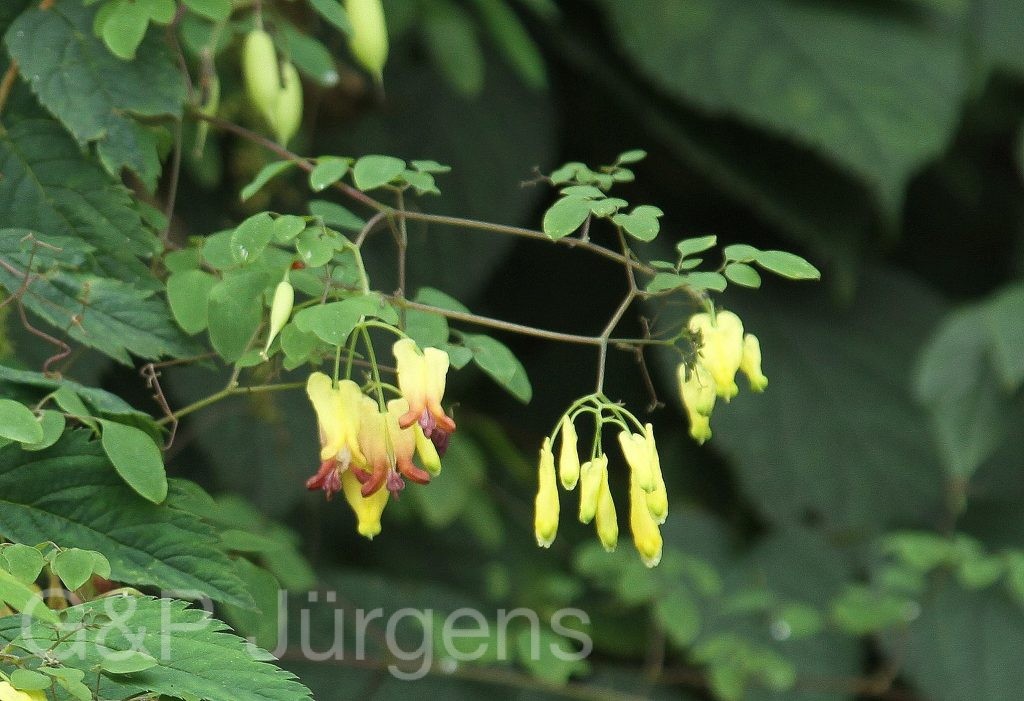
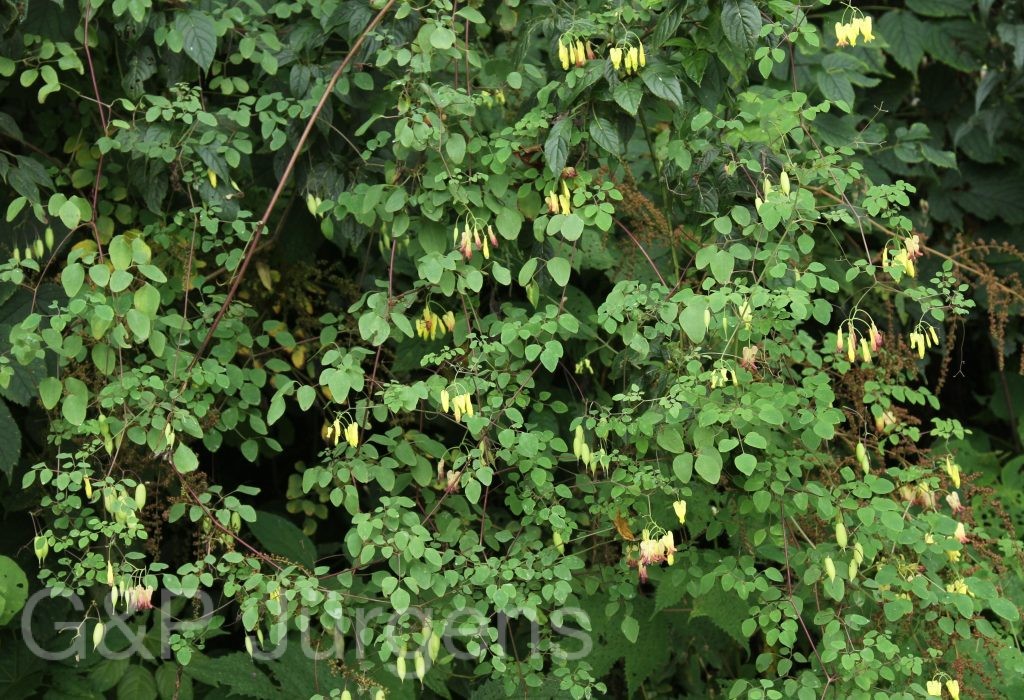
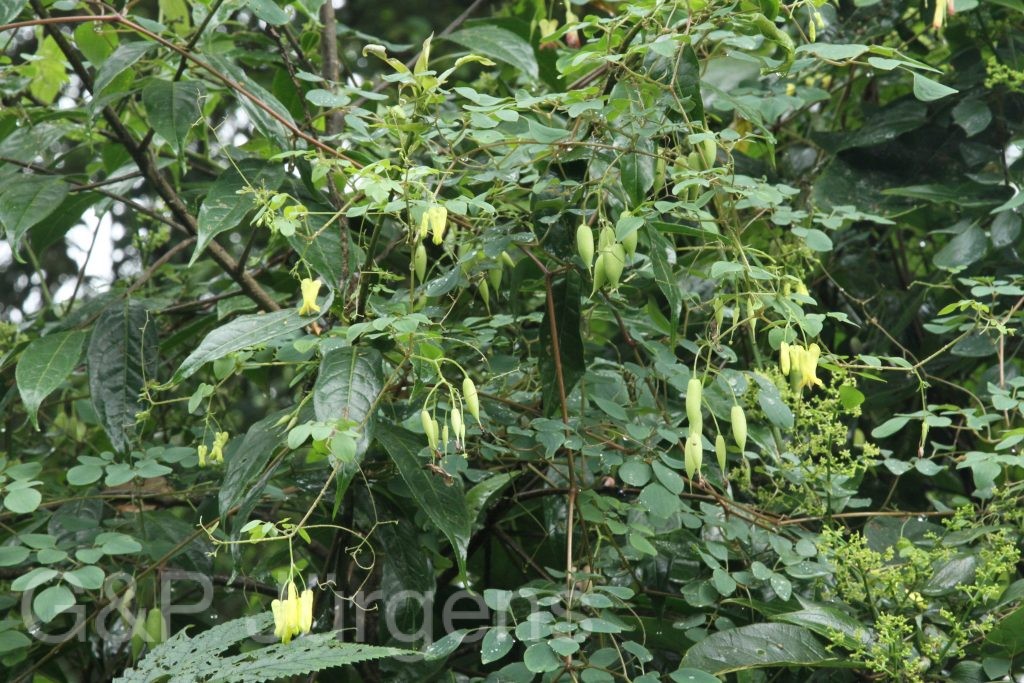
Dactylicapnos scandens is a climbing fumitory of the Himalaya and adjacent China and Indochina, native across China, India, Nepal, Bhutan, Myanmar, Vietnam, Thailand and Sri Lanka; its more than 300 GBIF records include numerous cultivated and naturalised occurrences in Europe, North America and New Zealand, reflecting its popularity as an ornamental climber. It grows in moist temperate forest, thickets and shrubby clearings, scrambling over other vegetation, mostly between about 1500 and 3300 m. The plant shown from Pele-La in Bhutan at 3300 m, flowering in June, sits at the upper edge of this range in cool broadleaved and conifer forest.

It is a herbaceous to suffrutescent perennial climber with slender, much-branched stems clinging by means of branched, tendril-like leaflet tips. The leaves are alternate, two- to three-pinnately compound and glaucous, the ultimate segments small and ovate, the terminal portions modified into coiling tendrils. The flowers hang in pendulous racemes and are zygomorphic with two bilaterally symmetrical, spurred or saccate outer petals enclosing two inner petals, the whole corolla bright golden-yellow. The fruit is an elongate, several-seeded capsule that dehisces to release shining black seeds, each bearing an elaiosome.

Dactylicapnos was separated from Dicentra and Corydalis on the basis of its climbing habit, tendrillate leaves and capsular fruit. D. scandens, based on D. Don's Fumaria scandens and transferred by Hutchinson, is widespread and not threatened, and its toxic isoquinoline alkaloids have attracted pharmacological interest in traditional medicine.

Author: (D.Don) Hutch. · Sources: POWO (Kew), GBIF, Flora of Bhutan, Flora of China, Lidén & Fukuhara revision of Dactylicapnos

(D.Don) Hutch.

Bhutan2012 1316
Bhutan2012 1315
Bhutan2012 678
Bhutan2012 477

Description

Dactylicapnos scandens (D.Don) Hutch. is a scrambling herbaceous climber of the eastern Himalaya and adjacent montane Asia, ranging across Nepal, India, Bhutan, southern China and Myanmar, with extensions into Thailand and Vietnam; the GBIF dataset records some 301 occurrences, the majority along the Sino-Himalayan arc, while scattered points from Europe, North America and New Zealand reflect cultivated or naturalised material. It favours moist temperate and subtropical forest margins, thickets, ravines and disturbed slopes, typically between about 1500 and 3000 m, threading through supporting vegetation by means of tendrillar leaf appendages.

The plant is a glabrous, glaucous perennial with slender, much-branched, climbing stems arising from a slender rootstock. The leaves are alternate, several times pinnately or ternately divided into small ovate to lanceolate leaflets, the terminal segments of the rachis modified into branched tendrils that secure the climbing habit. The pendent inflorescences are racemose, bearing nodding, bright yellow, distinctly heart-shaped flowers; the outer pair of petals is saccate to spurred at the base and connivent at the apex, enclosing the inner petals in the characteristic fumarioid manner. The fruit is a slender, elongate, dehiscent capsule containing several shining black seeds.

Formerly placed in Dicentra and Corydalis, the genus Dactylicapnos is now firmly assigned to the Papaveraceae subfamily Fumarioideae, distinguished by its climbing tendrillate habit and zygomorphic dimerous flowers. The species is widespread and locally common, of no immediate conservation concern, and is valued horticulturally as an ornamental climber for cool temperate gardens.

Author: (D.Don) Hutch. · Sources: POWO (Kew), GBIF, Flora of China, Flora of Bhutan, Flora of Nepal, Lidén & Zetterlund monograph of Dactylicapnos and Fumarioideae