
(Sw. ex Lehm.) Thunb. ex Brand
Description
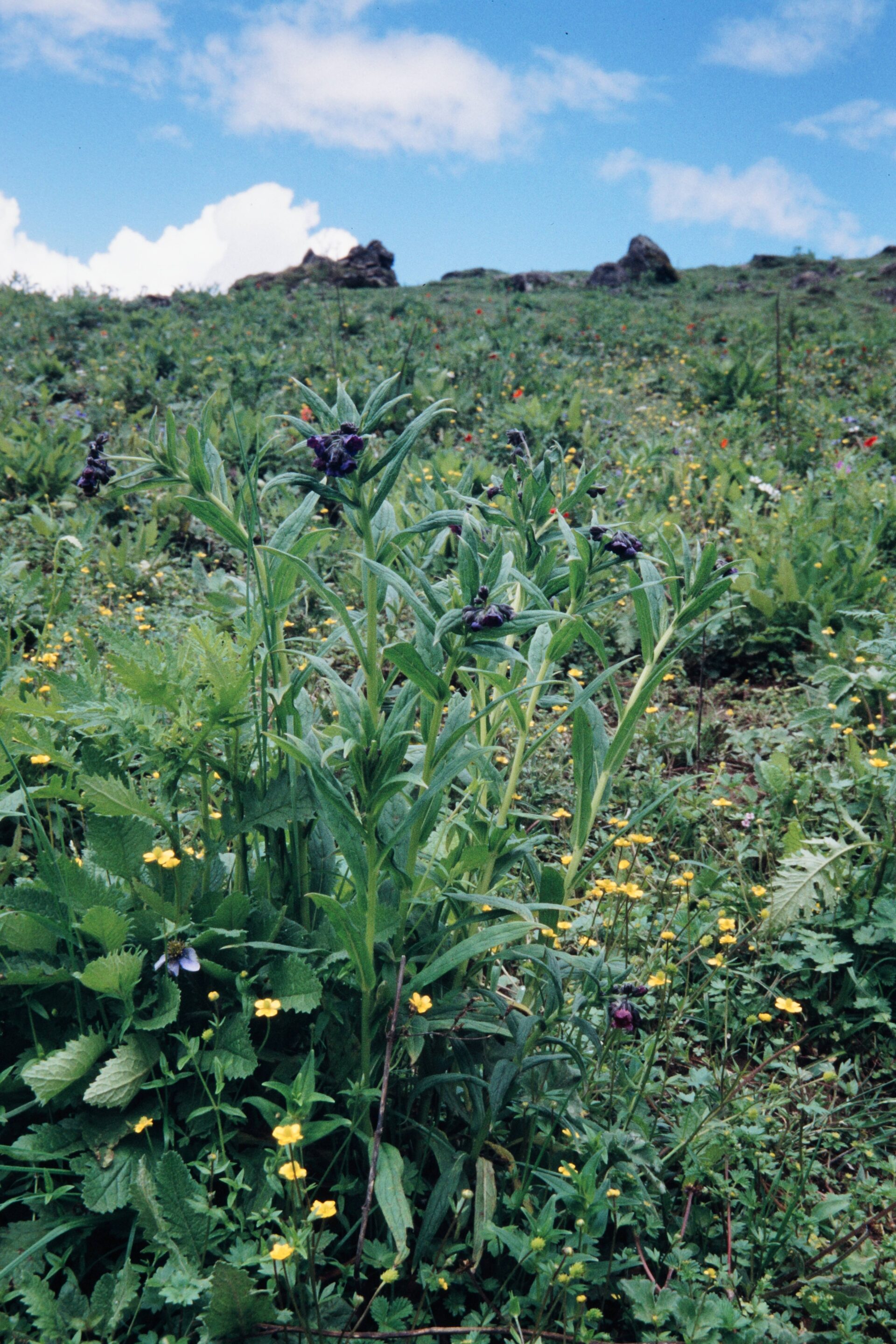
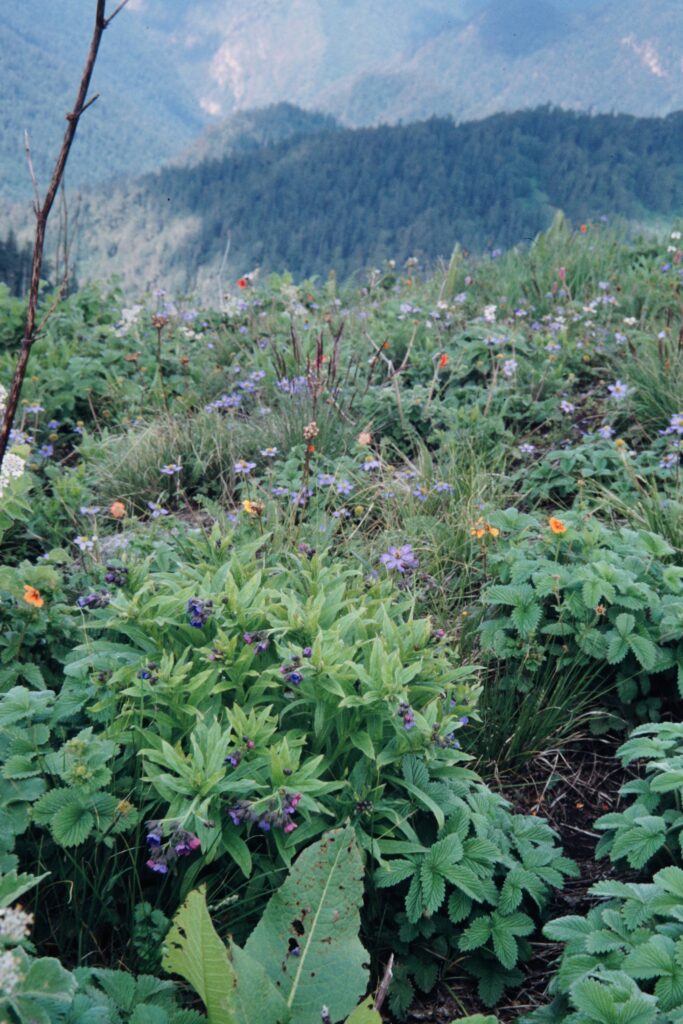
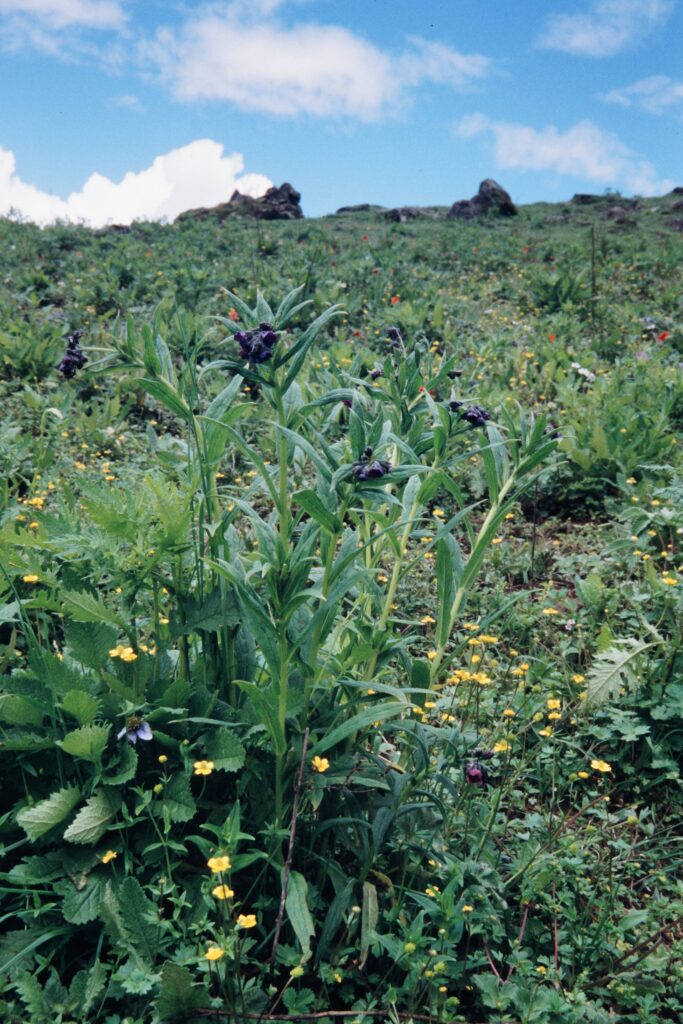
Cynoglossum zeylanicum (Sw. ex Lehm.) Thunb. ex Brand is a widely distributed herb of the borage family, ranging across tropical and warm-temperate Asia and now widely naturalised elsewhere. GBIF documents a very large number of records (c. 2,637) from China, India, Nepal, Sri Lanka, the Philippines, Japan, Korea and beyond, with introduced populations in the Americas and the Caucasus. In the Himalaya it ascends from foothill grasslands to subalpine meadows; the photographed material from west Nepal at Kalomura (c. 4,050 m) and Churta-Khola (c. 3,800 m), both flowering in July, shows it reaching the upper limits of its altitudinal range on open, disturbed slopes during the monsoon.
The plant is an erect biennial or short-lived perennial herb, 30–80 cm tall, clothed throughout in appressed to spreading hispid hairs. The leaves are alternate, the basal ones petiolate and oblong-lanceolate, the cauline leaves sessile and progressively reduced upward. The inflorescence is a scorpioid, bracteate cyme. Flowers are small with a five-lobed campanulate corolla, blue to pale blue with white fornices closing the throat. The fruit is a schizocarp splitting into four ovoid nutlets densely covered with glochidiate (barbed) bristles, an epizoochorous adaptation aiding dispersal on animal fur.
The species has at times been treated under Cynoglossum or segregated genera within tribe Cynoglosseae, and the glochidiate nutlets are diagnostic for the group. Its wide ecological amplitude and effective animal dispersal explain its near-cosmopolitan, often weedy distribution; it is of no conservation concern and is locally regarded as a minor pasture weed.
Author: (Sw. ex Lehm.) Thunb. ex Brand · Sources: POWO (Kew), Flora of China Vol. 16, Flora of Nepal, Flora of Pakistan, GBIF, Brand: Das Pflanzenreich – Borraginaceae