Tag:

Nepal

Flowers of Nepal — 1313 wild plant species documented from the Nepalese Himalaya, from subtropical foothills to high alpine meadows above 4,000 m. Nepal’s dramatic elevation gradient makes it one of the richest botanical regions on Earth, home to rhododendrons, primulas, gentians and the famed blue poppies (Meconopsis). Every entry gives a botanical description, native distribution, habitat and flowering season, alongside the original field photograph and the location where it was taken.

(Hook.f. & Thomson) W.T.Wang & P.K.Hsiao
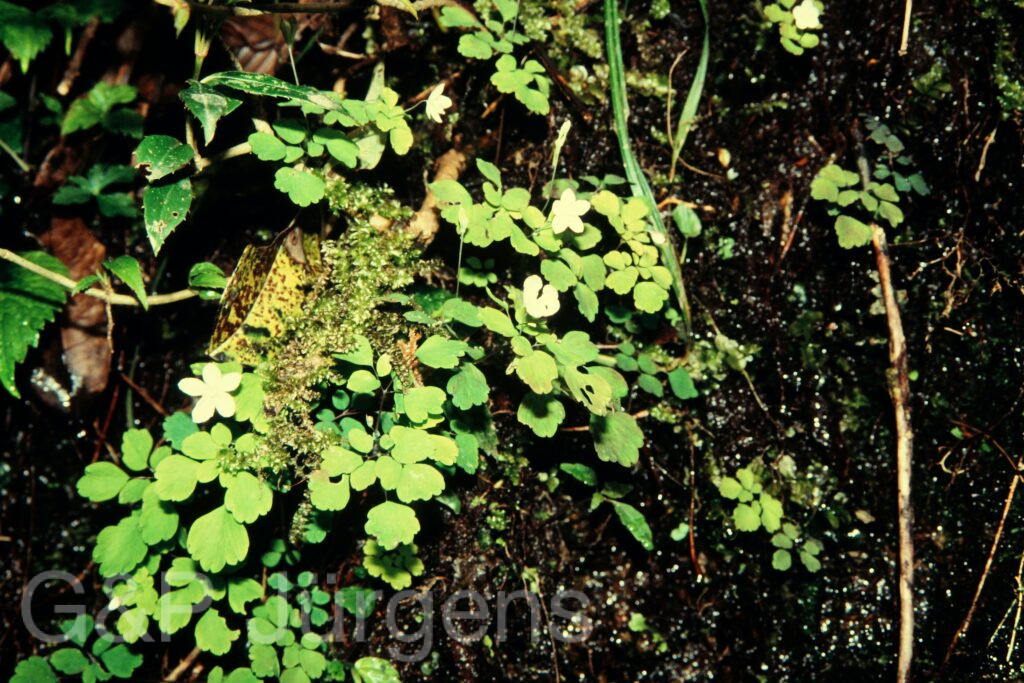
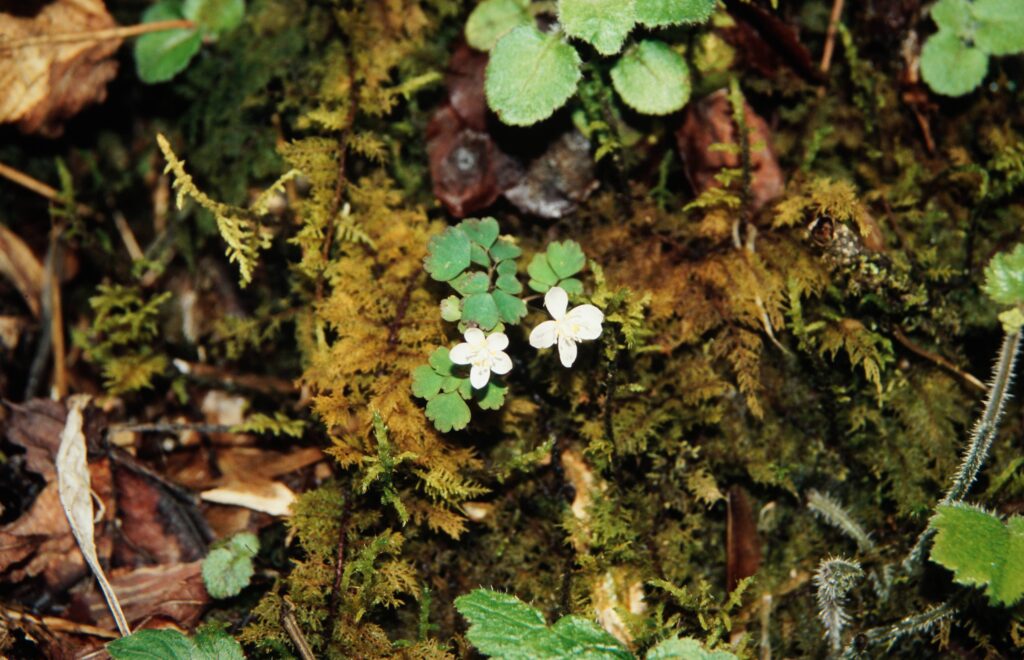
Nepal 97 310 G614
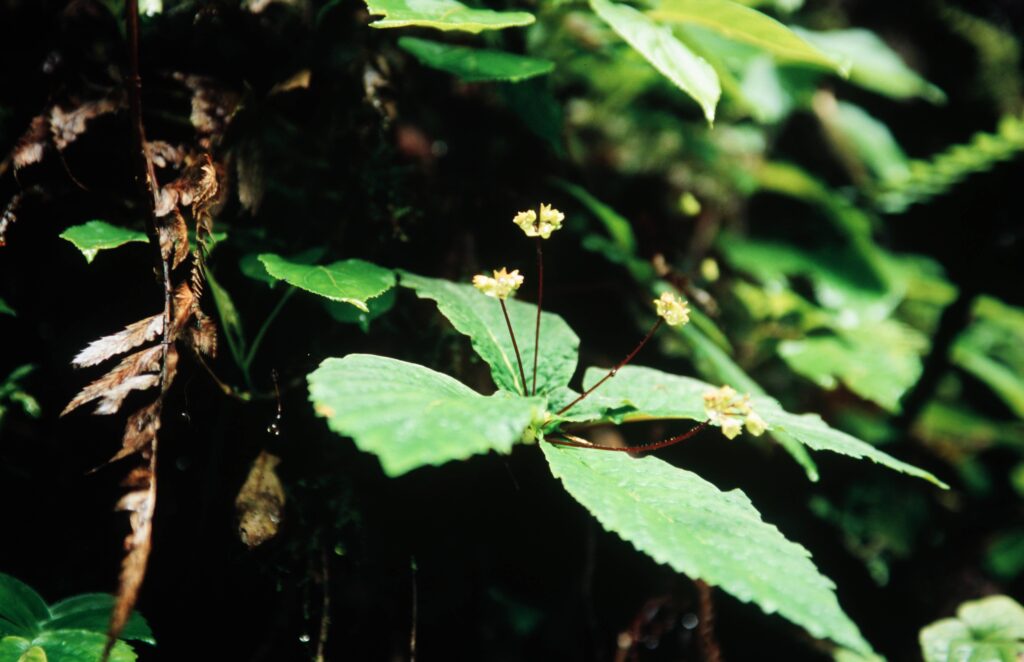
Nepal Honggaon 2300m May
Sikkim 2006 33 2 ergebnis
India West-Bengal Tonglu 3200m, May

Description

Dichocarpum adiantifolium is a slender woodland buttercup relative of the Sino-Himalayan region, distributed through Taiwan, China, India, Nepal, Bhutan and Myanmar, with the comparatively rich total of about 286 GBIF records. It grows in cool, shaded, humus-rich situations: moist temperate forest floors, mossy rocks, ravine banks and streamsides, generally between about 2000 and 3500 m. The collections illustrated, from Honggaon in Nepal at around 2300 m and Tonglu in West Bengal at about 3200 m, both in May, represent its typical spring-flowering forest habitat.

It is a delicate, glabrous perennial herb arising from a short rhizome. The leaves are mostly basal, long-petiolate and compound, divided into numerous small, thin, fan-shaped to obovate leaflets that recall the fronds of a maidenhair fern (Adiantum), hence the epithet. Slender scapes bear loose, few-flowered cymes of small flowers, each with five white, petaloid sepals and small tubular or two-lipped nectary petals, numerous stamens and usually two carpels. The diagnostic fruit is a pair of divergent, flattened follicles spreading widely at maturity, a feature reflected in the generic name (from the Greek for divided fruit).

Dichocarpum is a small east Asian and Himalayan genus segregated from Isopyrum and allied to Thalictrum and Aquilegia within the Ranunculaceae; D. adiantifolium was originally described under Isopyrum and later transferred by Wang and Hsiao. The paired spreading follicles and ferny foliage make it readily recognisable. It is a fairly widespread forest-understorey species and is not regarded as threatened, though as a shade-demanding mesophyte it depends on intact, humid temperate forest and would be sensitive to logging and forest fragmentation.

Author: (Hook.f. & Thomson) W.T.Wang & P.K.Hsiao · Sources: POWO (Kew), GBIF, Flora of China, Flora of Bhutan, Annotated Checklist of the Flowering Plants of Nepal, Wang & Hsiao Revision of the Genus Dichocarpum
Hook.f. & Thomson

Nepal 99 399 ergebnis
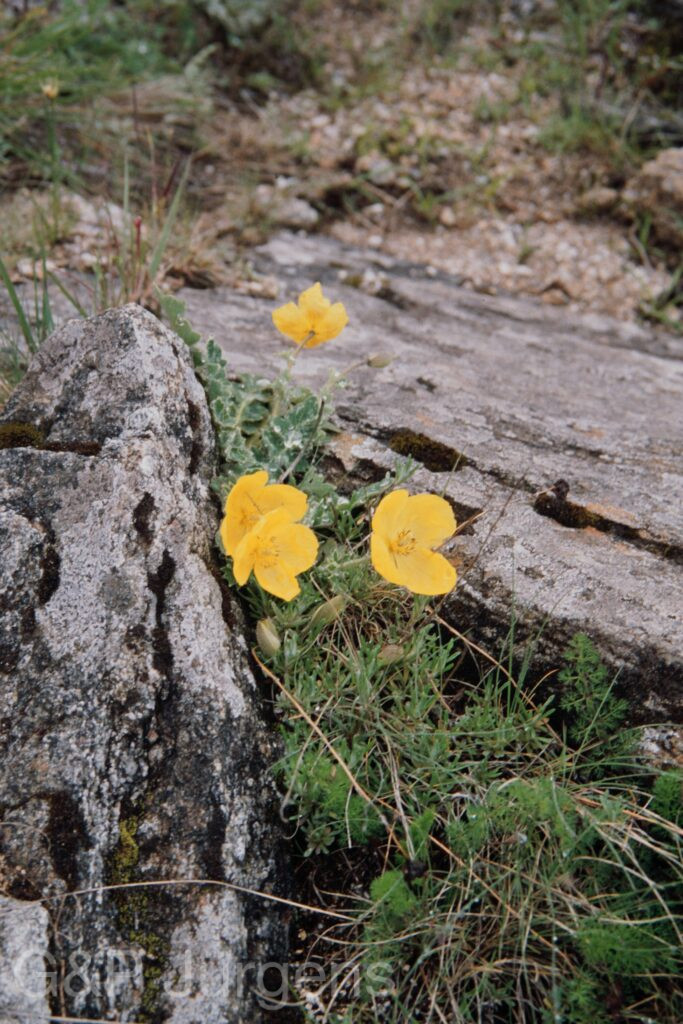
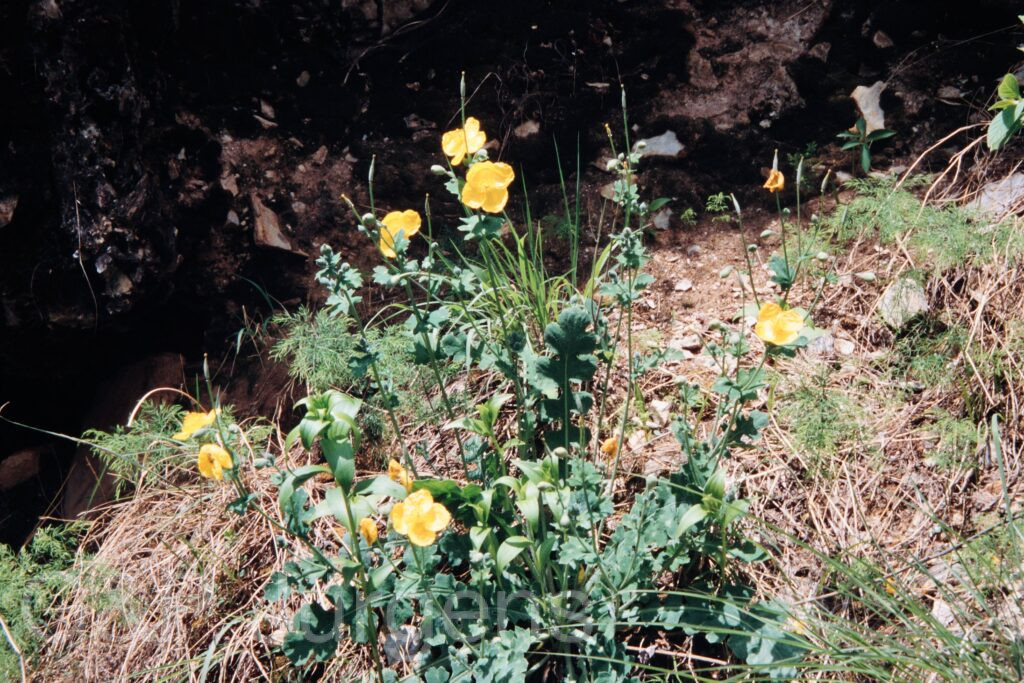
West-Nepal Talphi 2830m, June
Nepal 99 551 ergebnis
West-Nepal Talphi 2830m, June
Nepal 99 552 ergebnis
West-Nepal Talphi 2830m, June

Description

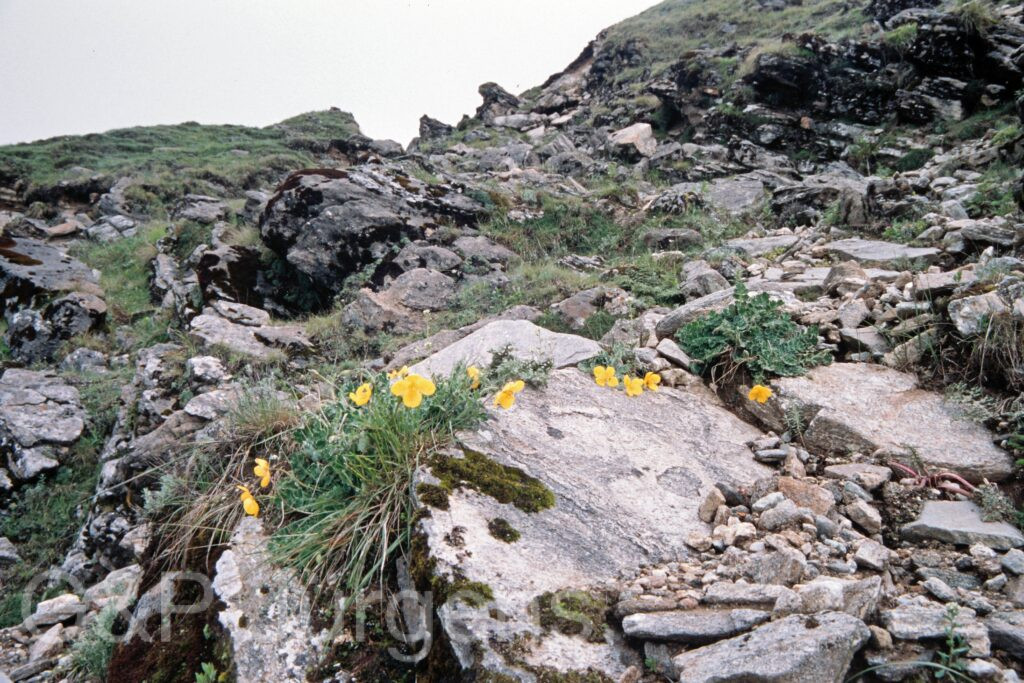
Dicranostigma lactucoides Hook.f. & Thomson is a yellow-flowered Himalayan poppy relative known from about 145 records in Nepal, China, India and Bhutan. It is a plant of dry, open, often disturbed ground: stony slopes, rock crevices, river terraces, field margins and roadside banks in the inner valleys, generally in the warm-temperate to subalpine belt between roughly 2500 and 4000 m. The individual photographed at Talphi in West Nepal at 2830 m in June reflects its preference for sunny, well-drained, somewhat ruderal sites in the comparatively arid trans-Himalayan rain-shadow.

The species is an erect annual to short-lived perennial herb containing yellow to orange latex. The basal leaves form a rosette and are oblanceolate in outline, pinnately lobed to lyrate-pinnatifid with a large terminal lobe, glaucous and somewhat lettuce-like, whence the epithet "lactucoides." Cauline leaves are smaller and clasping. The flowers are borne on slender pedicels; two caducous sepals enclose four broad, crinkled, bright yellow petals surrounding numerous stamens. The fruit is the diagnostic feature of the genus: a slender, elongate, more or less cylindrical siliqua-like capsule dehiscing from the apex, crowned by a short style with a forked (bifid) stigma, and releasing many small seeds.

Dicranostigma is a small Asian genus close to Glaucium and Chelidonium in tribe Chelidonieae, distinguished by its elongate capsule and divided stigma; D. lactucoides is its principal Himalayan representative. Like its allies it contains benzylisoquinoline alkaloids and has been used locally in folk medicine. As a ruderal, weedy colonist of open ground it is resilient to moderate disturbance and is not regarded as threatened across its Sino-Himalayan range.

Author: Hook.f. & Thomson · Sources: POWO (Kew), GBIF, Flora of China, Flora of Nepal, Hooker's Flora of British India, monograph of Papaveraceae tribe Chelidonieae

C.B.Clarke

Sikkim2003 22 G26
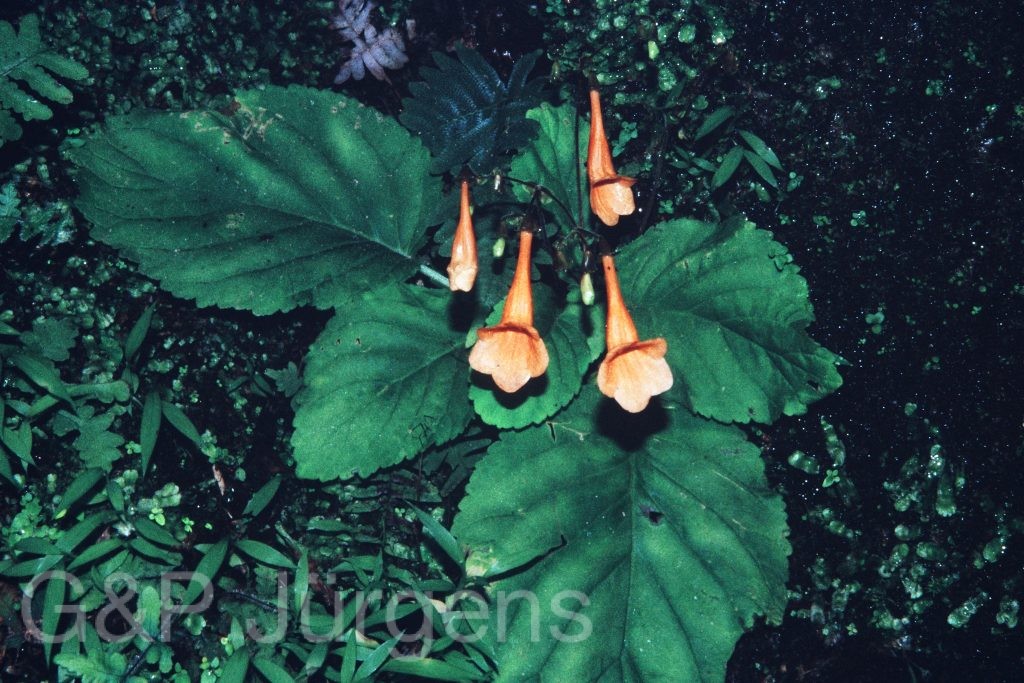
Sikkim Rathong-Chu 1200 m, August

Description

Didymocarpus aurantiacus is an eastern Himalayan gesneriad recorded from India, Nepal and Bhutan, with around 33 occurrences concentrated in the wet, monsoon-drenched subtropical to lower temperate belt of Sikkim, Darjeeling and adjacent regions. It is a lithophyte and epipetric herb growing on shaded, moss-covered rocks, cliff faces and damp ravine walls within evergreen broad-leaved forest, typically between roughly 1000 and 2000 m. The illustrated material from the Rathong-Chu valley in Sikkim at 1200 m, flowering in August, reflects its main flowering during the rainy season, when the humid rock habitats it favours are kept constantly moist by mist and seepage.

It is a small perennial herb with a short rhizomatous base and crowded, opposite or subrosulate leaves. The lamina is ovate to elliptic, with a crenate-serrate margin, an acute to acuminate apex and a thinly hairy surface, the venation impressed above and prominent beneath. The inflorescence is an axillary cyme borne on a slender peduncle. The flowers have a tubular, lobed calyx and a tubular, somewhat ventricose corolla that is orange to orange-yellow (as the epithet aurantiacus indicates), two-lipped with a shorter upper and spreading lower lip. There are two fertile stamens with cohering anthers and staminodes; the gynoecium develops into the elongate, septicidal, two-valved capsule characteristic of the genus.

The input places this taxon under "Didymocarpinae", which is the subtribe within tribe Trichosporeae of the Gesneriaceae rather than a family; the species is correctly accommodated in the genus Didymocarpus. The name D. aurantiacus C.B.Clarke is accepted. As a narrow-ranged rock specialist tied to perhumid forest, it is dependent on intact, shaded microhabitats and is therefore potentially sensitive to deforestation and habitat drying, though it has not been formally assessed.

Author: C.B.Clarke · Sources: POWO (Kew), GBIF, Flora of Bhutan Vol. 2, Flora of Nepal, Weber Gesneriaceae of the World (monograph), Clarke Commelynaceae et Cyrtandreae Bengalenses

Wall.

Sikkim 2006 449 ergebnis
India West-Bengal, Tolung 2450m, May

Description

Didymocarpus oblongus is a relatively uncommon gesneriad endemic to the eastern Himalaya, recorded from Nepal, northeast India (Sikkim, Darjeeling, Assam), Bhutan, and adjacent parts of southern China (Xizang, Yunnan). It inhabits shaded, damp rock faces, mossy cliff ledges, and steep earth banks in montane broadleaved and mixed forests, typically at elevations between 1,800 and 3,000 m. The species has been documented from the Tolung area of West Bengal at approximately 2,450 m, where it grows in the moist understorey of temperate forests during the spring season.
The plant is a perennial herb with a short, erect stem 5–15 cm tall, arising from a fleshy rootstock. Leaves are arranged in an opposite, often crowded rosette-like cluster near the stem apex; they are oblanceolate to oblong, 5–15 cm long and 2–5 cm wide, with a crenate to serrate margin, the upper surface dark green and sparsely pilose, the lower surface paler and more densely pubescent. The inflorescence is a lax cyme of 2–6 flowers borne on a slender peduncle 5–10 cm long. The calyx is tubular, five-lobed. The corolla is tubular-funnelform, 2–3 cm long, typically pale purple to lavender with darker markings in the throat. Stamens are two, with the filaments inserted at mid-tube; the anthers are coherent face to face. The fruit is a slender, elongate capsule 2–4 cm long, dehiscing loculicidally.
Didymocarpus is a genus of approximately 100 species centred in mainland Asia, with the Himalayan region representing a significant centre of diversity. D. oblongus is distinguished from allied species by its oblong leaf shape, relatively long peduncles, and high-elevation habitat preference. With only 88 occurrence records in GBIF and a restricted distribution along the eastern Himalayan arc, the species warrants conservation attention, particularly as its cliff-face and forest-understorey habitats are sensitive to deforestation and landslide disturbance.

Author: Wall. · Sources: POWO (Kew), GBIF, Flora of Bhutan Vol. 2, Flora of China Vol. 18, Möller & Clark: Gesneriaceae classification (2013)

C.B.Clarke

BhutanPG2011 78 ergebnis 1
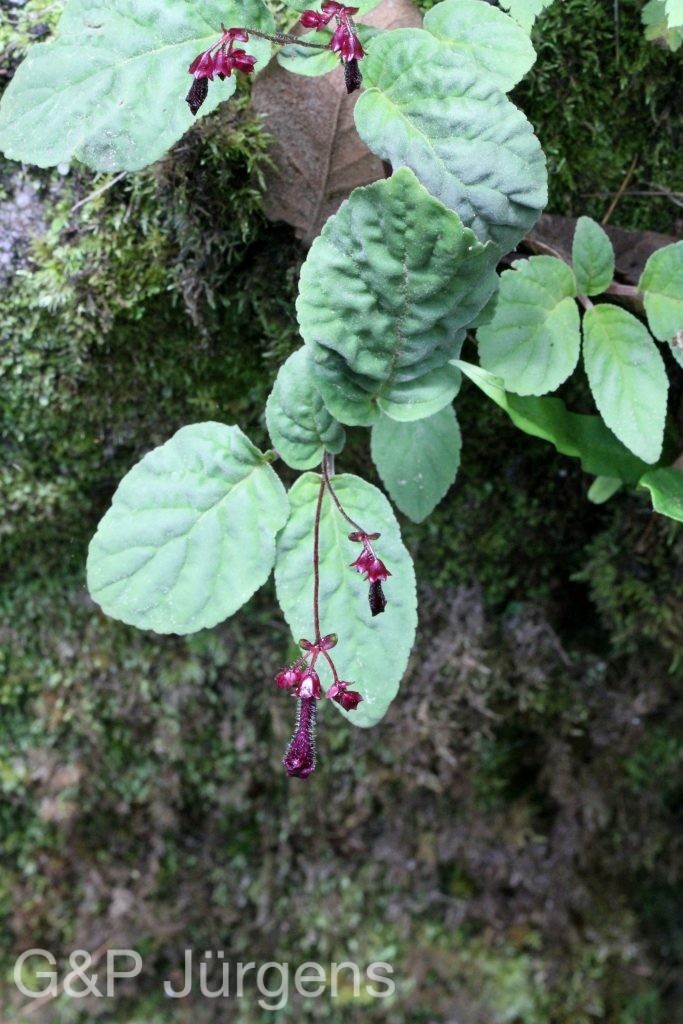
Bhutan Menchuang, 2800m June

Description

Didymocarpus podocarpus is an eastern Himalayan gesneriad recorded from Nepal (NP), India (IN) and Bhutan (BT), with 59 GBIF occurrences reflecting its relatively localised montane distribution. It is a lithophyte and epiphyte of shaded, humid temperate forest, growing on moss-covered rocks, cliff faces and tree trunks where atmospheric humidity is high, typically in the 2000-3000 m belt. The illustrated material was gathered at Menchuang in Bhutan at about 2800 m in June, during the early monsoon when the genus comes into flower.

It is a perennial herb with a short rhizomatous base and erect to ascending stems bearing opposite or whorled leaves clustered toward the apex. The leaf blades are ovate to elliptic, crenate-serrate at the margin, and often somewhat fleshy with sparse hairs. The inflorescence is an axillary cyme of several flowers; the calyx is tubular and shortly lobed, while the corolla is tubular and two-lipped with a spreading limb in shades of purple to violet. Only two stamens are fertile, a diagnostic feature of Didymocarpus, the anthers cohering in pairs. The fruit is a slender, elongate, podocarpic (long-pointed) capsule that dehisces to release numerous minute seeds, the epithet alluding to this fruit form.

Didymocarpus is a large Asian genus centred on the Sino-Himalayan and Southeast Asian region, traditionally placed in subtribe Didymocarpinae of Gesneriaceae, the rank cited here verbatim as the family field. Many species are narrow-range rock specialists vulnerable to habitat disturbance, and several Himalayan taxa, including this one, are of biogeographic interest as components of the moist broadleaf forest gesneriad flora.

Author: C.B.Clarke · Sources: POWO (Kew), GBIF, Flora of Bhutan, Flora of Nepal, The Gesneriaceae of the Indian subcontinent, Monograph of the genus Didymocarpus (Weber & Burtt)

Lindl.

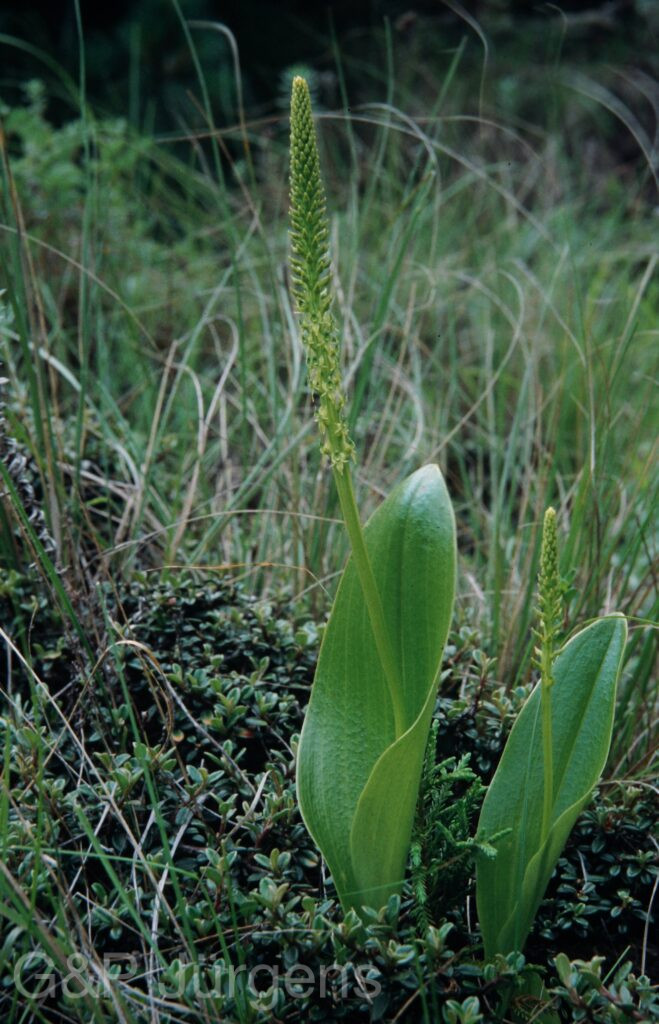
Nepal 99 891 ergebnis
West-Nepal Suli-Khola 2900m, July

Description

Dienia cylindrostachya is a terrestrial orchid distributed across the Himalaya and adjacent montane Asia, recorded from India, Nepal, Bhutan, China, Hong Kong, Myanmar and Pakistan, with GBIF documenting some 98 georeferenced occurrences. It favours humus-rich, shaded forest floors, mossy banks and damp grassy slopes in the temperate zone, typically between about 1500 and 3000 m. The photographed plant was found in West Nepal along the Suli-Khola at 2900 m in July, an elevation and season that coincide with its summer flowering during the monsoon, when soil moisture and atmospheric humidity are at a maximum.

The species is a small, glabrous herb arising from a fleshy, ovoid pseudobulb or thickened stem-base. It bears a few thin, plicate, ovate-elliptic to lanceolate leaves that are membranous and sheathing at the base. The inflorescence is an erect, slender, densely many-flowered cylindrical raceme, from which the epithet derives, carrying numerous minute, non-resupinate flowers in shades of greenish-yellow to purplish. The sepals and petals are small and spreading; the lip is broad, often auriculate or saccate at the base, and the column is short and stout. The fruit is a small, ellipsoid, ribbed capsule releasing dust-like seeds.

Long placed in Malaxis, the species is now treated in Dienia (Malaxidinae, Epidendroideae), a segregate distinguished by non-resupinate flowers and column structure. The family is rendered "Orchideaceae" in the source but the taxon belongs to the Orchidaceae. As an easily overlooked terrestrial of intact temperate forest, it is sensitive to deforestation, though its wide Asian range affords some resilience.

Author: Lindl. · Sources: POWO (Kew), GBIF, Flora of Nepal, Flora of China, Flora of Bhutan, Genera Orchidacearum (Pridgeon et al.)

(Roxb.) Sweet

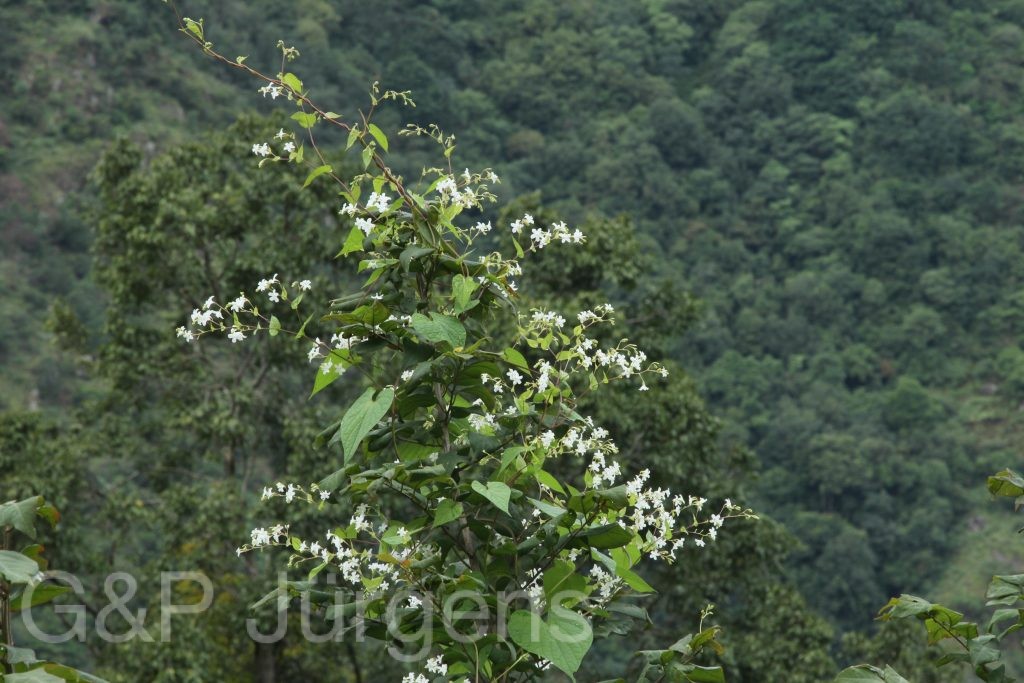
Bhutan2012 1212
Bhutan Mo-Chu 1500m, October
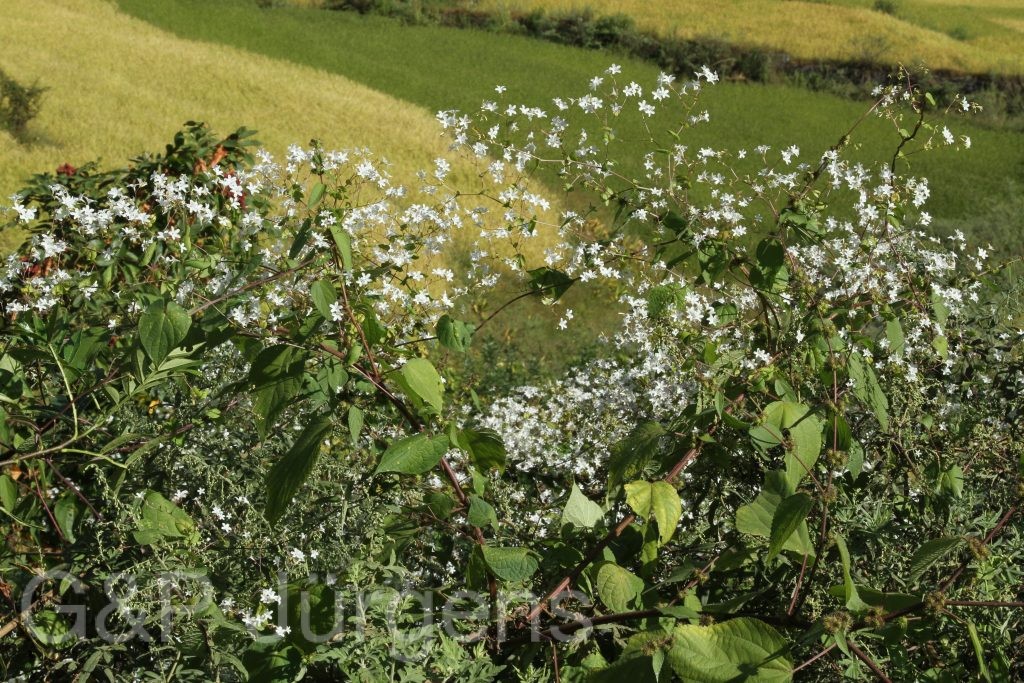
Bhutan2015 565
Bhutan Mo-Chu 1500m, October
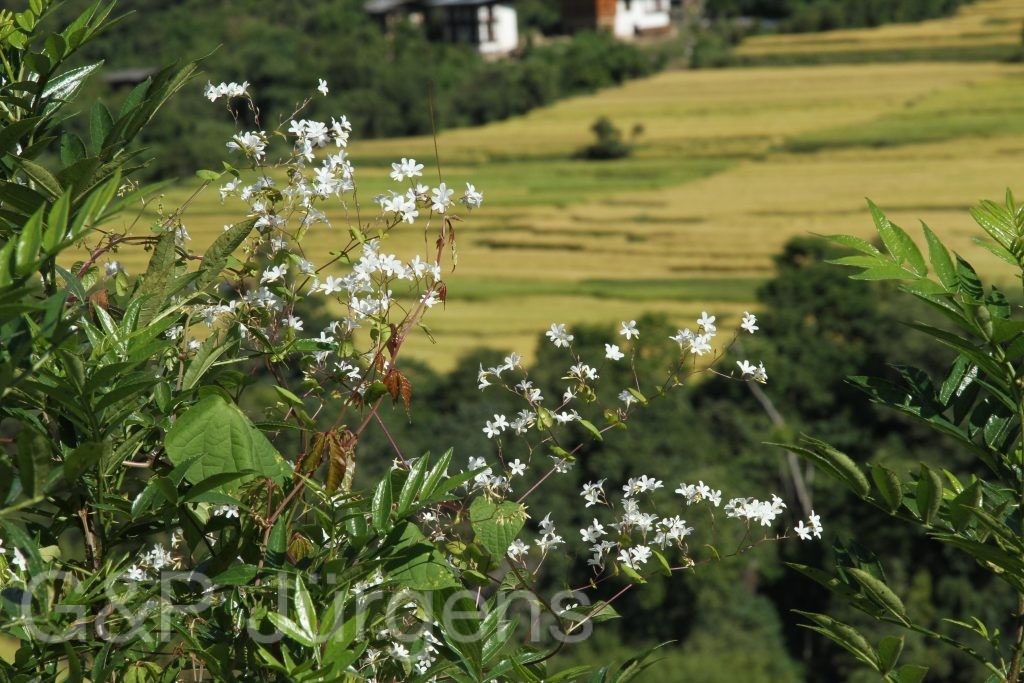
Bhutan2015 566
Bhutan Mo-Chu 1500m, October

Description

Dinetus racemosus is a twining climber of the morning-glory family widely distributed across the Himalaya, Indo-Burma and South-East Asia. GBIF records, numbering over 900, place it in India, Nepal, Bhutan and China through Myanmar, Thailand, Laos, Vietnam and Malaysia to Indonesia and Timor-Leste, with cultivated or naturalised records elsewhere. It occupies forest margins, thickets, hedgerows, scrubby roadsides and clearings in subtropical to warm-temperate zones, where it scrambles vigorously over shrubs and small trees. The photographed plant from the Mo Chu valley in Bhutan, at about 1500 m and flowering in October, illustrates its autumn-flowering habit in mid-elevation valley vegetation, where its conspicuous white inflorescences appear after the monsoon.

The species is a perennial, herbaceous to slightly woody, left-twining liana with slender, often pubescent stems. The leaves are alternate, long-petiolate, broadly ovate to ovate-cordate with a deeply cordate base and acuminate apex, the lamina entire and softly hairy. The flowers are borne in elongate, many-flowered, axillary and terminal racemes or panicles, a distinctive feature in a family more usually cymose. Each flower is small, with a five-lobed calyx and a white, broadly funnelform to subcampanulate, five-angled corolla. After flowering the calyx lobes enlarge markedly and become membranous, accrescent wings that surround the small, indehiscent, one- to few-seeded fruit, serving as a wind-dispersal organ.

Dinetus belongs to the tribe Poraneae of Convolvulaceae, a group characterised by racemose inflorescences and accrescent, wing-like fruiting sepals, and the species has long been known under the synonyms Porana racemosa and Porana grandiflora; modern treatments recognise the segregate genus Dinetus. The accrescent calyx wings are a clear adaptation to anemochory, dispersing the light fruits on the wind. The plant is common and ecologically resilient across its broad range and is of no conservation concern; it is locally appreciated as an ornamental for its profuse white autumn flowering and is occasionally used in traditional medicine.

Author: (Roxb.) Sweet · Sources: POWO (Kew), GBIF, Flora of China Vol. 16, Flora of Bhutan Vol. 2, Flora of Nepal, Flora of Pakistan, Staples' systematics of Convolvulaceae (Poraneae)

L.

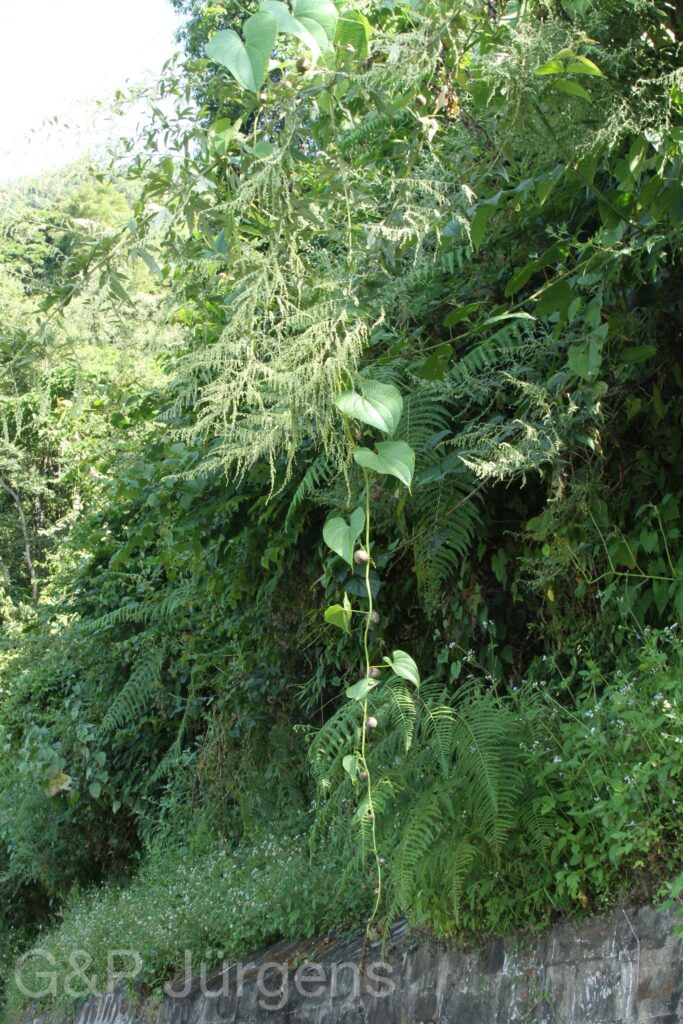
Bhutan2015 172
Bhutan Zhemgang 1000m, October

Description

Dioscorea bulbifera, the air potato or aerial yam, is a widely distributed twining vine of the Old World tropics, native across tropical Africa and Asia and now pantropically naturalised, including invasive populations in the southern United States, the Pacific and the Neotropics. It is among the most heavily recorded yams, GBIF holding over 16,000 occurrences. In the Himalaya it grows in subtropical forest, forest margins, thickets and disturbed ground at low to middle elevations. The plant from Zhemgang in central Bhutan at 1000 m in October occupies this warm foothill zone, where its aerial tubers ripen toward the season's end.

It is a herbaceous perennial climber arising from an underground tuber, the slender stems twining to the left (sinistrorse) and bearing in the leaf axils the diagnostic rounded to angular aerial bulbils that give the plant its names and serve as its chief means of propagation. The leaves are alternate, broadly cordate-ovate with a deeply notched base and long acuminate apex, palmately veined and long-petiolate. It is dioecious: the minute flowers are borne in slender pendulous spikes, staminate clustered and pistillate more lax, with a perianth of six tepals; the fruit, where set, is a three-winged loculicidal capsule with winged seeds, though sexual reproduction is often supplanted by the prolific bulbils.

Dioscorea, the type genus of Dioscoreaceae, is a large pantropical genus of economically vital yams. D. bulbifera is enormously variable, comprising numerous cytotypes and forms; some strains are cultivated for edible tubers while others are bitter and toxic, containing the sapogenin diosgenin and the toxic principle dioscorine. Its facility for clonal spread by bulbils has made it a notorious invasive weed beyond its native range, though within the Himalaya it is a common, unremarkable component of the disturbed subtropical flora.

Author: L. · Sources: POWO (Kew), GBIF, Flora of China Vol. 24, Flora of Bhutan Vol. 3, Annotated Checklist of the Flowering Plants of Nepal, Burkill account of Asiatic Dioscoreaceae

D.Don

Nepal 2009 101 ergebnis
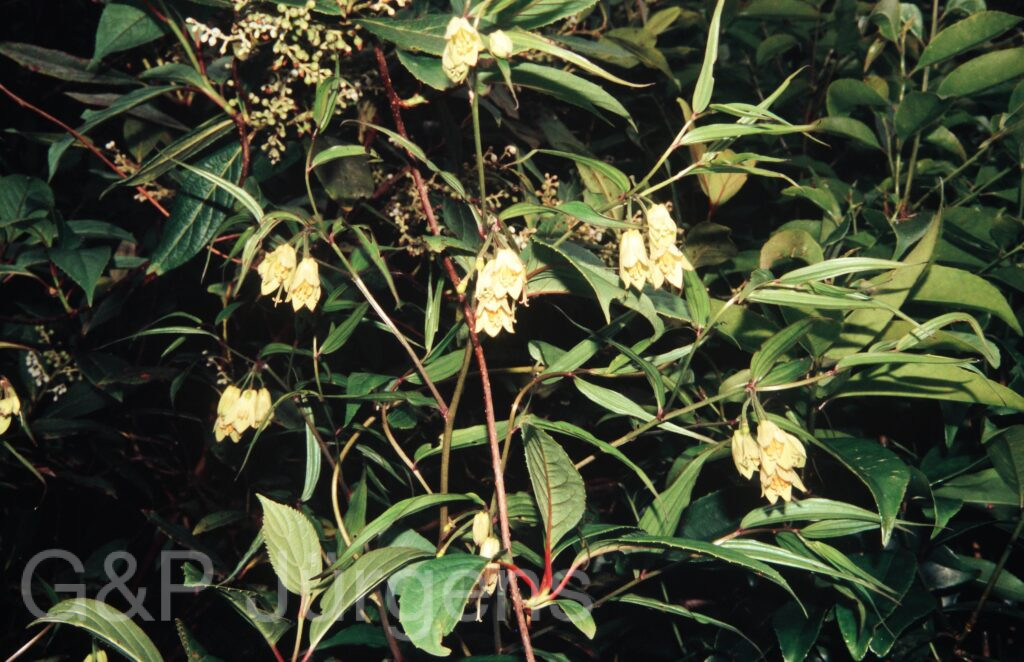
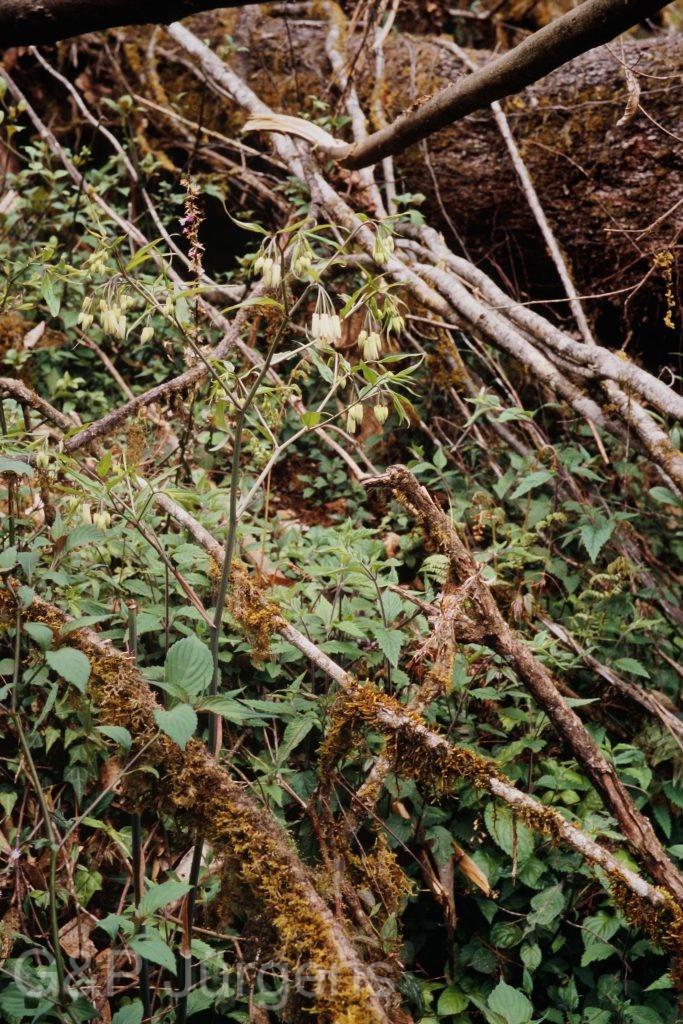
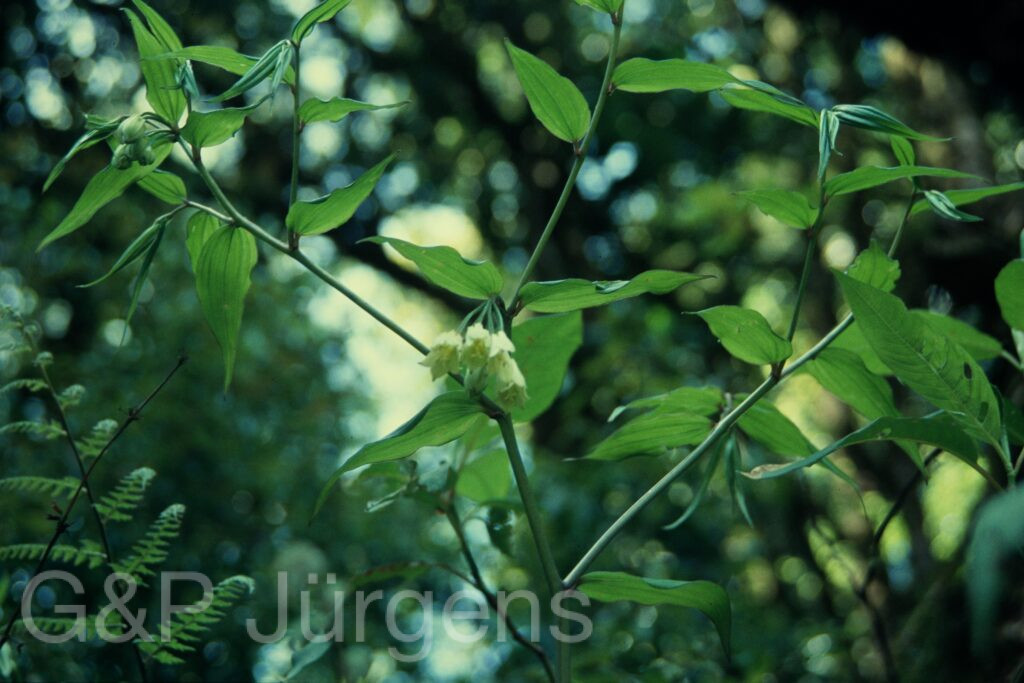
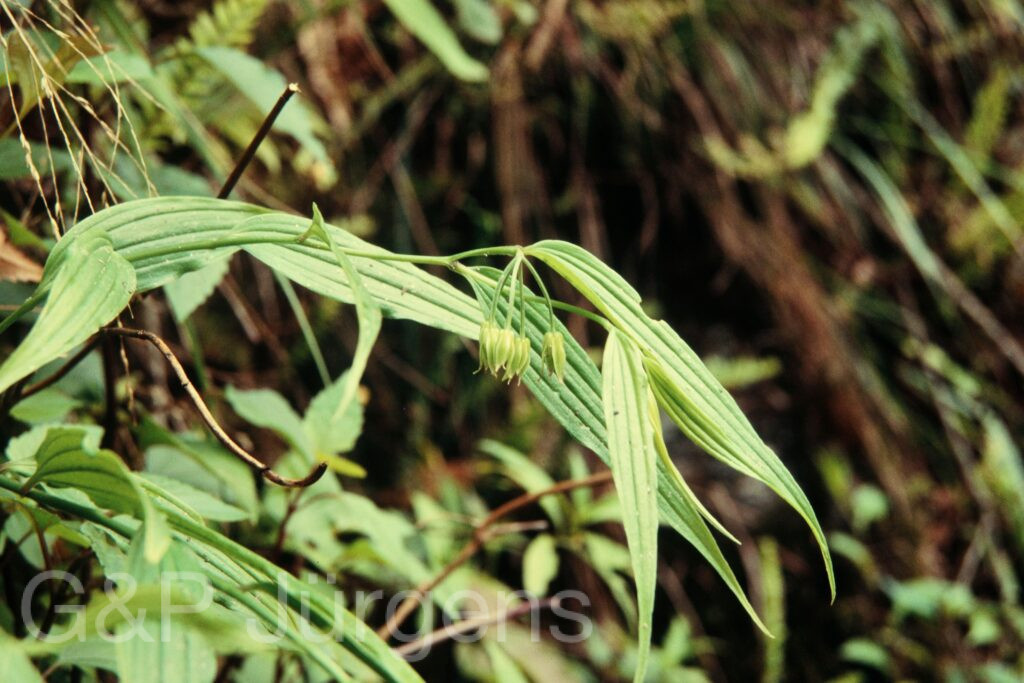
Nepal Helambu Samathang 2410, May

Description

Disporum calcaratum is a rhizomatous woodland herb widespread from the Himalaya through southern China to mainland and insular Southeast Asia, with GBIF occurrences in China, Thailand, Myanmar, India, Nepal, Vietnam, Indonesia, Malaysia, Bhutan and Laos. It grows in the shaded understorey of moist broad-leaved and mixed forest, on humus-rich slopes and along stream banks, generally between 1,500 and 2,800 m. The photographed plant was recorded at Samathang in the Helambu region of Nepal at about 2,410 m in May, flowering during the moist pre-monsoon period typical of its mid-montane habitat.

The plant arises from a short, creeping rhizome and produces erect, branching stems bearing alternate, ovate to ovate-lanceolate leaves with prominent arcuate venation, rounded to cordate bases and acuminate tips. The flowers hang in terminal and axillary umbellate clusters; the six tepals are narrow, recurved and purple to violet, each outer tepal extended at the base into a short, conspicuous saccate spur that gives the species its epithet. There are six stamens with the typical Disporum arrangement, and a superior, three-locular ovary. The fruit is a globose, dark blue to black berry containing several seeds, dispersed by birds.

Disporum is now placed in the Colchicaceae rather than the older Liliaceae, and D. calcaratum is readily recognised among Asian congeners by its spurred, purple, pendent flowers. The species is widespread and ecologically a minor but characteristic element of the montane forest floor, important in shaded herb-layer communities. It is common across its broad range and is not regarded as threatened, though it depends on the persistence of intact, humid forest understorey.

Author: D.Don · Sources: POWO (Kew), GBIF, Flora of China Vol. 24 (Colchicaceae), Grierson & Long: Flora of Bhutan Vol. 3, Hara et al.: An Enumeration of the Flowering Plants of Nepal

(Lour.) Merr.

Bh2008 447 G698
Bhutan Samtengang 2040m, May
Sikkim2004 113 P194
India West-Bengal, Utaray 2100m April
Nepal 97 373 P733
Nepal Arun-Valley 1750m, May

Description

Disporum cantoniense (Lour.) Merr. is a rhizomatous perennial herb of the Colchicaceae with a wide distribution across the Himalaya, mainland and insular Southeast Asia and East Asia. GBIF (nearly 4,000 occurrences) documents it from China, India, Nepal, Bhutan, Thailand, Taiwan, Japan, Vietnam, Myanmar, Malaysia, Indonesia and Sri Lanka, where it grows in shaded broad-leaved and mixed forest, on forest margins, shaded banks and among scrub. It occupies a broad montane belt; the records from Samtengang in Bhutan (2,040 m), Utaray in West Bengal (2,100 m) and the Arun Valley in Nepal (1,750 m), flowering in April–May, illustrate its spring anthesis in mid-elevation Himalayan forest understorey.

The plant arises from a short, knotty rhizome bearing fleshy roots and produces erect, branched aerial stems up to a metre or more tall. The leaves are alternate, ovate-lanceolate to lanceolate, with conspicuous arcuate-parallel venation and somewhat clasping or shortly petiolate bases. The flowers hang in terminal, drooping few-flowered umbel-like clusters at the branch tips; each is narrowly campanulate with six free, spreading to recurved tepals, white, greenish or tinged purple, the tepals saccate or shortly spurred at the base. There are six stamens and a superior ovary; the fruit is a globose, dark blue-black to purplish berry containing few seeds.

Disporum, long placed in Liliaceae and later Convallariaceae, is now firmly assigned to the Colchicaceae on molecular and morphological grounds, distinct from the New World Prosartes. D. cantoniense is a polymorphic, widespread species with several recognised varieties, and the variation in flower colour and stature has generated considerable taxonomic literature. Ecologically it is a characteristic shade-tolerant geophyte of Asian temperate and subtropical forests, with berries dispersed by birds.

Author: (Lour.) Merr. · Sources: POWO (Kew), Flora of China Vol. 24, Flora of Bhutan Vol. 3, GBIF, Conran & Tamura: Colchicaceae in The Families and Genera of Vascular Plants