Tag:

Nepal

Flowers of Nepal — 1313 wild plant species documented from the Nepalese Himalaya, from subtropical foothills to high alpine meadows above 4,000 m. Nepal’s dramatic elevation gradient makes it one of the richest botanical regions on Earth, home to rhododendrons, primulas, gentians and the famed blue poppies (Meconopsis). Every entry gives a botanical description, native distribution, habitat and flowering season, alongside the original field photograph and the location where it was taken.

(Wall. ex C.B. Clarke) Hand.-Mazz.
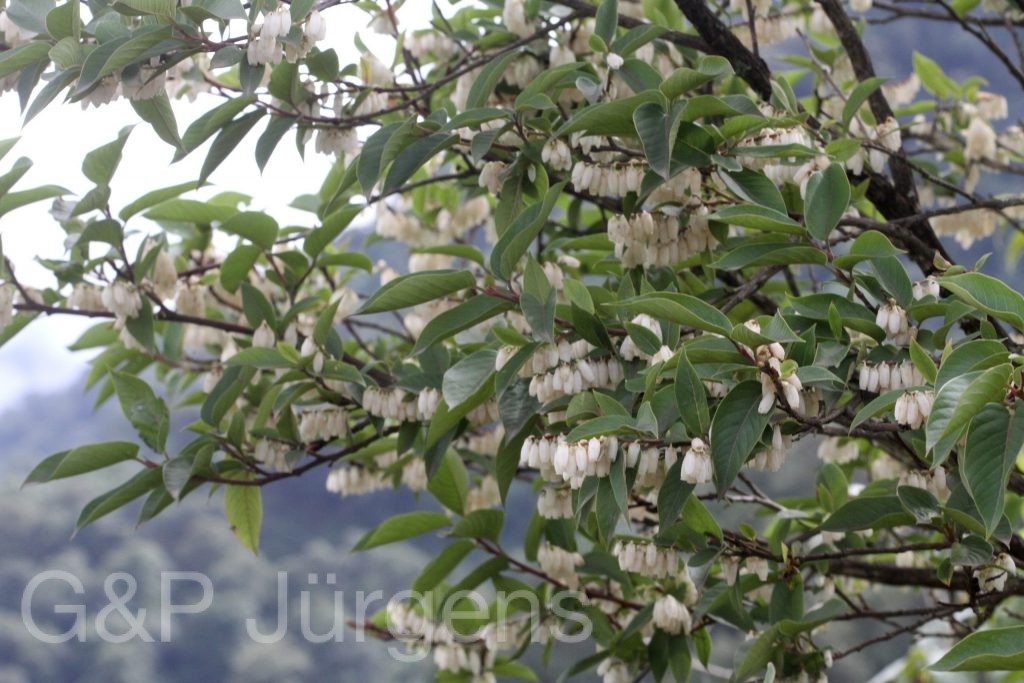
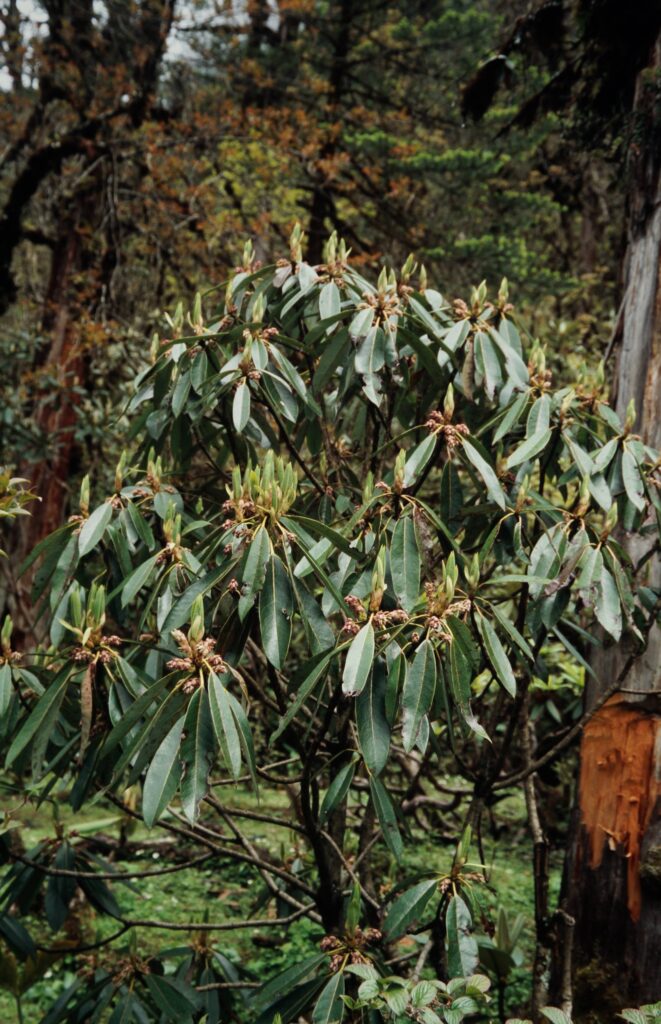
Lyonia villosa ergebnis scaled
Bhutan Wangdi, 2400m June

Description

Lyonia villosa (Wall. ex C.B.Clarke) Hand.-Mazz. is a widely distributed Sino-Himalayan shrub recorded from China, Nepal, Bhutan, India, Myanmar, Vietnam and Japan, with more than 1300 georeferenced occurrences in GBIF, reflecting its broad range across the eastern Himalaya and southern China. It grows in temperate forest, forest margins, thickets and open rocky hillsides, commonly between about 1500 and 3500 m. The plant photographed near Wangdi at 2400 m in June is characteristic of its mid-elevation habitat, where it forms part of the understorey and scrub of mixed broadleaved and conifer woodland.

It is a deciduous shrub or small tree with villous to tomentose young branchlets, the indumentum giving rise to the epithet. The leaves are alternate, ovate to elliptic, entire, with a pubescent surface and prominent venation. The white, urceolate (urn-shaped) flowers are borne in axillary racemes or fascicles along the branches; each corolla is shortly five-lobed at the contracted mouth, with included stamens whose anthers bear awns, and a superior ovary maturing into a woody, dehiscent, five-valved capsule. The capsule has thickened sutures, a diagnostic feature of the genus, and releases numerous small seeds.

Lyonia belongs to the tribe Lyonieae of the Ericaceae and is allied to Pieris and Agarista; the thickened capsule sutures and awned anthers separate it from these relatives. Several varieties have been recognised within L. villosa on the basis of indumentum density and leaf shape. As in many Ericaceae the foliage is reported to be toxic to livestock. The species is common and widespread and is not considered threatened.

Author: (Wall. ex C.B. Clarke) Hand.-Mazz. · Sources: POWO (Kew), GBIF, Flora of China, Flora of Bhutan, Judd revision of Lyonia (Ericaceae)
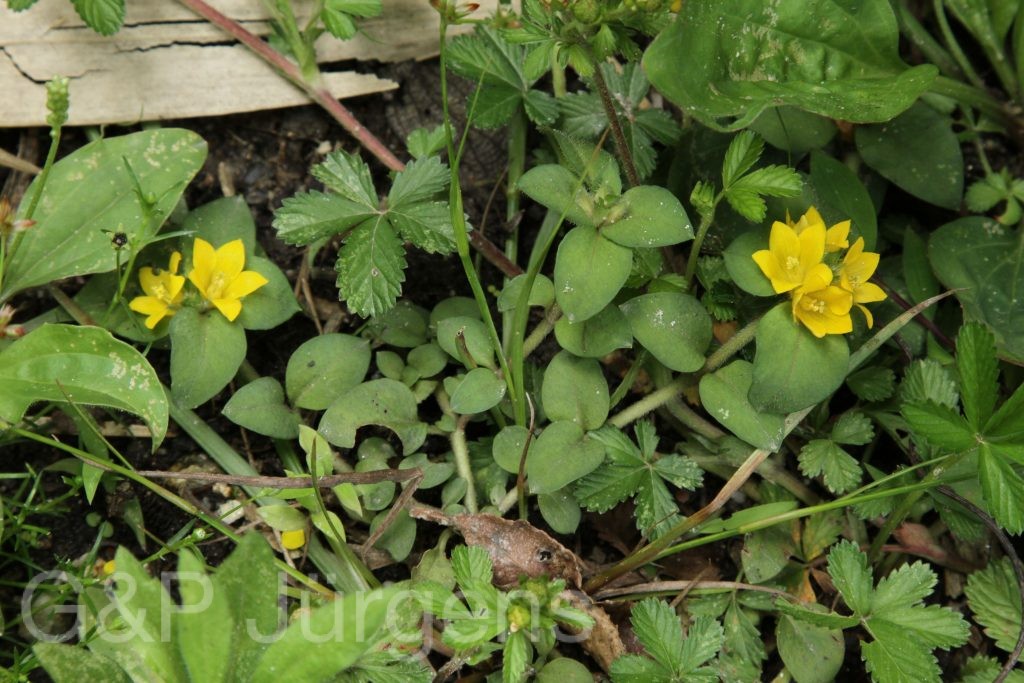
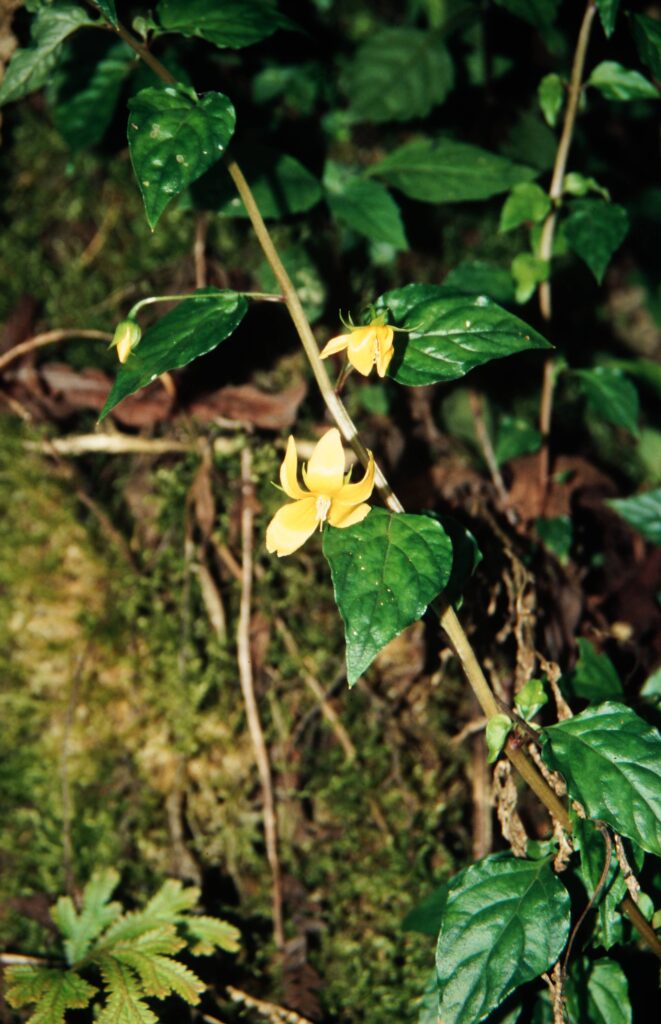
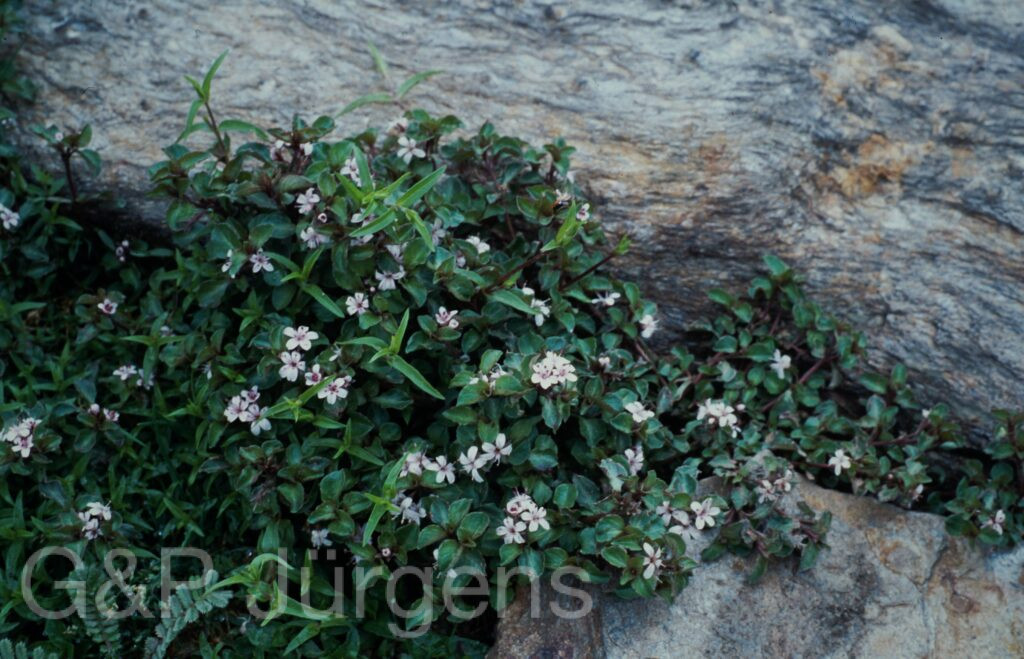
Hemsl.

Bhutan2014 782
Bhutan Wangdi Mo-Chu 1200m, May

Description

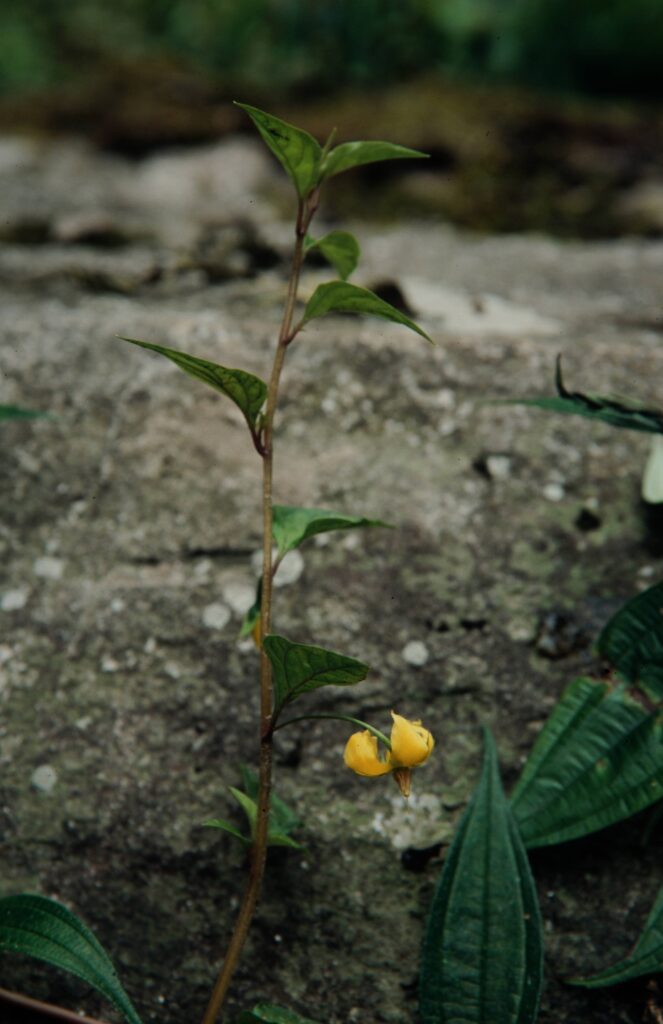
Lysimachia congestiflora is a wide-ranging species native across China, Taiwan, the Himalaya (Nepal, north-east India, Bhutan) and into Myanmar, Vietnam, Laos, Thailand and Japan; its very large total of 1844 georeferenced records includes numerous naturalised and cultivated points in the United States, Brazil, Ecuador, Mexico, Australia and Europe, reflecting its popularity as a creeping ground-cover and basket plant. It grows in moist, shaded to open ground on grassy banks, streamsides, ditches, field margins and damp roadside slopes. The Bhutan collection at Wangdi along the Mo-Chu at about 1200 m typifies its preference for warm, humid lower-montane habitats.

It is a low, mat-forming perennial herb with slender, decumbent to creeping stems that root at the lower nodes and are sparsely villous. The leaves are opposite, ovate to broadly elliptic, often gland-dotted and minutely hairy. The flowers are crowded in dense terminal clusters (hence congestiflora), each on a short pedicel; the corolla is yellow, rotate to broadly campanulate, five-lobed and frequently marked with reddish spots or a darker throat. There are five stamens, and the fruit is a small globose capsule enclosed by the persistent calyx.

Within Primulaceae the genus Lysimachia (sometimes segregated as Lysimachiopsis or placed in subgenus Idiophyton) comprises loosestrifes characterised by rotate corollas and capsular fruit. The clustered yellow flowers attract a range of generalist insect pollinators. Exceptionally adaptable and frequently weedy in cultivation, the species is abundant throughout its native range and of no conservation concern; its capacity to naturalise has even made it a minor garden escape in several regions.

Author: Hemsl. · Sources: POWO (Kew), GBIF, Flora of China, Flora of Bhutan, Flora of Nepal, Hu & Kelso Primulaceae monographic treatments

Wall.

Description

Lysimachia evalvis is a Sino-Himalayan herb distributed along the moist temperate and subtropical belt of the eastern Himalaya and adjacent Indo-Burmese ranges. GBIF records (88 occurrences) span India, Nepal, Myanmar, Bhutan, Bangladesh and China, with scattered cultivated or vouchered material noted from the United States. It favours shaded, humid forest margins, stream banks and seepage slopes within broadleaved woodland. The species was photographed at Chaana in West Bengal, India, at about 1650 m in May, in the lower montane forests where it flowers with the onset of the pre-monsoon rains.

It is a perennial, somewhat fleshy herb with slender erect to ascending stems arising from a short rhizomatous base. The leaves are alternate to subopposite, ovate to lanceolate, entire, acuminate at the apex and often gland-dotted, borne on short petioles. The flowers are solitary or few in the upper leaf axils, with a deeply five-lobed calyx and a yellow, rotate to campanulate corolla divided into five lobes; the five stamens are inserted on the corolla tube. The fruit is a small globose capsule; as the epithet evalvis suggests, dehiscence is reduced or irregular rather than by the typical valves, a diagnostic feature within the genus.

Lysimachia (Primulaceae, formerly segregated in Myrsinaceae alliance) is a large, near-cosmopolitan genus well represented in the Himalaya. L. evalvis belongs to the predominantly Asian element of the genus, its distribution reflecting the warm, perhumid forests of the eastern Himalayan front. No formal conservation assessment is widely published; like many forest-floor herbs of this region, its persistence depends on intact humid montane forest, making habitat conversion the principal threat to local populations.

Author: Wall. · Sources: POWO (Kew), GBIF, Flora of China, Flora of Bhutan, Annotated Checklist of the Flowering Plants of Nepal, Hu's monograph of Lysimachia (Primulaceae)

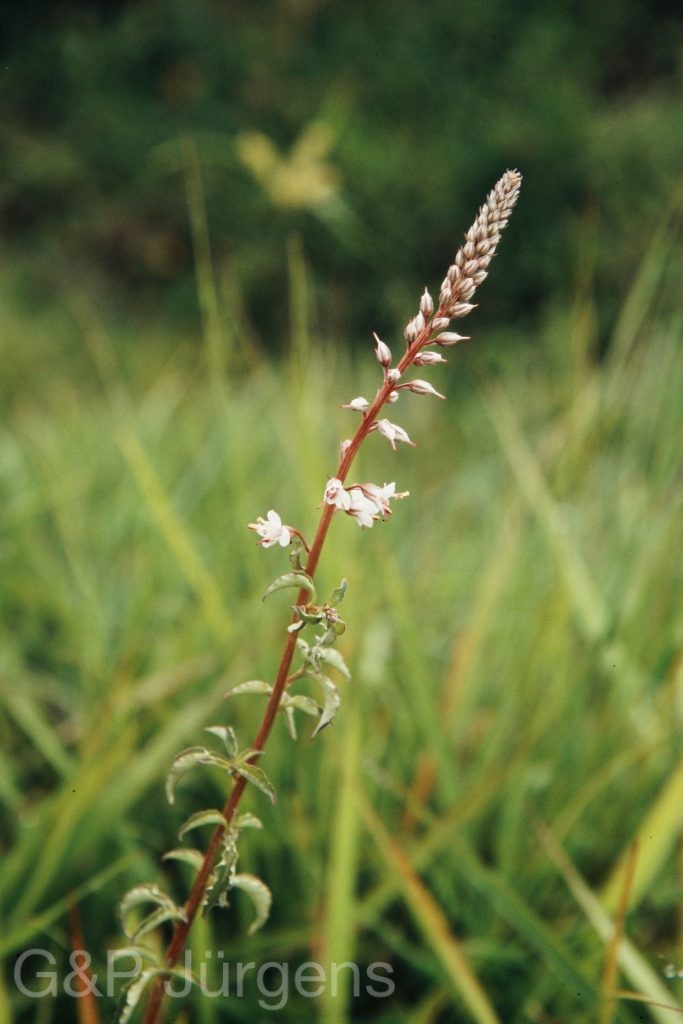
Wall.

Bh09 395 P626
Bhutan Mo-Chu, 1350m June
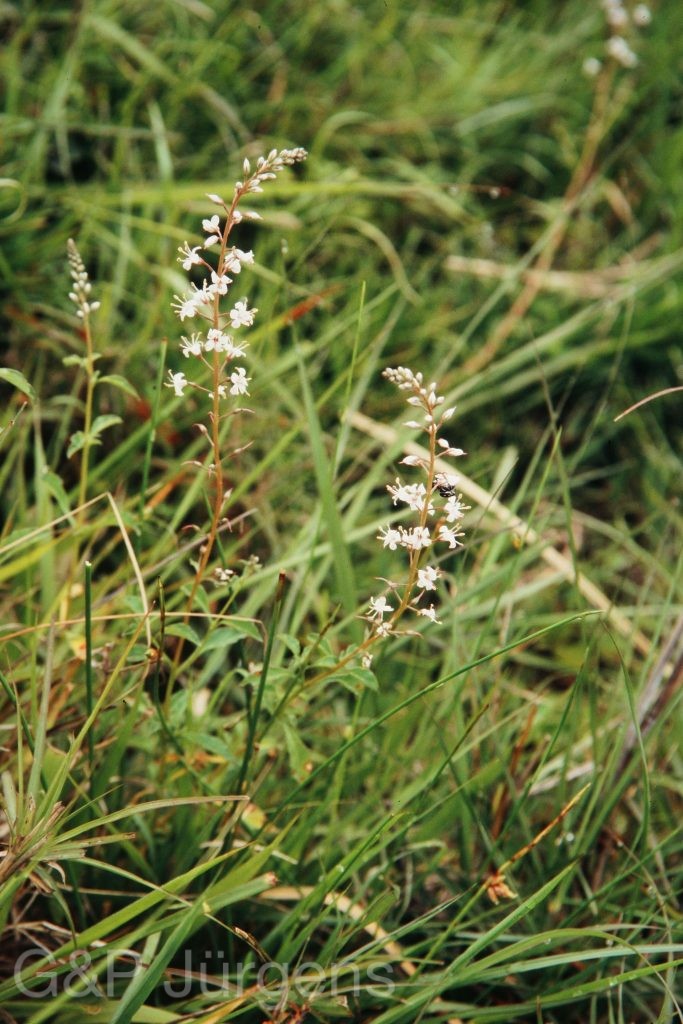
Bh09 396 P628
Bhutan Mo-Chu, 1350m June

Description

Lysimachia lobelioides is a slender herb ranging widely through the Himalaya and Southeast Asia, recorded from China, India, Bhutan, Nepal, Myanmar, Thailand, Laos, Vietnam, Taiwan and New Caledonia, with 647 occurrences logged in GBIF. It favours moist, shaded and disturbed places at low to middle elevations: stream banks, ditches, damp grassy ground, field margins and open forest, broadly between 300 and 2500 m. The Bhutanese collection illustrated, from the Mo-Chu valley at 1350 m in June, typifies its occurrence in warm subtropical river-valley habitats during the early monsoon, when it flowers freely on damp, fertile soils.

It is an annual or short-lived perennial with weak, erect to decumbent, often quadrangular stems 10-40 cm long, glabrous and sometimes rooting at the lower nodes. The leaves are alternate, ovate to lanceolate, thin in texture, shortly petiolate and frequently dotted with dark glandular punctations. The small flowers are borne singly in the upper leaf axils on filiform pedicels; the corolla is white to pale pink, deeply five-lobed and shorter than or about equalling the lanceolate calyx lobes, with five stamens. The fruit is a small globose capsule dehiscing by valves and releasing numerous minute angular seeds.

Lysimachia (Primulaceae, formerly Myrsinaceae in part) is a large, near-cosmopolitan genus best developed in eastern Asia; L. lobelioides belongs to a group of small-flowered, axillary-flowered annuals. Its wide distribution, weedy tendency and tolerance of disturbed wet ground make it ecologically adaptable and of no conservation concern. The disjunct New Caledonian records are biogeographically notable, pointing to long-distance dispersal of this colonising species across the Indo-Pacific.

Author: Wall. · Sources: POWO (Kew), GBIF, Flora of China, Flora of Bhutan, Revision of the Genus Lysimachia (Primulaceae)

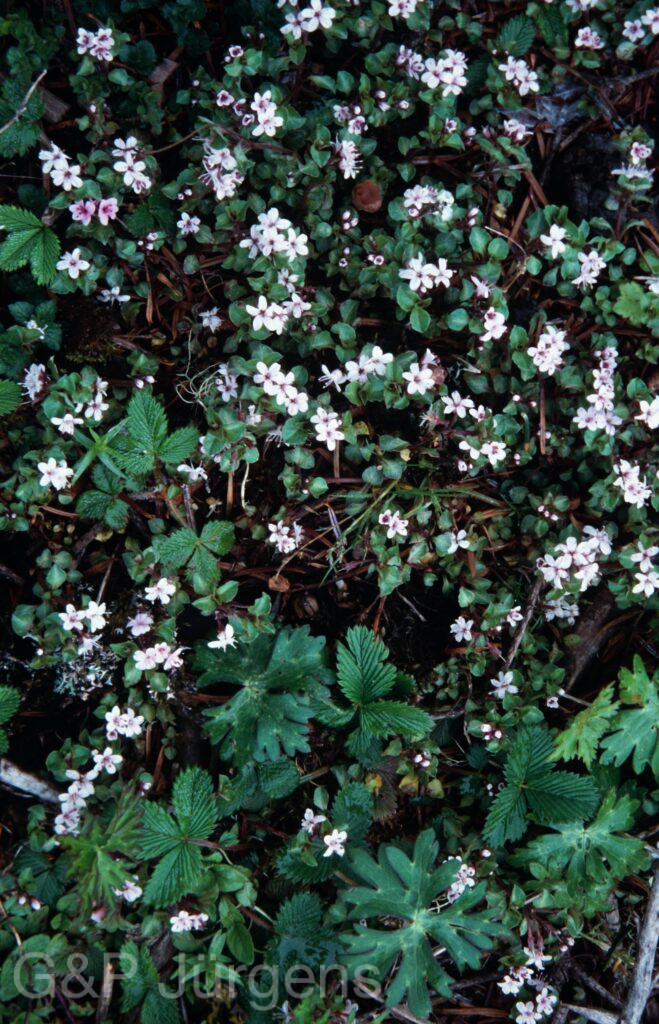
Klatt

Nepal 2001 255 ergebnis ergebnis
Nepal (Gorkha) Niuli Kharka 2700m, May
Nepal 2001 256 ergebnis ergebnis
Nepal (Gorkha) Niuli Kharka 2700m, May

Description

Lysimachia prolifera is a Sino-Himalayan species distributed across the central and eastern Himalaya and southwestern China, with verified occurrences in Nepal, India, Bhutan, China, Myanmar and Pakistan; outlying records from Japan and the United States among the roughly 194 collections almost certainly reflect cultivated or misdetermined material. It is a plant of moist temperate to subalpine habitats, favouring shaded forest margins, streamsides, mossy banks and damp grassy clearings. The photographed population at Niuli Kharka in Gorkha, Nepal, at about 2700 m and flowering in May, is typical of its mid-montane band where snowmelt and monsoon moisture keep the substrate reliably humid.

The species is a perennial herb with slender, often decumbent to ascending stems arising from a creeping rhizomatous base. The leaves are simple, opposite or sometimes whorled, ovate to lanceolate, entire-margined and frequently gland-dotted, narrowing to a short petiole or sessile base. The flowers are borne singly in the leaf axils or in lax leafy racemes; the corolla is rotate and five-lobed, typically yellow, the lobes spreading and often marked with darker glands. Stamens are five, opposite the corolla lobes and shortly connate at the base, the ovary superior with a single style. The fruit is a small, globose, dehiscent capsule containing numerous minute angular seeds.

Within Primulaceae, Lysimachia is a large, taxonomically intricate genus now circumscribed broadly, and species such as L. prolifera are distinguished by subtle differences in leaf arrangement, gland distribution and inflorescence form that have historically caused confusion. Ecologically it contributes to the herbaceous understorey of Himalayan forests and is visited by generalist pollinating insects. No specific conservation concern is recorded for this widespread montane species, though, like many Himalayan herbs, it is locally sensitive to forest clearance, trampling and grazing along trekking corridors.

Author: Klatt · Sources: POWO (Kew), GBIF, Flora of Nepal, Flora of China, Flora of Bhutan, Hu's monograph of Lysimachia (Primulaceae)

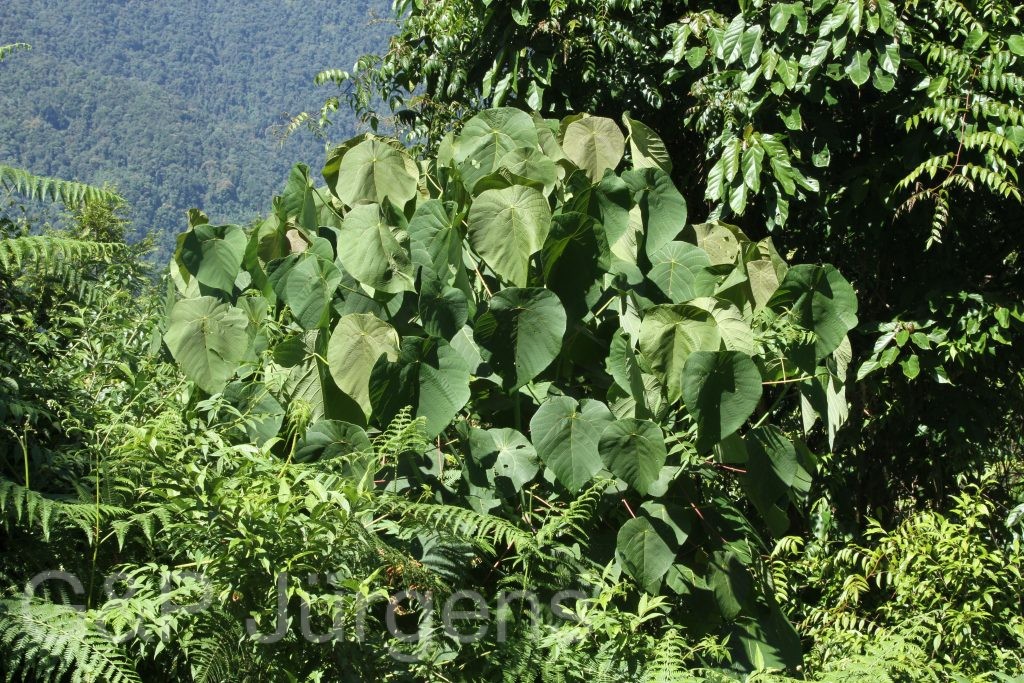
Müll.Arg.

Bhutan2015 199
Bhutan, Zhemgang 910m, October
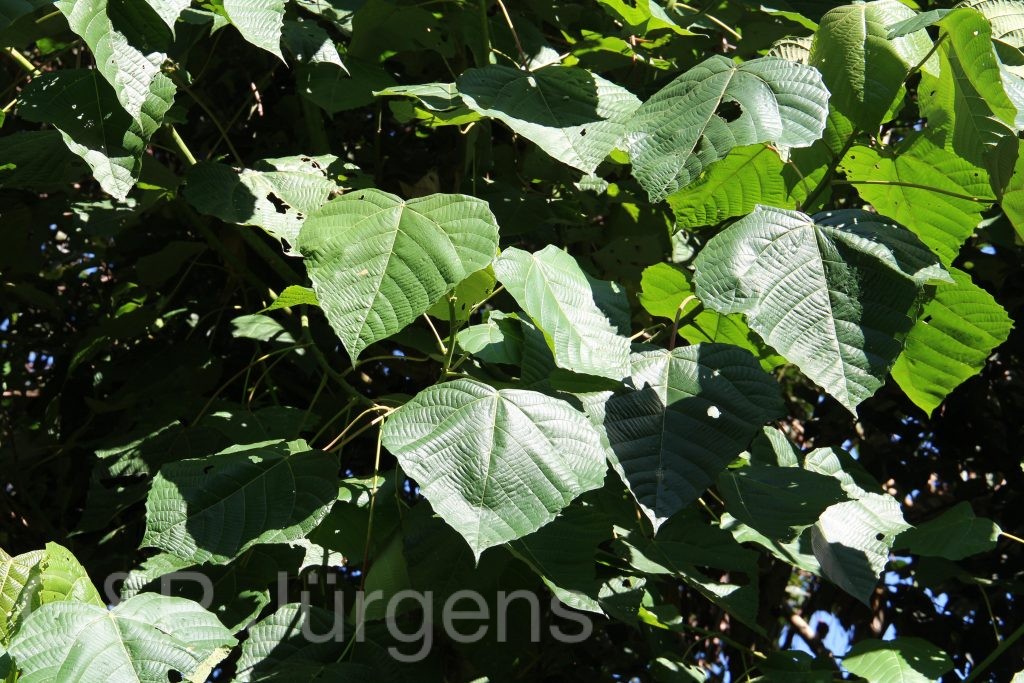
Bhutan2015 557
Bhutan, Punaka 1240m, October
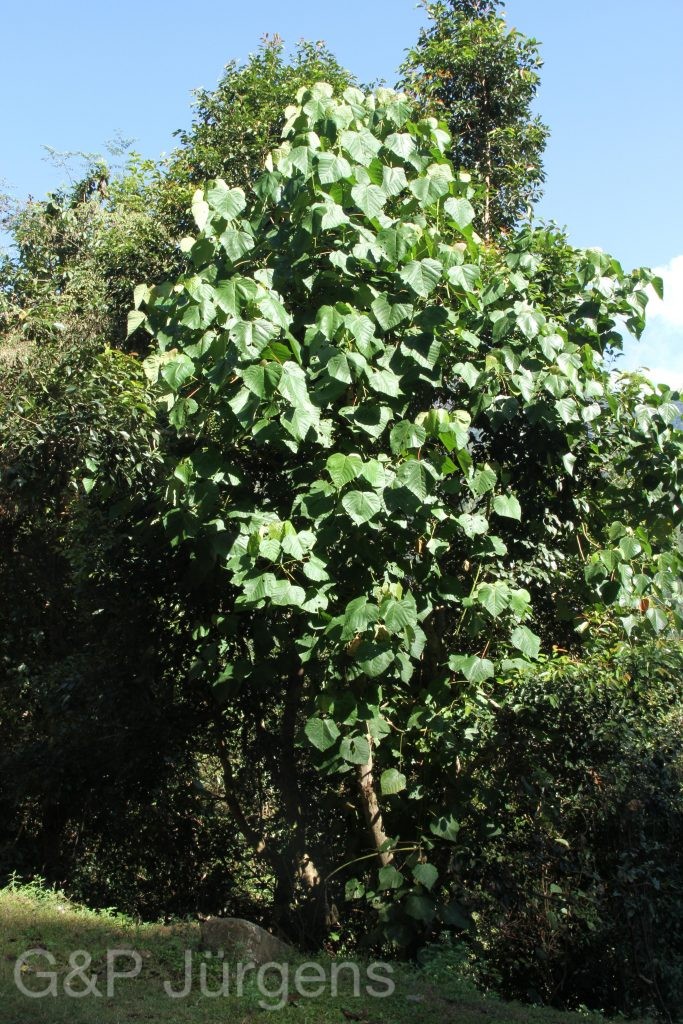
Bhutan2015 556
Bhutan, Punaka 1240m, October

Description

Macaranga denticulata is a fast-growing pioneer tree with a wide tropical and subtropical Asian distribution, its 1451 georeferenced occurrences spanning China, India, Nepal, Bhutan, Bangladesh, Myanmar, Thailand, Vietnam, Laos, Cambodia, Malaysia, Indonesia, the Philippines and beyond. It is a characteristic colonist of disturbed ground, forest gaps, road cuttings, secondary forest and abandoned swidden plots in warm, humid foothill country. The records from Zhemgang at 910 m and Punakha at 1240 m in Bhutan in October place it firmly in the low-elevation subtropical zone where it regenerates rapidly after disturbance and forms early-successional thickets and woodland.

The plant is a small to medium evergreen tree with smooth bark and somewhat whorled, spreading branches. The leaves are large, alternate, peltate or subpeltate, broadly ovate to triangular with a denticulate margin reflected in the epithet, palmately veined, and often bearing glands and pale tomentum beneath. As a member of the Euphorbiaceae it is dioecious, the small apetalous flowers borne in branched axillary inflorescences subtended by toothed or glandular bracts; male and female flowers occur on separate trees. The fruit is a small two-lobed capsule, the seeds often associated with a fleshy aril attractive to birds and ants.

Macaranga is a large palaeotropical genus famous for its myrmecophytic (ant-associated) species and its ecological role as a pioneer. M. denticulata is a non-myrmecophytic but ecologically important coloniser, valued for rapid biomass accumulation, soil stabilisation and as a nurse species in fallows. Its enormous range, abundance and affinity for disturbed habitats make it among the most secure and widespread trees in its family across tropical Asia.

Author: Müll.Arg. · Sources: POWO (Kew), GBIF, Flora of China, Flora of Bhutan, Revision of Macaranga (Euphorbiaceae) (Whitmore and successors), Trees of tropical Asia

King ex Hook.f.

Sikkim 2006 409 ergebnis
Sikkim Ringi-Chu 3100m, May

Description

Machilus duthei is an evergreen laurel of the Himalaya, recorded from northern India, Nepal and Pakistan, with relatively few documented occurrences across this western to central Himalayan range. It is a tree of moist temperate broad-leaved evergreen forest, occurring on shaded slopes, in ravines and along forested watercourses. It grows at mid to upper montane elevations; the tree photographed near the Ringi-Chu in Sikkim at 3,100 m in May represents an upper-elevation occurrence in the cool, humid temperate forest belt, where laurels form a notable element of the canopy and subcanopy.

The plant is a medium-sized evergreen tree with smooth bark and glabrous to finely pubescent young shoots. The leaves are alternate, coriaceous, elliptic to oblong-lanceolate, entire, glabrous and glossy above, somewhat glaucous beneath, with pinnate venation and aromatic tissue typical of the family. The flowers are small, bisexual and trimerous, with six subequal perianth segments and stamens in whorls, the inner whorl glandular, borne in axillary or subterminal panicles. The fruit is a globose to ellipsoid berry seated on a persistent, slightly enlarged perianth cup at the apex of the pedicel.

The genus Machilus, closely allied to and sometimes merged with Persea, comprises evergreen Asian laurels of considerable importance in moist subtropical and temperate forest. Machilus duthei, described by King ex Hooker f. and commemorating the botanist J. F. Duthie, is a comparatively narrowly distributed Himalayan species. Given its limited documented range and dependence on undisturbed humid montane forest, it is vulnerable to habitat degradation and logging, and its sparse records indicate a need for further field survey to assess its true distribution and conservation status.

Author: King ex Hook.f. · Sources: POWO (Kew), Flora of China Vol. 7, Annotated Checklist of the Flowering Plants of Nepal, GBIF, Kostermans: Lauraceae studies

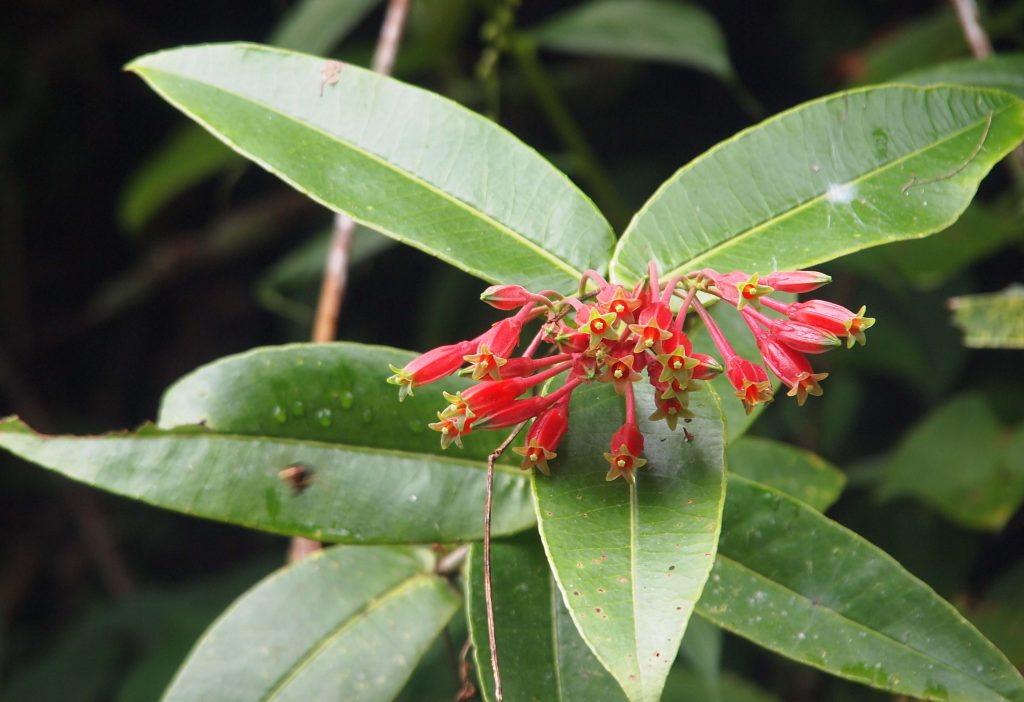
(Hook.f.) Danser

Bhutan2012 698
Bhutan Galephu 850m, September

Description

Macrosolen psilanthus is an eastern Himalayan hemiparasitic mistletoe distributed across India, Bhutan, Nepal and Bangladesh, with about 35 occurrences concentrated in the warm subtropical foothills and duars at the base of the Himalaya. It grows as a stem parasite on the branches of a range of broad-leaved trees and shrubs in subtropical broad-leaved forest, secondary woodland and along forest edges, predominantly at low elevations below about 1200 m. The photographed plant from Galephu in southern Bhutan at 850 m, flowering in September, is typical of its occurrence in the humid, low-altitude foothill forests of the eastern Himalayan front, where suitable host trees are abundant.

It is a glabrous, woody aerial hemiparasite attached to its host by a haustorial connection. The branches are terete to somewhat angled, and the leaves are opposite, coriaceous, ovate to elliptic-lanceolate, entire, with pinnate venation and a short petiole. The inflorescences are axillary spikes or racemes bearing opposite, decussate flowers, each subtended by a single bract. The flowers are bisexual with a calyculus crowning the inferior ovary and a tubular, six-merous corolla that is reddish, orange or greenish-yellow, the lobes reflexing at anthesis; the epithet psilanthus ("smooth-flowered") refers to the glabrous perianth. The six stamens are epipetalous. The fruit is a one-seeded berry whose seed is enveloped in viscin.

Macrosolen belongs to the Loranthaceae, the showy-flowered mistletoes, and like its relatives is an obligate hemiparasite drawing water and minerals from its host while photosynthesising in its own green leaves. The flowers are bird-pollinated (ornithophilous), and the viscin-coated seeds are dispersed by frugivorous birds such as flowerpeckers that deposit them on host branches. The species is locally frequent within its foothill range and is not considered threatened.

Author: (Hook.f.) Danser · Sources: POWO (Kew), GBIF, Flora of Bhutan Vol. 1, Flora of Nepal, Barlow Loranthaceae revisions for the Malesian and Asian region (monograph), Flora of British India

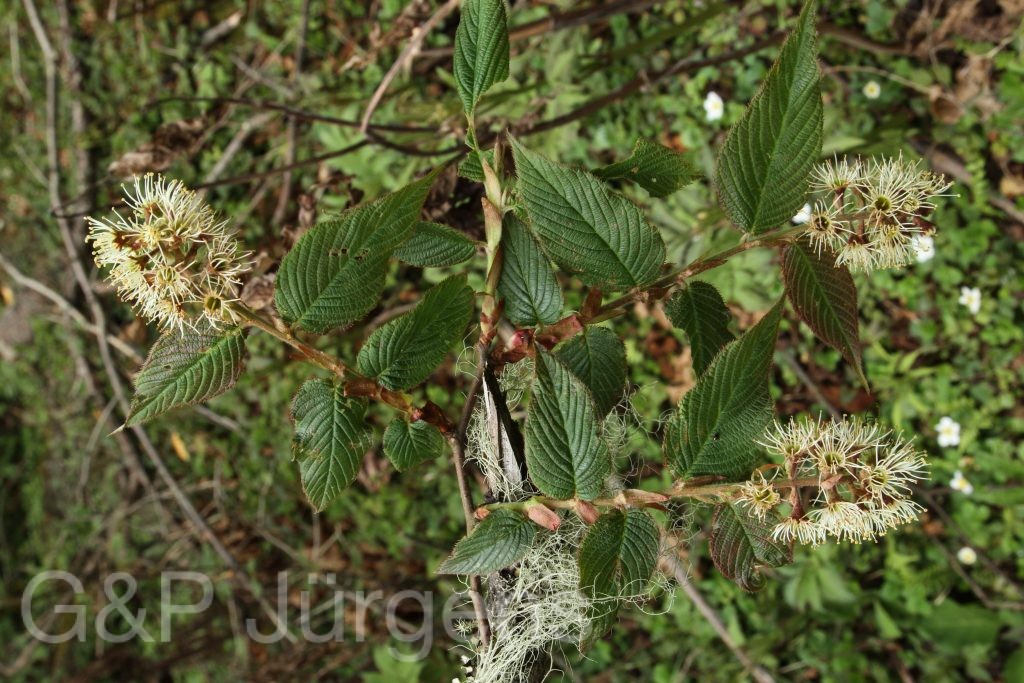
Hook.f. & Thomson

Bhutan2014 585
Bhutan Phobjika 3100m, May

Description

Maddenia himalaica is a Himalayan and Sino-Himalayan species recorded from Nepal, north-east India, Bhutan and south-west China, the 68 georeferenced occurrences including a few cultivated points in Belgium and the United States. It is a plant of cool temperate forest margins, ravines, streamsides and shrubberies, often in association with mixed broadleaved and conifer woodland. The Bhutan material was gathered at Phobjika at about 3100 m, within its usual elevational band of roughly 2400-3600 m in the upper temperate zone. Under current taxonomy GBIF treats the name as a synonym, with Maddenia himalaica regarded as the accepted name; the genus is now frequently subsumed within Prunus.

It is a deciduous shrub or small tree with glabrous to finely pubescent young branchlets and conspicuous, persistent, fringed stipules. The leaves are alternate, oblong to obovate-elliptic, acuminate, sharply and often doubly serrate at the margin, with prominent venation. The small flowers are crowded in short, dense racemes and are apetalous or nearly so, a key generic feature; the numerous stamens surround a glabrous ovary. The fruit is a small ovoid drupe, blackish at maturity, seated on the persistent hypanthium.

Maddenia has long been placed in subfamily Amygdaloideae near Prunus and Pygeum, and molecular studies support its inclusion within a broadly circumscribed Prunus, the reduced apetalous flowers being a derived condition. Its dense racemes attract small insects, and the drupes are dispersed by birds. Widespread if scattered across the Himalaya, it is not considered threatened, though its forest habitat is locally reduced by clearance and grazing.

Author: Hook.f. & Thomson · Sources: POWO (Kew), GBIF, Flora of Bhutan, Flora of China, Flora of Nepal, Rehder Manual of Cultivated Trees and Shrubs

Hook.f. & Thomson

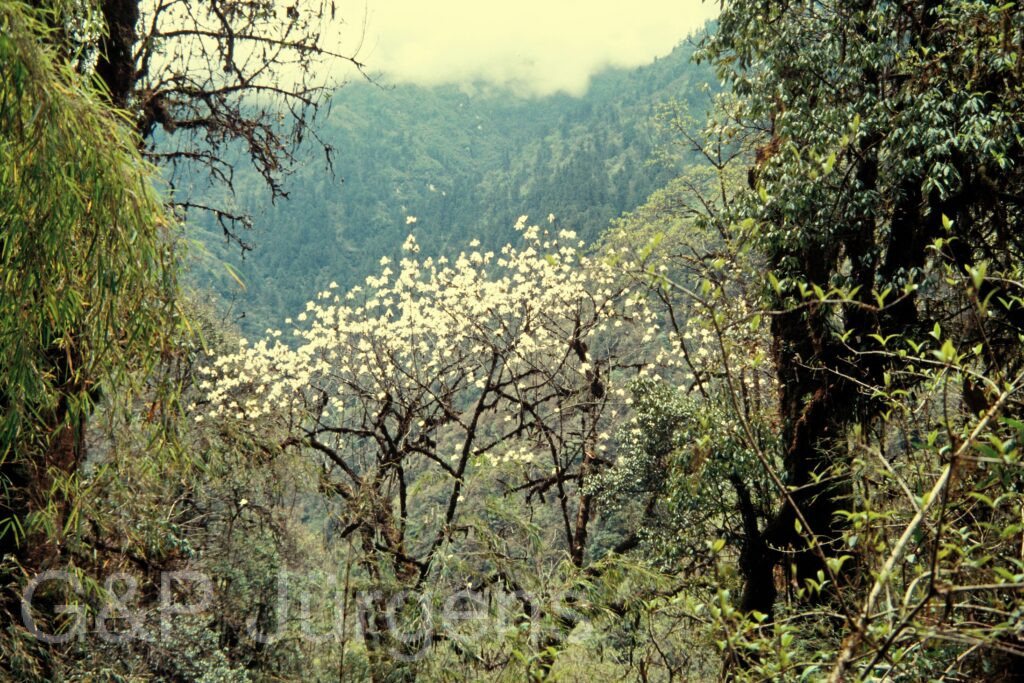
Nepal 97 118 P204
Nepal Mewa-Khola 2470m April
Nepal 97 119 G206 2
Nepal Mewa-Khola 2470m April
Nepal1992 149 P216 ergebnis
Nepal Simbua-Khola 2500m March 

Description

Magnolia campbellii, Campbell's magnolia, is a large deciduous tree of the eastern Himalaya, native from Nepal through Sikkim and Bhutan into NE India, Myanmar and SW China; the additional GBIF codes (GB, IE, US, NZ, JP, DE and others) among its roughly 807 occurrences reflect its renown as a cultivated ornamental. The plants photographed grow in eastern Nepal in the Mewa-Khola (c. 2,470 m, April) and Simbua-Khola (c. 2,500 m, March) valleys, flowering before leaf flush in early spring. In the wild it inhabits temperate broadleaf and mixed forest on humid, well-drained slopes, typically between 2,100 and 3,000 m, often as an emergent tree among oak, rhododendron and laurel.

It is a tree reaching 20–30 m with a stout trunk, grey bark and stout, often pubescent young twigs marked by ringed stipular scars. The leaves are alternate, elliptic to obovate, entire, glaucous and finely hairy beneath. The large, solitary, precocious flowers are among the most spectacular of the genus, cup-and-saucer in form, 15–25 cm across, with numerous tepals ranging from deep rose-pink to white; as in all Magnoliaceae the receptacle bears spirally arranged stamens below an elongate gynoecium of free carpels. The fruit is an aggregate of follicles forming a cylindrical, often twisted etaerio that splits to expose red, arillate seeds suspended on slender funicular threads.

Magnolia campbellii belongs to subgenus Yulania, the precocious-flowering Asian magnolias, and its early bloom on bare branches is a defining feature exploited in horticulture, where numerous selections and hybrids exist. Though widely grown, wild populations face pressure from logging and forest conversion, and the species is regarded as of conservation interest across parts of its native range, making intact mid-montane Himalayan forest important to its persistence.

Author: Hook.f. & Thomson · Sources: POWO (Kew), Flora of China Vol. 7, Flora of Bhutan Vol. 1, GBIF, Hunt (ed.): Magnolias and their Allies