
Müll.Arg.
Description
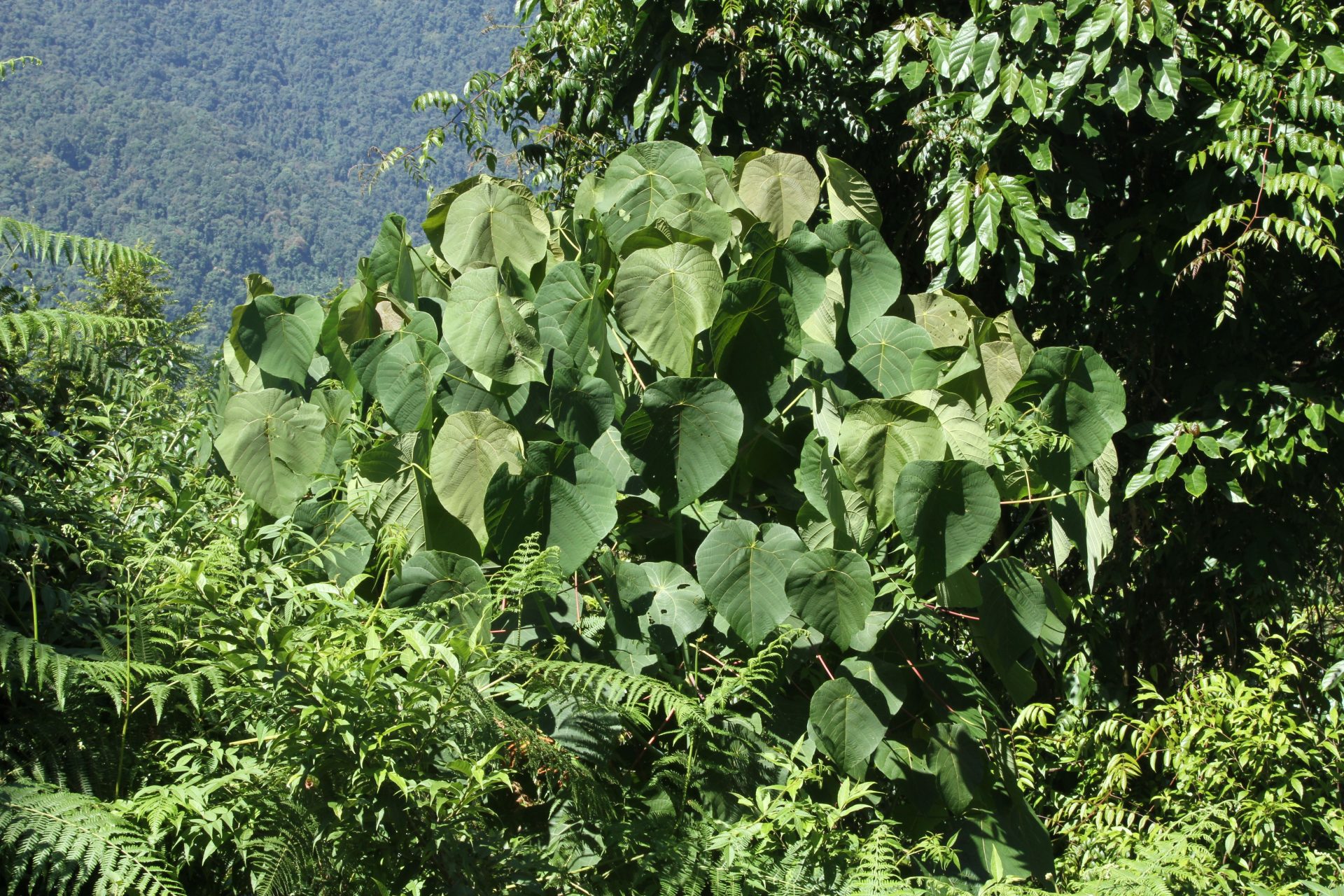
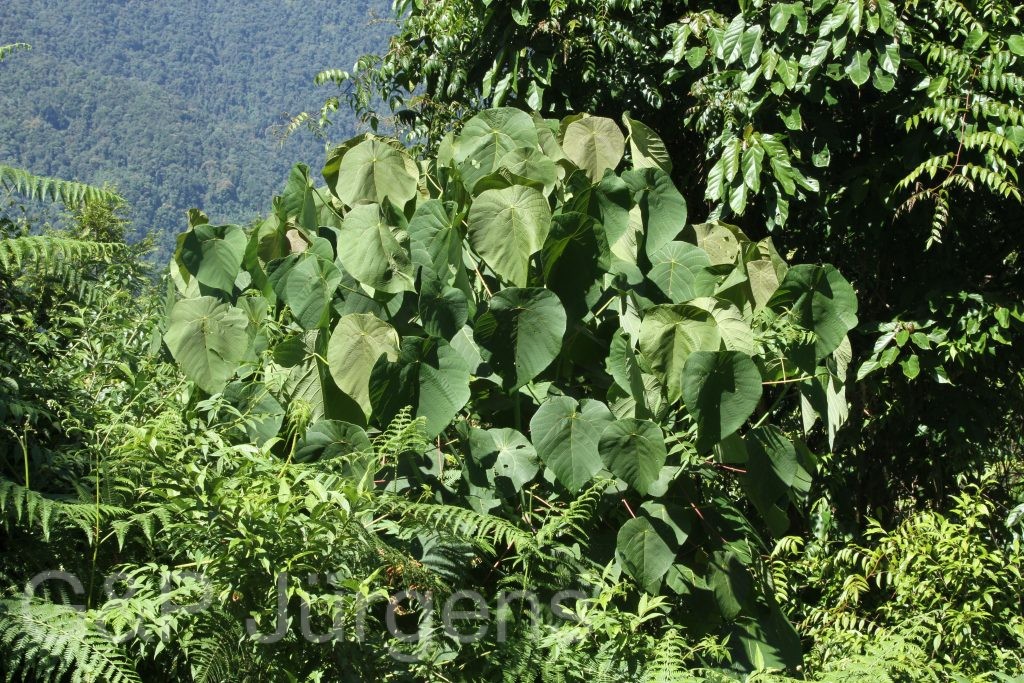
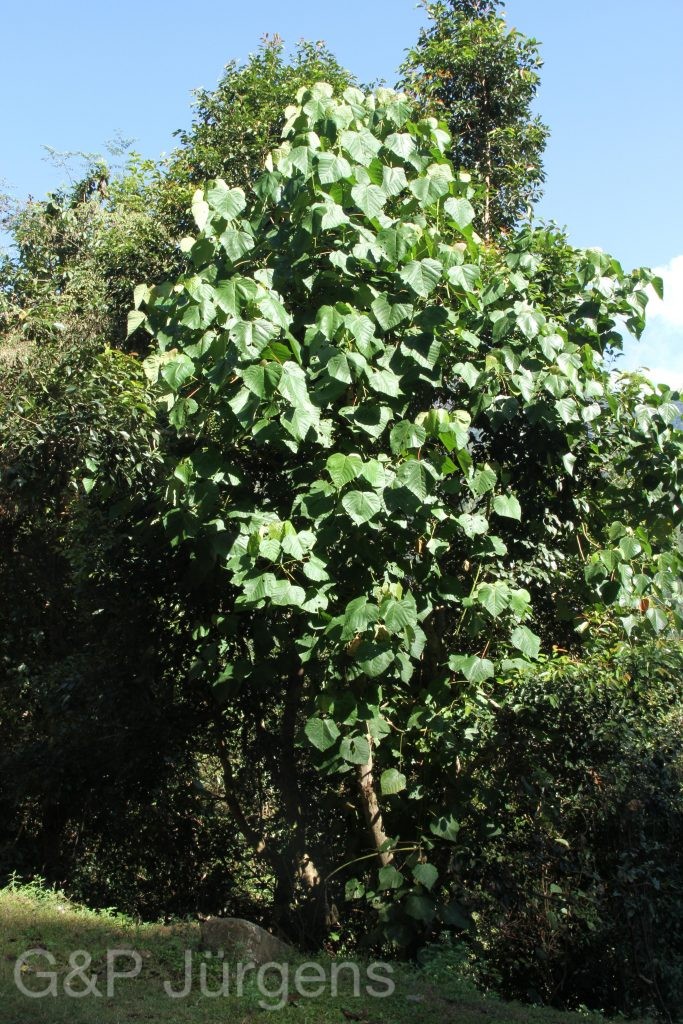
Macaranga denticulata is a fast-growing pioneer tree with a wide tropical and subtropical Asian distribution, its 1451 georeferenced occurrences spanning China, India, Nepal, Bhutan, Bangladesh, Myanmar, Thailand, Vietnam, Laos, Cambodia, Malaysia, Indonesia, the Philippines and beyond. It is a characteristic colonist of disturbed ground, forest gaps, road cuttings, secondary forest and abandoned swidden plots in warm, humid foothill country. The records from Zhemgang at 910 m and Punakha at 1240 m in Bhutan in October place it firmly in the low-elevation subtropical zone where it regenerates rapidly after disturbance and forms early-successional thickets and woodland.
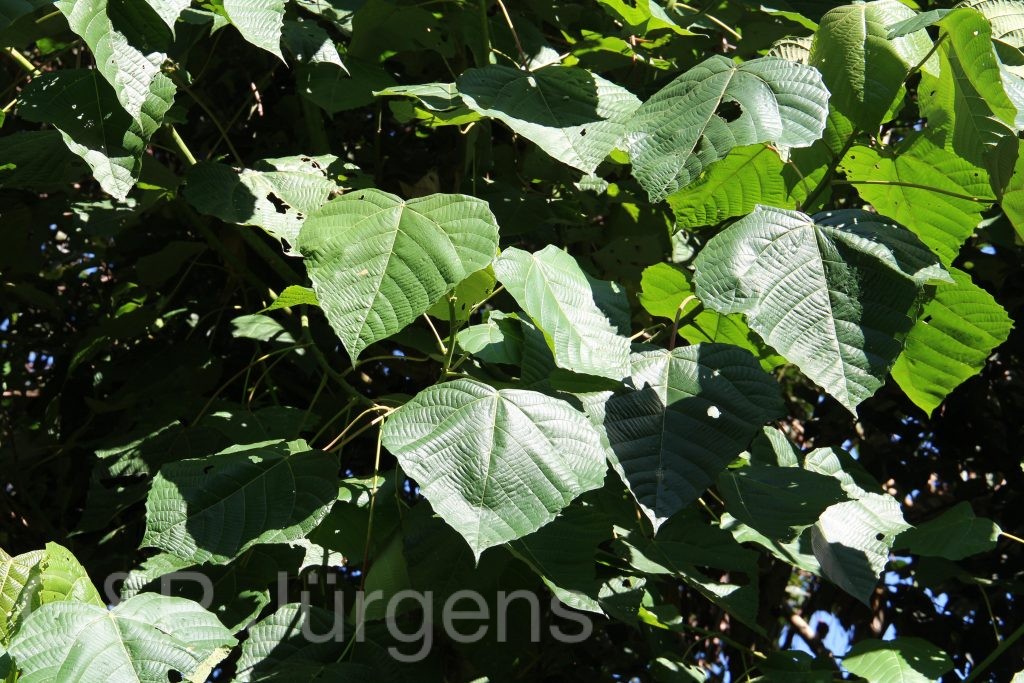
The plant is a small to medium evergreen tree with smooth bark and somewhat whorled, spreading branches. The leaves are large, alternate, peltate or subpeltate, broadly ovate to triangular with a denticulate margin reflected in the epithet, palmately veined, and often bearing glands and pale tomentum beneath. As a member of the Euphorbiaceae it is dioecious, the small apetalous flowers borne in branched axillary inflorescences subtended by toothed or glandular bracts; male and female flowers occur on separate trees. The fruit is a small two-lobed capsule, the seeds often associated with a fleshy aril attractive to birds and ants.
Macaranga is a large palaeotropical genus famous for its myrmecophytic (ant-associated) species and its ecological role as a pioneer. M. denticulata is a non-myrmecophytic but ecologically important coloniser, valued for rapid biomass accumulation, soil stabilisation and as a nurse species in fallows. Its enormous range, abundance and affinity for disturbed habitats make it among the most secure and widespread trees in its family across tropical Asia.
Author: Müll.Arg. · Sources: POWO (Kew), GBIF, Flora of China, Flora of Bhutan, Revision of Macaranga (Euphorbiaceae) (Whitmore and successors), Trees of tropical Asia