
Hook.f.
Description
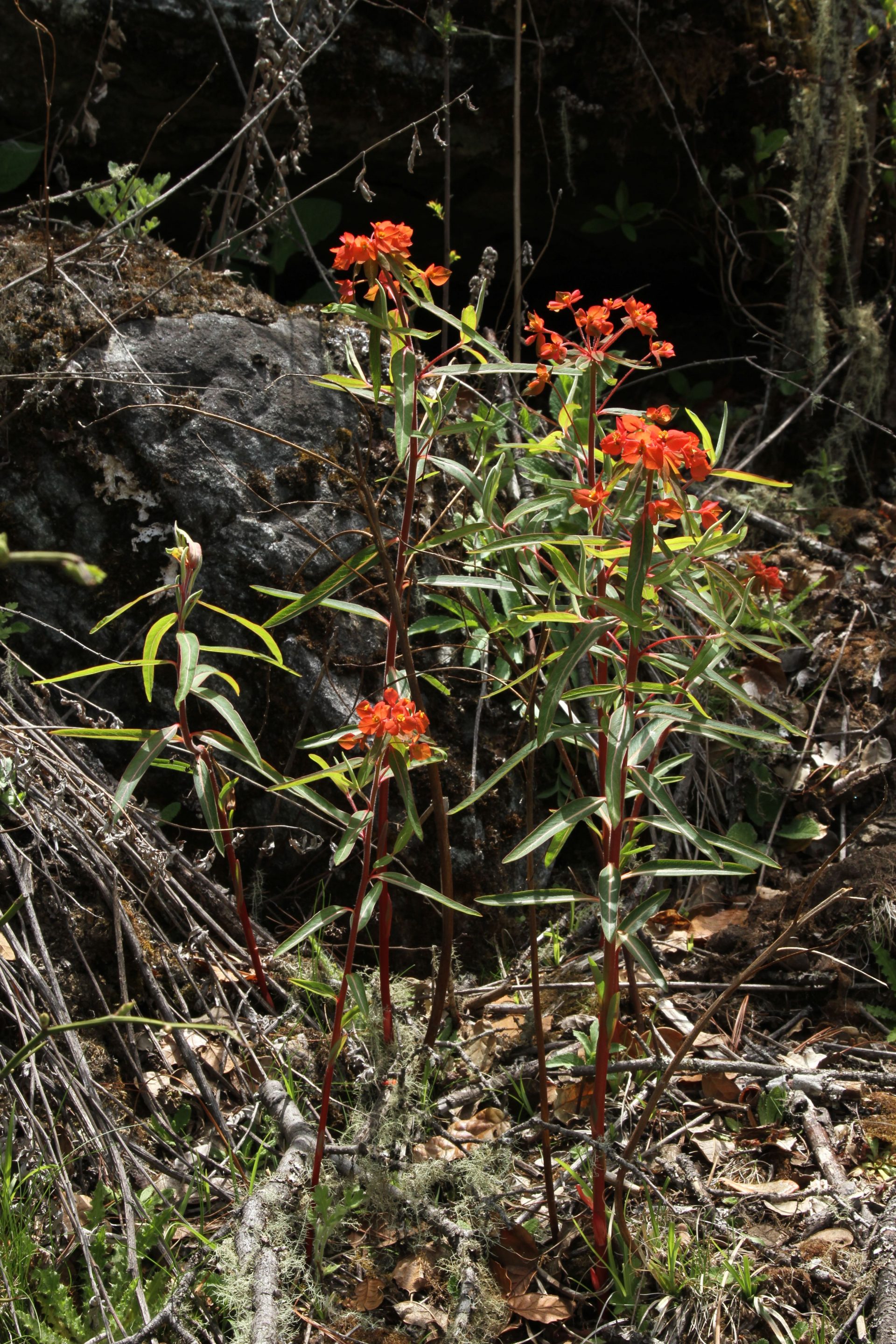
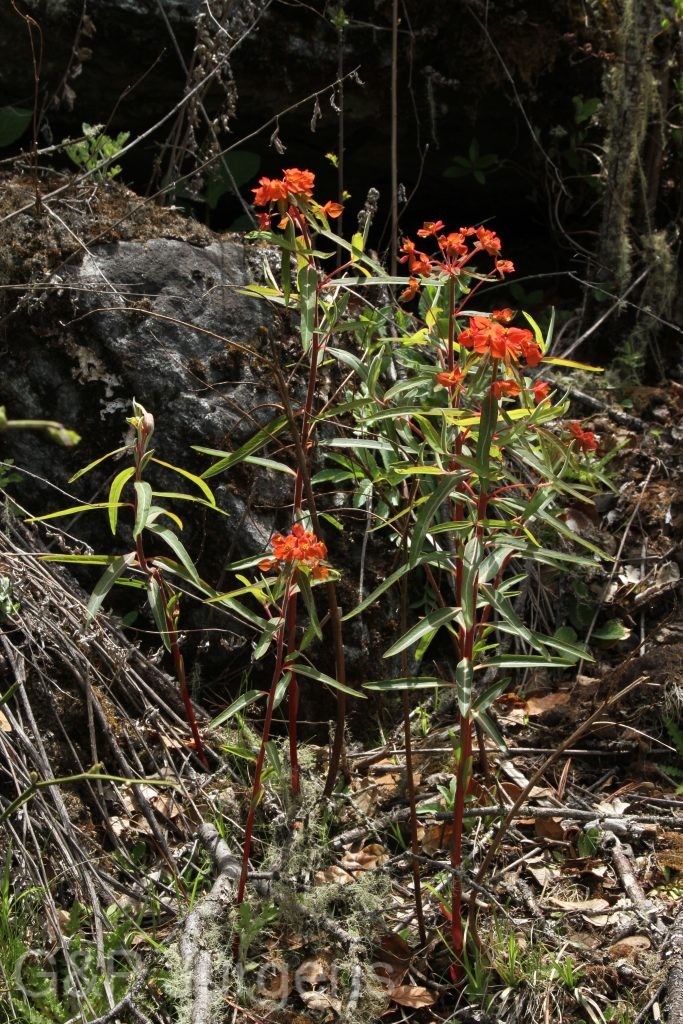
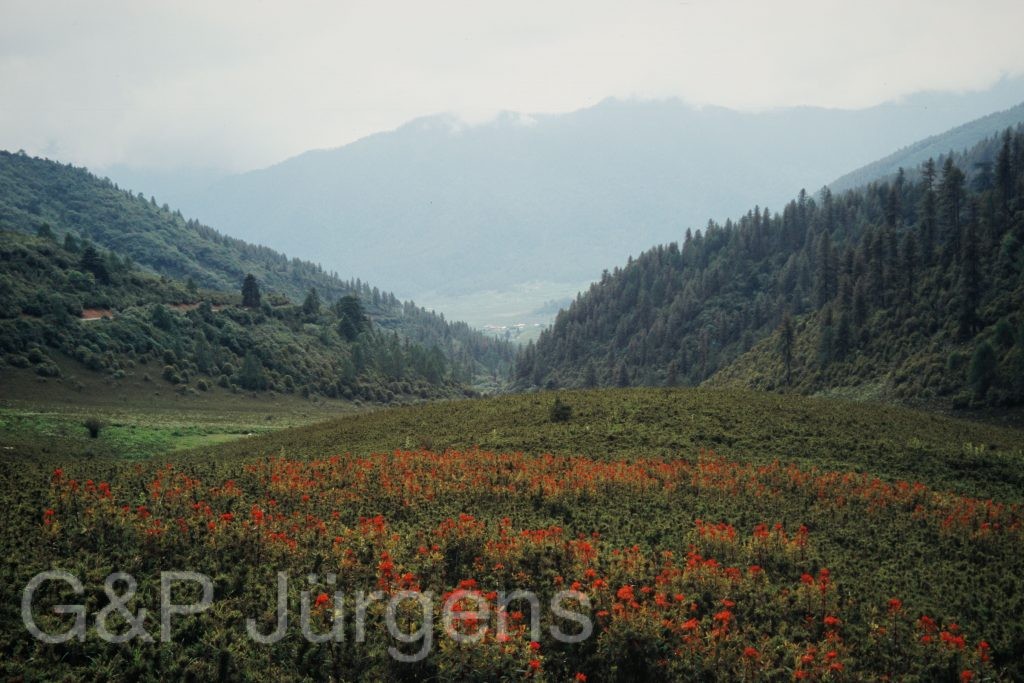
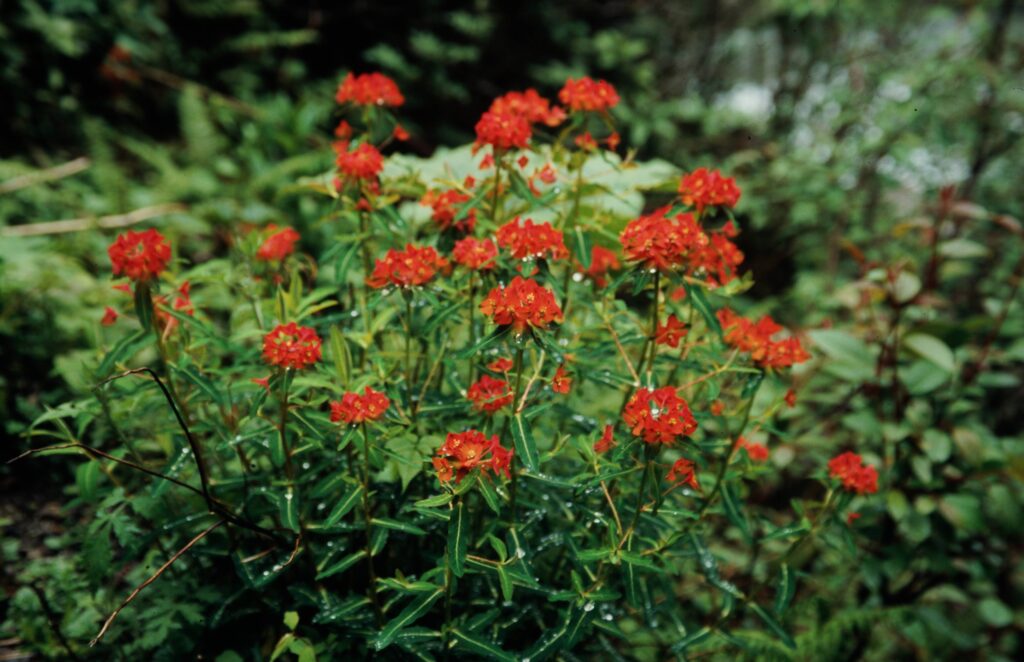
Euphorbia griffithii is a herbaceous perennial spurge of the eastern Himalayan mountains, with 538 GBIF occurrences spanning China, Bhutan, Myanmar, India and Nepal, alongside numerous cultivated records from Britain, Germany, France and North America, reflecting its popularity as a hardy garden perennial. It grows in open subalpine meadows, forest clearings, scrub and grassy slopes in the upper temperate to subalpine zone. It was recorded on the Chele-La in Bhutan at about 3400 m and at Tamrong in West Bengal, India, at about 2650 m, both in May, when the bracts colour vividly at the start of the growing season.
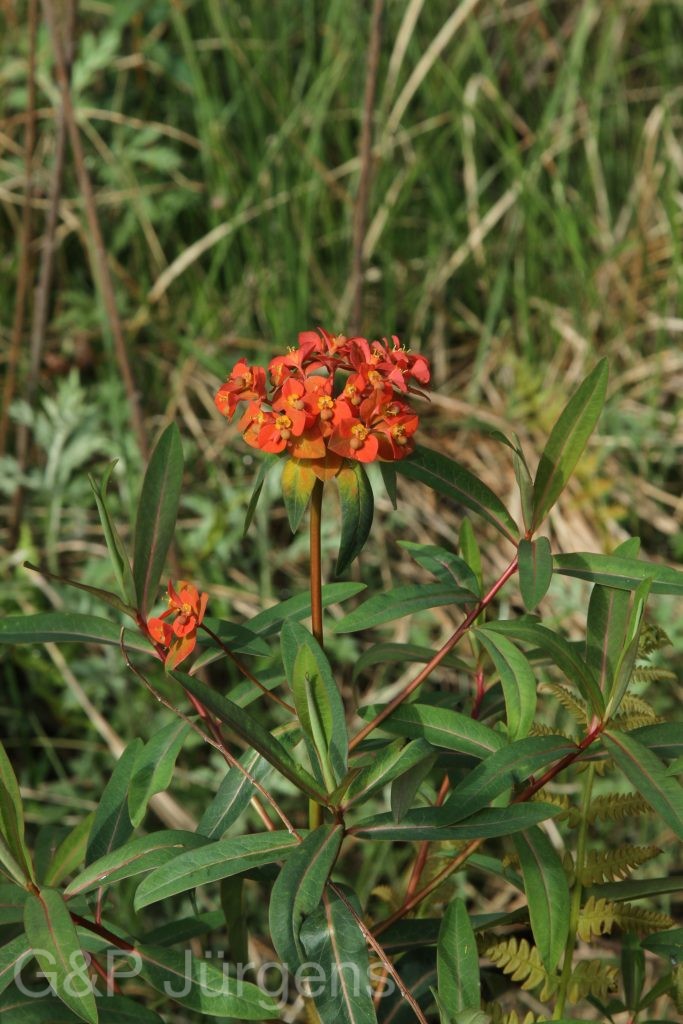
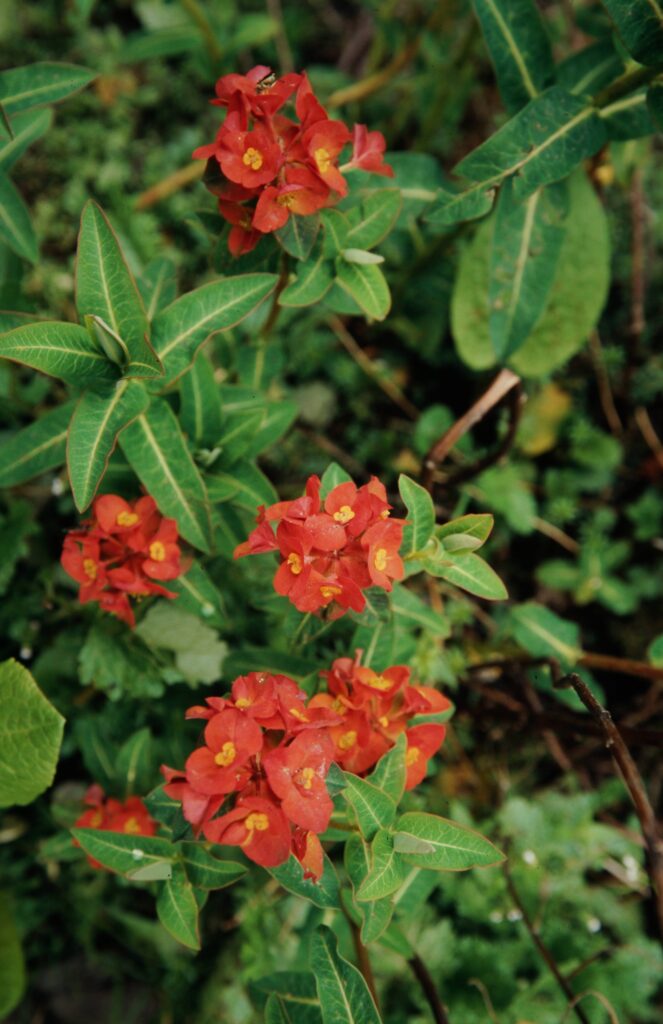
It is an erect, clump-forming herb arising from a creeping rhizome, the unbranched or sparingly branched stems exuding white latex when cut. The leaves are alternate, oblong to oblanceolate, entire, often flushed reddish and frequently with a pale midrib. The inflorescence is a terminal umbel-like cyme of cyathia, each cyathium a cup of fused bracts enclosing reduced flowers; the floral leaves and bracts beneath the cyathia turn fiery orange-red, providing the conspicuous display, while the involucral glands are typically yellowish. The fruit is a three-lobed capsule splitting into mericarps.
Euphorbia (Euphorbiaceae) is one of the largest plant genera, and E. griffithii belongs to its temperate, rhizomatous, herbaceous element rather than the succulent xerophytes. Long in cultivation, with selections such as the well-known coloured-bracted cultivars, it is widespread and secure across its native range. Its brilliant bract colouration and montane meadow habitat make it both a horticulturally important and biogeographically representative member of the eastern Himalayan herbaceous flora.
Author: Hook.f. · Sources: POWO (Kew), GBIF, Flora of China, Flora of Bhutan, Annotated Checklist of the Flowering Plants of Nepal, Radcliffe-Smith's treatment of Euphorbia (Euphorbiaceae)