
U.C.Bhattach.
Description
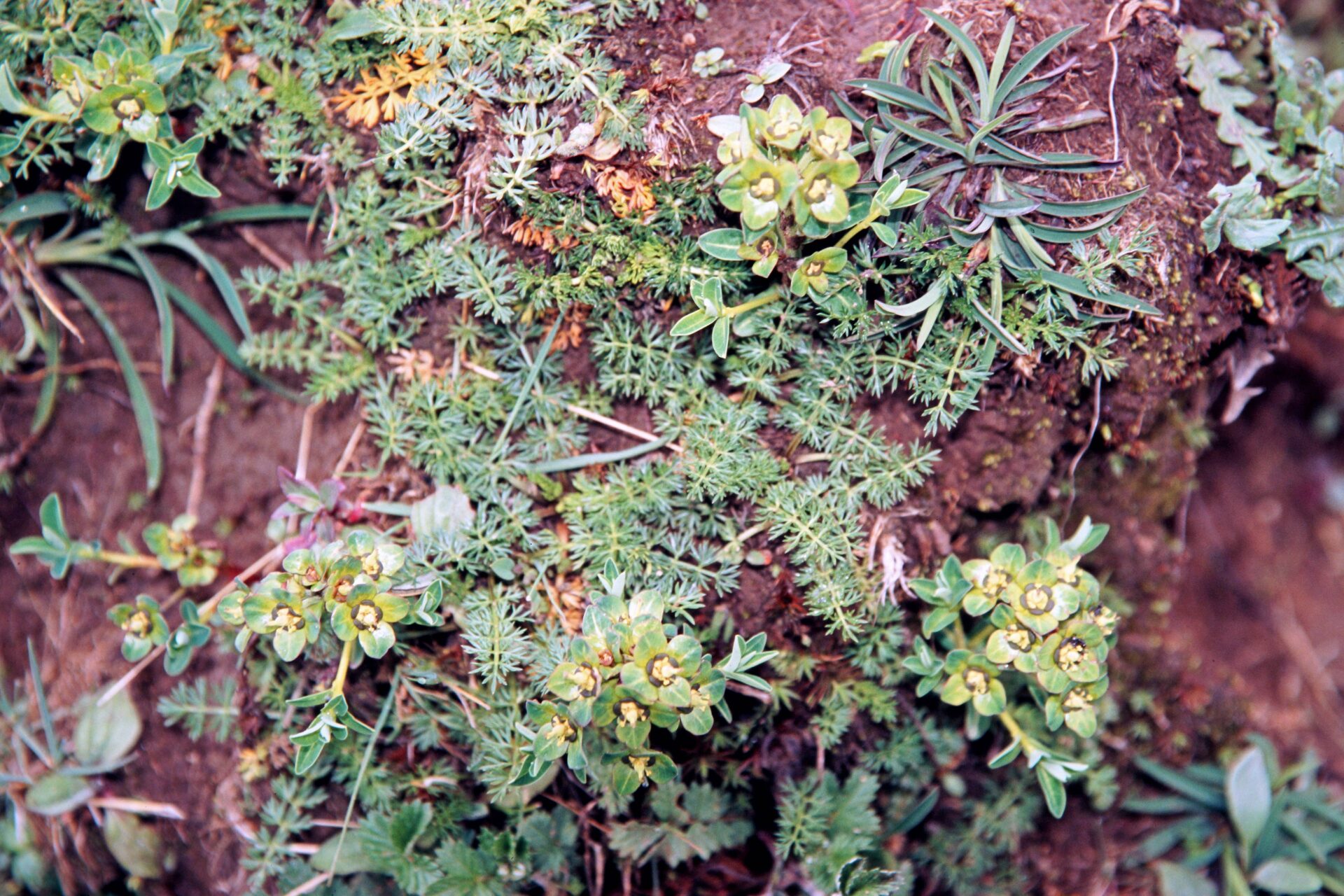
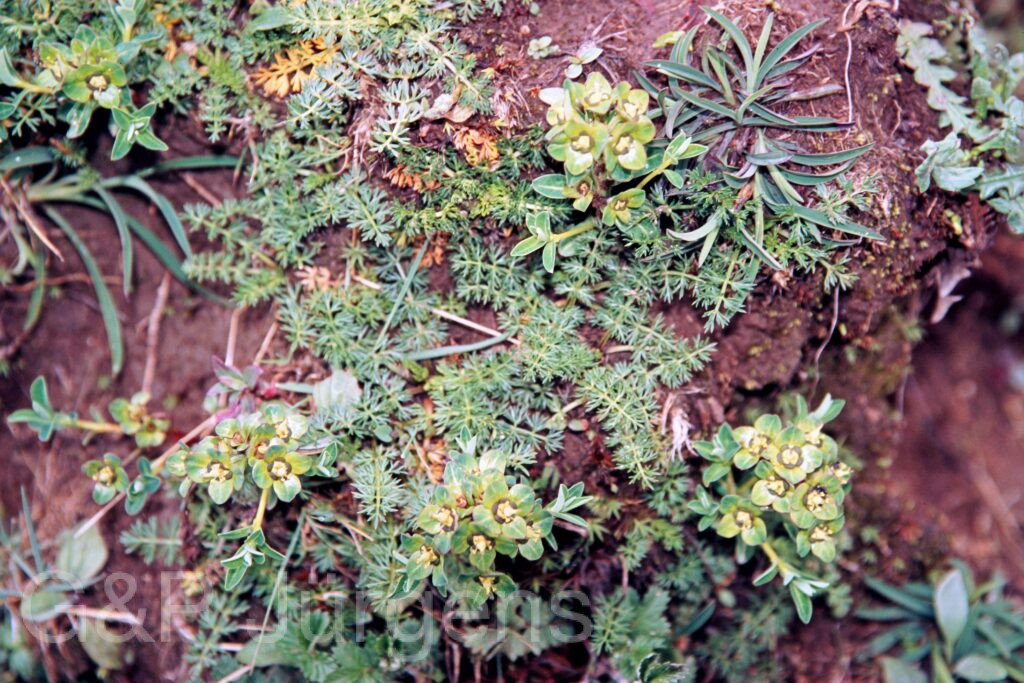
Euphorbia sharmae is a poorly known spurge apparently endemic to the western Himalaya of India, where it is recorded only from the Garhwal Himalaya of Uttarakhand. With very few documented occurrences, it appears to be a narrow regional endemic of temperate montane habitats, growing on open grassy slopes, forest clearings and rocky banks. The plant photographed at Belak Khal in Garhwal at 2,900 m in June occupies the cool temperate belt, flowering early in the warm season; the scarcity of records underscores how localised and infrequently collected the species is.
Like other members of the genus, the plant is a herbaceous perennial exuding milky white latex when damaged. It produces erect to ascending stems from a perennating rootstock, bearing alternate, entire, oblong to lanceolate cauline leaves and a terminal umbel-like arrangement of branches subtended by a whorl of leaf-like ray-leaves. The reproductive units are cyathia, the specialised pseudanthia diagnostic of Euphorbia, each comprising a cup-shaped involucre bearing crescent-shaped nectar glands and enclosing reduced unisexual flowers around a central stalked ovary. The fruit is a three-lobed schizocarpic capsule splitting into mericarps to release the seeds.
Euphorbia is among the largest and most cosmopolitan of angiosperm genera, and its Himalayan herbaceous representatives belong to the diverse subgenus Esula. Euphorbia sharmae, described by U. C. Bhattacharyya, is one of several narrowly distributed Indian endemics whose limits remain incompletely understood owing to sparse collection. Its restricted known range and the absence of population data place it among taxa of potential conservation concern, warranting targeted survey to clarify its distribution and status.
Author: U.C.Bhattach. · Sources: POWO (Kew), Flora of India (BSI), Flora of Uttar Pradesh, GBIF, Radcliffe-Smith: Euphorbia systematics