
Blume
Description
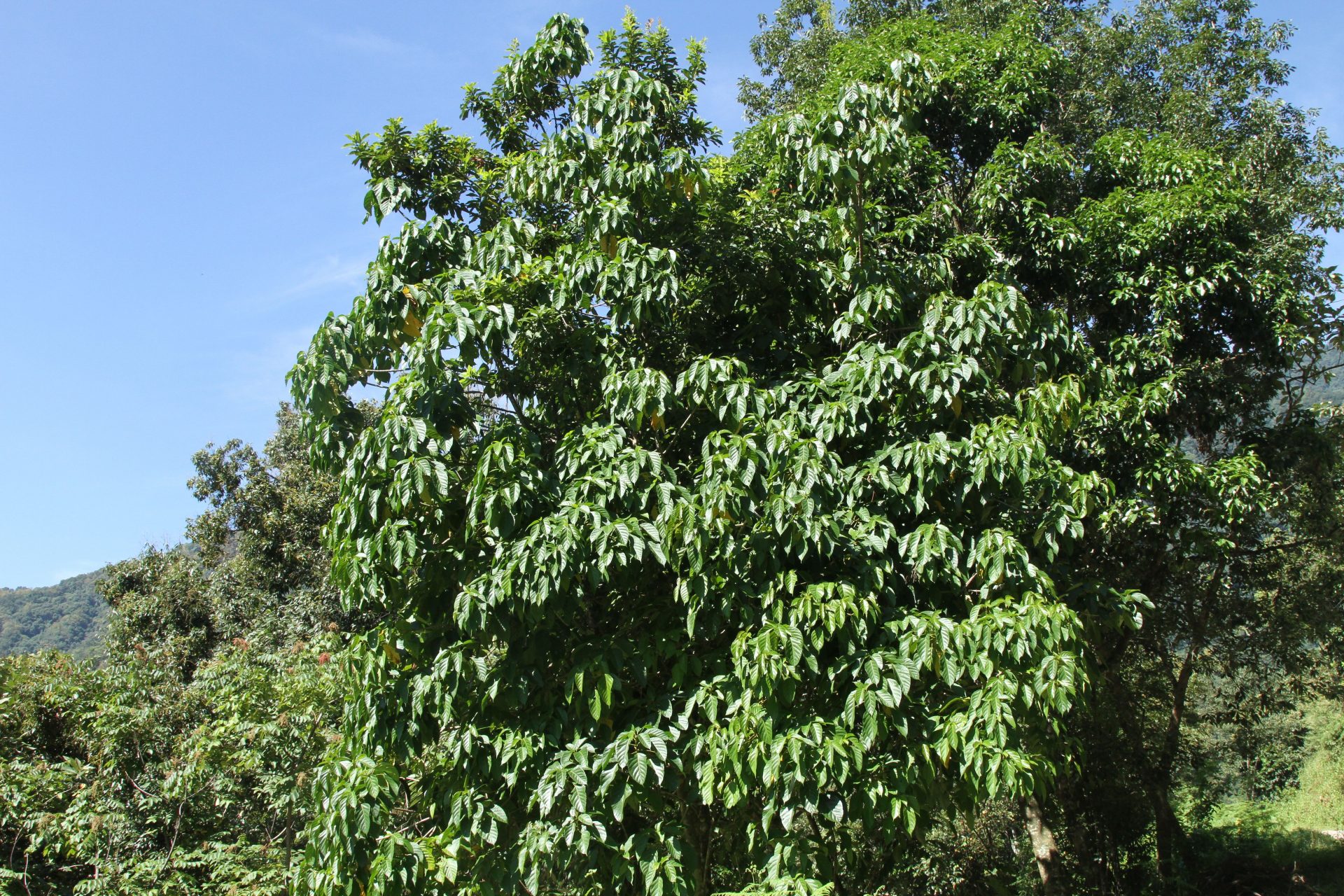
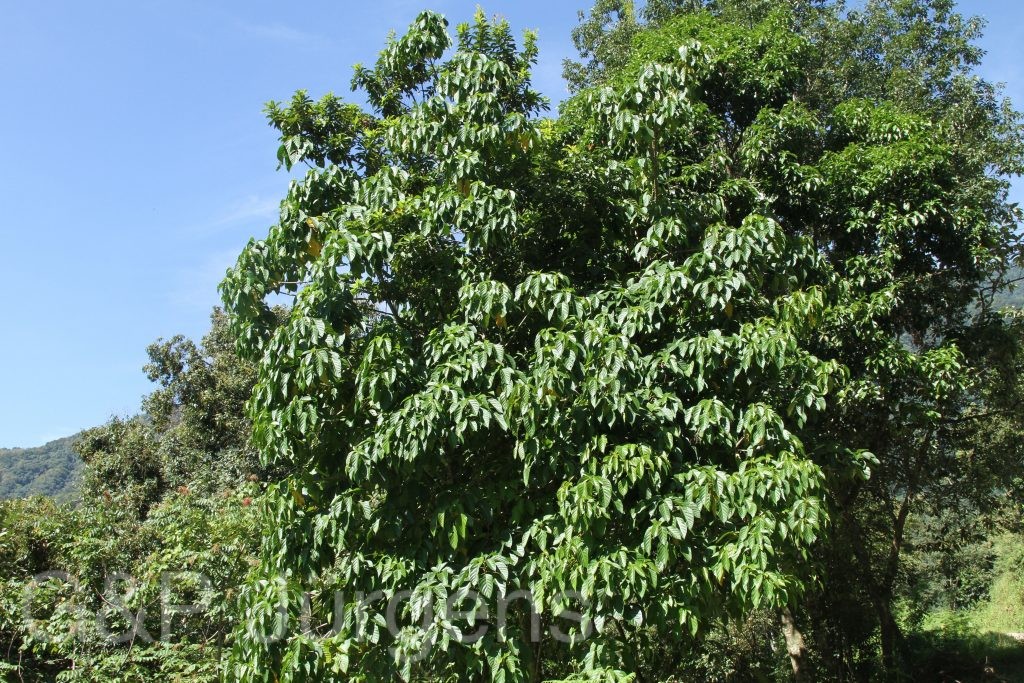
Ostodes paniculata is a tree or large shrub widely distributed through tropical and subtropical Asia, recorded by GBIF from China, Indonesia, Thailand, India, Myanmar, Vietnam, Nepal, Bhutan, Laos, Cambodia, Malaysia and Korea across more than 1100 occurrences. It is a component of evergreen and semi-evergreen broad-leaved forest in warm, humid lowland and lower montane settings, usually below about 1500 m, often on hillslopes and in valley forest. The photographed individual from Zhemgang in southern Bhutan at about 1000 m, in October, reflects this warm-temperate to subtropical foothill habitat where the species reaches the northern margin of its range along the Himalayan front.
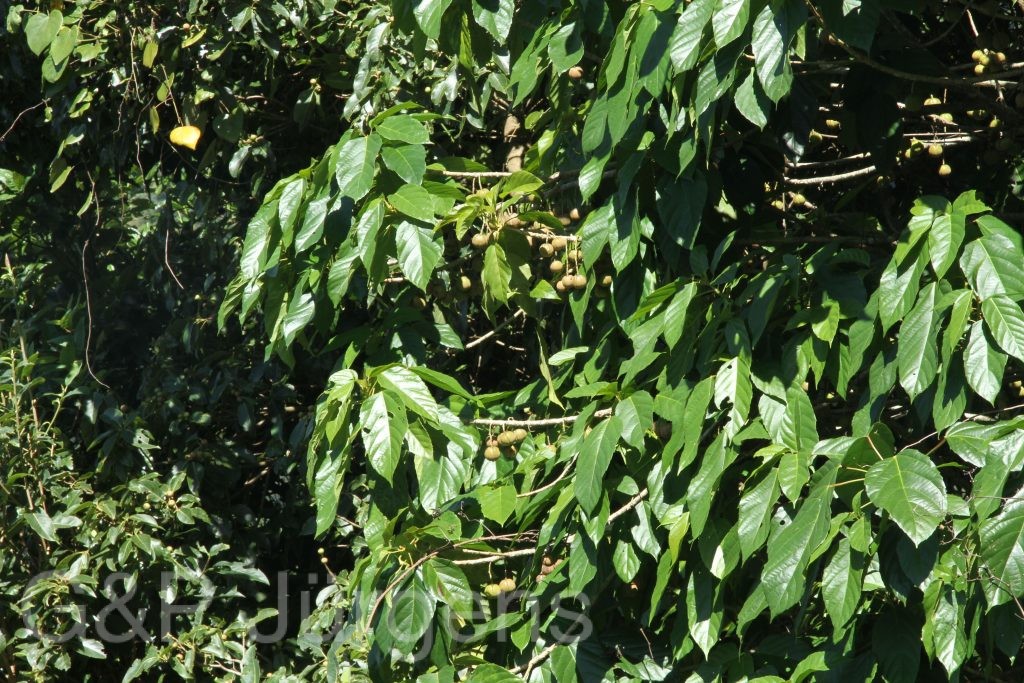
The plant is a monoecious, evergreen tree with smooth bark and a milky or watery exudate. The leaves are alternate, simple, broadly elliptic to ovate, long-petiolate with a pair of glands at the petiole apex, the margin serrate to glandular-toothed and the base often with a few prominent basal nerves. The inflorescences are terminal panicles bearing numerous small white to creamy flowers, the staminate and pistillate flowers separate, with five petals and conspicuous disk glands; staminate flowers have numerous stamens. The fruit is a globose, three-locular capsule, somewhat woody, that splits septicidally to release the large smooth seeds.
Ostodes is a small genus of the Euphorbiaceae (subfamily Crotonoideae) centred on tropical Asia, and O. paniculata is its most widespread and well-known species, valued locally for its timber and seed oil. Its broad range and tolerance of secondary forest mean it is not of conservation concern, and it is frequent across much of Indo-Malaya. Phytogeographically it exemplifies the Indo-Malayan element that penetrates the Himalaya through the warm, wet foothill forests of Bhutan and northeast India.
Author: Blume · Sources: POWO (Kew), GBIF, Flora of China, Flora of Bhutan, Flora of Thailand, Radcliffe-Smith Euphorbiaceae treatments