Tag:

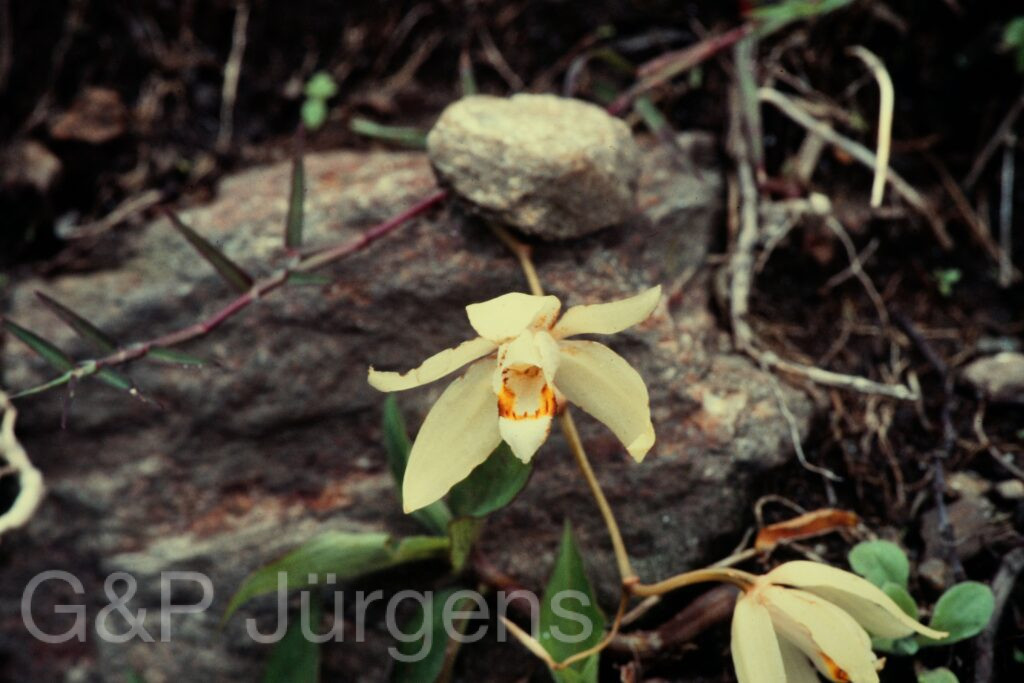
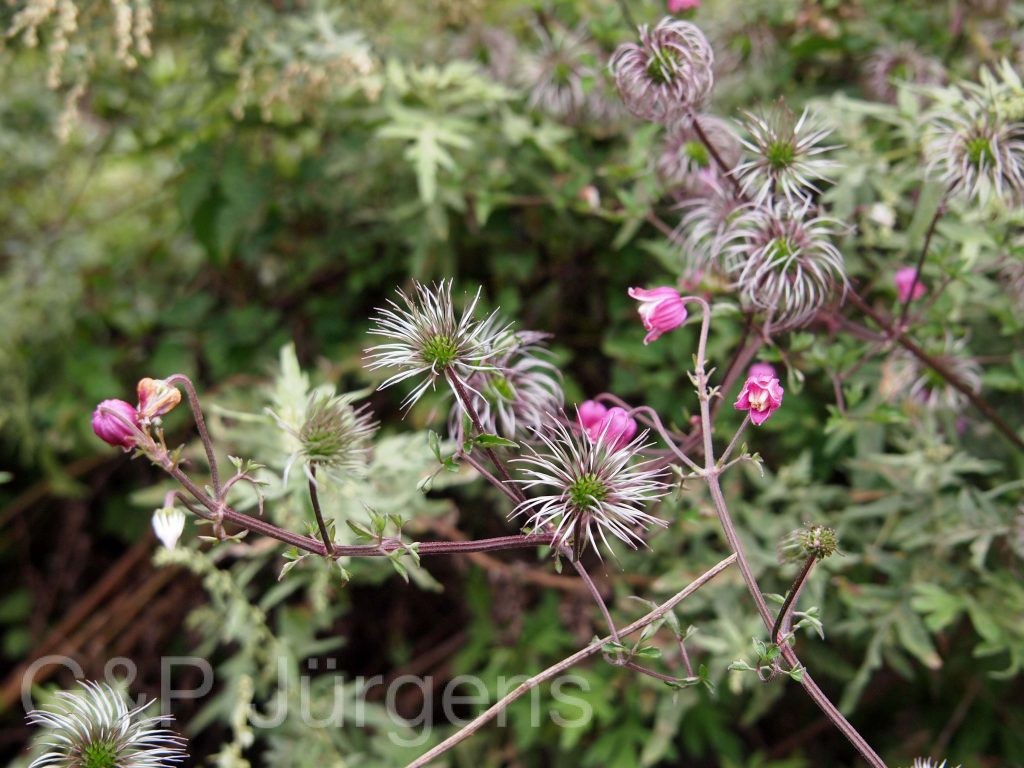
Subalpine (2500-3500 m)

Hook.f. & Thomson

Bhutan2012 133
Bhutan Haar-Valley, 3100m September

Description

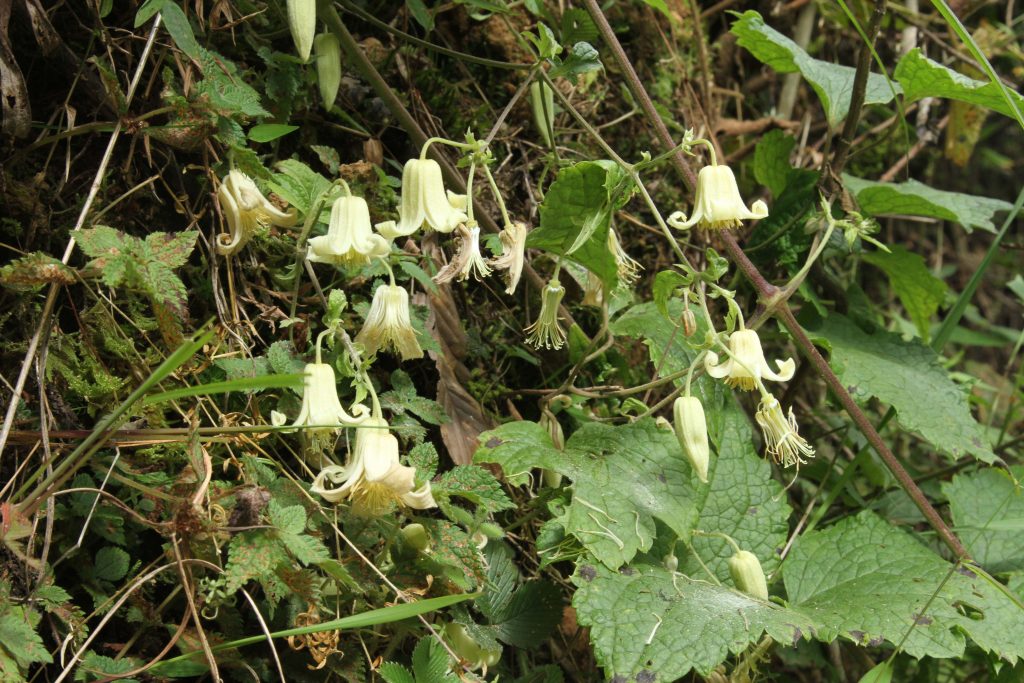
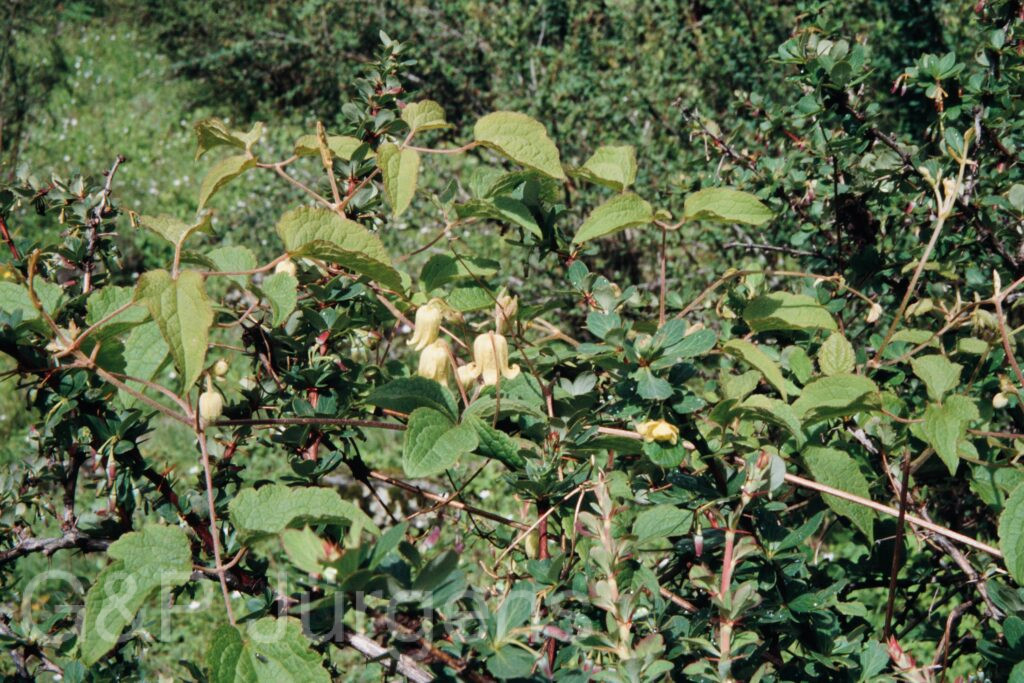
Clematis acutangula is an eastern Himalayan climber distributed through Bhutan, northern India, southern China and northern Myanmar, a comparatively restricted range reflected in the small number of GBIF records, about 61. It is a plant of temperate forest margins, scrub and thickets in the wetter montane ranges, scrambling over shrubs and into the lower canopy. The Bhutanese material photographed in the Haa (Haar) Valley at 3100 m in September documents the species in its upper-montane habitat, flowering at the close of the monsoon when many late-season Himalayan clematis come into bloom.

It is a woody to herbaceous climber whose stems are distinctly angular and sharply ridged, the feature from which the epithet acutangula derives. The leaves are opposite and compound, typically pinnate to biternate with ovate to lanceolate, toothed leaflets, the plant climbing by means of twining petioles and rachides. The flowers are nodding and campanulate, with four thick, recurved-tipped, petaloid sepals coloured yellowish to greenish-yellow, often tinged or dotted with purple; true petals are absent and the numerous stamens are enclosed within the bell. The fruit is a head of compressed achenes each bearing a long, persistent, plumose style that aids wind dispersal.

The species belongs to the autumn-flowering, yellow- to nodding-flowered assemblage of Asian Clematis allied to sect. Meclatis/Tubulosae groups, distinguished within the eastern Himalayan flora by its strongly angled stems and bell-shaped flowers. Its limited distribution and dependence on intact temperate forest scrub make it a characteristic but local element of the Bhutan-Sikkim montane flora; it is not formally assessed for conservation but its narrow range warrants attention.

Author: Hook.f. & Thomson · Sources: POWO (Kew), GBIF, Flora of Bhutan, Flora of China, Grey-Wilson's Clematis the Genus (monograph), Flora of British India
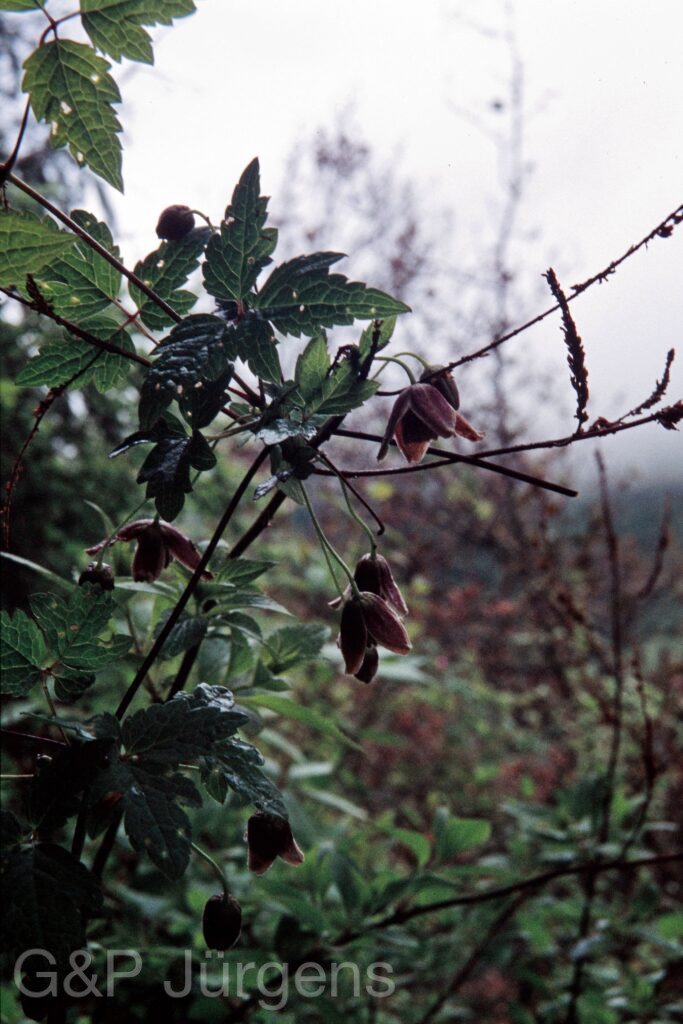
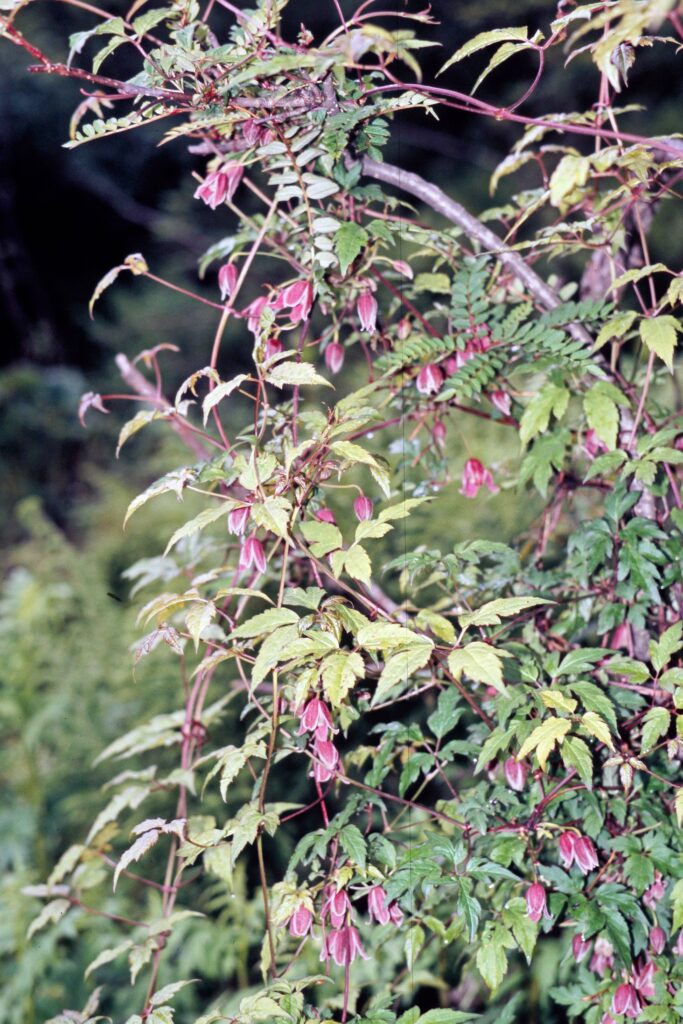
Edgew.

Nepal 99 580 ergebnis
West-Nepal Garpung-Khola 3400m, July
Garh 07 576 ergebnis
India Garhwal Seema 3400m, June

Description

Clematis barbellata is a Sino-Himalayan climber of the temperate and subalpine belt of the central and eastern Himalaya, with georeferenced collections (some 159 occurrences in GBIF) spanning India, Nepal, Bhutan, Pakistan, Myanmar and adjacent China. It ascends through shrubberies, forest margins and open rocky slopes, scrambling over Berberis, Rosa and Rhododendron thickets between roughly 2700 and 3800 m. The species is well represented in the western and central Himalaya, as documented by the photographed populations from West Nepal at the Garpung-Khola at 3400 m in July and from Garhwal at Seema, India, near 3400 m in June, where it flowers during the early monsoon.

It is a woody, deciduous climber with slender, ribbed, often purplish stems clambering by means of twining petioles. The leaves are opposite and pinnately to biternately compound, the leaflets ovate to lanceolate, acuminate, coarsely toothed or lobed and somewhat hairy beneath. The nodding, campanulate flowers are solitary or few in the leaf axils and lack true petals; the four spreading to incurved sepals are dull purple to violet-brown, thick-textured and conspicuously bearded along the margins with pale hairs, hence the epithet barbellata. Numerous stamens surround the many free carpels, which mature into a cluster of achenes bearing long, plumose, persistent styles that aid wind dispersal.

Within Clematis, the species belongs to the group of montane, axillary-flowered bell clematises related to C. montana and C. connata, distinguished by its barbellate sepal margins. As a member of Ranunculaceae it contains protoanemonin-type compounds rendering the foliage acrid and unpalatable to grazers. Though restricted to high elevations, it remains locally frequent across a broad Himalayan range and is not considered threatened, its principal role being as a structural element of subalpine scrub.

Author: Edgew. · Sources: POWO (Kew), GBIF, Flora of Bhutan, Flora of Pakistan, Annotated Checklist of the Flowering Plants of Nepal, Grey-Wilson Clematis: The Genus

DC.

Bhutan2012 503
Bhutan Pele-La 3000m, September

Description

Clematis buchananiana is a widespread climber of the Himalaya and montane Southeast Asia, ranging from Pakistan and Nepal through India, Bhutan and southern China to Myanmar, Thailand and Vietnam; with over 1100 GBIF occurrences it is among the better-documented Asian clematids, the scattered records from Britain, New Zealand and the United States representing cultivation. It scrambles over shrubs, forest margins, hedgerows and roadside thickets in temperate and subtropical zones, broadly between 1500 and 3000 m, flowering late in the season. The photographed plant from the Pele-La in central Bhutan at 3000 m in September shows its characteristic autumn flowering at the upper edge of its altitudinal span.

It is a woody to herbaceous perennial climber with ribbed, often pubescent stems and opposite, pinnate leaves bearing broadly ovate to cordate, coarsely toothed leaflets. The flowers, borne in axillary cymose panicles, are pendulous and bell-shaped (campanulate), the four thick, yellow to greenish-yellow tepals being densely tomentose outside and reflexed or recurved at the tips; true petals are absent. As in all Clematis the showy structures are sepaloid, surrounding numerous stamens and carpels. The fruit is a head of achenes, each bearing a long, plumose, feathery style that aids wind dispersal.

The species belongs to Clematis section Connatae (the nodding, campanulate-flowered, woolly-tepalled Asian group), in which it is distinguished by leaf form and the dense indumentum of its tepals. Ecologically valuable as a late-season nectar source, it is a common and adaptable species across a vast range and is of no conservation concern.

Author: DC. · Sources: POWO (Kew), GBIF, Flora of Bhutan, Flora of China, A Monograph of the Genus Clematis (Grey-Wilson)

Buch.-Ham. ex DC.

Bhutan2014 36
Bhutan Sandrup 1000m, May
Bhutan2014 971
Bhutan Chele-La 3400m, May
Nepal 1994 66 ergebnis
Ost-Nepal Jaljale Himal 2400m, April

Description

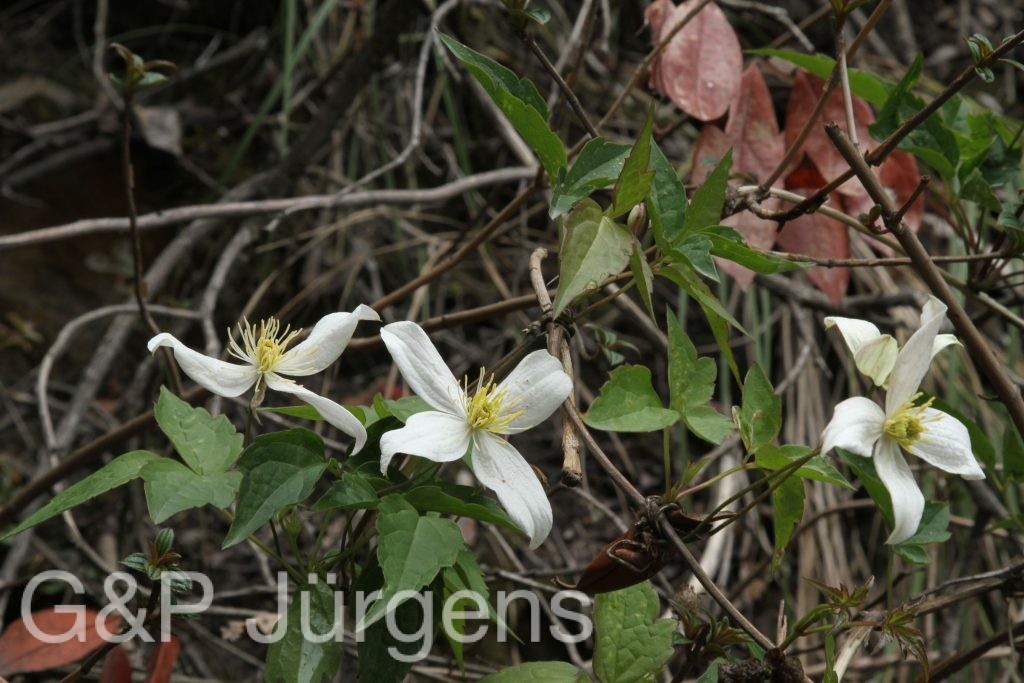
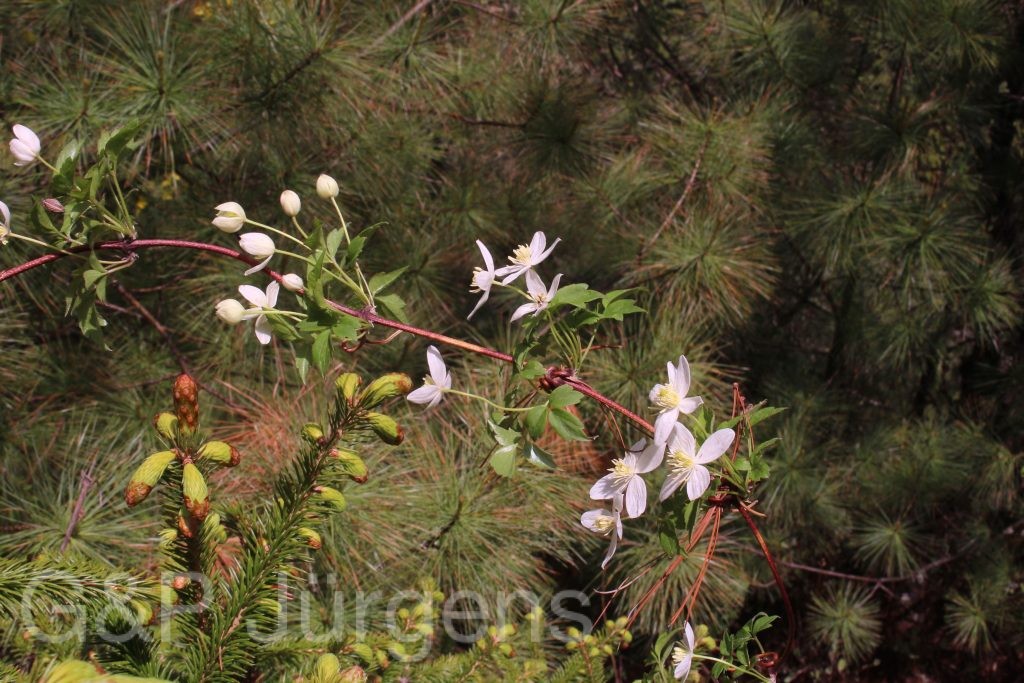
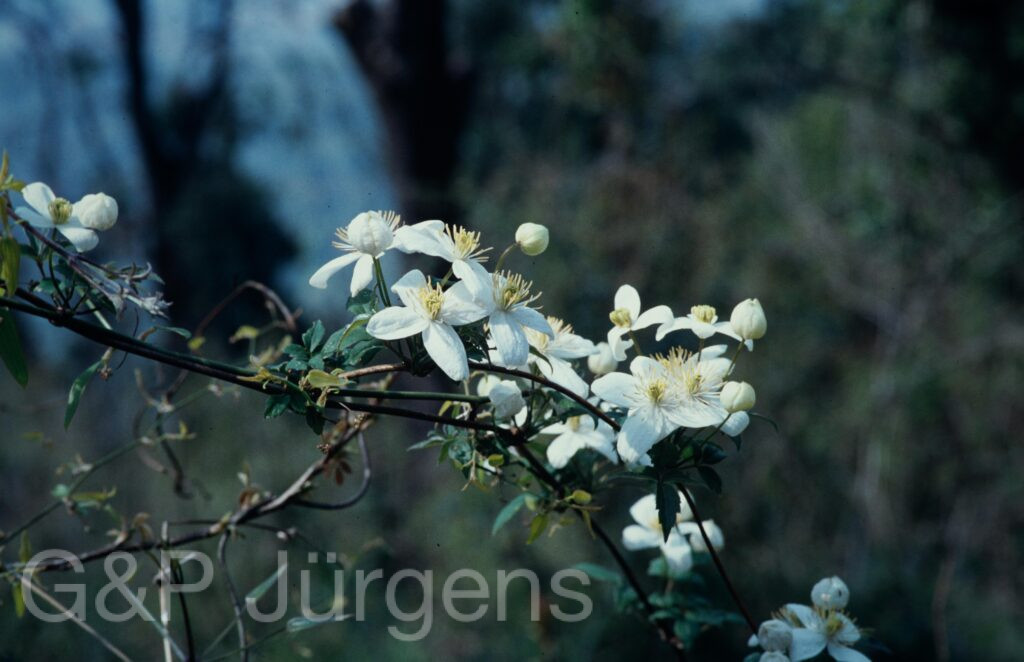
Clematis montana is a widespread Himalayan and Sino-Himalayan climber ranging from Pakistan and Kashmir eastward through Nepal, Bhutan and northern India into central and southwestern China and Myanmar. Reflecting its long history in horticulture, GBIF records exceed 6300 and include numerous cultivated and naturalised occurrences in Britain, continental Europe, North America, New Zealand and Australia alongside its native Asian range. In the wild it grows over an exceptionally broad elevational span, scrambling through forest margins, scrub, hedgerows and over rock from warm temperate valleys to high subalpine slopes. The Bhutanese material imaged at Sandrup (1000 m) and Chele La (3400 m) and the East Nepal population on the Jaljale Himal (2400 m), all flowering April to May, illustrate its vernal, pre-monsoon blooming across this range.

It is a vigorous woody climber with slender, ridged, eventually brown stems and clambering by twining petioles. The leaves are opposite and ternate, the three leaflets ovate to lanceolate, irregularly toothed or lobed and often softly hairy. Flowers are borne singly or in fascicles from the axils of the previous year's growth, each large and showy with four (occasionally more) spreading, petaloid sepals that are white to pink and frequently fragrant; true petals are absent. The numerous stamens have yellow anthers. The fruit is an aggregate of achenes, each tipped by a long, persistent, plumose silky style aiding wind dispersal.

Within Clematis the species belongs to sect. Montanae of spring-flowering, ternate-leaved climbers, and is morphologically variable, with several named varieties and many garden cultivars selected for flower colour and size. It is an early-season nectar source and a robust coloniser of disturbed and edge habitats. It is common and not of conservation concern; its naturalisation beyond Asia underscores its competitive vigour and broad climatic tolerance.

Author: Buch.-Ham. ex DC. · Sources: POWO (Kew), GBIF, Flora of China, Flora of Bhutan, Annotated Checklist of the Flowering Plants of Nepal, Grey-Wilson's Clematis the Genus (monograph)

L.H.J.Williams

Nepal 99 708 ergebnis
West-Nepal, Pungmo 3400m, July
Nepal 99 707 ergebnis
West-Nepal, Pungmo 3400m, July

Description

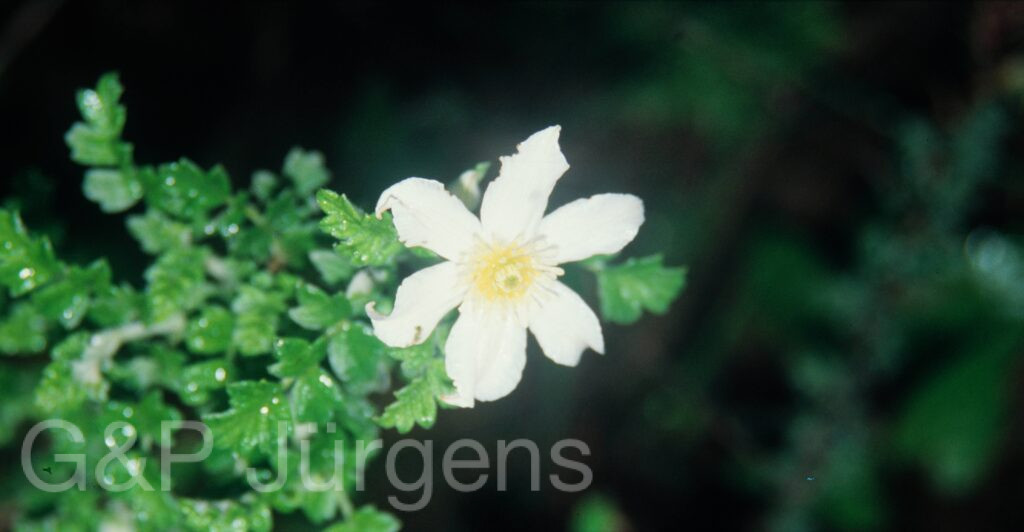
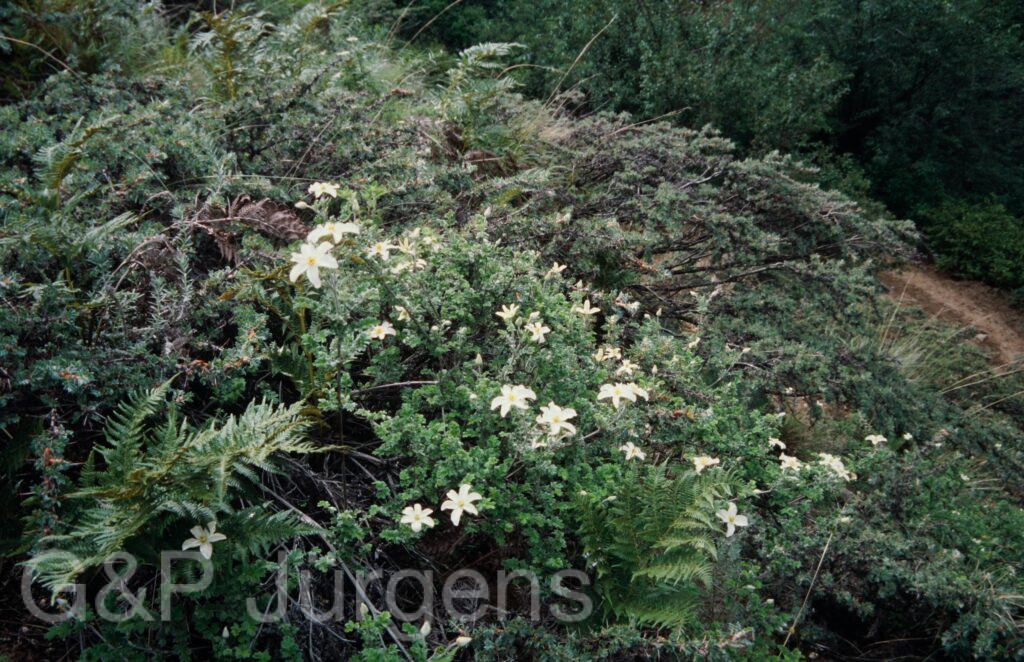
Clematis phlebantha L.H.J.Williams is a rare Himalayan endemic restricted to western Nepal, where GBIF records only 46 occurrences (the additional Netherlands record reflecting cultivated or herbarium material). It is a plant of dry, rocky, sun-exposed slopes and arid river gorges in the rain-shadowed valleys of the trans-Himalaya, growing at around 3000 to 3600 m. The plant photographed at Pungmo in West Nepal, at about 3400 m in July, exemplifies its association with the semi-arid inner valleys of the Dolpo region, where it scrambles over rock and shrubs in a markedly dry montane climate.

The species is a sprawling, woody-based climber or sub-shrub with silvery, silky-hairy stems and foliage that lend the plant a distinctive pale, felted appearance. The leaves are pinnate, with several segments that are densely silky beneath, an adaptation to its arid, high-light habitat. The flowers are solitary or few, borne on long pedicels, with no true petals; the showy floral parts are the four to six spreading, creamy-white to pale tepals, conspicuously marked with prominent purplish or reddish veins (phlebantha referring to this vein pattern). The fruit is an aggregate of achenes, each bearing a long, persistent, plumose style that aids wind dispersal.

First described from western Nepal, C. phlebantha is celebrated among horticulturists, having been introduced to cultivation following its discovery, and is valued for its silvery foliage and veined flowers. Its strict endemism and limited known range make it a species of notable biogeographic and conservation interest, characteristic of the specialised flora of the dry inner Himalayan valleys. Its narrow distribution warrants monitoring, as such restricted-range endemics are inherently vulnerable to habitat change.

Author: L.H.J.Williams · Sources: POWO (Kew), GBIF, Flora of Nepal, Grey-Wilson monograph of Clematis, Stainton Flowers of the Himalaya

Rehder

Nepal 99 469 ergebnis
West-Nepal Churta-Khola 3200m, June

Description

Clematis roylei is a Himalayan climber of the buttercup family, with about 66 GBIF occurrences recorded from India and Nepal. It is a plant of moist temperate forest and the shrubby ecotones between forest and open slope, scrambling over shrubs, herbaceous vegetation and embankments in cool, humid montane settings. The material photographed at Churta-Khola in West Nepal at about 3200 m in June was recorded at the start of the monsoon, when the temperate forest zone is flushed with new growth and these herbaceous climbers come into flower. The species occupies a broadly montane band along the central and western Himalaya.

It is a slender, somewhat woody-based herbaceous to subscandent climber whose petioles and rachises twine to provide support, the leaves being opposite and compound, typically pinnate to ternate with toothed or lobed, acuminate leaflets. The nodding, campanulate flowers lack true petals; the floral envelope consists of four (occasionally more) connivent sepals that are commonly bluish, purple, violet or dull yellow and frequently softly hairy on the margins and outer surface. The numerous stamens surround a cluster of carpels which, in fruit, develop into the characteristic achenes each tipped by a long, persistent, plumose feathery style that aids wind dispersal.

Clematis is a large, cosmopolitan genus, and roylei belongs to the nodding-flowered Himalayan assemblage allied to the C. connata group, with which it has often been associated taxonomically. These climbers contribute to the structural complexity of forest margins and provide nectar to montane pollinators. The species is locally distributed but not formally evaluated; its persistence is tied to the maintenance of intact mid-montane forest and shrubland habitats.

Author: Rehder · Sources: POWO (Kew), GBIF, Flora of Nepal, Hooker Flora of British India, Annotated Checklist of the Flowering Plants of Nepal, Tamura Ranunculaceae

(Kunth ex Baker) H.Hara

Bhutan2014 578
Bhutan Phobjika 3100m, May
Bhutan2014 827
Bhutan Thimphu 2450m, May

Description

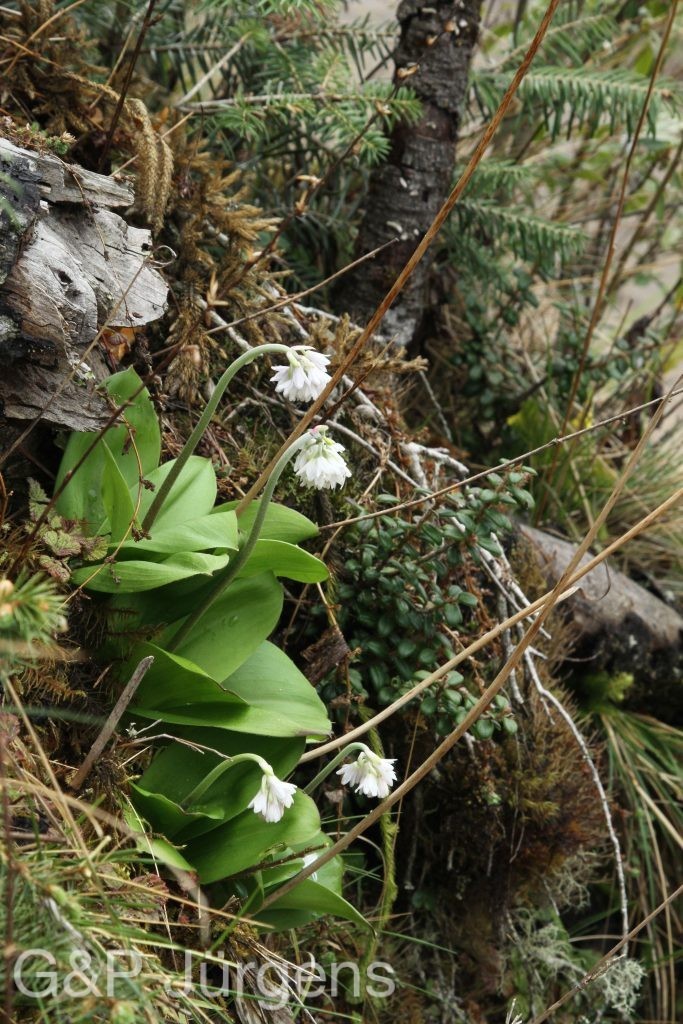
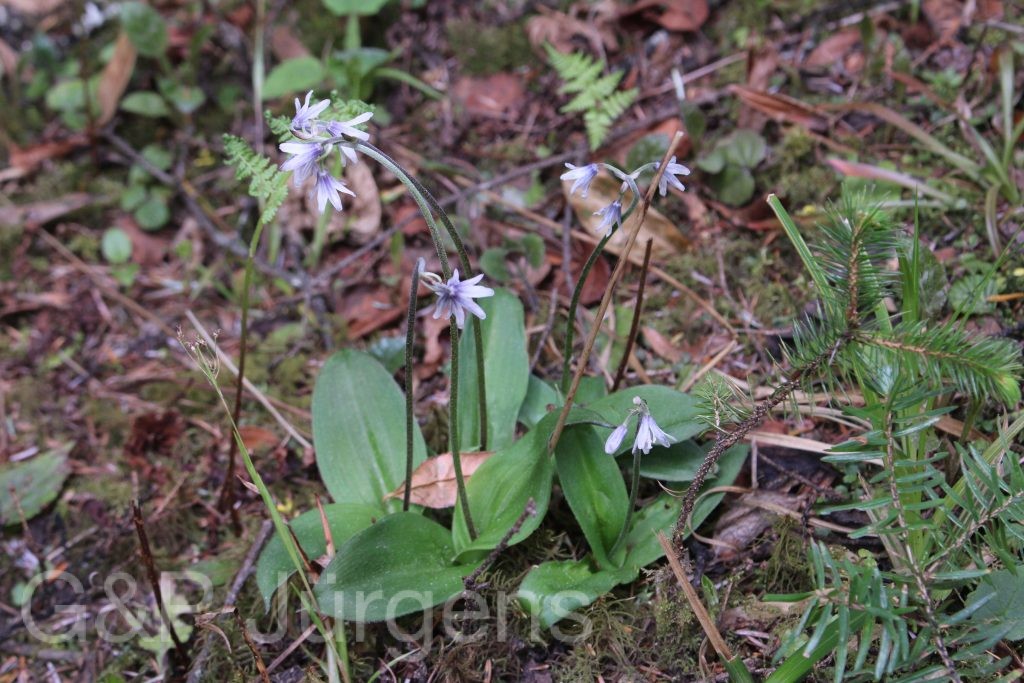
Clintonia udensis var. alpina is a rhizomatous woodland herb of the temperate Himalaya and the mountains of East Asia. GBIF records (around 230 occurrences) span China, India, Nepal, Bhutan, Myanmar, Korea and Japan, the species as a whole forming a classic Sino-Himalayan to East Asian arc. It is a plant of moist, shaded forest floors, growing among mosses beneath fir, hemlock and rhododendron, and along cool stream banks in the upper temperate and subalpine zones. The photographed plants came from Bhutan at Phobjika near 3100 m and above Thimphu at about 2450 m, both flowering in May, consistent with its habit of blooming as the snowmelt recedes.

The plant arises from a slender creeping rhizome and produces a basal rosette of two to five leaves. These are oblong-elliptic to obovate, entire, glabrous and somewhat fleshy, narrowed to a sheathing base. From the centre rises a leafless scape bearing a small umbel-like cluster of nodding, white, campanulate flowers; each has six free, oblong tepals, six stamens with versatile anthers, and a superior ovary topped by a short style. The fruit is a globose berry that ripens from green to a striking blue-black, borne erect on the lengthening pedicels, the contrast of dark fruit and green foliage being characteristic of the genus.

Clintonia is a small Northern Hemisphere genus of the Liliaceae traditionally placed near Medeola, with a disjunct distribution between eastern Asia and North America that makes it a textbook example of the boreal-temperate floristic link. The alpine variety represents the higher-elevation, smaller Himalayan expression of the wide-ranging C. udensis. The species is frequent in suitable forest and is of no conservation concern, its blue berries dispersed by birds.

Author: (Kunth ex Baker) H.Hara · Sources: POWO (Kew), GBIF, Flora of China, Flora of Bhutan, Annotated Checklist of the Flowering Plants of Nepal, Utech's taxonomic studies of Clintonia (Liliaceae)

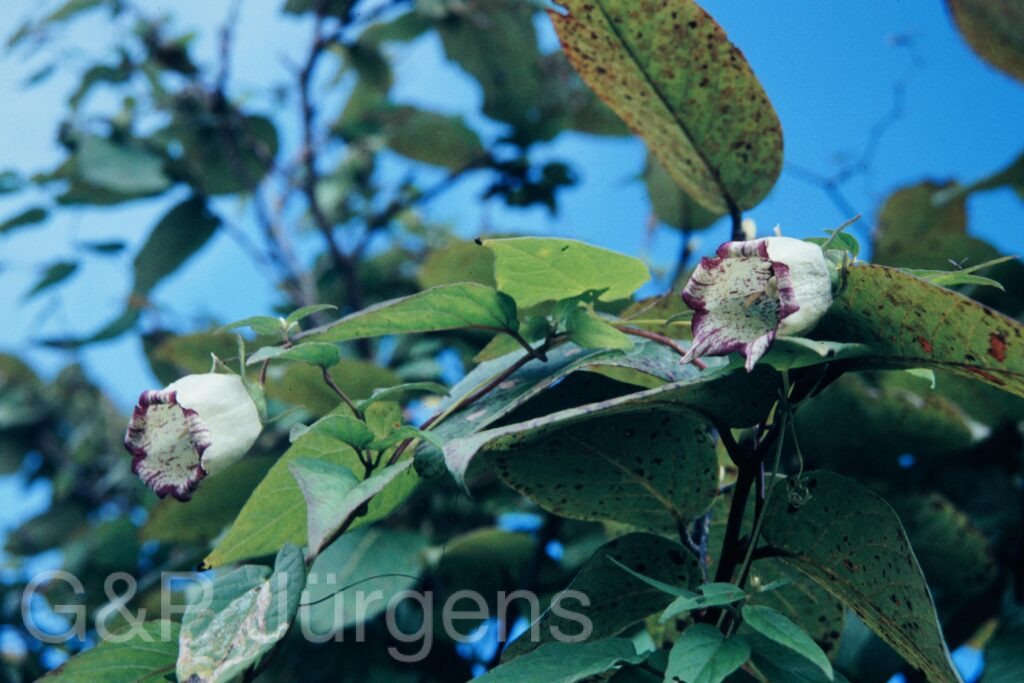
Wall.

Bhutan2012 1191
Bhutan Tashiyangtse 2000m, October
Bhutan2012 1193
Bhutan Tashiyangtse 2000m, October
Nepal 95 118 P206 ergebnis
Nepal south of Rupina La 3400m October
Nepal 95 119 P207 ergebnis
Nepal south of Rupina La 3400m October

Description

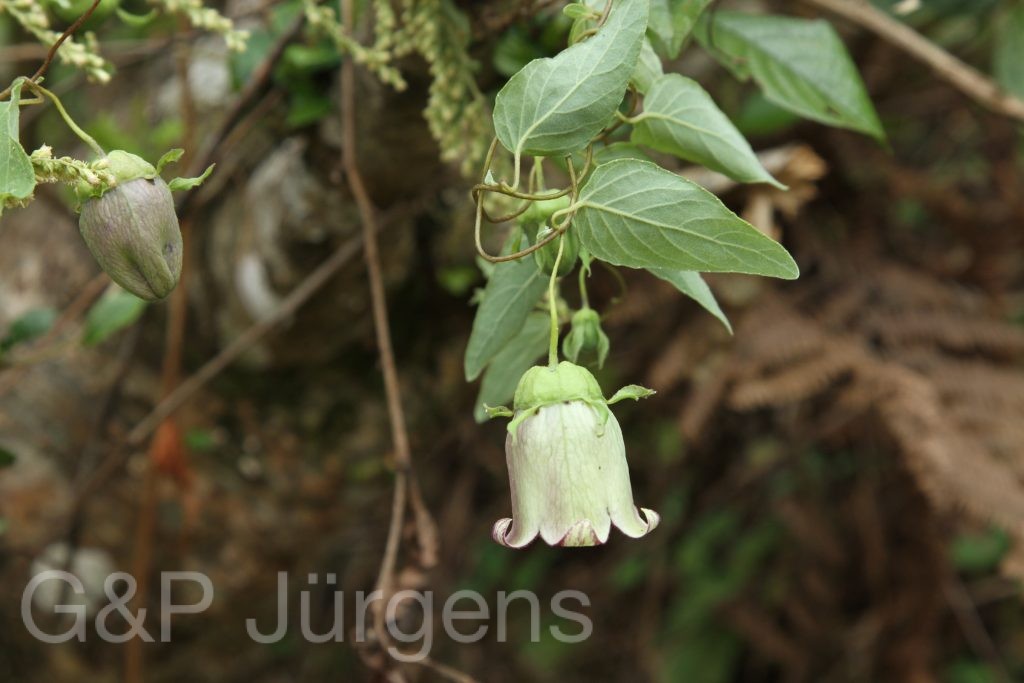
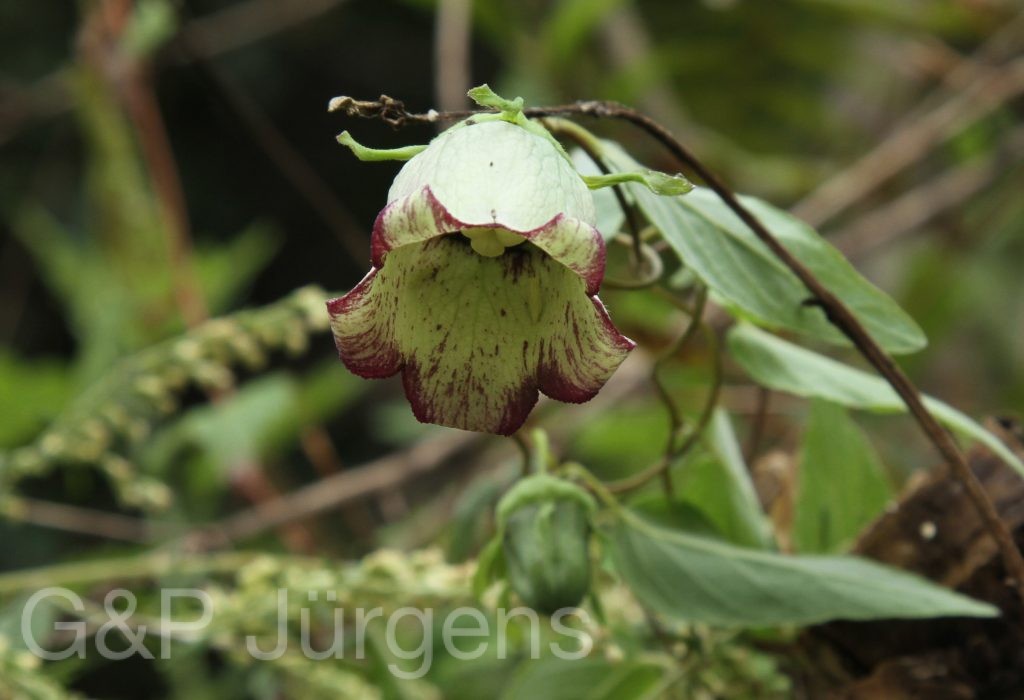
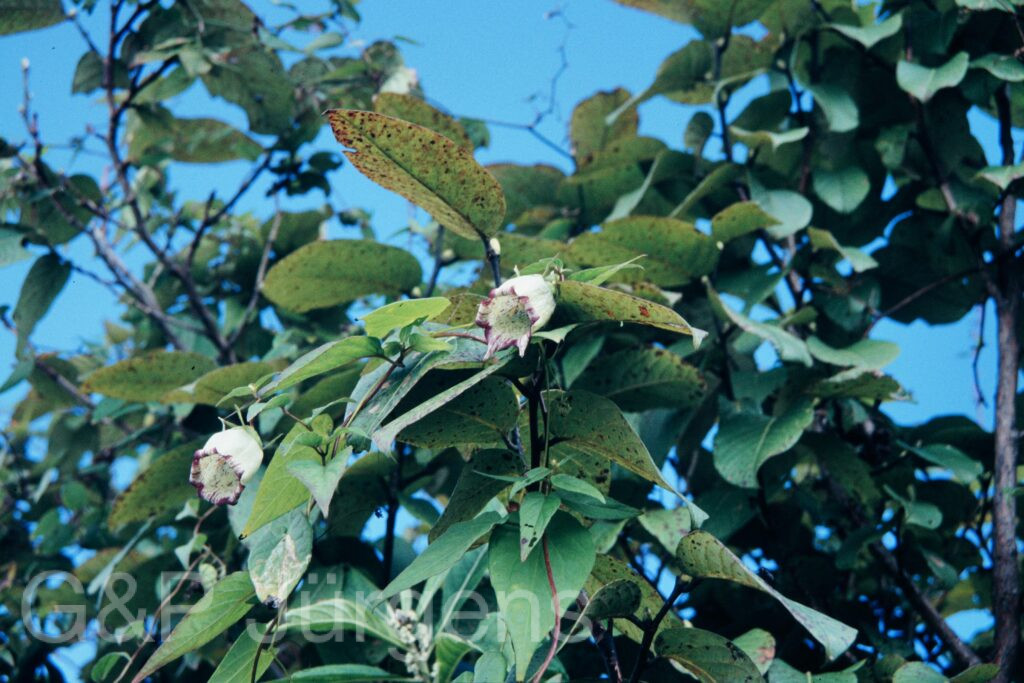
Codonopsis viridis is a Himalayan twining or scrambling perennial distributed along the central and eastern ranges from Nepal through northern India, Sikkim and Bhutan into south-western China, with 162 GBIF records concentrated in this Sino-Himalayan belt. It grows in shrubberies, forest margins, hedgerows and disturbed banks across a wide montane elevation span, from warm-temperate slopes to the subalpine zone. The cited collections illustrate this amplitude: from Tashiyangtse in eastern Bhutan at 2000 m to a higher site south of the Rupina La in Nepal at 3400 m, both flowering in October at the close of the monsoon.

It is a herbaceous climber with slender, twining stems emerging from a tuberous or fleshy rootstock, the foliage and roots emitting the characteristic acrid Codonopsis odour. The leaves are ovate to ovate-lanceolate, alternate or scattered along the stem, thin-textured and entire to obscurely toothed. The flowers are solitary and terminal or borne on slender lateral branches, broadly campanulate to cup-shaped, the corolla greenish to greenish-yellow, often faintly veined or tinged within, with five short spreading lobes. The fruit is a turbinate capsule with a flattened apex, dehiscing to release numerous small seeds.

Codonopsis is a large Asian genus centred on the Himalaya and China, and C. viridis is distinguished within it by its greenish corolla and climbing habit. Like its congeners, it is visited by bees and flies and several species are harvested as substitutes for the tonic root "dang shen". The species is widespread and locally frequent across its range and is not regarded as of conservation concern.

Author: Wall. · Sources: POWO (Kew), GBIF, Flora of China, Flora of Bhutan, Annotated Checklist of the Flowering Plants of Nepal, Lammers monograph of Campanulaceae (Codonopsis)

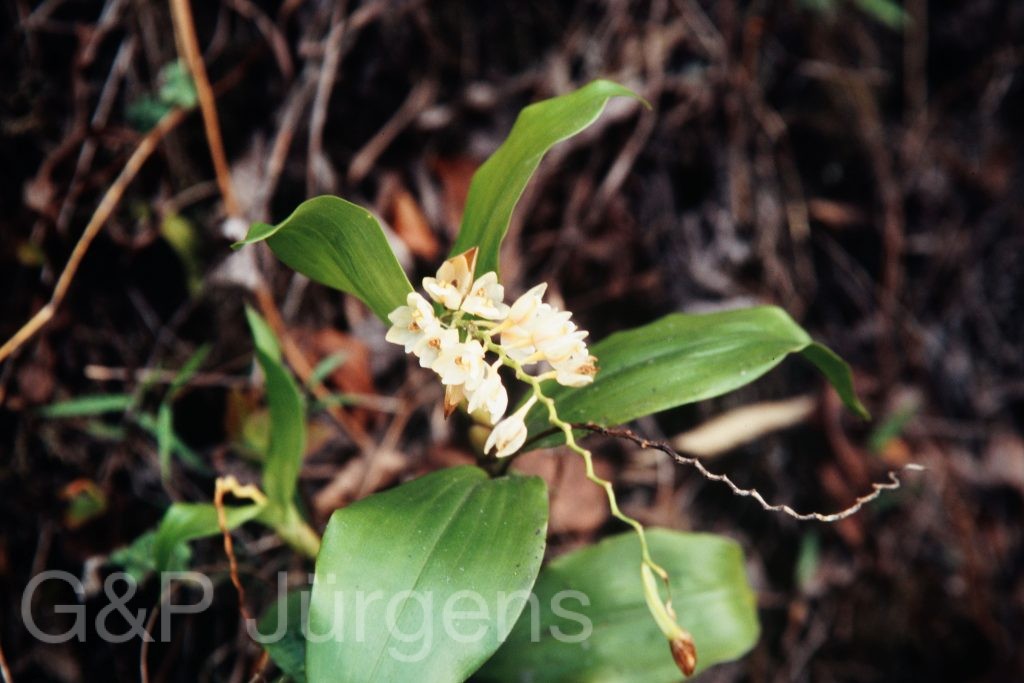
(Lindl.) Rchb.f.

Bh09 220 P373
Bhutan Dochu-La, 2900m June
Bh09 356 P573
Bhutan Dochu-La, 2900m June

Description

Coelogyne articulata (long widely known as Pholidota articulata) is an epiphytic orchid distributed broadly across tropical and subtropical Asia, from India, Nepal, Bhutan and China through Myanmar, Thailand, Indochina and Malesia to New Guinea, with 733 occurrences in GBIF. It grows as an epiphyte on tree trunks and mossy branches, occasionally as a lithophyte on shaded rocks, in evergreen and mixed broadleaved forest from the lowlands up to about 2900 m. The Bhutanese collection figured, from Dochu-La at 2900 m in June, marks the upper, cool-temperate edge of its range, where it flowers in the early monsoon in humid, shaded forest.

The plant has a creeping rhizome bearing a chain of cylindrical to fusiform pseudobulbs jointed end to end, each successive bulb arising from the apex of the last, producing the articulated, beaded habit reflected in the epithet. Each pseudobulb carries one or two oblong-lanceolate, plicate leaves. The slender, pendulous inflorescence is a distichous, secund raceme of many small flowers subtended by conspicuous boat-shaped bracts; the flowers are whitish to pale pink, with concave sepals, narrow petals and a saccate, concave lip. The fruit is a small ribbed dehiscent capsule releasing dust-like seeds.

The genus name on the source page reflects past placement in Pholidota; molecular phylogenetics has shown Pholidota to be nested within Coelogyne (Orchidaceae, subfamily Epidendroideae), and POWO accepts the combination Coelogyne articulata. The input family is given as "Orchideaceae"; the accepted family is Orchidaceae. Widespread, locally common and tolerant of secondary forest, the species is not regarded as threatened, though all wild orchids are listed on CITES Appendix II.

Author: (Lindl.) Rchb.f. · Sources: POWO (Kew), GBIF, Flora of China, Flora of Bhutan, The Genus Coelogyne (A Synopsis)

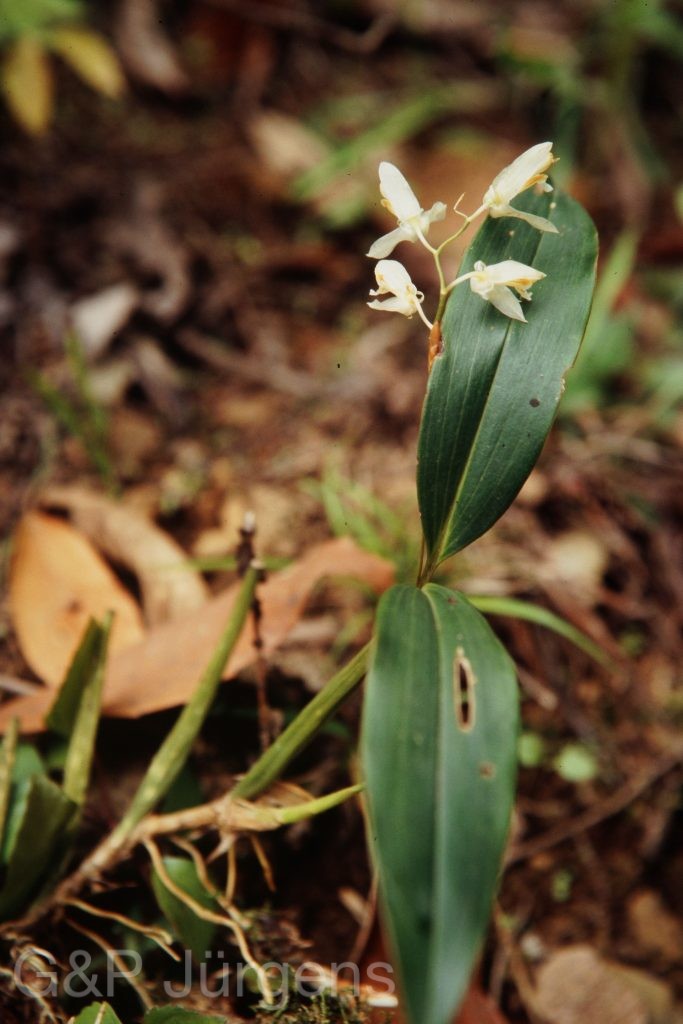
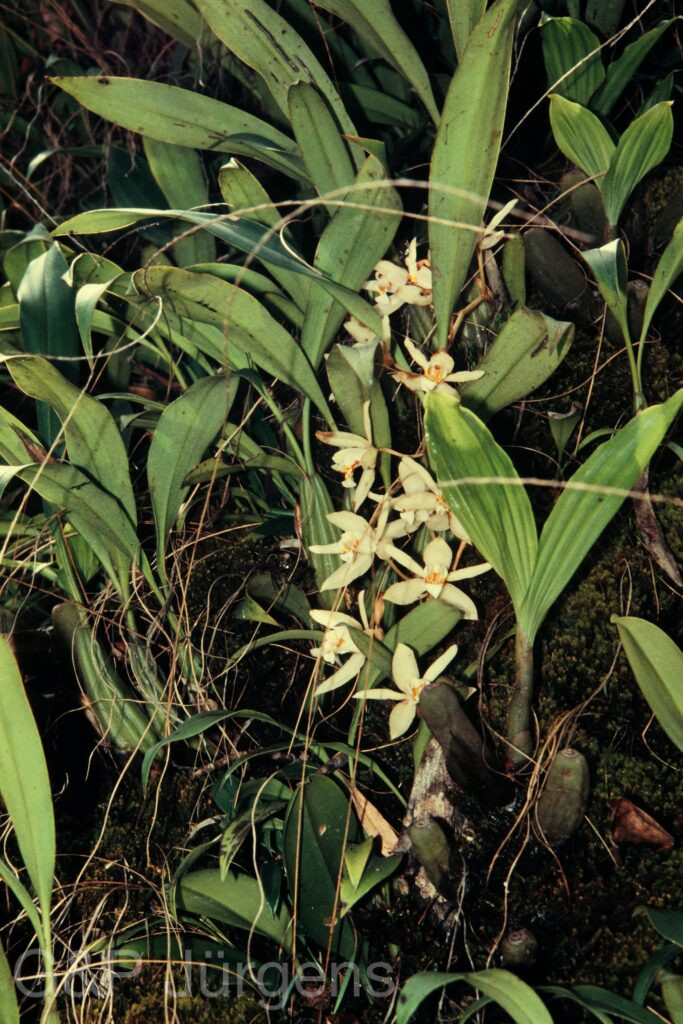
Lindl.

Nepal 97 444 G862
Nepal Tashigaon 2900m May
Nepal 97 446 P864
Nepal Tashigaon 2900m May

Description

Coelogyne flaccida Lindl. is an epiphytic orchid of the Himalaya and Southeast Asia, recorded from China, India, Nepal, Bhutan, Thailand, Laos, Vietnam and Myanmar, with cultivated records widely scattered elsewhere; GBIF documents around 243 occurrences. It grows as an epiphyte, occasionally a lithophyte, on mossy tree trunks and shaded rocks in broadleaved evergreen and mixed forest, generally between about 900 and 2300 m, though montane records reach higher. The photographed plant was found at Tashigaon in Nepal at about 2900 m in May, at the upper, cooler edge of its range where this pseudobulbous orchid flowers in spring on humid, well-shaded substrates.

The plant is sympodial, with clustered, oblong to ovoid pseudobulbs borne on a creeping rhizome, each pseudobulb bearing one or two apical, plicate, lanceolate to elliptic leaves. The inflorescence is a pendent, laxly several-flowered raceme arising from the base of the pseudobulb. The flowers are fragrant, the sepals and petals creamy-white to pale buff and somewhat flaccid (the epithet flaccida), and the trilobed labellum is marked with conspicuous yellow to orange-brown keels and reddish-brown veining on the side lobes. The fruit is a ribbed dehiscent capsule releasing dust-like seeds.

Within the large Asiatic genus Coelogyne, this species belongs to the white-flowered, pendent-racemed group allied to C. cristata and C. corymbosa and is widely grown by orchid enthusiasts. Like other epiphytic orchids it depends on undisturbed humid forest and mycorrhizal partners for germination. Although fairly widespread, wild populations are vulnerable to habitat loss and collection, and all Coelogyne are listed on CITES Appendix II, regulating international trade.

Author: Lindl. · Sources: POWO (Kew), GBIF, Flora of China, Flora of Bhutan, Annotated Checklist of the Flowering Plants of Nepal, Clayton The Genus Coelogyne: A Synopsis