
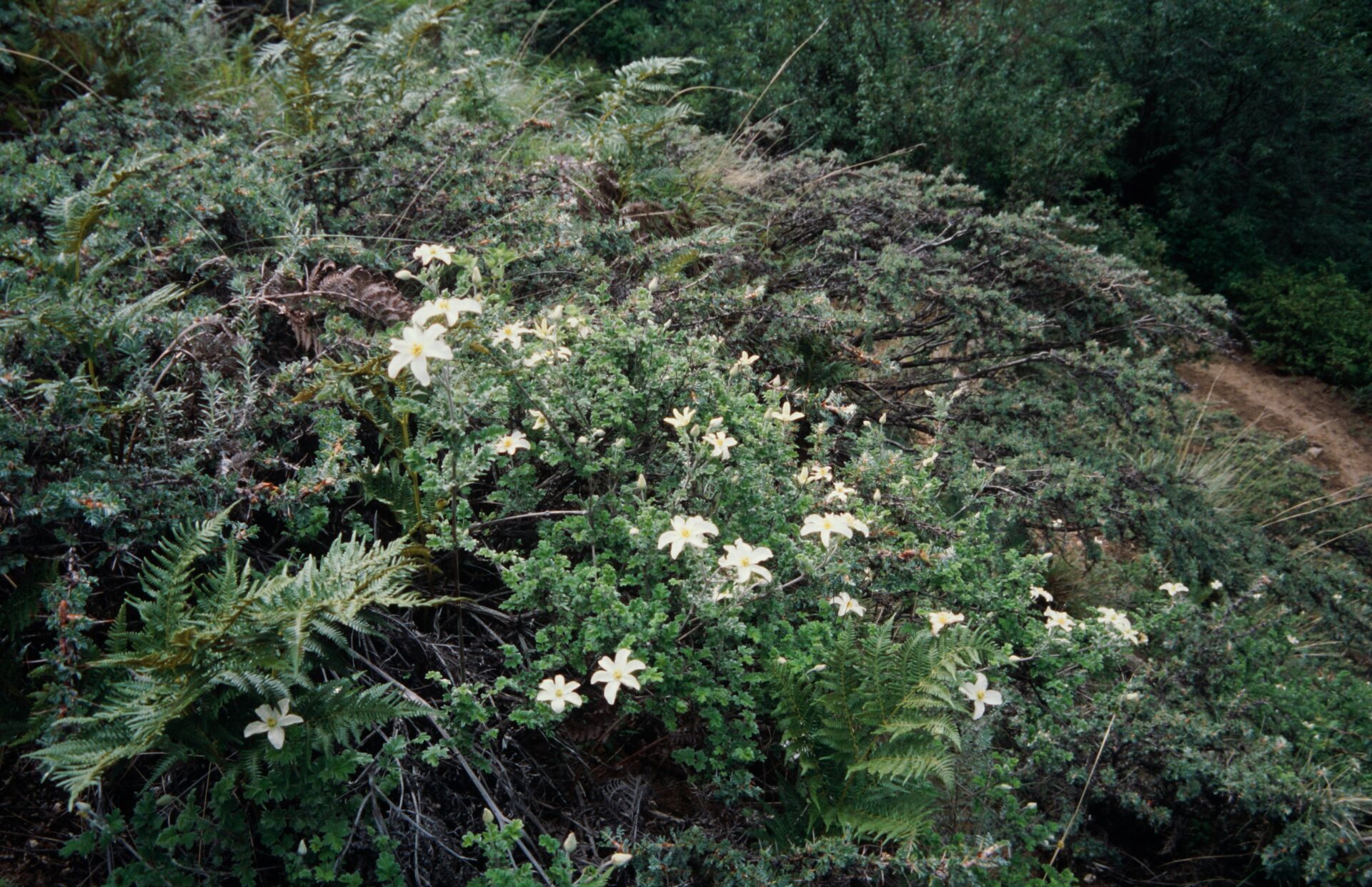
L.H.J.Williams
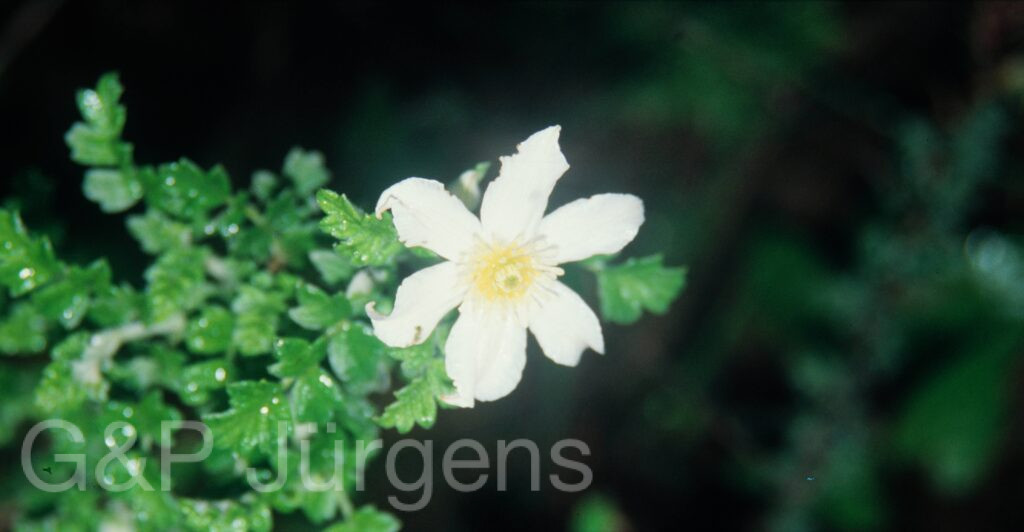
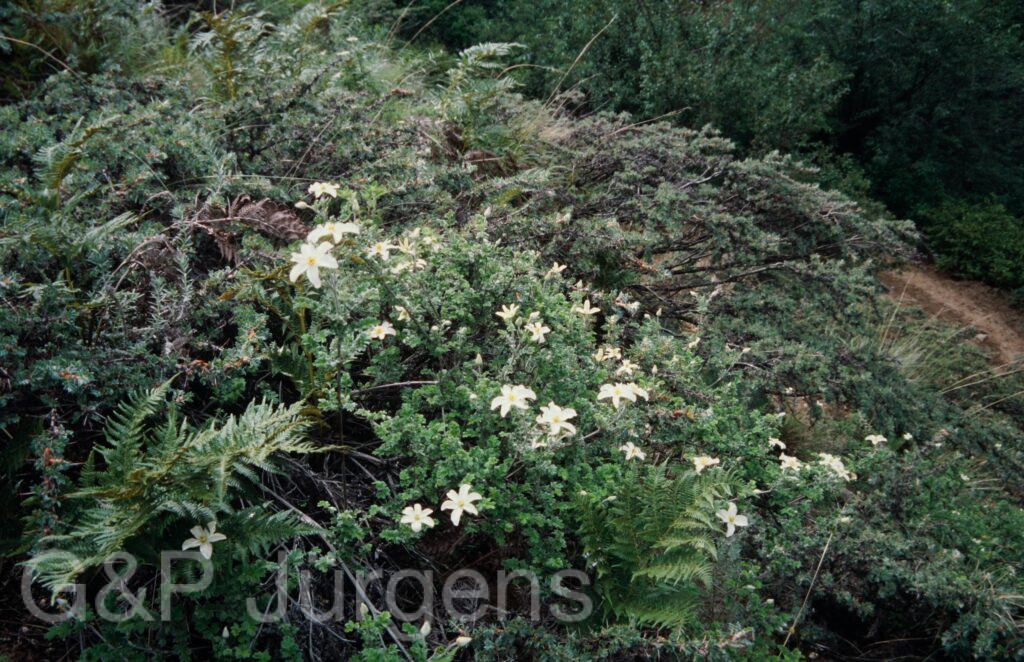
Description
Clematis phlebantha L.H.J.Williams is a rare Himalayan endemic restricted to western Nepal, where GBIF records only 46 occurrences (the additional Netherlands record reflecting cultivated or herbarium material). It is a plant of dry, rocky, sun-exposed slopes and arid river gorges in the rain-shadowed valleys of the trans-Himalaya, growing at around 3000 to 3600 m. The plant photographed at Pungmo in West Nepal, at about 3400 m in July, exemplifies its association with the semi-arid inner valleys of the Dolpo region, where it scrambles over rock and shrubs in a markedly dry montane climate.
The species is a sprawling, woody-based climber or sub-shrub with silvery, silky-hairy stems and foliage that lend the plant a distinctive pale, felted appearance. The leaves are pinnate, with several segments that are densely silky beneath, an adaptation to its arid, high-light habitat. The flowers are solitary or few, borne on long pedicels, with no true petals; the showy floral parts are the four to six spreading, creamy-white to pale tepals, conspicuously marked with prominent purplish or reddish veins (phlebantha referring to this vein pattern). The fruit is an aggregate of achenes, each bearing a long, persistent, plumose style that aids wind dispersal.
First described from western Nepal, C. phlebantha is celebrated among horticulturists, having been introduced to cultivation following its discovery, and is valued for its silvery foliage and veined flowers. Its strict endemism and limited known range make it a species of notable biogeographic and conservation interest, characteristic of the specialised flora of the dry inner Himalayan valleys. Its narrow distribution warrants monitoring, as such restricted-range endemics are inherently vulnerable to habitat change.
Author: L.H.J.Williams · Sources: POWO (Kew), GBIF, Flora of Nepal, Grey-Wilson monograph of Clematis, Stainton Flowers of the Himalaya