
DC.
Description
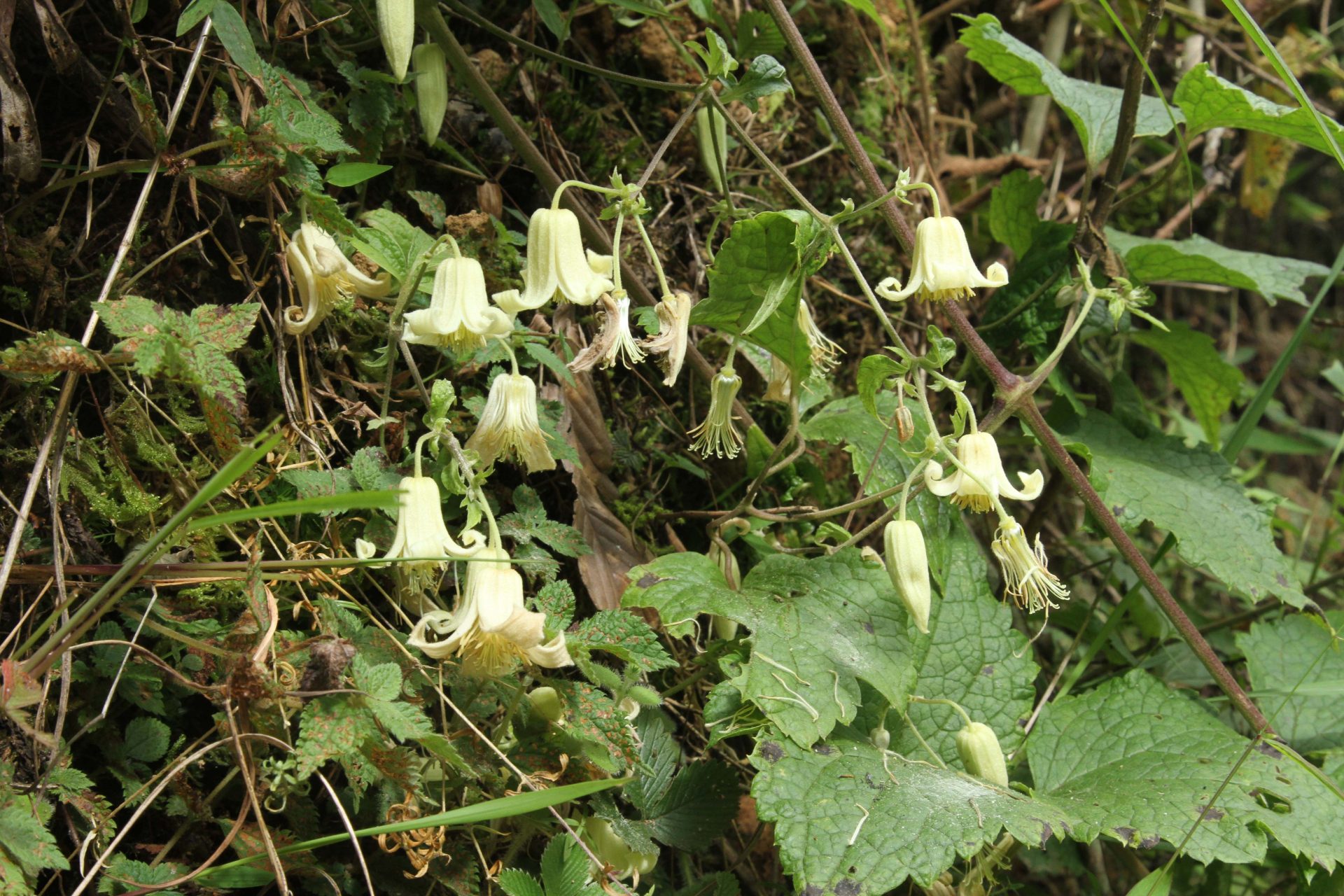
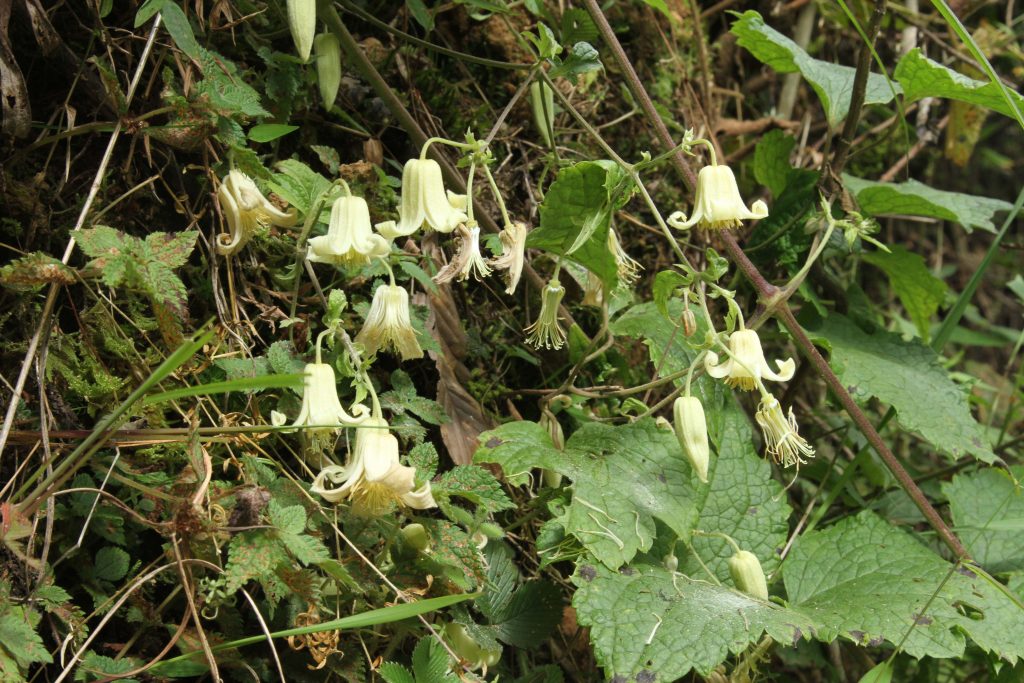
Clematis buchananiana is a widespread climber of the Himalaya and montane Southeast Asia, ranging from Pakistan and Nepal through India, Bhutan and southern China to Myanmar, Thailand and Vietnam; with over 1100 GBIF occurrences it is among the better-documented Asian clematids, the scattered records from Britain, New Zealand and the United States representing cultivation. It scrambles over shrubs, forest margins, hedgerows and roadside thickets in temperate and subtropical zones, broadly between 1500 and 3000 m, flowering late in the season. The photographed plant from the Pele-La in central Bhutan at 3000 m in September shows its characteristic autumn flowering at the upper edge of its altitudinal span.
It is a woody to herbaceous perennial climber with ribbed, often pubescent stems and opposite, pinnate leaves bearing broadly ovate to cordate, coarsely toothed leaflets. The flowers, borne in axillary cymose panicles, are pendulous and bell-shaped (campanulate), the four thick, yellow to greenish-yellow tepals being densely tomentose outside and reflexed or recurved at the tips; true petals are absent. As in all Clematis the showy structures are sepaloid, surrounding numerous stamens and carpels. The fruit is a head of achenes, each bearing a long, plumose, feathery style that aids wind dispersal.
The species belongs to Clematis section Connatae (the nodding, campanulate-flowered, woolly-tepalled Asian group), in which it is distinguished by leaf form and the dense indumentum of its tepals. Ecologically valuable as a late-season nectar source, it is a common and adaptable species across a vast range and is of no conservation concern.
Author: DC. · Sources: POWO (Kew), GBIF, Flora of Bhutan, Flora of China, A Monograph of the Genus Clematis (Grey-Wilson)