Tag:

Subalpine (2500-3500 m)

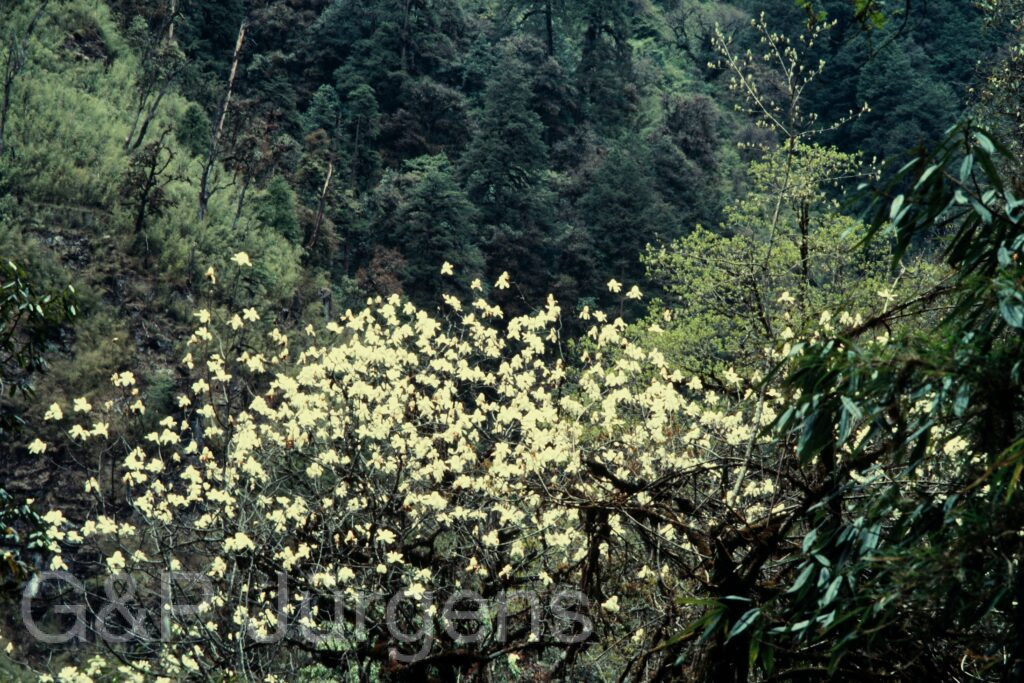
Hook.f. & Thomson

Bhutan2014 585
Bhutan Phobjika 3100m, May

Description

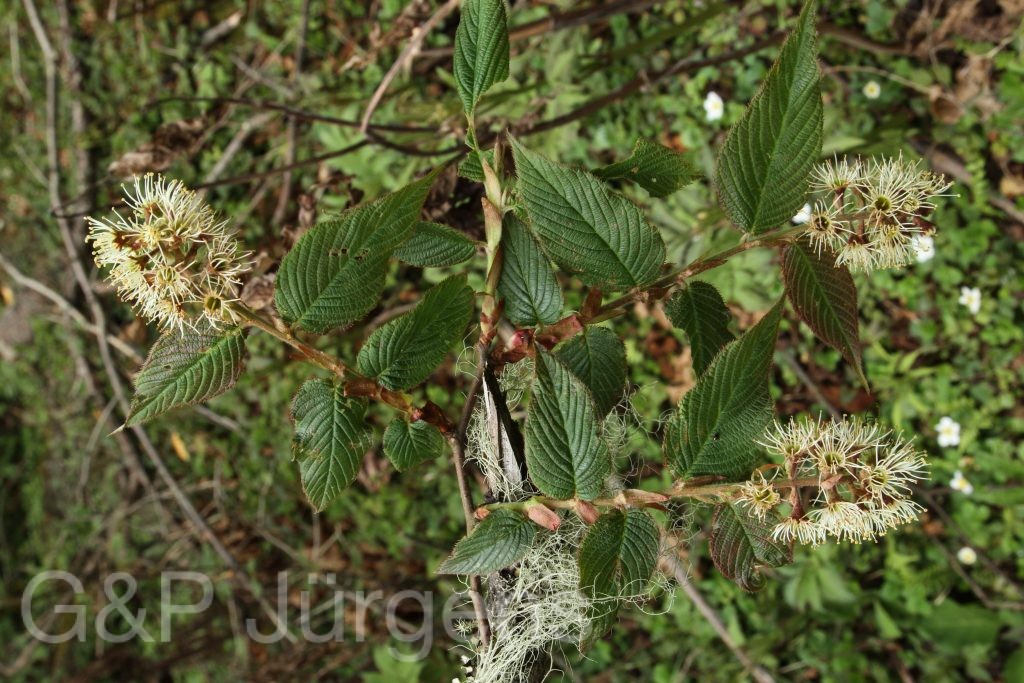
Maddenia himalaica is a Himalayan and Sino-Himalayan species recorded from Nepal, north-east India, Bhutan and south-west China, the 68 georeferenced occurrences including a few cultivated points in Belgium and the United States. It is a plant of cool temperate forest margins, ravines, streamsides and shrubberies, often in association with mixed broadleaved and conifer woodland. The Bhutan material was gathered at Phobjika at about 3100 m, within its usual elevational band of roughly 2400-3600 m in the upper temperate zone. Under current taxonomy GBIF treats the name as a synonym, with Maddenia himalaica regarded as the accepted name; the genus is now frequently subsumed within Prunus.

It is a deciduous shrub or small tree with glabrous to finely pubescent young branchlets and conspicuous, persistent, fringed stipules. The leaves are alternate, oblong to obovate-elliptic, acuminate, sharply and often doubly serrate at the margin, with prominent venation. The small flowers are crowded in short, dense racemes and are apetalous or nearly so, a key generic feature; the numerous stamens surround a glabrous ovary. The fruit is a small ovoid drupe, blackish at maturity, seated on the persistent hypanthium.

Maddenia has long been placed in subfamily Amygdaloideae near Prunus and Pygeum, and molecular studies support its inclusion within a broadly circumscribed Prunus, the reduced apetalous flowers being a derived condition. Its dense racemes attract small insects, and the drupes are dispersed by birds. Widespread if scattered across the Himalaya, it is not considered threatened, though its forest habitat is locally reduced by clearance and grazing.

Author: Hook.f. & Thomson · Sources: POWO (Kew), GBIF, Flora of Bhutan, Flora of China, Flora of Nepal, Rehder Manual of Cultivated Trees and Shrubs
Hook.f. & Thomson

Nepal 97 118 P204
Nepal Mewa-Khola 2470m April
Nepal 97 119 G206 2
Nepal Mewa-Khola 2470m April
Nepal1992 149 P216 ergebnis
Nepal Simbua-Khola 2500m March 

Description

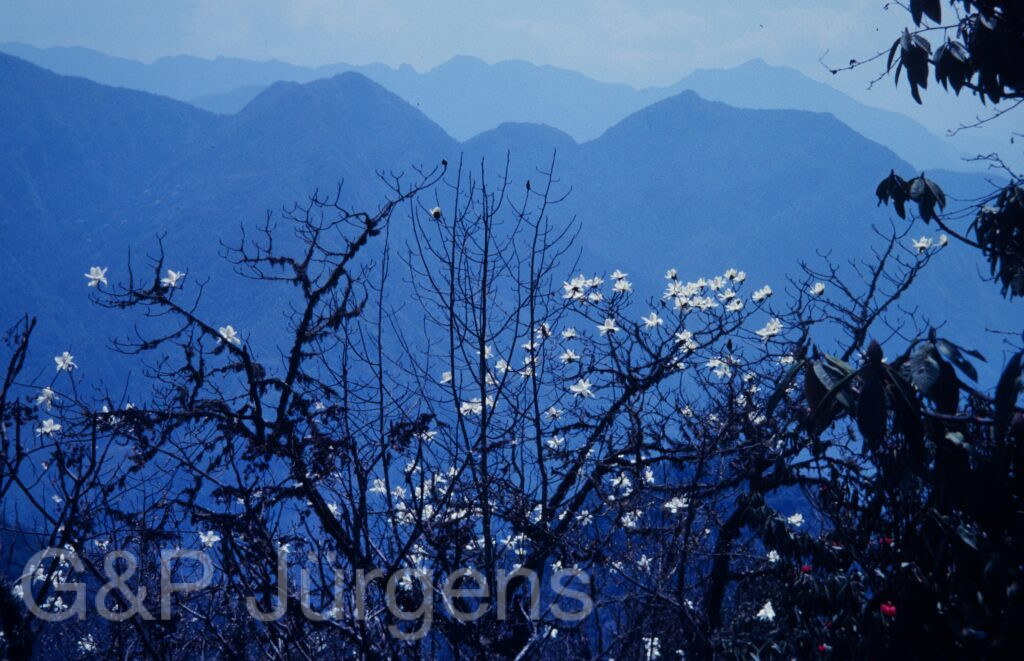
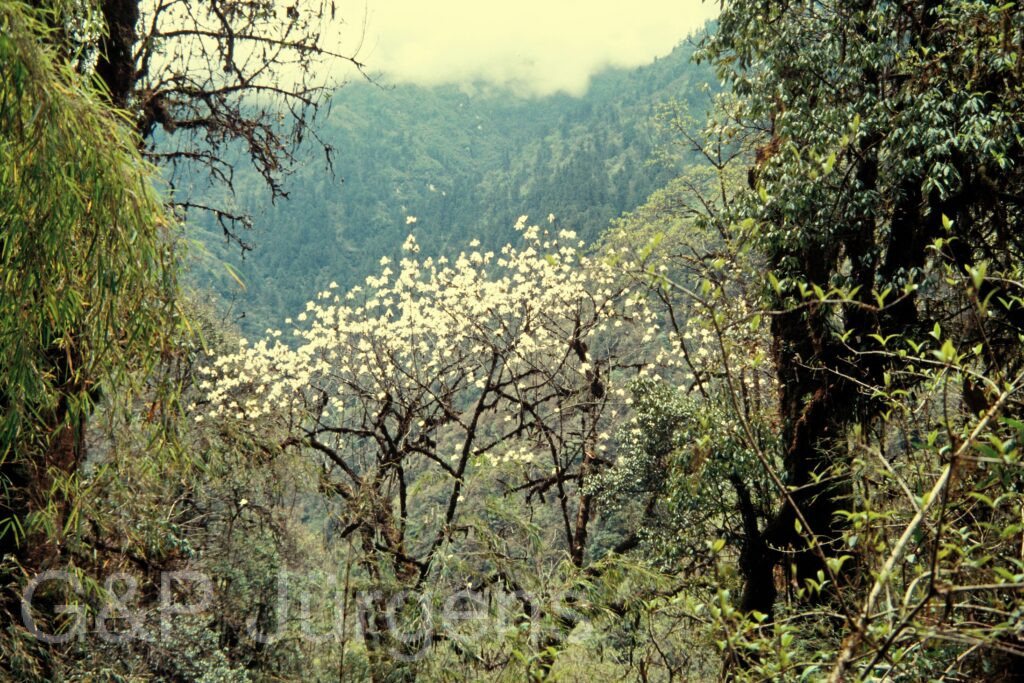
Magnolia campbellii, Campbell's magnolia, is a large deciduous tree of the eastern Himalaya, native from Nepal through Sikkim and Bhutan into NE India, Myanmar and SW China; the additional GBIF codes (GB, IE, US, NZ, JP, DE and others) among its roughly 807 occurrences reflect its renown as a cultivated ornamental. The plants photographed grow in eastern Nepal in the Mewa-Khola (c. 2,470 m, April) and Simbua-Khola (c. 2,500 m, March) valleys, flowering before leaf flush in early spring. In the wild it inhabits temperate broadleaf and mixed forest on humid, well-drained slopes, typically between 2,100 and 3,000 m, often as an emergent tree among oak, rhododendron and laurel.

It is a tree reaching 20–30 m with a stout trunk, grey bark and stout, often pubescent young twigs marked by ringed stipular scars. The leaves are alternate, elliptic to obovate, entire, glaucous and finely hairy beneath. The large, solitary, precocious flowers are among the most spectacular of the genus, cup-and-saucer in form, 15–25 cm across, with numerous tepals ranging from deep rose-pink to white; as in all Magnoliaceae the receptacle bears spirally arranged stamens below an elongate gynoecium of free carpels. The fruit is an aggregate of follicles forming a cylindrical, often twisted etaerio that splits to expose red, arillate seeds suspended on slender funicular threads.

Magnolia campbellii belongs to subgenus Yulania, the precocious-flowering Asian magnolias, and its early bloom on bare branches is a defining feature exploited in horticulture, where numerous selections and hybrids exist. Though widely grown, wild populations face pressure from logging and forest conversion, and the species is regarded as of conservation interest across parts of its native range, making intact mid-montane Himalayan forest important to its persistence.

Author: Hook.f. & Thomson · Sources: POWO (Kew), Flora of China Vol. 7, Flora of Bhutan Vol. 1, GBIF, Hunt (ed.): Magnolias and their Allies

Hook.f. & Thomson

Sikkim2011 191
Sikkim Lachung 2800m, June
Sikkim2011 193
Sikkim Lachung 2800m, June

Description

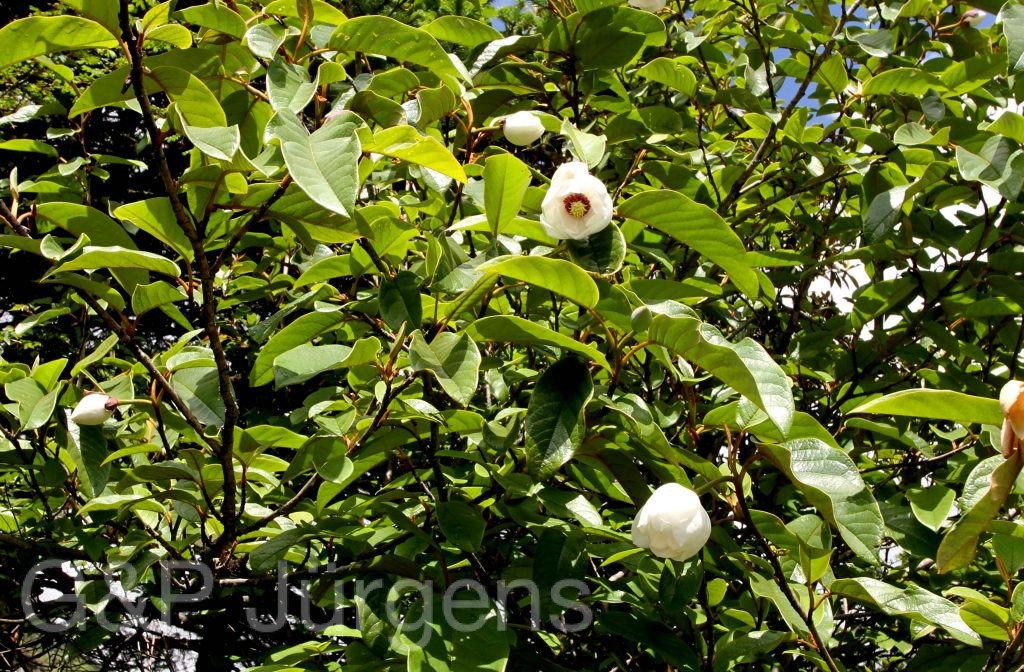
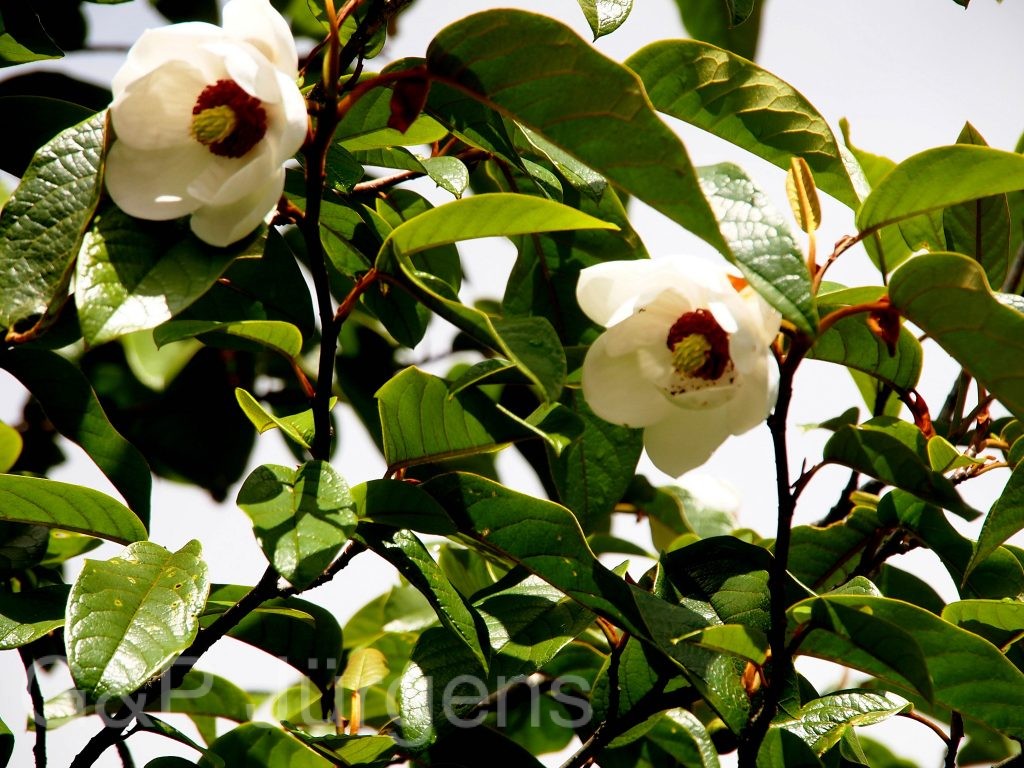
Magnolia globosa is a small deciduous tree or large shrub of the eastern Himalaya and adjacent China, documented by GBIF (236 occurrences) from China, India, Bhutan and Nepal, with additional records reflecting cultivation in Europe, Korea and elsewhere. It is a plant of cool, humid temperate forest, growing in mixed broadleaved and conifer woodland, along ravines and on shaded slopes, generally between about 2500 and 3500 m. The collection from Lachung in Sikkim at 2800 m in June represents its typical montane forest habitat, where it flowers in early summer in the moist, mist-laden middle-mountain belt.

The species is a spreading, often multi-stemmed tree whose young twigs, petioles and flower buds bear conspicuous rusty or pale tomentum. The leaves are alternate, broadly ovate to elliptic, rounded to cordate at the base and pubescent beneath. The flowers are nodding and characteristically cup-shaped to nearly globose, fragrant, with creamy-white to ivory tepals; the perianth is differentiated into a few outer and several inner tepals surrounding numerous spirally arranged stamens and an elongate gynoecium of free carpels. The fruit is an aggregate of follicles forming a cylindric to ovoid pink to crimson cone, releasing red-arillate seeds at maturity.

Magnolia globosa belongs to the morphologically ancient Magnoliaceae, a family noted for spirally arranged floral parts, apocarpous gynoecia and beetle pollination of the large protogynous flowers. Its nodding globose blooms and aggregate follicular cone are diagnostic. Though valued in horticulture, wild populations are scattered and the species, like many temperate Himalayan magnolias, is potentially vulnerable to forest loss and so warrants monitoring.

Author: Hook.f. & Thomson · Sources: POWO (Kew), GBIF, Flora of China Vol. 7, Flora of Bhutan Vol. 1, Flora of Nepal, Hunt Magnolias and their Allies

(Buch.-Ham. ex DC.) Figlar

Bhutan2012 435
Bhutan Dochu-La 2500m, October
Bhutan2015 517
Bhutan Dochu-La 2500m, October
Bhutan2015 519
Bhutan Dochu-La 2500m, October

Description

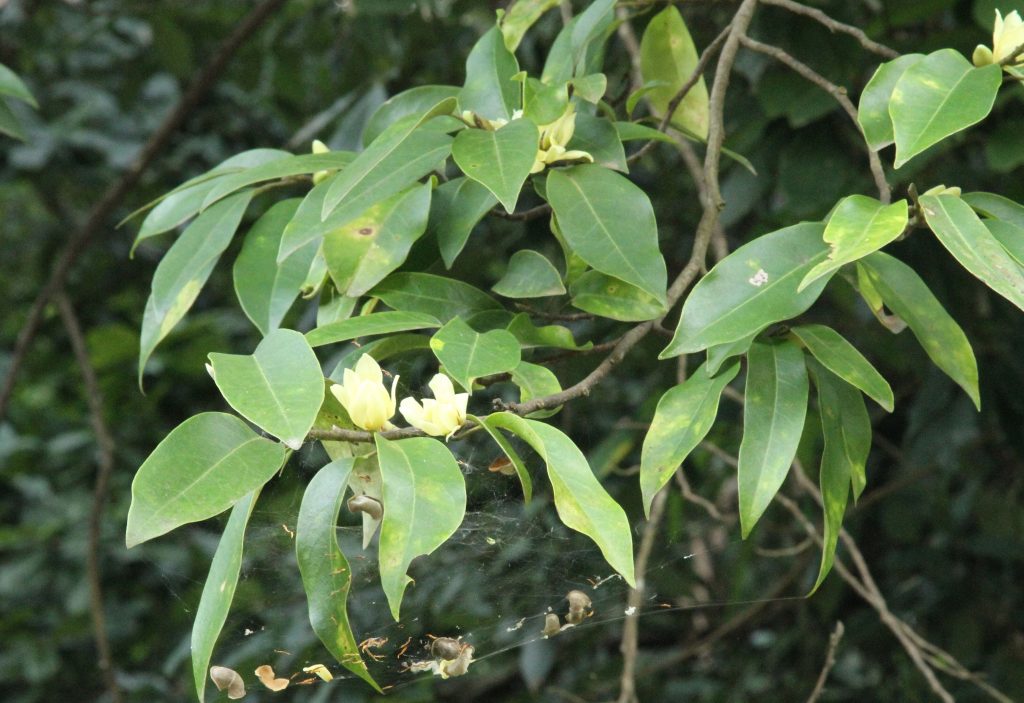
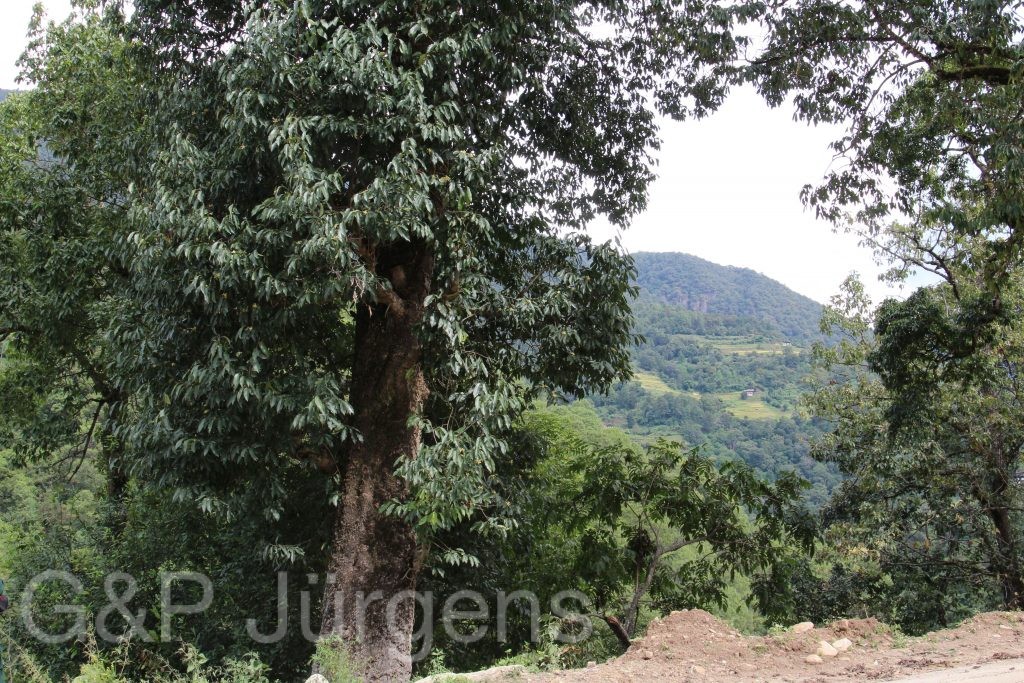
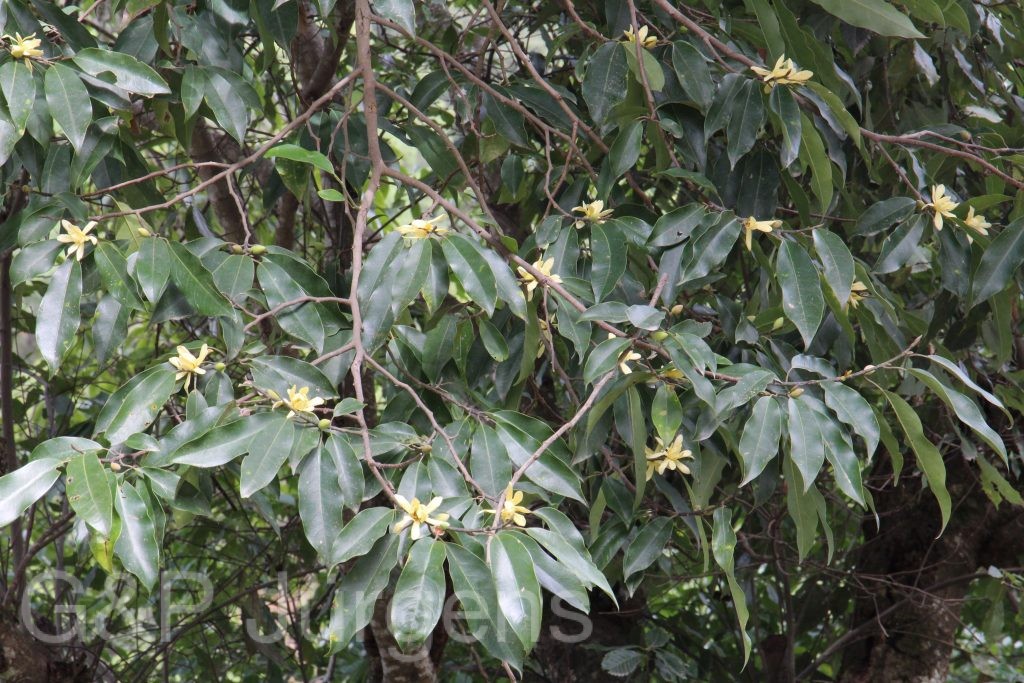
Magnolia kisopa (Buch.-Ham. ex DC.) Figlar is a Himalayan tree distributed across Nepal, China, India, Vietnam, Bhutan and Cambodia, with GBIF recording some 129 occurrences. It is a component of cool temperate to subtropical broad-leaved forest, on humid, well-drained slopes, in ravines and along forest margins in the mid-montane belt. The Bhutanese material from the Dochu-La at 2500 m, photographed in October, places it in the cool temperate evergreen and mixed forest zone, where it occurs as a scattered understorey to canopy tree.

It is a deciduous or semi-evergreen tree with smooth to slightly fissured bark and stout young twigs bearing the conspicuous stipular scars of the family. The leaves are simple, alternate, obovate to oblanceolate, entire-margined, with an acuminate apex and cuneate base, often glaucous beneath. The flowers are large, solitary and terminal, with a perianth of several free, fleshy white to creamy tepals undifferentiated into sepals and petals, surrounding the floral axis bearing numerous spiral stamens and free carpels. The fruit is an aggregate of follicles forming an oblong, cone-like etaerio dehiscing to expose seeds with a fleshy red sarcotesta.

Magnolia kisopa, formerly placed in Michelia, was transferred to a broadly circumscribed Magnolia by Figlar following molecular evidence uniting these Asian magnoliids. It belongs to the evergreen-leaved magnolias of the Sino-Himalayan and Southeast Asian region, an ancient lineage with beetle pollination and bird-dispersed arillate seeds. As a tree valued for timber and ornament, populations are locally affected by forest clearance, and the wider genus includes many taxa of conservation concern.

Author: (Buch.-Ham. ex DC.) Figlar · Sources: POWO (Kew), GBIF, Flora of China Vol. 7, Flora of Bhutan Vol. 1, Flora of Nepal, Figlar & Nooteboom magnolioid classification of the Magnoliaceae

(Wall. ex G. Don) A. DC.

BhutanPG2011 846
Bhutan Paro-Chu 2400m, July
Nepal 99 477 ergebnis
West-Nepal Churta-Khola 3300m, June

Description

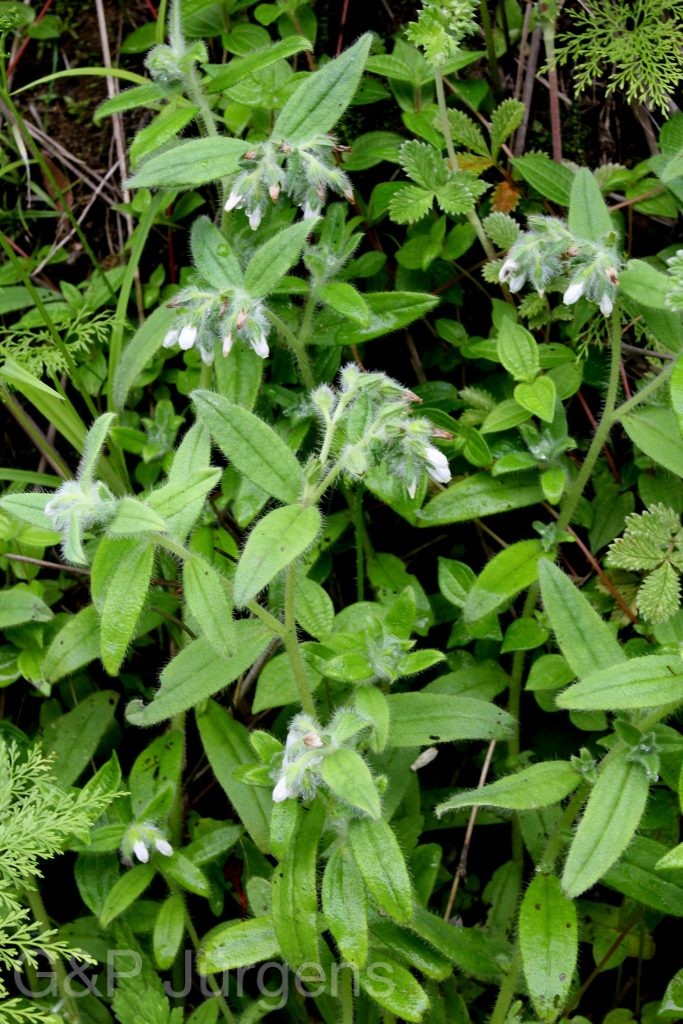
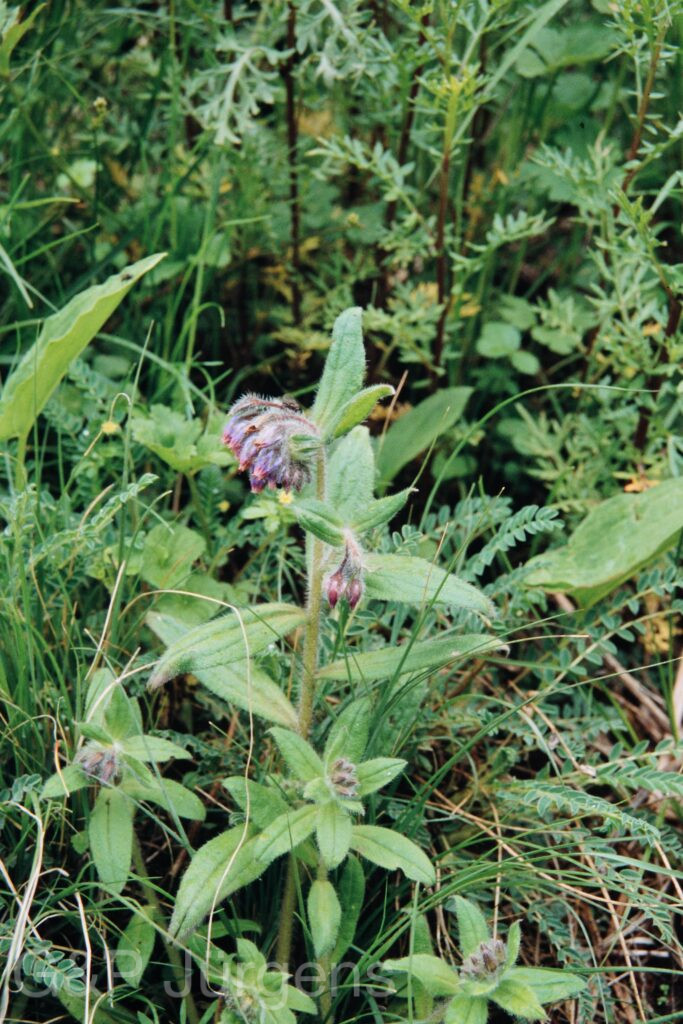
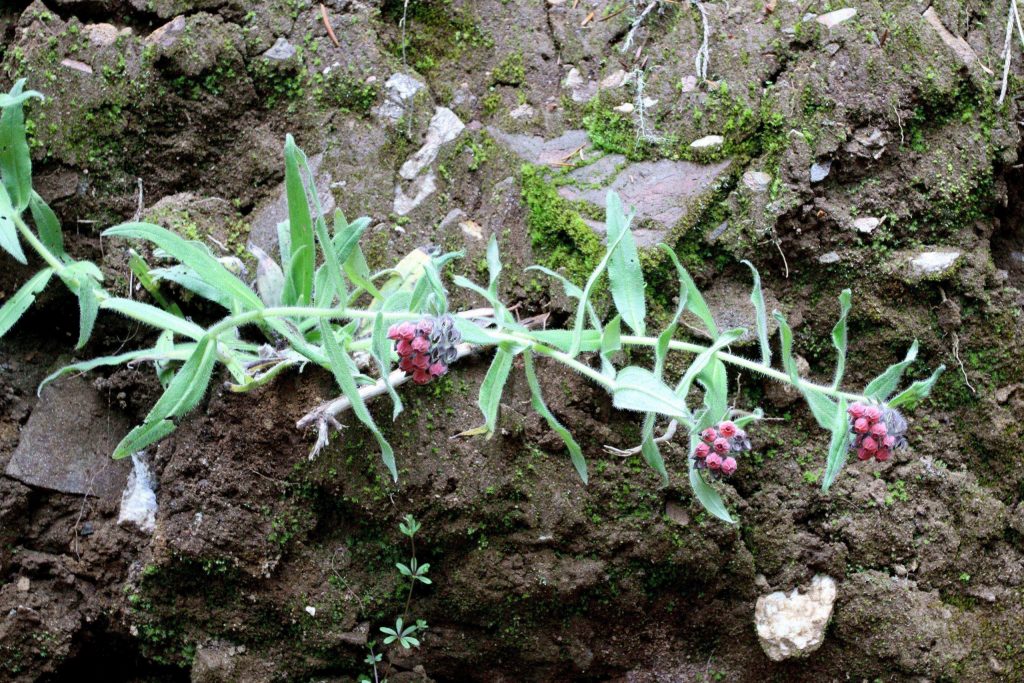
Maharanga bicolor (Wall. ex G. Don) A. DC. is a Himalayan herb of the borage family, recorded by GBIF in 64 occurrences from China (CN), Nepal (NP), Bhutan (BT) and India (IN). It grows on open grassy slopes, rocky banks, forest margins and alpine meadows of the temperate to subalpine zone. The image documents two populations: the Paro-Chu valley in Bhutan at 2400 m in July and the Churta-Khola in West Nepal at 3300 m in June, illustrating the species' typical mid- to high-elevation Himalayan range during the early monsoon.

The plant is a perennial herb arising from a thickened, often reddish rootstock, with erect or ascending stems clothed, like the whole plant, in stiff bristly hairs typical of the family. The leaves are alternate, oblong to lanceolate, sessile or shortly stalked and hispid on both surfaces. The flowers are nodding, borne in terminal scorpioid cymes; the corolla is tubular to narrowly campanulate or urceolate, contracted at the mouth and often bicoloured in yellow and dark purple or maroon, with the anthers conspicuously exserted in a connivent cone, a feature distinguishing Maharanga from the closely related Onosma. The fruit comprises up to four hard, ovoid nutlets.

Maharanga is a small Sino-Himalayan genus segregated from Onosma chiefly by its connate, exserted anthers and pendent flowers, and its species are characteristic elements of the open Himalayan flora. The bristly indumentum and reddish roots, which yield dyes in some relatives, are shared features of the Lithospermeae. The pendent tubular flowers are adapted to insect, probably bumblebee, pollination. With a restricted Himalayan range and dependence on open montane habitats, the genus is of biogeographic interest, though M. bicolor remains locally frequent and is not regarded as threatened.

Author: (Wall. ex G. Don) A. DC. · Sources: POWO (Kew), GBIF, Flora of Bhutan, Flora of China, Boraginaceae revision (Maharanga; I. M. Johnston, Onosma and allied genera)

DC.

BhutanPG2011 99 scaled
Bhutan Chogcham, 3400m June
Nepal 99 42 ergebnis
West-Nepal Nyor Gaad 2800m, June

Description

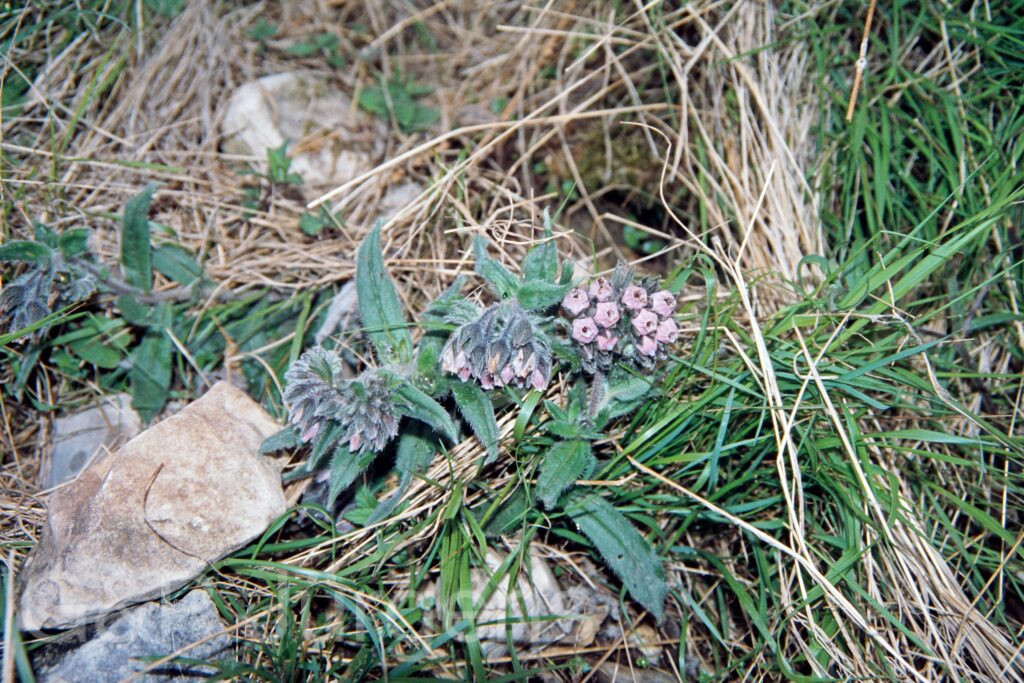
Maharanga emodi is a striking bristly herb of the Himalaya and adjacent China, recorded from Nepal, India, China and Bhutan, with GBIF documenting 170 occurrences. It grows on open alpine and subalpine slopes, rocky banks, grazed meadows and cliff ledges. The images derive from Chogcham in Bhutan at about 3400 m and from Nyor Gaad in West Nepal at about 2800 m, both flowering in June, illustrating its mid- to high-montane range across the chain.

The plant is a perennial with a stout rootstock and erect to ascending stems densely clothed in stiff, often pustular-based hairs. The leaves are oblong to oblanceolate, rough-hairy and crowded below. The flowers are pendent in nodding, branched cymes; the corolla is tubular and somewhat inflated or urceolate, contracted at the mouth, typically yellow flushed with purple or wine-red, with the anthers connivent around the exserted style, a floral form distinctive of the genus.

GBIF treats this binomial as a synonym while listing Maharanga emodi as the accepted name, reflecting nomenclatural movement between Maharanga and Onosma. Maharanga is a small Himalayan segregate of Onosma defined largely by its inflated corolla and connate stamens, and its taxonomic independence has been debated; some authors subsume it within Onosma. Like its relatives the roots contain red dye pigments. Its showy flowers and montane habitat make it a conspicuous element of Himalayan slope vegetation.

Author: DC. · Sources: POWO (Kew), GBIF, Flora of Nepal, Flora of Bhutan, Riedl's treatment of Boraginaceae

(Baker) LaFrankie

Sikkim 2006 58 ergebnis
India West-Bengal, Kalipokkri 3100m, May

Description

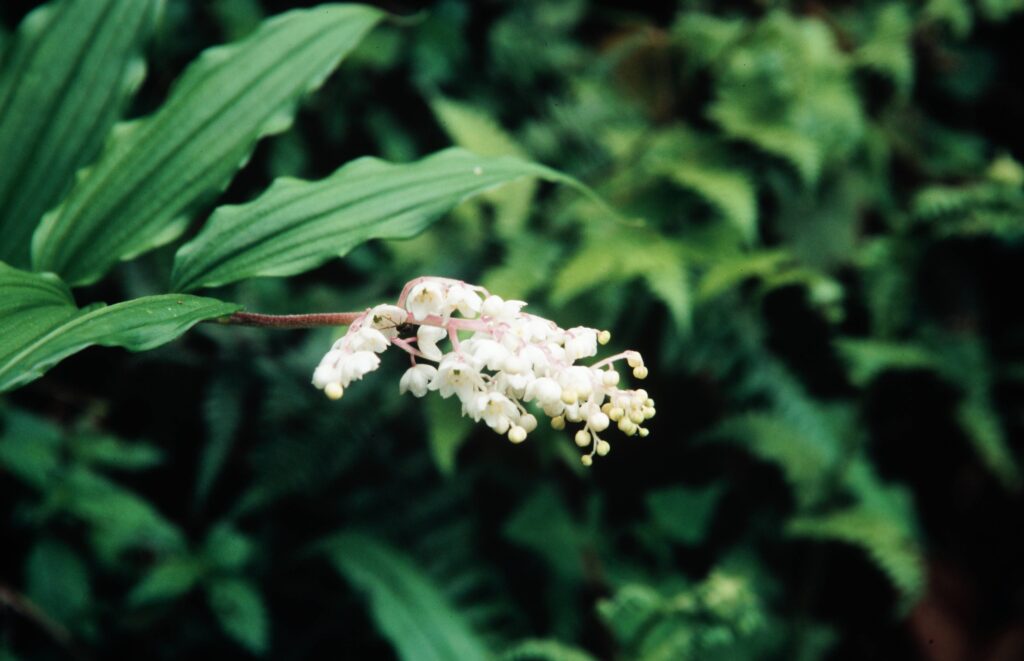
Maianthemum oleraceum is a robust rhizomatous herb of the eastern Himalaya and western China, recorded from China, Nepal, India, Bhutan and Myanmar, with roughly 259 documented occurrences. It is a woodland species inhabiting moist temperate and subalpine forests, shaded ravines, shrubberies and forest clearings on deep humus-rich soils, often forming loose colonies through its spreading rhizome. In the Indian eastern Himalaya it reaches the upper montane belt, exemplified by the gathering near Kalipokkri in West Bengal at about 3100 m in May, when the species comes into flower at the close of the cool season.

The plant produces stout, erect to arching leafy stems from a thickened creeping rhizome. The leaves are several, alternate, sessile or shortly petiolate, broadly ovate to ovate-lanceolate, acuminate at the apex and cordate to rounded at the base, with prominent arching venation. The inflorescence is a terminal branched panicle of numerous small flowers, each with six free, spreading, pinkish to greenish-white tepals and six stamens; the flowers are subtended by small bracts. The fruit is a globose berry, green and mottled when young, ripening through red to dark purple, containing few hard seeds.

Maianthemum, treated under Asparagaceae in modern classifications and long placed near Smilacina, comprises rhizomatous forest herbs of the northern hemisphere, of which M. oleraceum is one of the larger Asian species. The fleshy berries are dispersed by birds and small mammals, while clonal rhizome growth allows persistence in shaded understorey. The young shoots and leaves are gathered locally as a potherb, reflected in the epithet oleraceum. Common across its montane range, it is not considered threatened, though it depends on the maintenance of intact temperate forest.

Author: (Baker) LaFrankie · Sources: POWO (Kew), GBIF, Flora of China Vol. 24, Flora of Bhutan Vol. 3, Flora of Nepal, LaFrankie revision of Maianthemum (Smilacina)

D. Don

Nepal 97 273 P558
Nepal Bagong-Khola 2650m April
Nepal 2001 86 ergebnis ergebnis
East-Nepal Gupka Pokhari 2920m, April

Description

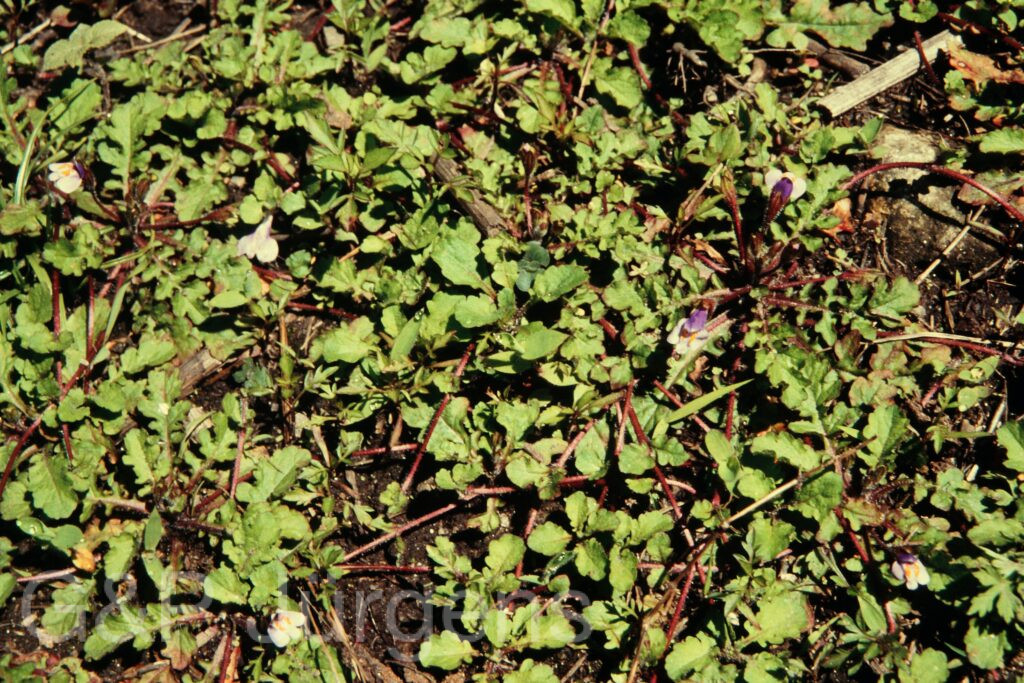
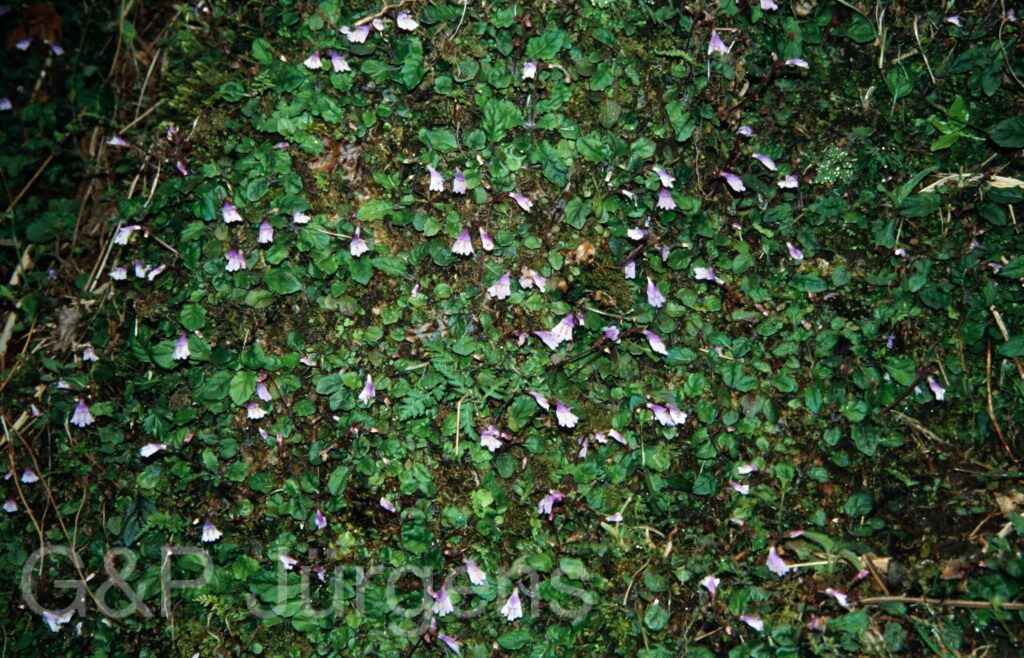
Mazus surculosus D.Don is a small, creeping perennial herb of moist temperate habitats in the Himalaya and adjacent mountains. GBIF records it from India, Nepal, China, Bhutan and Pakistan, with some 230 occurrences, indicating a Sino-Himalayan distribution. It grows on damp, shaded ground — streamsides, wet banks, mossy turf and the margins of paths and forest clearings — typically between about 2,000 and 3,200 m. The illustrated material is from central Nepal at Bagong-Khola, 2,650 m, and from East Nepal at Gupka Pokhari, 2,920 m, both flowering in April, in keeping with its early-spring phenology.

The plant is mat-forming, spreading by slender, rooting stolons or surculose runners (whence surculosus), from which arise short ascending flowering shoots. The leaves are mostly in a basal rosette, obovate to spathulate, crenate-toothed, narrowed to a winged petiole, with a few smaller opposite leaves on the stem. The flowers are borne in lax, few-flowered racemes; the corolla is strongly bilabiate, blue-violet to purple, the short upper lip two-lobed and the larger lower lip three-lobed and marked with white and yellow palatal ridges spotted with darker colour. The fruit is a small, rounded, loculicidal capsule enclosed by the persistent calyx, releasing numerous minute seeds.

Mazus, formerly placed in Scrophulariaceae, is now referred to Phrymaceae (or the segregate Mazaceae) on molecular grounds, and the input family Phrymaceae reflects this modern placement. The genus is centred in temperate and subtropical Asia. As a widespread, weedy creeper of damp open ground, M. surculosus is common and not of conservation concern.

Author: D. Don · Sources: POWO (Kew), GBIF, Flora of China Vol. 18, Flora of Bhutan Vol. 2, Flora of Nepal, Beardsley & Olmstead: Redefining Phrymaceae (American Journal of Botany)

Grey-Wilson

Nepal 99 248 ergebnis
West-Nepal Tallekh 3155m, June
Nepal 99 265 ergebnis
West-Nepal Tallekh 3155m, June
Nepal 99 266 ergebnis
West-Nepal Tallekh 3155m, June

Description

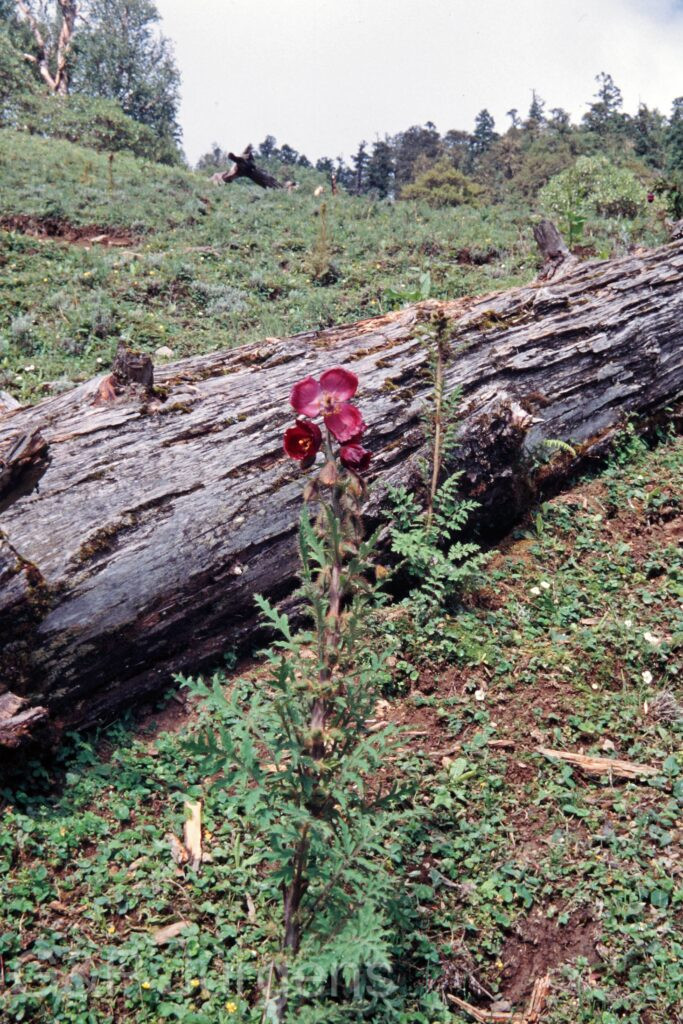
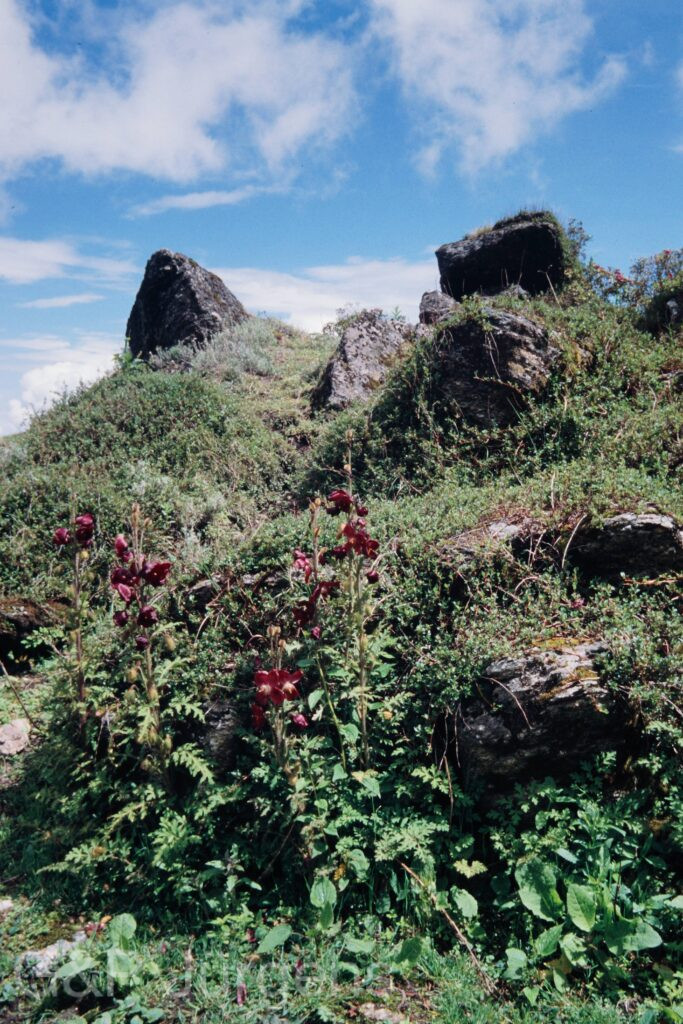
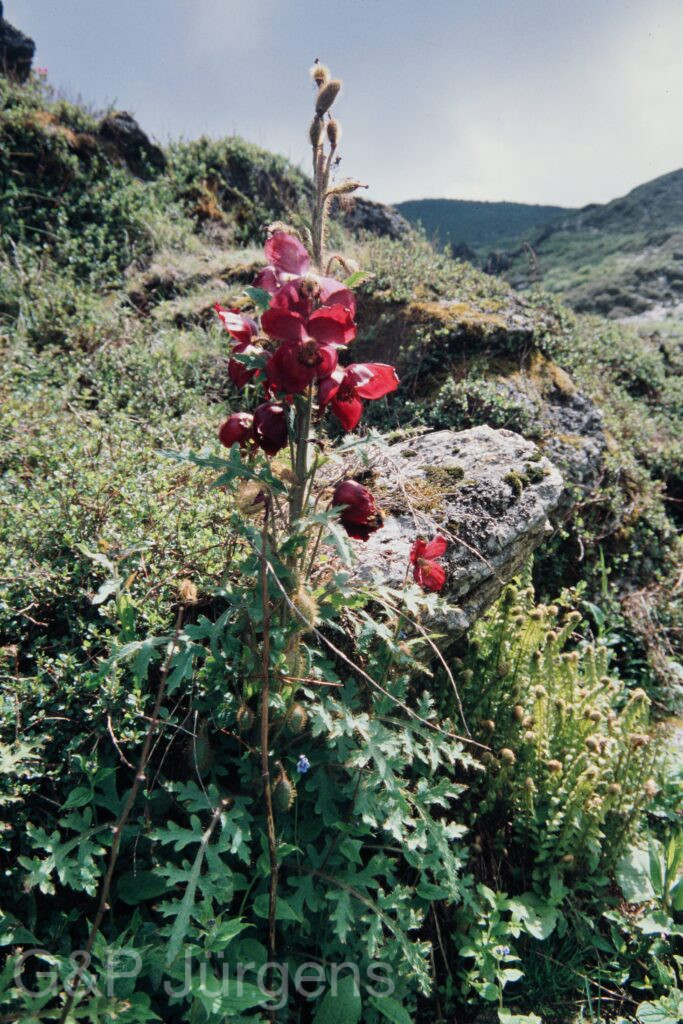
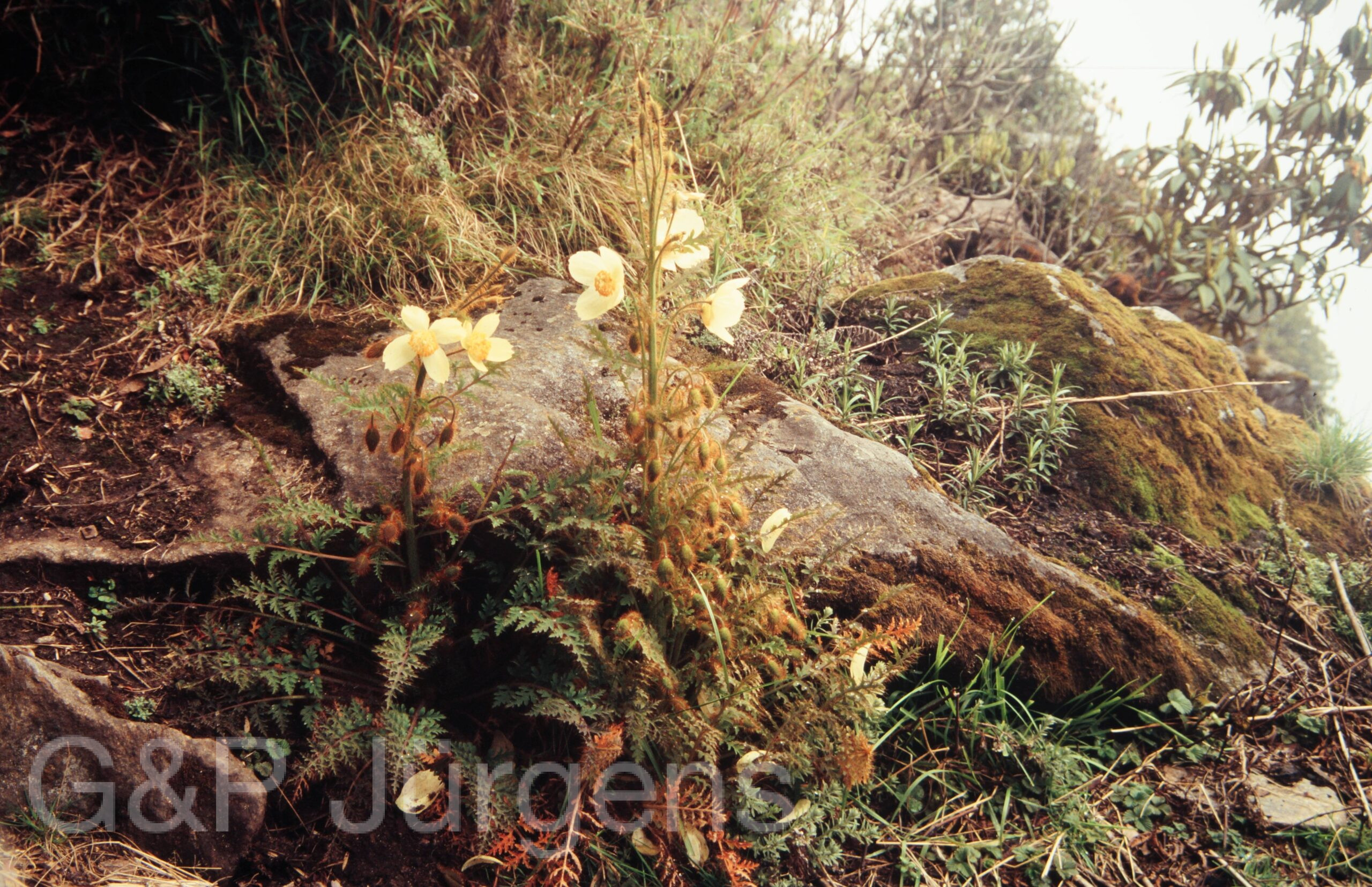
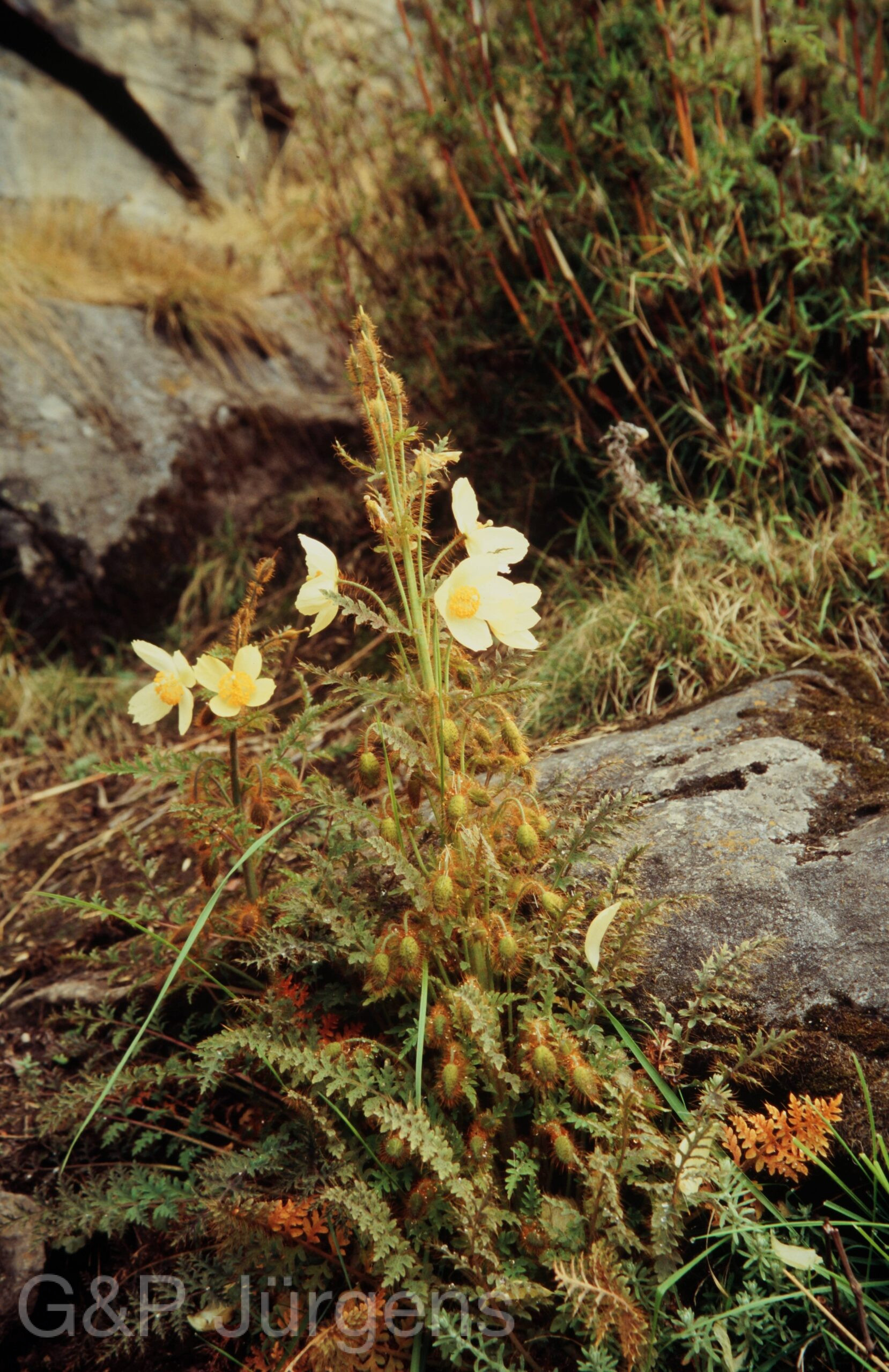
Meconopsis chankheliensis is a narrowly endemic poppy of the western Himalaya, presently documented only from Nepal, where the comparatively small number of records (18 georeferenced occurrences) reflects both its restricted range and the remoteness of its habitat. It is a plant of moist, sheltered situations in the upper temperate and subalpine zones, typically growing in damp meadows, on humus-rich banks and among rocks beside seepages and streamsides. The photographed material from Tallekh in West Nepal, at about 3155 m and flowering in June, is characteristic of the moderate elevations at which the species comes into bloom following the onset of the early summer monsoon moisture.

The plant is a tufted herb arising from a basal rosette of leaves and a stout taproot. The foliage is more or less covered in spreading bristly hairs; the leaves are oblanceolate to obovate, narrowed to a winged petiole, with entire to lobed or coarsely toothed margins. Flowering stems are erect and bristly, bearing one to several flowers. The blooms are bowl-shaped and showy, with four (occasionally more) broad, satiny petals in shades of blue to purplish-blue, surrounding a dense boss of numerous stamens with slender filaments and a short style crowned by a lobed stigma. The fruit is an elongate, bristly capsule dehiscing by apical valves to release many small seeds.

Meconopsis is a genus of the Sino-Himalayan region whose blue poppies have attracted intense horticultural and taxonomic attention, much of it through the monographic work of Christopher Grey-Wilson, whose name is associated with this taxon. As a localised Nepalese endemic restricted to a single mountain region, M. chankheliensis is of conservation concern, vulnerable to grazing pressure, habitat disturbance and the climatic shifts increasingly affecting Himalayan alpine floras. Its narrow distribution makes accurate field documentation and protection of known populations particularly important.

Author: Grey-Wilson · Sources: POWO (Kew), GBIF, Flora of Nepal, Annotated Checklist of the Flowering Plants of Nepal, Grey-Wilson: The Genus Meconopsis (monograph)

G.Taylor

Description

Meconopsis gracilipes is a rare Himalayan poppy of restricted range, recorded from Nepal and adjacent south-western China. The low GBIF tally of 50 occurrences reflects both its scarcity and its confinement to remote high-mountain terrain. It grows in the subalpine and lower alpine zone, on shaded rocky banks, moist cliff ledges, mossy boulders and the margins of forest and shrubbery, generally between about 3000 and 4000 m. The plant photographed at Koktrok in the Helambu region of Nepal at about 3100 m in May exemplifies this damp, sheltered montane habitat, where it flowers early in the growing season before the full monsoon.

It is a slender, monocarpic or short-lived herb forming a rosette of petiolate, lobed to pinnatifid leaves, the plant sparsely clothed in fine bristly hairs. From the rosette arise delicate, thread-like (gracile) flowering stems, the specific epithet referring to these slender pedicels. The nodding flowers have four broad petals in shades of pale blue to lavender or purple; numerous stamens surround a short style with a small capitate stigma. The fruit is a narrow, few-valved capsule opening at the apex to shed many minute seeds.

Meconopsis gracilipes belongs among the blue-flowered Himalayan poppies and is allied to slender-stemmed species such as M. bella, sharing their preference for moist, shaded rock habitats rather than open scree. Its restricted distribution, low recorded abundance and dependence on specialised microhabitats make it of potential conservation interest, though it has not been formally assessed; the integrity of its high-elevation rock and forest-margin habitats is key to its persistence.

Author: G.Taylor · Sources: POWO (Kew), GBIF, Flora of Nepal, Annotated Checklist of the Flowering Plants of Nepal, Grey-Wilson Meconopsis monograph