Tag:

Subalpine (2500-3500 m)

Kitam.

Garw 2005 68 ergebnis ergebnis
India Garhwal Valley of flowers 3200m, September

Description

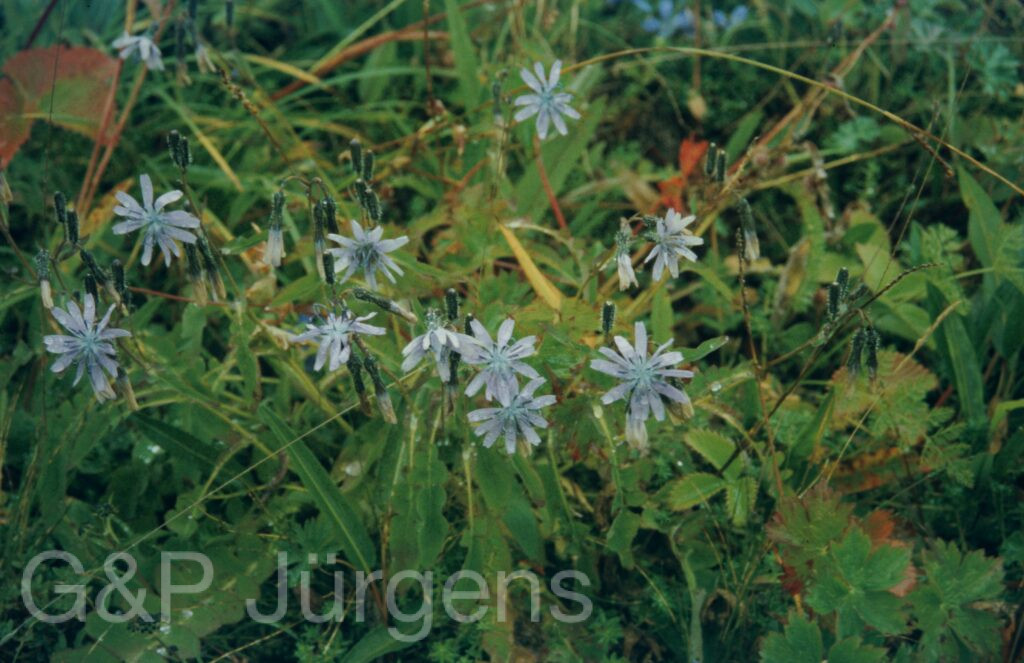
Lactuca dolichophylla is a Himalayan and Central Asian perennial herb distributed through the Indian Himalaya, Pakistan, Nepal, Bhutan, southern China, Afghanistan, Russia and Myanmar, documented from a modest number of georeferenced collections. It is a plant of the subalpine and alpine zone, growing on open grassy slopes, herb-rich meadows, forest clearings and stony banks. The photographed material is from the Valley of Flowers in Garhwal, India, at about 3200 m in September, a celebrated high-montane meadow habitat where the species flowers in the late post-monsoon season.

The plant is an erect perennial herb with a leafy, often glaucous stem exuding milky latex when cut. The leaves are elongate and narrow, as the epithet 'dolichophylla' (long-leaved) implies, lanceolate to linear-lanceolate, entire to runcinate-lobed, with the upper leaves sessile and often clasping. The capitula are arranged in a lax paniculate-corymbose synflorescence; each head is ligulate, with an imbricate cylindrical involucre and several blue to bluish-purple or violet ray florets, a colour characteristic of the Himalayan blue-flowered lettuces. The fruit is a flattened, ribbed achene (cypsela) narrowed into a beak and crowned by a pappus of simple white capillary bristles.

Lactuca belongs to the tribe Cichorieae of Asteraceae, the dandelion-and-lettuce alliance with milky latex and ligulate florets. The blue-flowered Himalayan species, sometimes segregated under Cicerbita or Mulgedium, form a taxonomically intricate group, and this taxon was described by Kitamura. Wind-dispersed by its pappus, L. dolichophylla is a characteristic component of moist alpine meadows and is not regarded as threatened.

Author: Kitam. · Sources: POWO (Kew), GBIF, Flora of China, Flora of Pakistan, Kitamura's studies of Himalayan Cichorieae (Compositae)
(Siebold & Zucc.) Wedd

Bhutan2012 855
Bhutan Nangsephal 2800m, October

Description

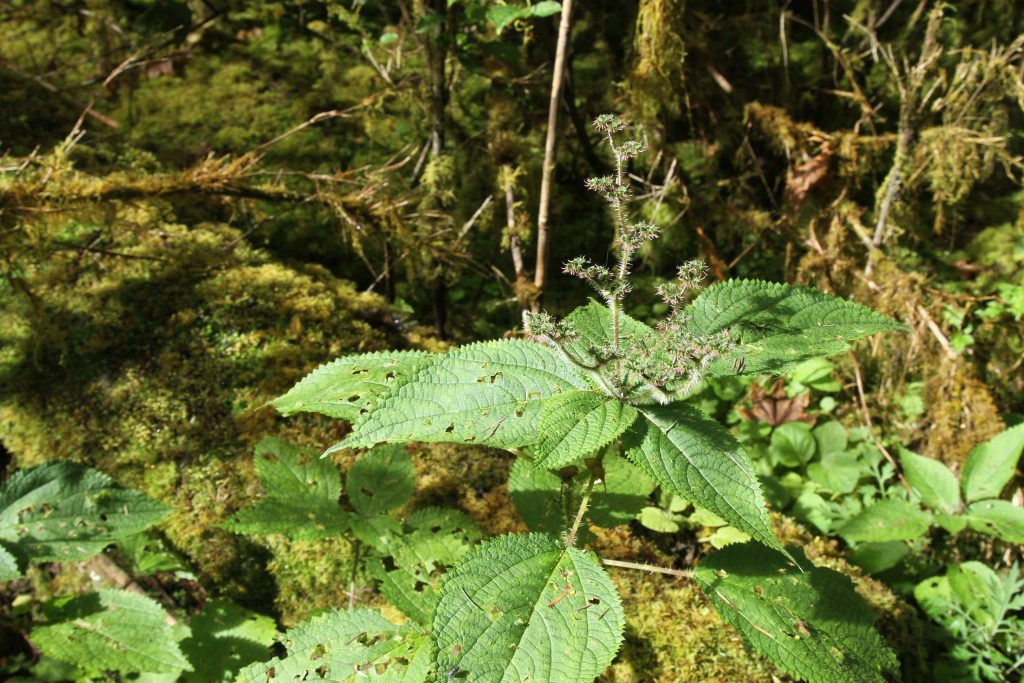
Laportea bulbifera is a widespread perennial nettle ranging across East and South Asia, with GBIF documenting more than 4500 occurrences from Japan, China, Korea, the Russian Far East, the Himalaya, Taiwan and into Southeast Asia and Sri Lanka. It colonises moist forest margins, ravines, streamsides and shaded clearings, often forming patches on humus-rich soils in temperate and subtropical woodland. The photographed population grows in Bhutan at Nangsephal around 2800 m, still in flower or fruit in October; the species occurs broadly from the lowlands to roughly 3000 m, thriving where moisture and partial shade coincide.

The plant produces erect, often unbranched stems from a creeping rootstock, the herbage armed with stinging hairs delivering an irritant on contact. Distinctive bulbils (gemmae) form in the upper leaf axils, giving the epithet bulbifera and providing a means of vegetative propagation. The leaves are alternate, ovate to elliptic, acuminate, serrate-margined and three-nerved from the base, on slender petioles. Small unisexual flowers are borne in axillary, paniculate cymes, the female inflorescences asymmetric with the achene set obliquely on an enlarged pedicel; the dry, flattened achene is the fruit.

Laportea belongs to the Urticeae, the tribe of true stinging nettles, and L. bulbifera is among its most morphologically variable and geographically far-flung members, prompting recognition of several infraspecific forms across its enormous range. The axillary bulbils represent an effective clonal strategy in disturbed, shaded habitats. The species is abundant and of least concern; in parts of its range young shoots are gathered as a cooked vegetable and the fibrous stems occasionally used locally.

Author: (Siebold & Zucc.) Wedd · Sources: POWO (Kew), GBIF, Flora of China, Flora of Bhutan, Urticaceae monograph (Friis / Chen)

(C.B. Clarke) Benth. ex Gamble

BhutanPG2011 823 01 01
Bhutan Paro 3000m, July

Description

Leptoboea multiflora is a perennial herb of the eastern Himalaya and adjacent Southeast Asia, with 153 GBIF occurrences recorded from India, Nepal, Bhutan, China, Myanmar, Thailand, Vietnam and Cambodia. As a member of the Gesneriaceae, it grows in shaded, humid forest, typically on mossy rocks, boulders, banks and tree bases in damp, sheltered situations of the temperate broad-leaved zone, often between about 1500 and 3000 m. The plant photographed at Paro in Bhutan at 3000 m in July occupies the upper end of this range, flowering during the moist monsoon period when atmospheric humidity is high.

The species is a low, herbaceous to slightly succulent perennial with short stems and leaves that may be clustered or subopposite, the blades ovate to elliptic, crenate to serrate at the margins and frequently pubescent, with the asymmetric, anisophyllous tendency common in the family. The flowers are numerous, as the epithet indicates, borne in axillary cymes; each has a small five-lobed calyx and a tubular, somewhat bilabiate corolla, with the typically reduced fertile stamen number of the gesneriad tribe and a superior ovary. The fruit is a slender, elongate capsule dehiscing to release very numerous minute seeds.

The entry lists the family as Trichosporeae, which is in fact a tribe of Gesneriaceae rather than a family; the accurate placement is Gesneriaceae, subfamily Didymocarpoideae, tribe Trichosporeae, within which Leptoboea is a small Asian genus allied to Boea and Paraboea. As a humidity-dependent epilithic forest herb, it is sensitive to canopy disturbance, though it remains locally frequent in undisturbed montane forest.

Author: (C.B. Clarke) Benth. ex Gamble · Sources: POWO (Kew), GBIF, Flora of China Vol. 18, Flora of Bhutan Vol. 2, Flora of Nepal, Flora of Pakistan, Weber's classification of Gesneriaceae

Sm.

Bhutan2015 595
Bhutan Mo-Chu 1900m, October
Bhutan2012 1307
Bhutan Mo-Chu 1900m, October

Description

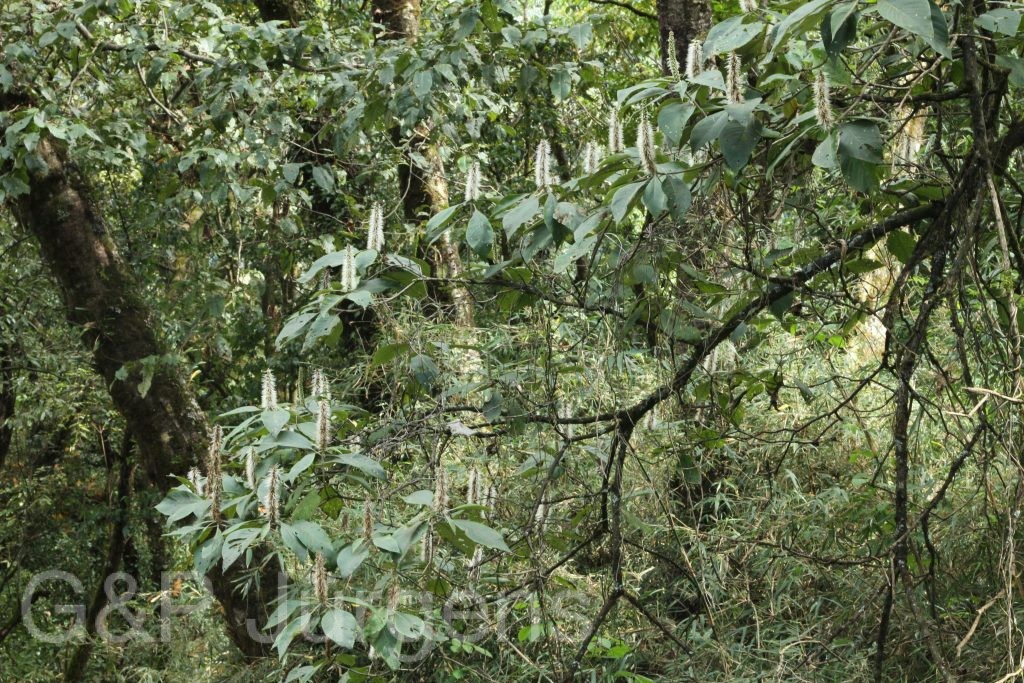
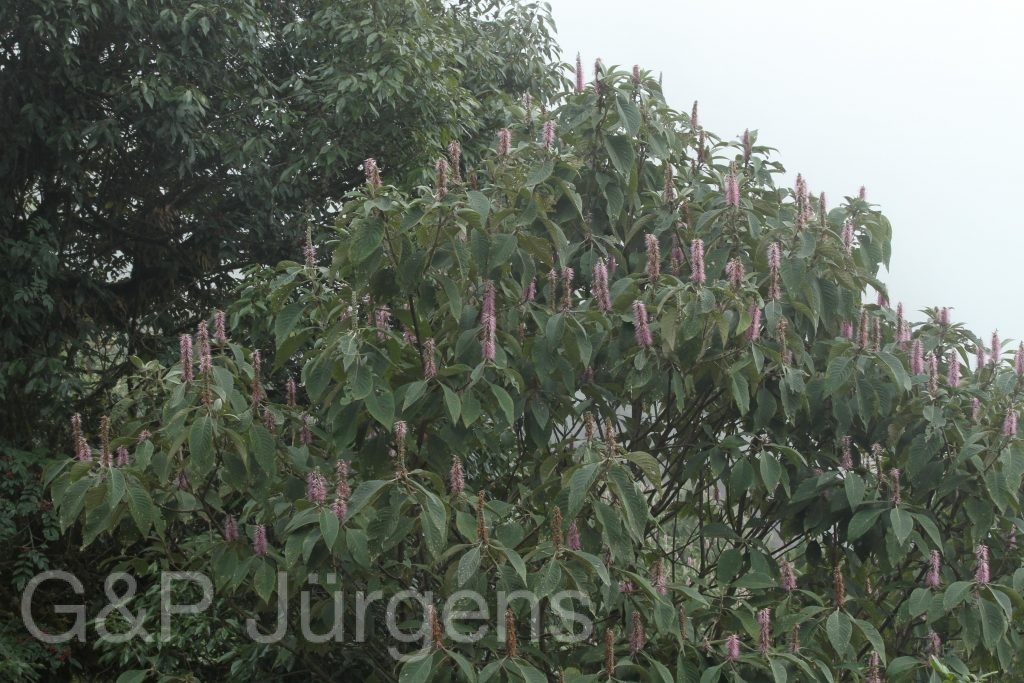
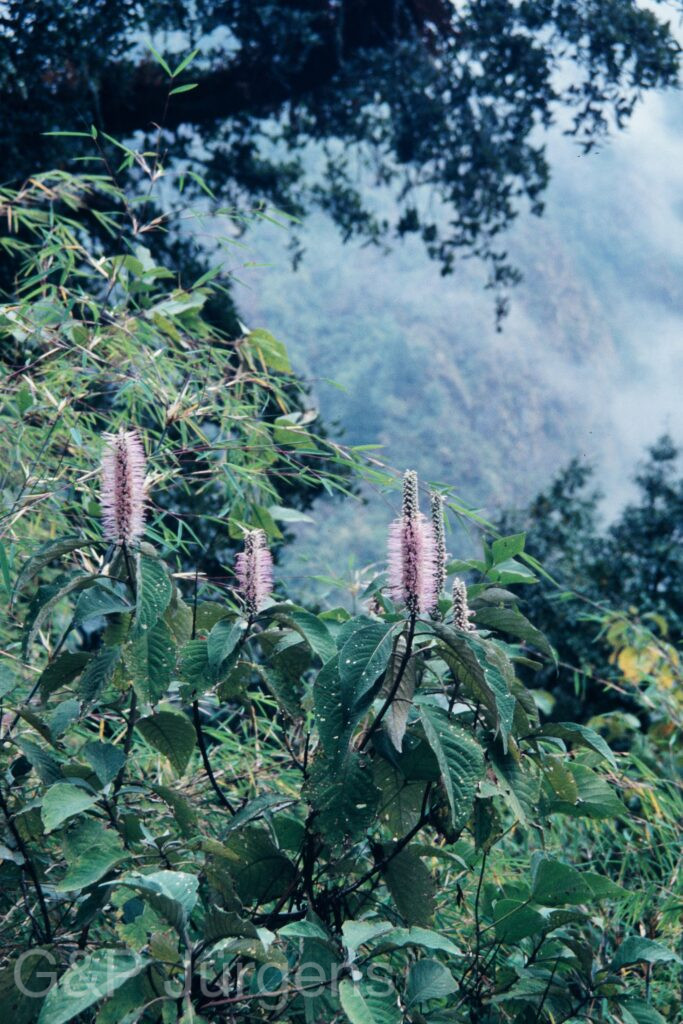
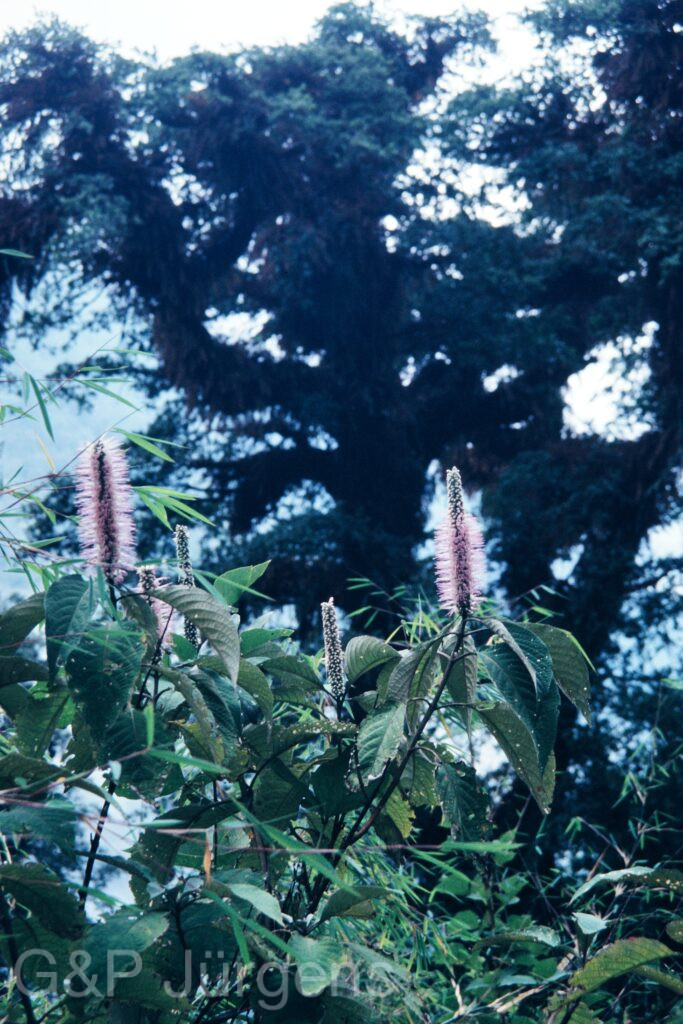
Leucosceptrum canum is a soft-wooded shrub or small tree of the Himalaya and southwestern China, distributed through China, Nepal, India, Bhutan and Myanmar and east to Indochina (CN, NP, IN, BT, MM, VN, TH, BD, LA, with further records), one of the more frequently collected species here with about 515 occurrences. It grows in moist temperate forest, on shaded slopes, ravine sides, forest margins and clearings, typically in the warm- to cool-temperate belt. The gatherings cited are from the Mo-Chu valley in Bhutan at 1900 m and from Trisuli in Nepal at 2700 m, both flowering in October, reflecting its autumn-to-early-winter blooming in the mid-montane forest zone.

The plant is a coarse shrub or small tree with stout, four-angled young branches densely clothed, like the leaf undersides and inflorescence, in a greyish (canous) tomentum from which the epithet derives. The leaves are large, opposite, elliptic to oblong-lanceolate, with a serrate margin, an acuminate apex and prominent venation. The flowers are crowded into a dense, terminal, cylindrical spike-like thyrse with conspicuous bracts; the calyx is tubular and five-toothed, and the white to pale yellow, two-lipped corolla has a short tube and exserted, declinate stamens. The fruit comprises four small nutlets (an eremocarp) enclosed in the persistent calyx.

Leucosceptrum is a small genus placed in the subfamily Lamioideae (or basal lineages) of the Lamiaceae and is of phylogenetic interest as part of an early-diverging Asian woody assemblage allied to Comanthosphace. The conspicuous, nectar-rich autumn inflorescences attract bees, butterflies and birds, and the species is notable for the production of defensive sesquiterpenes secreted by glandular trichomes. Widespread and common across the Himalaya into China, L. canum is of no conservation concern and is locally valued for fuel and as a bee plant.

Author: Sm. · Sources: POWO (Kew), GBIF, Flora of Bhutan, Flora of China, Labiatae of the Himalaya (Lamiaceae revision)

(Hook. f. & Thomson) Hook.f.

Bhutan2014 312
Bhutan Tumching-La 2600m, May

Description

Leycesteria glaucophylla is an eastern Himalayan shrub distributed across India, China, Bhutan and Nepal and into Myanmar; GBIF documents about 113 occurrences, including a few cultivated records in Great Britain and New Zealand. It is a plant of temperate montane forest, occurring at forest margins, in shrubberies, along stream sides and in clearings, generally between about 2000 and 3000 m. The photographed individual grows in Bhutan at Tumching La at around 2600 m in May, a setting typical of this shade-tolerant honeysuckle relative within the cool, humid forests of the eastern Himalaya during the pre-monsoon period.

The species is an erect, deciduous shrub with hollow, often glaucous young stems. The leaves are opposite, ovate to lanceolate, acuminate, entire to slightly toothed, and conspicuously glaucous, particularly beneath, a feature reflected in the epithet glaucophylla. The flowers are borne in pendulous, bracteate terminal and axillary inflorescences subtended by leafy bracts; each has a tubular, funnel-shaped, white to pinkish corolla with five short lobes. The fruit is a many-seeded berry ripening to a dark purplish colour, attractive to birds which act as the principal seed dispersers.

Leycesteria glaucophylla (Hook.f. & Thomson) Hook.f. belongs to a small genus of Himalayan and Sino-Himalayan shrubs allied to Lonicera, placed in Caprifoliaceae; its showy bracts and pendulous spikes give the genus ornamental interest, and several species are cultivated. The species is restricted to the eastern Himalaya and adjacent ranges but is locally frequent in montane forest and not currently regarded as threatened. Its bird-dispersed berries aid colonisation of forest gaps and margins.

Author: (Hook. f. & Thomson) Hook.f. · Sources: POWO (Kew), GBIF, Flora of Bhutan, Flora of China, taxonomic revisions of Leycesteria (Caprifoliaceae)

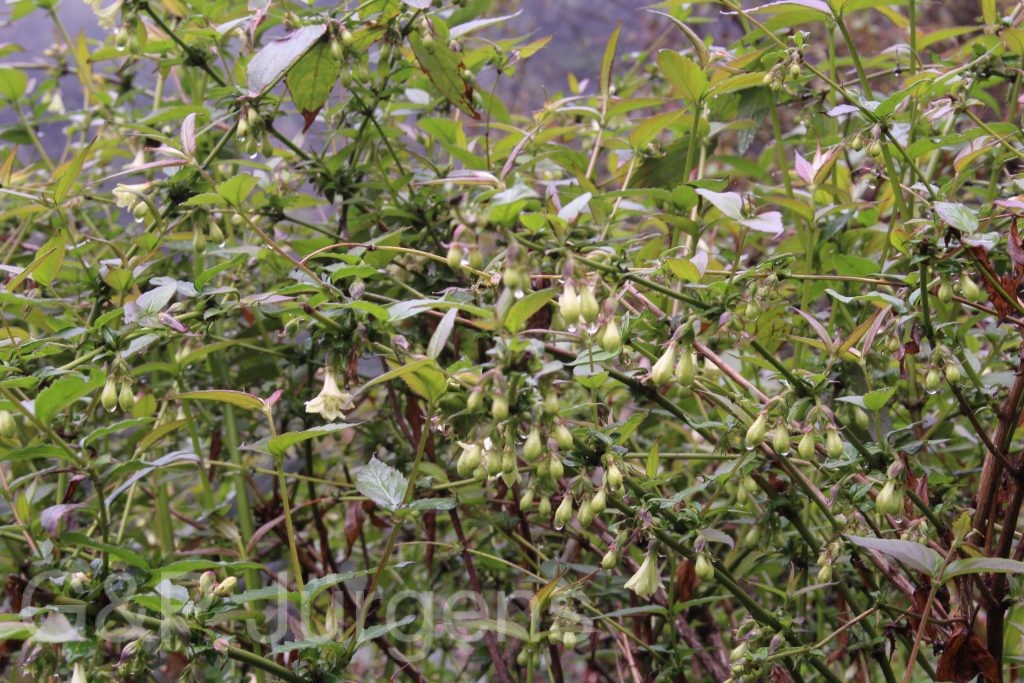
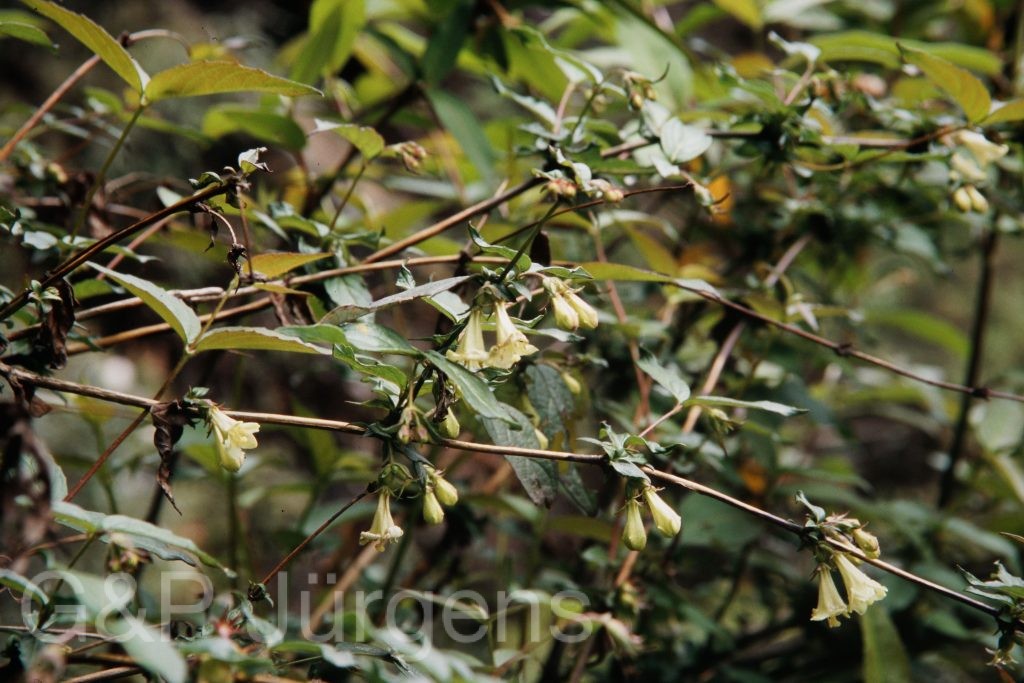
(Kurz) Airy Shaw

Bh2008 326 P504
Bhutan Jakar, 3000m April

Description

Leycesteria gracilis is a Himalayan and Sino-Himalayan shrub, GBIF recording around 232 occurrences from China, India, Bhutan, Nepal and Myanmar, with scattered records from Japan. It grows in the understorey and at the margins of temperate broadleaved and mixed forest, in shrubberies, along forest tracks and on shaded, moist banks, generally at mid to upper montane elevations between about 2400 and 3300 m. The plant photographed from Jakar (Bumthang) in central Bhutan at 3000 m, in early flower in April, is characteristic of its preference for cool, humid montane forest where it leafs and blooms in spring ahead of the summer rains.

It is a slender, erect to arching deciduous shrub with hollow, often glaucous young stems, more delicate in habit than its relative L. formosa—hence "gracilis." The leaves are opposite, ovate-lanceolate to lanceolate, long-acuminate, entire to finely toothed and thin in texture. The flowers are borne in pendulous, interrupted spikes or whorled clusters subtended by leafy, sometimes purplish bracts; each has a small calyx and a tubular to funnel-shaped, five-lobed corolla in shades of white, pink or pale purple. The fruit is a small, several-seeded berry ripening dark purplish to nearly black.

Transferred by Airy Shaw from Kurz's original epithet, L. gracilis belongs to the small Himalayan genus Leycesteria, now placed in Caprifoliaceae in its broad modern sense. It is locally frequent and not regarded as threatened, though dependent on intact montane forest. Ecologically its tubular flowers attract insect and bird pollinators, while its fleshy dark berries are taken by birds that disperse the seed, making it a useful component of regenerating montane scrub.

Author: (Kurz) Airy Shaw · Sources: POWO (Kew), GBIF, Flora of Bhutan, Flora of China, Airy Shaw revision of Leycesteria (Caprifoliaceae)

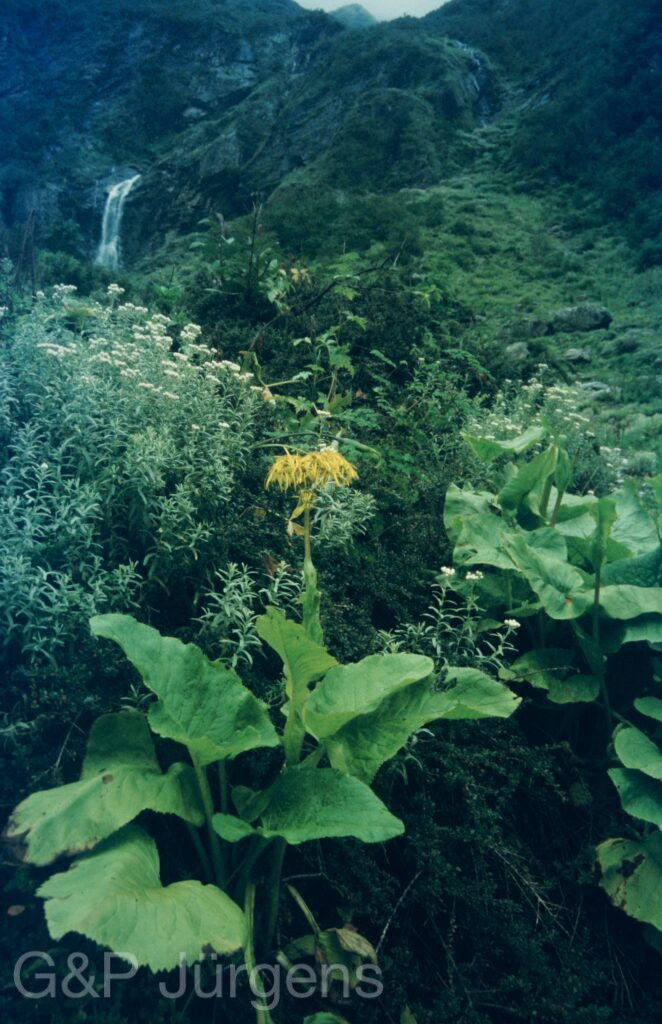
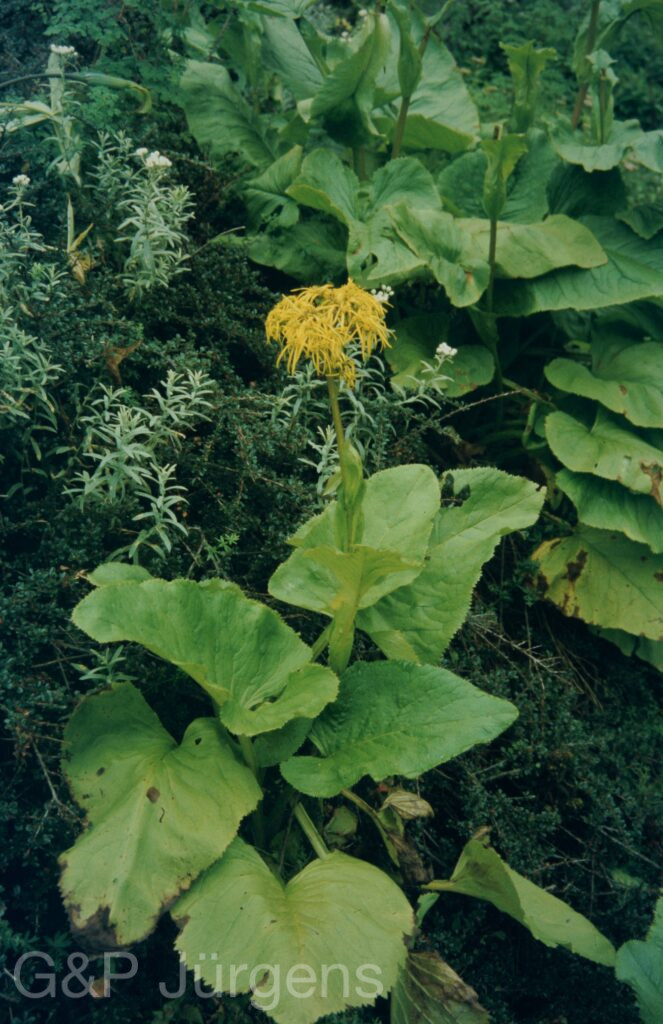
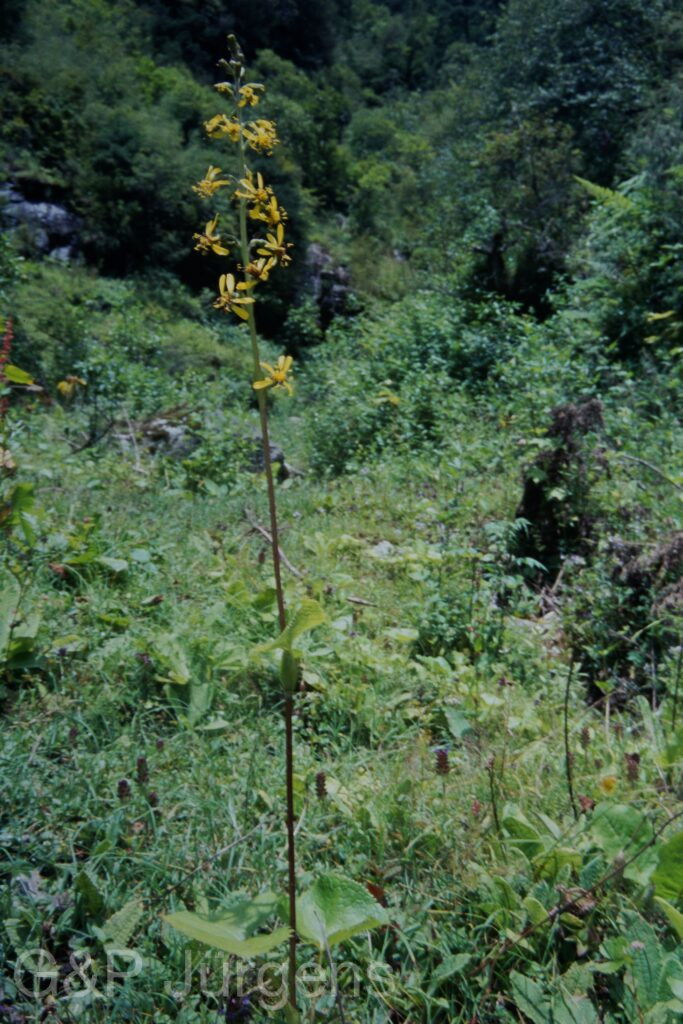
DC.

Garw 2005 33 ergebnis ergebnis
India Garhwal Valley of flowers 3050m, September
Garw 2005 34 ergebnis ergebnis
India Garhwal Valley of flowers 3050m, September

Description

Ligularia amplexicaulis DC. is a robust Himalayan composite ranging from Pakistan and northern India through Nepal and Bhutan into southwestern China (gbif_countries: NP, IN, BT, CN, PK, plus collection records coded US and CA), with around 271 occurrences in GBIF. It is characteristic of moist alpine and subalpine meadows, tall-herb slopes, forest clearings and streamside grassland, typically between about 2800 and 4300 m. The photographed plant from the celebrated Valley of Flowers in Garhwal at 3050 m, flowering in September, exemplifies its late-season presence in the rich monsoon-fed herb meadows for which that valley is famous.

It is a stout perennial herb arising from a short rhizome with fibrous roots. The lower leaves are large, reniform to broadly cordate and long-petiolate, the cauline leaves becoming sessile and conspicuously amplexicaul (stem-clasping), as the epithet records. The inflorescence is an elongate terminal raceme of numerous radiate capitula. Each head bears yellow ray florets and yellow tubular disc florets, subtended by a campanulate involucre of few subequal phyllaries; the achenes are glabrous and cylindric, crowned by a pappus of soft barbellate bristles.

Ligularia (tribe Senecioneae) is a large Sino-Himalayan genus centred on the eastern alpine flora, and the present species is part of the racemose-headed Himalayan assemblage. Like its relatives it accumulates pyrrolizidine alkaloids, deterring herbivory and rendering it of pharmacological and toxicological interest. The species is widespread and locally abundant in protected alpine areas such as Nanda Devi and the Valley of Flowers, and is not considered threatened.

Author: DC. · Sources: POWO (Kew), GBIF, Flora of China (Asteraceae: Senecioneae), Flora of Bhutan, Annotated checklist of the flowering plants of Nepal

(C.B.Clarke) S.W.Liu

Sikkim2003 365 P512 2
Sikkim Lachen 2740m, August

Description

Ligularia atkinsonii is a tall herbaceous perennial of the Himalaya and adjacent China, with verified occurrences in Nepal, China, Bhutan, India and Myanmar. It favours moist, cool situations such as forest margins, streamsides, damp meadows and shrubby slopes through the temperate and subalpine zones, broadly between about 2500 and 4000 m. The plant photographed at Lachen in northern Sikkim at around 2740 m in August represents its late-summer flowering, when these golden composites are conspicuous in the monsoon-fed grasslands and clearings of the inner valleys.

The species arises from a stout rootstock bearing large, long-petioled basal leaves; these are broadly cordate to reniform, with toothed margins and a soft texture, the bases of the petioles often sheathing the stem. The flowering stem is erect, leafy below and bears a narrow elongate inflorescence (a raceme or narrow panicle) of numerous radiate capitula. Each head has an involucre of few narrow phyllaries and carries several spreading yellow ray florets around a disc of tubular florets. The fruit is a glabrous cylindrical achene topped by a pappus of fine brownish bristles aiding wind dispersal.

Ligularia, of tribe Senecioneae, is a large and taxonomically demanding genus centred on the Sino-Himalayan region, and L. atkinsonii, transferred to the genus by S.W. Liu from a C.B. Clarke basionym, is distinguished by its leaf shape and narrow inflorescence. Ecologically these robust herbs are important late-season nectar sources in subalpine meadows. The species is reasonably widespread along the Himalaya and is not currently considered to be of conservation concern, though it depends on the persistence of moist montane grassland.

Author: (C.B.Clarke) S.W.Liu · Sources: POWO (Kew), GBIF, Flora of China, Flora of Bhutan, Annotated Checklist of the Flowering Plants of Nepal

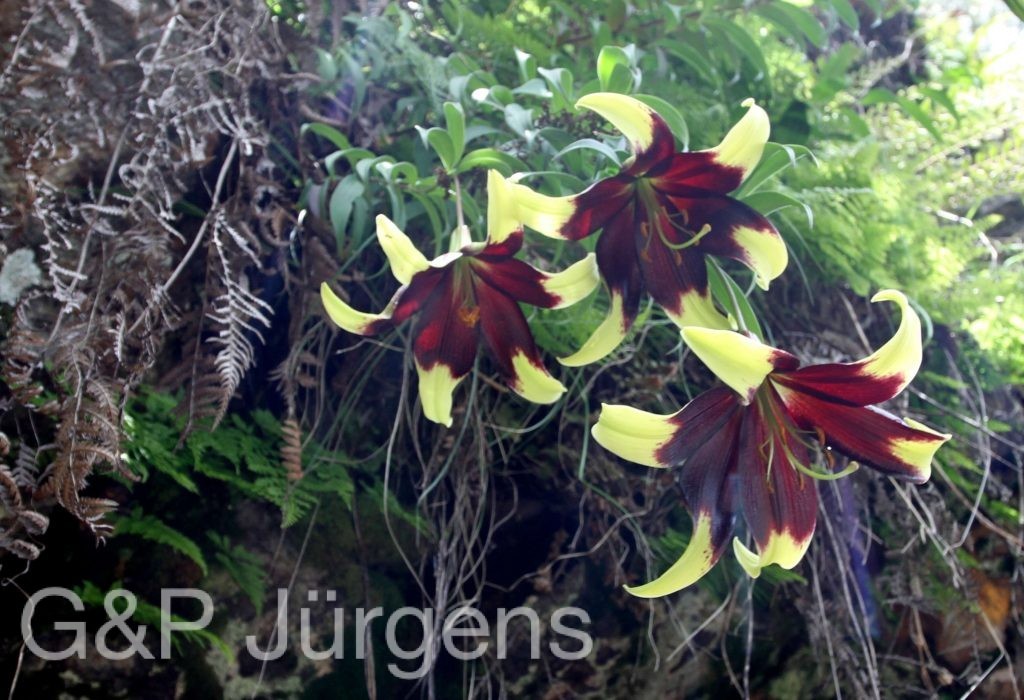
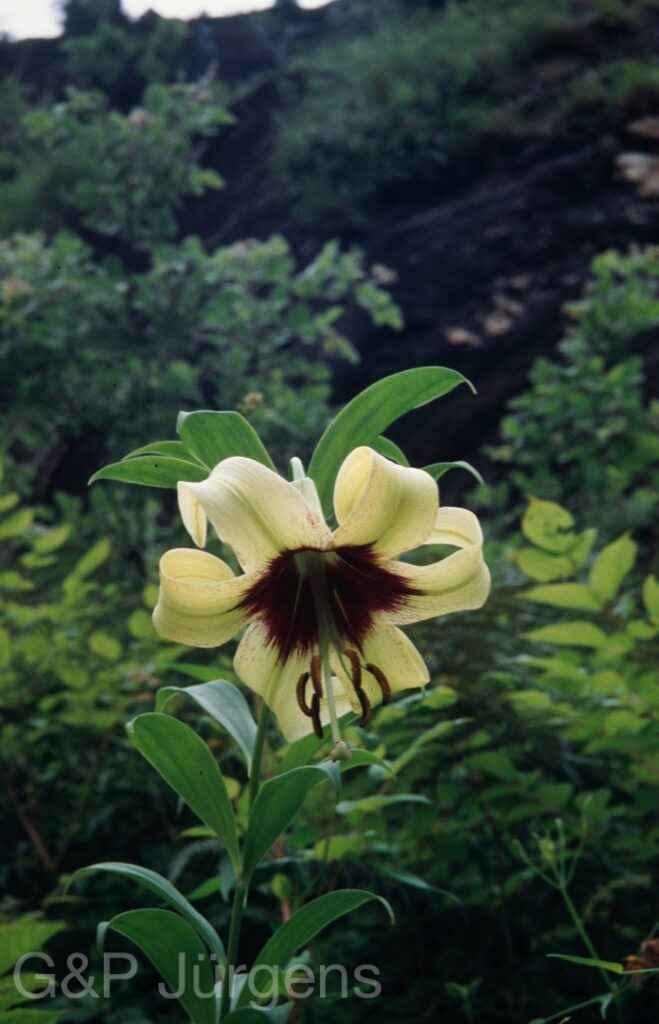
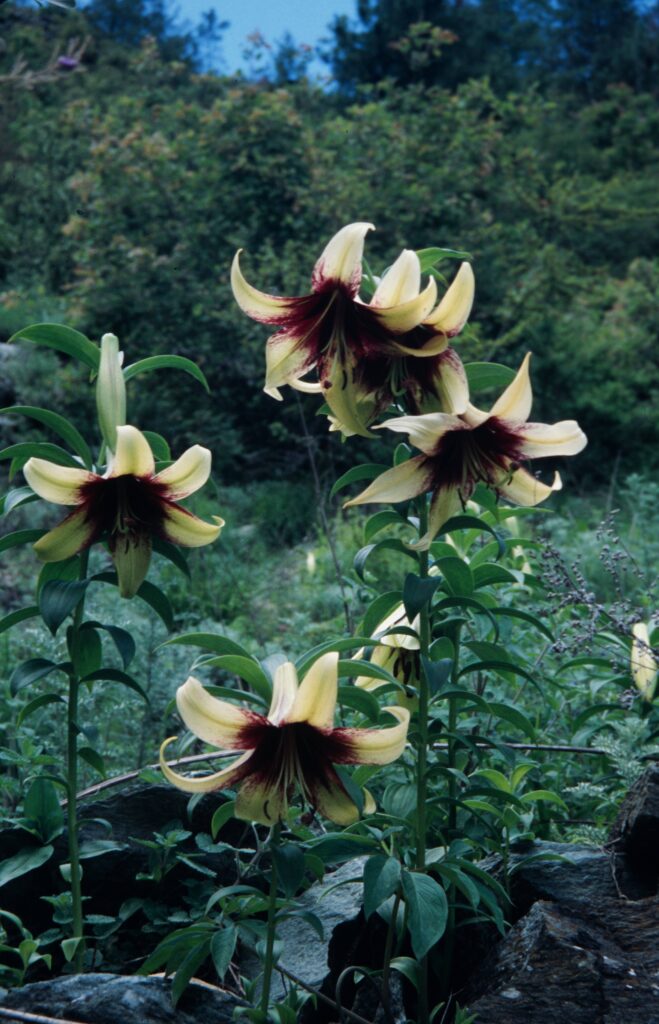
Lilium nepalense

by GP Jürgens

D.Don

BhutanPG2011 703 01 01
Bhutan Luksor, 2700m July
Nepal 99 900 ergebnis
West-Nepal Sepka 2700m, July
Nepal 99 1005 ergebnis
West-Nepal Sepka 2700m, July
Nepal 99 1006 ergebnis
West-Nepal Sepka 2700m, July

Description

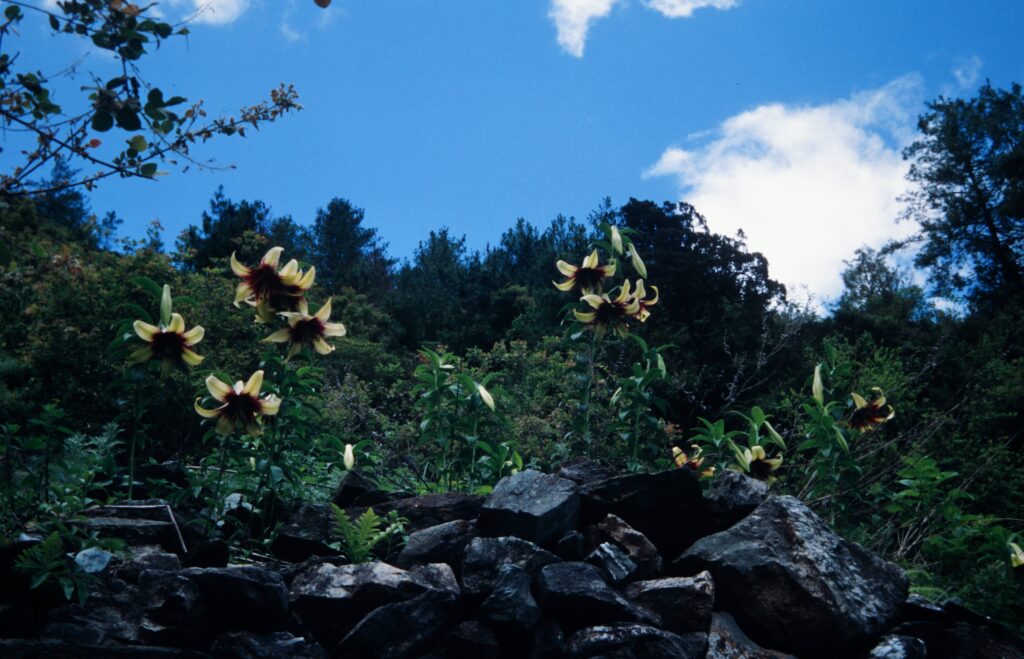
Lilium nepalense is a striking Himalayan lily native to Nepal, Bhutan, northern India and south-western China, extending into Myanmar; GBIF records (around 206 occurrences) also reflect numerous cultivated and naturalised collections in Europe and South-East Asia, as it is widely grown as an ornamental. In its natural range it inhabits cool, humid temperate to subalpine slopes, growing among shrubberies, in forest clearings, on grassy banks and along the margins of oak, rhododendron and conifer woodland on rich, well-drained humic soils. The collections from Luksor in Bhutan and Sepka in western Nepal, both near 2700 m in July, illustrate its mid-montane elevation and monsoon-season flowering.

The plant grows from a stoloniferous bulb with loosely imbricate white scales, the underground stem often wandering before emerging. The erect, leafy aerial stem bears scattered, lanceolate to ovate, sessile or shortly petiolate leaves with prominent parallel venation. The flowers, borne singly or few in a lax raceme, are large, nodding and broadly funnelform to trumpet-shaped; the six recurved tepals are luminous greenish-yellow to pale chartreuse with a dramatic deep maroon to purple-black throat blotch, giving the species its horticultural celebrity. The six stamens carry large versatile anthers, and the slender style ends in a capitate three-lobed stigma. The superior ovary develops into an erect, oblong, three-valved capsule with numerous flat, winged seeds.

Described by D. Don, Lilium nepalense belongs to a Sino-Himalayan group of trumpet lilies and is prized in cultivation for its colour contrast and fragrance, having earned horticultural recognition in temperate gardens. Its stoloniferous bulb is an adaptation for vegetative spread through loose montane soils. While locally frequent, wild populations face pressure from over-collection of bulbs, grazing and habitat disturbance, making sustainable propagation important for relieving demand on natural stands.

Author: D.Don · Sources: POWO (Kew), GBIF, Flora of Bhutan, Flora of China, Stainton Flowers of the Himalaya, The Genus Lilium (Jefferson-Brown)

Schult.f.

Bhutan2012 515
Bhutan Wangdi 2600m, September
Bhutan2012 516
Bhutan Wangdi 2600m, September

Description

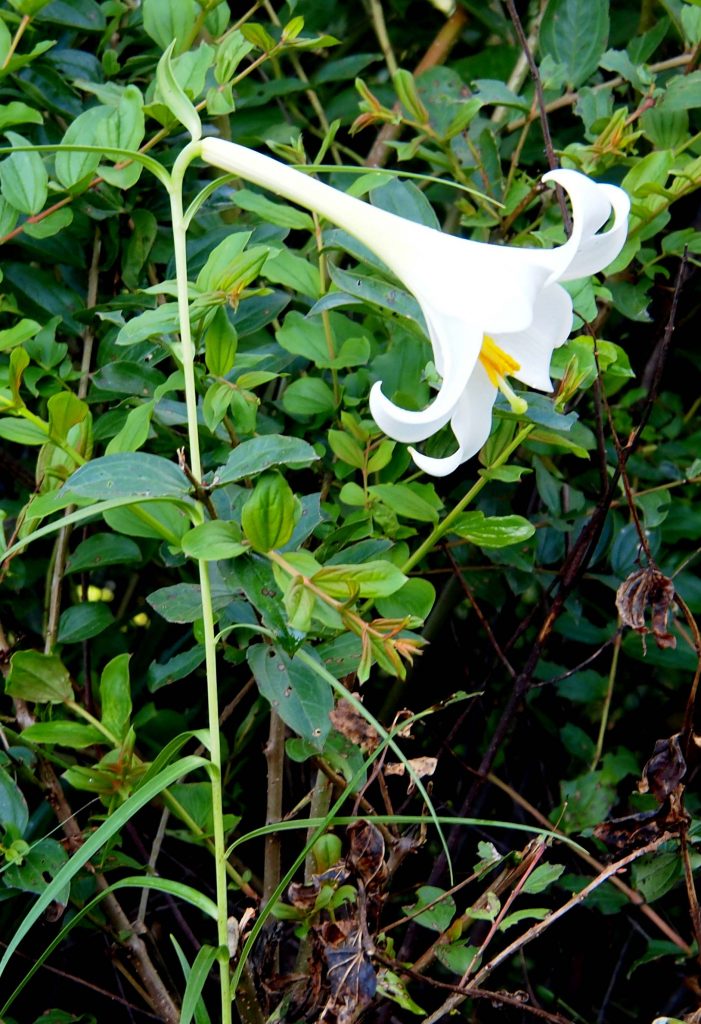
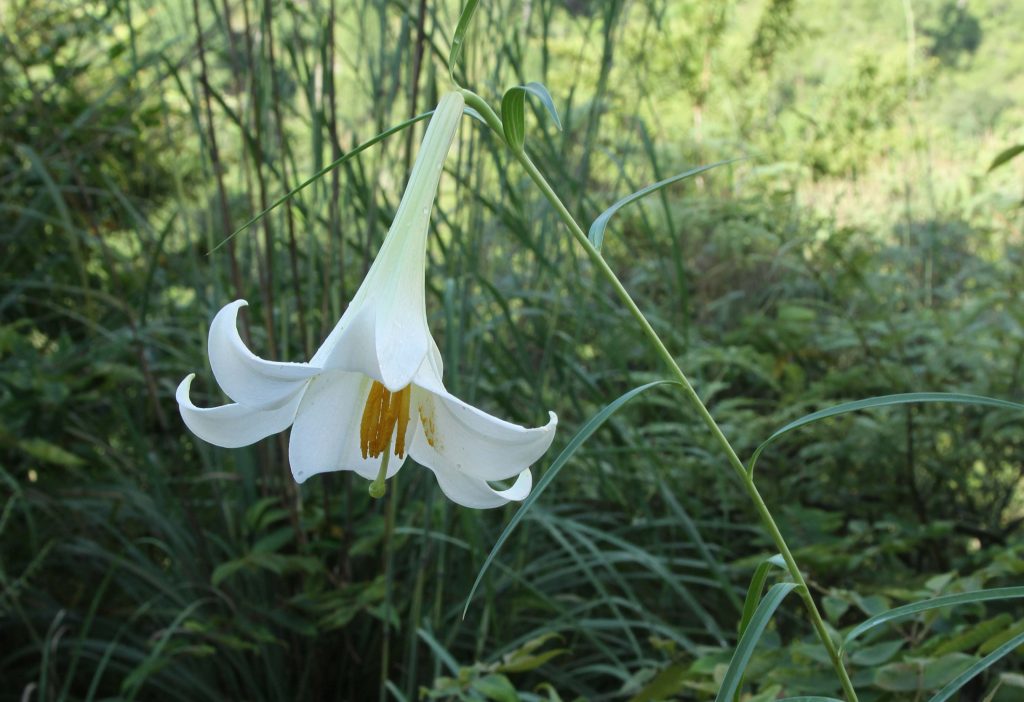
Lilium wallichianum is a tall, trumpet-flowered lily of the Himalaya, ranging from northern India and Nepal through Bhutan to Myanmar, with naturalised or cultivated occurrences elsewhere; GBIF records (c. 217) reflect both its native distribution and its presence in cultivation. In the wild it grows on grassy and shrubby slopes, in forest clearings, scrub and along the margins of temperate forest, generally between about 1500 and 2700 m. The photographed plant from Wangdi (Wangdue Phodrang) in Bhutan, at 2600 m and flowering in September, is characteristic of its late-summer to autumn flowering in mid-elevation montane vegetation.

The plant arises from a stoloniferous, white, scaly bulb and produces a stout, erect stem up to 1–2 m tall bearing scattered, narrowly linear to linear-lanceolate leaves. The flowers are large, solitary or few, long-tubular to trumpet-shaped and powerfully fragrant; the six perianth segments are white, often flushed greenish or rose-purple externally, recurving at the tips. The flowers are typically held horizontally or somewhat declined, with six stamens bearing versatile anthers and a long, slender style ending in a three-lobed stigma. The fruit is an erect, oblong, loculicidal capsule containing numerous flat, papery, wind-dispersed seeds.

Lilium wallichianum belongs to the trumpet- or Aurelian-lily group (section Leucolirion / Lilium), the Asiatic trumpet lilies prized in horticulture for their fragrance and elegant form; it has contributed to the breeding of garden trumpet hybrids. The epithet commemorates Nathaniel Wallich, the Danish botanist who pioneered the study of Himalayan flora. Although locally not uncommon, wild populations of showy lilies are vulnerable to bulb collection and grazing, warranting habitat protection.

Author: Schult.f. · Sources: POWO (Kew), GBIF, Flora of Bhutan, Flora of Nepal, The Genus Lilium (Liberty Hyde Bailey / Comber classification)