Tag:

Subalpine (2500-3500 m)

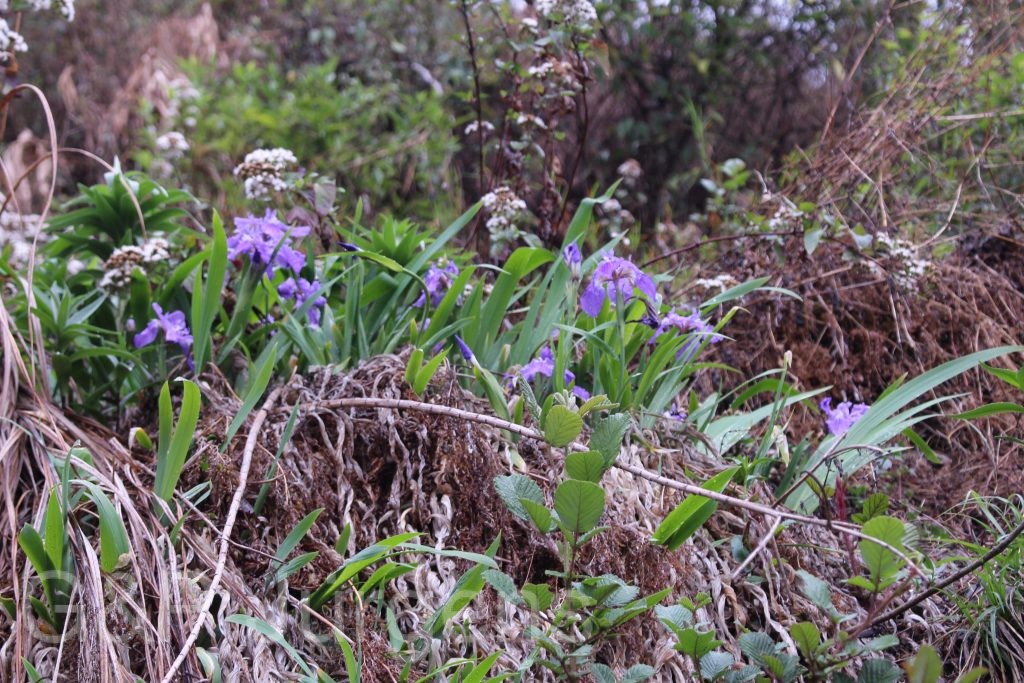
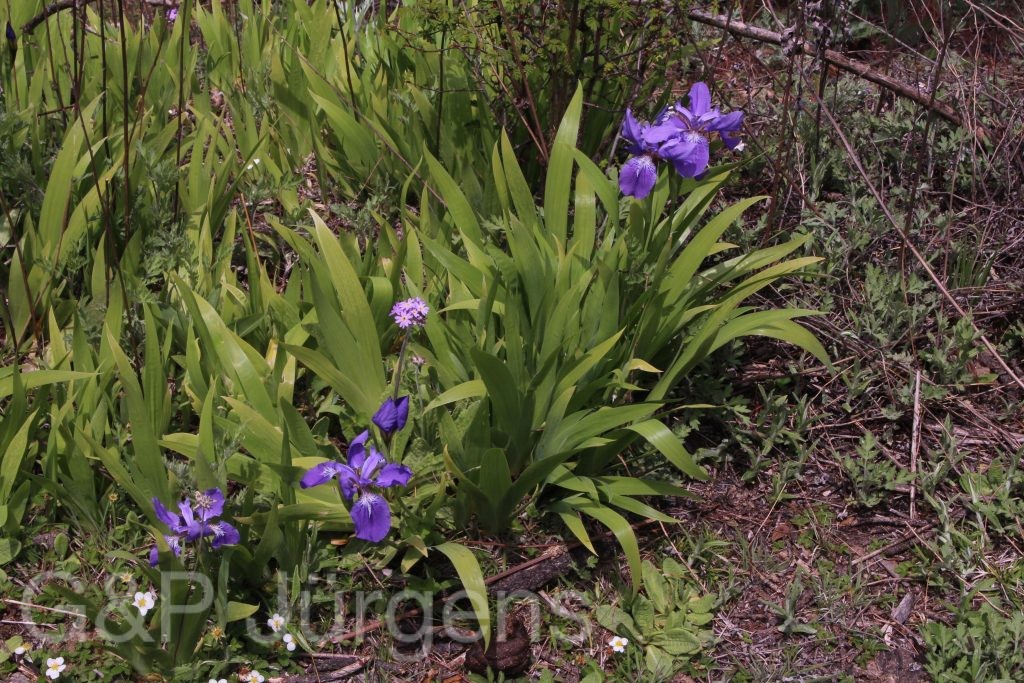
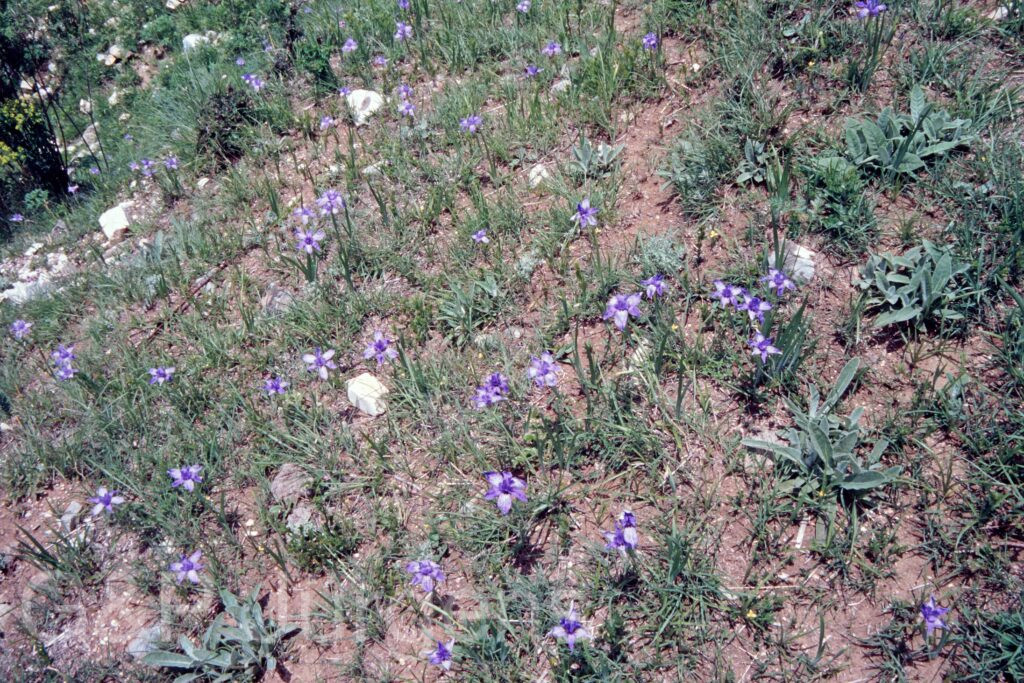
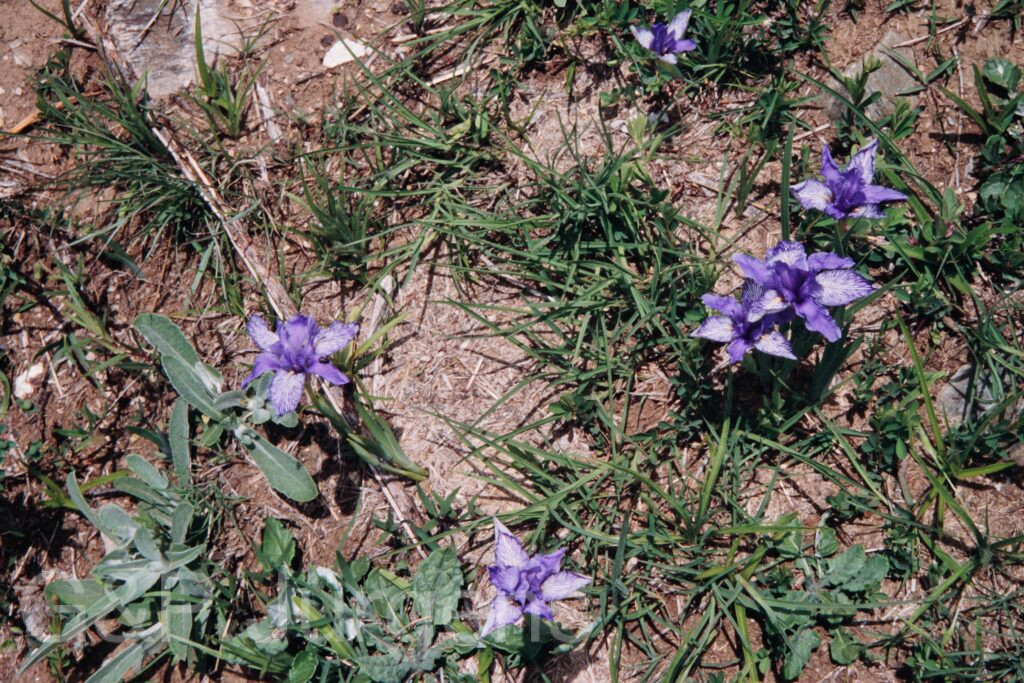
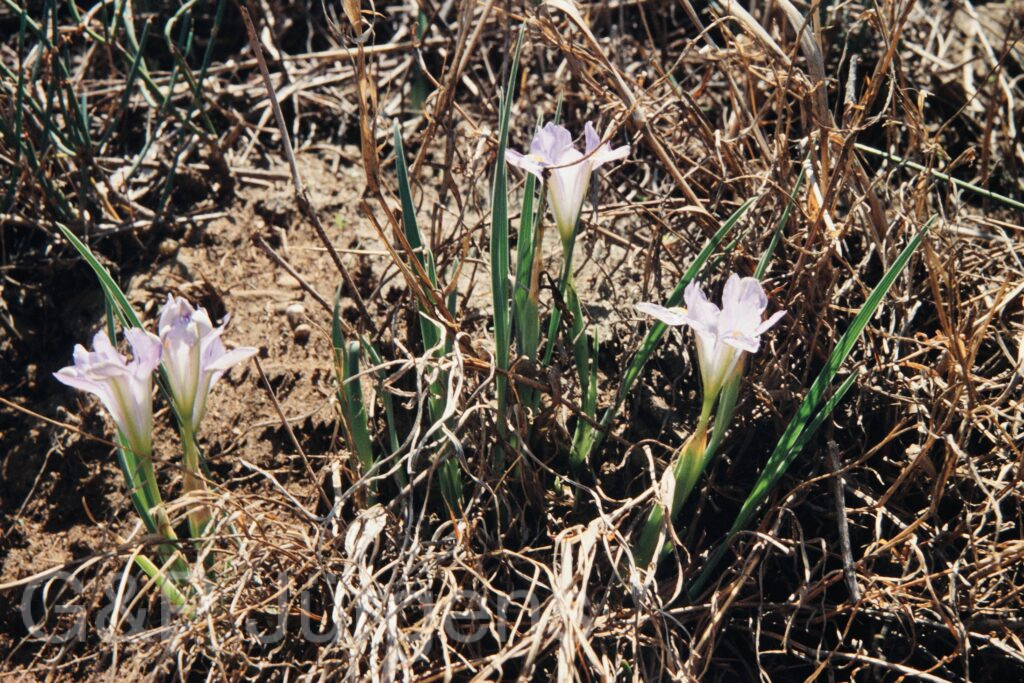
Iris collettii

by G & P Jürgens

Hook.f.

Nepal 99 413 ergebnis
West-Nepal Talphi 2830m, June
Nepal 99 414 ergebnis
West-Nepal Talphi 2830m, June
Nepal 99 415 ergebnis
West-Nepal Talphi 2830m, June

Description

Iris collettii is a Himalayan iris distributed from western Nepal through northeast India and northern Myanmar to southwest China (Yunnan, Sichuan) and northern Thailand. GBIF records approximately 349 occurrences, with the majority from China and Myanmar. The species favours open, grassy slopes, forest margins, and pine-oak woodland clearings at elevations of 1,800–3,200 m, typically on well-drained soils. At Talphi in western Nepal at 2,830 m, it grows in open montane grassland and along forest edges, flowering in June at the onset of the monsoon season — a period when the grassy slopes of the western Nepalese mid-hills support a rich herbaceous flora.
Iris collettii is a rhizomatous perennial herb, 20–40 cm tall. The rhizome is slender, creeping, and clothed in persistent fibrous leaf bases. Leaves are basal, linear-ensiform, 15–30 cm long and 5–10 mm wide, with a prominent midrib, often slightly falcate. The stem bears 1–3 terminal flowers subtended by a pair of spathaceous bracts. Flowers are 4–6 cm in diameter, blue-violet to deep purple; the falls are obovate with a prominent white and yellow signal patch and darker veining, while the standards are erect, oblanceolate, and slightly paler. The style branches are petaloid and arching over the stamens. The fruit is an ellipsoid capsule, trigonous, 2–3 cm long, containing brown angular seeds.
Iris collettii was described by J.D. Hooker and named in honour of Sir Henry Collett, who collected extensively in Myanmar and northern India. The species belongs to subgenus Limniris, section Lophiris (crested irises), and is distinguished from the related I. decora by its generally shorter stature, narrower leaves, and deeper violet flower colour. Its occurrence in western Nepal at Talphi represents the westernmost limit of its known Himalayan distribution. The species is of biogeographical interest as a link between the Sino-Himalayan and Indo-Burmese iris floras.

Author: Hook.f. · Sources: POWO (Kew), GBIF, Flora of China Vol. 24, Flora of Nepal Checklist, Mathew: The Iris (1981)
Iris decora

by G & P Jürgens

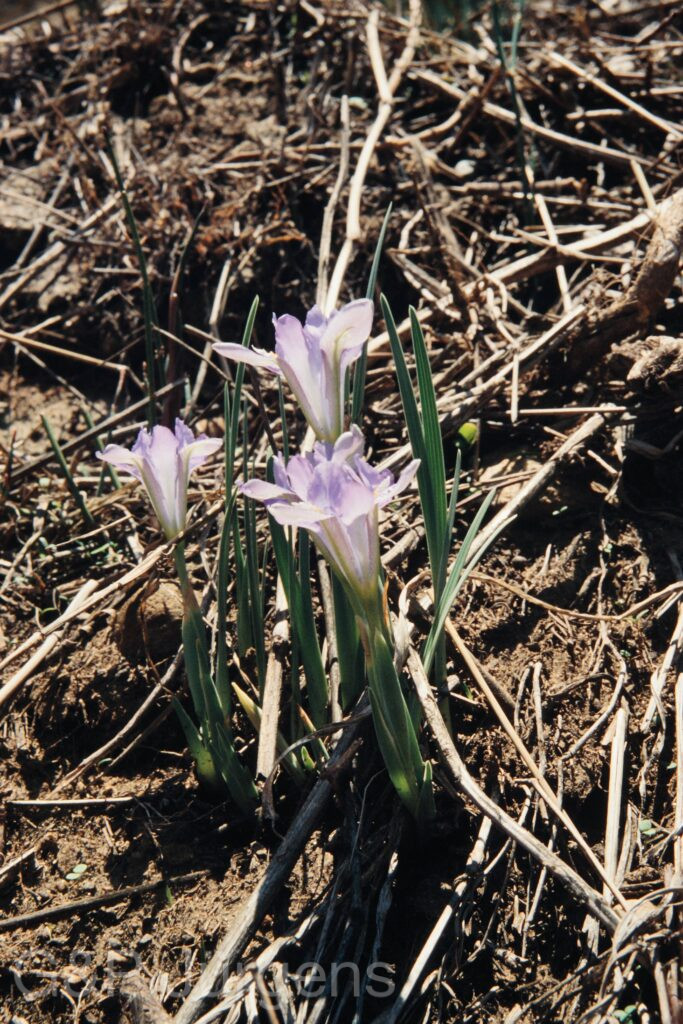
Wall.

Nepal 99 13 ergebnis
West-Nepal, Jumla 2500m june
Nepal 99 14 ergebnis
West-Nepal, Jumla 2500m june

Description

Iris decora Wall. is a tuberous-rooted iris of the Himalaya and the mountains of southwestern China. GBIF data confirm its presence in Nepal, India, Bhutan, Pakistan, China and Myanmar, a range extending the length of the Himalayan arc into Yunnan. It grows on open grassy hillsides, stony slopes and among scrub in the temperate zone, characteristically between about 1,800 and 3,300 m. The plant recorded near Jumla in west Nepal at 2,500 m, flowering in June, typifies its early-summer flowering on sunny montane meadows.

The species arises from a cluster of slender, fleshy, fascicled roots rather than a true rhizome, and produces narrow, grass-like, ribbed leaves that develop fully after flowering. The flowering stem is short, bearing one to several flowers in succession, each subtended by membranous spathe valves. The flowers are lilac to pale violet-blue, the falls bearing a conspicuous yellow or white crest along the central ridge and the standards smaller and erect. The capsule is oblong-cylindric with a beaked apex, splitting to release numerous seeds.

Iris decora belongs to the subgenus Nepalensis (section Pseudoregelia in older treatments), a small group of Sino-Himalayan irises characterised by fascicled fleshy roots and crested falls. It is grown by alpine-plant enthusiasts and is the type of its species group. Although locally common in suitable grassland, it is vulnerable to overgrazing and habitat conversion in the more accessible parts of its range.

Author: Wall. · Sources: POWO (Kew), GBIF, Flora of China Vol. 24, Flora of Bhutan Vol. 3, Mathew: The Iris (1989)

Iris tectorum

by G & P Jürgens

Maxim.

Bhutan2014 42
Bhutan Trashigang 1200m, May
Bhutan2014 974
Bhutan Chele-La 3400m, May
Bhutan2014 975
Bhutan Chele-La 3400m, May

Description

Iris tectorum, the roof iris or wall iris, is native to China and long cultivated across East Asia, with naturalised and planted populations widely recorded; GBIF documents 1128 occurrences in China, Japan, Korea, the United States, India, Bhutan, Myanmar, Taiwan, Kazakhstan and parts of Europe. It grows on dry banks, grassy slopes, rocky ground and, famously, on thatched roofs and old walls where it was traditionally established. In Bhutan the illustrated plants span a wide range, from Trashigang at about 1200 m to Chele-La at 3400 m, both flowering in May, showing its tolerance of both warm valley and high-pass conditions.

The plant is a rhizomatous perennial with a stout, shortly creeping rhizome bearing tufts of broadly ensiform, soft, ribbed leaves arranged in flat fans. The flowering stem is branched and bears several large flowers; each has the iris structure of three spreading, reflexed outer perianth segments (falls) and three smaller erect inner segments (standards). The falls are pale lilac-blue, conspicuously veined and mottled with darker blue, and bear a fringed or crested white-and-violet ridge in place of a beard, identifying it as a crested (Evansia) iris. The three petaloid style branches arch over the stamens; the inferior ovary matures into an oblong, ridged loculicidal capsule releasing rounded seeds.

Assigned to subgenus Limniris and the crested-iris alliance, I. tectorum is a long-standing ornamental and the source material for traditional medicinal use of its rhizome. POWO and GBIF accept the name. Its frequent cultivation accounts for the scattered extralimital records far beyond its East Asian native range.

Author: Maxim. · Sources: POWO (Kew), GBIF, Flora of China, Flora of Bhutan, The Iris (Iridaceae monograph), Annotated Checklist of the Flowering Plants of Nepal

(Benth.) Murata

Bhutan2015 29
Bhutan Dochu-La 2800m, October

Description

Isodon hispidus (Benth.) Murata is a perennial herb of the mint family distributed across the eastern Himalaya and the mountains of southern China and mainland Southeast Asia. GBIF records confirm its presence in Bhutan, India, China, Myanmar, Laos, Vietnam, Thailand and Korea, with an outlying record from Tanzania likely representing a cultivated or misidentified collection. It favours moist forest margins, shrubby clearings and open slopes in the temperate and subalpine zones, typically between 1,500 and 3,000 m. The photographed plant at the Dochu-La in Bhutan, at 2,800 m and flowering in October, exemplifies its preference for cool, humid montane habitats where autumn blooms persist after the monsoon.

The species forms an erect, branched herb 0.5–1.5 m tall arising from a woody rootstock, with quadrangular stems that are densely hispid with spreading hairs. The opposite leaves are ovate to broadly ovate, acuminate, with a coarsely serrate margin and a rugose, pubescent surface, narrowing to a winged petiole. The inflorescence is a lax terminal panicle composed of numerous cymes; the small flowers have a campanulate, two-lipped calyx and a pale violet to purplish corolla with the characteristic declinate lower lip of the genus, enclosing four exserted stamens. The fruit comprises four smooth, ovoid nutlets.

Isodon hispidus belongs to a large and taxonomically intricate genus (formerly placed in Rabdosia and Plectranthus) noted for diterpenoid chemistry of pharmacological interest. Several congeners are used in traditional Asian medicine, and the genus is a focus of phytochemical research into ent-kaurene diterpenoids. The species is widespread and not considered threatened across its broad range.

Author: (Benth.) Murata · Sources: POWO (Kew), GBIF, Flora of China Vol. 17, Flora of Bhutan Vol. 2, Murata: Revision of Asian Isodon (Lamiaceae)

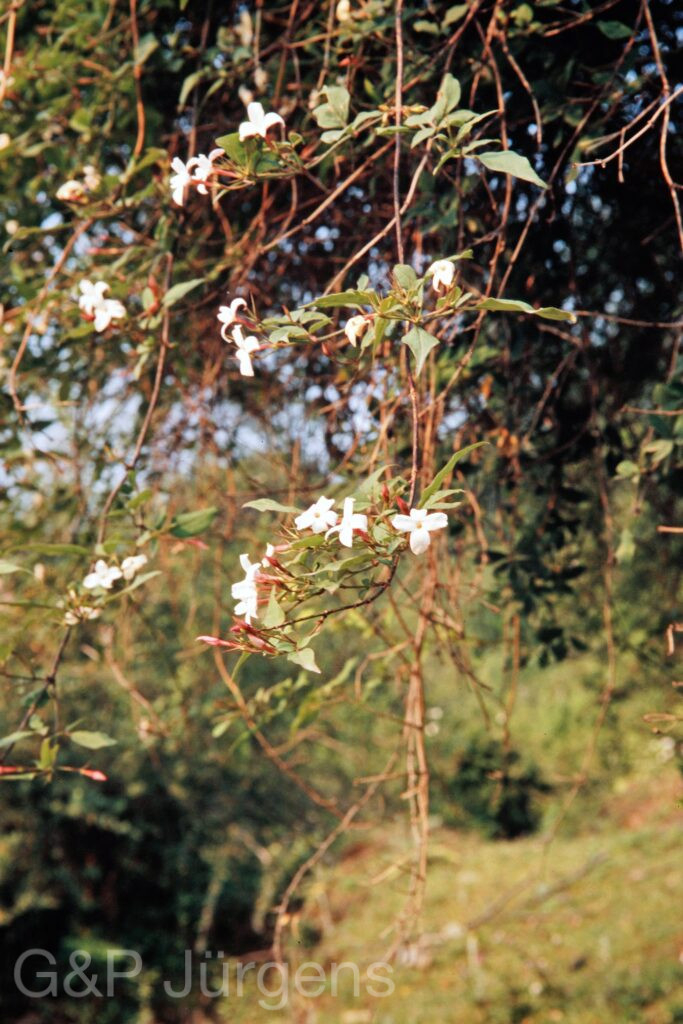
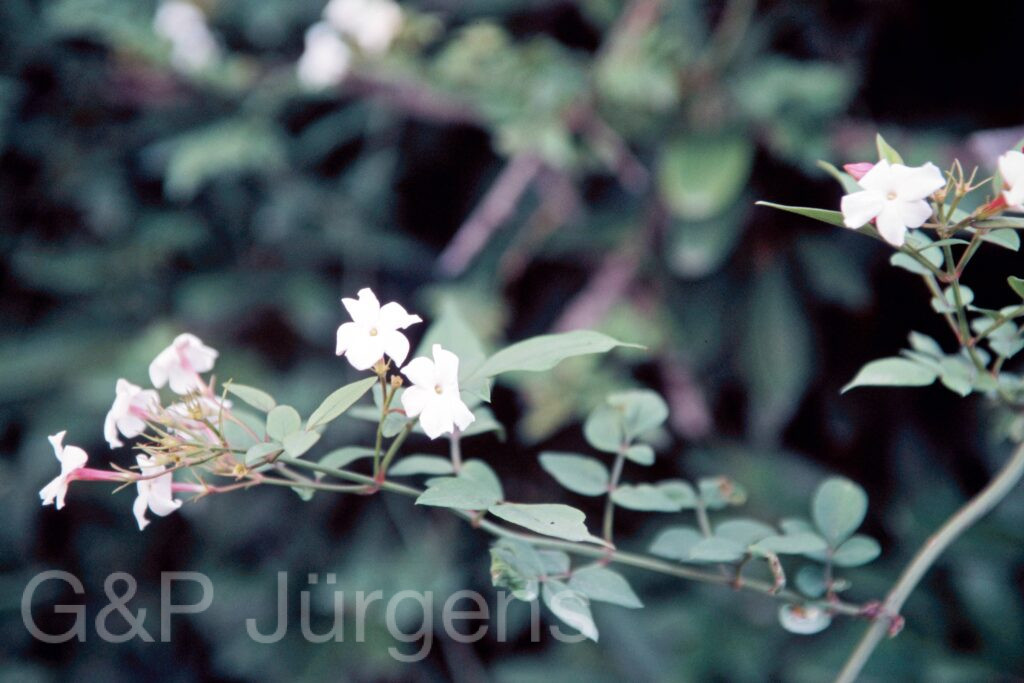
L.

Garh 07 94 ergebnis
India Garhwal Meggu Kichatti 3100m, June
Garh 07 309 ergebnis
India Garhwal Bebra 2400m, June

Description

Jasminum officinale, the common or poet's jasmine, is native to the Caucasus, Central Asia and the Himalaya through Afghanistan, Pakistan, N India, Nepal and SW China, but is so widely cultivated that GBIF's 3,200-plus records span France, Britain, Spain, Italy, the United States, Australia and beyond, reflecting naturalisation far outside its native range. In its Himalayan homeland it is a plant of open forest, scrub, thickets and rocky slopes. The photographed material from Garhwal in the Indian Himalaya, at Meggu Kichatti (3,100 m) and Bebra (2,400 m) in June, illustrates its occurrence on warm temperate to subalpine slopes between roughly 1,500 and 3,100 m.

It is a deciduous or semi-evergreen scrambling shrub with slender, angular, twining green branches. The leaves are opposite and imparipinnate, with usually five to nine ovate-lanceolate, acuminate leaflets, the terminal leaflet longer and stalked. The fragrant flowers are borne in terminal and axillary cymes; each has a slender corolla tube expanding into four to five spreading white lobes, often flushed pink in bud. The fruit is a black, two-lobed berry, though fruiting is uncommon in cultivated clones.

The intense evening fragrance, produced by volatile esters and indole, attracts moths and other long-tongued nocturnal pollinators and underlies the long economic history of the species in the perfume and tea-scenting industries. Numerous cultivars and forms exist, including the hardy var. affine. As an extensively cultivated and locally naturalising species it is of no conservation concern, and indeed can behave as a garden escape in mild-climate regions worldwide.

Author: L. · Sources: POWO (Kew), Flora of Pakistan, GBIF, Flora of China Vol. 15, Green: A Revision of the Genus Jasminum (Kew Bulletin)

D.Don

Sikkim2011 200
Sikkim Yumthang 3300m, June

Description

Juncus concinnus is a tufted, grass-like perennial rush of the Juncaceae, distributed through the Himalaya and the mountains of eastern Asia. GBIF data (nearly 1,000 occurrences) document a native range across China, Nepal, India, Bhutan, Pakistan, Japan, Myanmar and Thailand. The species is characteristic of moist alpine and subalpine habitats, including wet meadows, marshy ground, streamsides, seepage flushes and damp grassy slopes, generally between about 2,500 and 4,500 m. The collection from Yumthang in northern Sikkim at 3,300 m in June reflects its occurrence in the wet, snow-fed alpine meadows of the eastern Himalaya in early summer.

The plant forms dense tufts of slender, erect, terete to slightly compressed stems arising from a short rhizome, with narrow, channelled basal and cauline leaves. The inflorescence is a more or less compact, terminal cluster of several flower heads, each head comprising a few small, dark-coloured flowers. As in all Juncus, the perianth consists of six chaffy, lanceolate tepals (the inner and outer whorls similar), subtending three or six stamens and a superior ovary. The fruit is a small, three-valved loculicidal capsule containing numerous minute seeds, the chaffy perianth persisting around it.

Juncus is a large, cosmopolitan genus of the rush family, an assemblage of wind-pollinated, reduced-flowered monocots adapted predominantly to wet and seasonally inundated ground. As a component of alpine mire and wet-meadow vegetation, J. concinnus contributes to the structure of high-altitude wetland turf and stabilises moist soils. Widely distributed and secure across its range, it nonetheless depends on intact alpine hydrology, making it sensitive to wetland drainage and to changes in snowmelt regimes.

Author: D.Don · Sources: POWO (Kew), Flora of China Vol. 24, Flora of Bhutan Vol. 3, GBIF, Kirschner et al.: Juncaceae – Species Plantarum: Flora of the World

Fisch. & C.A.Mey.

Sikkim2011 92
Sikkim Chopta-valley 4300m, June
Nepal1992 120 P170 ergebnis
Nepal Ghunsa 3400m March

Description

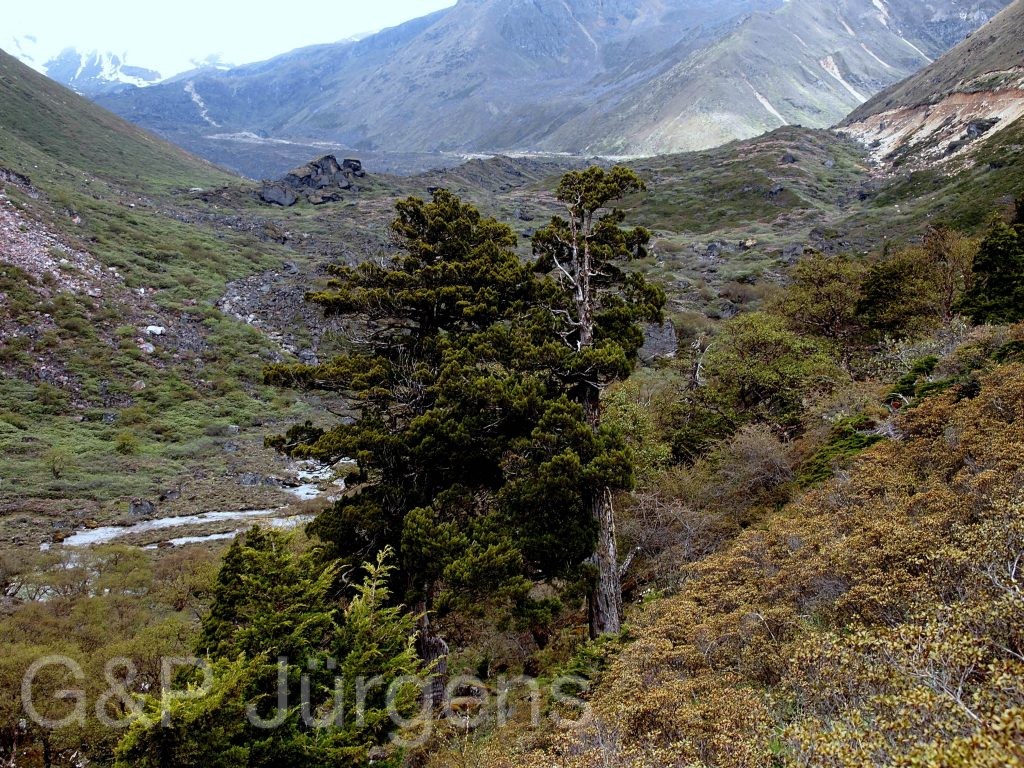
Juniperus pseudosabina is a coniferous shrub of the high mountains of Central Asia and the Himalaya, with GBIF documenting around 1678 occurrences across Russia, Kazakhstan, China, Uzbekistan, Mongolia, Kyrgyzstan, Pakistan, Tajikistan, India, Nepal, Afghanistan and Bhutan. It is a constituent of the upper subalpine and alpine zones, forming krummholz and prostrate thickets on stony slopes, rocky ridges, moraines and at the timberline. The photographed plants were recorded in Sikkim's Chopta valley at 4300 m in June and at Ghunsa in Nepal at 3400 m in March, illustrating its occupation of cold, exposed high-montane sites near and above the tree limit.

It is typically a low, spreading, mat-forming or procumbent shrub, occasionally a small tree, with reddish-brown shredding bark. The foliage is mostly squamiform (scale-like), with small, closely appressed, rhombic leaves bearing a conspicuous dorsal resin gland; needle-like juvenile leaves may persist on vigorous shoots. The species is usually dioecious; the pollen cones are small and terminal, while the seed cones are berry-like galbuli that ripen blue-black to purplish-black, are glaucous, and characteristically contain a single large seed.

GBIF accepts the name. Belonging to section Sabina, the multi-seeded and single-seeded savin junipers, J. pseudosabina is closely allied to several Himalayan and Central Asian junipers with which it has been taxonomically confused. Its galbuli are dispersed by birds, and the dwarfed, wind-pruned habit reflects adaptation to severe alpine exposure. Wide-ranging and locally abundant, it is assessed as of least concern.

Author: Fisch. & C.A.Mey. · Sources: POWO (Kew), GBIF, Flora of China, Flora of Nepal, Farjon monograph of Juniperus

Buch.-Ham. ex D.Don

Bh2008 394 P610
Bhutan Gogona 3160m, May

Description

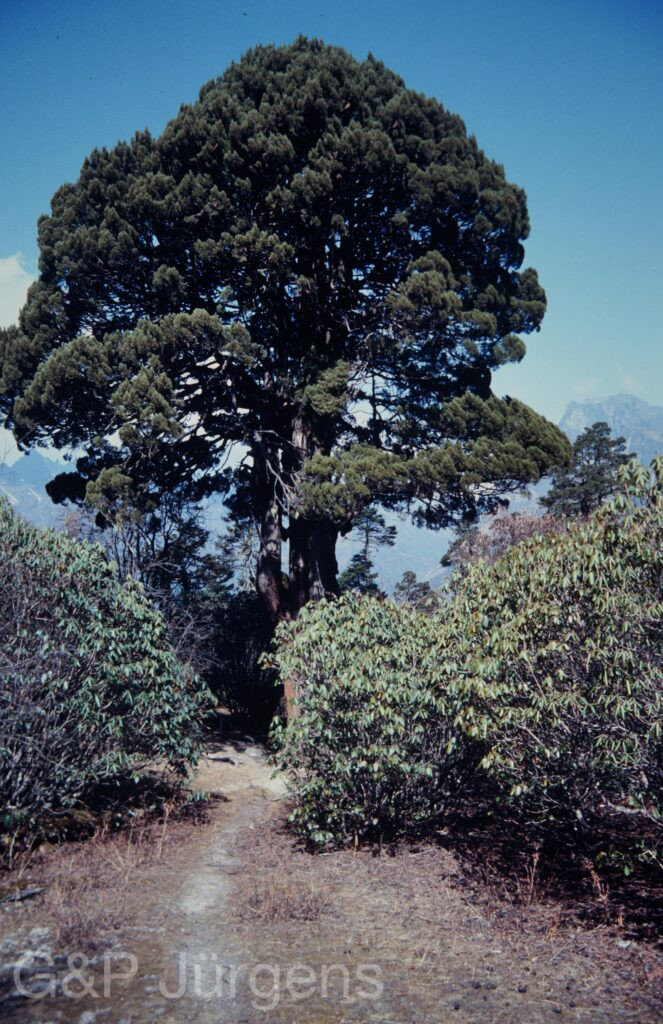
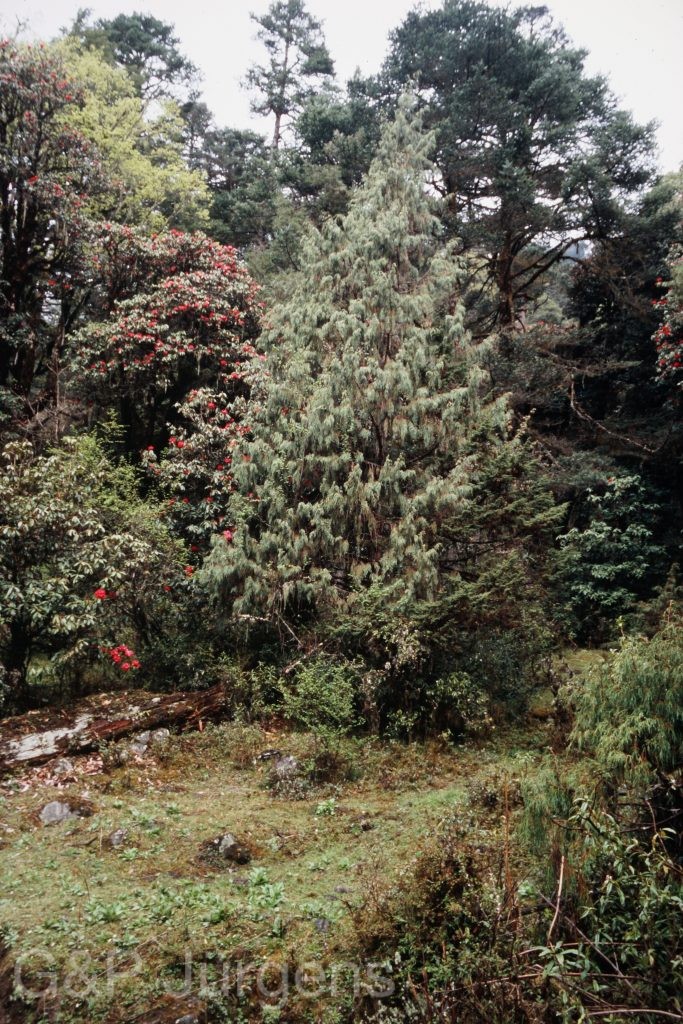
Juniperus recurva, the drooping or Himalayan weeping juniper, is a high-mountain conifer native across the Himalaya and adjacent China, with a core distribution in China, Nepal, India, Bhutan, Myanmar, Afghanistan and Pakistan; its very large GBIF tally of around 1185 records includes numerous cultivated occurrences in Great Britain, the United States, Spain, New Zealand, Japan and Germany, reflecting its long history in horticulture. In the wild it is a tree of the subalpine and alpine zones, forming open woodland, krummholz and scattered stands at and above the timberline on dry, rocky slopes. The tree photographed at Gogona in Bhutan at about 3160 m in May typifies its occurrence in the upper subalpine belt, where it often mingles with Abies, Rhododendron and Betula.

It is an evergreen tree or large shrub with characteristically pendulous, drooping branchlets and reddish-brown, fibrous bark that peels in long strips. The foliage consists of needle-like (acicular) juvenile-type leaves borne in whorls of three, incurved and sharply pointed, with a glaucous adaxial band; the leaves are retained as adults rather than reduced to scales. The species is typically dioecious, with small terminal pollen cones and ovulate cones that mature over two seasons into fleshy, berry-like galbuli that ripen blue-black to brownish and usually contain a single seed.

Juniperus recurva belongs to section Juniperus (the needle-leaved junipers) and includes the well-known coffin-juniper variant (var. coxii) with especially long pendulous shoots. Its fleshy cones are dispersed by birds and mammals, and the aromatic foliage is traditionally burned as incense across the Buddhist Himalaya. Although globally widespread and not classed as threatened, local populations near settlements are depleted by cutting for incense and fuel, and as a slow-growing timberline species it is potentially sensitive to warming-driven shifts in the upper forest limit.

Author: Buch.-Ham. ex D.Don · Sources: POWO (Kew), GBIF, Flora of China Vol. 4, Flora of Bhutan Vol. 1, Flora of Nepal, Adams Junipers of the World: The Genus Juniperus

Siebold & Zucc.

Bh2008 391 P606
Bhutan Gogona 3250m, May

Description

Juniperus rigida is a coniferous shrub or small tree of temperate East Asia, very well represented in GBIF with 6235 occurrences centred on Korea, Japan, China and the Russian Far East, alongside numerous cultivated records in Europe and North America. It grows on dry, rocky slopes, exposed ridges, sandy soils and open montane woodland, tolerating poor substrates and cold, often from the hills to the subalpine zone. The individual photographed at Gogona in Bhutan at 3250 m in May reflects its occurrence at higher Himalayan elevations, where it persists on stony, well-drained ground in cool montane conditions.

The plant is a dioecious, evergreen shrub or tree with spreading to pendulous branches and reddish-brown, fibrous bark that peels in strips. The leaves are all needle-like (acicular), borne in whorls of three, rigid, sharply pointed and deeply grooved adaxially with a single white stomatal band, a combination giving the foliage a harsh, prickly texture reflected in the epithet rigida. The male cones are small and axillary, shedding pollen in spring; the female structures develop into fleshy, berry-like seed cones (galbuli) that ripen blue-black with a glaucous bloom over about two years, each typically enclosing three seeds.

Juniperus rigida belongs to section Juniperus, the needle-leaved junipers, and is closely allied to J. communis, from which it differs in its longer, more rigid leaves and arching habit. It is widely cultivated as an ornamental and for bonsai, explaining many of its extralimital records. Ecologically it is a hardy pioneer of disturbed and stressful sites, and it remains common and of least concern across its broad native range.

Author: Siebold & Zucc. · Sources: POWO (Kew), GBIF, Flora of China Vol. 4, Flora of Bhutan Vol. 1, Flora of Nepal, Flora of Pakistan, Adams' Junipers of the World

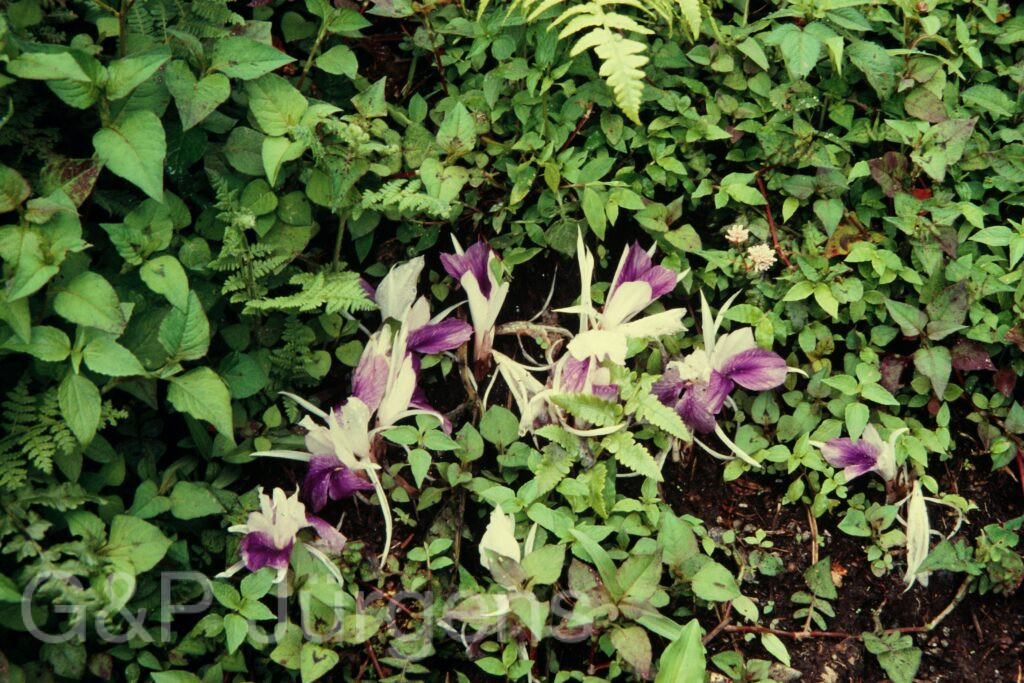
L.

Nepal 97 410 P792
Nepal Tashigaon 3000m May
Nepal 2001 173 ergebnis ergebnis
East-Nepal Sabha-Khola 2100m, April

Description

Kaempferia rotunda L. is a tuberous, rhizomatous herb of the ginger family native to tropical and subtropical Asia and very widely cultivated, so that its GBIF record (586 occurrences) spans India, Myanmar, China, Thailand, Bangladesh, Cambodia, Laos, Vietnam, Indonesia and the Philippines alongside many introduced localities in the Neotropics, North America and the Pacific. In the Himalayan foothills it grows in warm, shaded forest, scrub and disturbed ground; it was recorded in eastern Nepal at Sabha-Khola near 2100 m in April and at Tashigaon around 3000 m in May, the latter elevation being unusually high and probably reflecting sheltered, low-frost microsites or local cultivation.

The plant arises from a clustered, aromatic rhizome bearing fleshy tuberous roots. The leaves, two to four per shoot, are oblong-lanceolate, often handsomely variegated with dark and silvery-green zones above and purplish beneath, and appear after or with flowering. The inflorescence is hysteranthous, emerging directly from the rhizome at ground level before the leaves expand: a cluster of short-lived flowers with white, narrowly oblong corolla lobes, two petaloid white staminodes, and a conspicuous, deeply bilobed lilac to violet labellum. The fruit is a three-valved capsule, though propagation is largely vegetative.

Kaempferia rotunda is the type species of its genus and is grown ornamentally as 'peacock ginger' and used in traditional medicine across South and Southeast Asia, its rhizomes valued for fragrant essential oils. Its enormous naturalised range testifies to long human movement of the species. Pollination of the showy ephemeral flowers is by bees and other insects attracted to the labellar nectar guides, while persistence in cultivation buffers it against any wild conservation concern.

Author: L. · Sources: POWO (Kew), GBIF, Flora of China, Flora of Bhutan, Flora of British India, Zingiberaceae monograph (Larsen & Larsen; K. Schumann Zingiberaceae)