Tag:

Subalpine (2500-3500 m)

(Roxburgh ex D. Don) Brühl
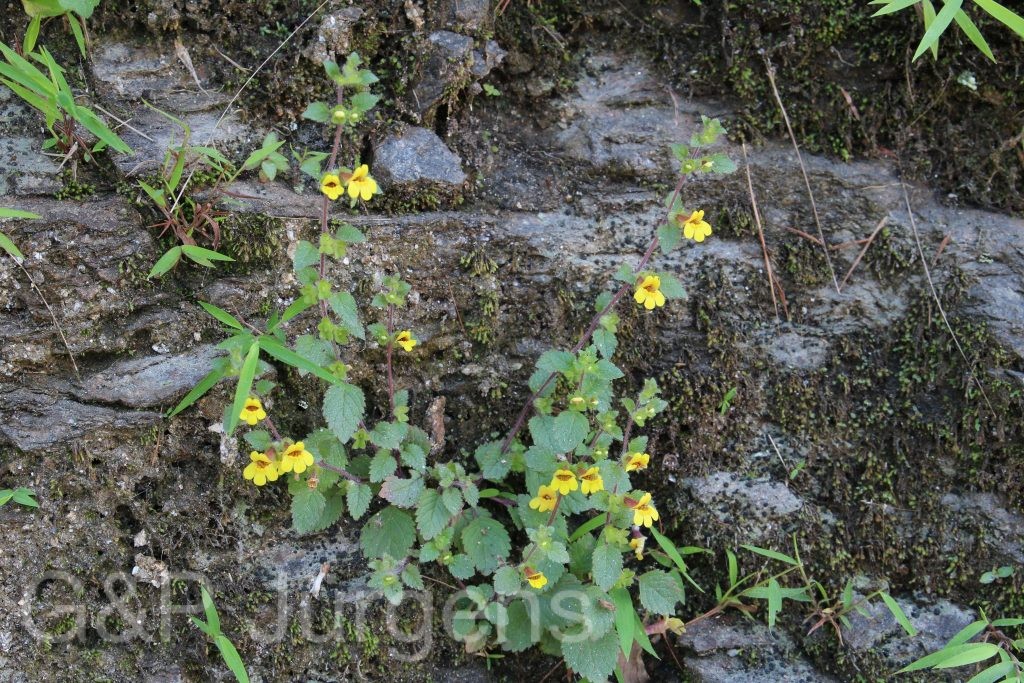
Bhutan2015 73
Bhutan Wangdi Phodrang 1500m, October
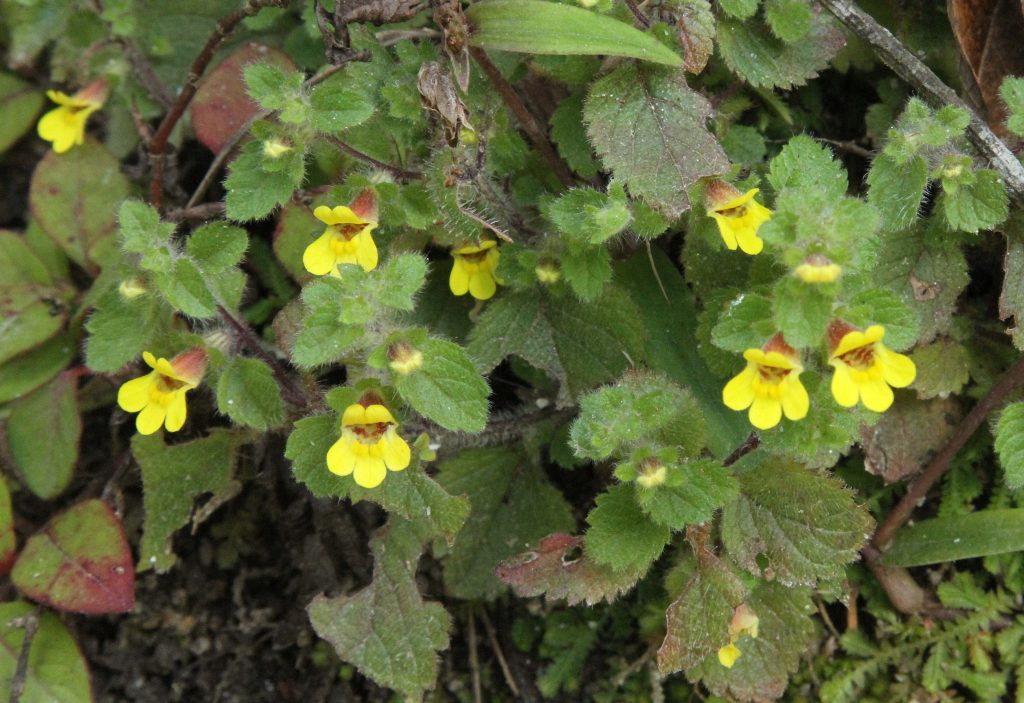
Bhutan2012 410
Bhutan Wangdi 2700m, September
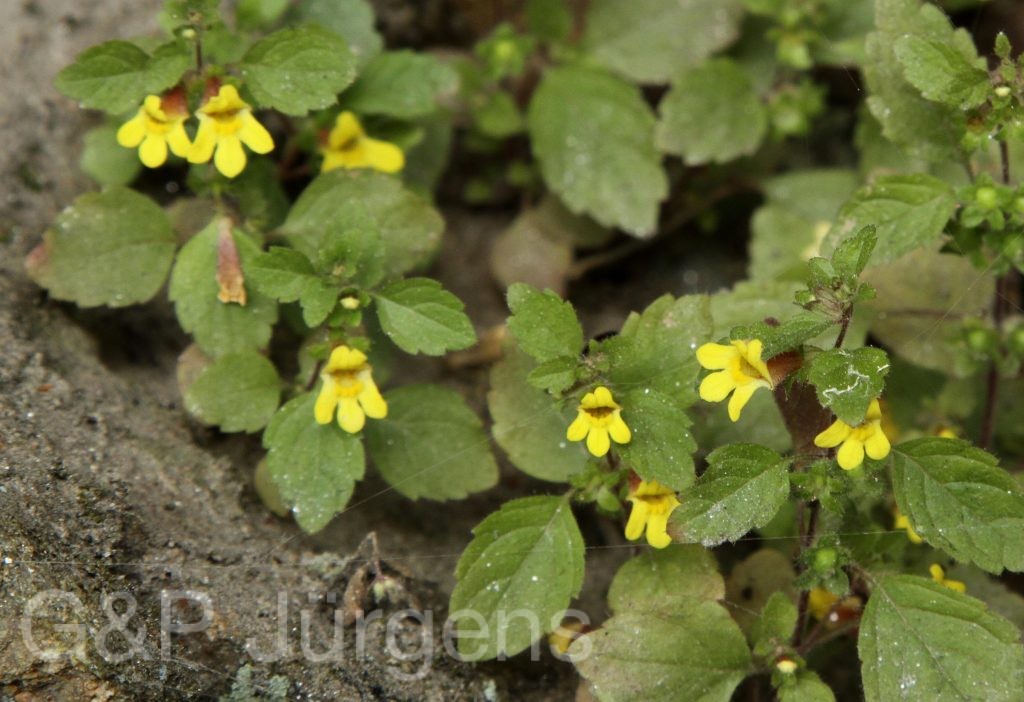
Bhutan2012 654
Bhutan Tserang 1200m, September

Description

Lindenbergia muraria is a widespread herb of warm-temperate and subtropical Asia, recorded across India, China, Nepal, Bhutan, Myanmar, Thailand, Vietnam, Cambodia, Bangladesh, Pakistan and into parts of Arabia and Africa; GBIF logs 585 occurrences over this broad range. As its epithet implies, it is a colonist of old walls, rock crevices, stony banks, roadsides and waste ground, generally from the lowlands up to about 2700 m. The illustrated plants come from several Bhutanese stations, Wangdue Phodrang at 1500 m in October, Wangdue at 2700 m in September and Tsirang at 1200 m in September, spanning the autumn flowering of this ruderal species across a wide elevational band.

The plant is an erect to ascending annual or short-lived perennial herb, the stems softly pubescent and often glandular-hairy. Leaves are opposite below and sometimes alternate above, ovate to ovate-lanceolate, with a serrate margin and short petiole. The flowers are solitary or paired in the upper leaf axils, forming a leafy terminal spike-like inflorescence; each has a tubular, five-toothed calyx and a yellow, two-lipped corolla with a short tube, the lower lip three-lobed and often marked. There are four didynamous stamens, and the superior ovary ripens into a small, ovoid, septicidal capsule containing numerous minute seeds.

Lindenbergia, long placed in Scrophulariaceae, is now referred to the broadly circumscribed Plantaginaceae (consistent with the input family) following molecular reclassification, occupying a basal position near the family's scrophularioid lineages. POWO and GBIF accept the name. Its tolerance of walls and disturbed mineral substrates underlies its wide, weedy distribution across monsoon Asia.

Author: (Roxburgh ex D. Don) Brühl · Sources: POWO (Kew), GBIF, Flora of China, Flora of Bhutan, Flora of British India, Annotated Checklist of the Flowering Plants of Nepal, Revision of Lindenbergia (Plantaginaceae/Scrophulariaceae)
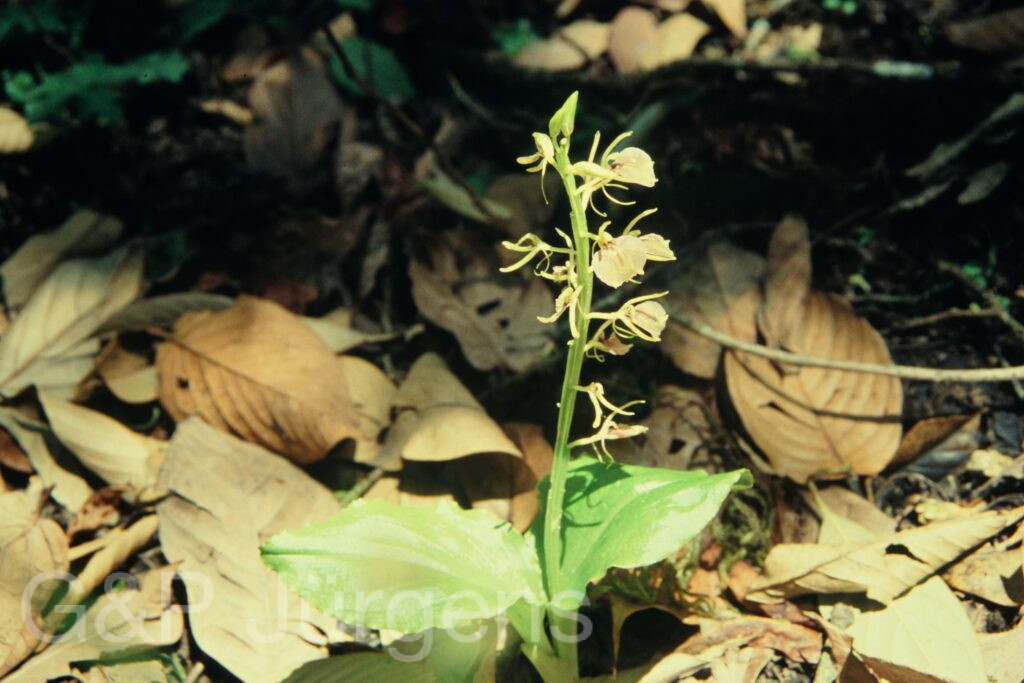
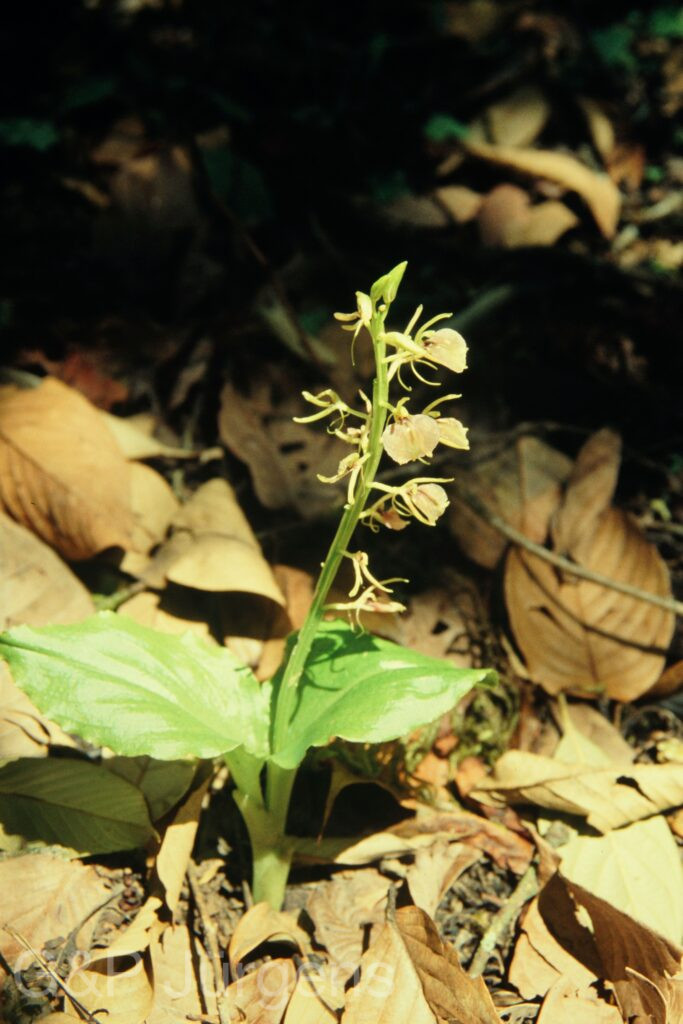
Hook.f.

Sikkim2004 93 G163
Sikkim West-Bengal, Bersay 2700m April
Sikkim2004 117 G201
Sikkim West-Bengal, Bersay 2700m April

Description

Liparis cathcartii is an East Himalayan terrestrial orchid known from a restricted range spanning northern India (Sikkim, West Bengal, Darjeeling), Nepal, Bhutan and south-eastern China; its modest tally of about 60 georeferenced occurrences (IN, CN, NP, BT) marks it as a regional endemic of the moist temperate forest belt. It grows in shaded, humus-rich leaf litter and on mossy banks within broad-leaved and mixed forest, generally between about 2000 and 3000 m. The plant photographed at Bersay on the Sikkim-West Bengal border at 2700 m in April, flowering early in the season, is typical of its cool, humid forest-floor habitat.

It is a small terrestrial herb arising from clustered, fleshy pseudobulbs partly sheathed by membranous scales. From each pseudobulb arise a few thin-textured, plicate, ovate to elliptic leaves with sheathing bases. The slender erect scape bears a lax raceme of several small flowers, greenish to purplish-brown in colour, with narrow spreading sepals and filiform petals; the lip (labellum) is the most distinctive organ, broad, recurved and often emarginate, contrasting with the slender column characteristic of the genus. The fruit is a small ellipsoid, ribbed capsule releasing abundant dust-like seeds dispersed by wind.

Liparis is a large, near-cosmopolitan genus of subtribe Malaxidinae, with Himalayan species notably diverse; L. cathcartii is allied to other temperate plicate-leaved members of the genus. Like most orchids it depends on mycorrhizal fungi for germination and is protected internationally under CITES Appendix II. Its narrow distribution and reliance on undisturbed forest make it sensitive to habitat loss, though it persists locally where forest cover remains intact.

Author: Hook.f. · Sources: POWO (Kew), GBIF, Flora of Bhutan, Flora of China, The Orchids of Sikkim Himalaya (King & Pantling), Genera Orchidacearum (Pridgeon et al.)

Roth

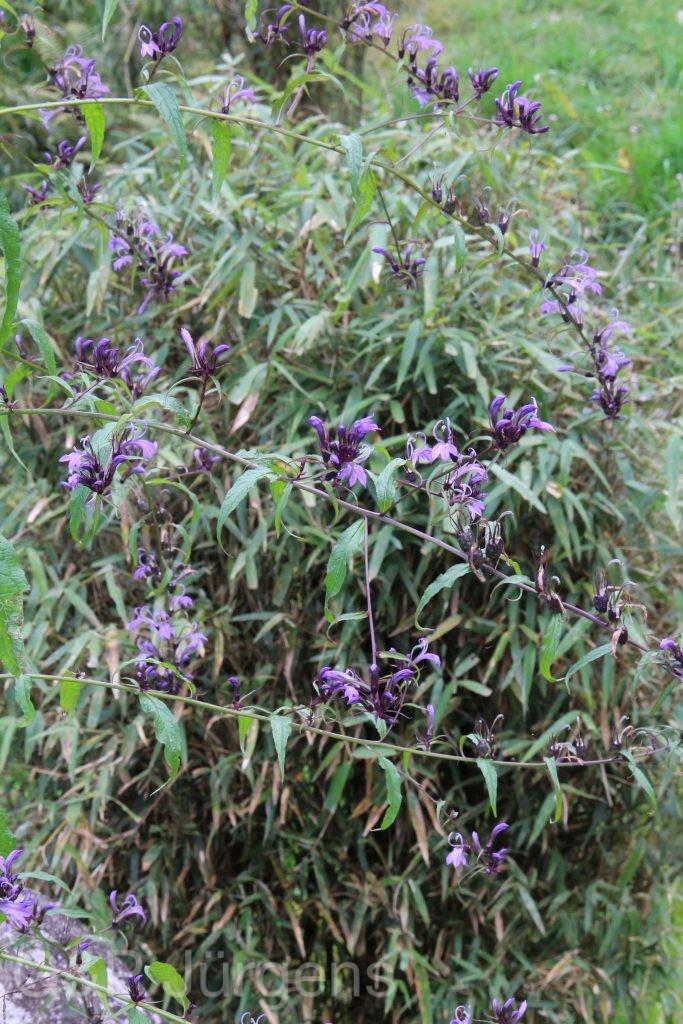
Bhutan2015 35
Bhutan Dochu-La 2700m, October
Bhutan2015 36
Bhutan Dochu-La 2700m, October
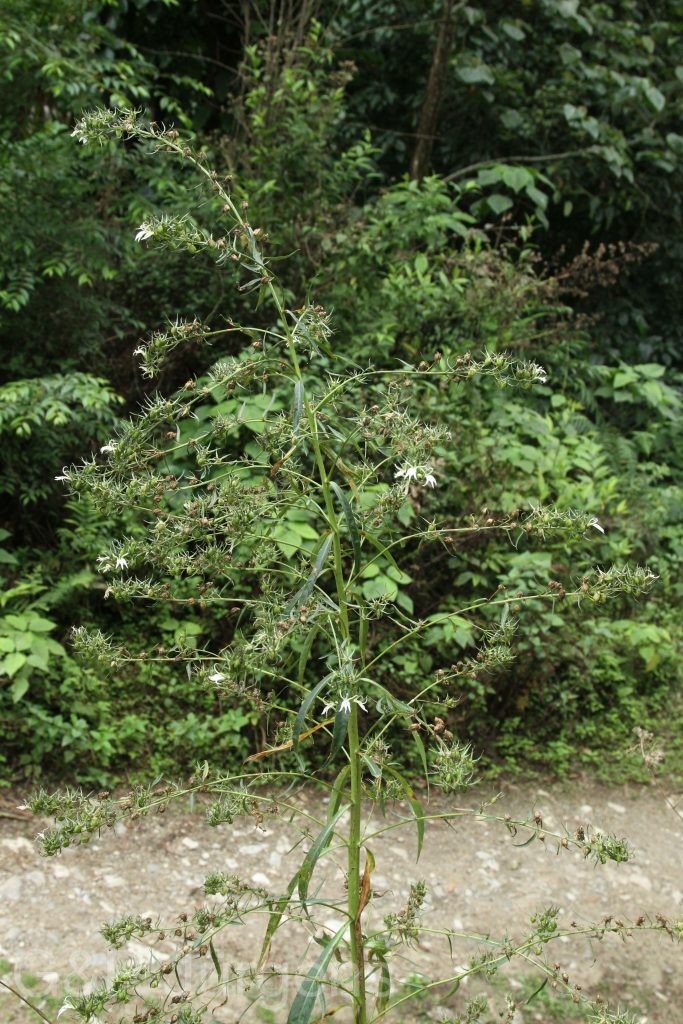
Bhutan2014 286
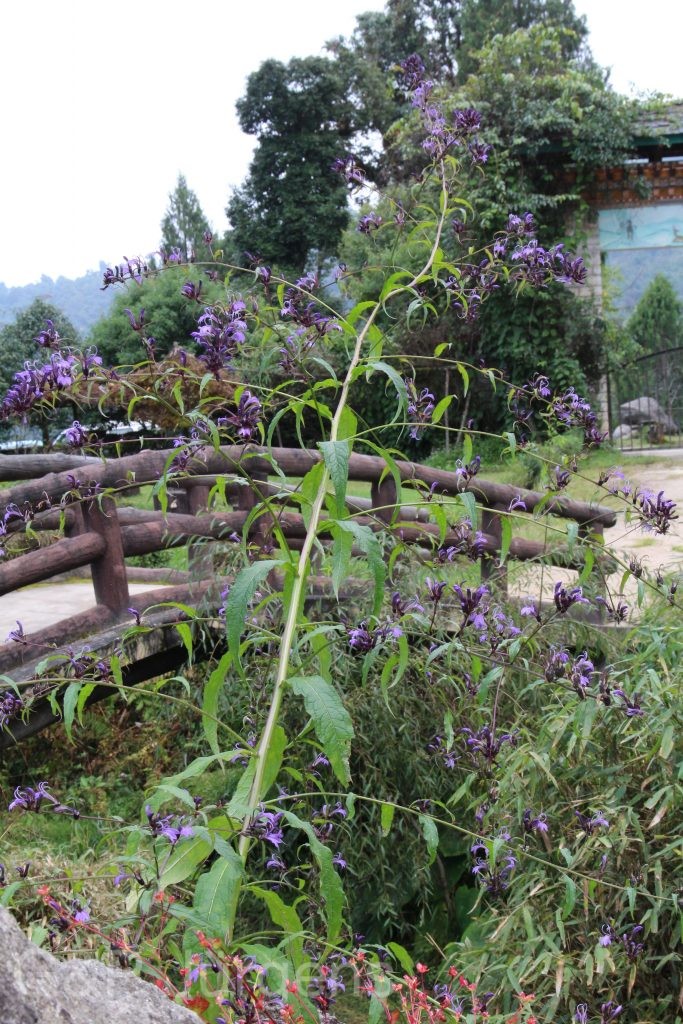
Bhutan Trithangebe at a farm, 800m May
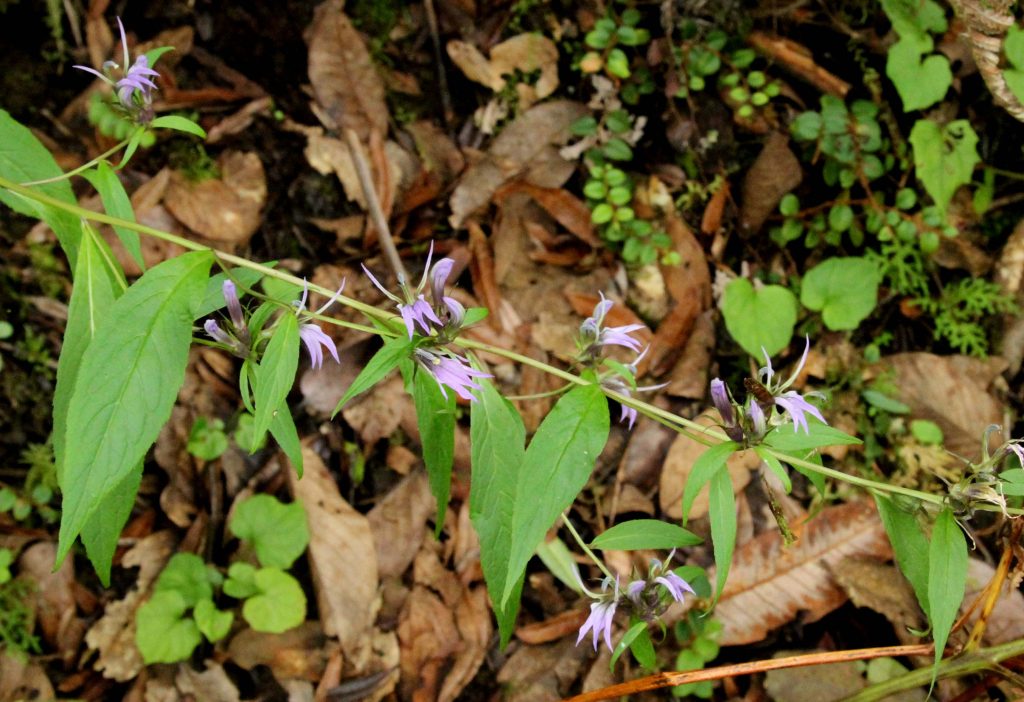
Bhutan2012 338
Bhutan Dochu-La 3000m, September

Description

Lobelia nicotianifolia is a robust, wide-ranging lobelia of the Indian subcontinent and tropical Asia, documented from India, China, Sri Lanka, Nepal, the Philippines, Thailand, Myanmar, Indonesia, Bangladesh, Vietnam, Bhutan, Laos, Malaysia and Taiwan, with around 763 occurrences making it one of the better-collected species in this set; New World records reflect cultivation or error. It occupies a wide altitudinal span, from warm foothill farmland to cool montane forest margins, favouring open, disturbed, moist ground along roadsides, clearings and field edges. The Bhutanese collections illustrate this breadth, ranging from a farm at Trithangebe at about 800 m in May to the Dochu-La between roughly 2700 and 3000 m flowering in September and October.

It is a tall, stout biennial or short-lived perennial herb, sometimes exceeding two metres, with an erect, little-branched stem exuding acrid milky latex when cut. The leaves are large, alternate, lanceolate to elliptic, finely toothed and tobacco-like in size and texture, hence the epithet nicotianifolia, the lower ones forming a substantial basal array. The flowers are borne in a long, dense terminal raceme; each is zygomorphic with a tubular, two-lipped corolla, typically pale greenish-white to bluish, split nearly to the base, the upper lip of two narrow lobes and the lower of three, the stamens connate into a staminal tube around the style. The fruit is a many-seeded capsule dehiscing at the apex.

Within Campanulaceae, Lobelia is a large genus distinguished by strongly bilabiate flowers and syngenesious anthers, and tall species such as this are notable for their imposing single-stemmed inflorescences and their pyridine alkaloids related to lobeline, giving them a long history of medicinal and folk use. The acrid latex deters herbivores, and the protandrous flowers favour outcrossing by insect visitors. Common and adaptable across a vast range, the species is of no conservation concern and behaves as a colonist of disturbed, anthropogenic habitats.

Author: Roth · Sources: POWO (Kew), GBIF, Flora of Bhutan, Flora of China, Flora of British India, Lammers's monographic studies of Lobelia (Campanulaceae)

Pall. ex Schult.

BhutanPG2011 590
Bhutan Kem-La 4100m, July
Garh 07 111 ergebnis
India Garhwal Meggu Kichatti 3200m, June

Description

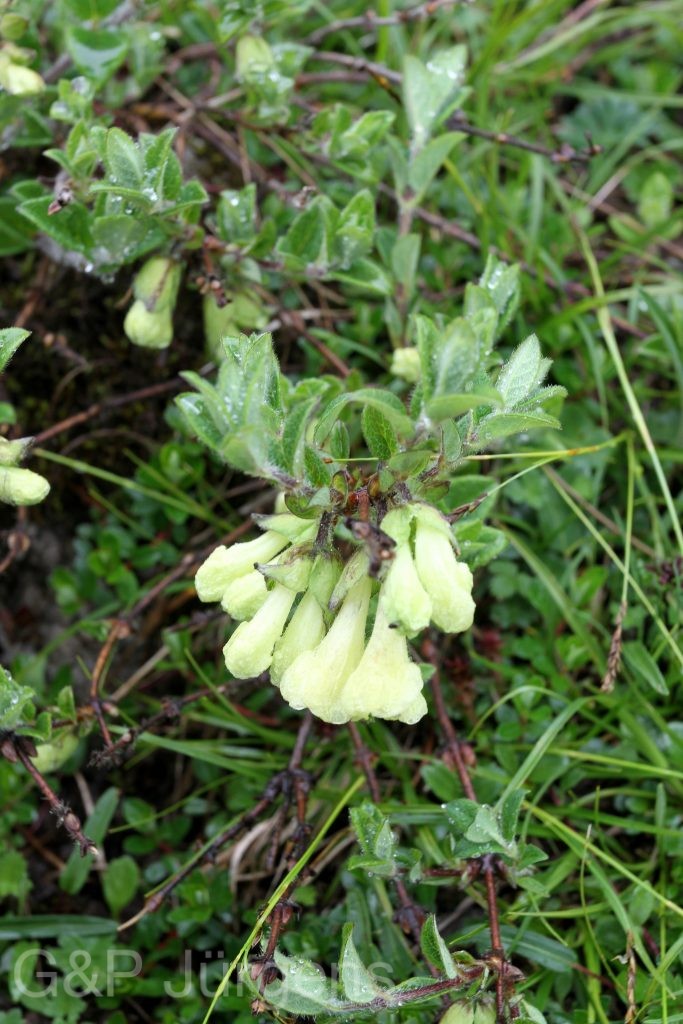
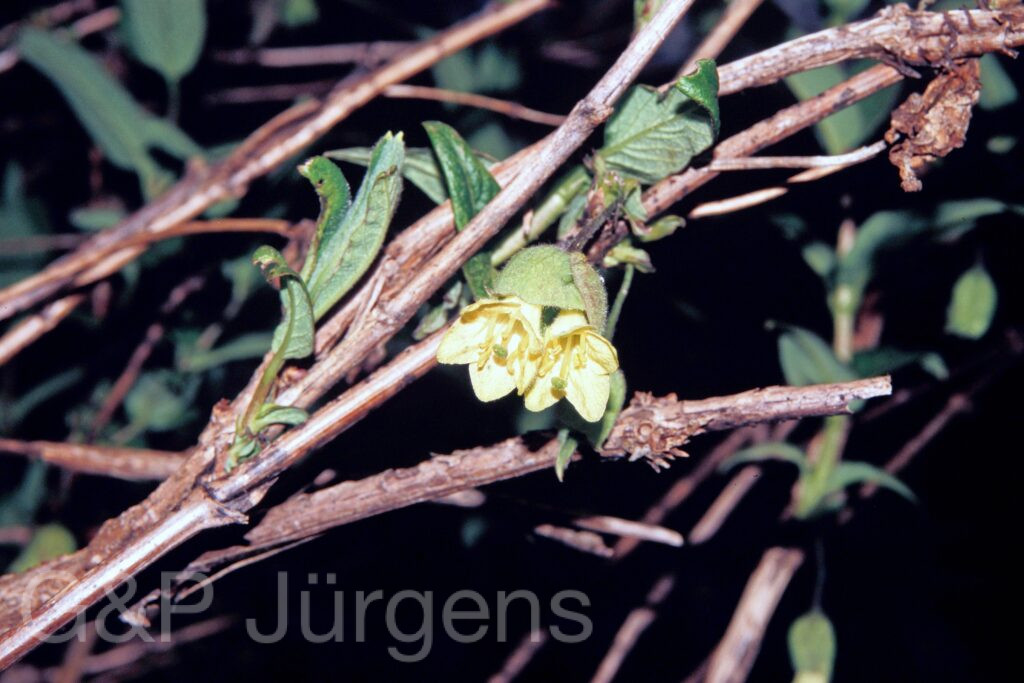
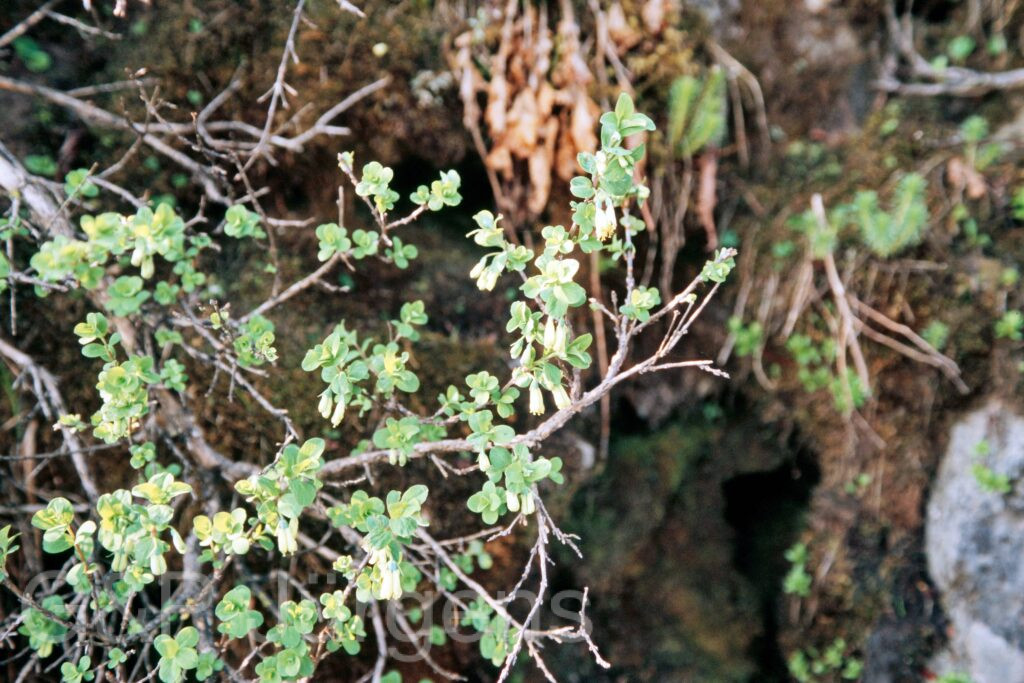
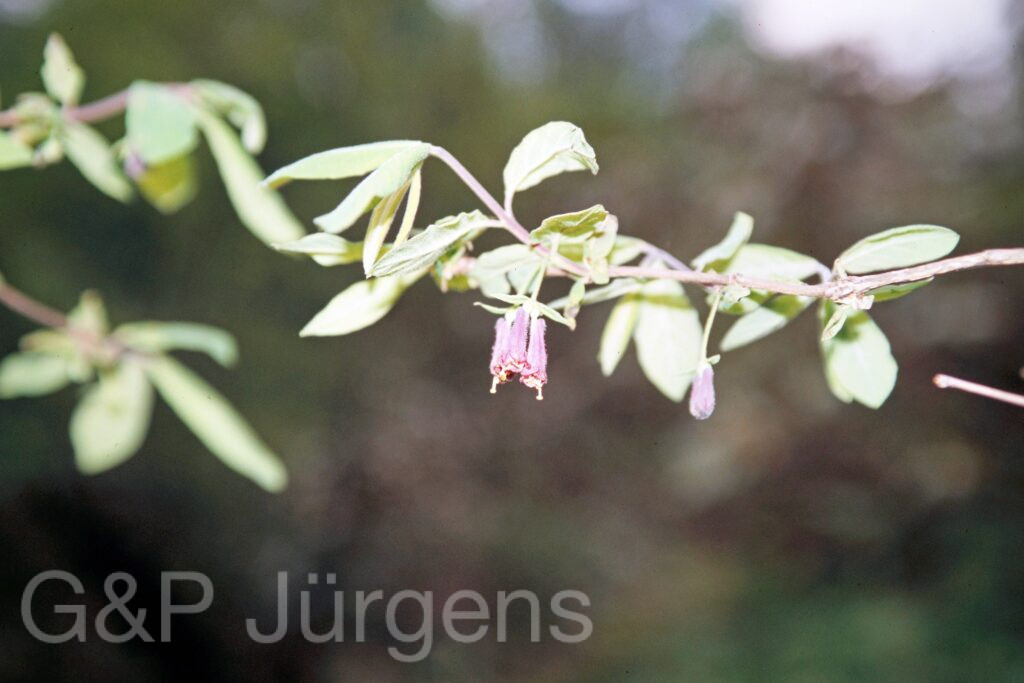
Lonicera hispida is a deciduous shrub of the high mountains of Central and High Asia, ranging through the Himalaya from Pakistan and India to Nepal and Bhutan, across Tibet and western China, and northward into the Tien Shan, Pamir-Alai and Altai of Central Asia and Russia. It grows in subalpine and alpine scrub, open coniferous forest, stream banks and rocky slopes, typically between about 2500 and 4500 m. The photographed material comes from Kem-La in Bhutan at around 4100 m and from Meggu Kichatti in Indian Garhwal at about 3200 m, flowering in June and July. With over 3100 georeferenced records it is a well-documented and widespread montane honeysuckle.

It forms an erect, much-branched shrub up to about 2 m, the young shoots and petioles bristly-hispid with stiff spreading hairs and glandular bristles, the older bark exfoliating. The leaves are opposite, oblong to elliptic, ciliate and bristly-margined, often glaucous beneath. The flowers are borne in axillary pairs subtended by large, broad, persistent bracts that enlarge in fruit; the corolla is tubular-funnelform, white to pale yellow, weakly two-lipped, with a gibbous base and exserted stamens and style. The paired ovaries are partly united, and the fruit is a fleshy berry, red at maturity, the bracts often colouring and partly enclosing the twin fruits.

Lonicera hispida belongs to section Isika and is distinguished by its conspicuously hispid bristly indumentum and large floral bracts. It is morphologically variable across its enormous range, and several varieties have been recognised. The berries are taken by birds, aiding dispersal. As a common, broadly distributed alpine shrub it is of least conservation concern.

Author: Pall. ex Schult. · Sources: POWO (Kew), GBIF, Flora of China, Flora of Bhutan, Rehder's revision of Lonicera

Royle ex Hook.f. & Thomson

Garh 07 116 ergebnis
India Garhwal Meggu Kichatti 3300m, June

Description

Lonicera obovata is a Himalayan shrubby honeysuckle distributed through Afghanistan, Pakistan, Nepal, NW India, Bhutan and SW China, with 424 occurrences recorded in GBIF. It inhabits high-elevation shrubberies, open coniferous and birch woodland margins, rocky slopes and the upper subalpine to alpine zone. The photographed material from Meggu Kichatti in Garhwal, India, at about 3,300 m in June, represents typical habitat where the plant flowers as the snow recedes, often forming low thickets among rocks and dwarf rhododendron.

It is a deciduous, much-branched dwarf shrub usually 0.3–1 m tall with slender, often arching branches. The leaves are opposite, small, obovate to elliptic as the epithet implies, 1–3 cm long, rounded or retuse at the apex and somewhat glaucous, with short petioles. The flowers are borne in axillary pairs on short peduncles; the twin corollas are funnelform, pale yellow to creamy white, two-lipped, with the ovaries of the paired flowers partly connate. The fruit is a fused, ovoid, red berry crowned by the persistent calyx teeth, the paired ovaries coalescing into a single bilocular fruit.

The species belongs to Lonicera sect. Isika, a group of paired-flowered honeysuckles with connate fruits. GBIF records it as accepted. It is a hardy element of the West and Central Himalayan alpine flora, ecologically important as a nectar source for high-altitude pollinators and as cover in exposed terrain, and is not considered threatened across its broad montane range.

Author: Royle ex Hook.f. & Thomson · Sources: POWO (Kew), Flora of China Vol. 19, Flora of Pakistan, GBIF, Rehder: Synopsis of the Genus Lonicera (1903)

Walp.

Garh 07 112 ergebnis
India Garhwal Meggu Kichatti 3200m, June

Description

Lonicera purpurascens Walp. is a deciduous shrubby honeysuckle of the western and central Himalaya. GBIF occurrence data place it principally in India, Pakistan, Nepal, Afghanistan, Bhutan and Myanmar, confirming a chiefly Himalayan distribution. It is a plant of subalpine forest and shrubberies, growing among Abies, Betula and Rhododendron stands and along open rocky slopes, generally between about 2,800 and 3,800 m. The illustrated plant from Meggu Kichatti in Garhwal at 3,200 m, flowering in June, is characteristic of its occurrence in the upper temperate to subalpine belt where it blooms shortly after snowmelt.

It is an erect to spreading shrub up to 1.5–2 m tall with terete, glabrescent young branches and ovate to elliptic, entire leaves that are often glaucous and purplish-tinged beneath. The flowers are borne in axillary pairs on a common peduncle, subtended by bracts; the corolla is two-lipped, gibbous at the base, and ranges from yellowish to purple-flushed, hence the epithet. The paired ovaries are partly fused, and the resulting berries are red, more or less connate, each containing several seeds.

The species is one of numerous Himalayan Lonicera within the section Isika, and the purplish foliage and connate fruits distinguish it from allied taxa such as L. quinquelocularis and L. webbiana. Its berries provide food for montane birds, contributing to seed dispersal. The species is widespread within the Himalayan arc and is not currently regarded as of conservation concern.

Author: Walp. · Sources: POWO (Kew), GBIF, Flora of Pakistan, Flora of Bhutan Vol. 2, Rehder: Synopsis of the Genus Lonicera

Ghose

Nepal 95 346 P619 ergebnis
Nepal Tiblung 2810m, October

Description

Luculia grandifolia is a rare and poorly known shrub or small tree endemic to the eastern Himalayas, recorded from Bhutan, northeast India (Sikkim, Arunachal Pradesh), and central-eastern Nepal. Only 30 occurrences are documented on GBIF, making it one of the least collected species in the genus. It grows in moist, evergreen montane forests and along shaded ravines at elevations of 2,000–3,200 m, where it is associated with Rhododendron, Magnolia, and Lithocarpus in the upper warm-temperate to lower cloud-forest zone. The species favours humid, sheltered microsites on steep slopes with deep humus.
Luculia grandifolia is a semi-evergreen to evergreen shrub or small tree, 2–5 m tall, with stout, terete branches. The leaves are the largest in the genus, opposite, broadly elliptic to obovate, 15–30 cm long and 8–15 cm wide, coriaceous, with entire margins and prominent venation beneath; petioles are stout, 2–4 cm long. Stipules are interpetiolar, triangular, and caducous. The inflorescence is a terminal, dense, corymbose cyme bearing numerous fragrant flowers. Each flower has a salverform corolla, 2.5–3.5 cm long, with five spreading, rounded lobes; the colour ranges from white to pale pink. The calyx is five-lobed, with lobes often tinged reddish. The fruit is a septicidal capsule containing numerous small, winged seeds.
Luculia is a small genus of approximately five species restricted to the Sino-Himalayan region, all prized for their showy, sweetly fragrant flowers. Luculia grandifolia is distinguished from the more widely cultivated L. gratissima by its significantly larger leaves and more robust overall habit. The photographed specimen from Tiblung in Nepal at 2,810 m in October represents a late-season flowering event, consistent with the autumnal blooming period reported for the genus. Given its limited distribution, small population sizes, and dependence on undisturbed montane forest, L. grandifolia is of considerable conservation interest and would likely qualify as Vulnerable under IUCN criteria if formally assessed.

Author: Ghose · Sources: POWO (Kew), GBIF, Flora of Bhutan Vol. 2, Press et al.: Annotated Checklist of the Flowering Plants of Nepal (2000), Springate et al. (2015)

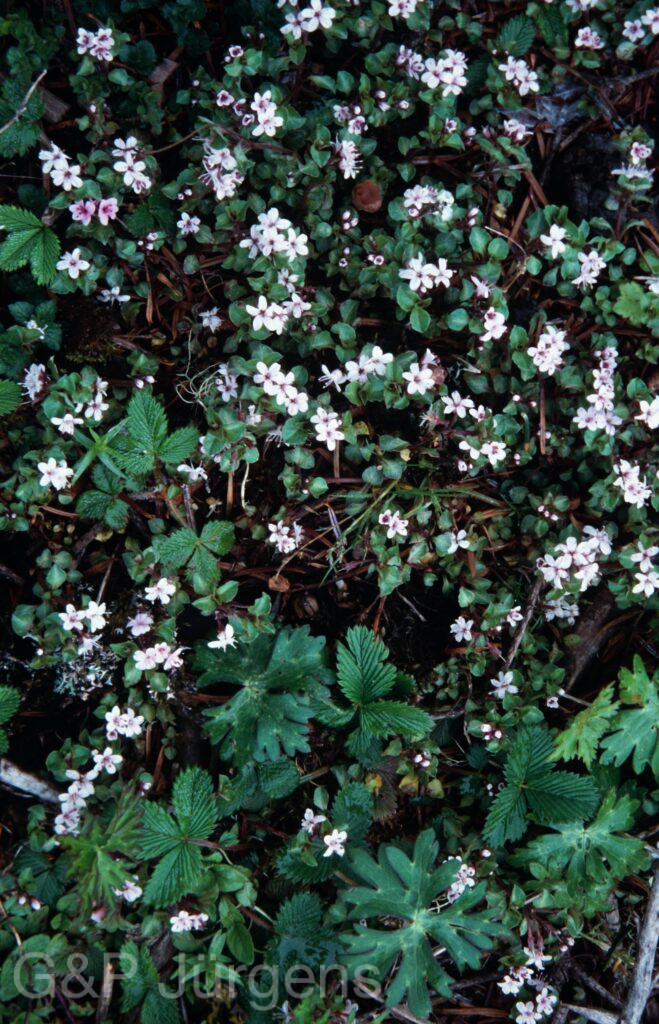
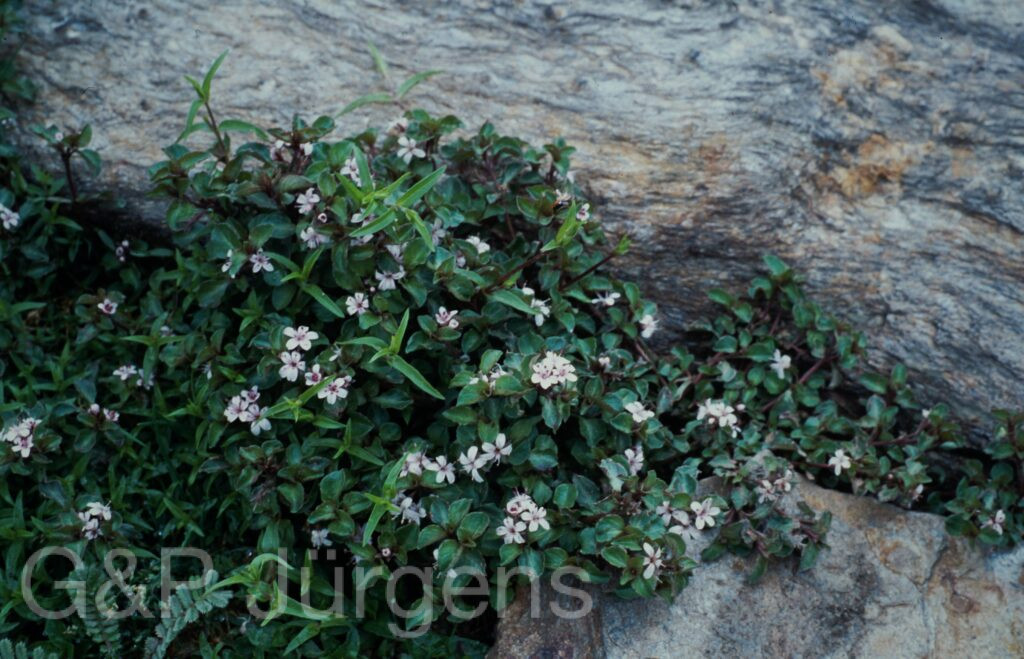
Klatt

Nepal 2001 255 ergebnis ergebnis
Nepal (Gorkha) Niuli Kharka 2700m, May
Nepal 2001 256 ergebnis ergebnis
Nepal (Gorkha) Niuli Kharka 2700m, May

Description

Lysimachia prolifera is a Sino-Himalayan species distributed across the central and eastern Himalaya and southwestern China, with verified occurrences in Nepal, India, Bhutan, China, Myanmar and Pakistan; outlying records from Japan and the United States among the roughly 194 collections almost certainly reflect cultivated or misdetermined material. It is a plant of moist temperate to subalpine habitats, favouring shaded forest margins, streamsides, mossy banks and damp grassy clearings. The photographed population at Niuli Kharka in Gorkha, Nepal, at about 2700 m and flowering in May, is typical of its mid-montane band where snowmelt and monsoon moisture keep the substrate reliably humid.

The species is a perennial herb with slender, often decumbent to ascending stems arising from a creeping rhizomatous base. The leaves are simple, opposite or sometimes whorled, ovate to lanceolate, entire-margined and frequently gland-dotted, narrowing to a short petiole or sessile base. The flowers are borne singly in the leaf axils or in lax leafy racemes; the corolla is rotate and five-lobed, typically yellow, the lobes spreading and often marked with darker glands. Stamens are five, opposite the corolla lobes and shortly connate at the base, the ovary superior with a single style. The fruit is a small, globose, dehiscent capsule containing numerous minute angular seeds.

Within Primulaceae, Lysimachia is a large, taxonomically intricate genus now circumscribed broadly, and species such as L. prolifera are distinguished by subtle differences in leaf arrangement, gland distribution and inflorescence form that have historically caused confusion. Ecologically it contributes to the herbaceous understorey of Himalayan forests and is visited by generalist pollinating insects. No specific conservation concern is recorded for this widespread montane species, though, like many Himalayan herbs, it is locally sensitive to forest clearance, trampling and grazing along trekking corridors.

Author: Klatt · Sources: POWO (Kew), GBIF, Flora of Nepal, Flora of China, Flora of Bhutan, Hu's monograph of Lysimachia (Primulaceae)

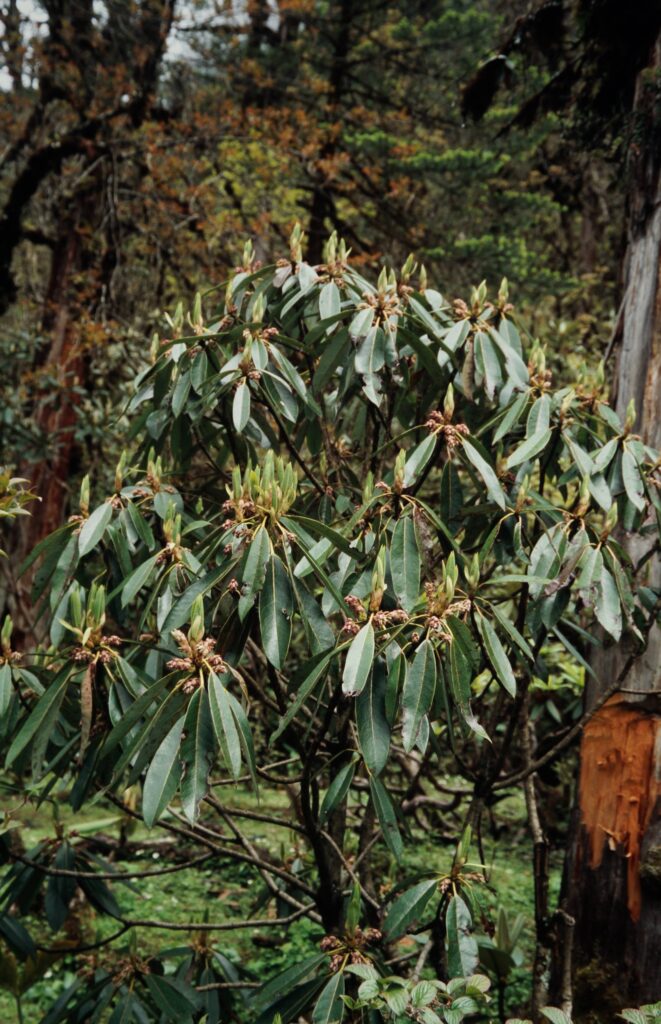
King ex Hook.f.

Sikkim 2006 409 ergebnis
Sikkim Ringi-Chu 3100m, May

Description

Machilus duthei is an evergreen laurel of the Himalaya, recorded from northern India, Nepal and Pakistan, with relatively few documented occurrences across this western to central Himalayan range. It is a tree of moist temperate broad-leaved evergreen forest, occurring on shaded slopes, in ravines and along forested watercourses. It grows at mid to upper montane elevations; the tree photographed near the Ringi-Chu in Sikkim at 3,100 m in May represents an upper-elevation occurrence in the cool, humid temperate forest belt, where laurels form a notable element of the canopy and subcanopy.

The plant is a medium-sized evergreen tree with smooth bark and glabrous to finely pubescent young shoots. The leaves are alternate, coriaceous, elliptic to oblong-lanceolate, entire, glabrous and glossy above, somewhat glaucous beneath, with pinnate venation and aromatic tissue typical of the family. The flowers are small, bisexual and trimerous, with six subequal perianth segments and stamens in whorls, the inner whorl glandular, borne in axillary or subterminal panicles. The fruit is a globose to ellipsoid berry seated on a persistent, slightly enlarged perianth cup at the apex of the pedicel.

The genus Machilus, closely allied to and sometimes merged with Persea, comprises evergreen Asian laurels of considerable importance in moist subtropical and temperate forest. Machilus duthei, described by King ex Hooker f. and commemorating the botanist J. F. Duthie, is a comparatively narrowly distributed Himalayan species. Given its limited documented range and dependence on undisturbed humid montane forest, it is vulnerable to habitat degradation and logging, and its sparse records indicate a need for further field survey to assess its true distribution and conservation status.

Author: King ex Hook.f. · Sources: POWO (Kew), Flora of China Vol. 7, Annotated Checklist of the Flowering Plants of Nepal, GBIF, Kostermans: Lauraceae studies

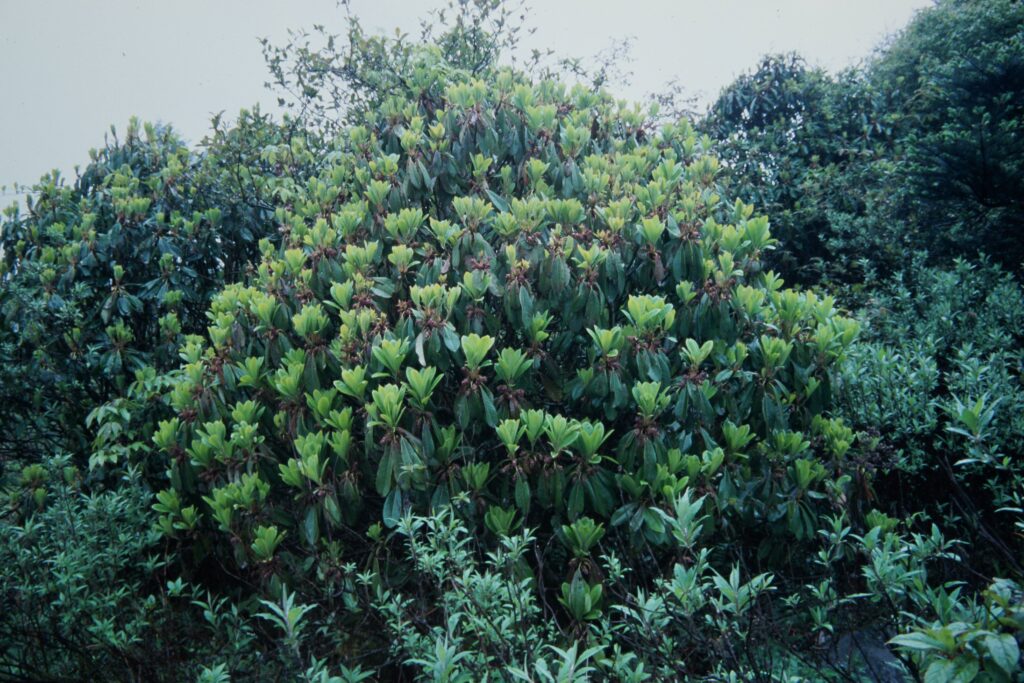
King ex Hook.f.

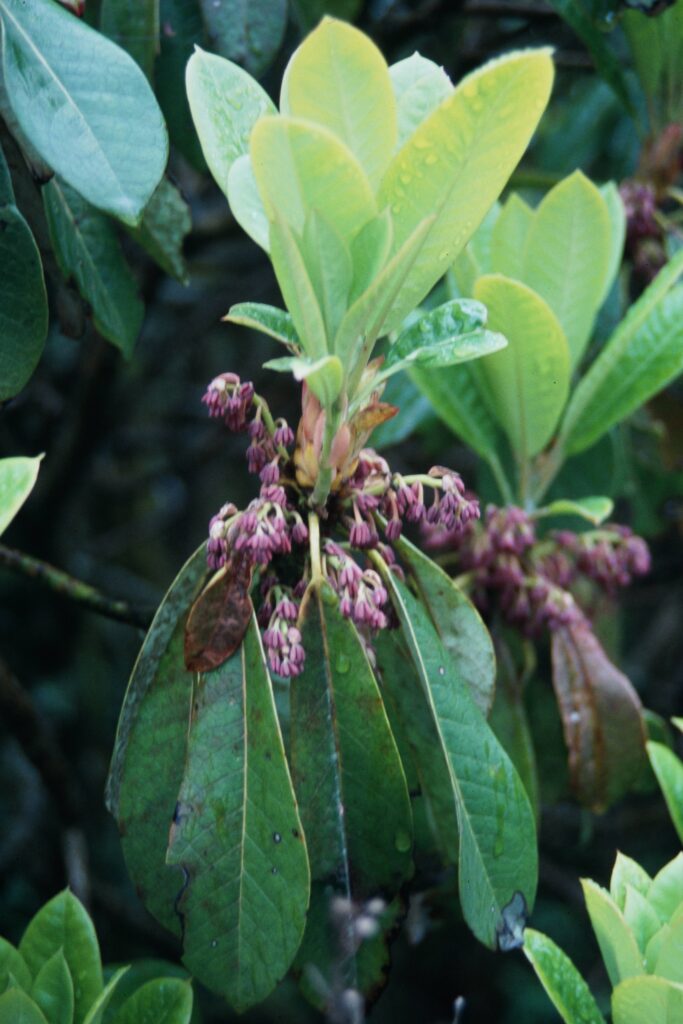
Sikkim2004 379 P656 ergebnis
Sikkim Lachung-valley 3200 m, May
Sikkim2004 380 P657 ergebnis
Sikkim Lachung-valley 3200 m, May

Description

Machilus kurzii is an evergreen laurel of the eastern Himalaya and Southeast Asia, distributed from NE India and Bhutan through Myanmar, Thailand, Cambodia and Vietnam into SW China, as documented by its roughly 135 GBIF occurrences across IN, BT, CN, MM, TH, KH, VN and KR. The tree photographed grows in the Lachung valley of northern Sikkim at about 3,200 m in May. It is a species of humid temperate and subtropical evergreen broadleaf forest, occurring on moist slopes and in ravines often dominated by other Lauraceae, Fagaceae and rhododendrons, where high rainfall and persistent cloud sustain the laurophyllous canopy across a broad altitudinal range.

It is an evergreen tree with smooth bark and glabrous to thinly pubescent twigs. The leaves are alternate, coriaceous, elliptic to oblanceolate, entire, with a pinnate venation of fine, looping secondary veins and an obtuse to shortly acuminate apex, often glaucous beneath. The flowers are small and bisexual, borne in subterminal or axillary panicles; they show the trimerous laurel plan with six tepals in two whorls, fertile stamens in several whorls including a third whorl with paired basal glands, and inward-facing anthers dehiscing by valves. The fruit is a globose to ellipsoid berry seated on a persistent, somewhat enlarged perianth base or cupule, characteristic of the genus.

Machilus, often treated within or close to Persea, is an Asian genus of the tribe Laureae whose delimitation has long been debated; molecular and floral evidence continues to refine the boundary between Machilus and Persea. The species is an integral element of mid-montane evergreen forest, contributing to canopy structure and providing fleshy fruits for birds. It is not currently considered threatened, though it depends on the maintenance of undisturbed humid broadleaf forest.

Author: King ex Hook.f. · Sources: POWO (Kew), Flora of China Vol. 7, Flora of Bhutan Vol. 1, GBIF, Kostermans: Lauraceae studies