
King ex Hook.f.
Description
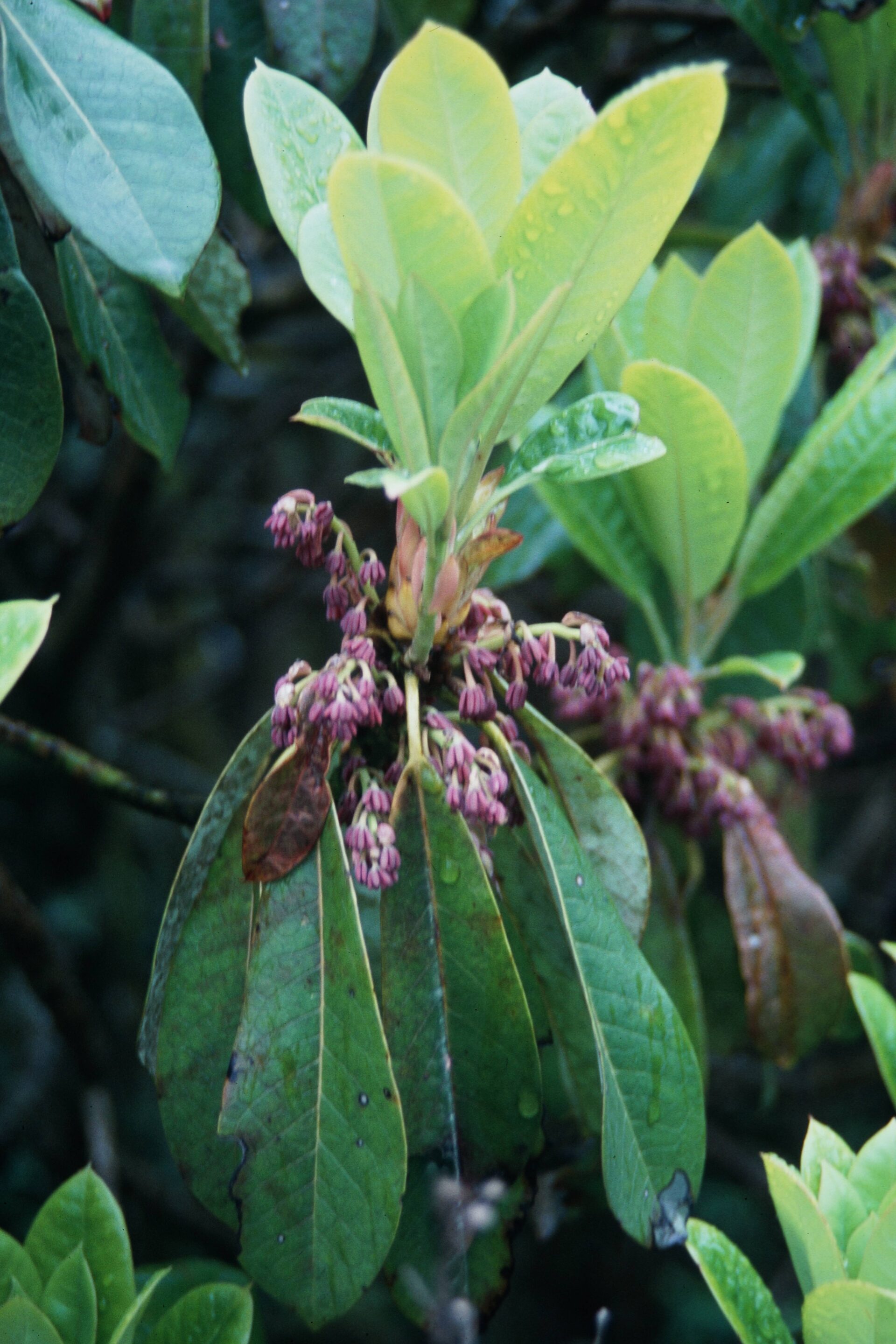
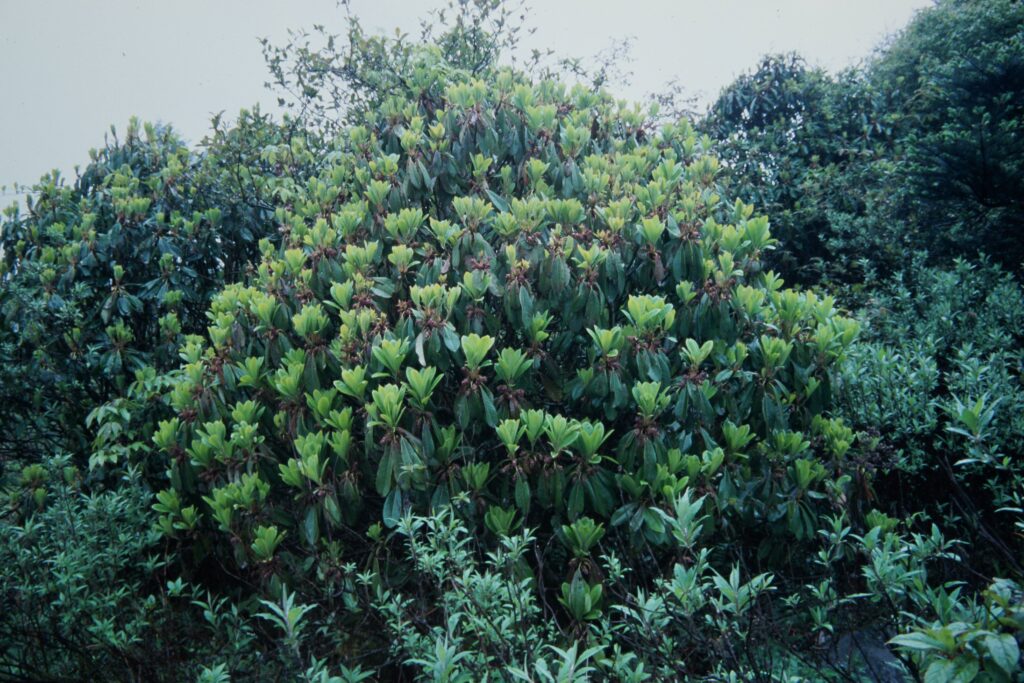
Machilus kurzii is an evergreen laurel of the eastern Himalaya and Southeast Asia, distributed from NE India and Bhutan through Myanmar, Thailand, Cambodia and Vietnam into SW China, as documented by its roughly 135 GBIF occurrences across IN, BT, CN, MM, TH, KH, VN and KR. The tree photographed grows in the Lachung valley of northern Sikkim at about 3,200 m in May. It is a species of humid temperate and subtropical evergreen broadleaf forest, occurring on moist slopes and in ravines often dominated by other Lauraceae, Fagaceae and rhododendrons, where high rainfall and persistent cloud sustain the laurophyllous canopy across a broad altitudinal range.
It is an evergreen tree with smooth bark and glabrous to thinly pubescent twigs. The leaves are alternate, coriaceous, elliptic to oblanceolate, entire, with a pinnate venation of fine, looping secondary veins and an obtuse to shortly acuminate apex, often glaucous beneath. The flowers are small and bisexual, borne in subterminal or axillary panicles; they show the trimerous laurel plan with six tepals in two whorls, fertile stamens in several whorls including a third whorl with paired basal glands, and inward-facing anthers dehiscing by valves. The fruit is a globose to ellipsoid berry seated on a persistent, somewhat enlarged perianth base or cupule, characteristic of the genus.
Machilus, often treated within or close to Persea, is an Asian genus of the tribe Laureae whose delimitation has long been debated; molecular and floral evidence continues to refine the boundary between Machilus and Persea. The species is an integral element of mid-montane evergreen forest, contributing to canopy structure and providing fleshy fruits for birds. It is not currently considered threatened, though it depends on the maintenance of undisturbed humid broadleaf forest.
Author: King ex Hook.f. · Sources: POWO (Kew), Flora of China Vol. 7, Flora of Bhutan Vol. 1, GBIF, Kostermans: Lauraceae studies