
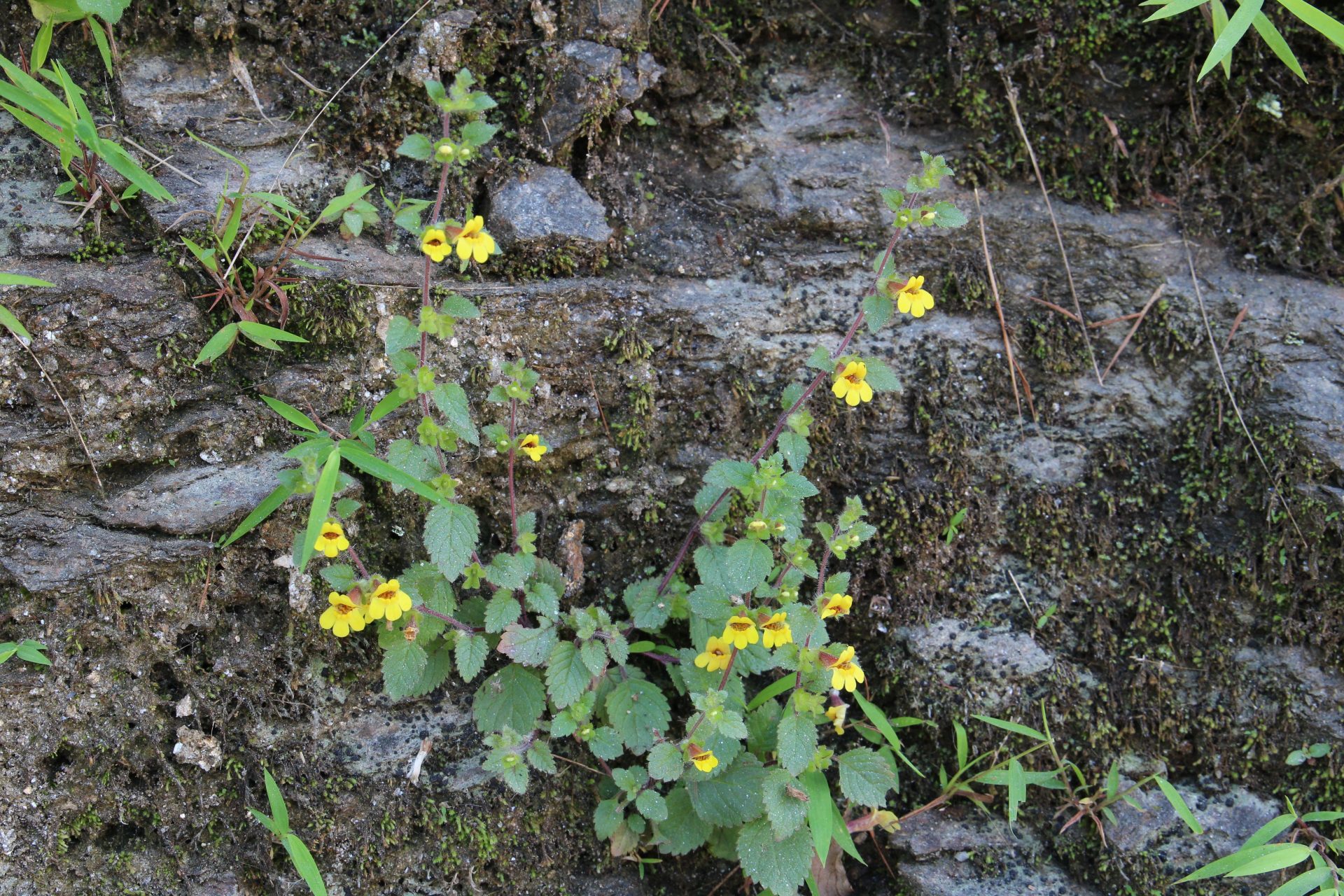
(Roxburgh ex D. Don) Brühl
Description
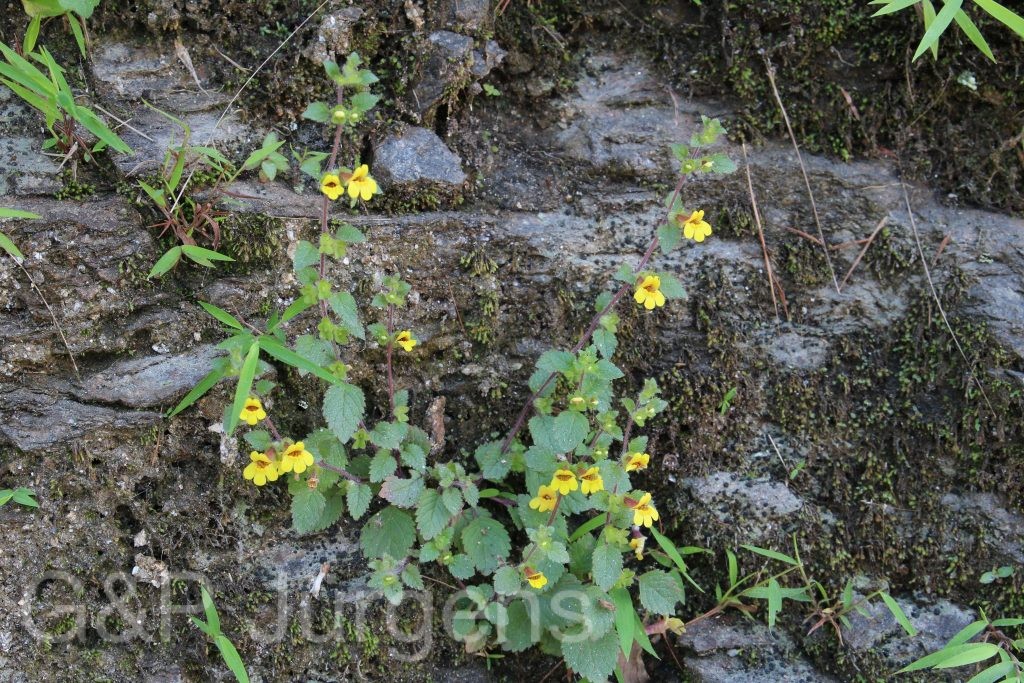
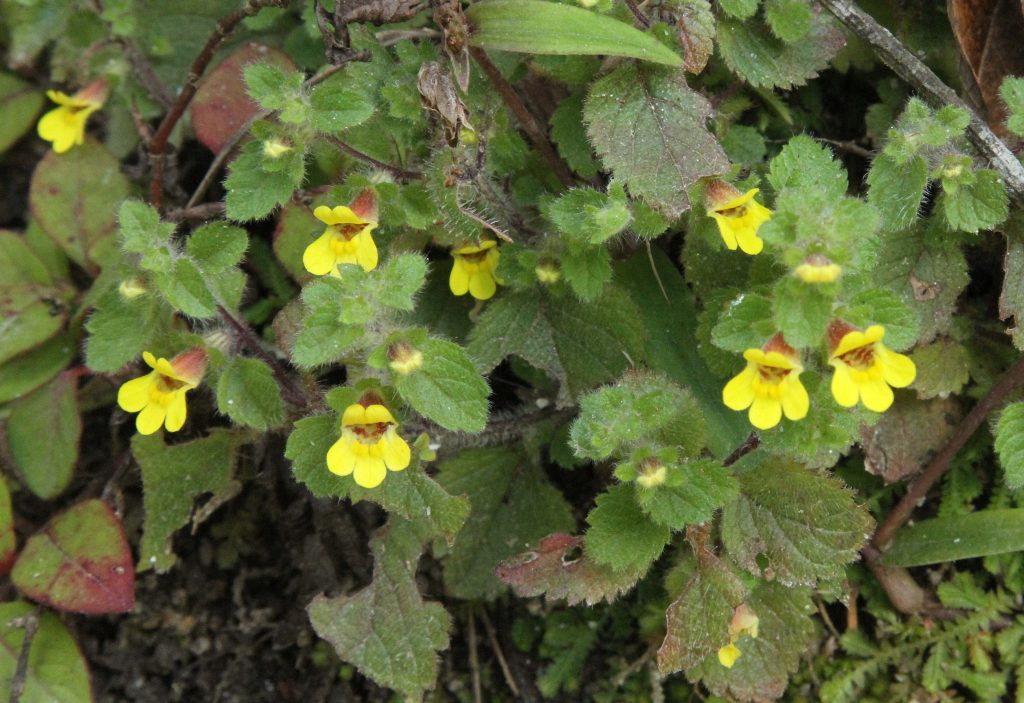
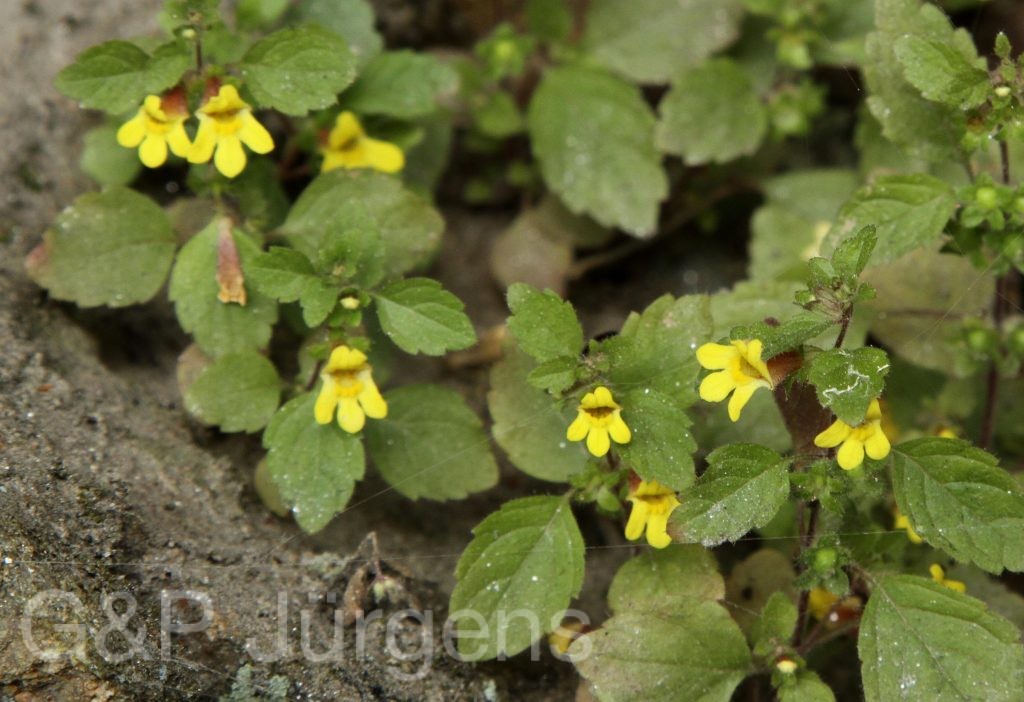
Lindenbergia muraria is a widespread herb of warm-temperate and subtropical Asia, recorded across India, China, Nepal, Bhutan, Myanmar, Thailand, Vietnam, Cambodia, Bangladesh, Pakistan and into parts of Arabia and Africa; GBIF logs 585 occurrences over this broad range. As its epithet implies, it is a colonist of old walls, rock crevices, stony banks, roadsides and waste ground, generally from the lowlands up to about 2700 m. The illustrated plants come from several Bhutanese stations, Wangdue Phodrang at 1500 m in October, Wangdue at 2700 m in September and Tsirang at 1200 m in September, spanning the autumn flowering of this ruderal species across a wide elevational band.
The plant is an erect to ascending annual or short-lived perennial herb, the stems softly pubescent and often glandular-hairy. Leaves are opposite below and sometimes alternate above, ovate to ovate-lanceolate, with a serrate margin and short petiole. The flowers are solitary or paired in the upper leaf axils, forming a leafy terminal spike-like inflorescence; each has a tubular, five-toothed calyx and a yellow, two-lipped corolla with a short tube, the lower lip three-lobed and often marked. There are four didynamous stamens, and the superior ovary ripens into a small, ovoid, septicidal capsule containing numerous minute seeds.
Lindenbergia, long placed in Scrophulariaceae, is now referred to the broadly circumscribed Plantaginaceae (consistent with the input family) following molecular reclassification, occupying a basal position near the family's scrophularioid lineages. POWO and GBIF accept the name. Its tolerance of walls and disturbed mineral substrates underlies its wide, weedy distribution across monsoon Asia.
Author: (Roxburgh ex D. Don) Brühl · Sources: POWO (Kew), GBIF, Flora of China, Flora of Bhutan, Flora of British India, Annotated Checklist of the Flowering Plants of Nepal, Revision of Lindenbergia (Plantaginaceae/Scrophulariaceae)