
Royle ex Benth.
Description
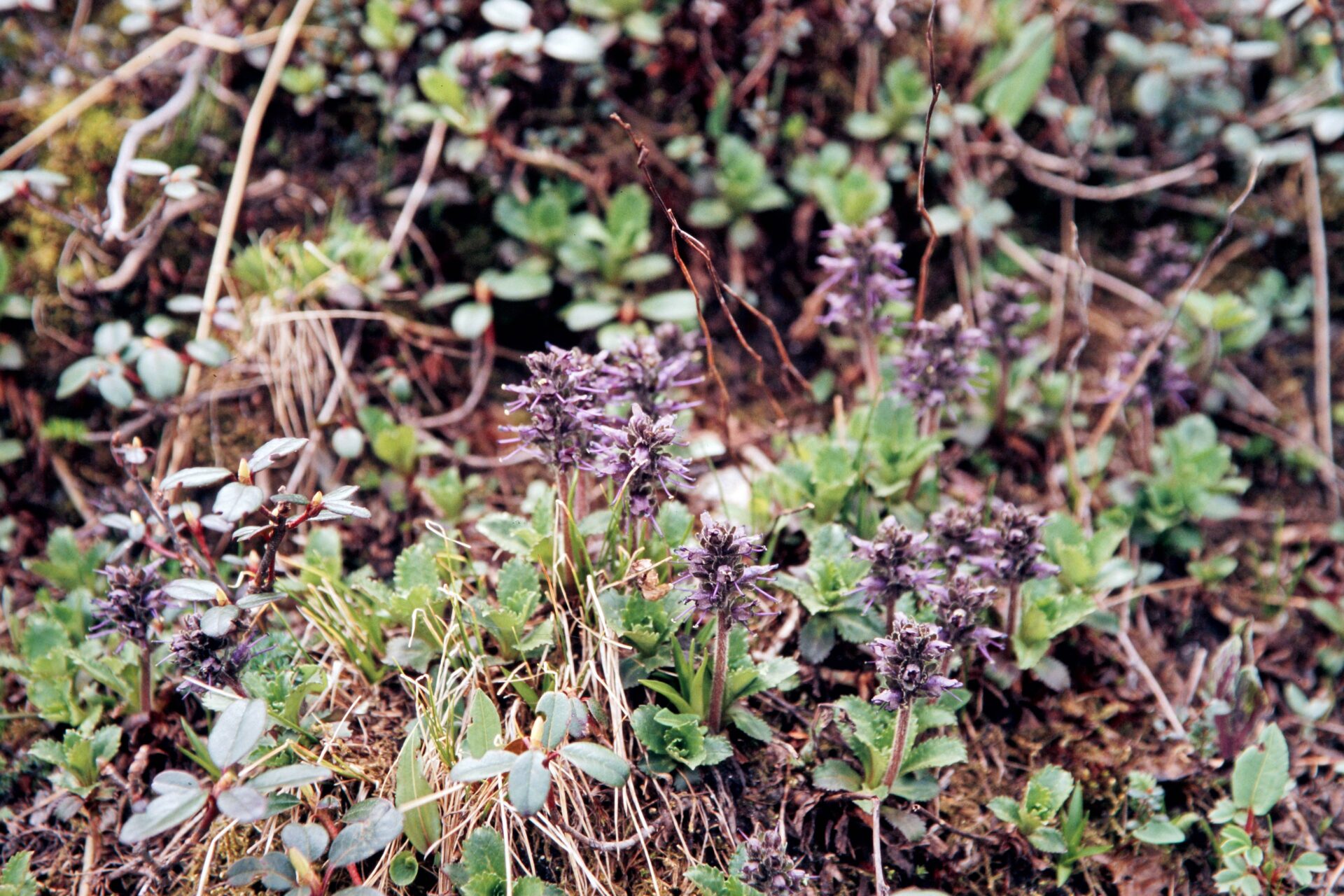
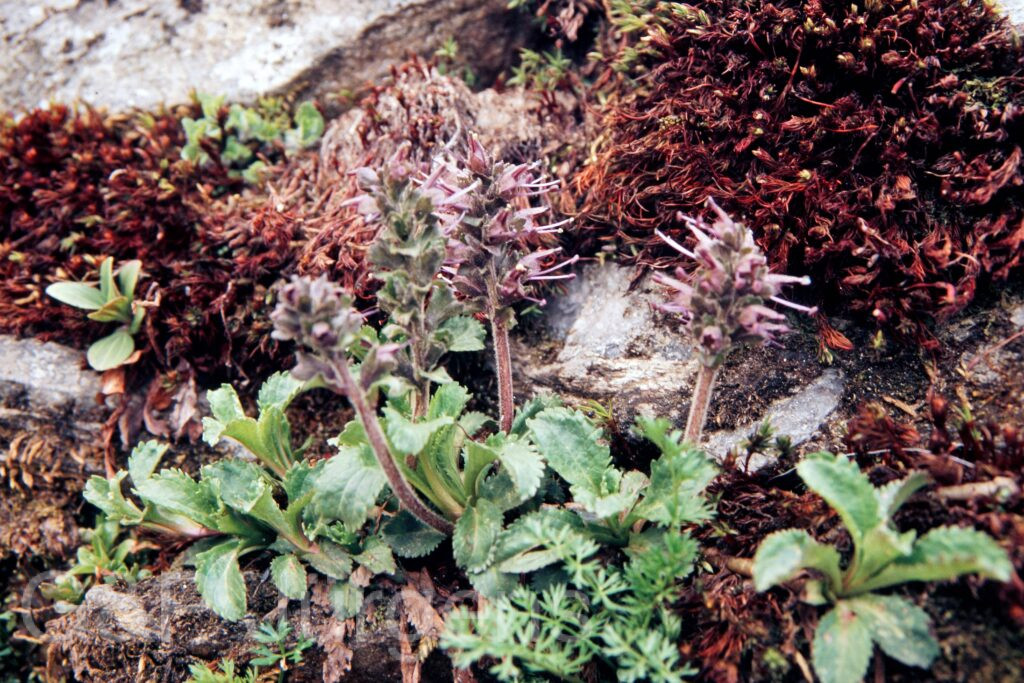
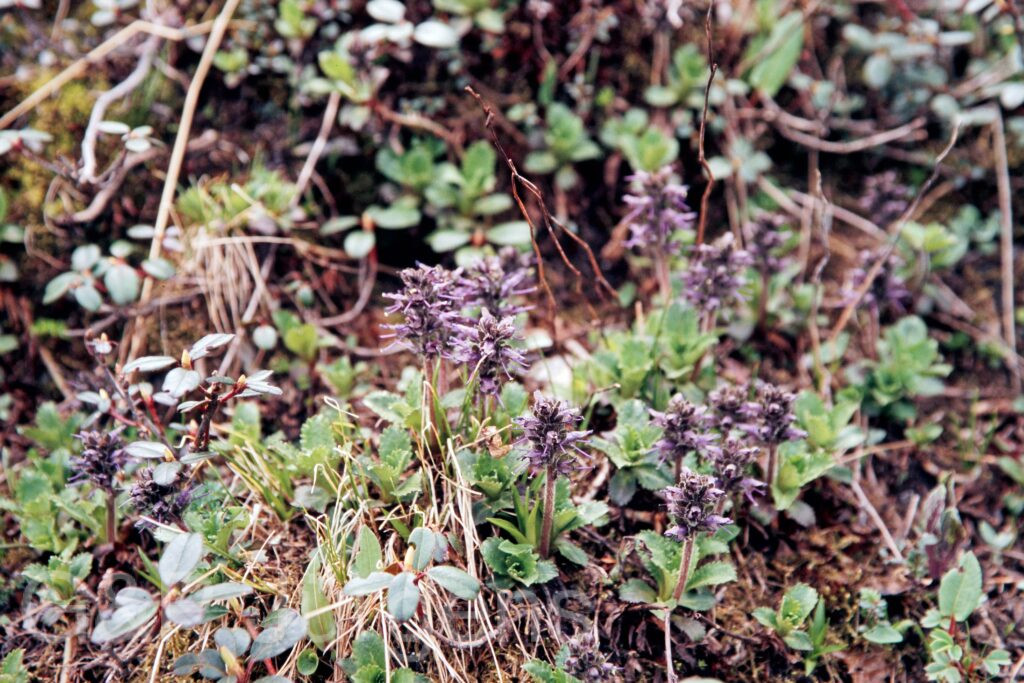
Picrorhiza kurroa Royle ex Benth. is a high-alpine perennial herb of the western and central Himalaya. GBIF records (238 occurrences) place it in India, Pakistan, Nepal, Bhutan, and adjacent China, with its core range along the alpine zone of the Himalayan arc. It was photographed in Garhwal at Kinkhola at 3,550 m in June, a characteristic station on open, rocky alpine slopes, moist screes, and herb-rich meadows between about 3,000 and 4,500 m. The species favours cool, well-drained, often north-facing situations where snow lies late.
The plant develops a creeping, woody, bitter-tasting rhizome from which arise rosettes of leaves. The foliage is mostly basal, the leaves spatulate to obovate, sharply serrate, and tapering into a winged petiole. Erect, leafless scapes bear a dense, cylindrical, spike-like raceme of small flowers; the corolla is bluish-purple to pale, five-lobed, with conspicuously exserted stamens, giving the inflorescence a bristly appearance. The fruit is a small, ovoid capsule containing numerous seeds. The genus is now placed in Plantaginaceae following the dismantling of the traditional Scrophulariaceae.
Picrorhiza kurroa is one of the most heavily exploited Himalayan medicinal plants, the rhizome ("kutki") being a long-established source of the hepatoprotective iridoid glycosides picroside I and II. Sustained wild harvesting for the herbal trade, combined with its narrow alpine niche, has driven steep population declines; it is listed on CITES Appendix II and is regarded as threatened across much of its range, prompting cultivation and conservation initiatives.
Author: Royle ex Benth. · Sources: POWO (Kew), Flora of Pakistan, Flora of Bhutan Vol. 2, GBIF, Hooker: Flora of British India Vol. 4