
(Wall. ex Benth.) Makino
Description
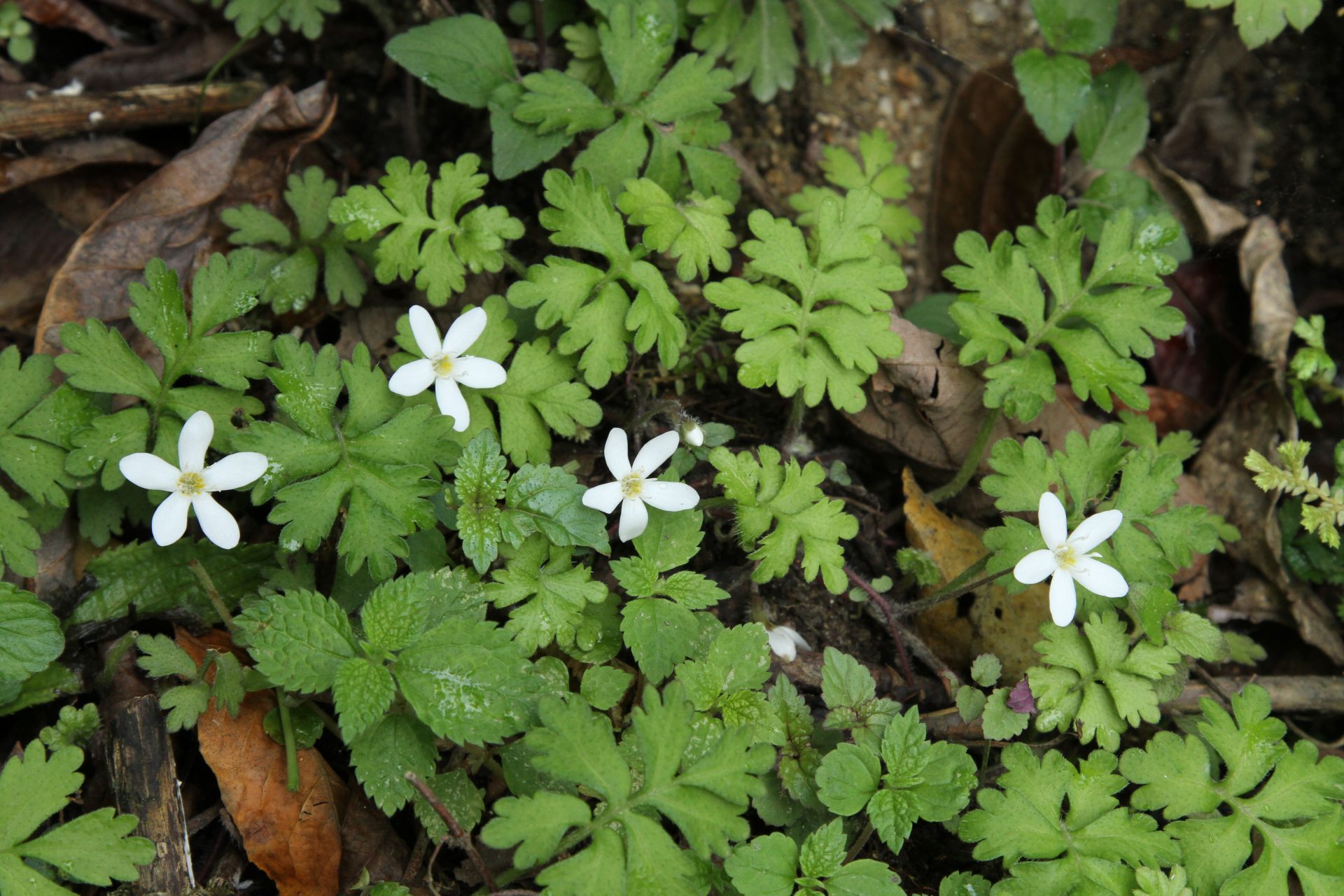
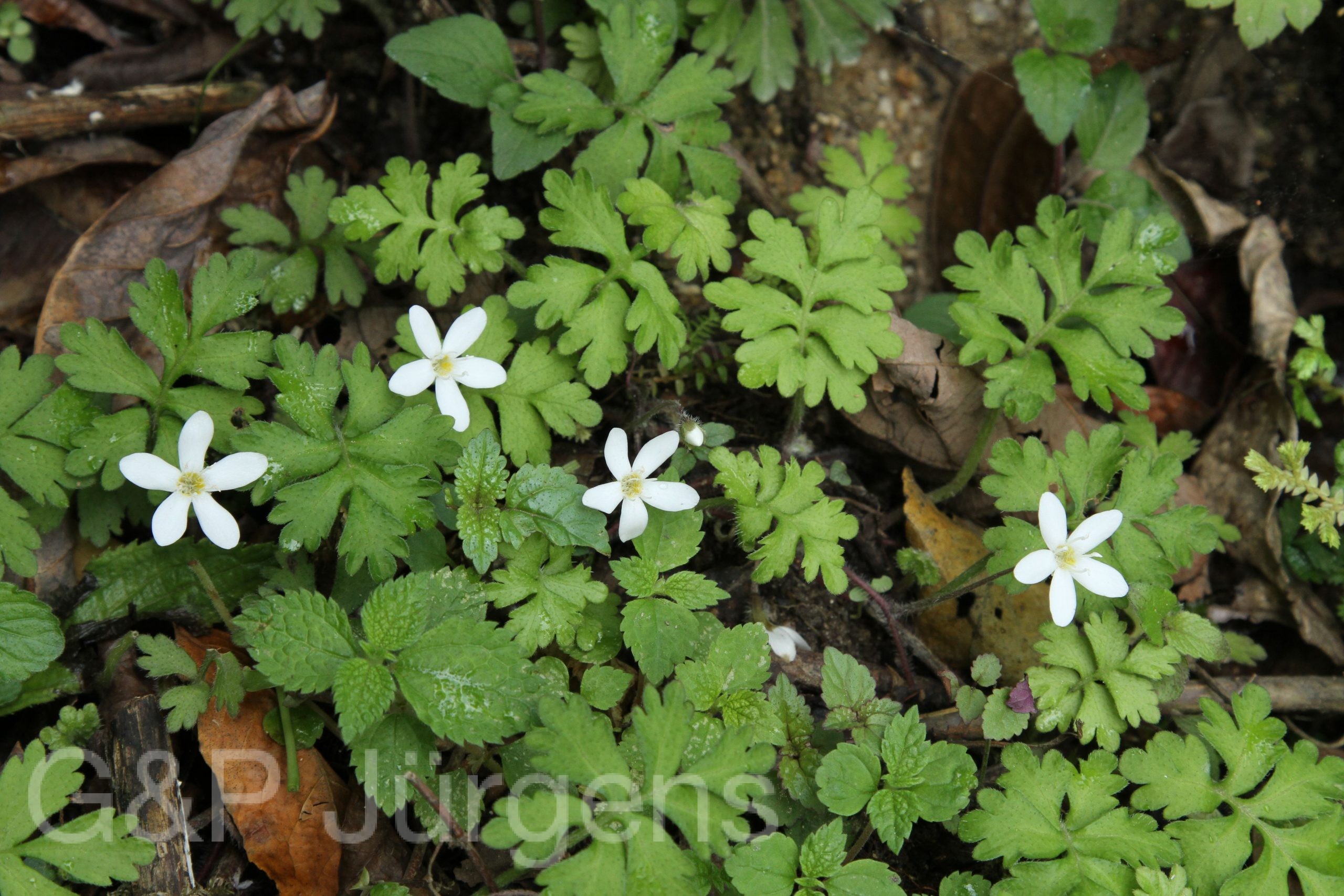
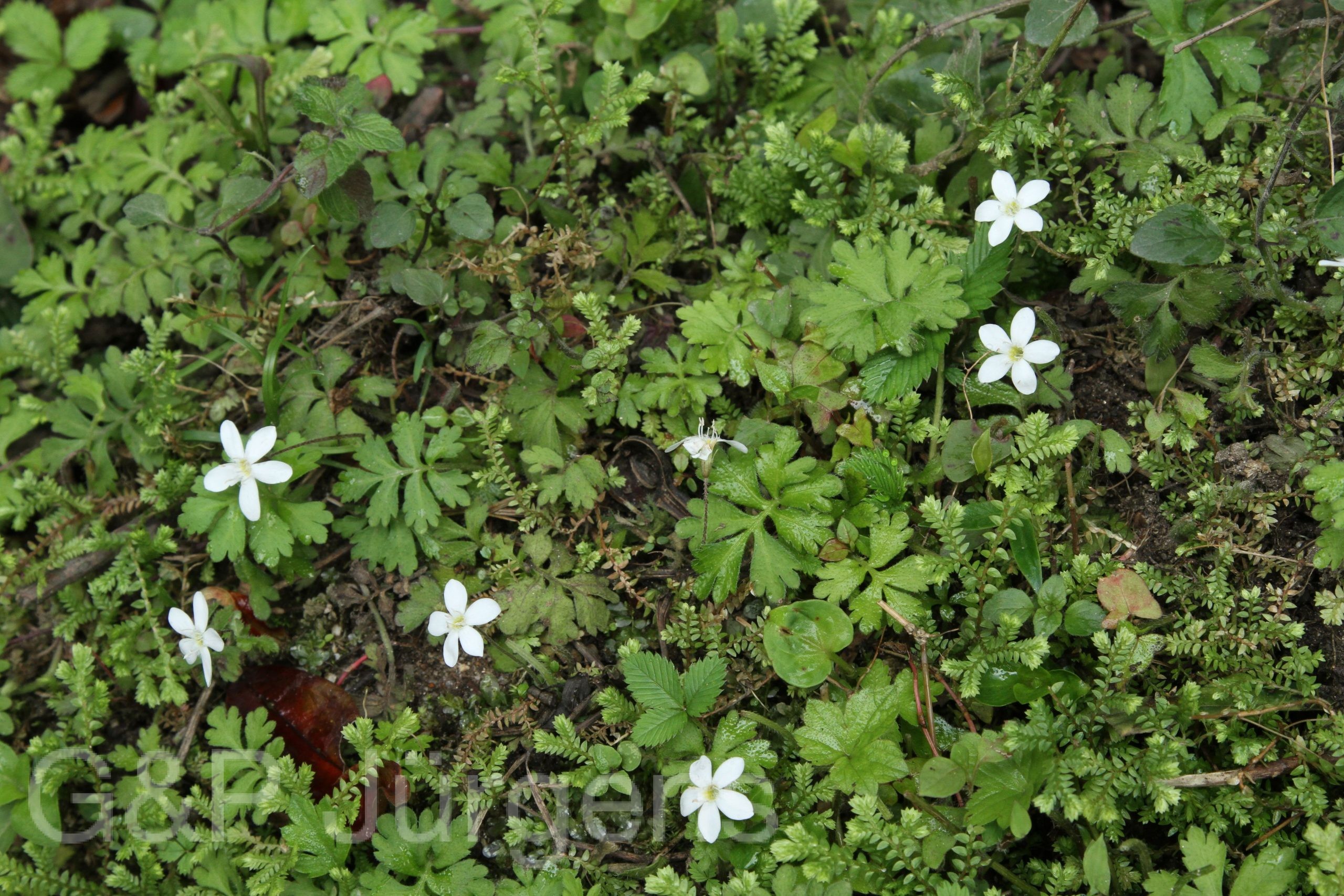
Ellisiophyllum pinnatum is a wide-ranging creeping herb distributed across temperate and montane East and South-East Asia, from the Himalaya through China, Taiwan and Japan to the Philippines, New Guinea and Papua. Its 1616 GBIF records, the highest in this group, confirm a broad native range, with the few European and North American points representing cultivated or herbarium material. It favours moist, shaded ground along streamsides, damp banks, ditches and forest margins, often at lower to middle montane elevations. The plant photographed along the Mo-Chu in Bhutan at about 1500 m in May reflects this preference for cool, humid riparian habitats in the Eastern Himalaya.
It is a slender, softly pubescent perennial that creeps and roots at the nodes, forming loose mats by means of prostrate, filiform stolons. The leaves are alternate, long-petiolate and deeply pinnately lobed to pinnatisect, with rounded, crenate segments. The flowers are solitary on long, slender axillary pedicels; the campanulate calyx has five lobes, and the white, broadly campanulate to rotate corolla is five-lobed, enclosing four didynamous stamens. The fruit is a small capsule enclosed within the accrescent calyx.
Ellisiophyllum is a monotypic genus, E. pinnatum being its sole species, and its placement has long been debated; once referred to the Scrophulariaceae, it is now placed in the Plantaginaceae following molecular phylogenetic studies of the lamiid families. The creeping, stoloniferous, node-rooting habit suits colonisation of unstable, frequently disturbed streambanks. Given its extensive geographic range and ecological adaptability, the species is of no conservation concern.
Author: (Wall. ex Benth.) Makino · Sources: POWO (Kew), GBIF, Flora of Bhutan, Flora of China, Flora of Japan