Tag:

Subalpine (2500-3500 m)

(D. Don) Prain

Sikkim2011 89
Sikkim Chopta-valley 4200m, June
BhutanPG2011 321
Bhutan
Sikkim2011 252
Sikkim Yumthang 3700m, June
Nepal 97 136 G252
Nepal Mewa-Khola 3100m April

Description

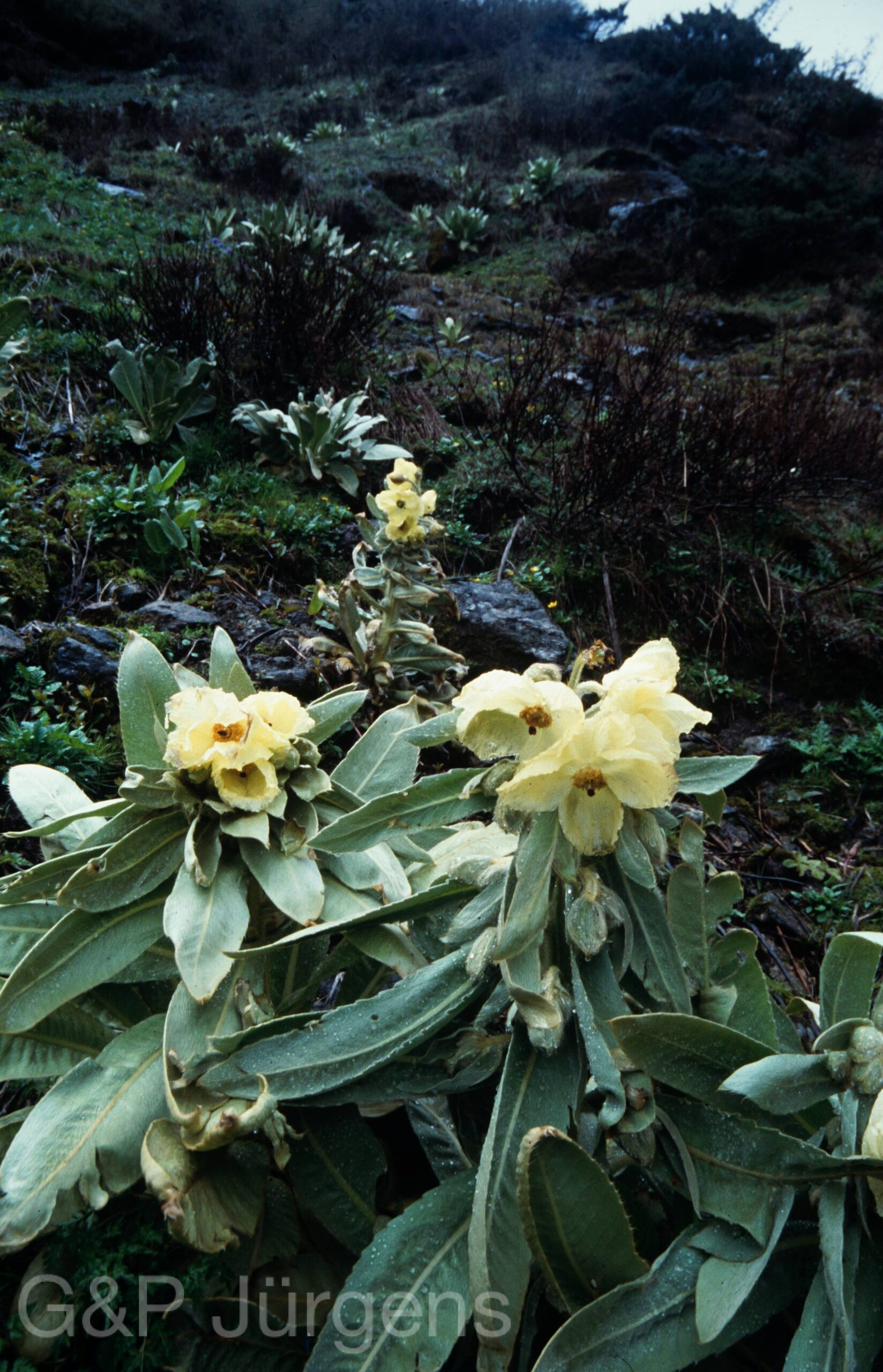
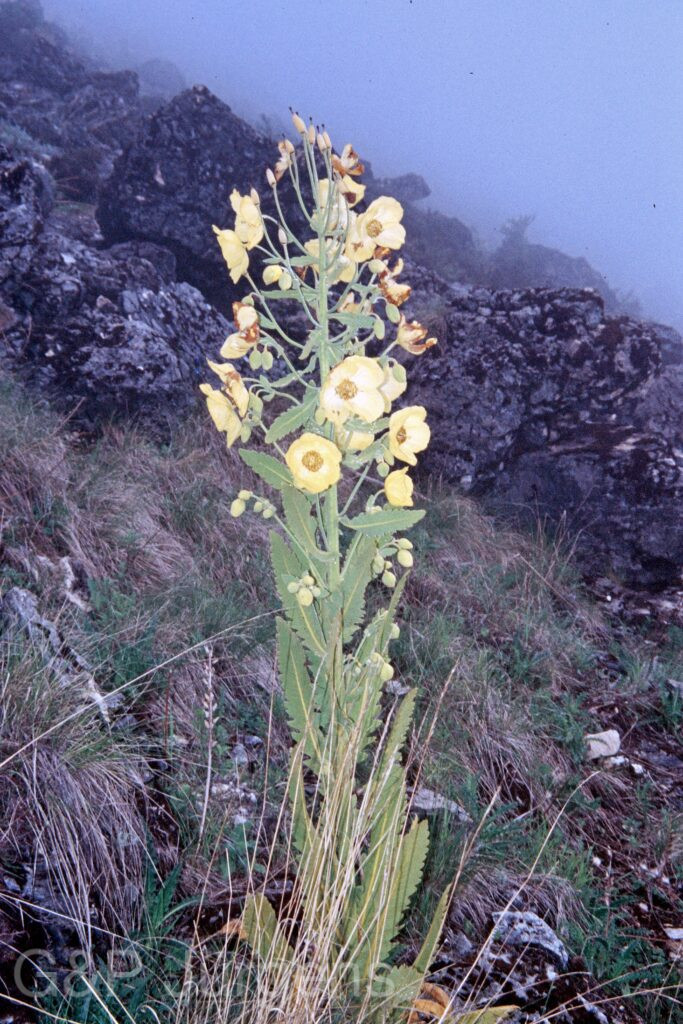
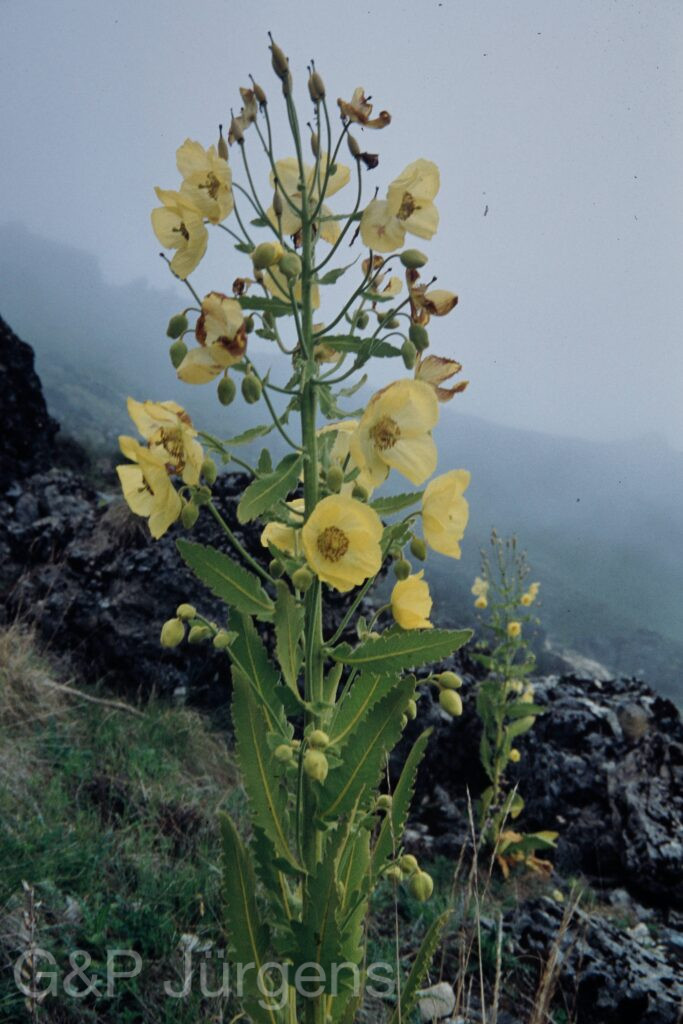
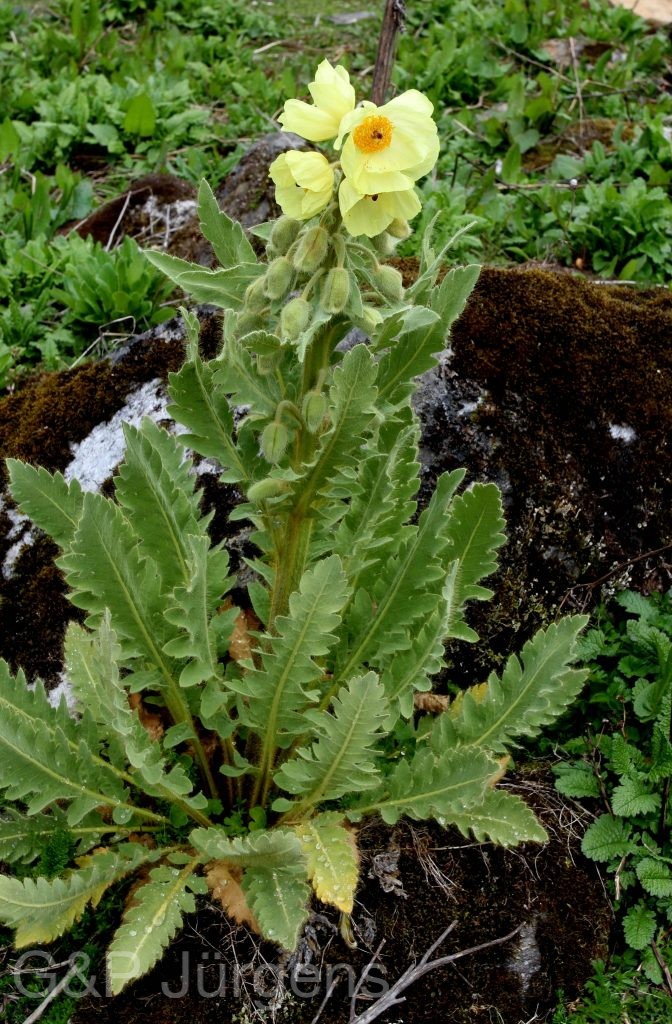
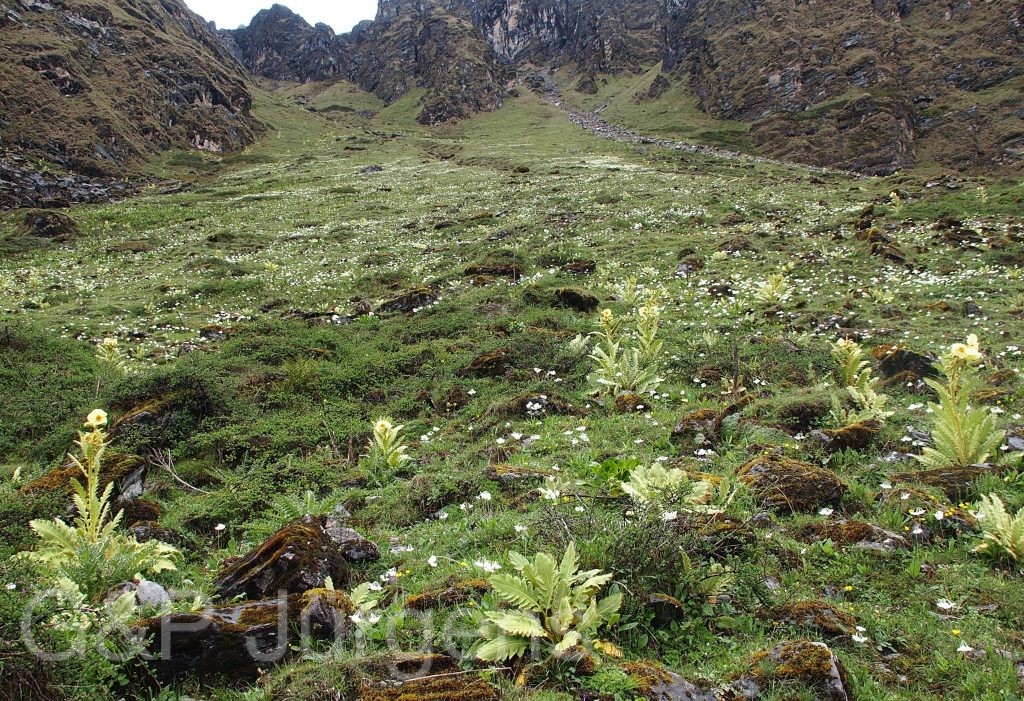
Meconopsis paniculata is a stately Himalayan poppy distributed through Nepal, the Indian states of Sikkim and Darjeeling, Bhutan and southern Tibet (China), with cultivated records in Britain and Canada; GBIF documents about 440 occurrences. It grows in the upper temperate to subalpine and lower alpine zone, on open grassy slopes, forest clearings, streamsides and shrubby hillsides, as recorded in the Chopta valley (4200 m) and at Yumthang (3700 m) in Sikkim and at Mewa-Khola (3100 m) in Nepal. Spanning roughly 3000-4200 m, it flowers from spring into early summer (April-June), often forming conspicuous stands on damp, humus-rich slopes.

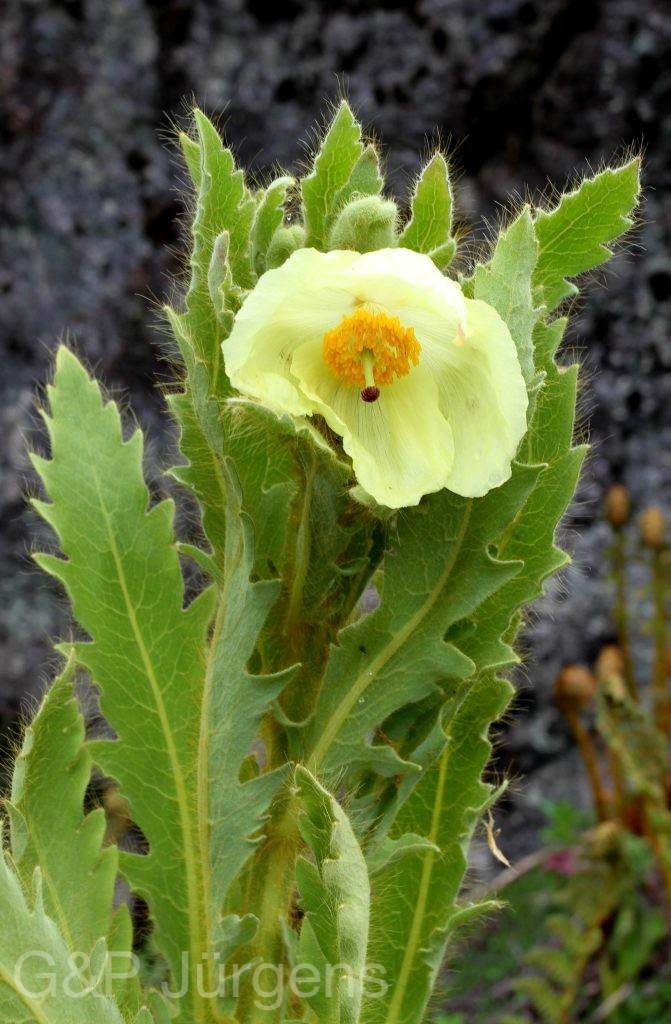
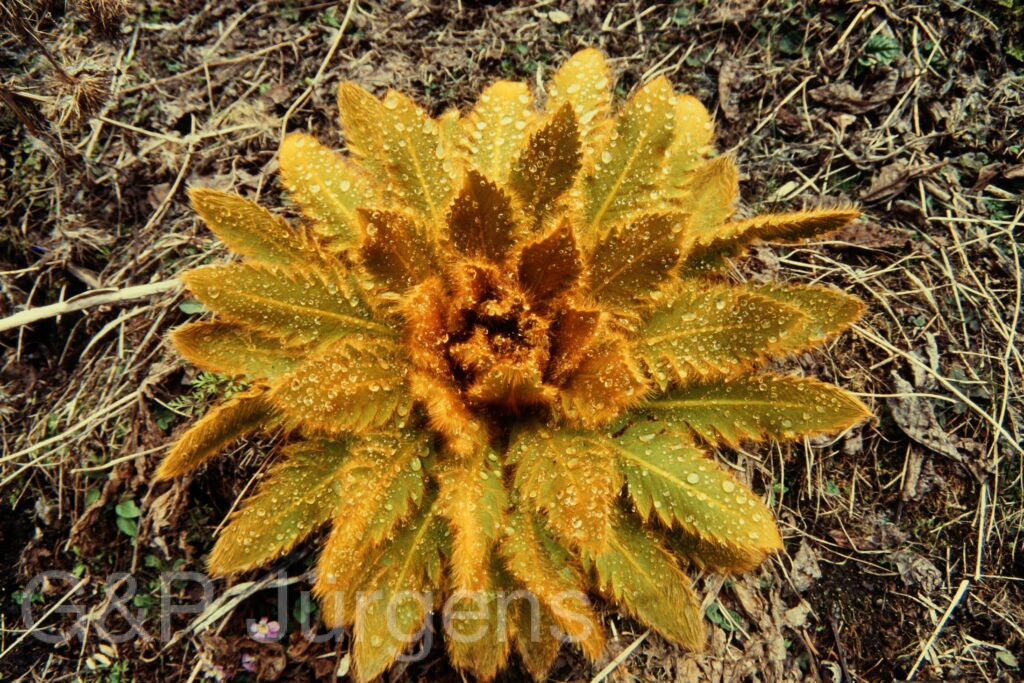
It is a robust monocarpic herb, forming in its first years a large basal rosette before producing a single tall, branched flowering stem up to 1.5-2 m. The whole plant is densely clothed in golden to rusty, spreading bristly hairs. The basal leaves are large, oblong-lanceolate and pinnately lobed or deeply cut, narrowing into a winged petiole. The inflorescence is an elongate, leafy panicle (the epithet "paniculata") of nodding, broadly cup-shaped flowers; the four (rarely more) petals are pale to clear yellow, surrounding a boss of numerous yellow stamens and a stout ovary crowned by a short style and lobed stigma. The fruit is an oblong, bristly capsule dehiscing by apical pores to shed many small seeds.

Described by Prain from D. Don's basionym, M. paniculata belongs to the monocarpic, bristly-fruited group of Meconopsis allied to M. napaulensis and M. wallichii, a complex whose taxonomy has long been debated owing to hybridisation and variable indumentum. As a monocarpic species it dies after a single flowering, relying entirely on abundant seed for regeneration. The flowers are visited by bumblebees foraging at altitude. Widespread across its range, it is not considered globally threatened, though seed collection and grazing can affect local populations.

Author: (D. Don) Prain · Sources: POWO (Kew), GBIF, Flora of Bhutan, Flora of Nepal, Grey-Wilson's monograph of the genus Meconopsis
G.Taylor

Nepal 95 136.P229 ergebnis
Nepal south of Rupina La October

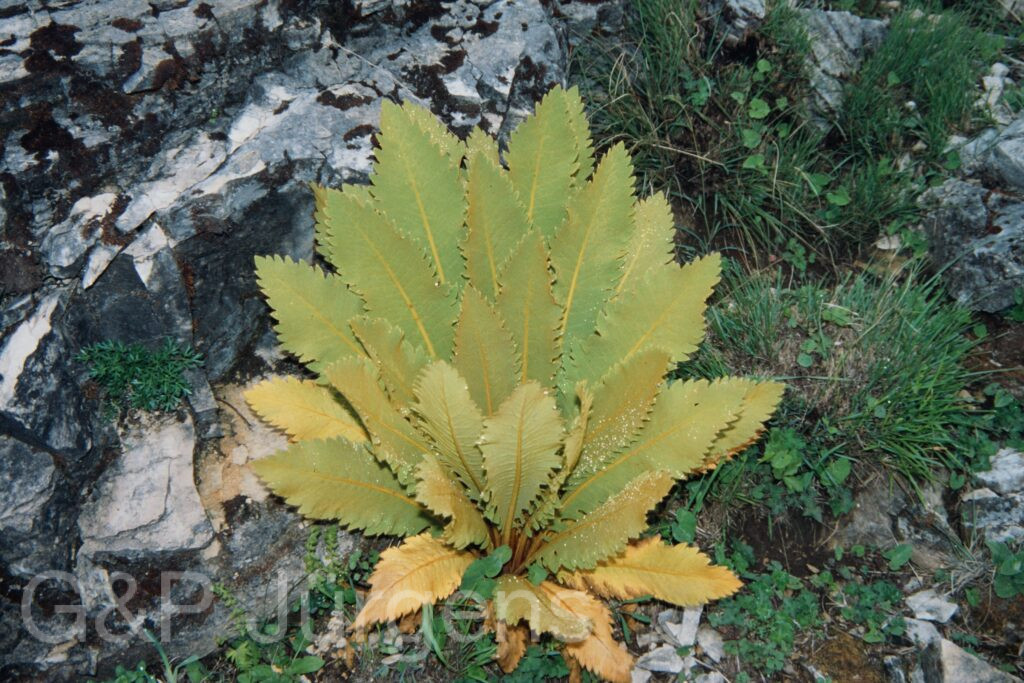
Description

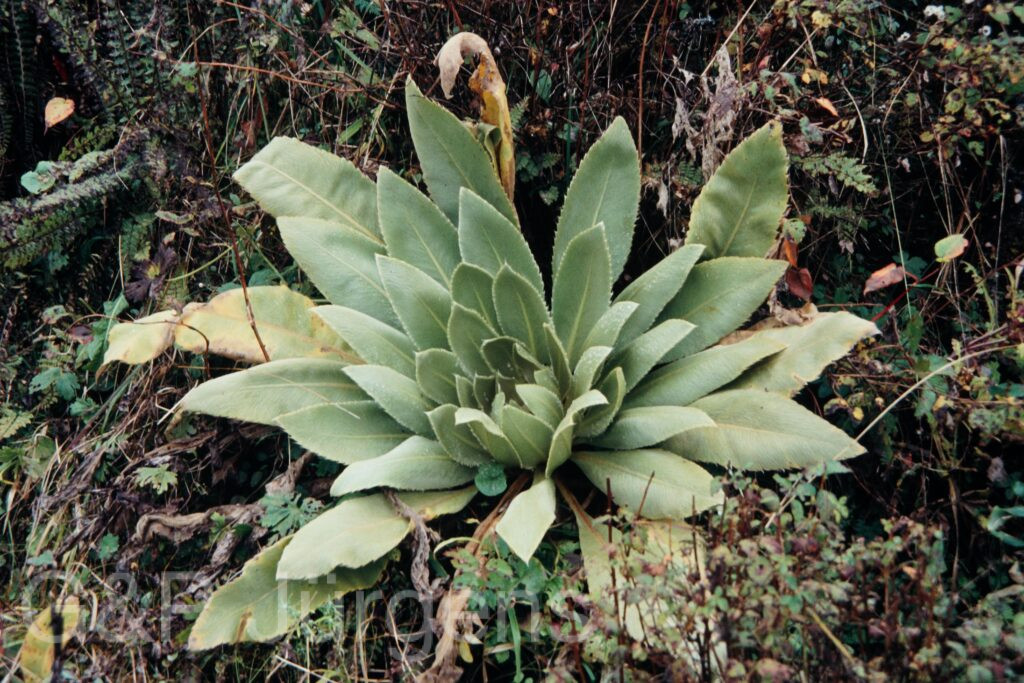
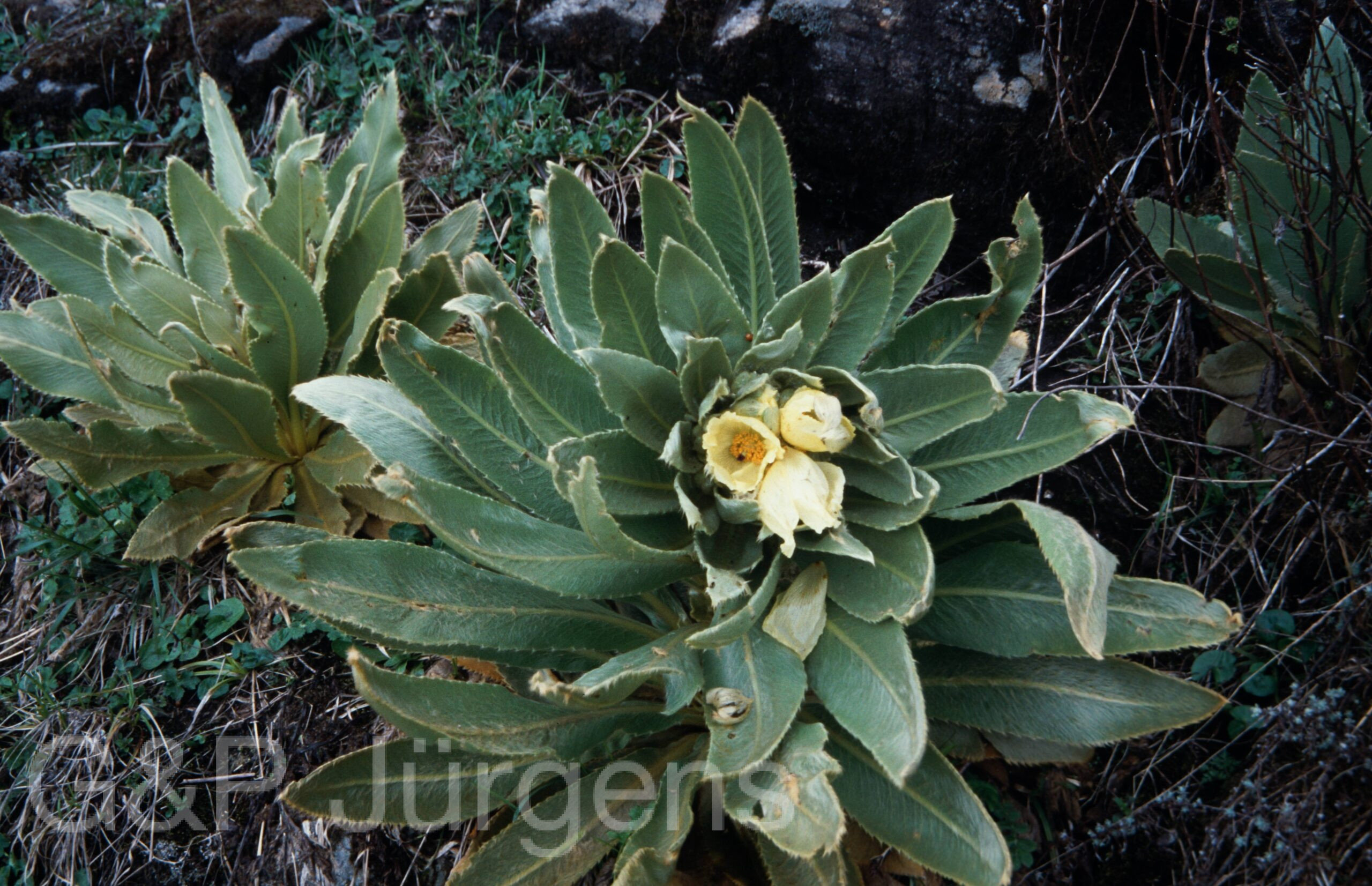
Meconopsis regia is a stately monocarpic poppy endemic to central Nepal, the great majority of its roughly 100 documented records lying within that country. It is a plant of open rocky slopes, screes, cliff ledges and alpine grassland of the subalpine to alpine zones, typically between about 3000 and 4200 m. The illustrated material derives from the Rupina-La area in the Gorkha region of Nepal: a flowering plant at 3350 m in May and a withered specimen recorded south of the pass in October, together documenting the full annual cycle from spring growth to autumn senescence.

The species is celebrated for its magnificent overwintering rosette of large oblanceolate leaves clothed in dense golden to rusty-red silky hairs, which protect the resting bud through the alpine winter. After several years of rosette growth it bolts to produce a tall, stout, leafy flowering stem bearing numerous large flowers. The blooms are saucer-shaped with four broad, satiny petals of pale to golden yellow, surrounding a boss of many stamens and a stout ovary topped by a short style and capitate stigma. After flowering the plant dies, the ovary maturing into an elongate ribbed capsule that dehisces by apical pores to scatter the seeds.

Meconopsis is the iconic genus of Himalayan and Sino-Tibetan poppies, distinguished from Papaver largely by its distinctive style and stigma. As a narrow-range Nepalese endemic with a monocarpic, hapaxanthic life-history, M. regia is intrinsically vulnerable to over-collection and habitat disturbance and is of conservation interest despite lacking a formal IUCN assessment; it is also prized by alpine horticulturists.

Author: G.Taylor · Sources: POWO (Kew), GBIF, Annotated Checklist of the Flowering Plants of Nepal, Flowers of the Himalaya, The Genus Meconopsis (Grey-Wilson monograph), Flora of Nepal

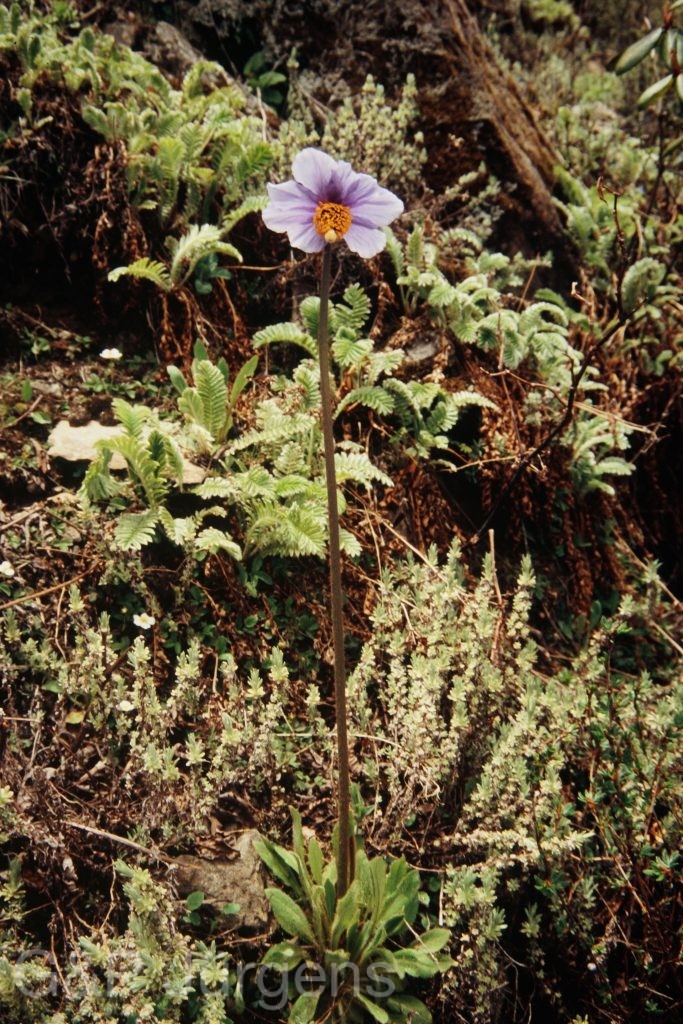
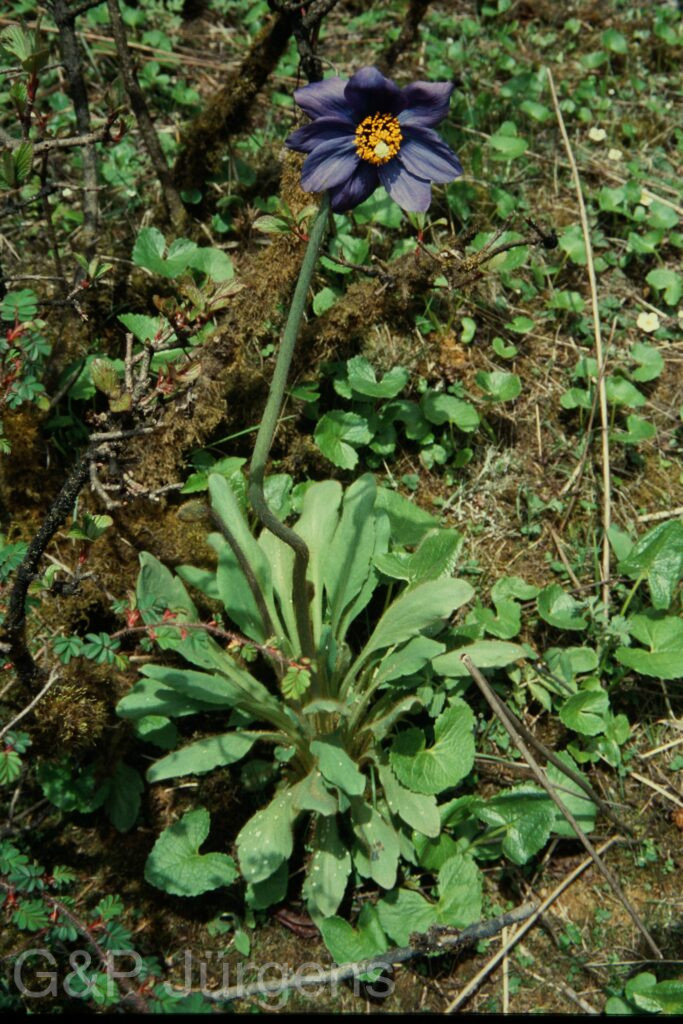
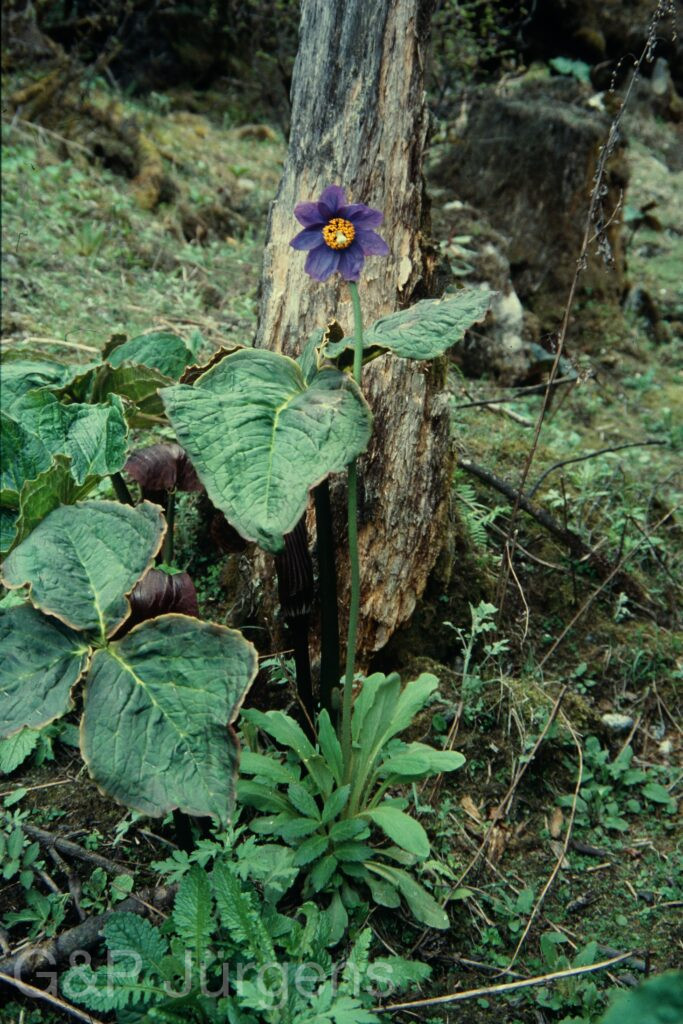
(D. Don) Walp.

Description

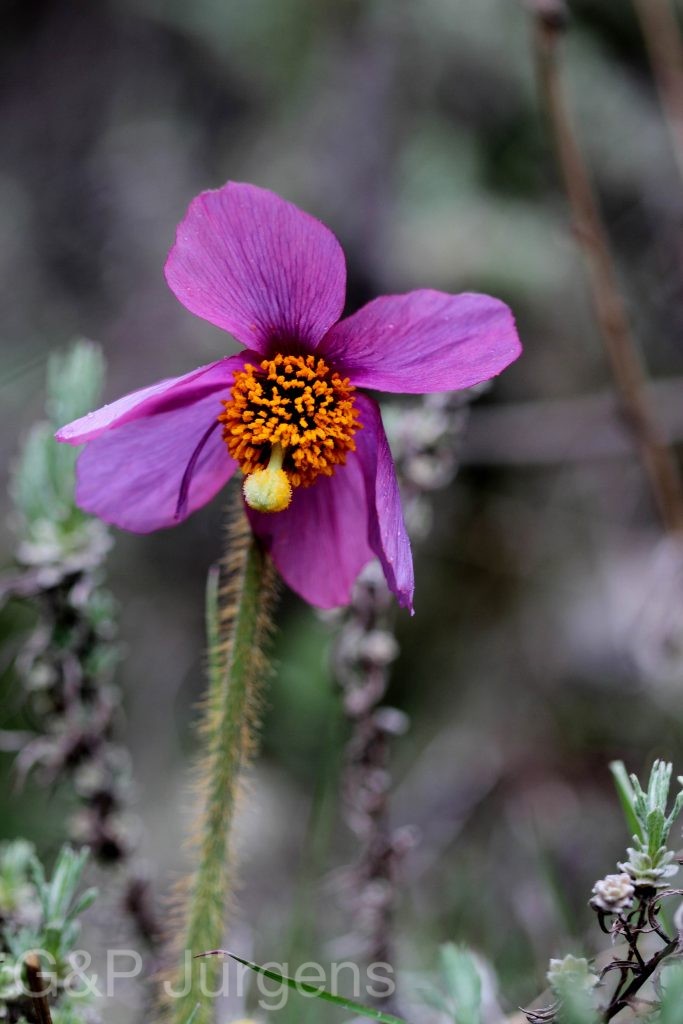
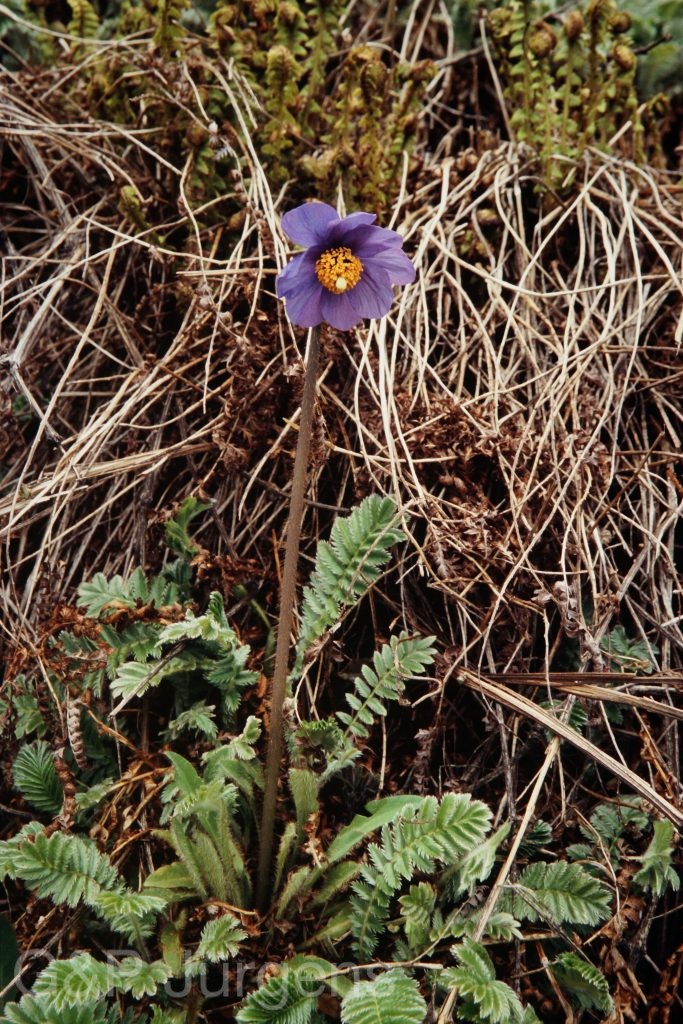
Meconopsis simplicifolia (D. Don) Walp. is a high-mountain perennial blue poppy of the central and eastern Himalaya, ranging through Nepal, Sikkim and northern India, Bhutan and southern Tibet (China), with cultivated records accounting for the United Kingdom entries in a GBIF dataset of roughly 267 occurrences. It inhabits alpine meadows, open turf, rocky slopes and the margins of Rhododendron scrub on moist, humus-rich, well-drained acidic soils, typically within the snowmelt-fed alpine zone. The illustrated collections cluster between about 3200 and 3900 m, from Tanghu in Sikkim at 3900 m and Chele-La in Bhutan at 3200 m in June to Yumthang on the Sikkim-India border at 3600 m in May, marking a late-spring to early-summer flowering as the snow retreats.

It forms a perennial herb with a basal rosette of simple, undivided leaves, oblanceolate to elliptic or narrowly lanceolate, entire to faintly toothed and clothed in soft, often fulvous to fawn-coloured bristly hairs, narrowing to a winged petiole; the simple, unlobed foliage gives the species its epithet. From the rosette arise one or several slender, bristly, leafless scapes, each bearing a solitary, nodding flower. The flowers have four (sometimes more) broad, silky, overlapping petals of clear sky-blue to violet or, in some forms, reddish-purple, surrounding a tuft of golden stamens and a stout ovary topped by a short, distinct style and capitate stigma. The fruit is an ellipsoid, bristly capsule opening by short apical valves.

Meconopsis simplicifolia is part of the perennial, scapose blue-poppy assemblage and is distinguished from allies such as M. grandis by its single-flowered scapes and entirely simple leaves; it is variable in flower colour and in whether it behaves as monocarpic or polycarpic. Pollinated chiefly by bumblebees, it is a celebrated ornamental long grown in cool temperate gardens. Across its range populations are localised and sensitive to grazing, trampling and the warming of alpine habitats, making it, like its relatives, a species of interest for Himalayan alpine conservation though not formally assessed as threatened.

Author: (D. Don) Walp. · Sources: POWO (Kew), GBIF, Flora of Bhutan, Flora of Nepal, Christopher Grey-Wilson – The Genus Meconopsis

Nepal 99 41 ergebnis
West-Nepal Nyor Gaad 2800m, June
Nepal 99 38 ergebnis
West-Nepal Nyor Gaad 2800m, June
Nepal 99 39 ergebnis
West-Nepal Nyor Gaad 2800m, June

Description

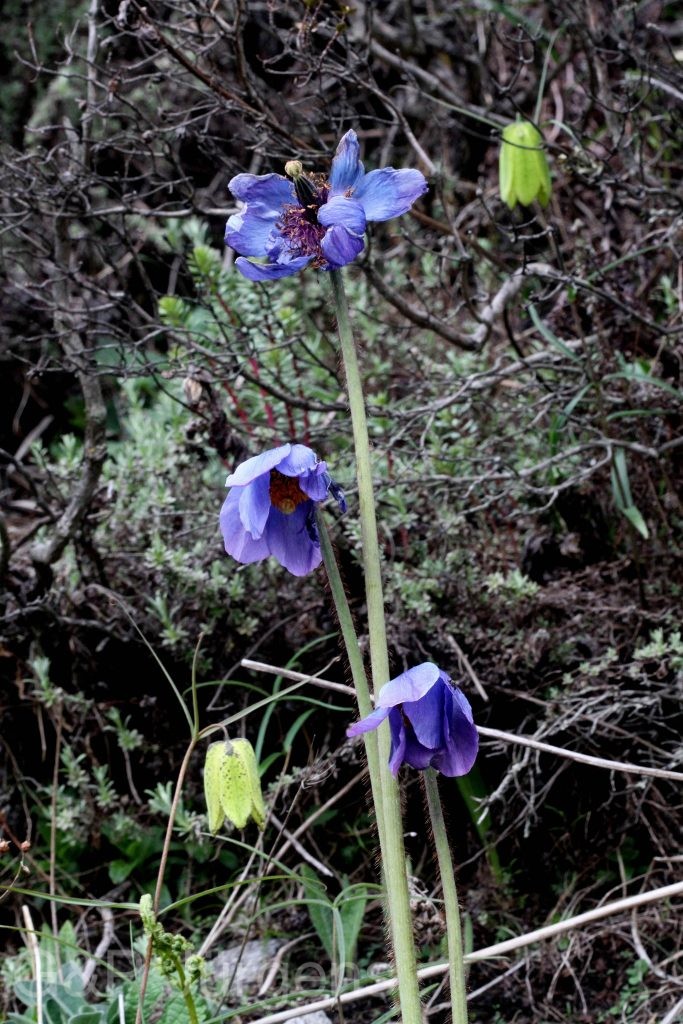
Meconopsis is a genus of approximately 50–80 species of poppy-like herbs predominantly centred on the Sino-Himalayan region, with a single outlying species (M. cambrica) in western Europe. The genus ranges from Pakistan through the Himalayas to southwestern China and northern Myanmar, with its greatest species diversity in southeastern Xizang, northwestern Yunnan, and western Sichuan. Species occupy diverse montane to alpine habitats including forest clearings, scrub, rocky slopes, scree, and high-altitude meadows at elevations from 2,000 to over 5,500 m. The present specimen, photographed in the Nyor Gaad valley of western Nepal at 2,800 m in June, represents a population in the lower elevational range typical for the genus.
Meconopsis species are annual, biennial, or monocarpic to polycarpic perennial herbs, producing rosettes of basal leaves that are variously lobed, pinnatifid, or entire, and typically covered with bristly or plumose hairs. The flowers are borne singly or in racemose to paniculate inflorescences and are characteristically large and showy, 3–10 cm across, with 4–8 petals in shades of blue, purple, red, yellow, or white. The stamens are numerous, with conspicuous yellow to orange anthers. The gynoecium consists of a syncarpous ovary that matures into a capsule dehiscing by apical valves. Identification to species level often requires examination of fruit morphology, indumentum type, and style characters.
Species-level determination in Meconopsis from photographs alone is frequently unreliable, as many taxa overlap in floral colour and vegetative morphology, and the genus has undergone considerable taxonomic revision. Western Nepal harbours several species including M. regia, M. napaulensis, and M. paniculata, among others. Over 9,200 occurrence records in GBIF attest to the genus's wide distribution and collecting interest. Many species are of significant horticultural value, particularly the blue-flowered taxa, while several narrow endemics face conservation concerns due to climate-driven habitat shifts and overcollection. Continued field surveys and molecular phylogenetic studies are essential for resolving species boundaries within this iconic Himalayan genus.

Sources: POWO (Kew), GBIF, Grey-Wilson: The Genus Meconopsis (2014), Flora of China Vol. 7, Flora of Nepal

(Royle) N.Kilian

Bhutan2012 260
Bhutan Chele-La 3500m, September
Nepal 99 928 ergebnis
West-Nepal Roha 2700m, July

Description

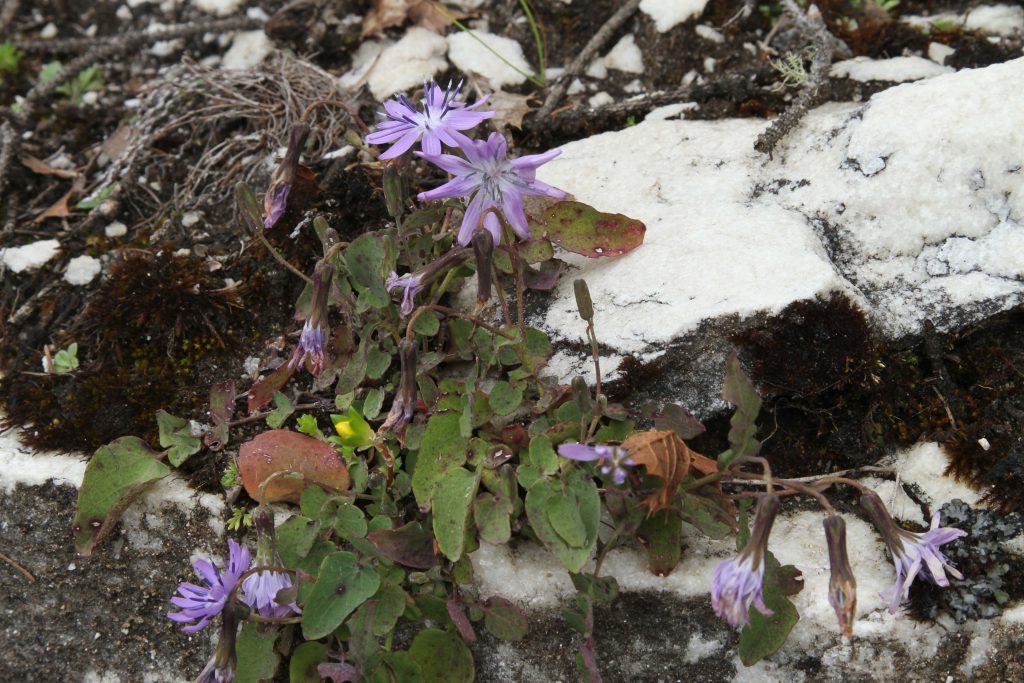
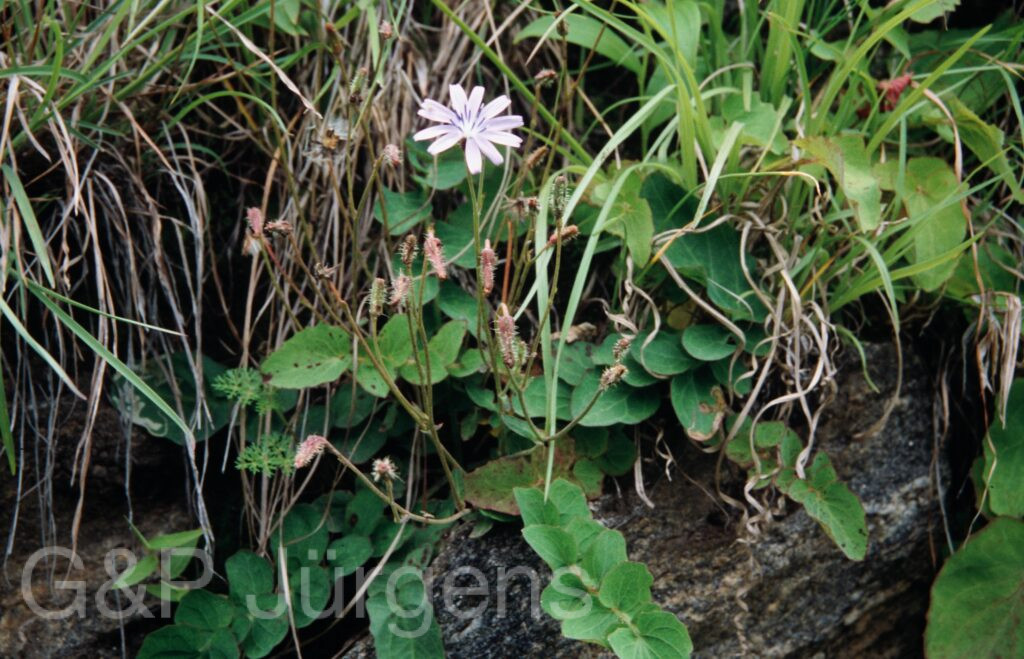
Melanoseris macrorhiza (Royle) N.Kilian is a Himalayan and Sino-Himalayan blue-flowered lettuce relative recorded from Nepal, India, Pakistan, Afghanistan, Bhutan, China and Myanmar, with around 468 georeferenced occurrences in GBIF. It grows on open alpine and subalpine slopes, in moist meadows, among rocks and along forest margins, typically between about 2700 and 4000 m. The collections from Chele-La at 3500 m in September and from Roha in West Nepal at 2700 m in July illustrate its broad Himalayan altitudinal range and its late-summer to autumn flowering.

It is a perennial herb arising, as the epithet macrorhiza indicates, from a stout, thickened taproot or rootstock, with milky latex characteristic of the tribe Cichorieae. The stems are erect and leafy below, becoming branched in the inflorescence. The leaves are lyrate-pinnatifid to runcinate, the basal ones petiolate and the cauline ones often clasping with auriculate bases. The capitula are wholly ligulate, with blue to violet-blue strap-shaped florets and a cylindric involucre of imbricate phyllaries. The fruit is a flattened, ribbed cypsela narrowed toward the apex and bearing a pappus of white, soft bristles.

The species has a complex nomenclatural history, having been placed at various times in Lactuca, Cicerbita and Cephalorrhynchus before transfer to Melanoseris, a predominantly Asian genus segregated within the lettuce alliance on the basis of cypsela and pappus characters supported by molecular data. It is a widespread montane element of no particular conservation concern.

Author: (Royle) N.Kilian · Sources: POWO (Kew), GBIF, Flora of China, Flora of Pakistan, Kilian revision of Cichorieae (Melanoseris)

(C.B.Clarke) C.B.Shang

Sikkim2011 387
Sikkim Lachung 3200m, June
Sikkim2011 389
Sikkim Lachung 3200m, June
Sikkim 2006 327 ergebnis
India West-Bengal, Tolung 2400m, May

Description

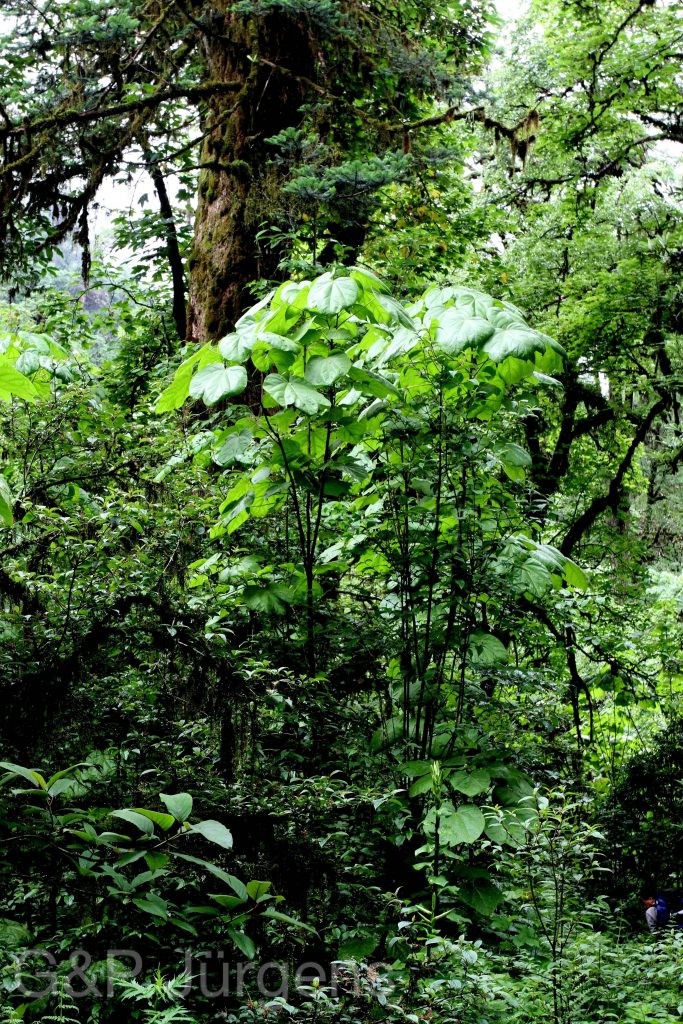
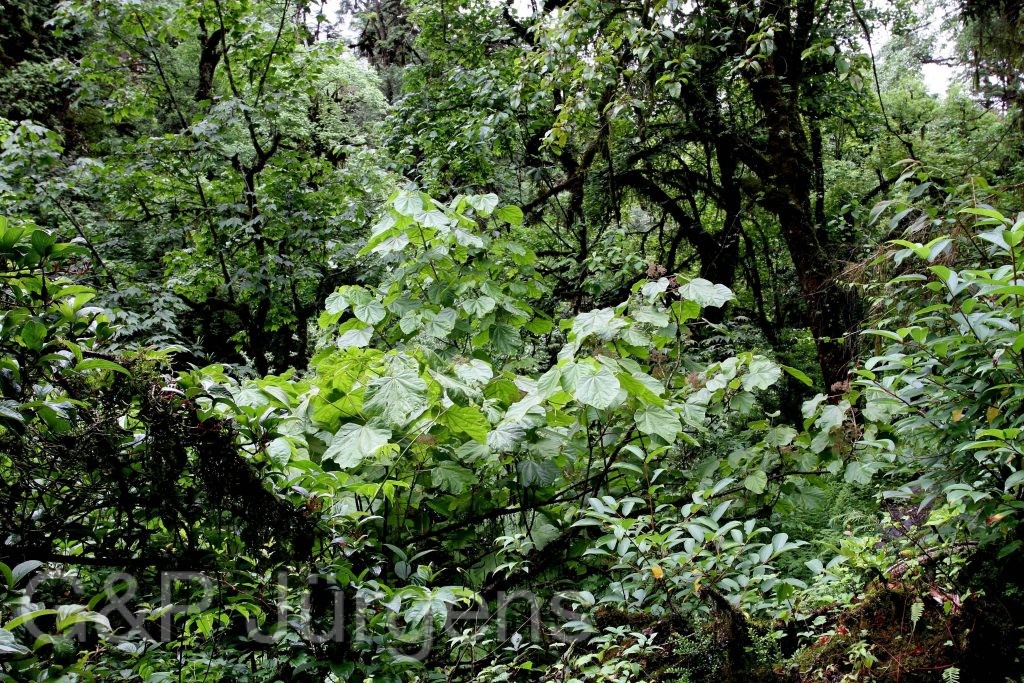
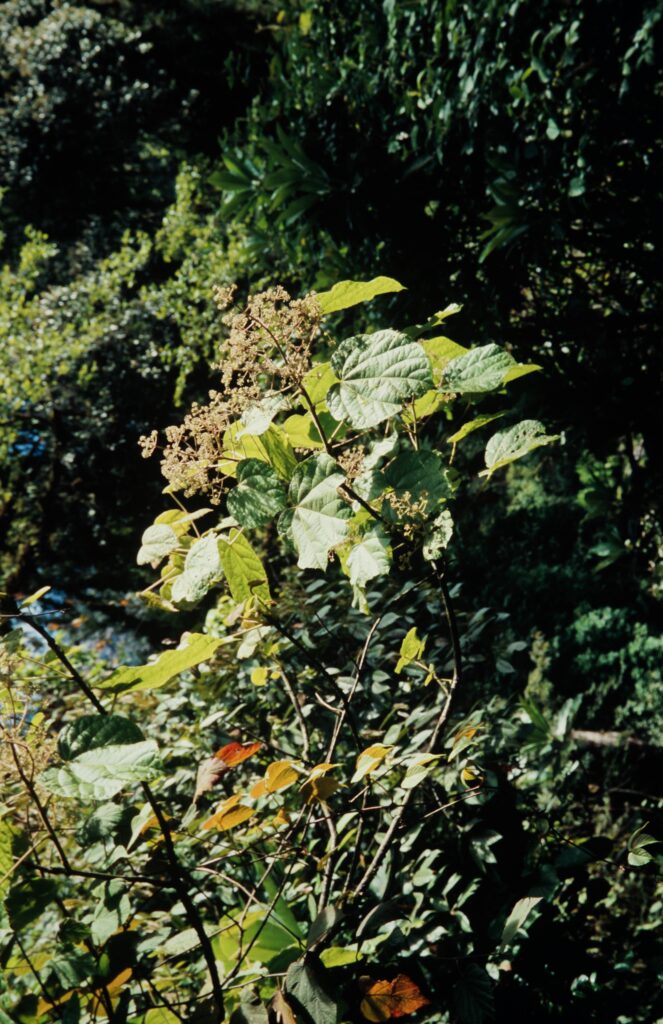
Merrilliopanax alpinus is a small tree or shrub of the eastern Himalaya and south-western China, recorded from Nepal, northern India, Bhutan and Yunnan, a comparatively narrow range reflected in only some 59 occurrence records. It inhabits moist, evergreen broad-leaved and mixed montane forest and forest margins, generally between about 2000 and 3500 m, often in shaded, humid ravines. The images here derive from Sikkim at Lachung (3200 m, June) and from the Tolung area of West Bengal (2400 m, May), localities typical of the rich, mist-bathed mid-montane forests where the genus reaches its diversity.

The plant is an evergreen with stout, sparingly branched stems bearing simple, leathery leaves clustered toward the branch tips. The leaves are large, ovate to elliptic, entire or shallowly toothed, glabrous and shining above and frequently rusty-tomentose beneath, on long petioles. The inflorescence is a terminal panicle of small umbels; the flowers are small, polygamous and greenish, with a reduced calyx, several petals and stamens, and an inferior ovary. The fruit is a small, globose to ellipsoid drupe crowned by the persistent styles.

Merrilliopanax is a small genus of the Araliaceae segregated from the broadly defined Schefflera/Aralia complex and is restricted to the Sino-Himalayan region; M. alpinus was described by C.B.Clarke and transferred to the genus by C.B.Shang. Its simple (rather than compound) leaves distinguish it from many relatives. The drupes are bird-dispersed, and the species is a localised but characteristic element of eastern Himalayan cloud forest. Its restricted range makes it of biogeographic interest and potentially sensitive to forest loss, though no formal threat assessment is widely established.

Author: (C.B.Clarke) C.B.Shang · Sources: POWO (Kew), GBIF, Flora of China, Flora of Bhutan, Shang revision of Merrilliopanax, Frodin & Govaerts World Checklist of Araliaceae

Hemsl.

Bhutan2012 863
Bhutan Nangsephal 2850m, October

Description

Microula sikkimensis Hemsl. is a Sino-Himalayan herb recorded by GBIF in China, Nepal, Bhutan and India, with 1011 occurrences documenting a fairly continuous distribution along the higher Himalaya and into south-western China. It grows on open slopes, grassy banks, fallow ground, trail margins and forest clearings in the temperate to subalpine zones, typically between about 2500 and 4000 m. The plant photographed at Nangsephal in Bhutan, at roughly 2850 m in October, reflects its occurrence in the cool temperate belt of the eastern Himalaya and its persistence into the autumn.

The species is a hispid annual or short-lived herb with spreading, bristly stems clothed in stiff, often pustular-based hairs typical of the family. The leaves are alternate, oblong to lanceolate, sessile or short-petiolate and roughly hairy on both surfaces. The flowers are small and borne in leafy-bracted cymes; the corolla is blue to bright blue with a short tube, a spreading five-lobed limb and small scales (fornices) closing the throat. The fruit characteristically separates into four nutlets that bear a dorsal aperture and marginal teeth or wings, a diagnostic feature of the genus Microula.

Microula is a genus largely centred on the Himalaya and the Qinghai-Tibetan plateau, distinguished within the Boraginaceae by its sculptured, apertured nutlets, and M. sikkimensis is among its more widespread and variable species. The barbed or toothed nutlets promote epizoochorous dispersal, attaching to animal fur and clothing, which aids colonisation of disturbed ground. The species is common across its range and of no conservation concern, forming a characteristic element of the weedy and meadow flora of the central and eastern Himalaya.

Author: Hemsl. · Sources: POWO (Kew), GBIF, Flora of China, Flora of Bhutan, Flora of Nepal, Riedl Boraginaceae of the Himalaya

(L.) G.Don

Nepal 99 876 ergebnis
Nepal Murwa 3400m, July

Description

Modiola caroliniana is a pantropical and warm-temperate weed of American origin, now naturalized on every continent. GBIF documents over 23,700 occurrences, with the densest concentrations in the southeastern United States, southern South America, Australia, and New Zealand. While the species typically colonises disturbed lawns, roadsides, and cultivated land at low to moderate elevations, the present collection from Murwa in Nepal at 3,400 m represents a remarkably high-altitude record. In the Himalayan region it is known primarily as a casual introduction, exploiting anthropogenic disturbance along trade routes and settlement margins.
Modiola caroliniana is a prostrate to decumbent perennial herb with slender, creeping stems that root at the nodes, forming dense mats. Stems are sparsely to moderately stellate-pubescent. Leaves are alternate, palmately 5–7-lobed, 2–5 cm in diameter, with crenate margins; stipules are ovate, scarious. Flowers are solitary and axillary, small (8–12 mm across), with five salmon-pink to orange-red petals, each narrowly obovate and slightly emarginate. The staminal column is characteristic of Malvaceae. The fruit is a schizocarp, 6–8 mm in diameter, composed of 15–22 mericarps arranged in a disc; each mericarp bears two divergent, spine-like awns at the apex and contains a single reniform seed. The barbed mericarps facilitate epizoochorous dispersal.
Modiola is a monotypic genus, distinguished from related genera such as Malva and Sida by its spiny mericarps and prostrate, stoloniferous habit. Its occurrence at 3,400 m in western Nepal is biogeographically noteworthy, well above its typical altitudinal range of sea level to 1,500 m. This high-elevation record likely reflects transport along the heavily trafficked trails connecting lowland Nepal with trans-Himalayan passes. The species' ability to establish at such altitudes hints at a broader climatic tolerance than generally assumed and warrants monitoring as a potential indicator of upward weed migration under changing climate conditions.

Author: (L.) G.Don · Sources: POWO (Kew), GBIF, Flora of China Vol. 12, Fryxell: The Natural History of the Cotton Tribe (1979), Press et al.: Annotated Checklist of the Flowering Plants of Nepal (2000)

L.

Bh09 307 G504
Bhutan Yetong-La, 3050m June
Nepal 99 882 ergebnis
West-Nepal Suli-Khola 3000m, July

Description

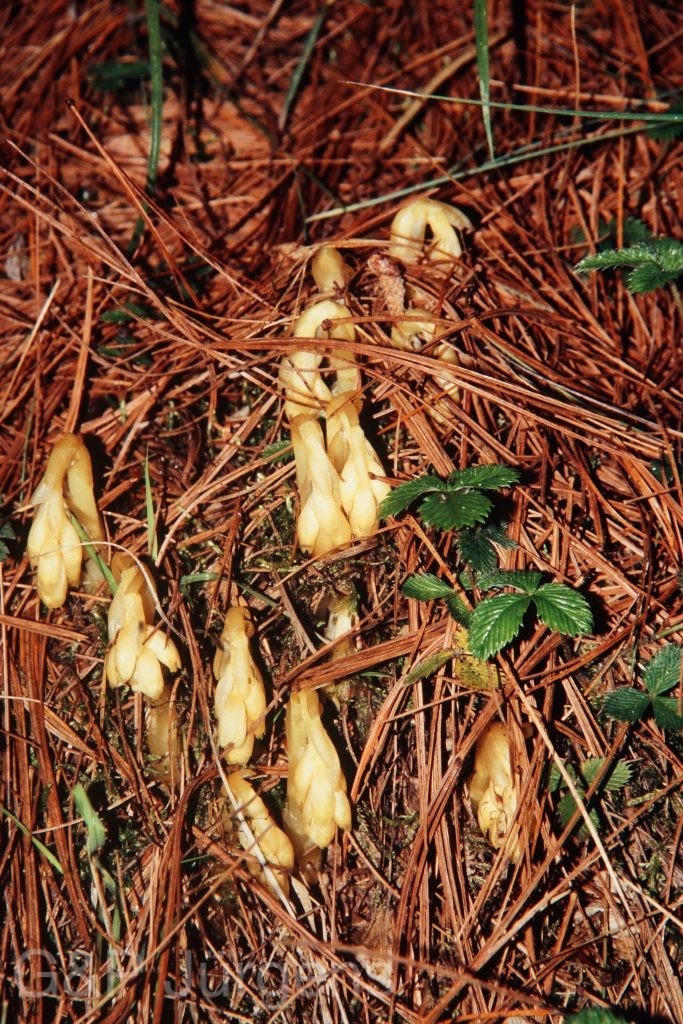
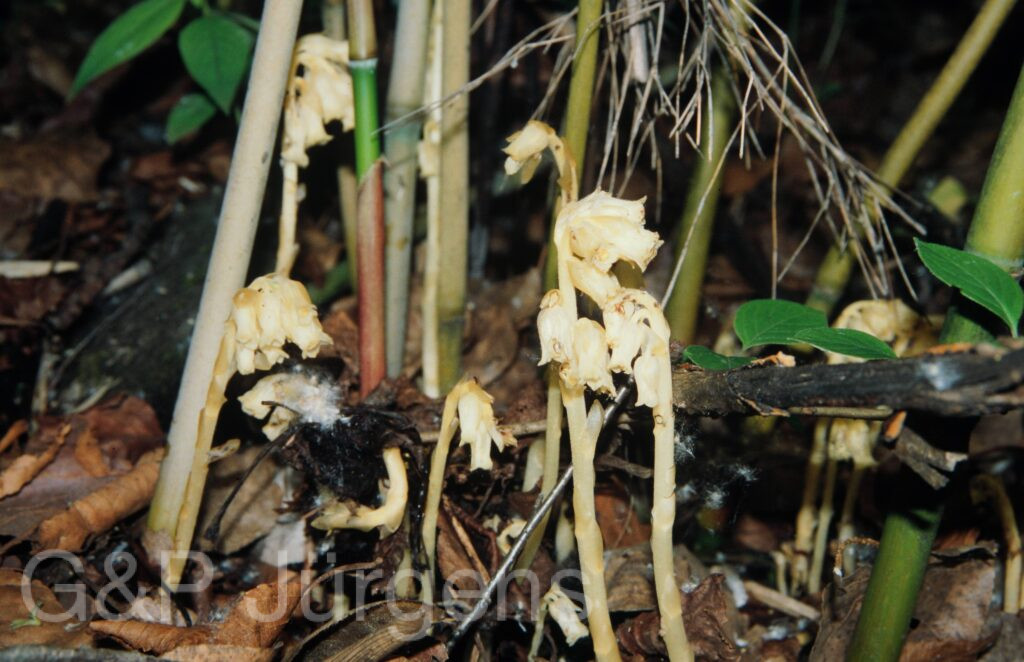
Monotropa hypopitys, the yellow bird's-nest, is a circumboreal mycoheterotroph of remarkably broad distribution, with GBIF amassing over 56,000 occurrences spanning North America, Europe and temperate Asia, including the United States, France, Canada, Russia, Germany, Scandinavia and Japan. It grows in the deep shade and leaf litter of coniferous and broadleaved forests, lacking chlorophyll and obtaining its carbon indirectly from surrounding trees via shared ectomycorrhizal fungi. The Himalayan records from Yetong-La in Bhutan at about 3050 m in June and Suli-Khola in western Nepal near 3000 m in July document its occurrence in shaded temperate fir, oak and rhododendron forest along the southern margin of its vast range. Here gbif_status is SYNONYM, with Monotropa hypopitys taken as the accepted name (often referred to Hypopitys monotropa).

The entire plant is a waxy, fleshy herb of pale yellow, ivory or pinkish-brown colour, wholly devoid of green pigment. The simple, unbranched stem is clothed in scale-like, alternate, bract-form leaves in place of true foliage. At anthesis the stem nods at the apex, bearing a short, secund, few-flowered raceme of pendent, urn-shaped to campanulate flowers; the lateral flowers are usually 4-merous and the terminal 5-merous, with free or loosely cohering petals and eight to ten stamens. After pollination the inflorescence becomes erect, the ovary maturing into an ovoid capsule releasing enormous numbers of minute, dust-like seeds.

Long placed in its own family Monotropaceae, M. hypopitys is now firmly embedded within Ericaceae subfamily Monotropoideae, a lineage of obligate mycoheterotrophs whose nutrition depends entirely on a tripartite plant-fungus-tree relationship. Its dust seeds require fungal infection to germinate, tying its distribution closely to suitable mycorrhizal hosts. Despite its enormous global range it is inconspicuous and of least concern overall, though sensitive to forest clearance that severs its underground fungal connections.

Author: L. · Sources: POWO (Kew), GBIF, Flora of China, Flora Europaea, Flora of Bhutan, Wallace monograph of Monotropoideae

Wall. ex DC.

Sikkim2003 372 G521
Sikkim Tista valley 3500m August
Nepal 99 84 ergebnis
West-Nepal Bhulbhule 3200m, June
Garw 2005 36 ergebnis ergebnis
India Garhwal Valley of flowers 3100m, September

Description

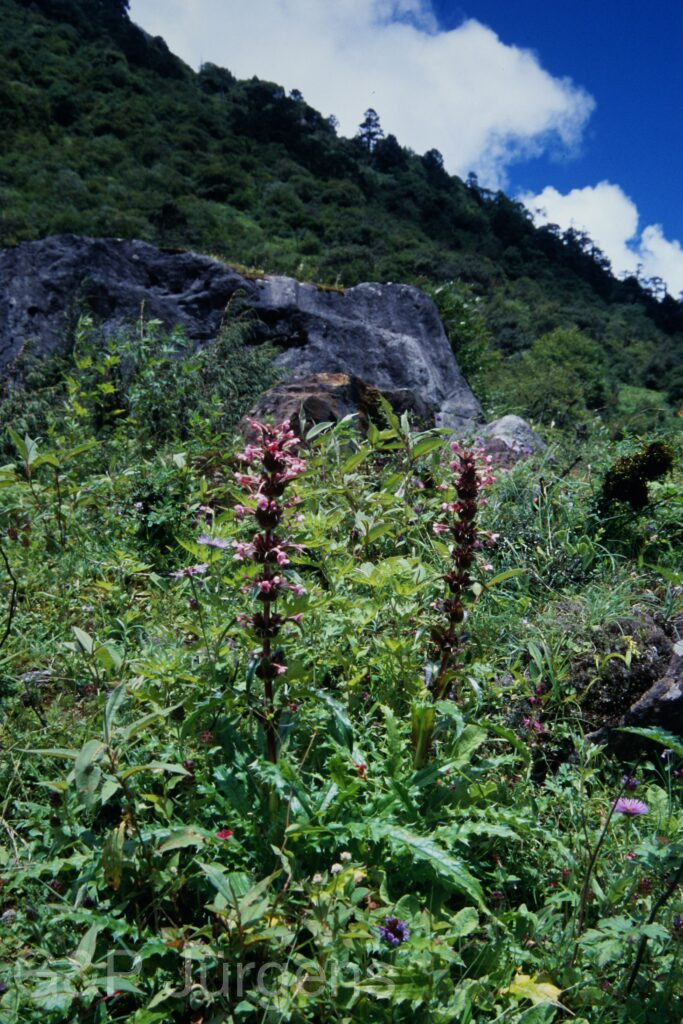
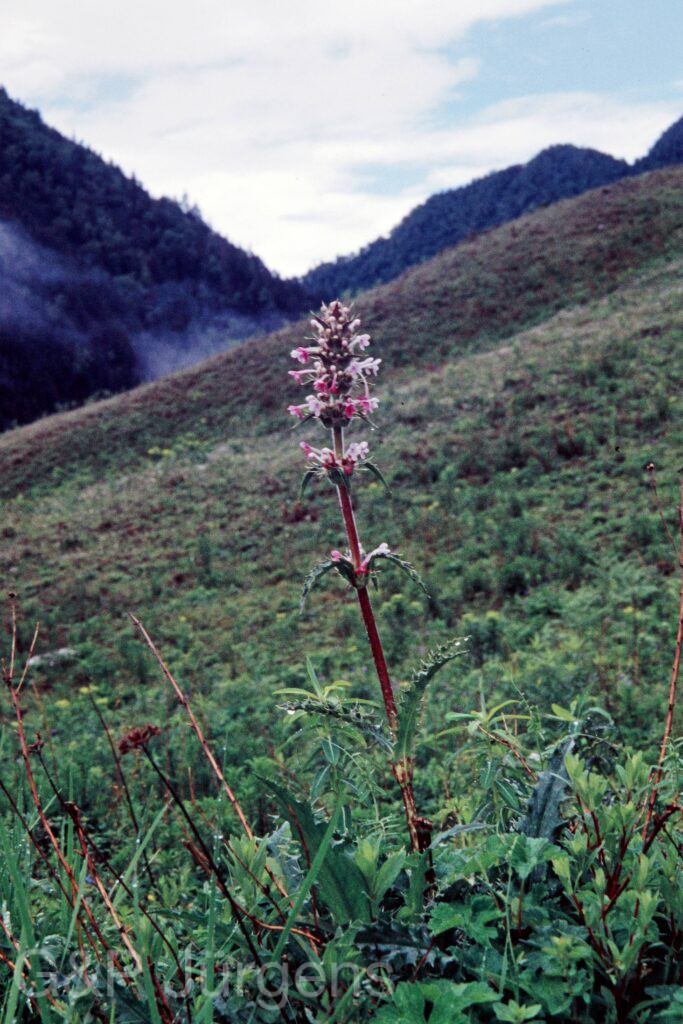
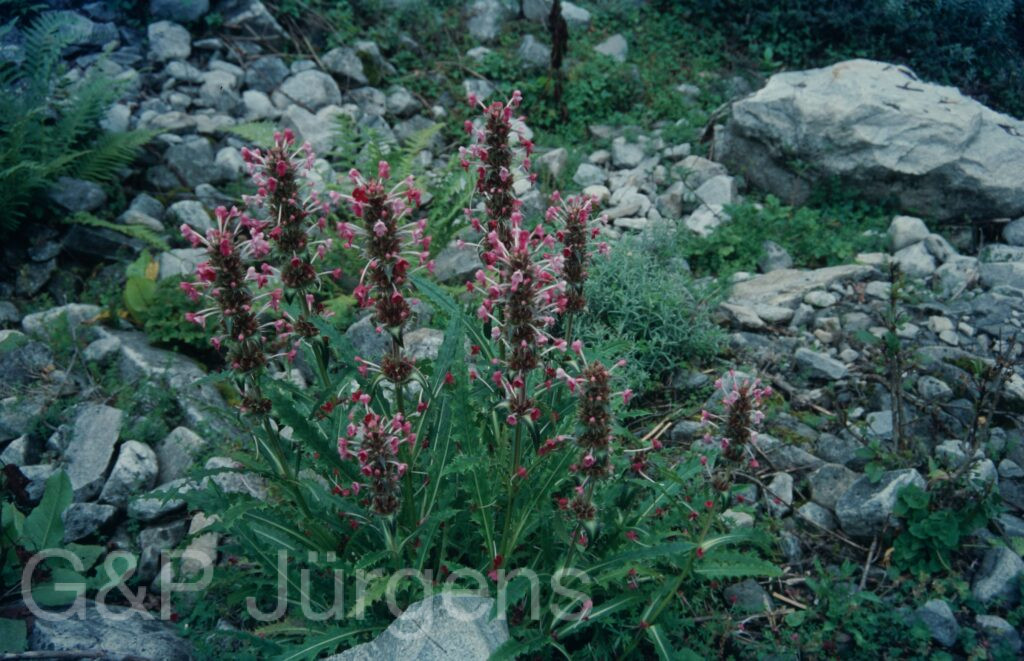
Morina longifolia, the Himalayan whorlflower, is native to the Himalaya across Pakistan, India, Nepal and Bhutan, with naturalised and cultivated records in Europe and North America (Norway, Germany, Denmark, Sweden, the United States) reflected among its roughly 125 GBIF occurrences. It grows on open alpine and subalpine slopes, in stony meadows, grassy clearings and among low scrub on well-drained soils above the forest. The cited localities, the Tista valley in Sikkim at 3500 m in August, Bhulbhule in western Nepal at 3200 m in June, and the Valley of Flowers in Garhwal at 3100 m in September, span its range of roughly 3000-4000 m, where it flowers through the summer monsoon.

It is a robust, erect perennial herb forming a basal rosette of long, narrow, linear-lanceolate leaves whose margins are conspicuously spiny-toothed, giving a thistle-like appearance, the whole plant aromatic when crushed. The flowering stem rises stoutly and bears the flowers in well-separated, spiny-bracted whorls (verticillasters) up the upper axis. Each flower has a tubular, curved, two-lipped corolla that opens white and ages through pink to deep crimson, so flowers of several colours appear together in one whorl. Two stamens are fertile, the slender style is exserted, and the inferior ovary develops into a small one-seeded achene enclosed within the persistent involucel.

The genus Morina, with its spiny leaves and whorled bicoloured flowers, has been placed variously in its own family Morinaceae or within Dipsacaceae, and is treated by current systems within an enlarged Caprifoliaceae; molecular work confirms its position near the teasels and valerians in the Dipsacales. The long-tubed flowers are pollinated by long-tongued insects, and the species is widely grown as an ornamental, accounting for its scattered occurrences far beyond its native range.

Author: Wall. ex DC. · Sources: POWO (Kew), GBIF, Flora of Pakistan, Flora of Bhutan, Cannon revision of Morina, Bell Dipsacales phylogeny