
(L.) G.Don

Description
Modiola caroliniana is a pantropical and warm-temperate weed of American origin, now naturalized on every continent. GBIF documents over 23,700 occurrences, with the densest concentrations in the southeastern United States, southern South America, Australia, and New Zealand. While the species typically colonises disturbed lawns, roadsides, and cultivated land at low to moderate elevations, the present collection from Murwa in Nepal at 3,400 m represents a remarkably high-altitude record. In the Himalayan region it is known primarily as a casual introduction, exploiting anthropogenic disturbance along trade routes and settlement margins.
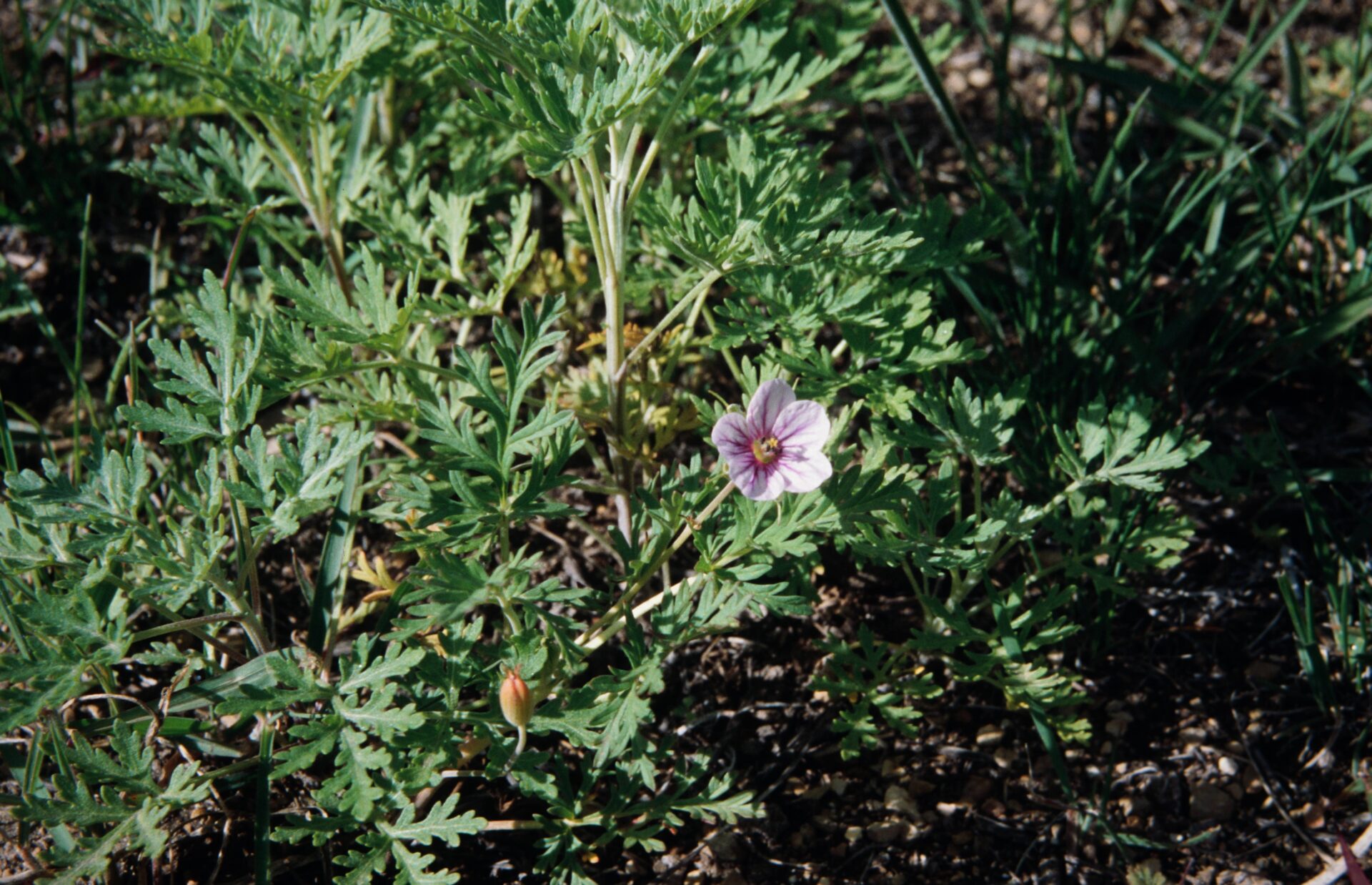
Modiola caroliniana is a prostrate to decumbent perennial herb with slender, creeping stems that root at the nodes, forming dense mats. Stems are sparsely to moderately stellate-pubescent. Leaves are alternate, palmately 5–7-lobed, 2–5 cm in diameter, with crenate margins; stipules are ovate, scarious. Flowers are solitary and axillary, small (8–12 mm across), with five salmon-pink to orange-red petals, each narrowly obovate and slightly emarginate. The staminal column is characteristic of Malvaceae. The fruit is a schizocarp, 6–8 mm in diameter, composed of 15–22 mericarps arranged in a disc; each mericarp bears two divergent, spine-like awns at the apex and contains a single reniform seed. The barbed mericarps facilitate epizoochorous dispersal.
Modiola is a monotypic genus, distinguished from related genera such as Malva and Sida by its spiny mericarps and prostrate, stoloniferous habit. Its occurrence at 3,400 m in western Nepal is biogeographically noteworthy, well above its typical altitudinal range of sea level to 1,500 m. This high-elevation record likely reflects transport along the heavily trafficked trails connecting lowland Nepal with trans-Himalayan passes. The species' ability to establish at such altitudes hints at a broader climatic tolerance than generally assumed and warrants monitoring as a potential indicator of upward weed migration under changing climate conditions.
Author: (L.) G.Don · Sources: POWO (Kew), GBIF, Flora of China Vol. 12, Fryxell: The Natural History of the Cotton Tribe (1979), Press et al.: Annotated Checklist of the Flowering Plants of Nepal (2000)