
Burm.f.
Description
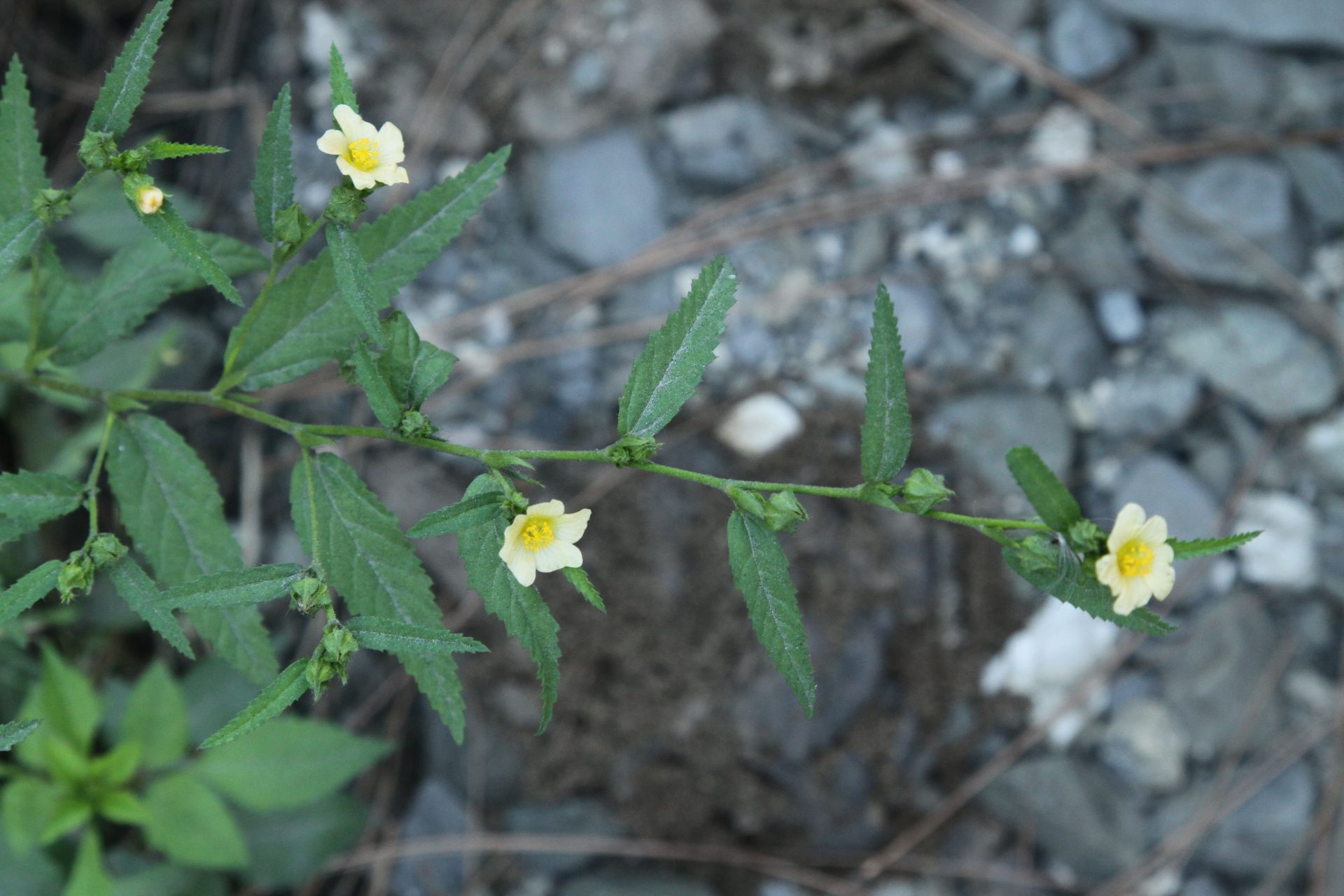
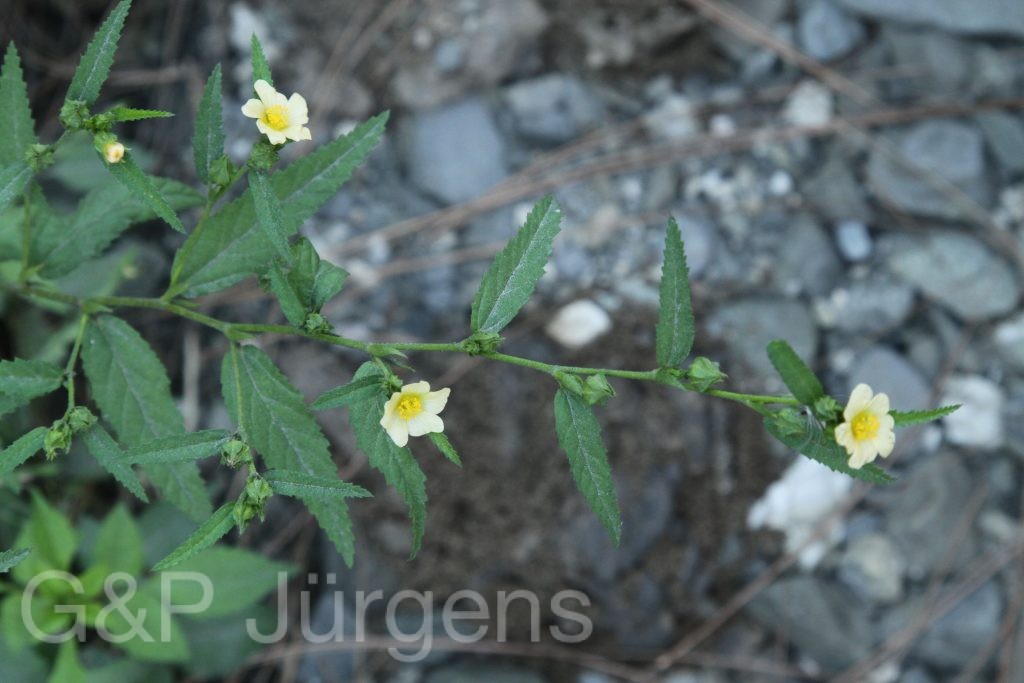
Sida acuta Burm.f. is a pantropical subshrub of the mallow family, one of the most widespread weeds in warm regions, documented by GBIF in over 23,000 occurrences spanning the Americas (Colombia, Mexico, Brazil, Argentina, Venezuela, El Salvador, USA), Africa (Ghana, Cameroon, Nigeria, Benin, Burkina Faso, DR Congo), Asia (India, China, Taiwan, Indonesia) and Australia. It thrives in disturbed ground, roadsides, pastures, fallow fields and waste places from sea level into the subtropical foothills, and was photographed in Bhutan at Wangdi Phodrang at 1800 m in October, near the upper margin of its altitudinal range.
The plant is an erect, much-branched perennial subshrub woody at the base, with tough fibrous stems. The leaves are alternate, narrowly lanceolate to oblong, with a sharply serrate margin and acute apex, and short stipules at the base of the petiole. The flowers are solitary or few in the leaf axils, with a five-lobed calyx and a corolla of five pale yellow to cream petals that open briefly in the morning; the stamens are united into a characteristic staminal column typical of Malvaceae. The schizocarpic fruit splits into several mericarps, each tipped with two short awns aiding epizoochorous dispersal.
Sida acuta is a notorious invasive and agricultural weed, forming dense stands that suppress pasture and crops, and is the target of biological control programmes in northern Australia. Despite its weedy status it yields a strong bast fibre and is used in traditional medicine across its range. Probably of neotropical origin, it has become naturalised throughout the tropics through human activity, and its tolerance of poor soils and disturbance ensures its continued spread.
Author: Burm.f. · Sources: POWO (Kew), GBIF, Flora of Bhutan, Flora of China, Sida revision (Fryxell, Malvaceae of the World)