
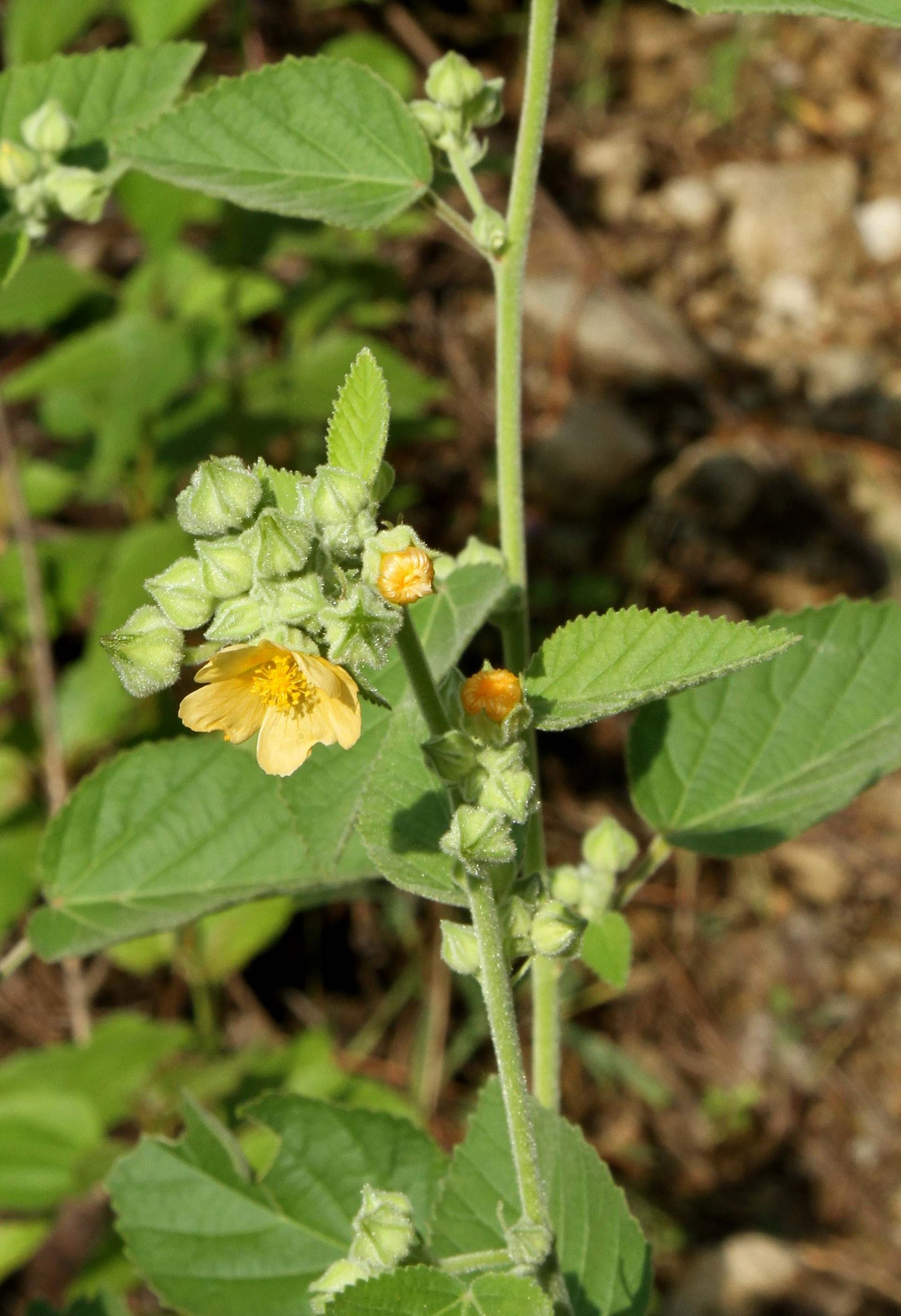
Herb.Madr. ex Wight & Arn.
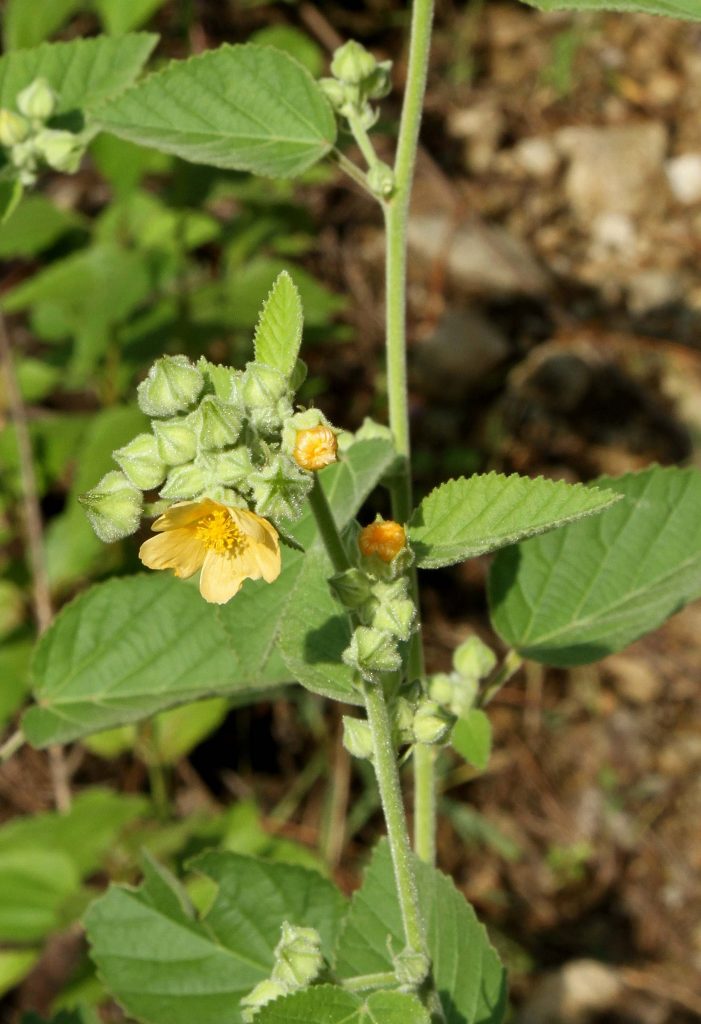
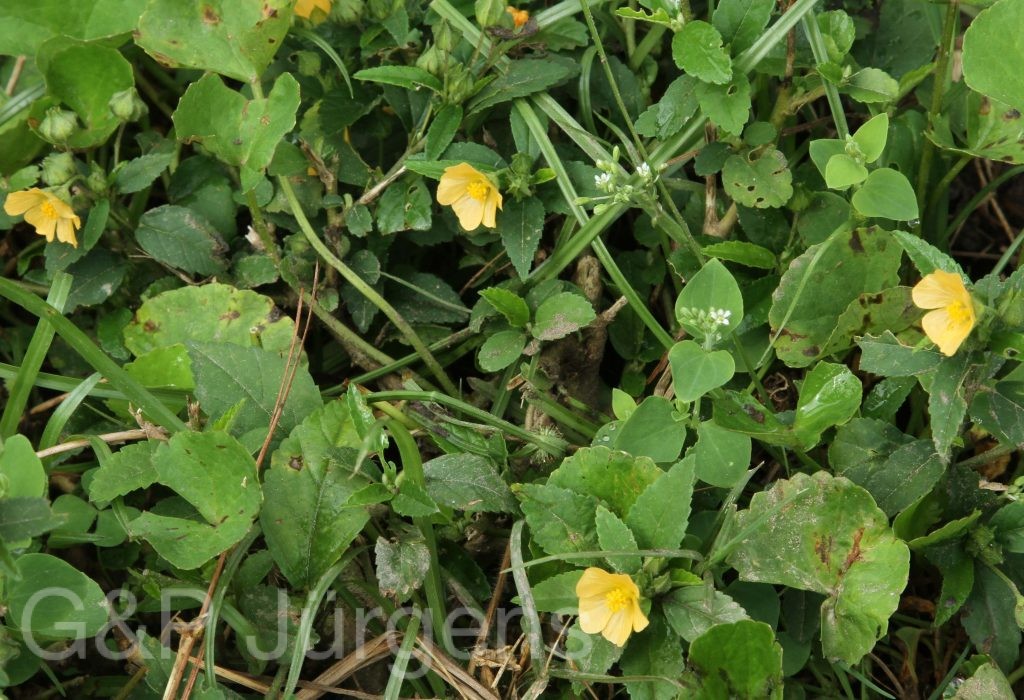
also included: Drymaria cordata
Description
Sida mysorensis is an Old World tropical, weakly pantropical weedy herb, GBIF recording some 630 occurrences across South and Southeast Asia (India, Sri Lanka, China, Taiwan, Myanmar, Thailand, Vietnam, Cambodia, Laos, the Philippines, Indonesia), the Himalayan states (Nepal, Bhutan) and naturalised in the Neotropics (Mexico, Brazil, Colombia, Cuba, Guatemala). It is a plant of warm low to mid elevations, colonising roadsides, waste ground, fallow fields and forest margins. The Bhutanese record from Trithangebe at about 1000 m, flowering in October beside Drymaria cordata, is characteristic of its association with humid, weedy subtropical foothills after the monsoon.
It is an erect to ascending annual or short-lived perennial herb or subshrub, 30–120 cm tall, the stems and foliage softly pubescent to stellate-tomentose and often viscid. The leaves are alternate, ovate to cordate, crenate-serrate and stipulate. Flowers are small, solitary or few in the leaf axils; the corolla is yellow to pale orange, of five obovate petals around a staminal column typical of Malvaceae. The fruit is a schizocarp of several reticulate mericarps, each usually bearing short apical awns aiding dispersal.
Described from a Madras herbarium specimen by Wight and Arnott, S. mysorensis belongs to the large, taxonomically complex genus Sida, in which softly hairy, axillary-flowered species are frequently confused. It is of no conservation concern, being a widespread ruderal and minor agricultural weed, and like many Sida species has been used in folk medicine and as a bast fibre. Ecologically it is an early colonist of disturbed tropical ground.
Author: Herb.Madr. ex Wight & Arn. · Sources: POWO (Kew), GBIF, Flora of Bhutan, Flora of China, Malvaceae of the World (Bayer & Kubitzki treatment)