
(Roxb.) R.Br.
Description
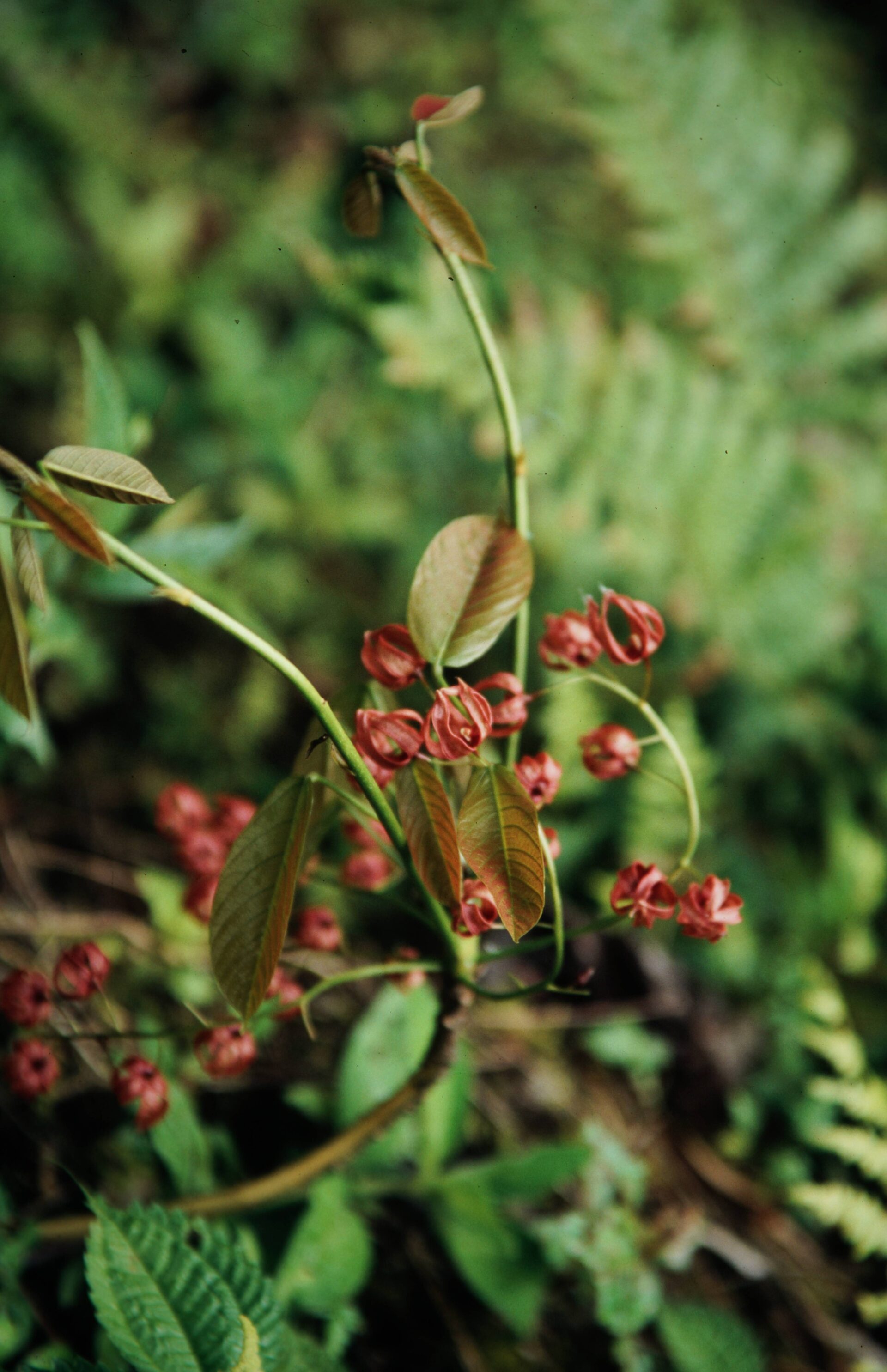
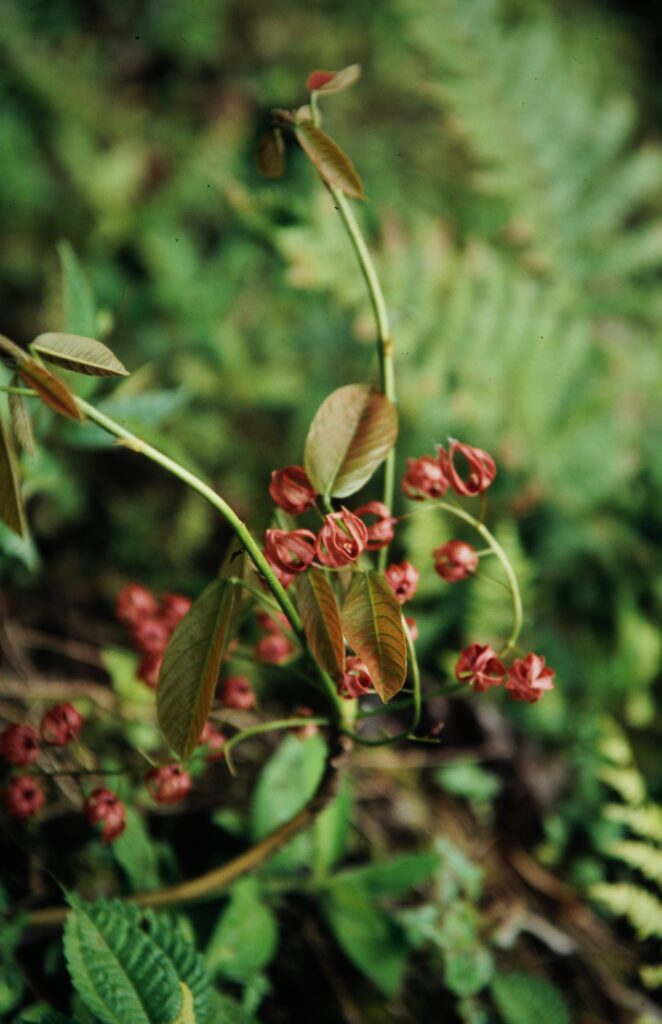
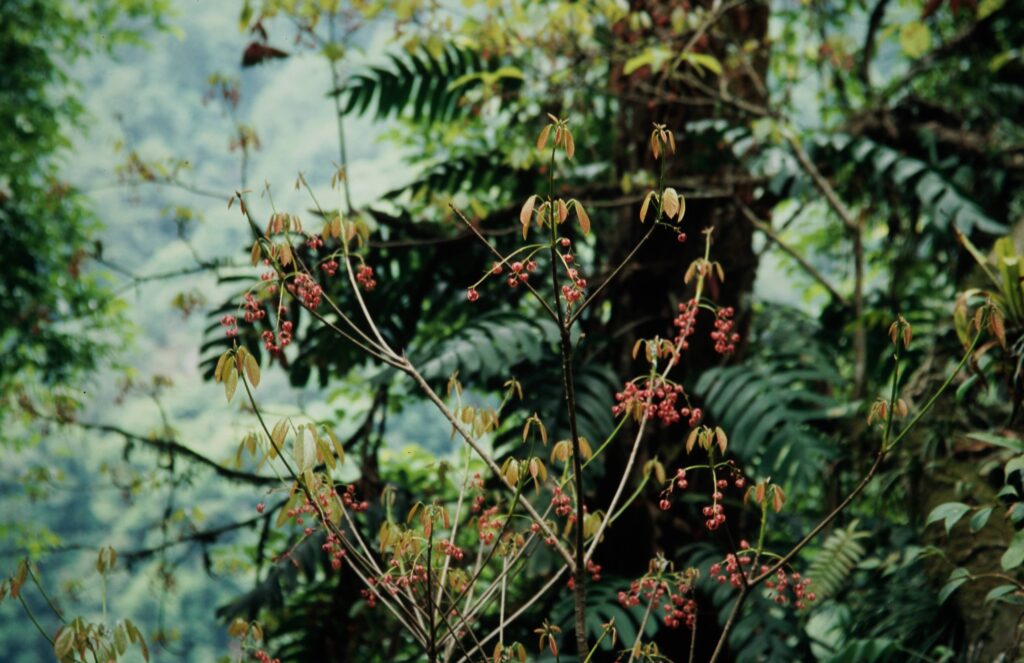
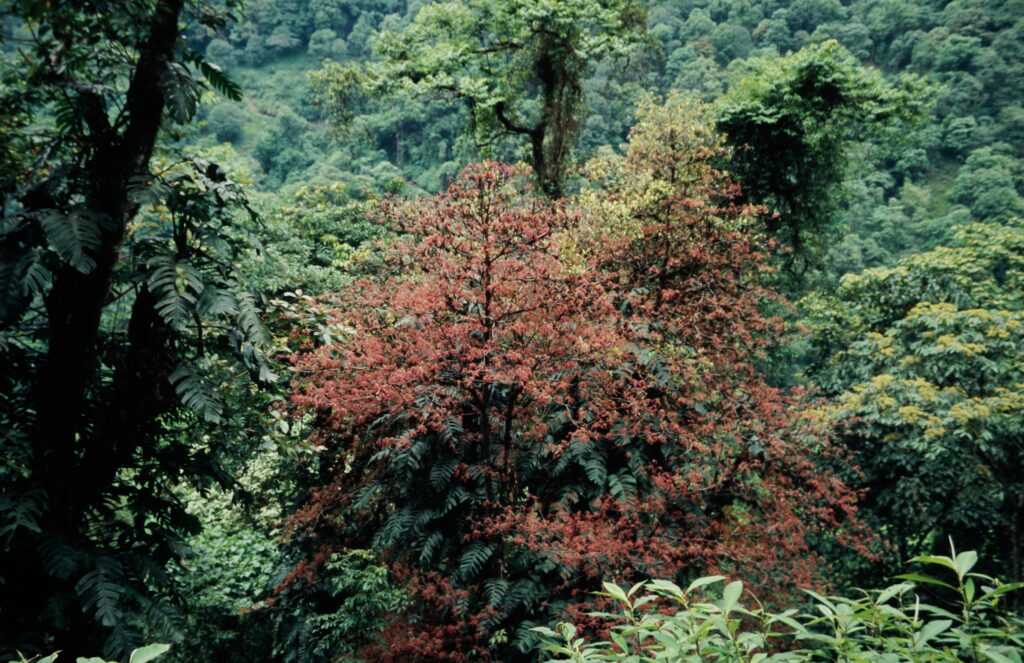
Pterygota alata is a large deciduous tree of tropical and subtropical Asia, distributed from India, Bangladesh, Sri Lanka and Nepal eastward through Myanmar, Thailand, the Malay Peninsula, Indonesia, the Philippines and southern China, with cultivated records elsewhere; GBIF lists some 350 occurrences, a number inflated by its frequent planting as an avenue and shade tree. It grows in lowland and lower-montane evergreen and semi-evergreen forest, often along valley bottoms on deep moist soils. The photographed individual was recorded in the West Bengal hills at Chaana around 1650 m in May, near the upper margin at which this tropical tree persists in the eastern Himalayan foothills.
It is a tall tree with a straight bole and spreading crown, the bark grey and rather smooth, often buttressed at the base. The leaves are alternate, large, broadly ovate to orbicular with a cordate base and abruptly acuminate apex, palmately veined and clustered toward the branch tips. The flowers are borne in axillary panicles, lacking a corolla, with a coloured, campanulate, lobed calyx. The most distinctive feature is the fruit, a cluster of large, woody, globose follicles that split to release numerous broadly winged seeds adapted for wind dispersal, the wing giving the genus its name.
Formerly placed in Sterculiaceae, Pterygota is now treated within an expanded Malvaceae (subfamily Sterculioideae), as reflected in the family given here. The winged seed and apetalous flowers ally it with Sterculia and Firmiana. Valued for its light timber and as an ornamental, P. alata is not considered globally threatened, although natural lowland-forest populations are locally reduced by logging.
Author: (Roxb.) R.Br. · Sources: POWO (Kew), GBIF, Flora of China Vol. 12, Flora of Bhutan Vol. 1, Flora of Nepal, Flora of Pakistan, Kostermans revision of Asian Sterculiaceae