
Roxb.
Description
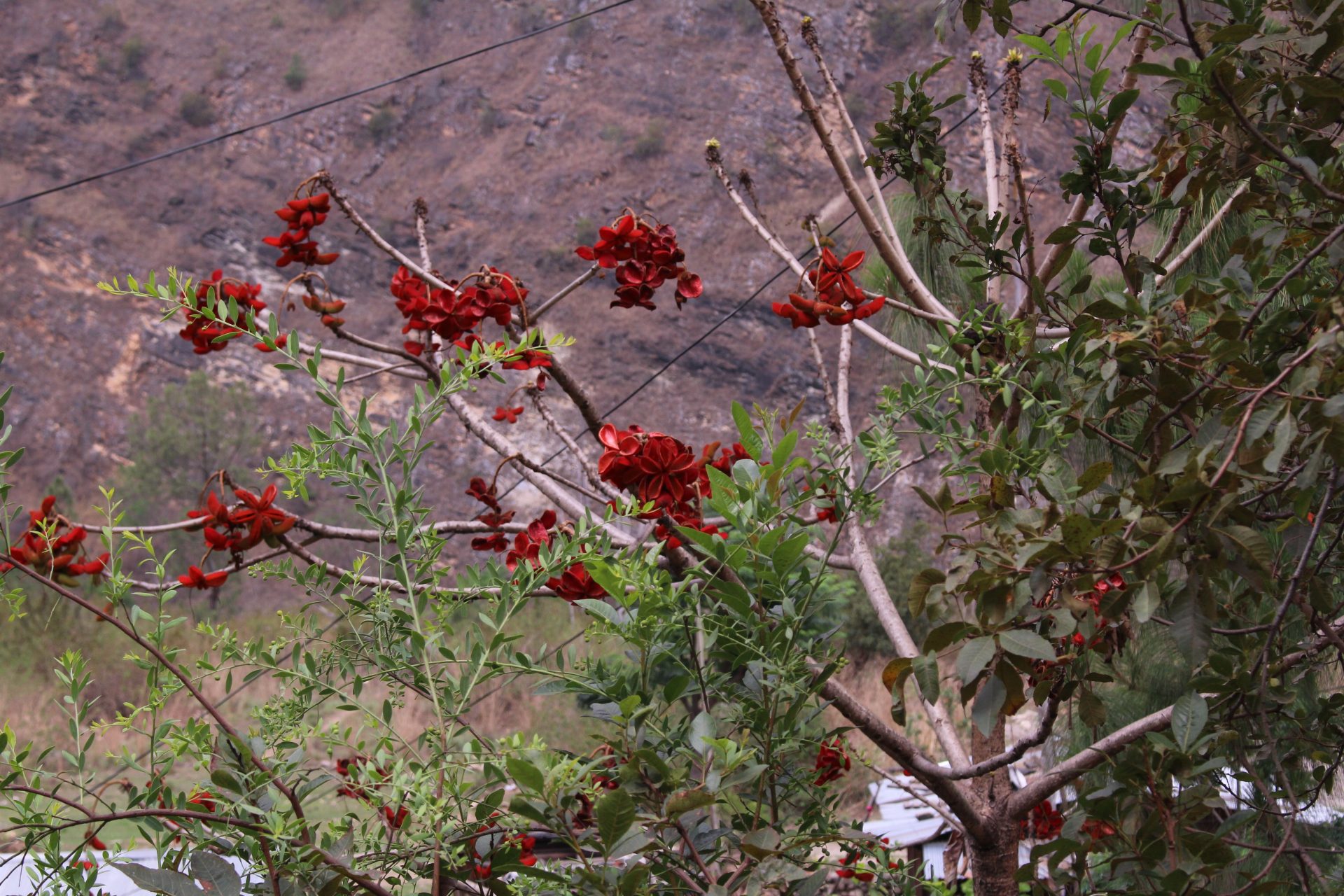
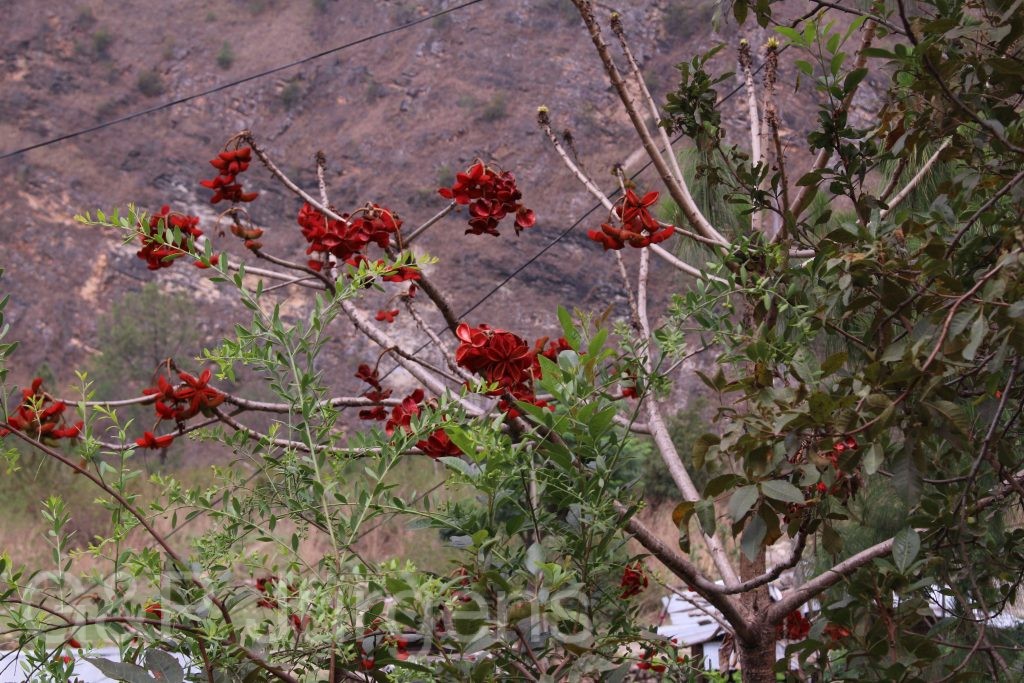
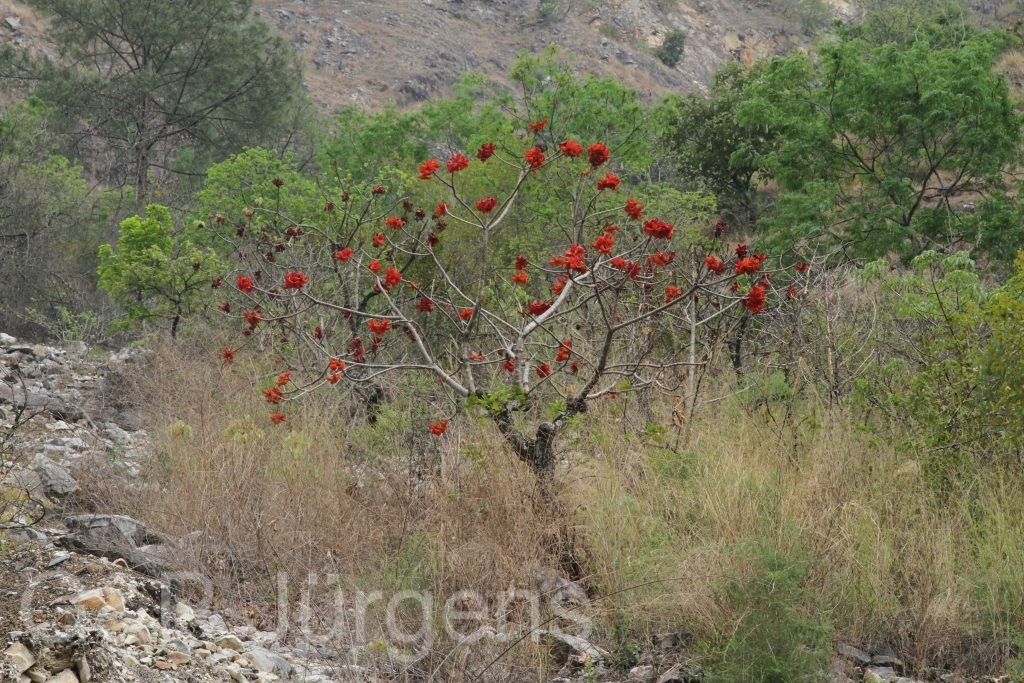
Sterculia villosa is a deciduous tree widely distributed across tropical and subtropical Asia, from India, Nepal, Bangladesh, Bhutan and Sri Lanka eastward through Myanmar, Thailand, Vietnam, southern China and into Malesia (Malaysia, Indonesia), with the 452 GBIF records reflecting both this native range and cultivated or naturalised occurrences elsewhere. It is a tree of monsoon and deciduous forest, riverine valleys and disturbed slopes at low to moderate elevations, generally below about 1500 m though reaching higher in warm valleys. The photographed individual from the Karu-Chu valley in Bhutan at around 1800 m, flowering in May before or with the new leaves, marks the upper, warm-temperate edge of its range.
The tree has a straight bole, grey bark and stout branches, the young parts densely clad in soft tawny villous hairs from which the epithet derives. The large, alternate leaves are palmately lobed with 5-7 broad lobes, cordate at the base and long-petioled, hairy beneath. The flowers, borne in much-branched velvety panicles, are apetalous, with a campanulate, lobed, reddish to greenish-yellow calyx; the species is andromonoecious with a central androgynophore. The fruit is the characteristic sterculiaceous group of large, woody, beaked, velvety follicles that dehisce to expose black seeds against a red interior.
Formerly placed in Sterculiaceae, the genus Sterculia is now treated within an enlarged Malvaceae (subfamily Sterculioideae), as adopted here. S. villosa is economically valued for its strong bast fibre, used for ropes and cordage, and yields a gum; its bark and seeds feature in local medicine. As a fast-growing, light-demanding species of disturbed and secondary forest it is widespread and not of conservation concern, though it is locally significant in agroforestry and as a host for lac and silk insects.
Author: Roxb. · Sources: POWO (Kew), GBIF, Flora of Bhutan, Flora of British India, Flora of China, Kostermans Sterculiaceae monograph