
G.Taylor
Description
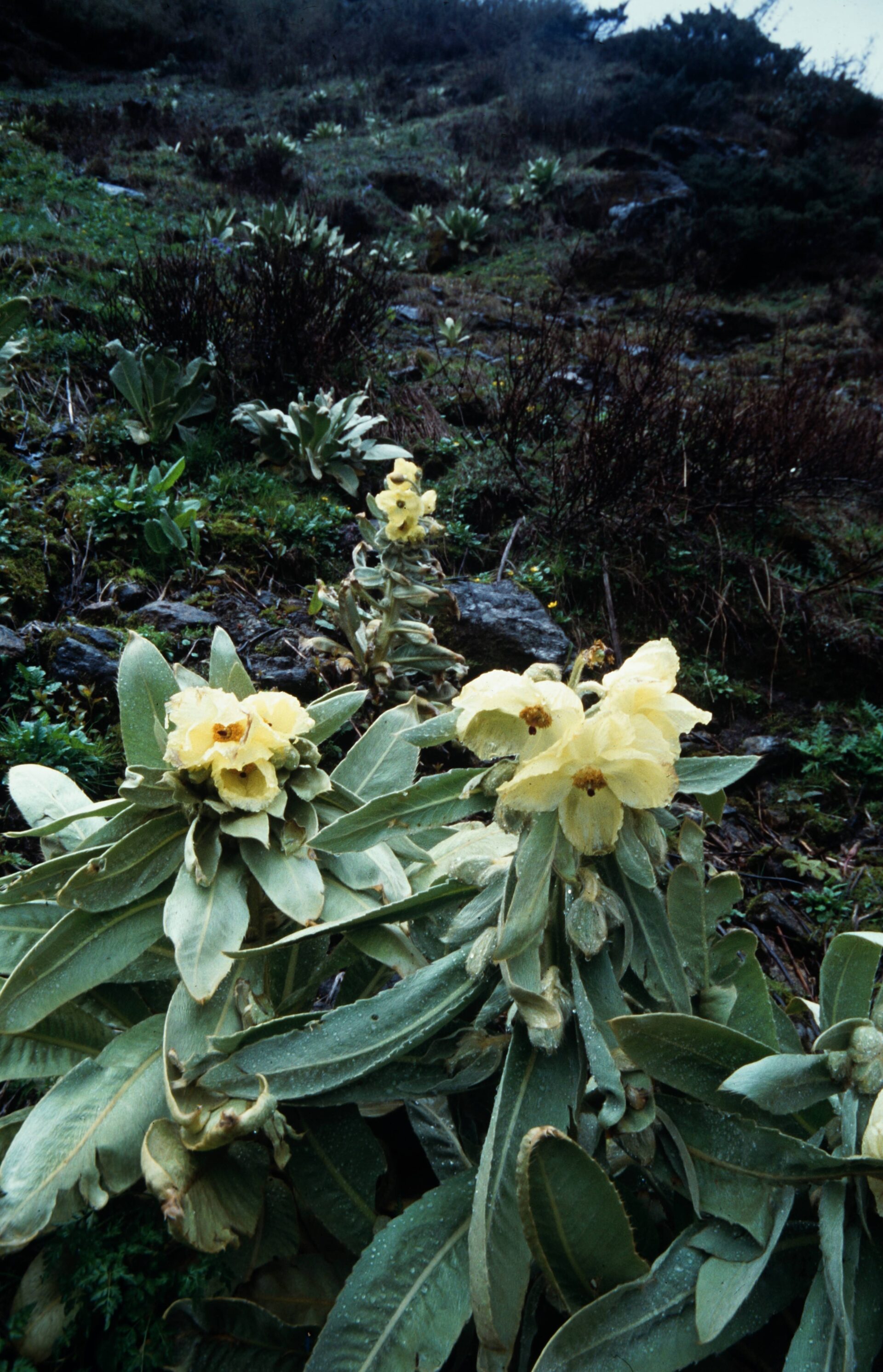
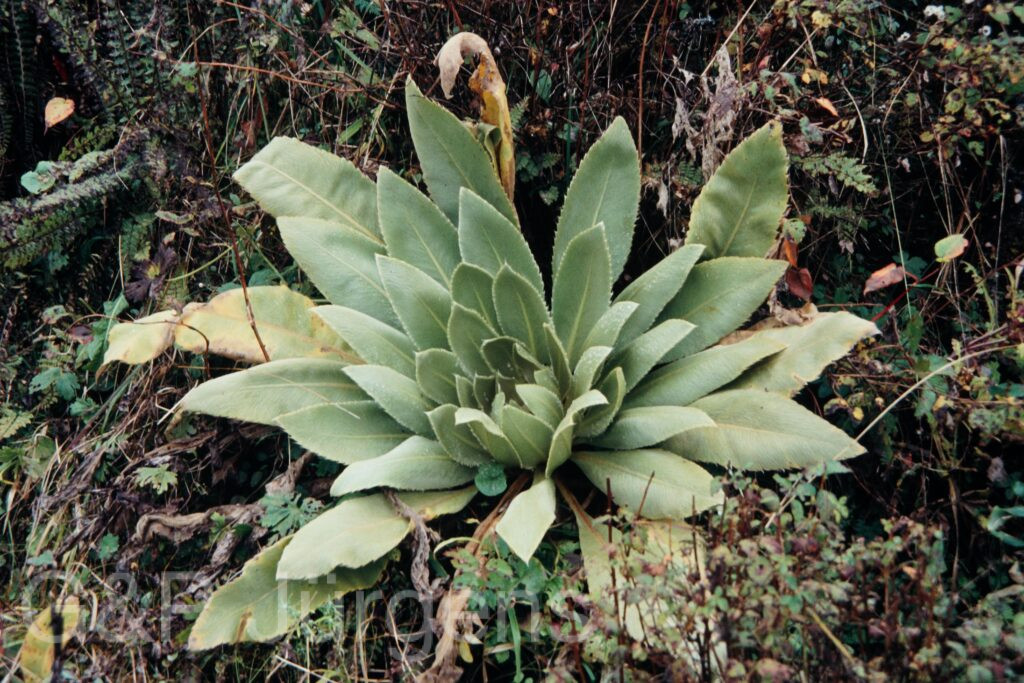
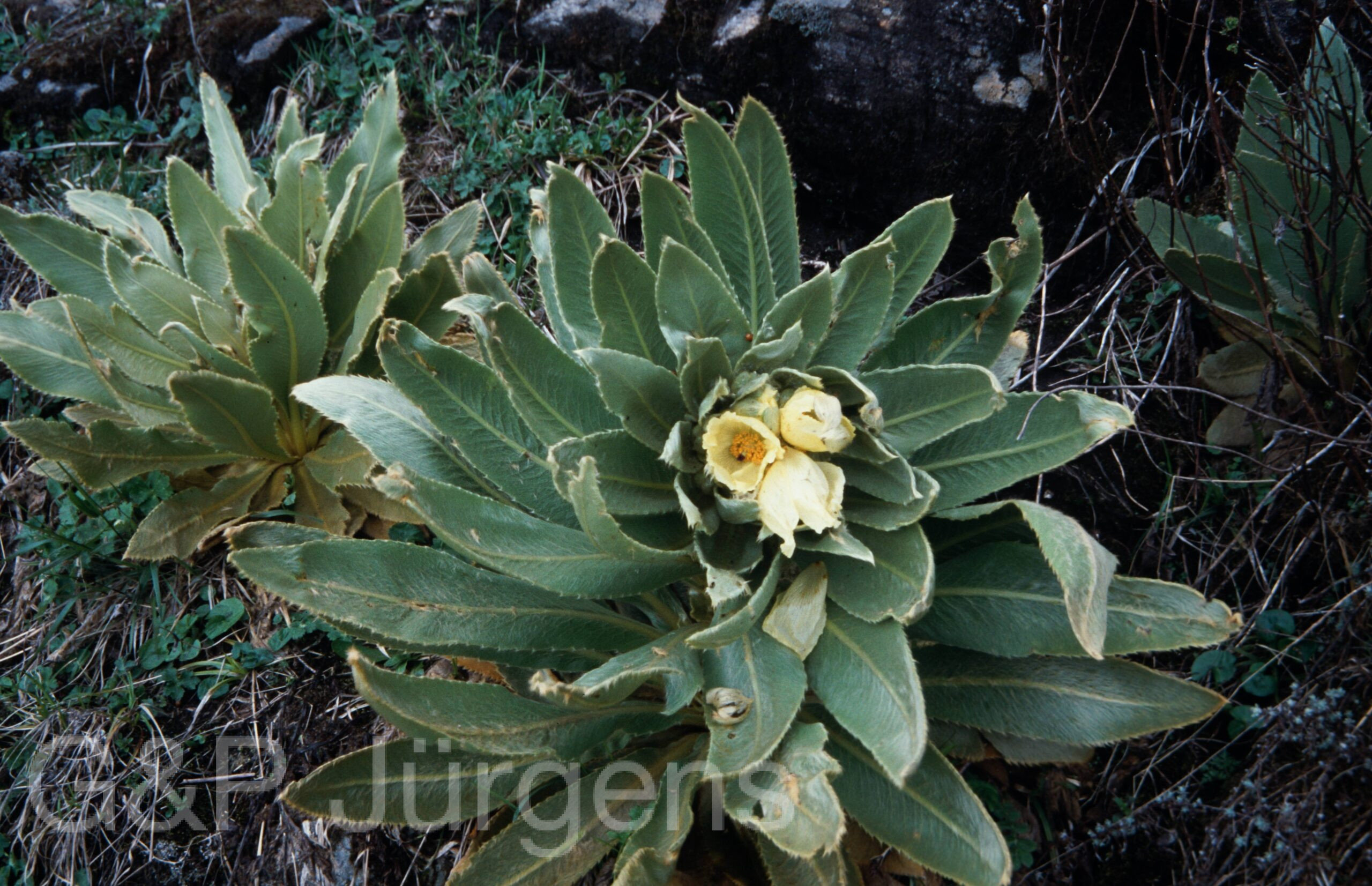
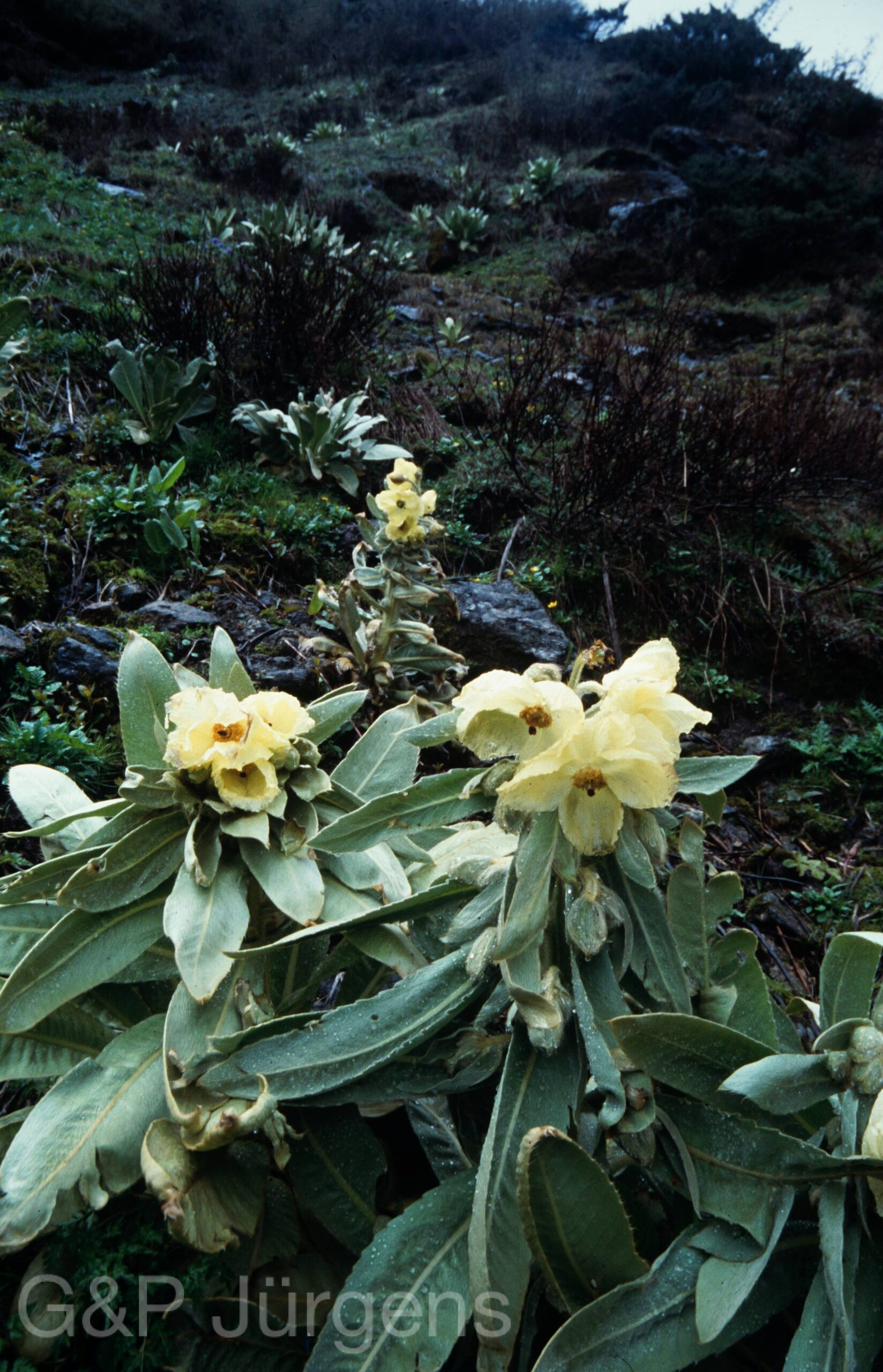
Meconopsis regia is a stately monocarpic poppy endemic to central Nepal, the great majority of its roughly 100 documented records lying within that country. It is a plant of open rocky slopes, screes, cliff ledges and alpine grassland of the subalpine to alpine zones, typically between about 3000 and 4200 m. The illustrated material derives from the Rupina-La area in the Gorkha region of Nepal: a flowering plant at 3350 m in May and a withered specimen recorded south of the pass in October, together documenting the full annual cycle from spring growth to autumn senescence.
The species is celebrated for its magnificent overwintering rosette of large oblanceolate leaves clothed in dense golden to rusty-red silky hairs, which protect the resting bud through the alpine winter. After several years of rosette growth it bolts to produce a tall, stout, leafy flowering stem bearing numerous large flowers. The blooms are saucer-shaped with four broad, satiny petals of pale to golden yellow, surrounding a boss of many stamens and a stout ovary topped by a short style and capitate stigma. After flowering the plant dies, the ovary maturing into an elongate ribbed capsule that dehisces by apical pores to scatter the seeds.
Meconopsis is the iconic genus of Himalayan and Sino-Tibetan poppies, distinguished from Papaver largely by its distinctive style and stigma. As a narrow-range Nepalese endemic with a monocarpic, hapaxanthic life-history, M. regia is intrinsically vulnerable to over-collection and habitat disturbance and is of conservation interest despite lacking a formal IUCN assessment; it is also prized by alpine horticulturists.
Author: G.Taylor · Sources: POWO (Kew), GBIF, Annotated Checklist of the Flowering Plants of Nepal, Flowers of the Himalaya, The Genus Meconopsis (Grey-Wilson monograph), Flora of Nepal