
Kitam.
Description
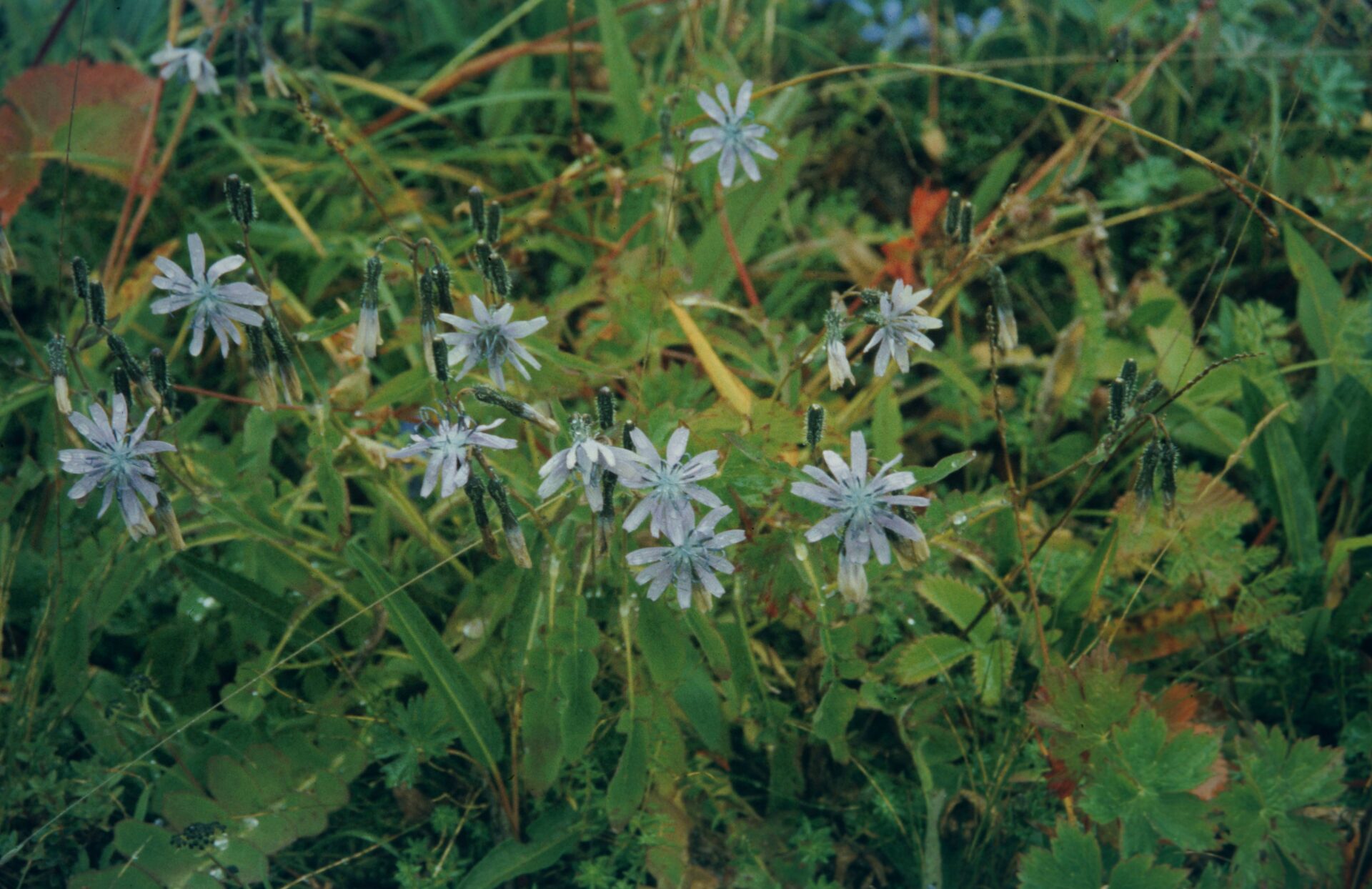
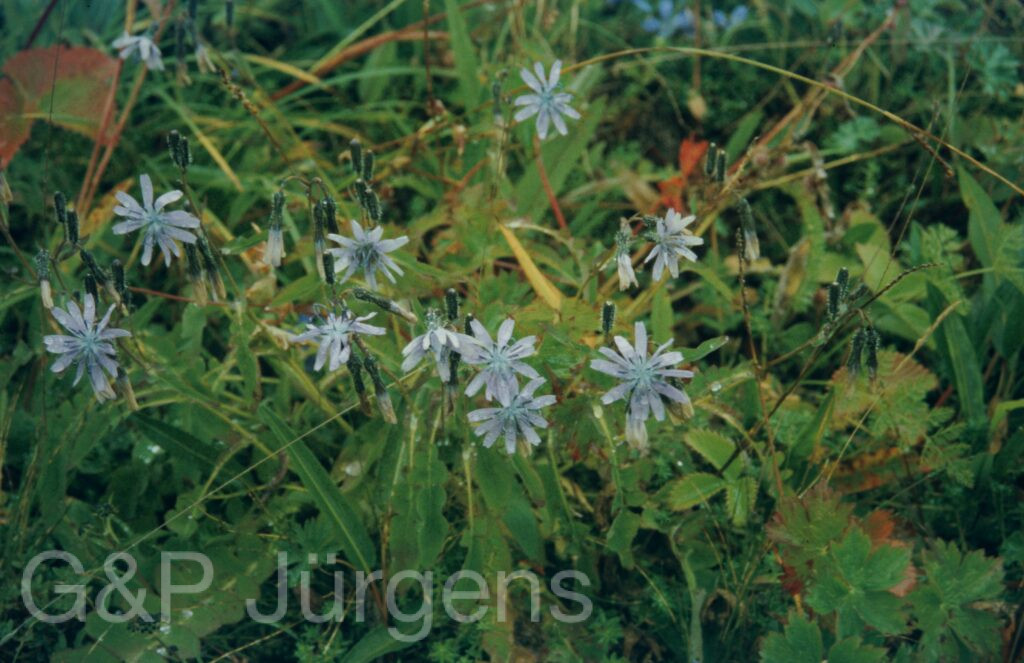
Lactuca dolichophylla is a Himalayan and Central Asian perennial herb distributed through the Indian Himalaya, Pakistan, Nepal, Bhutan, southern China, Afghanistan, Russia and Myanmar, documented from a modest number of georeferenced collections. It is a plant of the subalpine and alpine zone, growing on open grassy slopes, herb-rich meadows, forest clearings and stony banks. The photographed material is from the Valley of Flowers in Garhwal, India, at about 3200 m in September, a celebrated high-montane meadow habitat where the species flowers in the late post-monsoon season.
The plant is an erect perennial herb with a leafy, often glaucous stem exuding milky latex when cut. The leaves are elongate and narrow, as the epithet 'dolichophylla' (long-leaved) implies, lanceolate to linear-lanceolate, entire to runcinate-lobed, with the upper leaves sessile and often clasping. The capitula are arranged in a lax paniculate-corymbose synflorescence; each head is ligulate, with an imbricate cylindrical involucre and several blue to bluish-purple or violet ray florets, a colour characteristic of the Himalayan blue-flowered lettuces. The fruit is a flattened, ribbed achene (cypsela) narrowed into a beak and crowned by a pappus of simple white capillary bristles.
Lactuca belongs to the tribe Cichorieae of Asteraceae, the dandelion-and-lettuce alliance with milky latex and ligulate florets. The blue-flowered Himalayan species, sometimes segregated under Cicerbita or Mulgedium, form a taxonomically intricate group, and this taxon was described by Kitamura. Wind-dispersed by its pappus, L. dolichophylla is a characteristic component of moist alpine meadows and is not regarded as threatened.
Author: Kitam. · Sources: POWO (Kew), GBIF, Flora of China, Flora of Pakistan, Kitamura's studies of Himalayan Cichorieae (Compositae)