
D.Don
Description
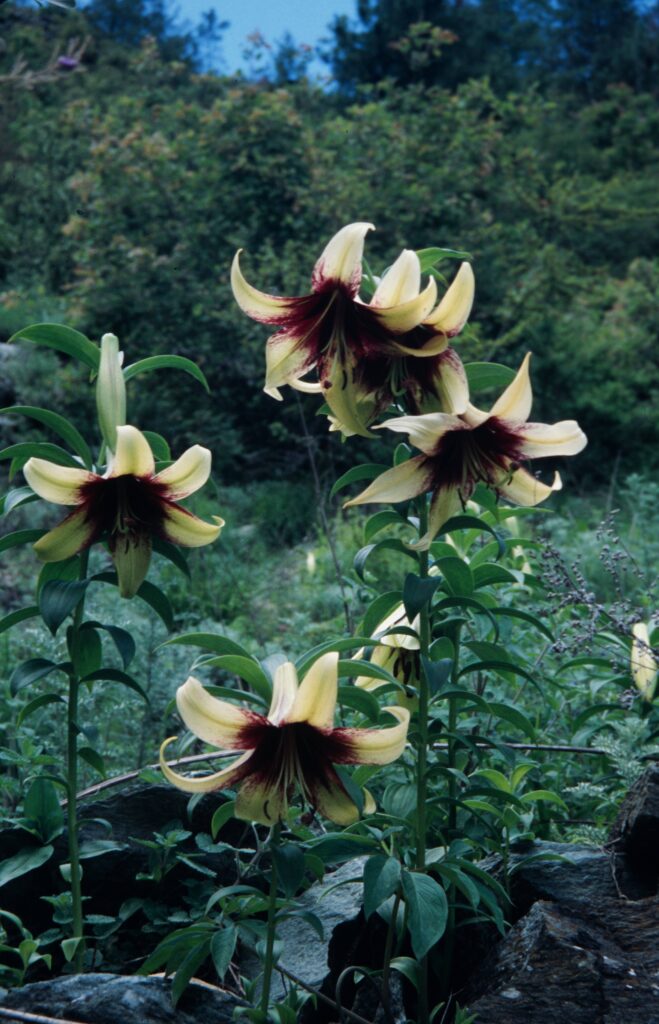
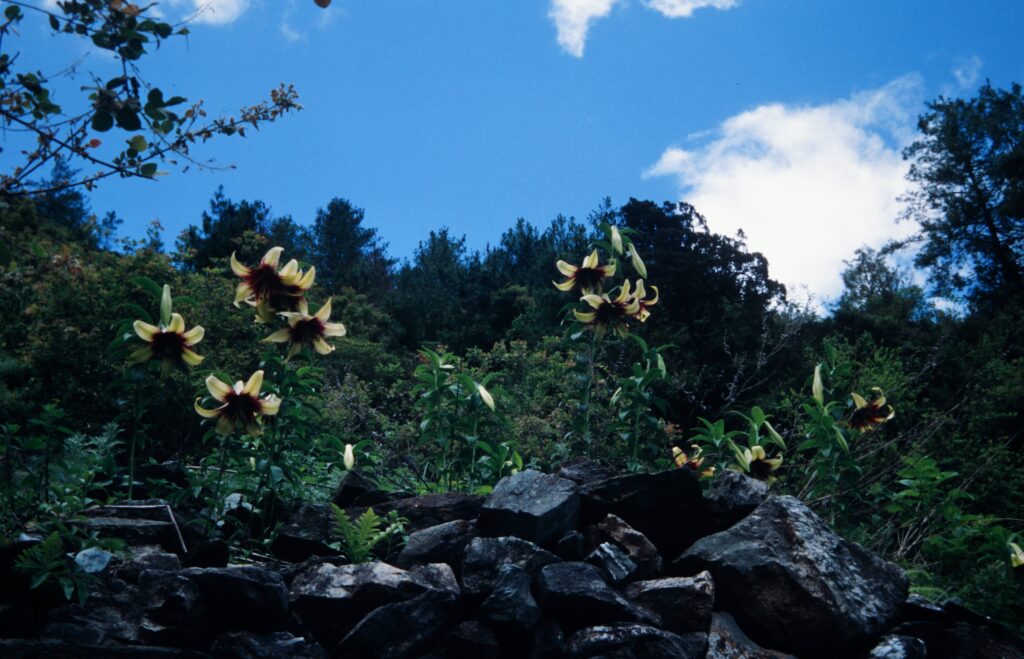
Lilium nepalense is a striking Himalayan lily native to Nepal, Bhutan, northern India and south-western China, extending into Myanmar; GBIF records (around 206 occurrences) also reflect numerous cultivated and naturalised collections in Europe and South-East Asia, as it is widely grown as an ornamental. In its natural range it inhabits cool, humid temperate to subalpine slopes, growing among shrubberies, in forest clearings, on grassy banks and along the margins of oak, rhododendron and conifer woodland on rich, well-drained humic soils. The collections from Luksor in Bhutan and Sepka in western Nepal, both near 2700 m in July, illustrate its mid-montane elevation and monsoon-season flowering.
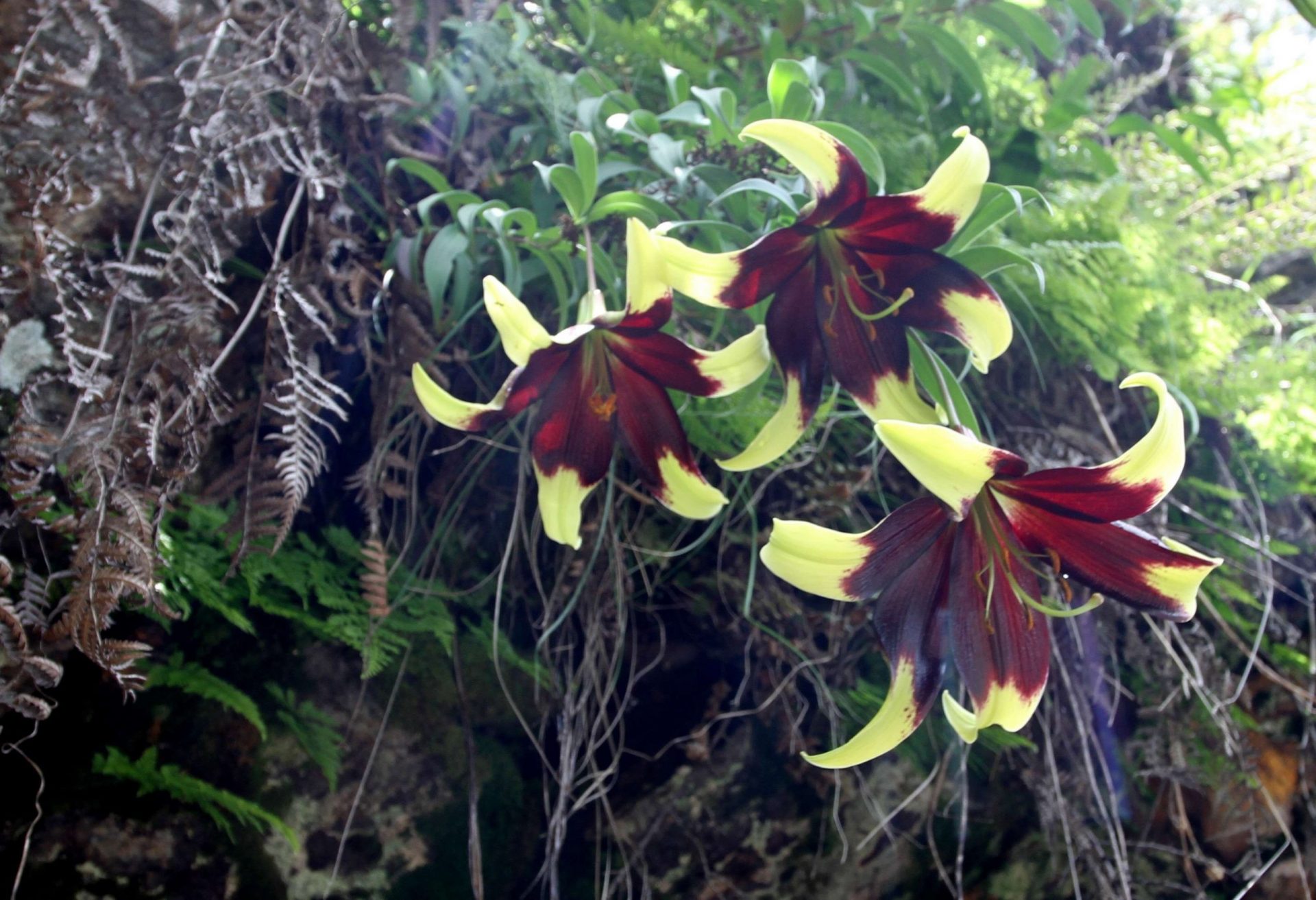
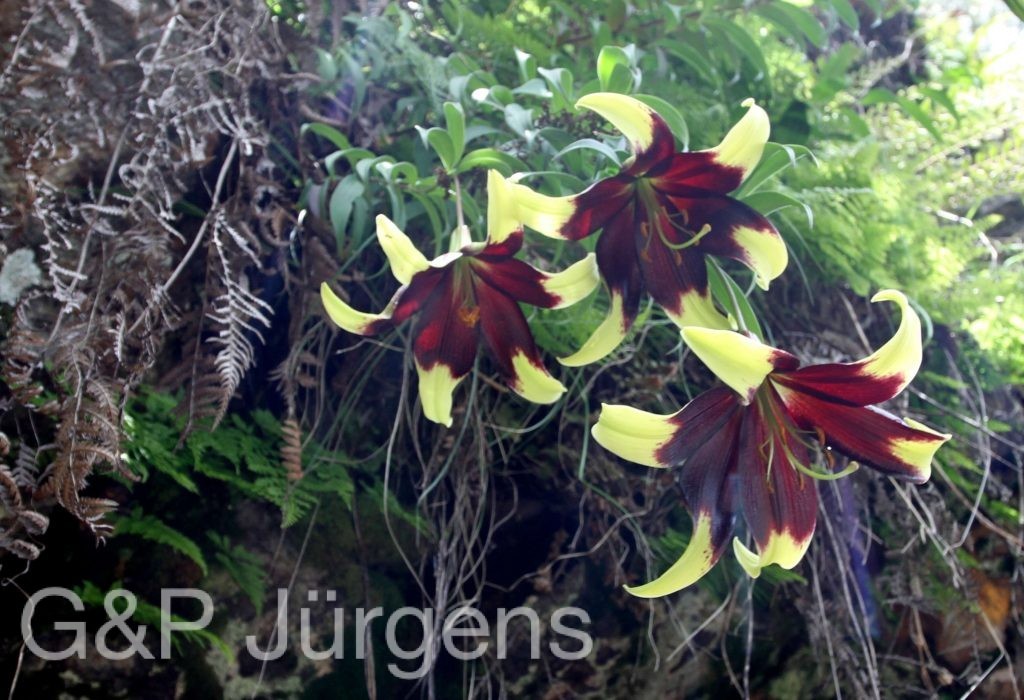
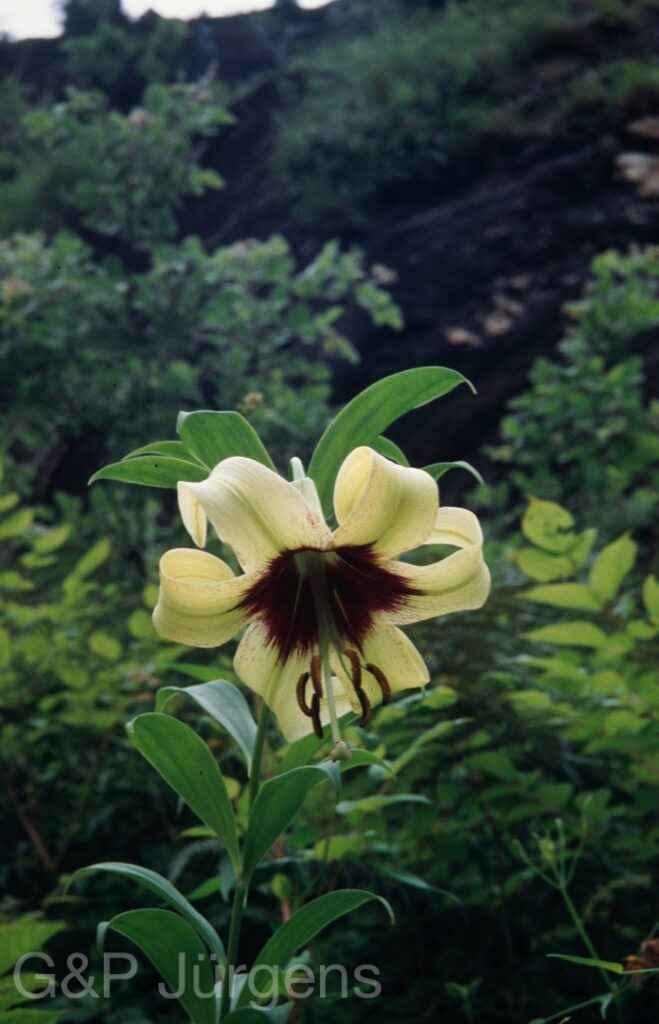
The plant grows from a stoloniferous bulb with loosely imbricate white scales, the underground stem often wandering before emerging. The erect, leafy aerial stem bears scattered, lanceolate to ovate, sessile or shortly petiolate leaves with prominent parallel venation. The flowers, borne singly or few in a lax raceme, are large, nodding and broadly funnelform to trumpet-shaped; the six recurved tepals are luminous greenish-yellow to pale chartreuse with a dramatic deep maroon to purple-black throat blotch, giving the species its horticultural celebrity. The six stamens carry large versatile anthers, and the slender style ends in a capitate three-lobed stigma. The superior ovary develops into an erect, oblong, three-valved capsule with numerous flat, winged seeds.
Described by D. Don, Lilium nepalense belongs to a Sino-Himalayan group of trumpet lilies and is prized in cultivation for its colour contrast and fragrance, having earned horticultural recognition in temperate gardens. Its stoloniferous bulb is an adaptation for vegetative spread through loose montane soils. While locally frequent, wild populations face pressure from over-collection of bulbs, grazing and habitat disturbance, making sustainable propagation important for relieving demand on natural stands.
Author: D.Don · Sources: POWO (Kew), GBIF, Flora of Bhutan, Flora of China, Stainton Flowers of the Himalaya, The Genus Lilium (Jefferson-Brown)