
Hook.f. & Thomson
Description
Magnolia globosa is a small deciduous tree or large shrub of the eastern Himalaya and adjacent China, documented by GBIF (236 occurrences) from China, India, Bhutan and Nepal, with additional records reflecting cultivation in Europe, Korea and elsewhere. It is a plant of cool, humid temperate forest, growing in mixed broadleaved and conifer woodland, along ravines and on shaded slopes, generally between about 2500 and 3500 m. The collection from Lachung in Sikkim at 2800 m in June represents its typical montane forest habitat, where it flowers in early summer in the moist, mist-laden middle-mountain belt.
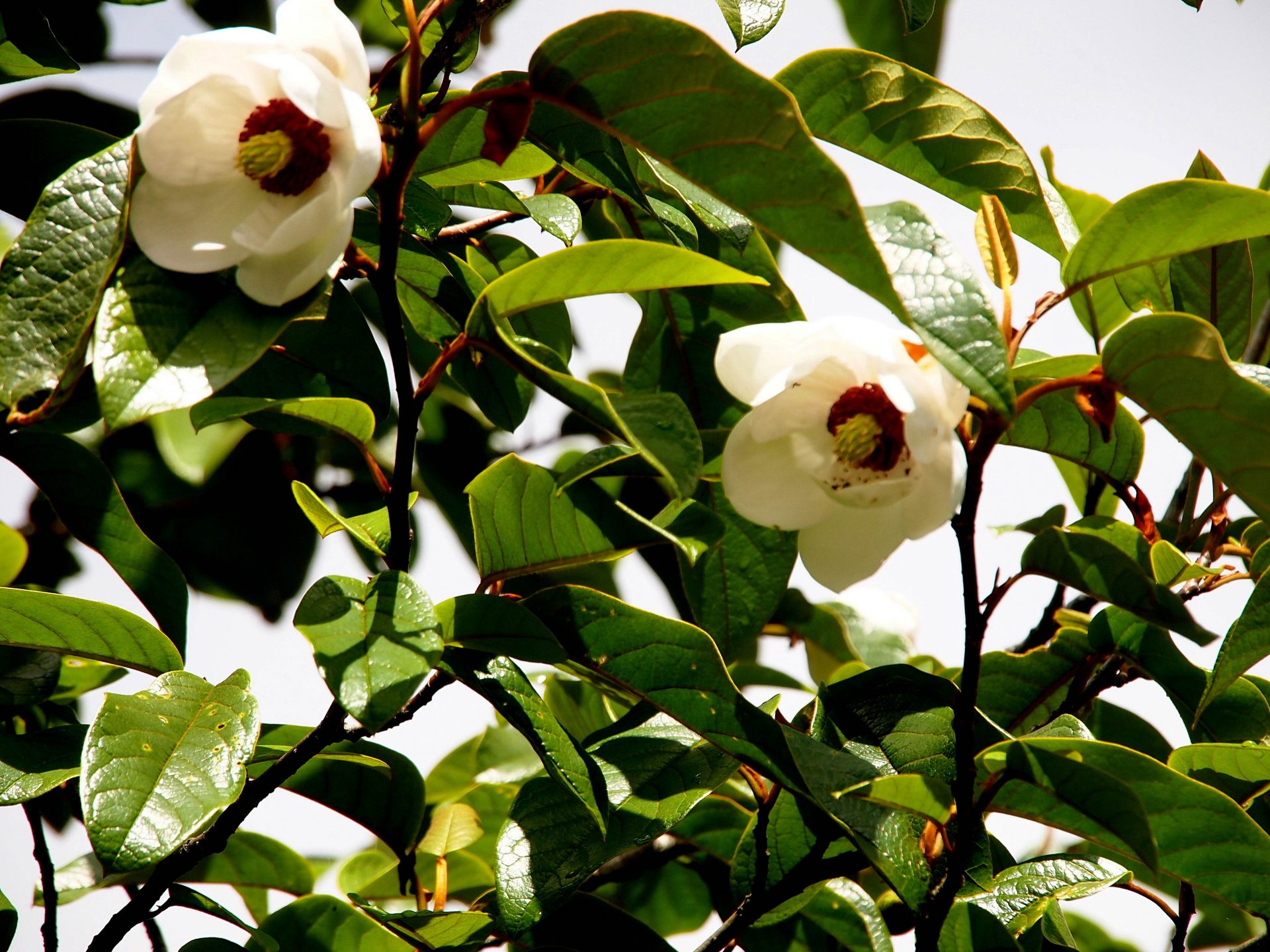
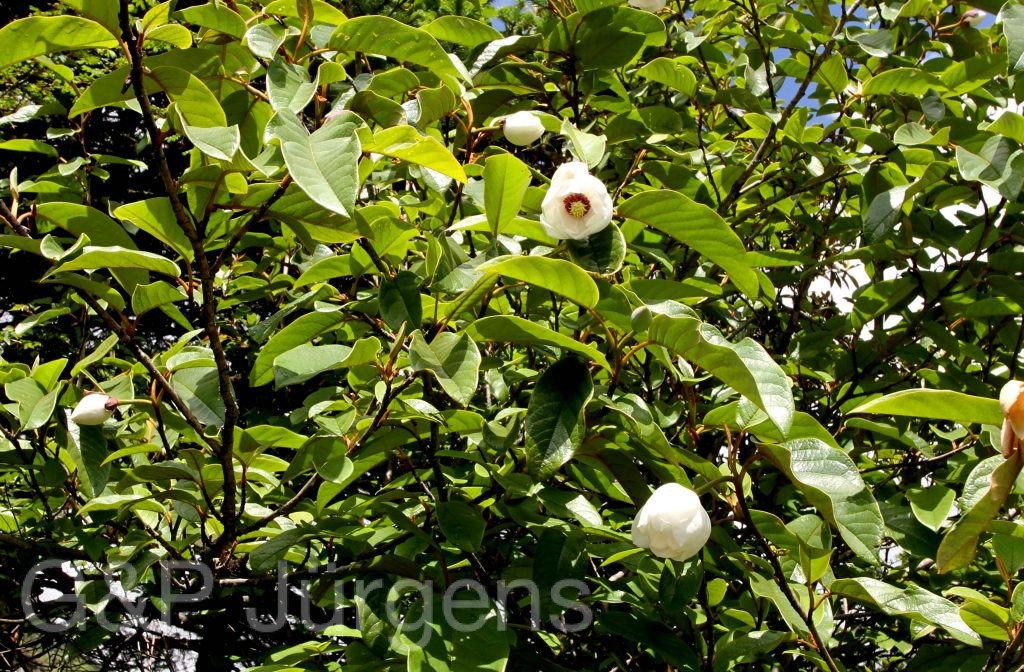
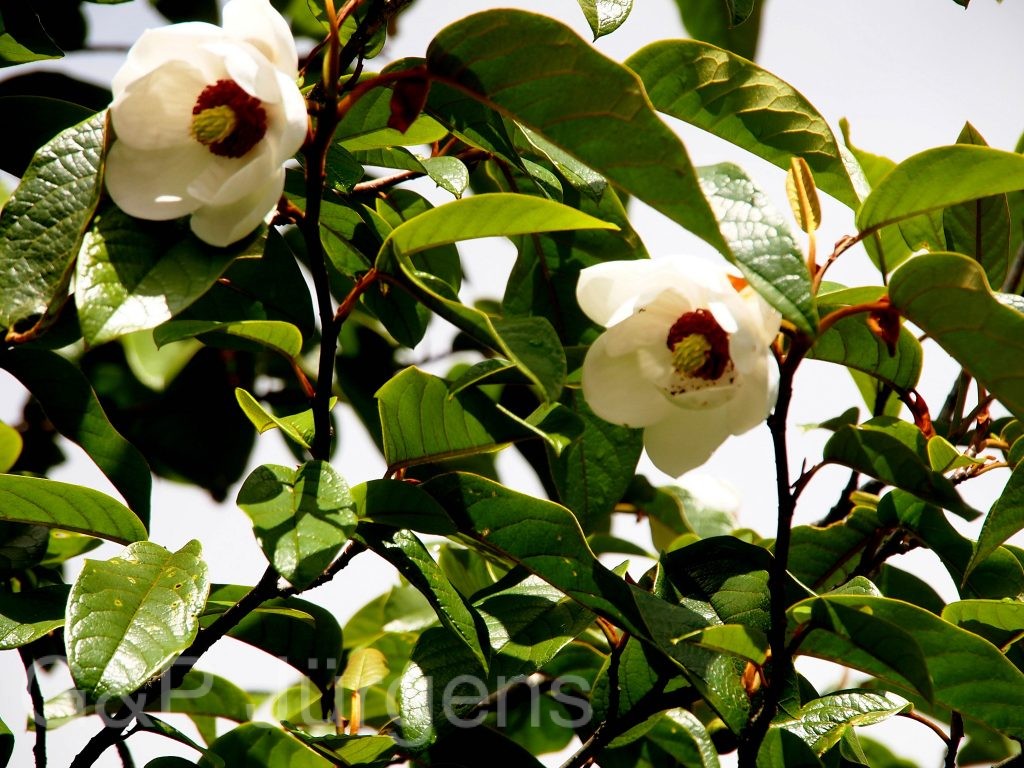
The species is a spreading, often multi-stemmed tree whose young twigs, petioles and flower buds bear conspicuous rusty or pale tomentum. The leaves are alternate, broadly ovate to elliptic, rounded to cordate at the base and pubescent beneath. The flowers are nodding and characteristically cup-shaped to nearly globose, fragrant, with creamy-white to ivory tepals; the perianth is differentiated into a few outer and several inner tepals surrounding numerous spirally arranged stamens and an elongate gynoecium of free carpels. The fruit is an aggregate of follicles forming a cylindric to ovoid pink to crimson cone, releasing red-arillate seeds at maturity.
Magnolia globosa belongs to the morphologically ancient Magnoliaceae, a family noted for spirally arranged floral parts, apocarpous gynoecia and beetle pollination of the large protogynous flowers. Its nodding globose blooms and aggregate follicular cone are diagnostic. Though valued in horticulture, wild populations are scattered and the species, like many temperate Himalayan magnolias, is potentially vulnerable to forest loss and so warrants monitoring.
Author: Hook.f. & Thomson · Sources: POWO (Kew), GBIF, Flora of China Vol. 7, Flora of Bhutan Vol. 1, Flora of Nepal, Hunt Magnolias and their Allies