
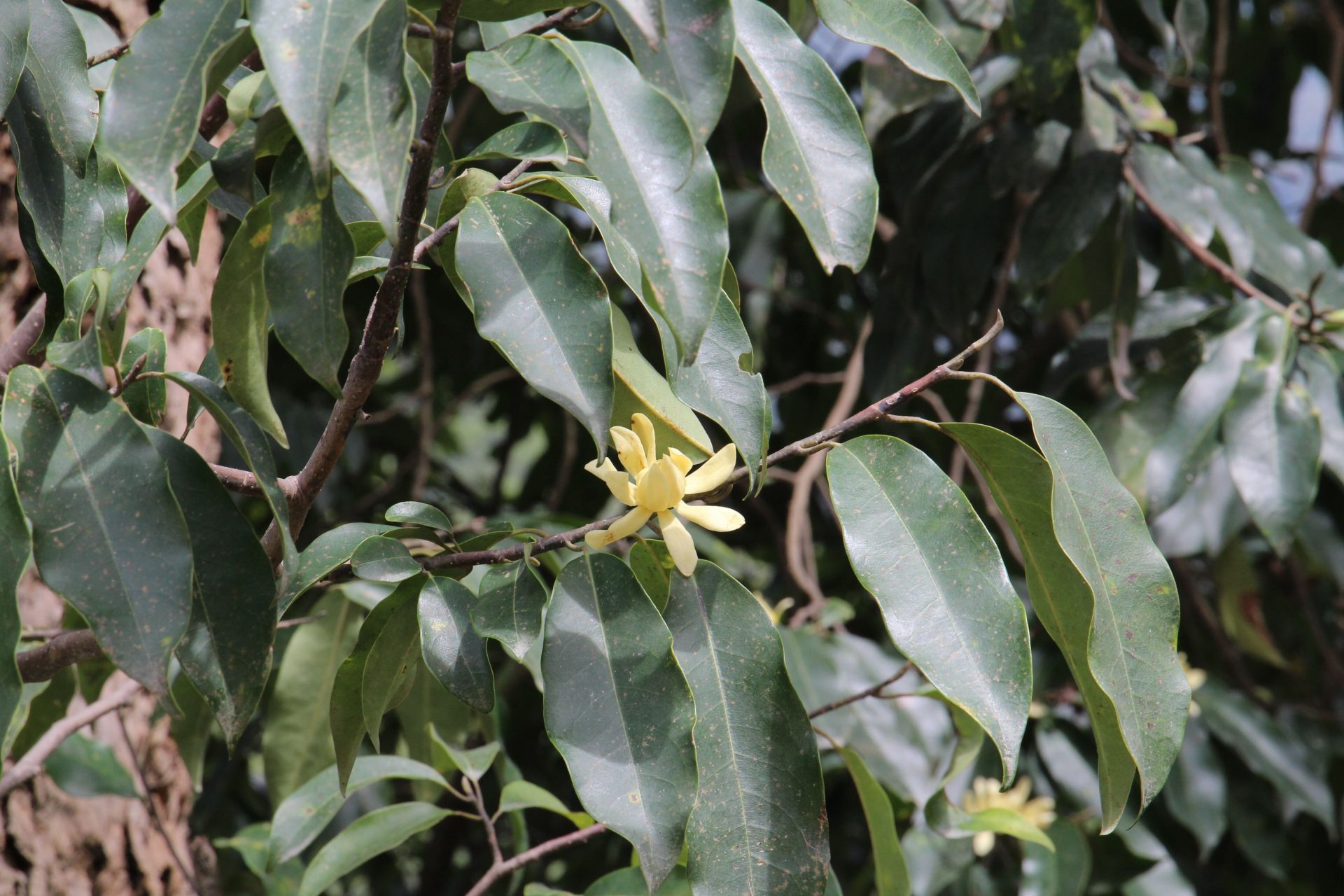
(Buch.-Ham. ex DC.) Figlar
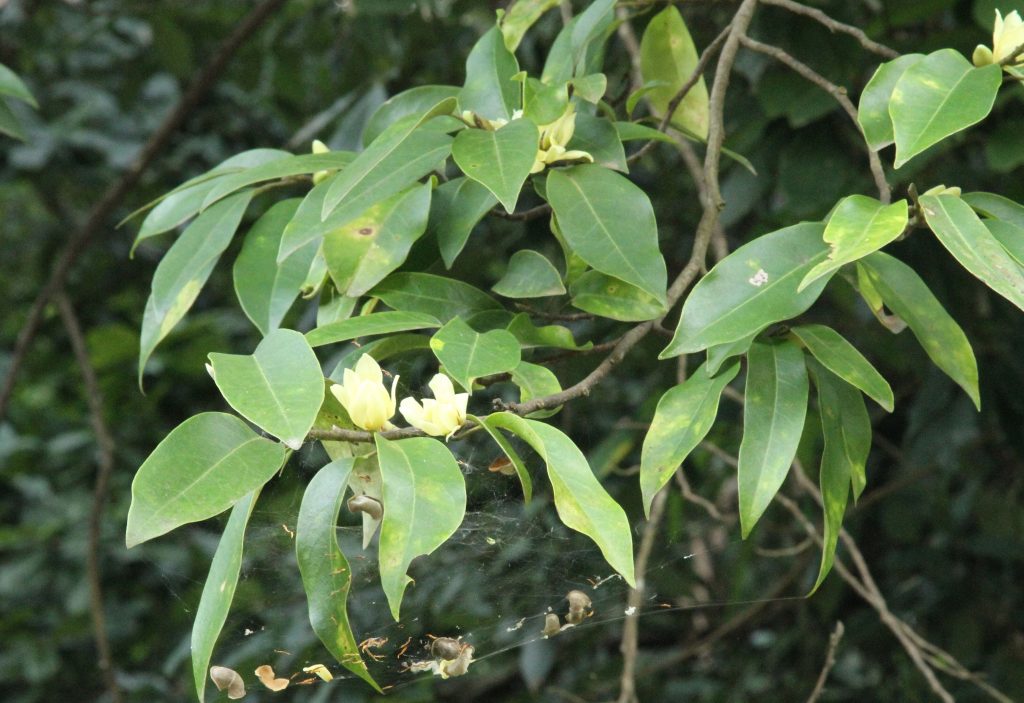
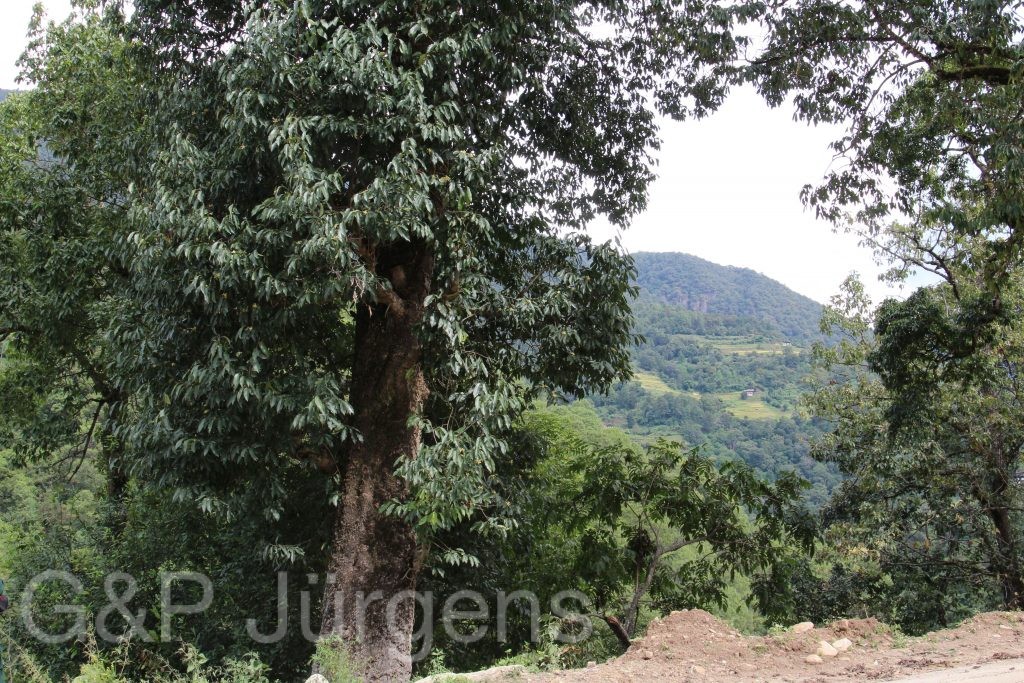
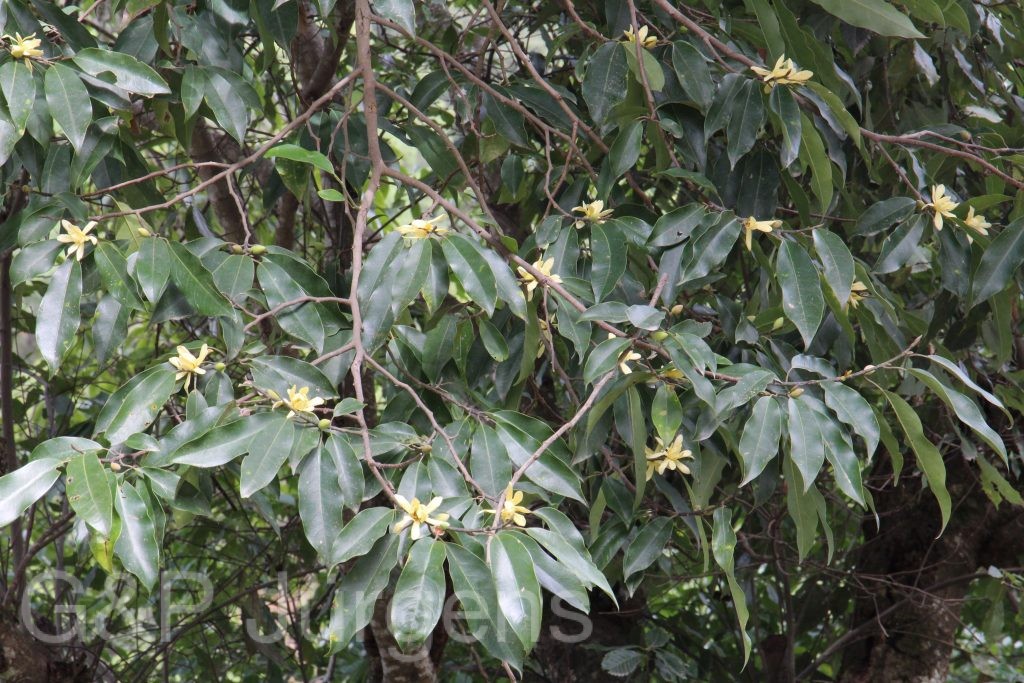
Description
Magnolia kisopa (Buch.-Ham. ex DC.) Figlar is a Himalayan tree distributed across Nepal, China, India, Vietnam, Bhutan and Cambodia, with GBIF recording some 129 occurrences. It is a component of cool temperate to subtropical broad-leaved forest, on humid, well-drained slopes, in ravines and along forest margins in the mid-montane belt. The Bhutanese material from the Dochu-La at 2500 m, photographed in October, places it in the cool temperate evergreen and mixed forest zone, where it occurs as a scattered understorey to canopy tree.
It is a deciduous or semi-evergreen tree with smooth to slightly fissured bark and stout young twigs bearing the conspicuous stipular scars of the family. The leaves are simple, alternate, obovate to oblanceolate, entire-margined, with an acuminate apex and cuneate base, often glaucous beneath. The flowers are large, solitary and terminal, with a perianth of several free, fleshy white to creamy tepals undifferentiated into sepals and petals, surrounding the floral axis bearing numerous spiral stamens and free carpels. The fruit is an aggregate of follicles forming an oblong, cone-like etaerio dehiscing to expose seeds with a fleshy red sarcotesta.
Magnolia kisopa, formerly placed in Michelia, was transferred to a broadly circumscribed Magnolia by Figlar following molecular evidence uniting these Asian magnoliids. It belongs to the evergreen-leaved magnolias of the Sino-Himalayan and Southeast Asian region, an ancient lineage with beetle pollination and bird-dispersed arillate seeds. As a tree valued for timber and ornament, populations are locally affected by forest clearance, and the wider genus includes many taxa of conservation concern.
Author: (Buch.-Ham. ex DC.) Figlar · Sources: POWO (Kew), GBIF, Flora of China Vol. 7, Flora of Bhutan Vol. 1, Flora of Nepal, Figlar & Nooteboom magnolioid classification of the Magnoliaceae