Tag:

Summer

Hand.-Mazz.

Sikkim2011 233
Sikkim Yumthang 3700m, June
Nepal 2001 304 ergebnis ergebnis
Nepal (Gorkha) Lambra Kharka 3200m, May

Description

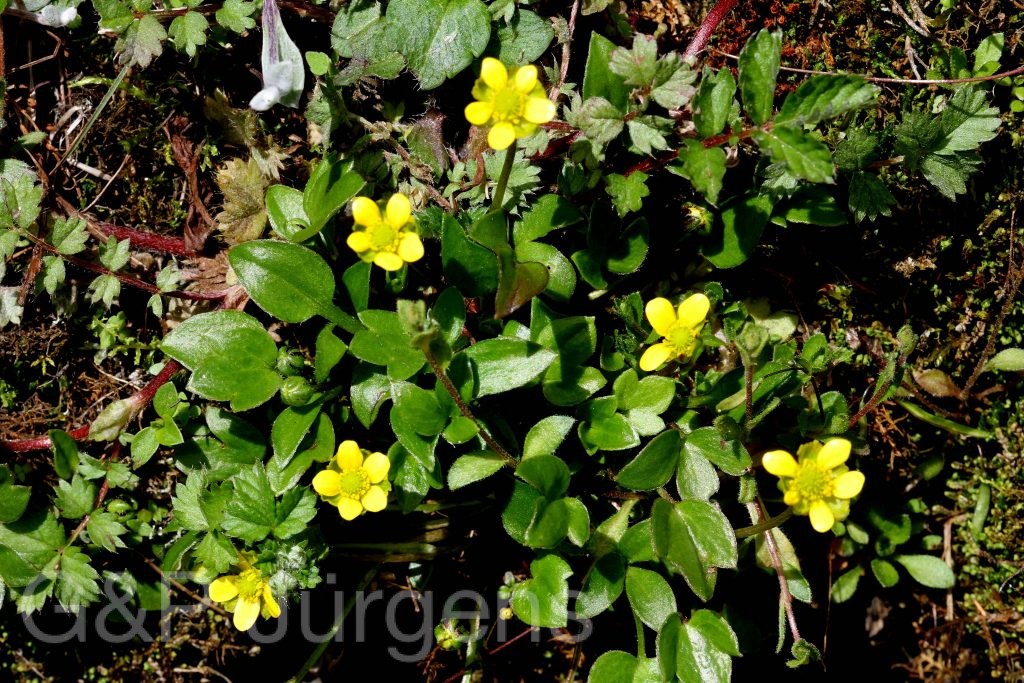
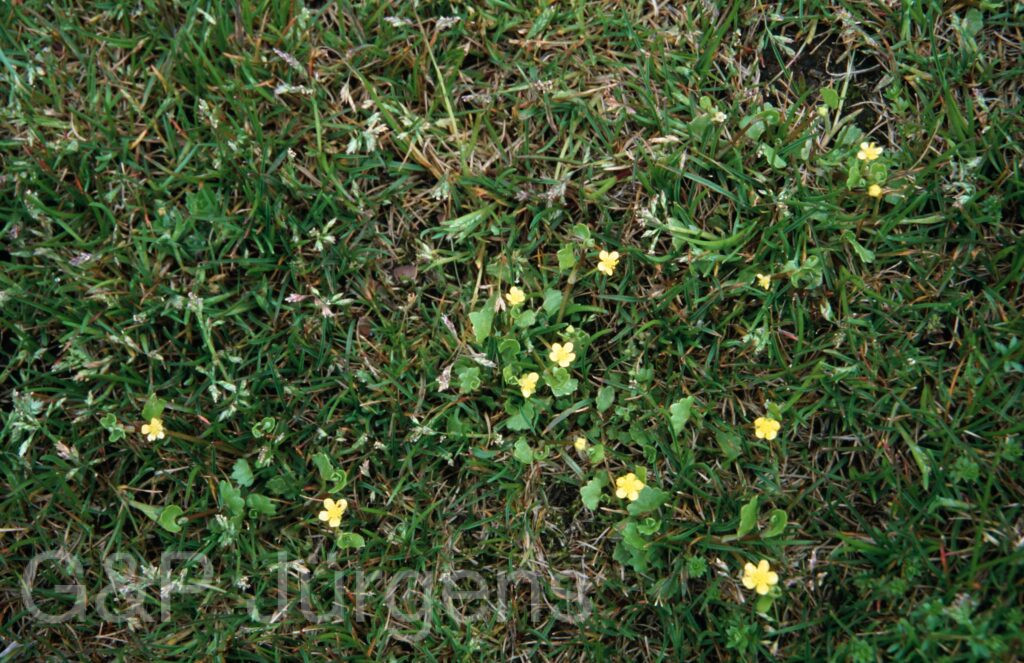
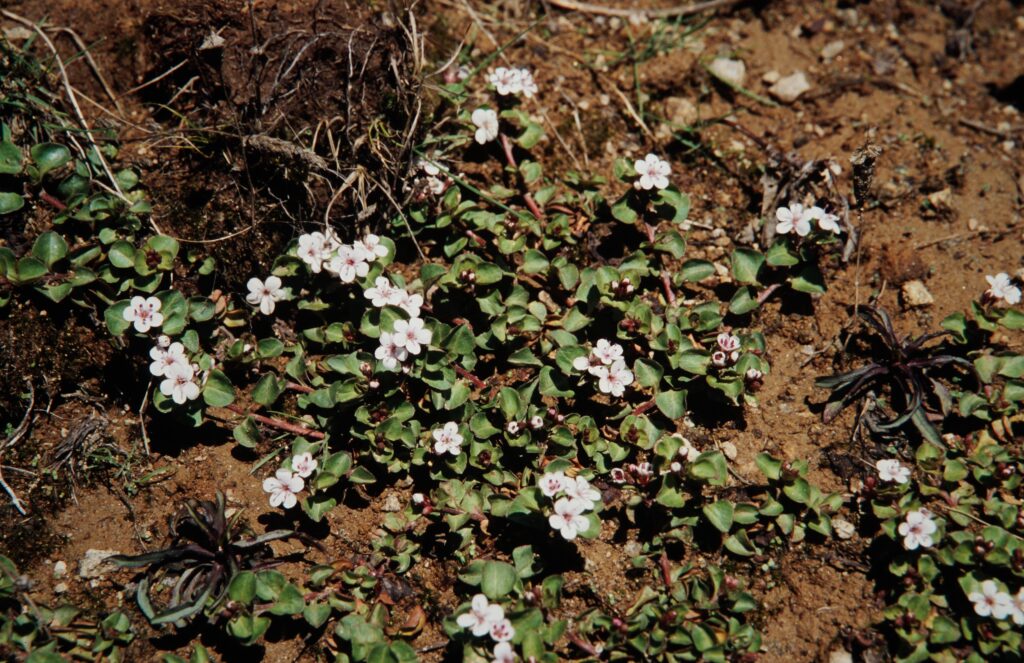
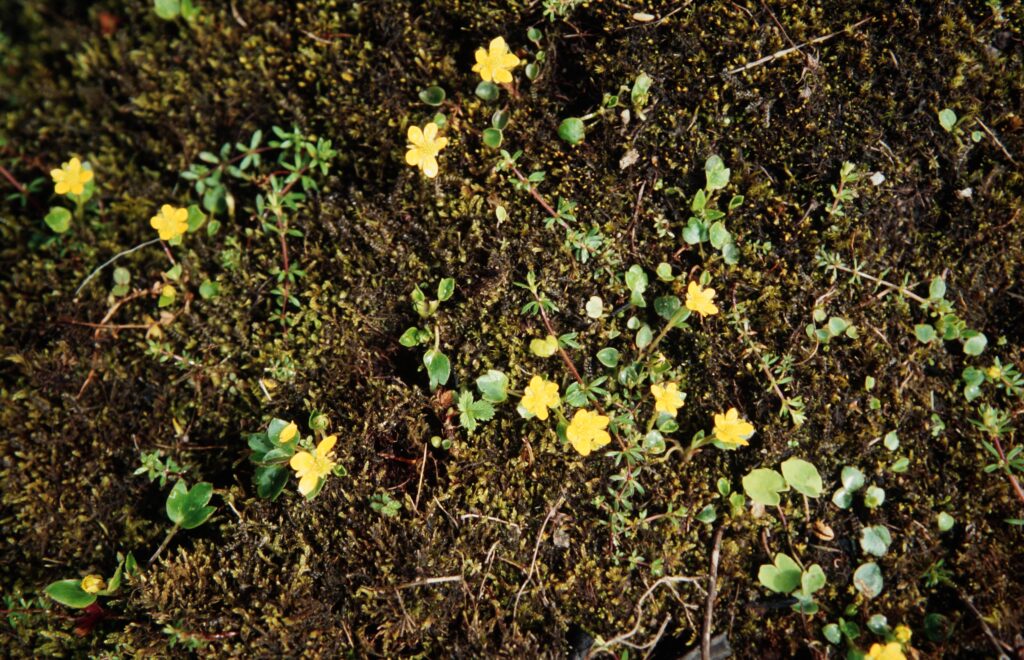
Ranunculus microphyllus is a Sino-Himalayan alpine buttercup whose core GBIF range (c. 399 occurrences) lies in China, Nepal, India and Bhutan, with scattered records elsewhere reflecting cultivated or misdetermined material. It grows in open alpine turf, moist meadows, snowmelt flushes, damp rock ledges and stream banks, typically between about 3000 and 4200 m. The cited localities—Yumthang in Sikkim at 3700 m in June, Lambra Kharka in the Nepalese Gorkha at 3200 m, and Sandakphu in West Bengal at 3200 m, both in May—illustrate its spring-to-early-summer flowering across moist, cool, high-elevation grasslands and seepage of the central and eastern Himalaya.

It is a small, tufted perennial herb, the stems low and ascending, often somewhat hairy, arising from a fibrous-rooted base. As the epithet implies the leaves are small; the basal leaves are petiolate and shallowly to deeply three-lobed or crenate, while the stem leaves are reduced and more dissected. The flowers are solitary or few, with the typical buttercup plan: five green sepals, five glossy bright-yellow petals each with a basal nectary, and numerous spirally arranged stamens and free carpels. The fruit is a globose head of small, slightly beaked achenes.

Described by Handel-Mazzetti, R. microphyllus belongs to the large, taxonomically intricate genus Ranunculus, in which the small-leaved Himalayan alpines form a closely related and often confused complex. It is locally common and not of conservation concern, though confined to moist high-altitude habitats sensitive to warming. Ecologically it is characteristic of snowmelt-fed alpine meadows, its open flowers offering accessible nectar and pollen to flies and other high-altitude insects.

Author: Hand.-Mazz. · Sources: POWO (Kew), GBIF, Flora of China, Annotated Checklist of the Flowering Plants of Nepal, Tamura monograph of Ranunculaceae
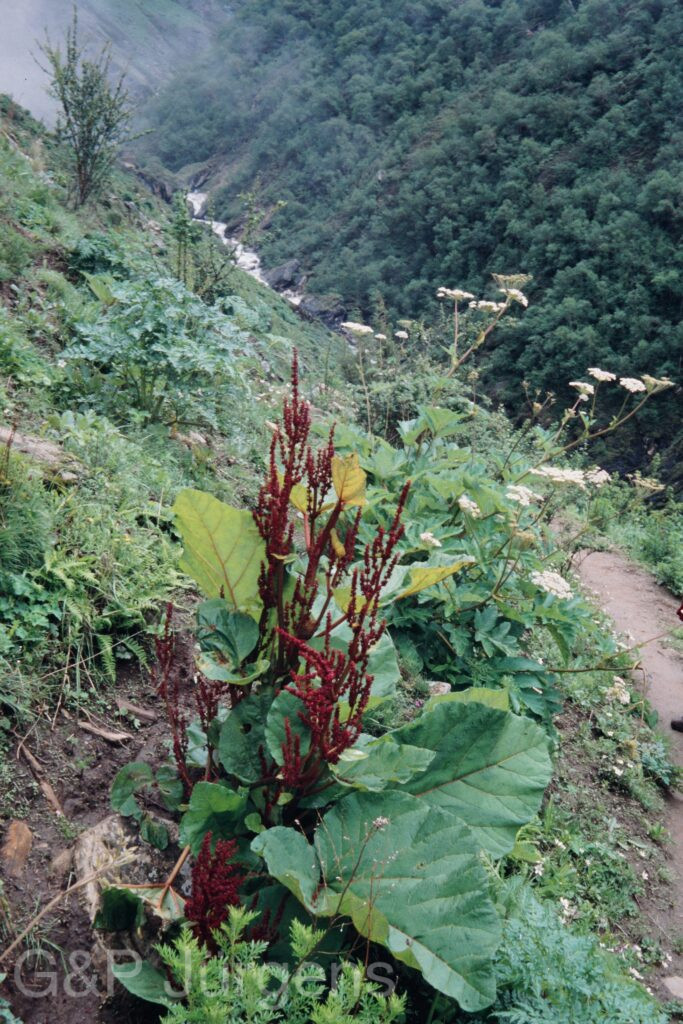
Hook. f. & Thomson

BhutanPG2011 778 01 01
Bhutan Chele-La, 3900m July
Sikkim2003 485 P673
Sikkim Lachung Valley 3500m August

Description

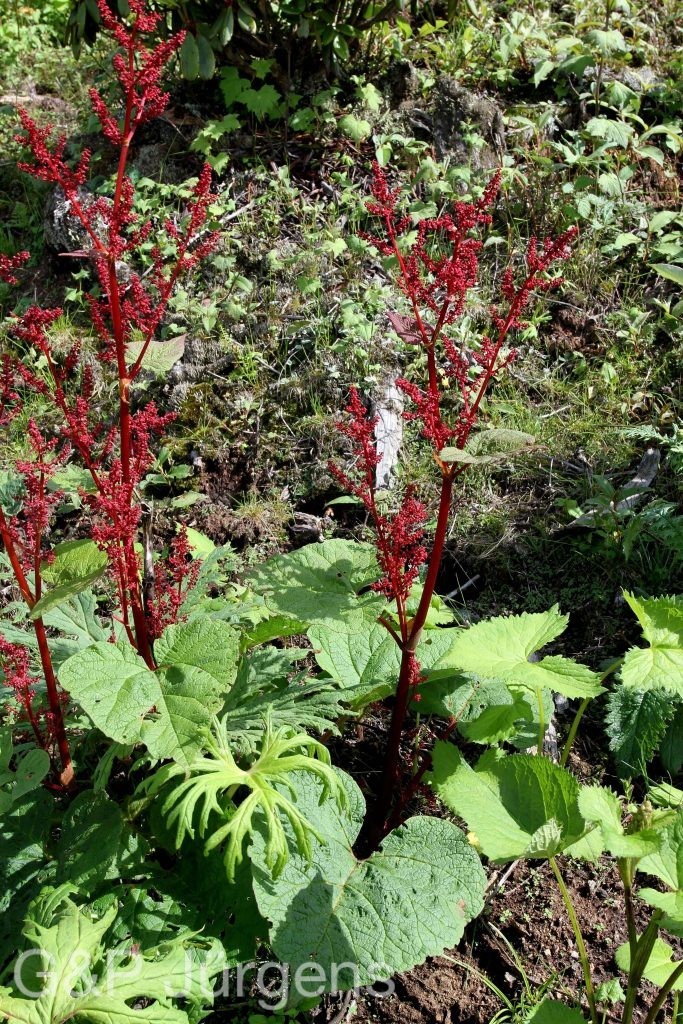
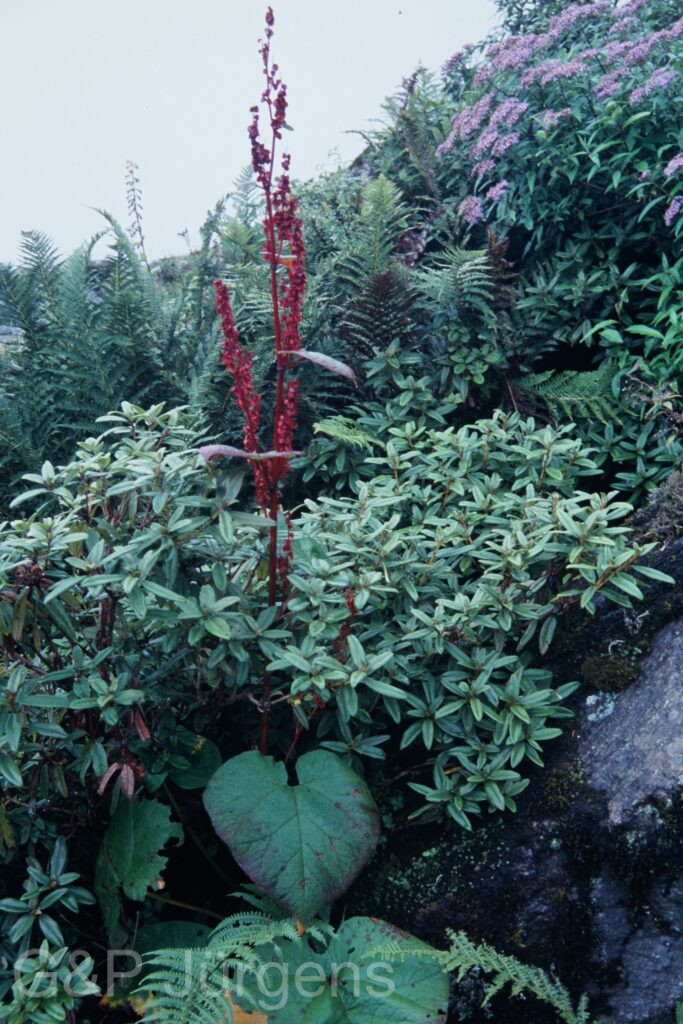
Rheum acuminatum is a stout perennial wild rhubarb of the eastern and central Himalaya, distributed through China, Nepal, India, Bhutan and Myanmar, with some 370 documented records. It is a plant of subalpine and alpine slopes, rocky meadows, open shrubberies and stream margins, generally growing between 3000 and 4300 m. The illustrated plants come from Chele-La in Bhutan at 3900 m in July and the Lachung Valley in Sikkim at 3500 m in August, spanning the high-summer flowering and fruiting period characteristic of the species at these elevations.

The plant arises from a thick woody rhizome and produces erect, often reddish, hollow stems up to a metre or more tall. The basal leaves are large, long-petiolate and broadly ovate-cordate with an acuminate apex giving the epithet, the blade more or less glabrous above and with prominent venation; an ochrea sheaths the stem at each node. The inflorescence is a tall, branched panicle bearing numerous small flowers with a coloured perianth of six segments, white to greenish or reddish. The fruit is a broadly winged triangular achene (a three-angled, three-winged nutlet) adapted to wind and water dispersal.

The genus Rheum reaches its richest diversity in the Himalaya and the Qinghai-Tibetan plateau, where high-altitude rhubarbs show striking adaptations to cold, exposed habitats. R. acuminatum lacks the inflated bracts of the alpine glasshouse rhubarbs but shares the family's ochreate, trigonous-fruited architecture. The rhizomes have a history of local medicinal use, and although the species is widespread and not threatened, related wild rhubarbs are subject to harvesting pressure across the region.

Author: Hook. f. & Thomson · Sources: POWO (Kew), GBIF, Flora of China, Flora of Bhutan, Annotated Checklist of the Flowering Plants of Nepal, Losina-Losinskaja revision of Rheum

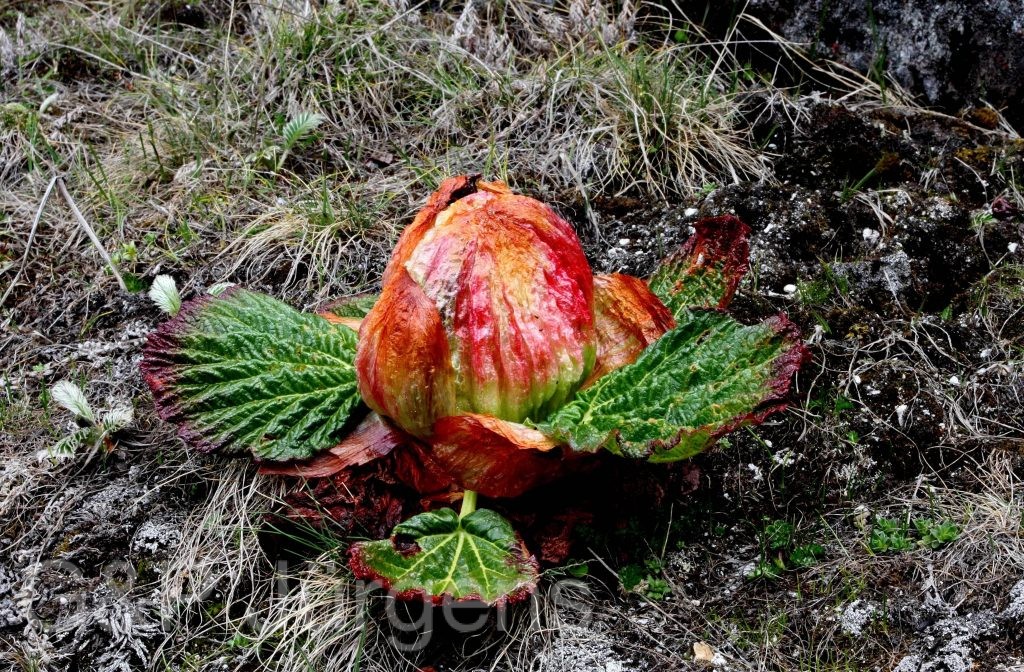
D. Don

Nepal 99 583 ergebnis
West-Nepal Garpung-Khola 3500m, July

Description

Rheum australe, the Himalayan rhubarb, ranges along the Himalaya from Pakistan through India, Nepal and Bhutan into south-western China (Tibet), with the bulk of its roughly 210 GBIF records falling within this arc; occurrences in Germany, the United States, France, Belgium, Norway, Romania and Sweden derive from cultivation and herbarium accessions. It grows on open alpine and subalpine slopes, in moist rocky meadows, along stream banks and amid boulder fields, generally between 3000 and 4300 m. The photographed plant from the Garpung-Khola valley of West Nepal at 3500 m in July reflects its typical mid-summer growth on damp, high-elevation slopes.

It is a robust, tall perennial herb arising from a thick, woody, reddish rhizome and stout root. The large basal leaves are broadly ovate to orbicular-cordate, with palmate venation, an entire to undulate margin and long, reddish, fleshy petioles. The erect, hollow, often reddish flowering stem reaches one to two metres and bears a large, branched, paniculate inflorescence of small flowers with a dark red to purplish perianth of six segments. The fruit is a broadly winged, ovate-elliptic trigonous achene, the three reddish wings aiding wind dispersal across open terrain.

Rheum australe (long known as R. emodi) is the principal medicinal rhubarb of the Himalaya, its rhizome rich in anthraquinones and valued in traditional systems for digestive and purgative use. Sustained harvesting for the herbal trade, combined with slow regeneration in the alpine zone, has raised conservation concern, and the species is regarded as vulnerable to over-collection across parts of its range, prompting cultivation efforts.

Author: D. Don · Sources: POWO (Kew), GBIF, Flora of China, Flora of Bhutan, Annotated Checklist of the Flowering Plants of Nepal, Rheum (rhubarb) taxonomic monograph

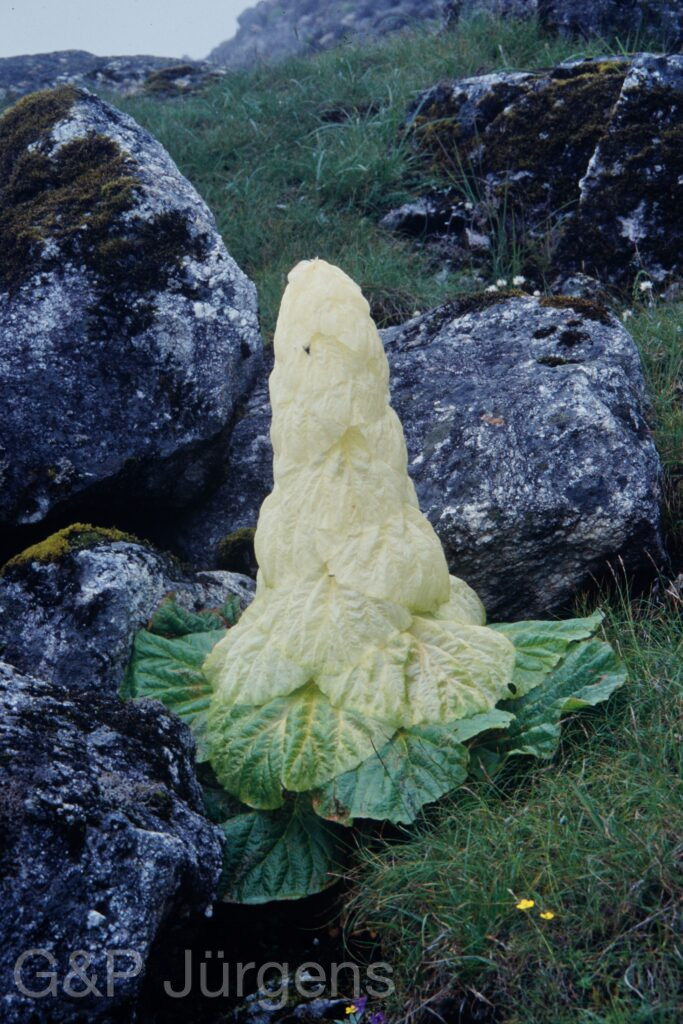
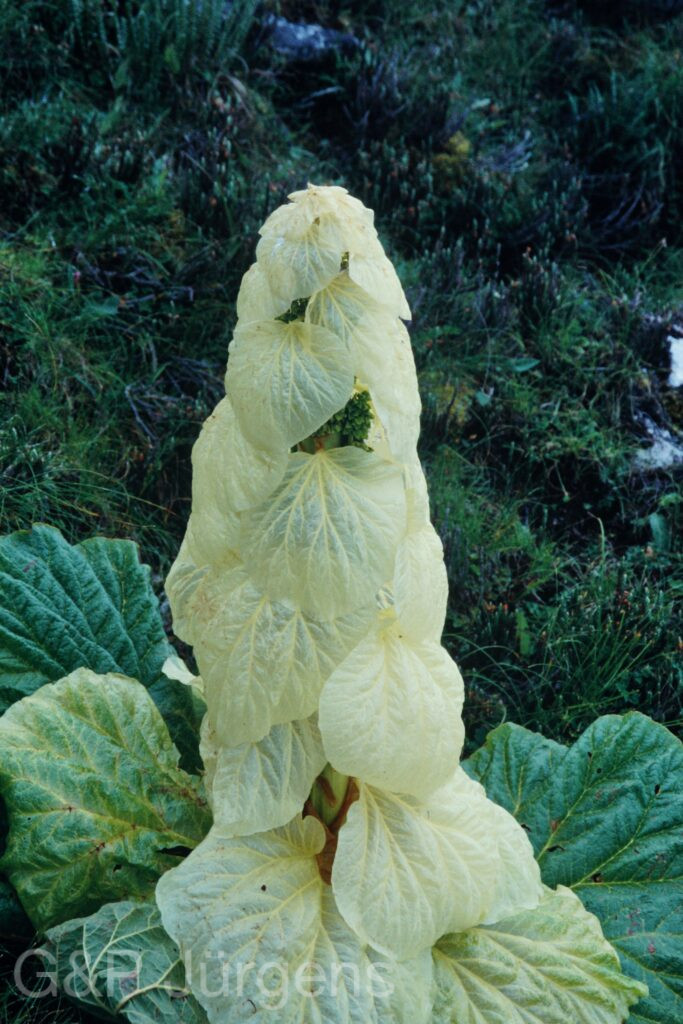
Rheum nobile

by GP Jürgens

Hook. f. & Thomson

Sikkim2011 328
Sikkim Lada-La 4400m, June
Sikkim2003 309 G438
Sikkim Saniti-Lake 4300m August
Sikkim2003 310 W439
Sikkim Saniti-Lake 4300m August

Description

Rheum nobile, the Sikkim or noble rhubarb, is a spectacular high-alpine perennial of the eastern Himalaya, distributed from Nepal through Sikkim and northern India into Bhutan, Myanmar and south-western China, with around 220 occurrence records. It is a strict specialist of open alpine screes, moraines and rocky slopes, typically between about 4000 and 4800 m. The images derive from Sikkim at Lada-La (4400 m, June) and near Saniti Lake (4300 m, August), localities characteristic of the high, exposed scree habitat in which this iconic "glasshouse plant" grows.

The species forms a stout, columnar flowering spike to about 1-2 m, arising from a thick taproot. Its most striking feature is the dense, overlapping series of large, translucent, straw-coloured to pale yellow bracts that sheathe the entire inflorescence, hiding the small flowers within. The basal leaves are large, broadly ovate to orbicular and reddish-margined, forming a rosette. The numerous small flowers are greenish and inconspicuous, concealed beneath the bracts, and develop into small, three-winged nutlets (achenes) typical of the genus.

Rheum nobile (Polygonaceae) is a classic example of a Himalayan "greenhouse" or glasshouse plant: the translucent bracts trap solar heat and create a warm, sheltered microclimate that protects the developing flowers from cold, wind and intense ultraviolet radiation while attracting and harbouring specialist pollinating midges. This remarkable adaptation, much studied in plant ecophysiology, makes the species a celebrated model of high-altitude floral biology. Though localised, it is of least conservation concern, but its restriction to a narrow alpine belt makes it potentially vulnerable to climatic warming.

Author: Hook. f. & Thomson · Sources: POWO (Kew), GBIF, Flora of China, Flora of Bhutan, Annotated Checklist of the Flowering Plants of Nepal, Losina-Losinskaja monograph of Rheum

(Wall. ex Hook. f. & Thomson) Fu

Nepal 99 839 ergebnis
West-Nepal Baga-La-Phedi 4000m, July

Description

Rhodiola bupleuroides is a perennial succulent herb of the high Himalaya and the Qinghai-Tibetan Plateau, recorded by GBIF from China, Nepal, India, Bhutan and Myanmar across roughly 956 occurrences, with additional cultivated or erroneous records from Europe. It is a plant of alpine and subalpine habitats, growing on rocky slopes, screes, cliff ledges, grassy turf and the margins of alpine scrub, generally from about 3000 to over 5000 m. The plant photographed at Baga-La-Phedi in west Nepal at about 4000 m, flowering in July at the height of the brief alpine summer, is typical of these cold, exposed, well-drained sites.

The plant arises from a stout, woody, branched caudex topped by a swollen rootstock, from which emerge several erect or ascending unbranched flowering stems. The leaves are alternate, sessile, flat and fleshy, elliptic to oblong or obovate, with an entire to obscurely toothed margin, recalling the foliage of Bupleurum as the epithet suggests. The species is dioecious, the small flowers crowded in a dense terminal corymbose cyme; they are usually four- to five-merous, the petals dark red, purplish or greenish-yellow, with the staminate and pistillate flowers on separate plants. The fruit is a cluster of erect follicles that split to shed numerous minute seeds.

Rhodiola, segregated from Sedum, is a characteristic genus of cold high-mountain and arctic regions, and R. bupleuroides is one of the most widespread Himalayan-Tibetan species, displaying considerable variation in stature, leaf shape and flower colour. Several Rhodiola species are harvested for traditional medicine and adaptogenic compounds, and the genus as a whole is of pharmacological interest. The dioecious breeding system and dependence on cold alpine conditions make it a useful indicator of high-elevation environments under climatic change, and harvesting pressure affects some related taxa.

Author: (Wall. ex Hook. f. & Thomson) Fu · Sources: POWO (Kew), GBIF, Flora of China, Flora of Bhutan, Ohba revision of Himalayan Crassulaceae (Rhodiola/Sedum), Annotated Checklist of the Flowering Plants of Nepal

(H. Lév.) Fu

Sikkim2003 396 G557
Sikkim Zemu Valley 3450m August
Sikkim2003 397 P558
Sikkim Zemu Valley 3450m August

Description

Rhodiola chrysanthemifolia is a high-altitude succulent of the Himalaya and adjacent China, recorded from China, Nepal, India and Bhutan with more than 630 georeferenced occurrences. It is a plant of alpine meadows, rocky slopes, cliff crevices and stabilised screes, typically growing well above the treeline. The population photographed in the Zemu Valley of northern Sikkim at about 3450 m in August represents its characteristic alpine habitat, flowering and fruiting in late summer on cool, well-drained, often rocky substrates exposed to intense montane conditions.

The species is a glabrous perennial arising from a stout, woody, often branched caudex topped by a persistent rootstock. The annual flowering stems bear numerous alternate, fleshy leaves that are toothed to pinnately incised, the dissection recalling the foliage of Chrysanthemum and reflected in the epithet chrysanthemifolia. The flowers are grouped in dense terminal cymes; as in Rhodiola the plant is typically dioecious, with the small four- to five-merous flowers bearing distinct sepals and yellow to greenish-yellow or reddish-tinged petals. The fruit comprises erect, beaked follicles that split along the inner suture to release the small seeds.

Rhodiola, segregated from Sedum on the basis of its perennial caudex, dioecy and basally connate carpels, is a circumboreal and alpine Asian genus of considerable interest for its adaptogenic secondary chemistry. Several Himalayan congeners are intensively harvested for medicinal roots, placing wild populations under pressure, although R. chrysanthemifolia itself remains widespread and locally common across the high Himalaya and is not presently regarded as threatened.

Author: (H. Lév.) Fu · Sources: POWO (Kew), GBIF, Flora of Nepal, Flora of China, Flora of Bhutan, Ohba's studies of Himalayan Crassulaceae

(Royle) Boriss.

Nepal 99 286 ergebnis
West-Nepal Kalmura 4200m, June

Description

Rhodiola coccinea (Royle) Boriss. is a high-alpine succulent of the stonecrop family ranging across the mountains of Central and High Asia, recorded by GBIF in 818 occurrences from China (CN), Nepal (NP), India (IN), Pakistan (PK), Afghanistan (AF) and Bhutan (BT) westward through Kazakhstan, Kyrgyzstan, Tajikistan, Uzbekistan, Russia and Mongolia. It is a plant of rock crevices, screes, moraines and stony alpine turf at very high elevations. It was photographed in West Nepal at Kalmura at 4200 m in June, well within the upper alpine zone where it endures intense radiation, drought and frost.

The plant grows from a stout, branched, woody caudex crowned with persistent papery leaf-bases, from which arise numerous short, densely leafy flowering stems. The leaves are small, fleshy, sessile, linear to oblong and entire or minutely toothed, crowded along the stems. As in many Rhodiola the species tends toward dioecy, with male and female flowers usually borne on separate plants in compact terminal cymes; the small flowers have four or five sepals and petals, the latter typically dark red to purplish, giving the epithet coccinea. The fruit is a cluster of erect, several-seeded follicles.

Formerly placed in a broadly circumscribed Sedum, Rhodiola is now well established as a distinct genus characterised by the persistent caudex and frequently unisexual flowers, an adaptation to the harsh, pollinator-poor alpine environment. Several Rhodiola species, notably R. rosea, are harvested for adaptogenic compounds, and high-elevation taxa such as this are of interest as cold- and drought-tolerant models. Its remote, rocky habitat affords some protection, though localised harvesting and climate change threaten alpine cushion communities.

Author: (Royle) Boriss. · Sources: POWO (Kew), GBIF, Flora of China, Flora of Nepal, Rhodiola monograph (Ohba; Crassulaceae of the Himalaya)

(Hook.f. & Thomson) H.Ohba

BhutanPG2011 537 ergebnis
Bhutan, Tem-Tso 4640m, June

Description

Rhodiola crenulata (Hook.f. & Thomson) H.Ohba is a succulent perennial of the high Himalaya and Tibetan plateau, distributed across China, Nepal, India, Bhutan and Pakistan. It is recorded from Bhutan at Tem-Tso and along the Ludlow-Sherriff trail near Dem-Tso between 4640 and 4650 m, flowering in June, exemplifying its strict confinement to the upper alpine zone. The species colonises rocky alpine meadows, scree, cliff ledges, moraine and well-drained gravelly slopes, generally between 4000 and 5600 m, where it withstands extreme cold, desiccating winds and high ultraviolet flux. Its roughly 484 GBIF records confirm a genuine but specialised high-elevation presence.

The plant arises from a stout, branched, woody caudex and thick fleshy rootstock that is reddish or yellowish within and aromatic. Numerous short, erect flowering stems bear crowded, sessile, glaucous leaves that are oblong to obovate and crenulate to dentate at the apex, giving the epithet. The species is usually dioecious, the flowers grouped in dense terminal corymbose cymes; they are small and typically four- to five-merous, with petals ranging from deep red and pink to greenish-white, the staminate flowers showing exserted stamens. The fruit is a cluster of erect, several-seeded follicles that turn red at maturity.

Rhodiola crenulata belongs to the genus Rhodiola, segregated from Sedum and centred on the cold deserts and alpine zones of Asia. The thick rhizome, rich in salidroside, rosavin and related compounds, makes it the principal source of "hong jing tian" in Tibetan and Chinese medicine, and intensive wild harvesting for the adaptogen trade has driven serious population decline across parts of its range. Slow growth at extreme altitude renders it especially vulnerable, prompting growing interest in cultivation and sustainable management.

Author: (Hook.f. & Thomson) H.Ohba · Sources: POWO (Kew), GBIF, Flora of China, Flora of Bhutan, Sedum and Rhodiola of the Himalaya (Ohba), Crassulaceae monograph (Ohba)

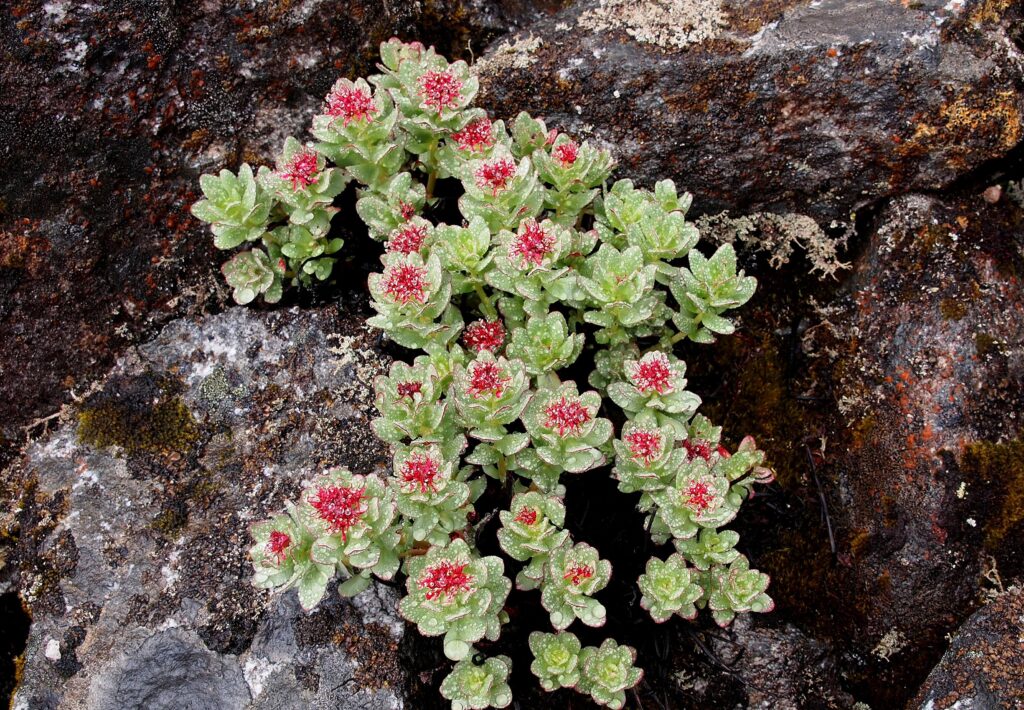
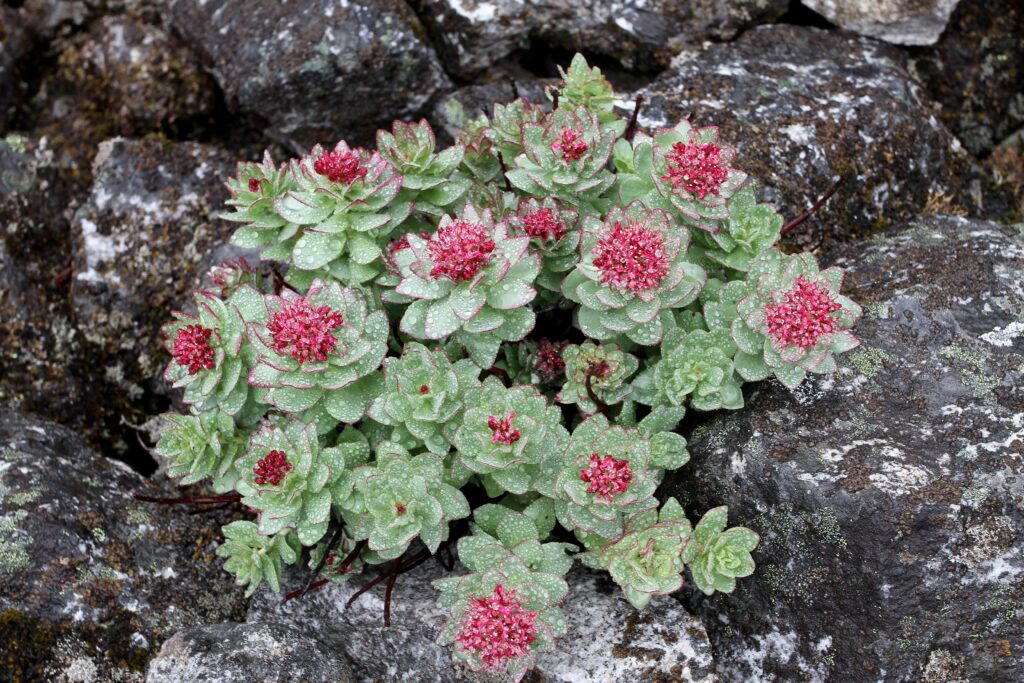
(Raym.-Hamet) H. Ohba

BhutanPG2011 280
Bhutan Jule-Tso, 4100m June
BhutanPG2011 520
Bhutan Jule-Tso, 4100m June

Description

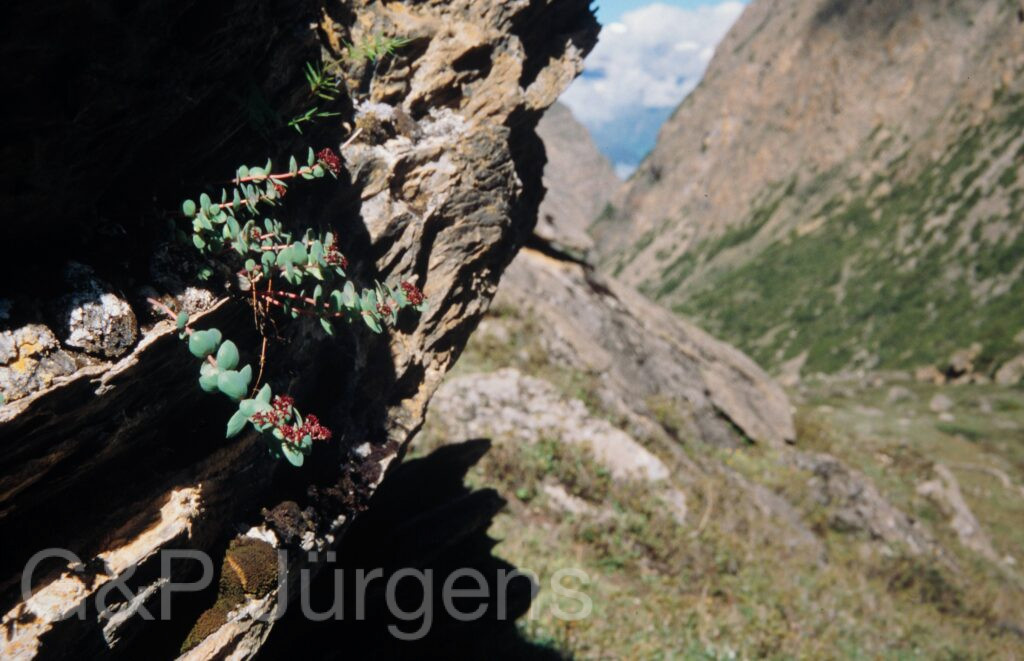
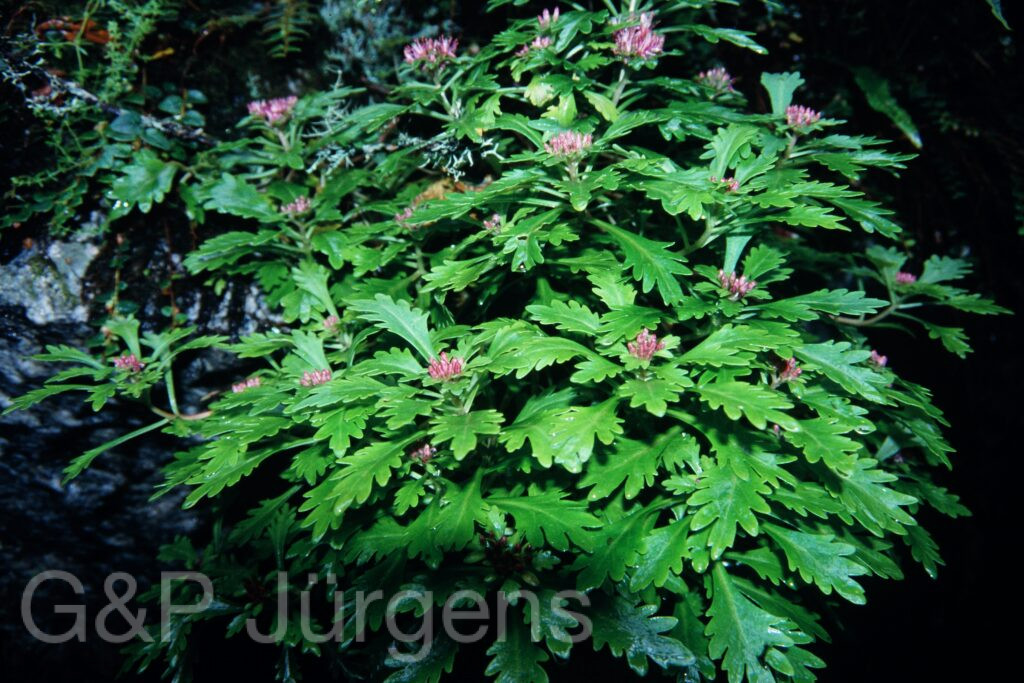
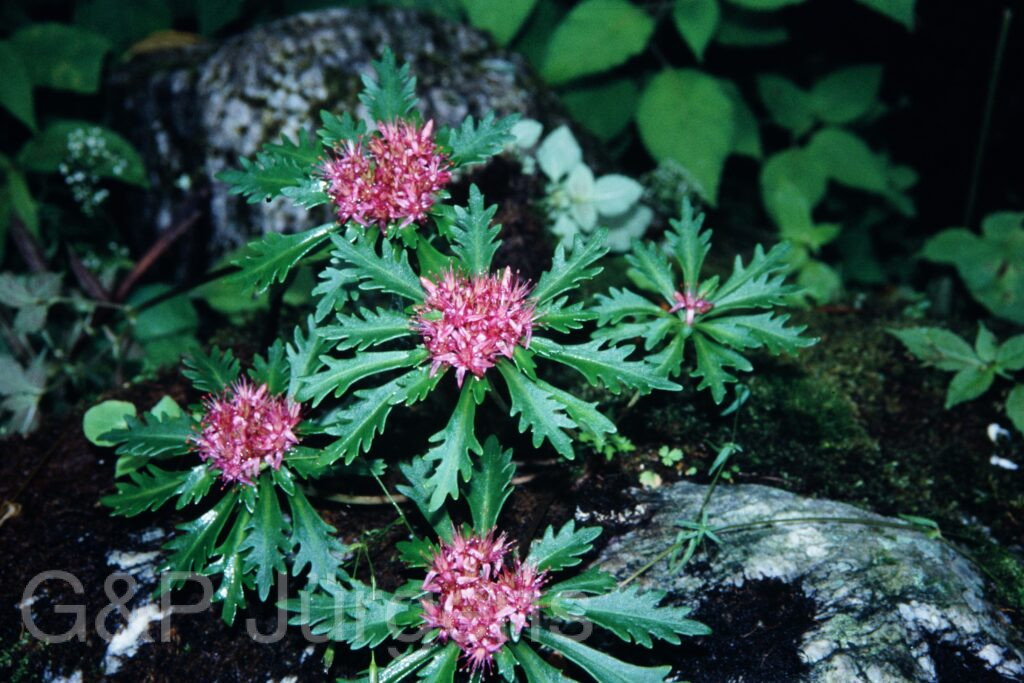
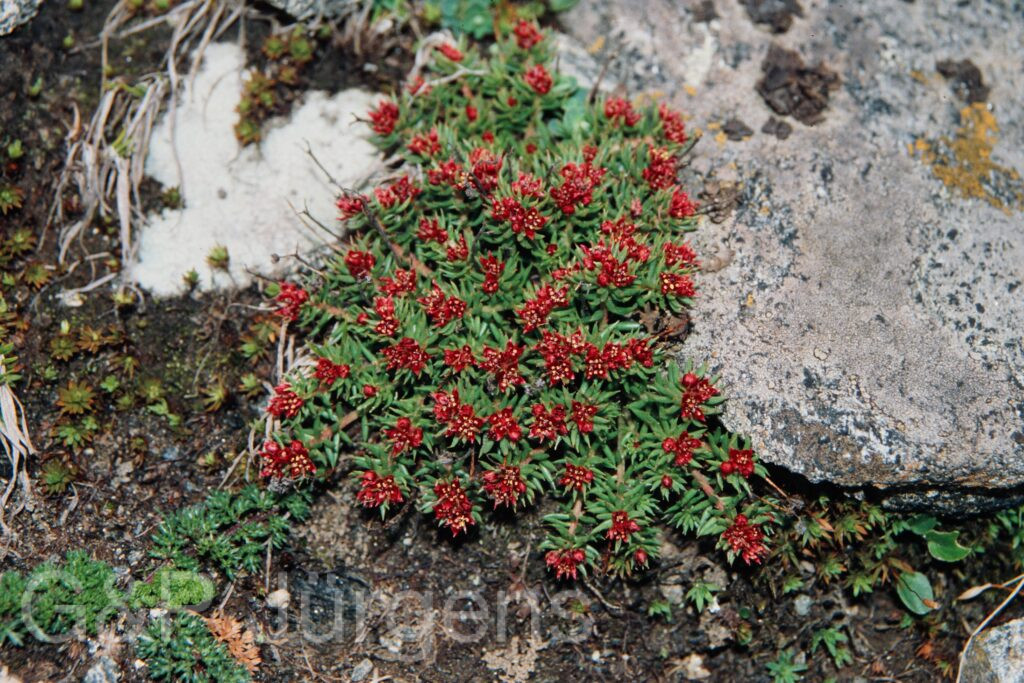
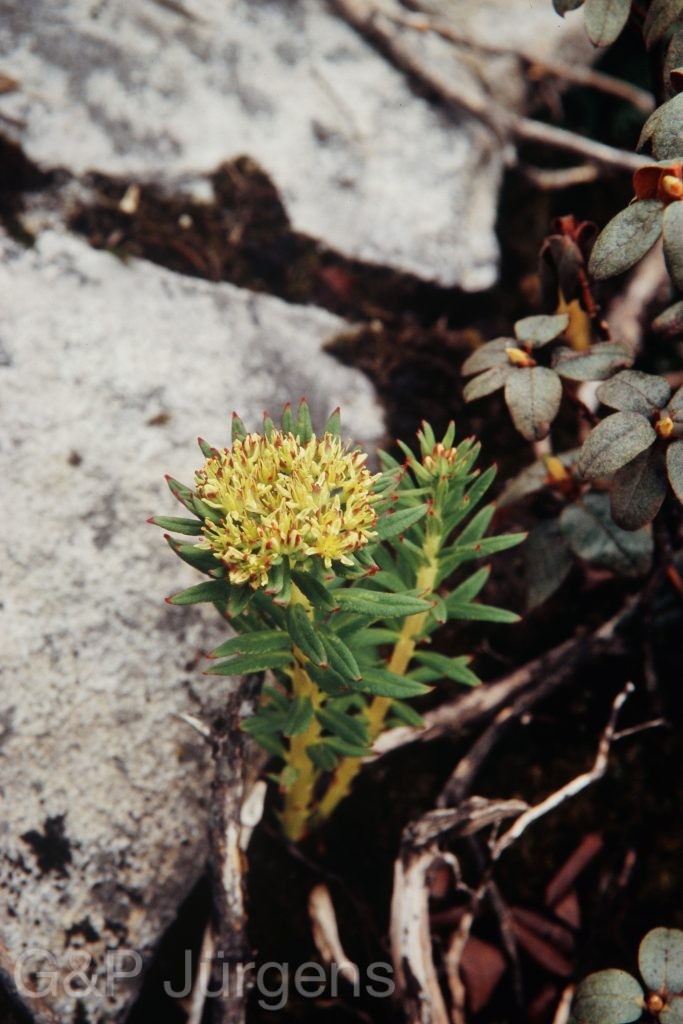
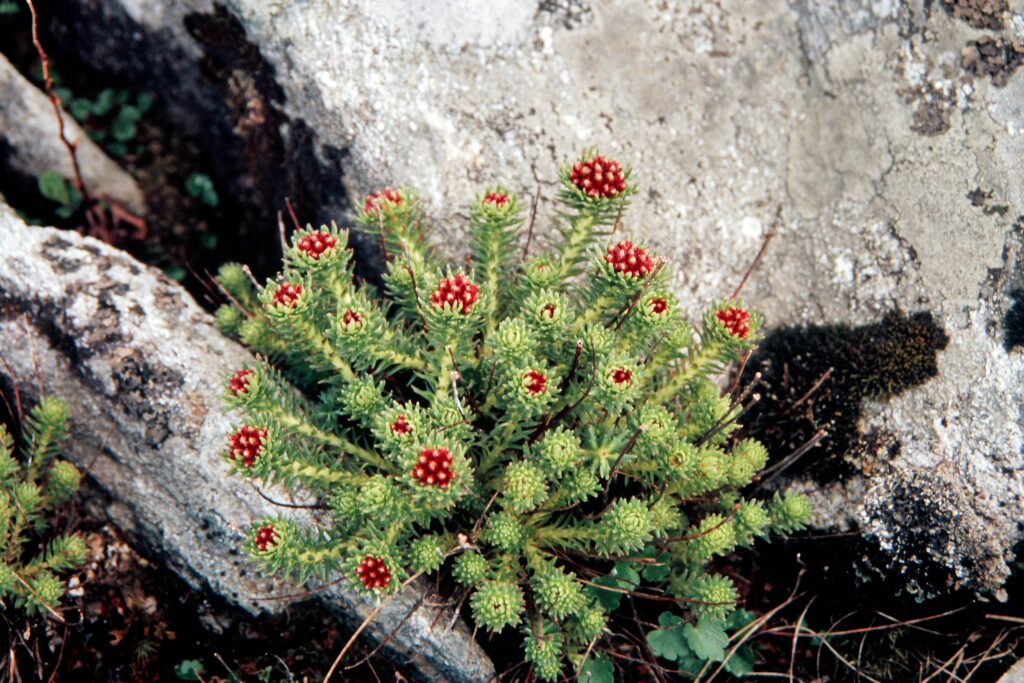
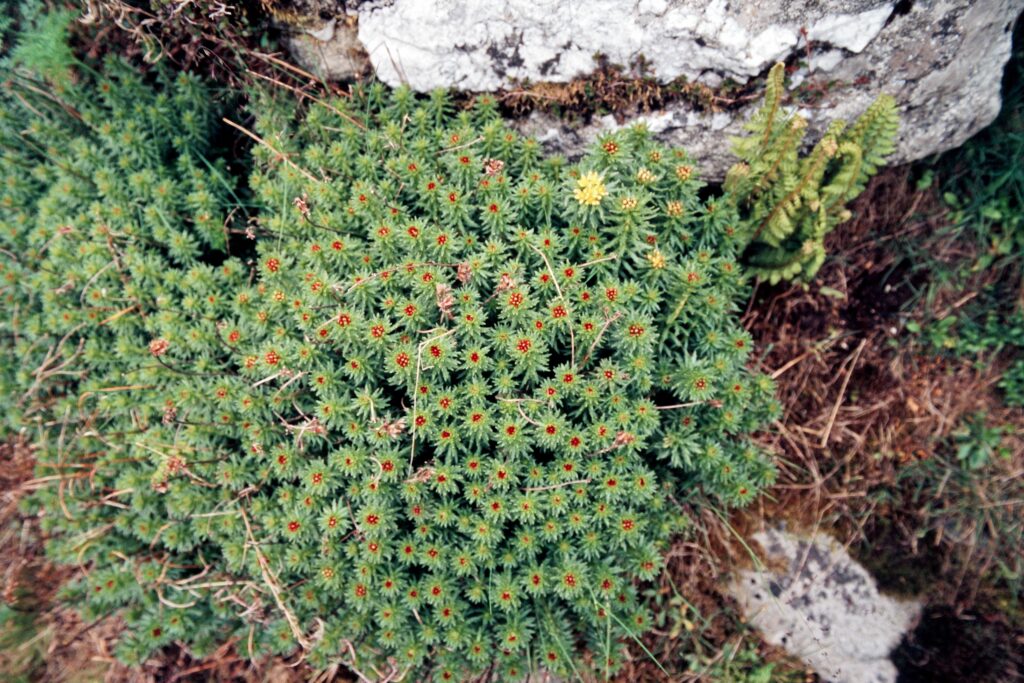
Rhodiola cretinii is a high-alpine succulent perennial of the Himalaya and adjacent Tibetan region, recorded from China, Nepal, India and Bhutan, with around 140 occurrences in GBIF. It is a plant of the upper alpine zone, growing on rocky slopes, screes, cliff ledges, moraines and stony turf, typically well above the treeline between about 3800 and 5000 m. The photographed material was collected in Bhutan at Jule-Tso at 4100 m in June, an elevation and rocky alpine setting fully consistent with the genus's affinity for cold, exposed, free-draining high-mountain ground.

The plant arises from a stout, fleshy, often woody caudex or rootstock crowned with the persistent remains of old leaf-bases. The flowering stems are short and erect, densely clothed with small, fleshy, alternate, sessile leaves that are flat to terete and entire or finely toothed at the apex. The flowers are crowded into a compact terminal cyme; like many alpine Rhodiola the species tends to be dioecious or functionally unisexual, the small flowers with greenish-yellow to reddish, often four- to five-merous perianths. The fruit is a cluster of erect to spreading follicles, each splitting to release numerous minute seeds.

Rhodiola, segregated from Sedum, comprises crassulacean stonecrops specialised for cold, arid and high-elevation habitats, employing succulence and a perennating caudex to survive harsh alpine winters. Several Himalayan species are harvested for traditional medicine, and although R. cretinii is not prominently exploited, slow-growing alpine perennials of this kind are inherently vulnerable to over-collection and habitat disturbance. Its compact cushion-like growth and dense leafy stems are typical adaptations to wind exposure, intense radiation and a short growing season.

Author: (Raym.-Hamet) H. Ohba · Sources: POWO (Kew), GBIF, Flora of China, Flora of Bhutan, Rhodiola monograph (Ohba)

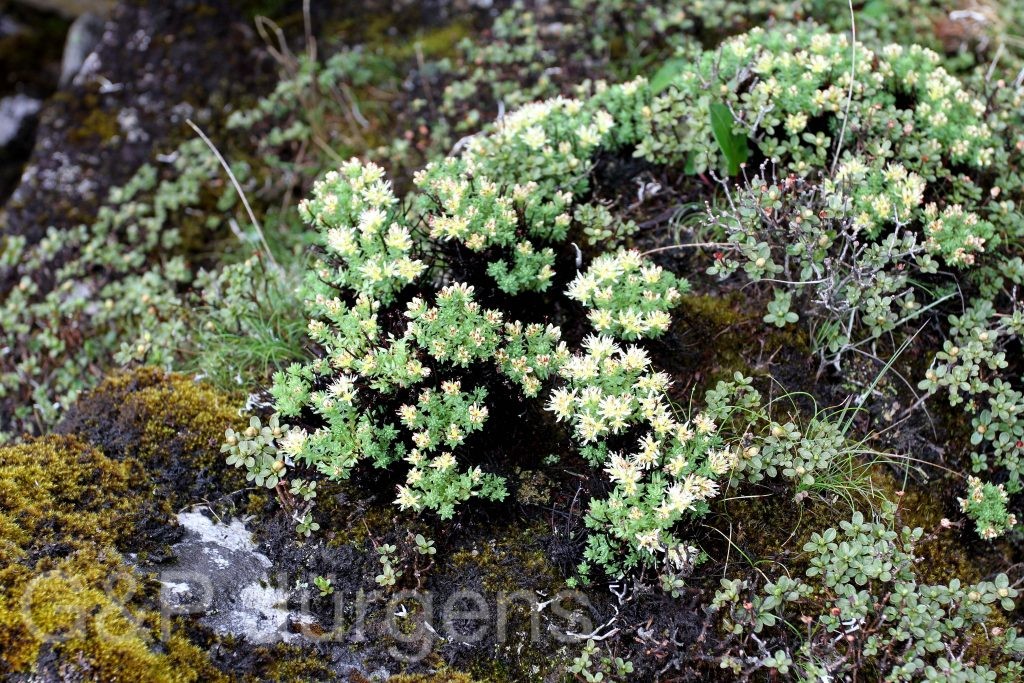
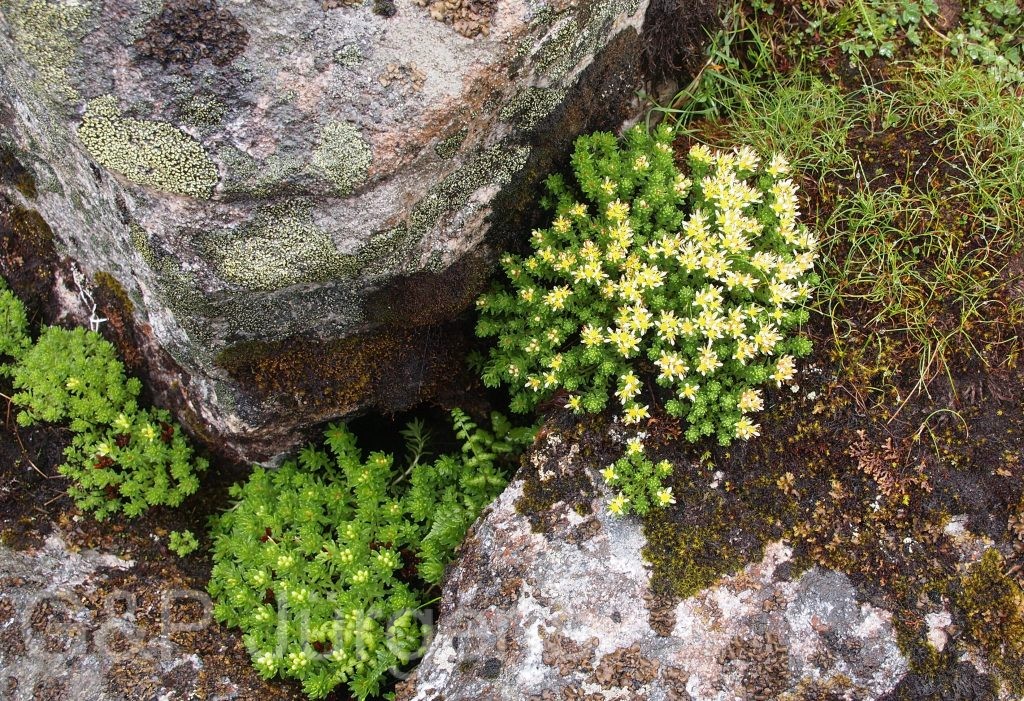
(Hook. f. & Thomson) S.H. Fu

Bh09 103 P181
Bhutan Jimilangtso, 4000m June
Garh 07 455 ergebnis
Garhwal Khiar-Kutti 3840m, June
Garh 07 538.7JPG ergebnis
Garhwal Khiar-Kutti 3840m, June

Description

Rhodiola fastigiata is a widespread high-alpine succulent of the Himalaya and the Sino-Himalayan ranges, well represented by some 724 georeferenced collections spanning China (CN), Nepal (NP), India (IN), Pakistan (PK), Bhutan (BT) and Myanmar (MM), with peripheral records from Mongolia (MN) and Afghanistan (AF). It is a plant of the upper subalpine and alpine zones, characteristically between roughly 3500 and 5000 m, colonising rocky slopes, screes, cliff ledges, moist alpine turf and the margins of snow-melt rills. The populations illustrated from Jimilangtso in Bhutan at about 4000 m and from Khiar-Kutti in Garhwal at 3840 m, both flowering in June, typify its occurrence in open, well-drained, high-elevation habitats.

It is a perennial herb arising from a stout, scaly, often branched caudex and thickened rootstock. Several erect, unbranched, fleshy flowering stems are produced, densely clothed throughout their length with crowded, overlapping, sessile leaves; these are narrowly oblong to linear-oblong, flat, entire or minutely toothed, somewhat glaucous and fleshy, giving the shoots a neat fastigiate aspect that gives the species its name. The inflorescence is a dense terminal corymb of small flowers, usually functionally dioecious, with five reddish to purplish-red sepals and petals; the staminate flowers bear ten stamens. The fruit is a cluster of erect, reddish, several-seeded follicles.

Rhodiola (Crassulaceae), formerly merged with Sedum, comprises stress-tolerant CAM succulents adapted to cold, arid, high-radiation alpine environments, where the swollen rootstock stores water and carbohydrate. Several Himalayan species, including this one, are harvested for traditional medicine for their adaptogenic rhizomes, creating localised collection pressure. R. fastigiata is broadly distributed and not currently considered threatened, but high-altitude Rhodiola populations are slow-growing and vulnerable to overharvesting.

Author: (Hook. f. & Thomson) S.H. Fu · Sources: POWO (Kew), GBIF, Flora of China, Flora of Bhutan, Flora of Pakistan, Ohba monographic studies of Himalayan Crassulaceae (Rhodiola)