
(Hook. f. & Thomson) S.H. Fu
Description
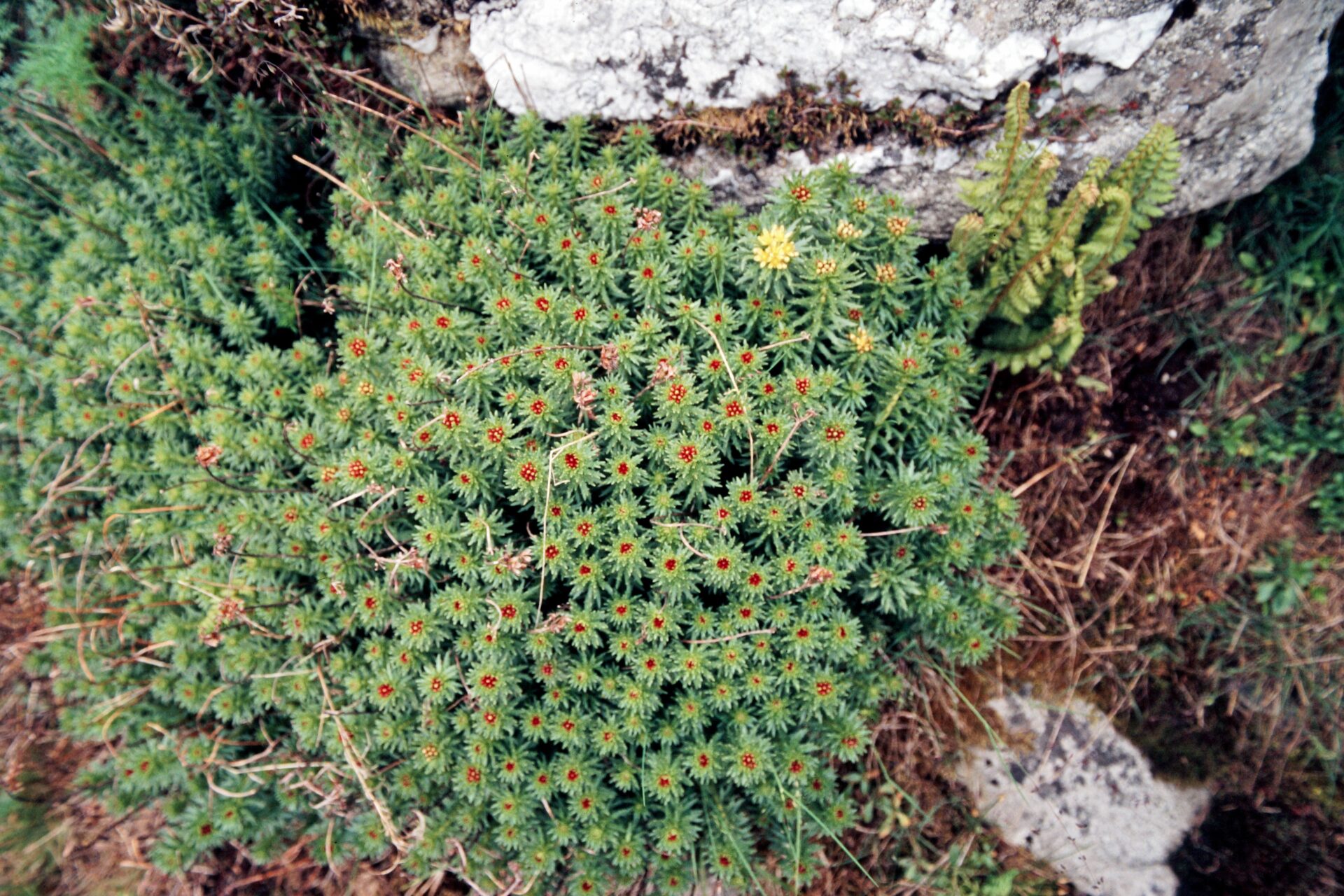
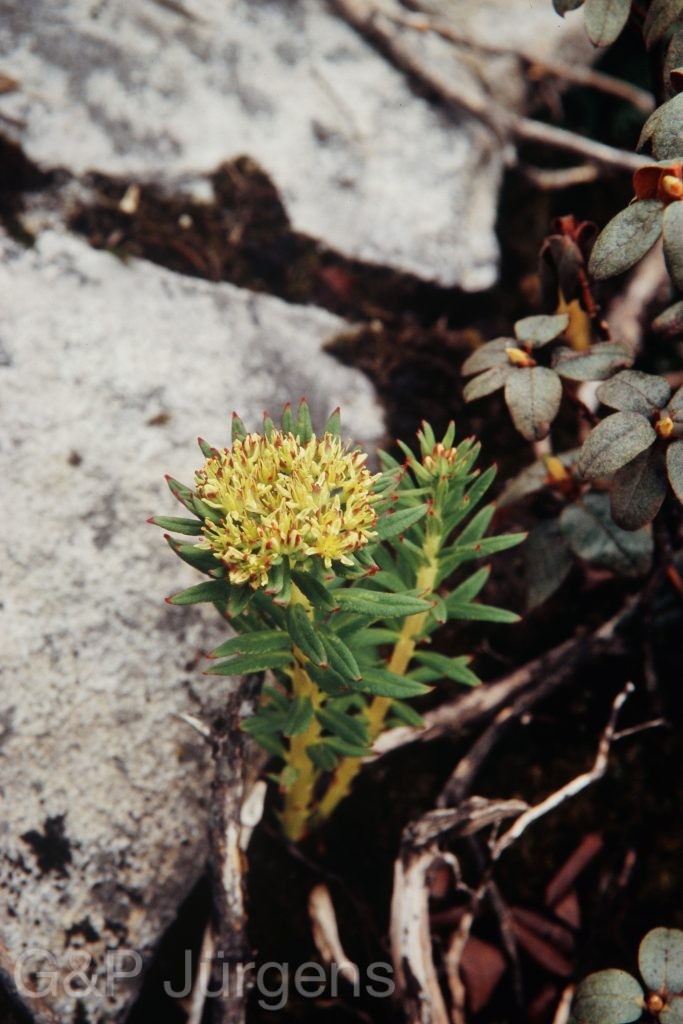
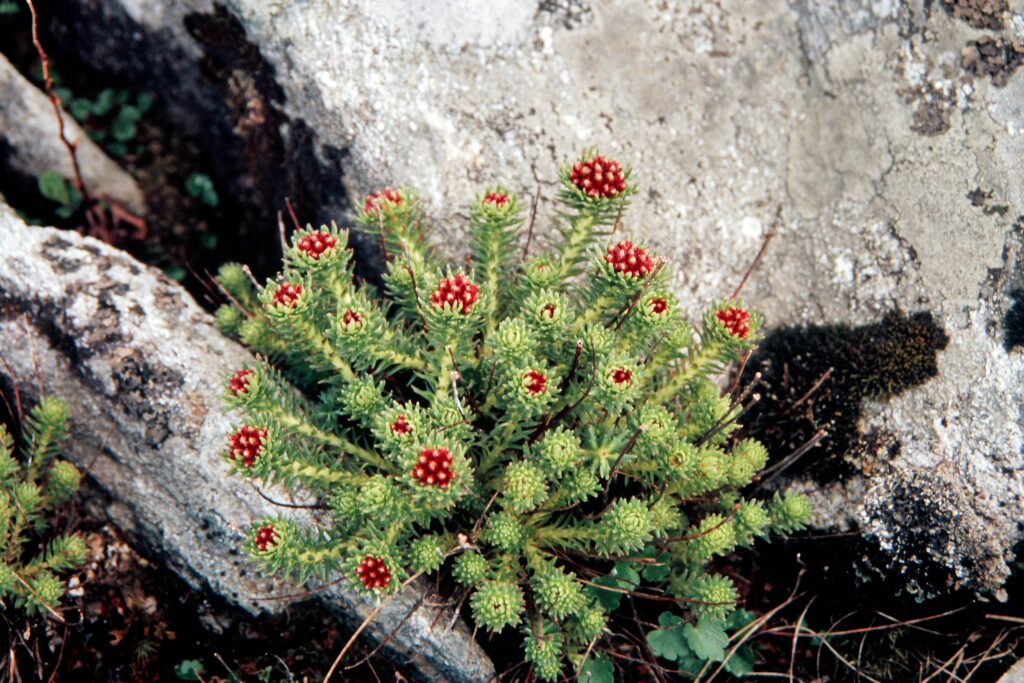
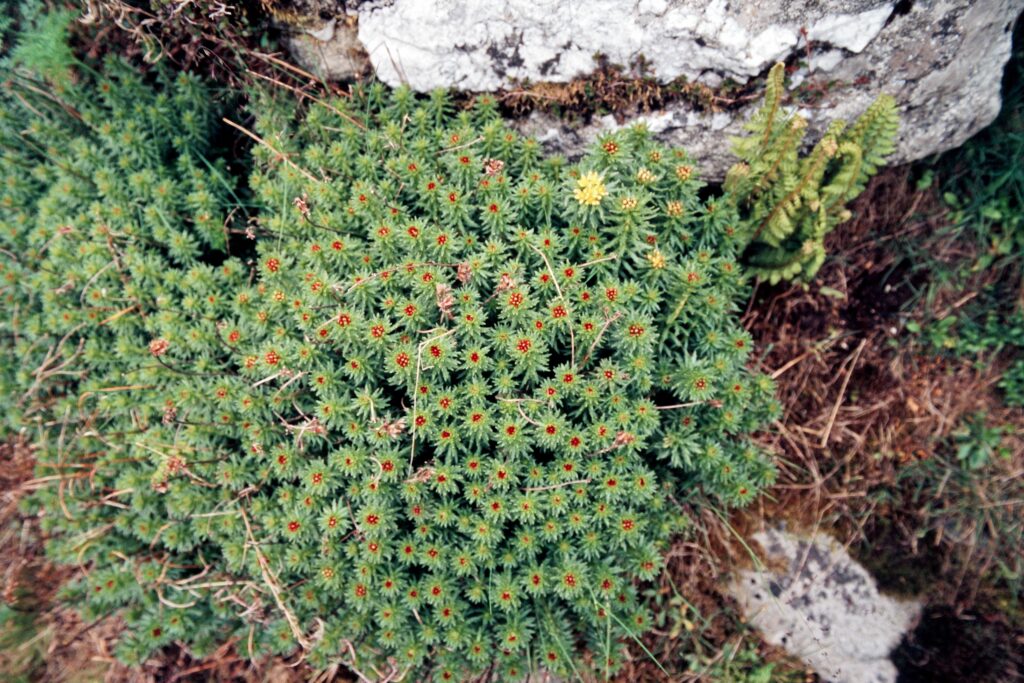
Rhodiola fastigiata is a widespread high-alpine succulent of the Himalaya and the Sino-Himalayan ranges, well represented by some 724 georeferenced collections spanning China (CN), Nepal (NP), India (IN), Pakistan (PK), Bhutan (BT) and Myanmar (MM), with peripheral records from Mongolia (MN) and Afghanistan (AF). It is a plant of the upper subalpine and alpine zones, characteristically between roughly 3500 and 5000 m, colonising rocky slopes, screes, cliff ledges, moist alpine turf and the margins of snow-melt rills. The populations illustrated from Jimilangtso in Bhutan at about 4000 m and from Khiar-Kutti in Garhwal at 3840 m, both flowering in June, typify its occurrence in open, well-drained, high-elevation habitats.
It is a perennial herb arising from a stout, scaly, often branched caudex and thickened rootstock. Several erect, unbranched, fleshy flowering stems are produced, densely clothed throughout their length with crowded, overlapping, sessile leaves; these are narrowly oblong to linear-oblong, flat, entire or minutely toothed, somewhat glaucous and fleshy, giving the shoots a neat fastigiate aspect that gives the species its name. The inflorescence is a dense terminal corymb of small flowers, usually functionally dioecious, with five reddish to purplish-red sepals and petals; the staminate flowers bear ten stamens. The fruit is a cluster of erect, reddish, several-seeded follicles.
Rhodiola (Crassulaceae), formerly merged with Sedum, comprises stress-tolerant CAM succulents adapted to cold, arid, high-radiation alpine environments, where the swollen rootstock stores water and carbohydrate. Several Himalayan species, including this one, are harvested for traditional medicine for their adaptogenic rhizomes, creating localised collection pressure. R. fastigiata is broadly distributed and not currently considered threatened, but high-altitude Rhodiola populations are slow-growing and vulnerable to overharvesting.
Author: (Hook. f. & Thomson) S.H. Fu · Sources: POWO (Kew), GBIF, Flora of China, Flora of Bhutan, Flora of Pakistan, Ohba monographic studies of Himalayan Crassulaceae (Rhodiola)