Author

GP Jürgens

Hochr.

Nepal 2001 226 ergebnis ergebnis
Nepal Gorkha Tullikot 2000m, May

Description

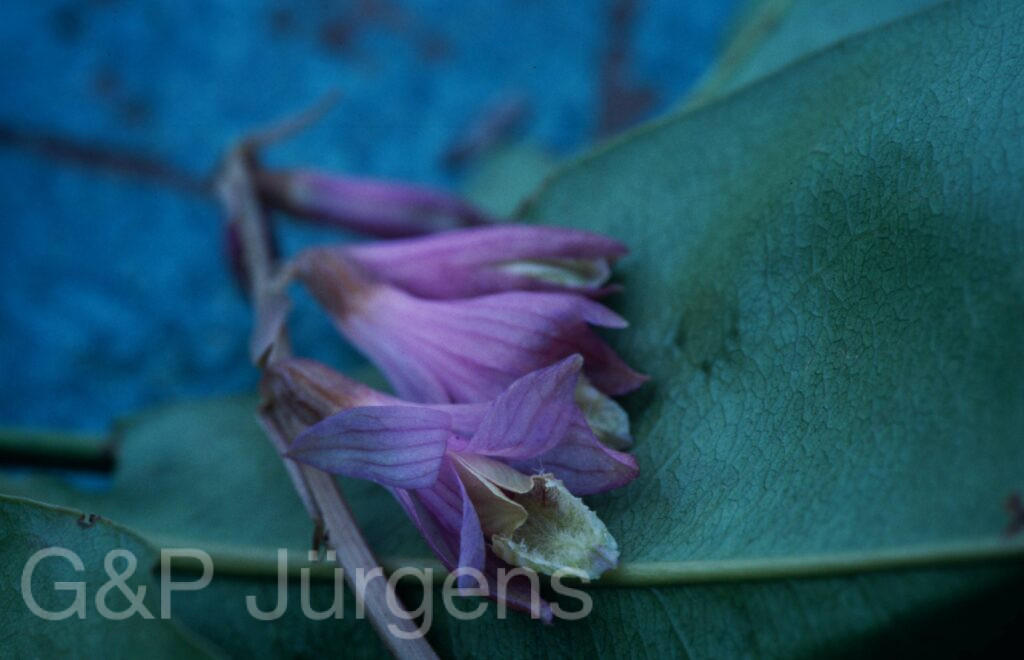
Eulophia dabia is a terrestrial orchid distributed across the temperate and subtropical belts of Central and southern Asia, with verified records (some 166 GBIF occurrences) spanning China, India, Nepal, Bhutan, Pakistan, Afghanistan, Tajikistan, Turkmenistan and Uzbekistan, reflecting a broadly Irano-Turanian to Sino-Himalayan range. In the Himalaya it favours open grassy slopes, scrubland and disturbed pasture on well-drained soils, flowering with the onset of pre-monsoon warmth. The plant illustrated was photographed near Tullikot in the Gorkha district of central Nepal at about 2000 m in May, typical of the species' preference for sunlit, seasonally dry meadow habitats at middle elevations.

The species is a tuberous geophyte producing subterranean, somewhat cormous pseudobulbs from which arise erect, often leafless or scarcely leafy flowering scapes that emerge before or with the foliage. The leaves are linear-lanceolate, plicate and grass-like, sheathing at the base. Flowers are borne in a loose terminal raceme; the tepals are narrow and spreading, typically dull greenish to purplish-brown, while the trilobed labellum bears longitudinal lamellae or papillose crests and a short spur or saccate base. The fruit is a pendent, ellipsoid dehiscent capsule releasing dust-like seeds adapted for wind dispersal and obligate mycorrhizal germination.

Within Eulophia, a large pantropical genus, E. dabia belongs to the group of dry-ground terrestrials whose seasonal, drought-deciduous habit suits monsoonal climates. Like all orchids it is listed under CITES Appendix II, restricting international trade, though the species itself is not regarded as globally threatened owing to its wide range. Its dependence on mycorrhizal fungi and on grazed or open grassland makes it sensitive to land-use change and overgrazing at the local scale.

Author: Hochr. · Sources: POWO (Kew), GBIF, Flora of Nepal, Flora of China, The Orchids of the Himalaya (King & Pantling), CITES Appendix II
L.

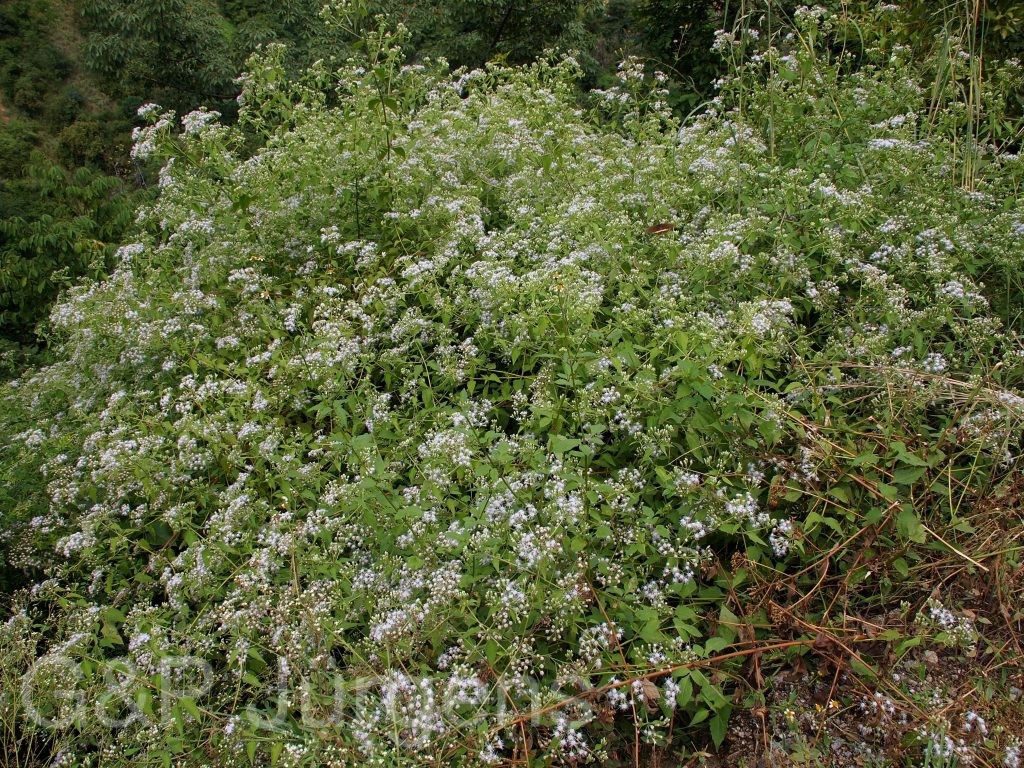
Bhutan2012 1208
Bhutan Trashigang 1150m, October

Description

Eupatorium cannabinum, hemp-agrimony, is a wide-ranging temperate herb whose centre of distribution lies across Europe and western Asia; GBIF records overwhelmingly from France, Britain, the Netherlands, Germany, Belgium, Austria and many other European countries total over 687,000 occurrences, attesting to its abundance. In Asia related populations extend into the Himalaya, and the species was photographed at Trashigang in eastern Bhutan at 1150 m in October, in the warm subtropical lower valleys. Throughout its range it favours damp, fertile ground: marsh margins, ditches, wet meadows, streambanks and moist woodland clearings, flowering in late summer and autumn.

It is a robust erect perennial herb 0.5 to 1.5 m tall, with stout, often reddish, finely downy stems arising from a short rhizome. The opposite leaves are palmately divided into three to five lanceolate, toothed, hemp-like segments (hence cannabinum), the uppermost sometimes simple. The numerous small flower heads are crowded into dense, flat-topped terminal corymbs; each narrow head contains only a few tubular florets, discoid and dull pink to mauve, with conspicuously exserted bifid style branches giving the inflorescence a soft fuzzy appearance. The fruit is a small black five-angled cypsela bearing a pappus of fine white bristles.

The species belongs to tribe Eupatorieae; following segregation of many New World species into other genera, Eupatorium s.str. is now a small mainly Eurasian and North American group, of which E. cannabinum is the principal European representative. Its nectar-rich heads are heavily visited by butterflies, hoverflies and bees, an important late-season pollinator resource. It contains pyrrolizidine alkaloids and has a long history in folk medicine. Common on damp disturbed ground, it is of no conservation concern.

Author: L. · Sources: POWO (Kew), GBIF, Flora Europaea, Flora of Bhutan, Eupatorieae systematics (King & Robinson monograph)

Hook.f.

Bhutan2014 976
Bhutan Chele-La 3400m, May
Bhutan2014 397
Bhutan Chele-La 3400m, May
Bh09 245 P408
Bhutan 2009

Description

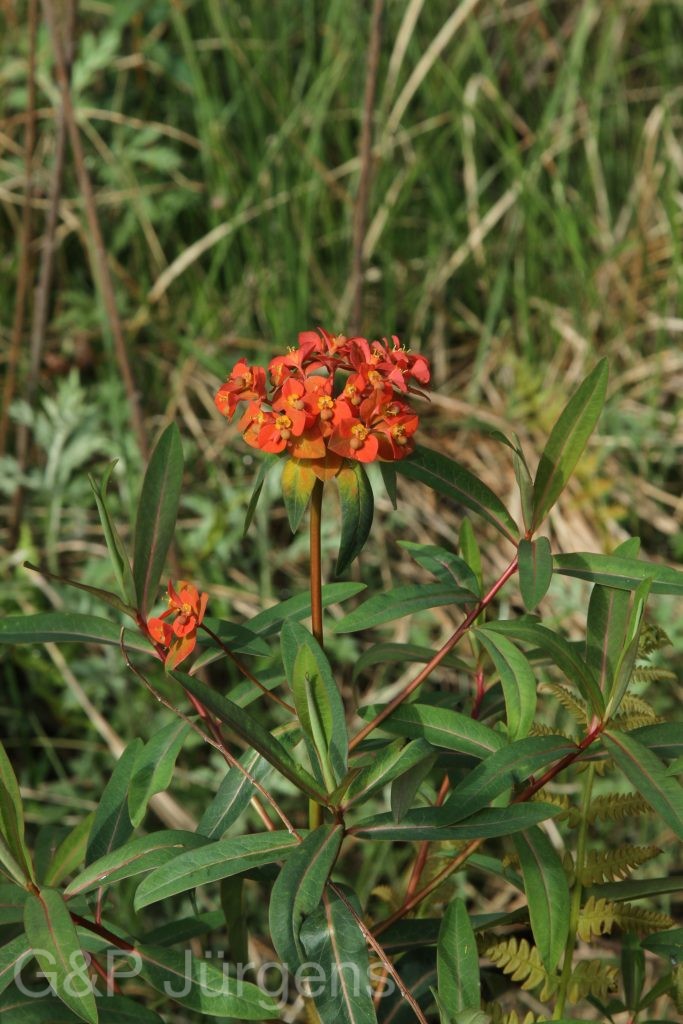
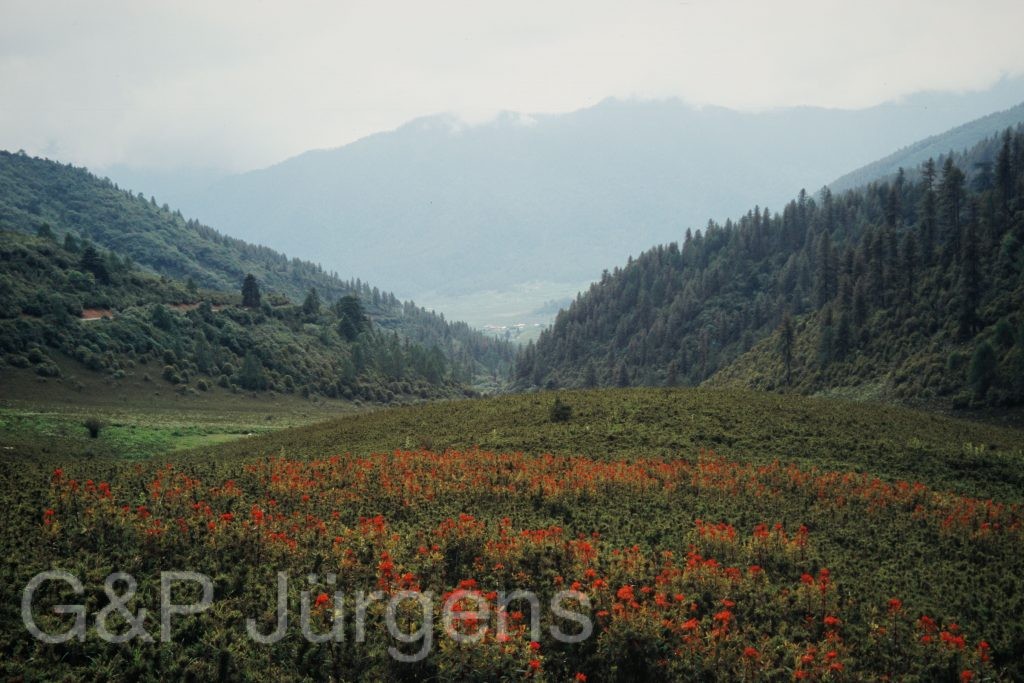
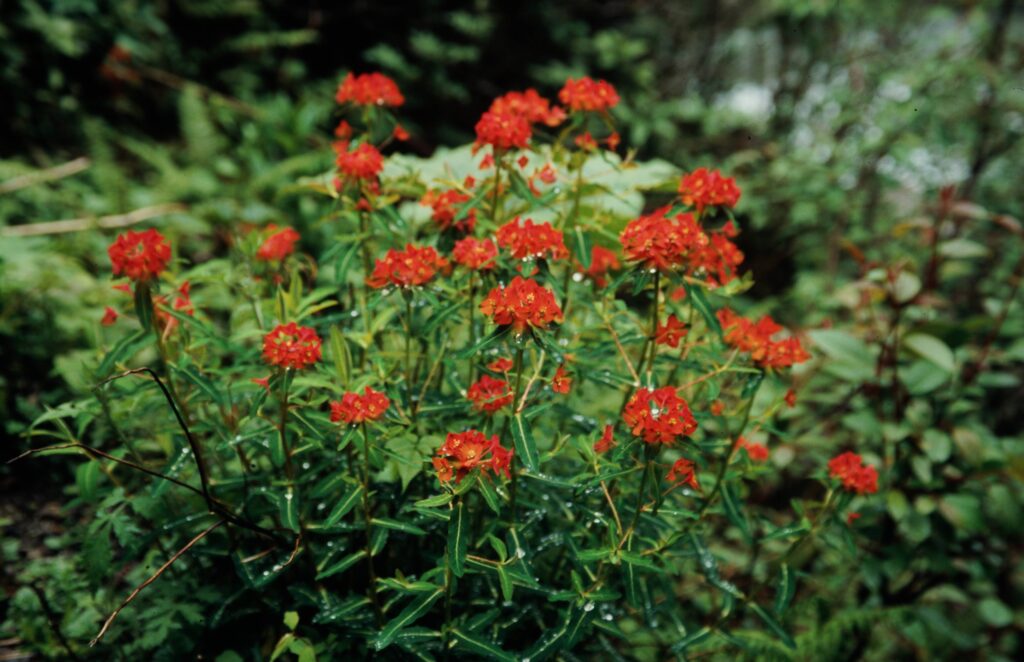
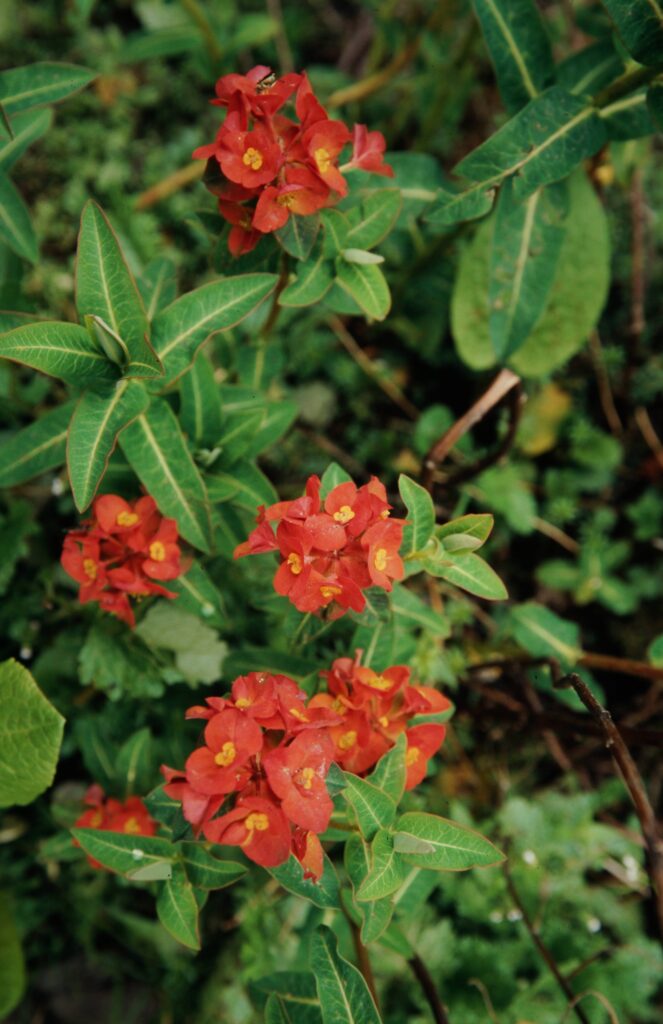
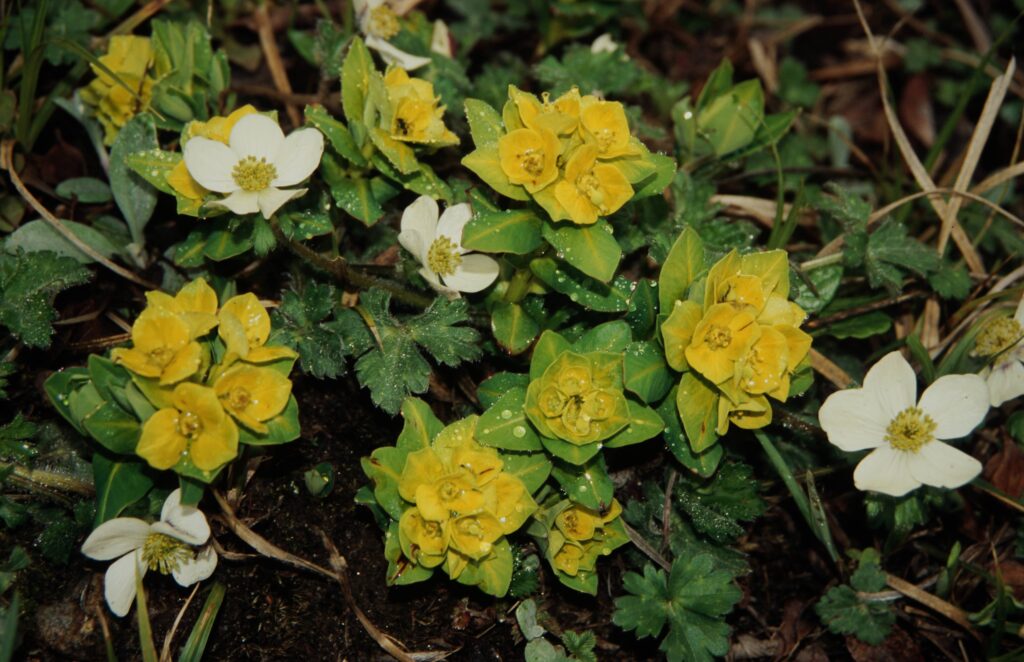
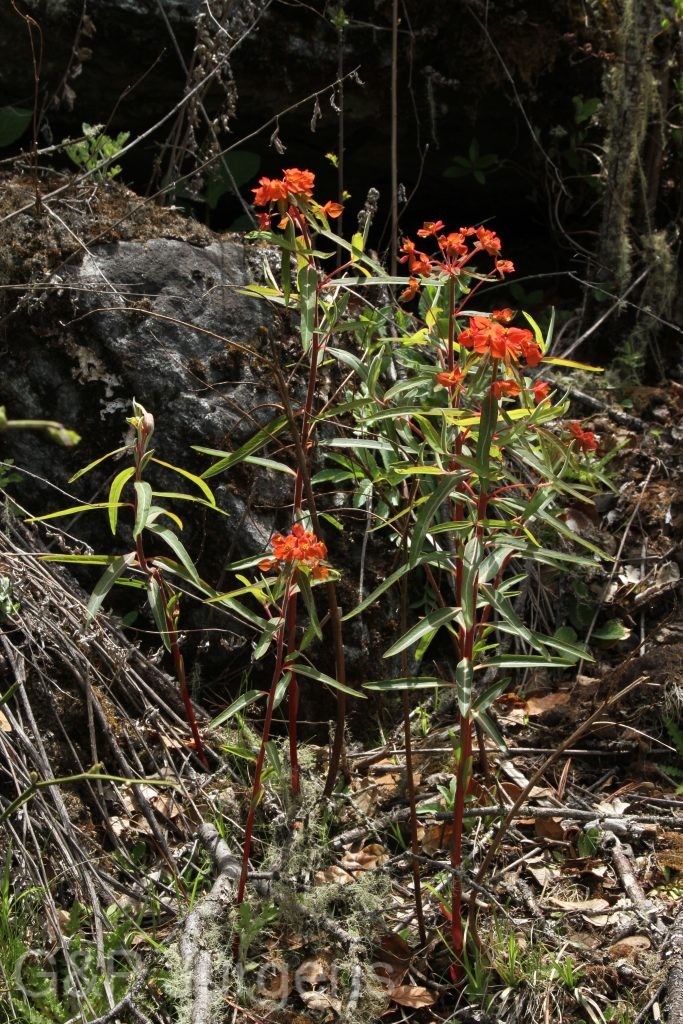
Euphorbia griffithii is a herbaceous perennial spurge of the eastern Himalayan mountains, with 538 GBIF occurrences spanning China, Bhutan, Myanmar, India and Nepal, alongside numerous cultivated records from Britain, Germany, France and North America, reflecting its popularity as a hardy garden perennial. It grows in open subalpine meadows, forest clearings, scrub and grassy slopes in the upper temperate to subalpine zone. It was recorded on the Chele-La in Bhutan at about 3400 m and at Tamrong in West Bengal, India, at about 2650 m, both in May, when the bracts colour vividly at the start of the growing season.

It is an erect, clump-forming herb arising from a creeping rhizome, the unbranched or sparingly branched stems exuding white latex when cut. The leaves are alternate, oblong to oblanceolate, entire, often flushed reddish and frequently with a pale midrib. The inflorescence is a terminal umbel-like cyme of cyathia, each cyathium a cup of fused bracts enclosing reduced flowers; the floral leaves and bracts beneath the cyathia turn fiery orange-red, providing the conspicuous display, while the involucral glands are typically yellowish. The fruit is a three-lobed capsule splitting into mericarps.

Euphorbia (Euphorbiaceae) is one of the largest plant genera, and E. griffithii belongs to its temperate, rhizomatous, herbaceous element rather than the succulent xerophytes. Long in cultivation, with selections such as the well-known coloured-bracted cultivars, it is widespread and secure across its native range. Its brilliant bract colouration and montane meadow habitat make it both a horticulturally important and biogeographically representative member of the eastern Himalayan herbaceous flora.

Author: Hook.f. · Sources: POWO (Kew), GBIF, Flora of China, Flora of Bhutan, Annotated Checklist of the Flowering Plants of Nepal, Radcliffe-Smith's treatment of Euphorbia (Euphorbiaceae)

D.G.Long

Sikkim2004 412 P707
Sikkim/India Lachung 3700m May

Description

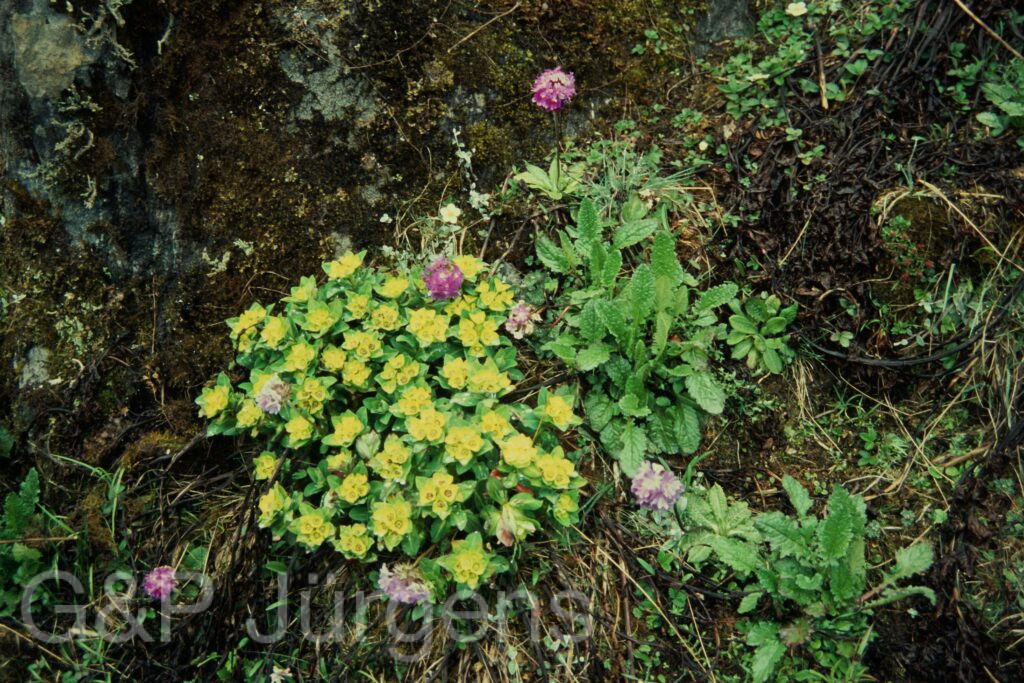
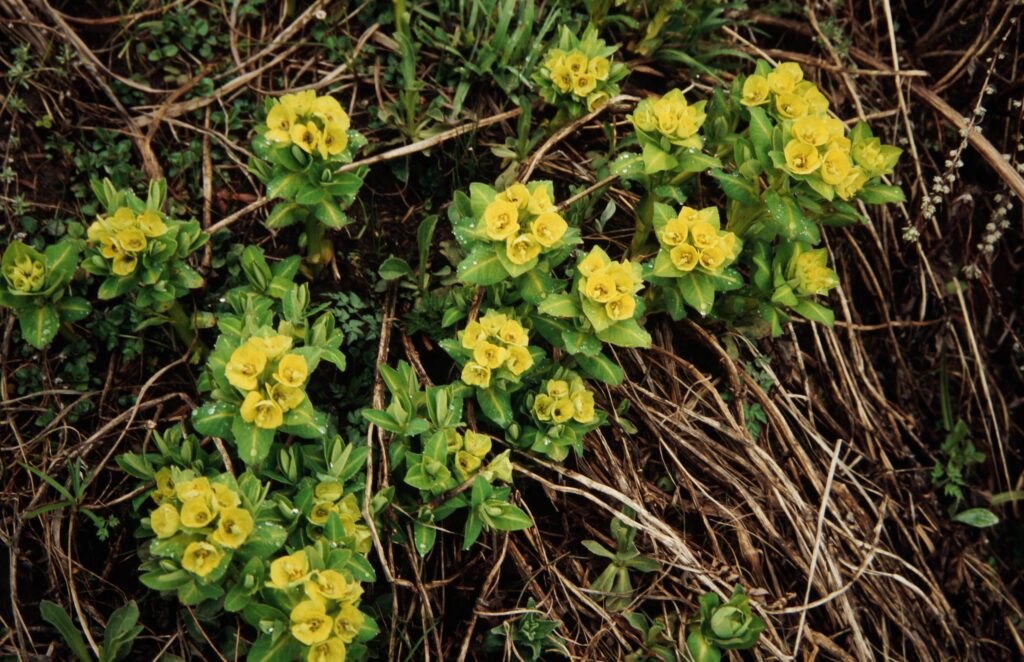
Euphorbia luteoviridis D.G.Long is an eastern Himalayan spurge recorded from Nepal, India, China and Bhutan (NP, IN, CN, BT), with GBIF documenting about 38 occurrences across this narrow range. It is a plant of the upper temperate to subalpine zone, growing on open slopes, forest margins, rocky banks and grazed pastures generally between about 3000 and 4000 m. The images from Lachung in Sikkim at 3700 m and Molley in West Bengal at 3630 m, both in May, illustrate its spring flowering, when the yellowish-green cyathial bracts emerge against the recovering alpine sward.

It is a perennial herb arising from a woody rootstock, producing one to several erect or ascending stems. The leaves are alternate, entire, oblong to oblanceolate or spathulate, with whorled, broader floral leaves subtending the inflorescence. This is the characteristic euphorbioid pseudanthium: a terminal pleiochasium with several rays, each cyathium subtended by yellow-green bracts and enclosing a single naked female flower surrounded by reduced male flowers, with crescentic nectar glands on the rim. The fruit is a three-lobed schizocarpic capsule splitting explosively into cocci; all parts exude the toxic milky latex typical of the genus.

Euphorbia luteoviridis was described comparatively recently by D.G.Long during work on the eastern Himalayan flora, and belongs to the herbaceous perennial spurges well represented in the high mountains. Its restricted distribution gives it significance as a regional endemic, while the latex confers chemical defence against herbivores in the grazed pastures it inhabits. No global threat assessment is widely published, but its limited range warrants attention.

Author: D.G.Long · Sources: POWO (Kew), GBIF, Flora of Bhutan Vol. 1, Flora of China Vol. 11, Flora of Nepal, Radcliffe-Smith treatments of Himalayan Euphorbia

Boiss.

Bhutan2014 202
Bhutan Trashyangtse 2100m, May
Bhutan2014 203
Bhutan Trashyangtse 2100m, May
Nepal 2001 516 ergebnis ergebnis
Nepal (Gorkha) Mulabari 1340m, May

Description

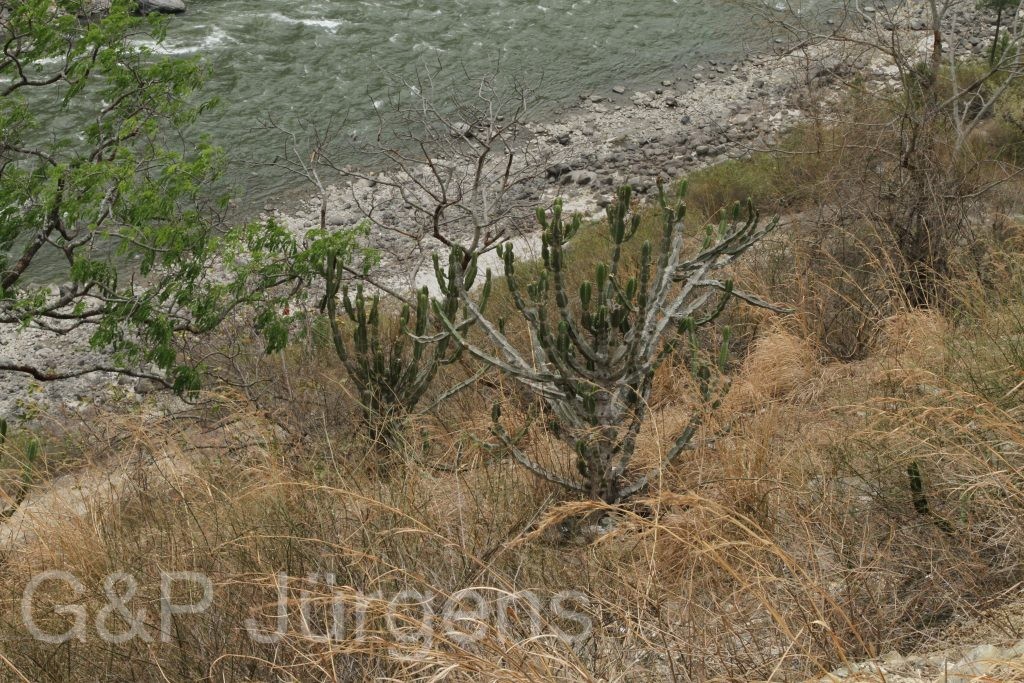
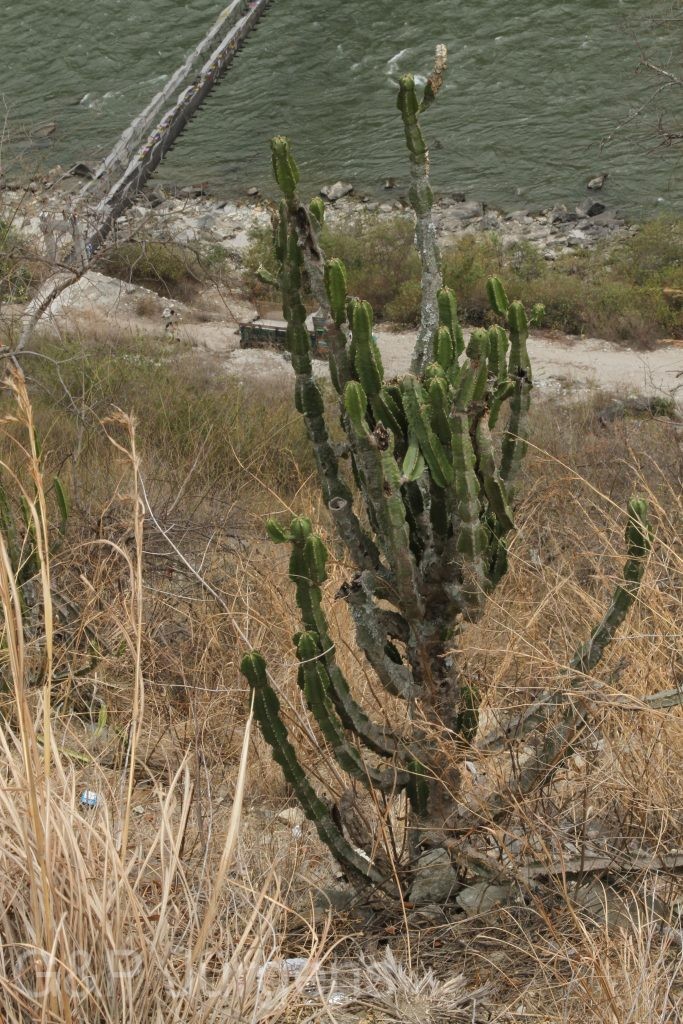
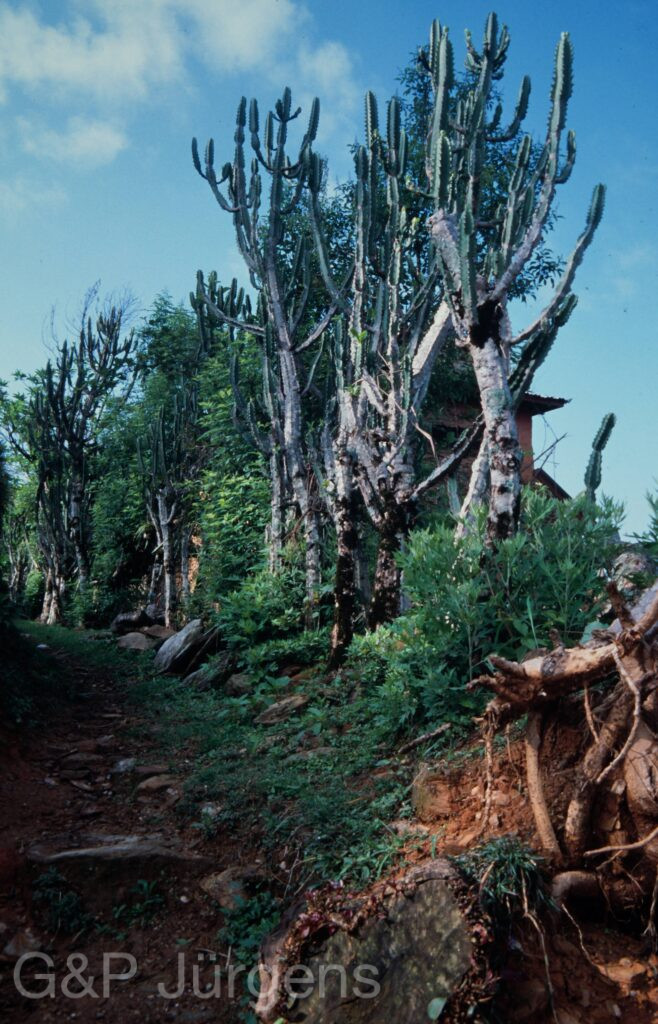
Euphorbia royleana is a succulent, tree-like spurge of warm, dry valleys across the Himalaya and adjacent regions. With 148 GBIF occurrences, it ranges through Nepal, India, China, Pakistan and Bhutan, with cultivated or introduced records noted elsewhere including Belgium, Egypt and the United States, reflecting its use as an ornamental and hedge plant. It is characteristic of hot, semi-arid slopes, rocky hillsides and degraded scrub in the subtropical to lower temperate zone, often on south-facing rain-shadow exposures. It was recorded at Trashyangtse in Bhutan at about 2100 m and at Mulabari in Gorkha, Nepal, at about 1340 m, both in May.

It is a stout, cactus-like succulent shrub or small tree with a short woody trunk and erect, candelabriform branches that are fleshy, grey-green and obtusely five- to seven-angled. Paired, short stipular spines arise on the angles, subtending small, fugacious leaves clustered near the branch tips. As in all Euphorbia the inflorescence is a cyathium: cup-like involucres bearing nectar glands enclose the reduced unisexual flowers, here borne in small cymose clusters and yielding the abundant caustic white latex typical of the genus. The fruit is a three-lobed capsule splitting into three mericarps.

Euphorbia (Euphorbiaceae) is among the largest of all plant genera, and E. royleana belongs to its succulent, xerophytic Old World element adapted to seasonal aridity. Long valued in the region for living fences and traditional medicine, it is widely planted, and its milky latex is irritant and toxic. The species is not of conservation concern, being common and frequently cultivated, but it is an important structural and biogeographic component of dry inner-Himalayan valley vegetation.

Author: Boiss. · Sources: POWO (Kew), GBIF, Flora of China, Flora of Pakistan, Annotated Checklist of the Flowering Plants of Nepal, Boissier's monograph of Euphorbia in de Candolle's Prodromus

D. Don

Sikkim2003 179 G245
Sikkim Dzongri 4100m 08.2003
Sikkim2003 504 P704
Sikkim Dzongri 4100m, August

Description

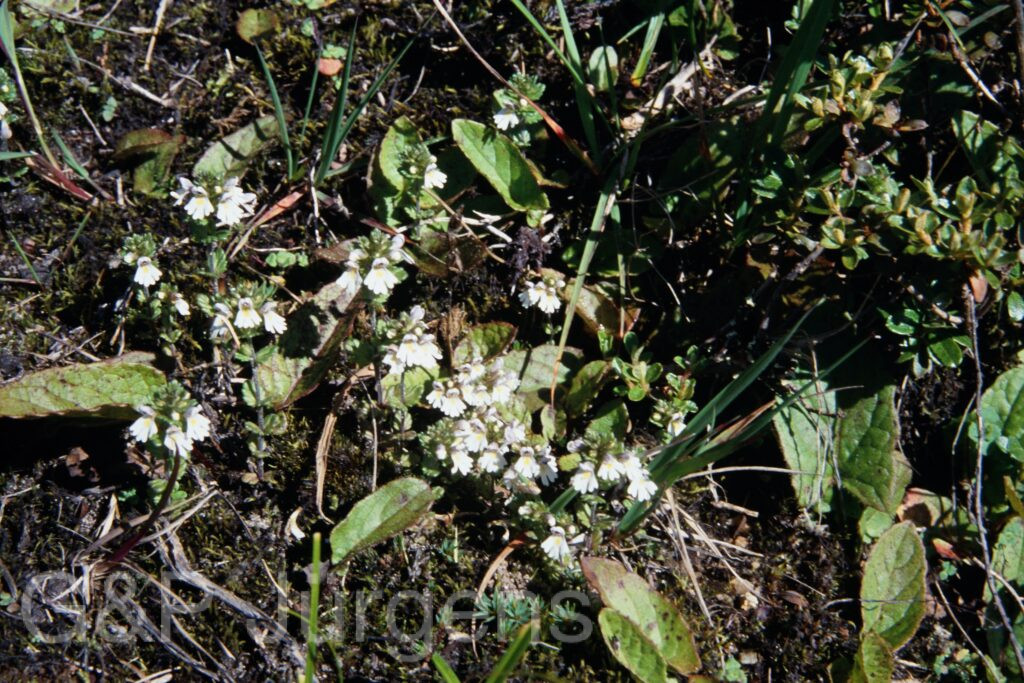
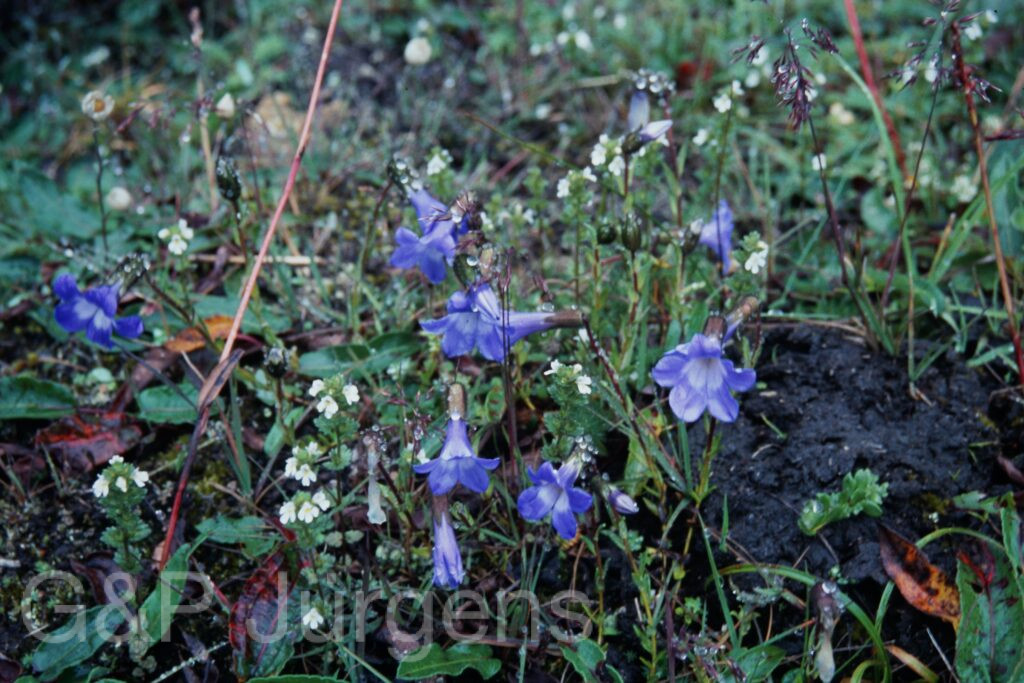
Euphrasia simplex is an alpine eyebright of the Himalaya, recorded from India and Nepal, and known from only a handful of georeferenced occurrences (five in GBIF), reflecting both its small stature, which makes it easily overlooked, and its restricted high-altitude range. It is a plant of short alpine turf, open grassy slopes and moist meadows above treeline. The illustrated material from Dzongri in Sikkim, gathered at about 4100 m in August, is characteristic of its occurrence high in the eastern Himalayan alpine zone, where it flowers in the late-summer growing season among low alpine vegetation.

The plant is a small, slender annual, as the epithet simplex suggests often little-branched or unbranched, with an erect, leafy stem. The leaves are small, opposite, sessile and ovate with a few coarse, often bristle-tipped teeth. The flowers are borne in the axils of the upper leaves, forming a leafy terminal spike; each has a tubular, four-lobed calyx and a two-lipped (bilabiate) corolla, the upper lip hooded and the lower lip three-lobed and spreading, the whole typically white to pale lilac with darker veining and a yellow throat-blotch. The fruit is a small, flattened, two-valved capsule containing several seeds.

Like other members of its genus, E. simplex is a hemiparasite, photosynthetic but attaching by haustoria to the roots of neighbouring grasses and herbs to draw water and nutrients; the genus has been transferred from the traditional Scrophulariaceae to the Orobanchaceae in light of this parasitic habit and molecular evidence. Euphrasia is notoriously difficult taxonomically owing to plasticity and hybridisation, and the high-altitude Himalayan species are imperfectly known. Its rarity in collections makes the status of E. simplex uncertain, and further field survey would clarify its true distribution and abundance.

Author: D. Don · Sources: POWO (Kew), GBIF, Flora of Nepal, Annotated Checklist of the Flowering Plants of Nepal, Yeo: monographic studies of the genus Euphrasia

DC.

Bhutan2012 1009
Bhutan Trithangebe, 1000m October
Bh2008 512 G786
Bhutan Chongsakha, 1850m April

Description

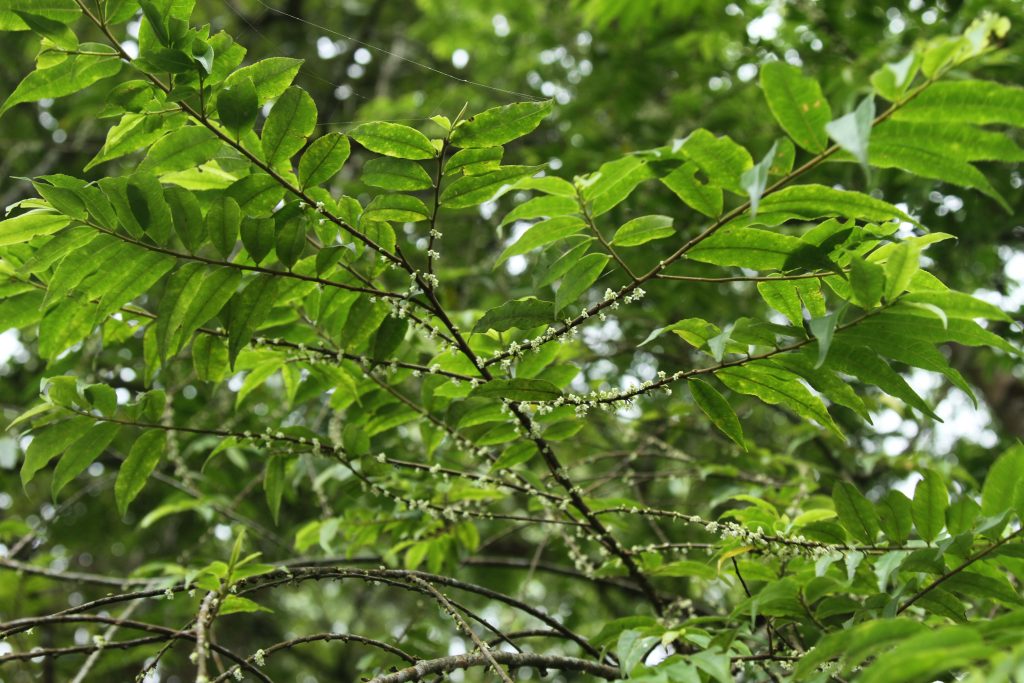
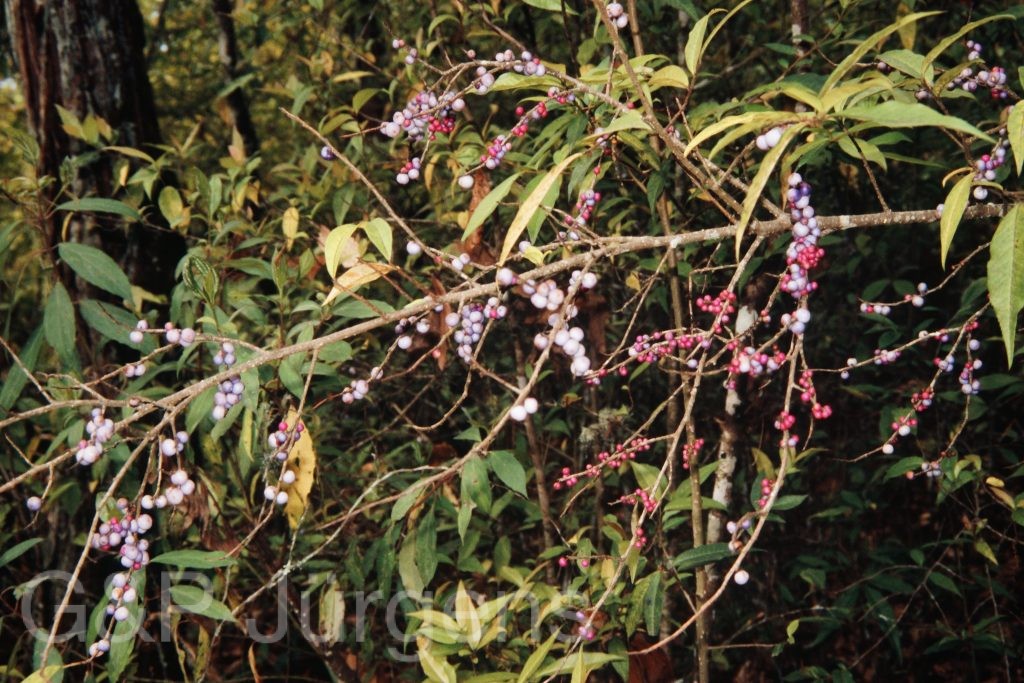
Eurya acuminata is an evergreen shrub or small tree widely distributed through tropical and subtropical Asia, ranging from the Himalaya across southern China, Taiwan and Japan to Indochina, the Malesian archipelago and New Guinea; its roughly 2614 GBIF occurrences span India, Nepal, Bhutan, China, Thailand, Malaysia, Indonesia and the Philippines. In Bhutan it occupies a broad altitudinal range, as recorded at Trithangebe around 1000 m in October and at Chongsakha near 1850 m in April. It grows in evergreen broad-leaved forest, along forest margins and in secondary woodland, often as an understorey or successional component of warm, moist forests.

The plant is a much-branched evergreen with leathery, alternate, distichous leaves that are lanceolate to oblong with the long-acuminate apex recorded in the epithet and a finely serrate margin; the young twigs are often two-edged. The species is dioecious, bearing small, axillary, fragrant flowers that are creamy to greenish-white with five sepals, five petals, and in male plants numerous stamens, while female flowers carry a superior ovary with a short divided style. The fruit is a small, globose, fleshy black berry containing several minute seeds, dispersed by birds.

Eurya, formerly placed in Theaceae and now referred to Pentaphylacaceae, is a large genus of Old World shrubs distinguished by its dioecy, bracteolate flowers and berry fruits; E. acuminata is among the most widespread and variable species, with several recognised varieties. As an abundant, generalist forest component spanning a vast area, it is of least concern, and its dense foliage and wood find local use as fuel, hedging and minor timber.

Author: DC. · Sources: POWO (Kew), GBIF, Flora of China Vol. 12, Flora of Bhutan Vol. 1, Flora of Nepal, Flora Malesiana (Theaceae/Pentaphylacaceae)

Hook.f. & Thomson

Sikkim2011 248
Sikkim Yumthang 3800m, June

Description

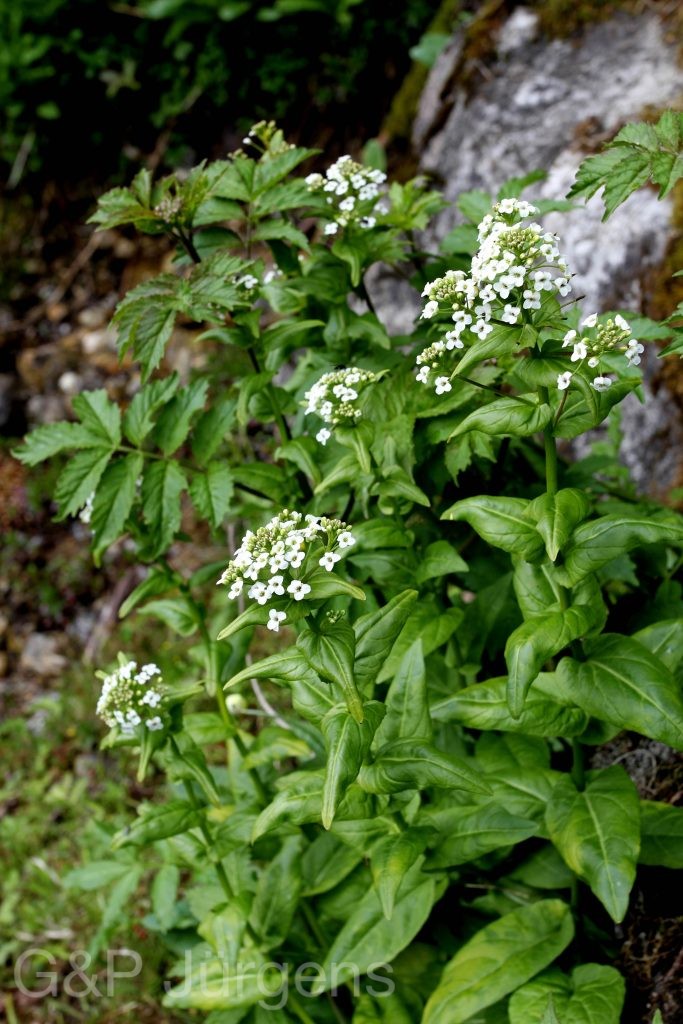
Eutrema himalaicum Hook.f. & Thomson is an alpine crucifer of the high Himalaya and adjacent China, recorded from China, India and Bhutan, with around 249 georeferenced occurrences in GBIF (further scattered records reflect cultivation and herbarium holdings). It occupies moist alpine meadows, streamsides, seepage slopes, gravelly flats and rocky places near snowmelt, generally between about 3500 and 4800 m. The photographed plant was found at Yumthang in Sikkim at about 3800 m in June, in the lush, well-watered subalpine to alpine turf that this small herb favours as the snow recedes.

The plant is a slender annual or short-lived perennial with erect or ascending, often glabrous stems arising from a basal rosette. The leaves are simple, the basal ones petiolate with ovate to deltoid or somewhat hastate blades (recalling the form once distinguished as E. deltoideum), the cauline leaves smaller and shortly stalked to subsessile. The flowers are small and borne in terminal racemes; each has four white petals arranged in the cruciform pattern typical of the family, four free sepals and the tetradynamous stamens of the Brassicaceae. The fruit is a slender silique, the seeds in a single row within each locule.

The genus Eutrema, which includes the cultivated wasabi (E. japonicum), has been substantially recircumscribed by molecular studies, absorbing several formerly segregate Himalayan genera; this accounts for the species' nomenclatural history and the alternate epithet seen on the source page. As a snowbed and seepage specialist it is adapted to short, cool growing seasons. The species is fairly widespread within its alpine band and not of conservation concern, though sensitive to habitat disturbance.

Author: Hook.f. & Thomson · Sources: POWO (Kew), GBIF, Flora of China, Flora of Bhutan, Al-Shehbaz revision of Eutrema and Tribe Eutremeae, Hara Flora of the Eastern Himalaya

(Hook.f. & Thomson) Al-Shehbaz, G.Q.Hao & J.Quan Liu

Bh09 144 P255
Bhutan Al-Shehbaz, 4100m June

Description

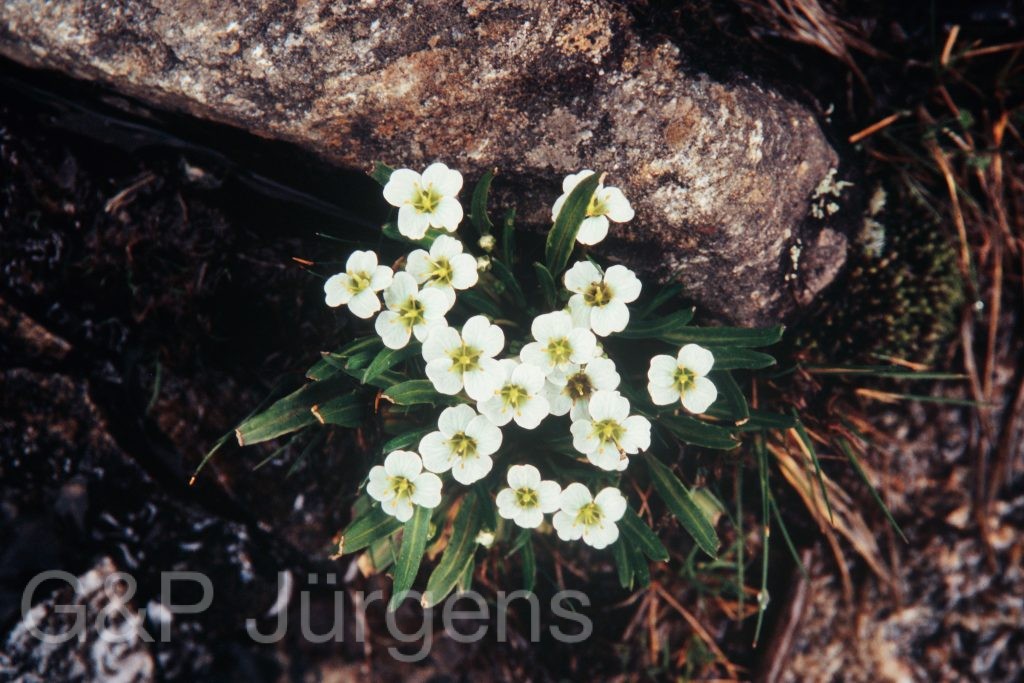
Eutrema scapiflorum (Hook.f. & Thomson) Al-Shehbaz, G.Q.Hao & J.Quan Liu is a dwarf alpine crucifer of the high Sino-Himalaya, recorded from China, India, Nepal, Bhutan and Myanmar. The species is illustrated from Bhutan at approximately 4100 m, flowering in June, consistent with its occurrence in the upper alpine belt. It inhabits open stony slopes, moraines, fellfield, gravelly flushes and the margins of snow-fed rills, generally between 3800 and 5000 m, where it endures intense insolation, freezing nights and a compressed growing season. With around 630 GBIF records it is a genuinely high-elevation specialist, scarce and patchily distributed across its range.

The plant is a small, glabrous, cushion- to rosette-forming perennial arising from a stout caudex and taproot. The basal leaves are crowded, spathulate to oblong-obovate, entire or obscurely toothed, and rather fleshy. As the epithet scapiflorum implies, the white flowers are borne on short, nearly leafless scapes scarcely exceeding the foliage, each flower with four spreading petals and the typical cruciferous tetradynamous androecium. The fruit is a short, oblong to linear silique or silicle, somewhat flattened, dehiscing to release a few seeds in two rows.

The taxon was long placed in the segregate genus Pegaeophyton (as P. scapiflorum), reflected in its original webpage URL, but molecular phylogenetic analyses have shown Pegaeophyton to be nested within Eutrema, prompting the present transfer. It belongs to the tribe Eutremeae, a predominantly Himalayan and Central Asian lineage of cold-adapted mustards. Its restricted high-alpine niche renders it sensitive to upslope vegetation shifts and the retreat of late-lying snow, though no formal conservation assessment has yet been made.

Author: (Hook.f. & Thomson) Al-Shehbaz, G.Q.Hao & J.Quan Liu · Sources: POWO (Kew), GBIF, Flora of China, Flora of Bhutan, Annotated Checklist of the Flowering Plants of Nepal, Al-Shehbaz revisions of Himalayan Brassicaceae

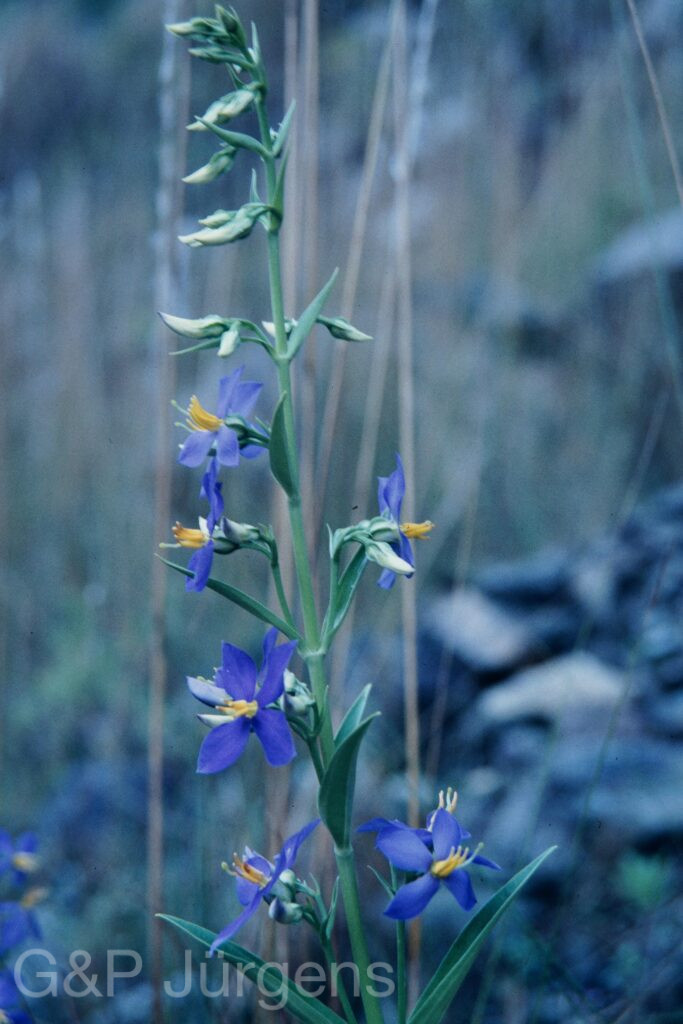
Exacum teres

by GP Jürgens

Wall.

Nepal 95 255 P438 ergebnis
Nepal Valley of Buri Gandaki, Kholabensi 2100m October

Description

Exacum teres is a slender annual gentian of the eastern Himalaya and adjacent Indo-Burmese region, documented by GBIF (about 125 occurrences) from India, Nepal, Bangladesh, China, Myanmar and Bhutan. It grows in moist, open habitats of the warm-temperate and subtropical belt, including grassy banks, terraced field margins, forest clearings and damp roadside slopes, typically below the main forest line. The illustrated material was gathered in the valley of the Buri Gandaki at Kholabensi in Nepal at about 2100 m in October, a montane locality near the upper edge of its altitudinal range, which extends from the lowland hills up into the cooler middle hills.

The plant is an erect, glabrous herb with a quadrangular, often narrowly winged stem (the epithet teres referring to its terete-cylindric aspect) that branches above. The leaves are opposite, sessile to subsessile, ovate to lanceolate, entire, and conspicuously three- to five-nerved from the base. The flowers are borne in a lax terminal and axillary cyme; each has a four-lobed calyx with keeled, narrowly winged segments, and a rotate to broadly campanulate corolla that is blue to violet with a deeper throat. The four stamens bear large yellow anthers that open by terminal pores, a diagnostic feature of Exacum. The bilocular ovary matures into a small, septicidal capsule containing numerous minute, reticulate seeds.

Exacum is a palaeotropical genus centred on Sri Lanka, southern India and Madagascar, with E. teres representing the small Himalayan element of the lineage. As a widespread annual of disturbed and semi-natural grassland it is not considered threatened. Its poricidal anthers and blue corollas indicate buzz-pollination by bees, and several relatives are of horticultural interest as the cultivated Persian violets.

Author: Wall. · Sources: POWO (Kew), GBIF, Flora of China, Flora of Bhutan, Annotated Checklist of the Flowering Plants of Nepal, Klackenberg's monograph of Exacum (Gentianaceae)