
L.
Description
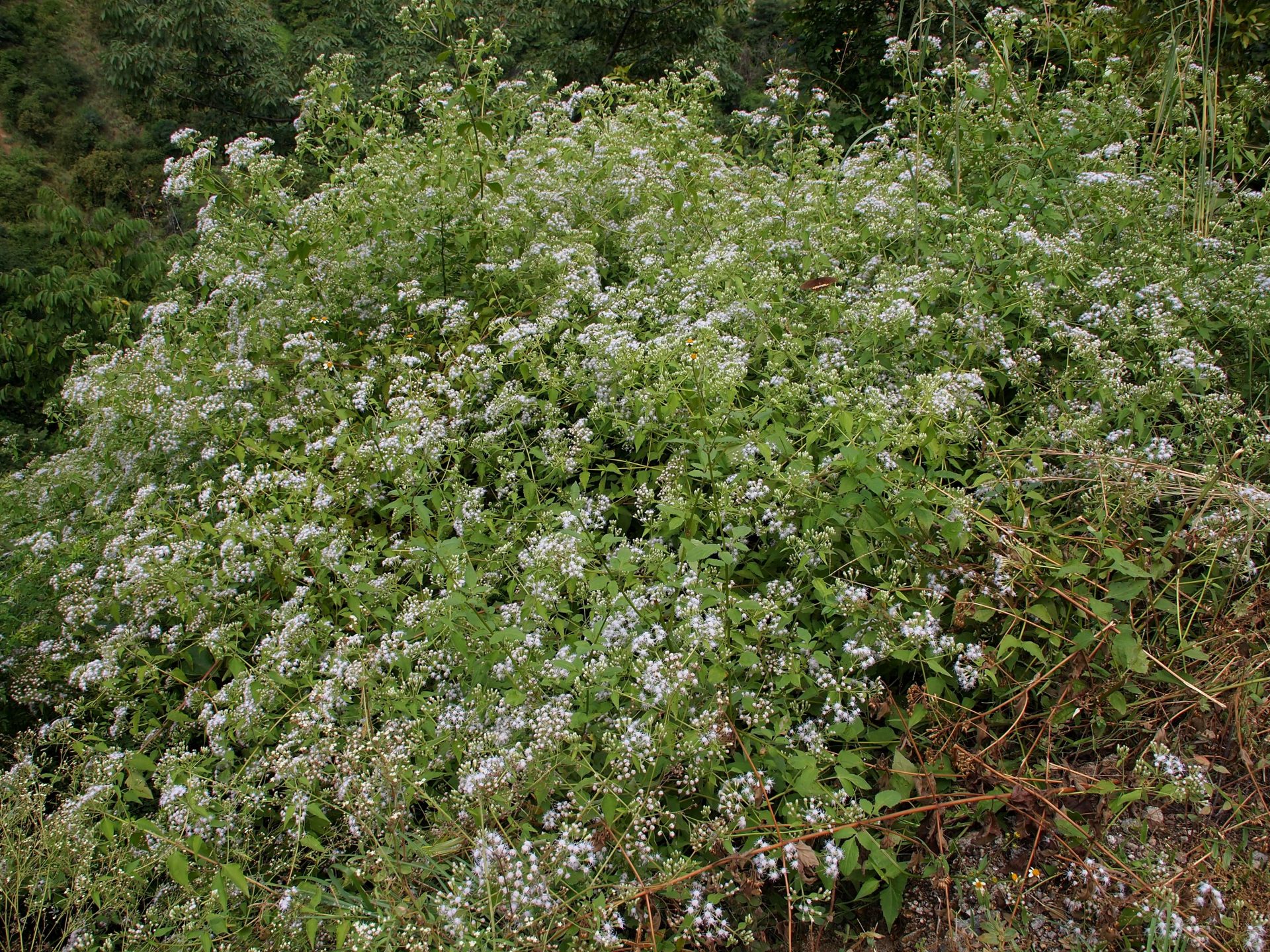
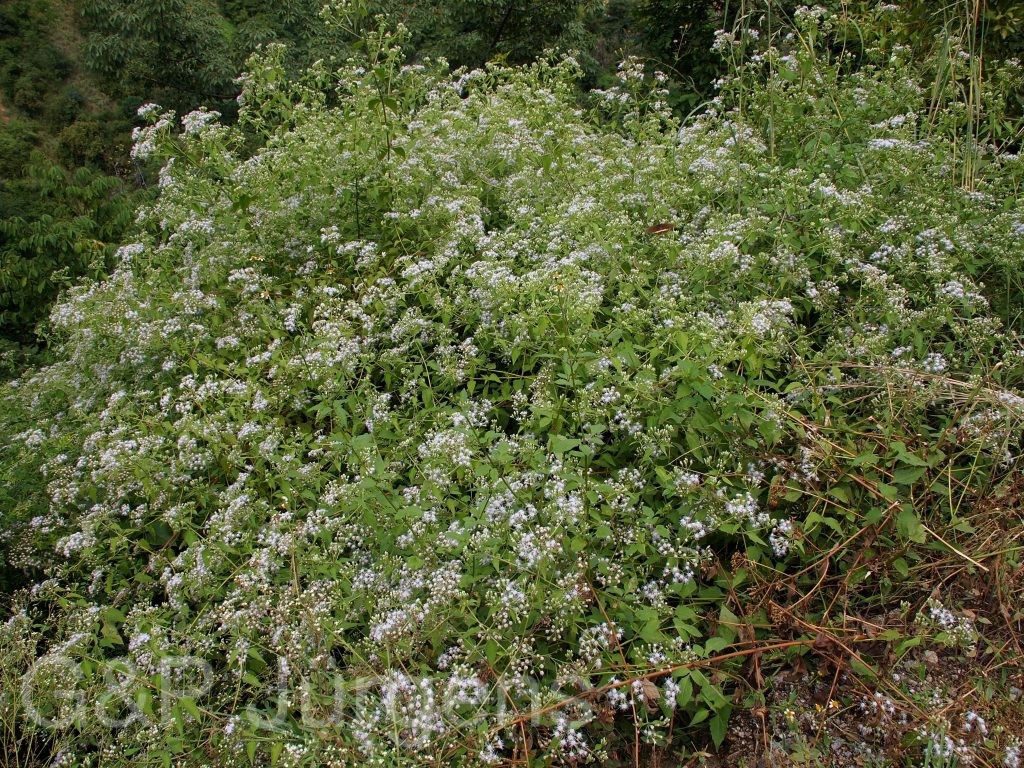
Eupatorium cannabinum, hemp-agrimony, is a wide-ranging temperate herb whose centre of distribution lies across Europe and western Asia; GBIF records overwhelmingly from France, Britain, the Netherlands, Germany, Belgium, Austria and many other European countries total over 687,000 occurrences, attesting to its abundance. In Asia related populations extend into the Himalaya, and the species was photographed at Trashigang in eastern Bhutan at 1150 m in October, in the warm subtropical lower valleys. Throughout its range it favours damp, fertile ground: marsh margins, ditches, wet meadows, streambanks and moist woodland clearings, flowering in late summer and autumn.
It is a robust erect perennial herb 0.5 to 1.5 m tall, with stout, often reddish, finely downy stems arising from a short rhizome. The opposite leaves are palmately divided into three to five lanceolate, toothed, hemp-like segments (hence cannabinum), the uppermost sometimes simple. The numerous small flower heads are crowded into dense, flat-topped terminal corymbs; each narrow head contains only a few tubular florets, discoid and dull pink to mauve, with conspicuously exserted bifid style branches giving the inflorescence a soft fuzzy appearance. The fruit is a small black five-angled cypsela bearing a pappus of fine white bristles.
The species belongs to tribe Eupatorieae; following segregation of many New World species into other genera, Eupatorium s.str. is now a small mainly Eurasian and North American group, of which E. cannabinum is the principal European representative. Its nectar-rich heads are heavily visited by butterflies, hoverflies and bees, an important late-season pollinator resource. It contains pyrrolizidine alkaloids and has a long history in folk medicine. Common on damp disturbed ground, it is of no conservation concern.
Author: L. · Sources: POWO (Kew), GBIF, Flora Europaea, Flora of Bhutan, Eupatorieae systematics (King & Robinson monograph)