Author

GP Jürgens

Lindl.

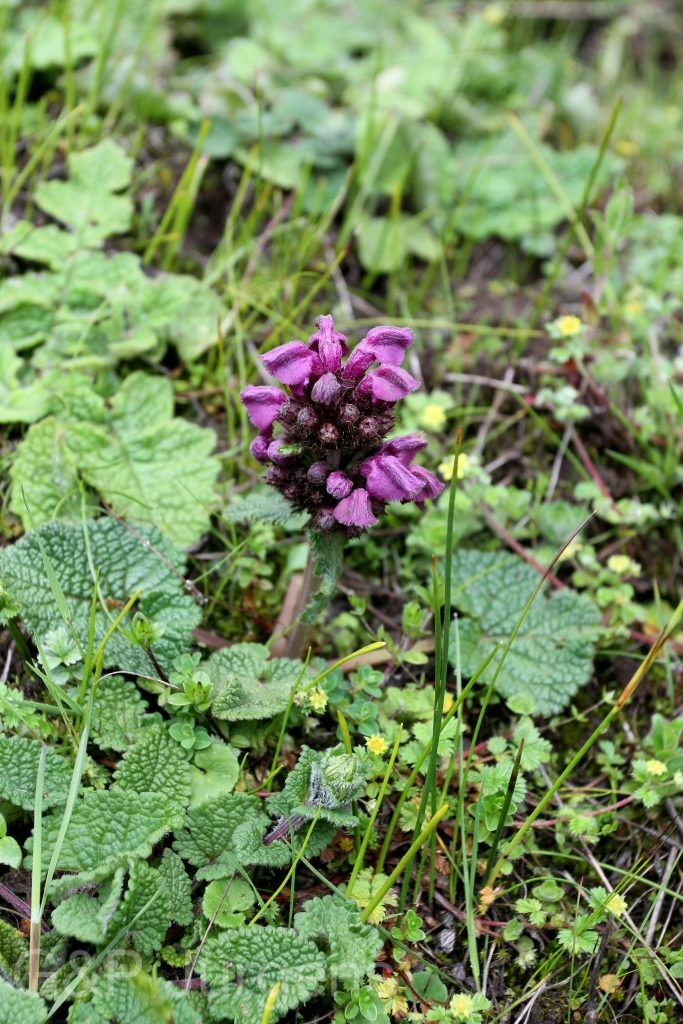
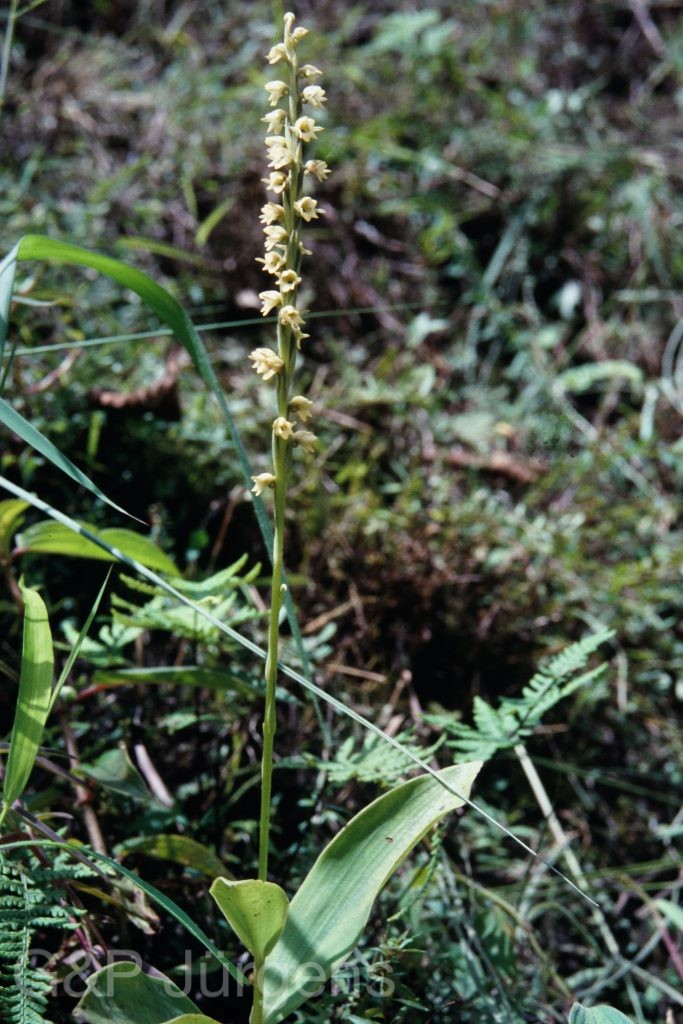
Sikkim2003 20 P24
Sikkim Rathong-Chu 1200m 08.2003
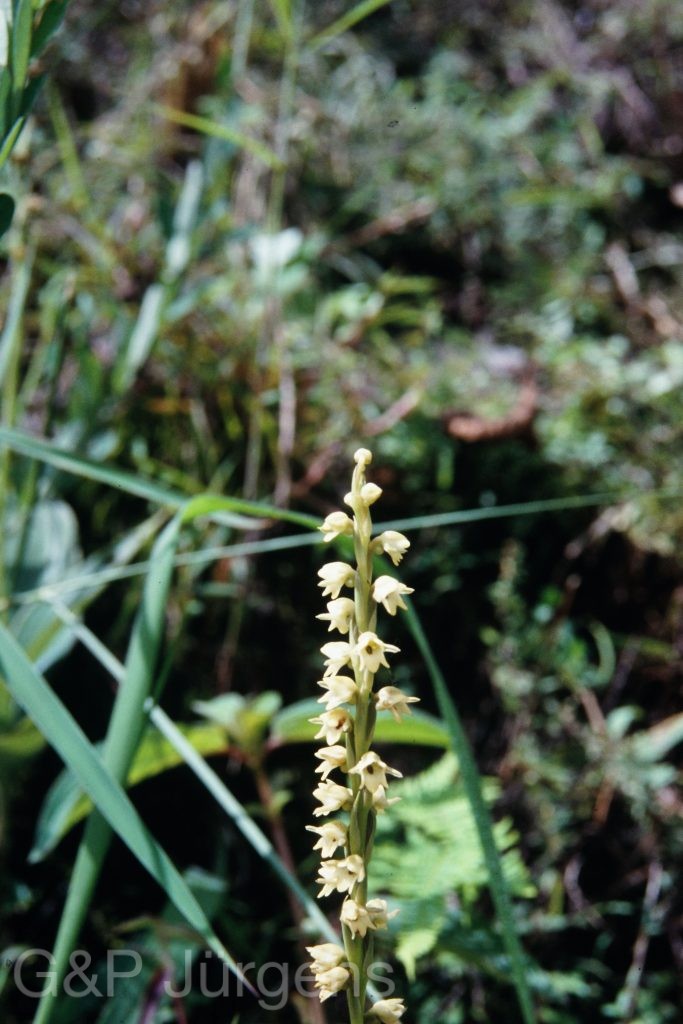
Sikkim2003 21 P25
Sikkim Rathong-Chu 1200m 08.2003

Description

Peristylus goodyeroides is a terrestrial orchid with a broad tropical and subtropical Asian range, the 545 GBIF records spanning China, the Indian subcontinent, Nepal, Bhutan, much of Southeast Asia, Taiwan, Hong Kong, Japan, Timor-Leste and Papua New Guinea. It occupies grassy slopes, open forest, forest margins and scrub from the lowlands to around 2000 m. The photographed plant was found in the Rathong-Chu valley of Sikkim at 1200 m in August, during the monsoon flowering period typical of the species at lower Himalayan elevations.

It is a tuberous geophyte producing an erect leafy stem 20-60 cm tall from ellipsoid underground tubers. The few to several leaves are clustered toward the lower-middle stem, ovate to elliptic-lanceolate, acuminate and sheathing at the base. The inflorescence is a many-flowered cylindrical raceme of small, greenish-white to pale green flowers subtended by lanceolate bracts. Each flower has connivent sepals and petals forming a hood, a small three-lobed lip with a short saccate or conical spur, and the column structure characteristic of the genus, lacking the distinct rostellar arms of related Habenaria.

The genus Peristylus, long confused with Habenaria, is distinguished by its short blunt spur and small viscidia, and P. goodyeroides is the widespread type-like species of the group. Its inconspicuous greenish flowers are pollinated by small insects, and the tuberous habit allows it to survive the seasonal dry period. Given its wide distribution and tolerance of disturbed grassland, it is among the more common members of the genus and is not regarded as threatened, though, like all orchids, it is listed under CITES Appendix II.

Author: Lindl. · Sources: POWO (Kew), GBIF, Flora of China, Flora of Bhutan, Pridgeon et al.: Genera Orchidacearum
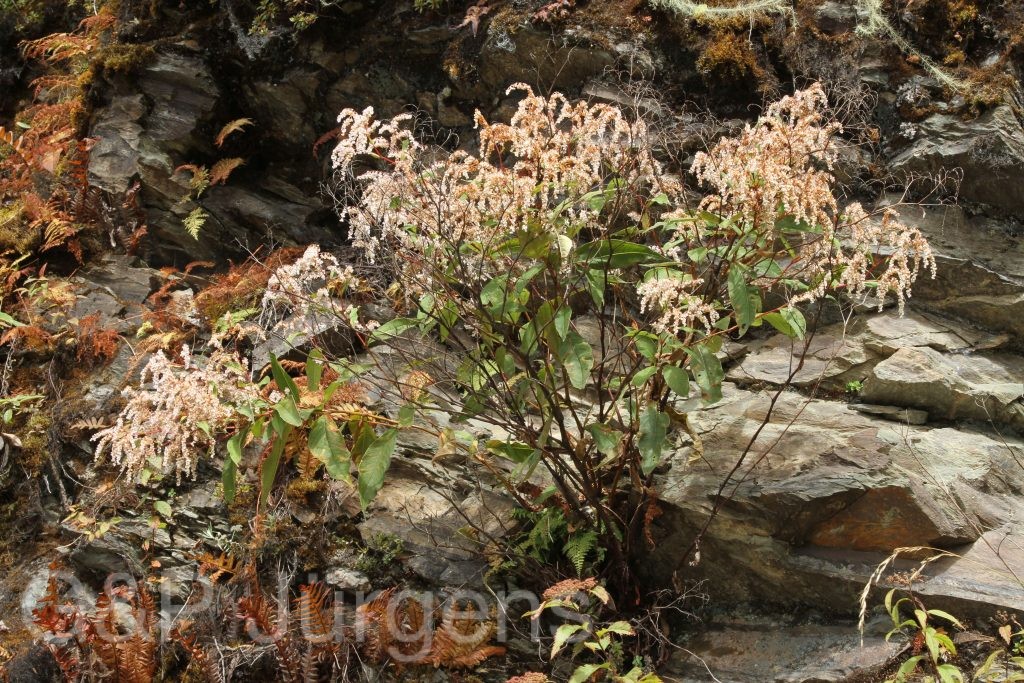
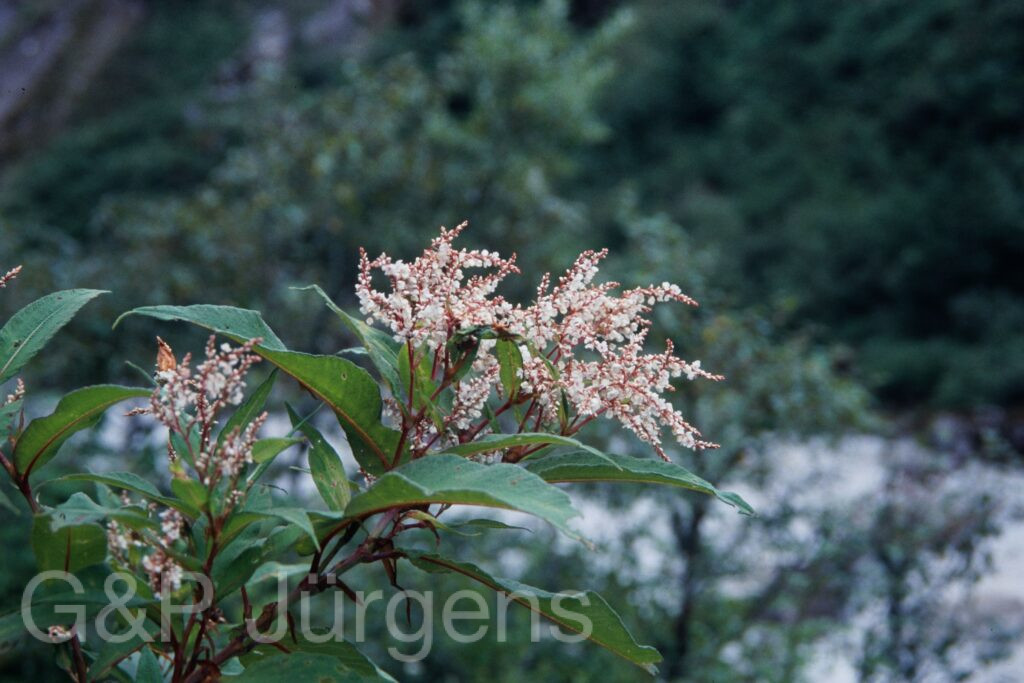
(Hook.f.) Ronse Decr.

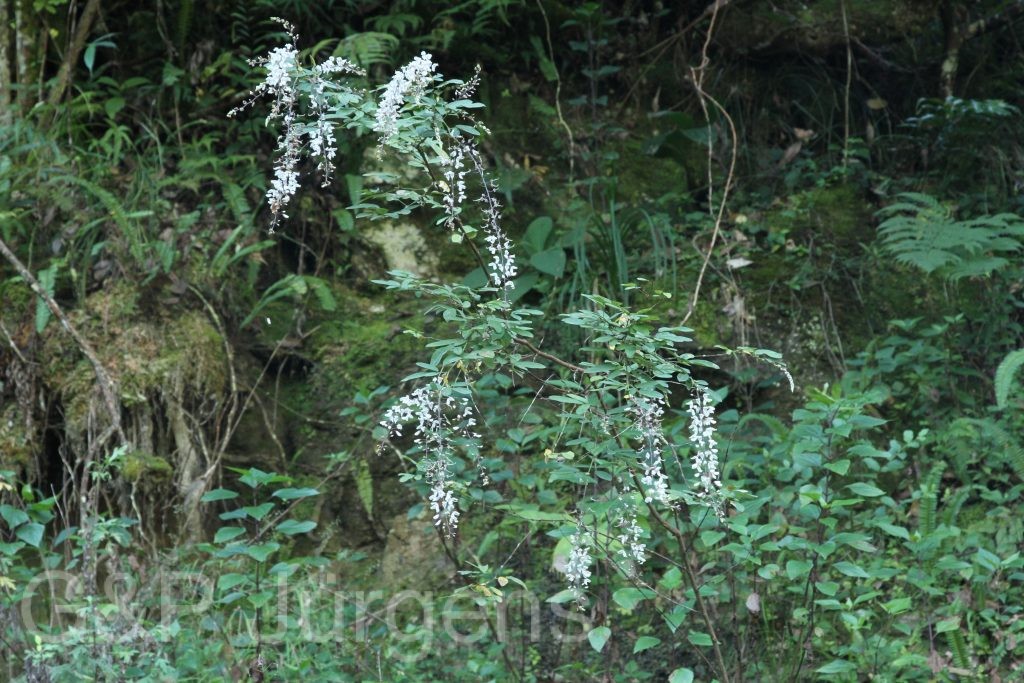
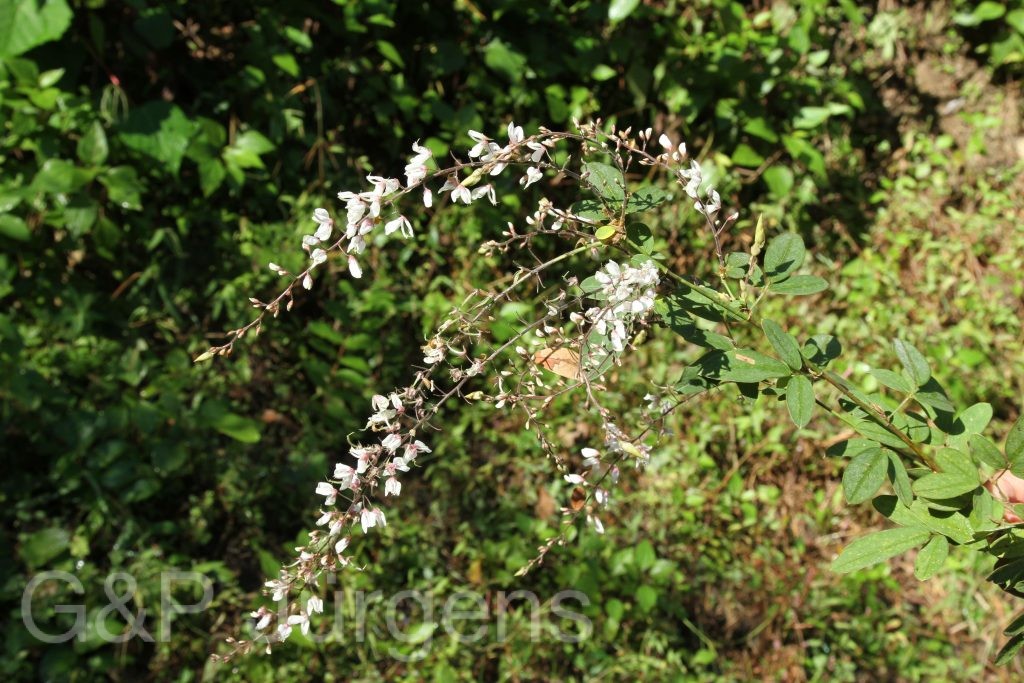
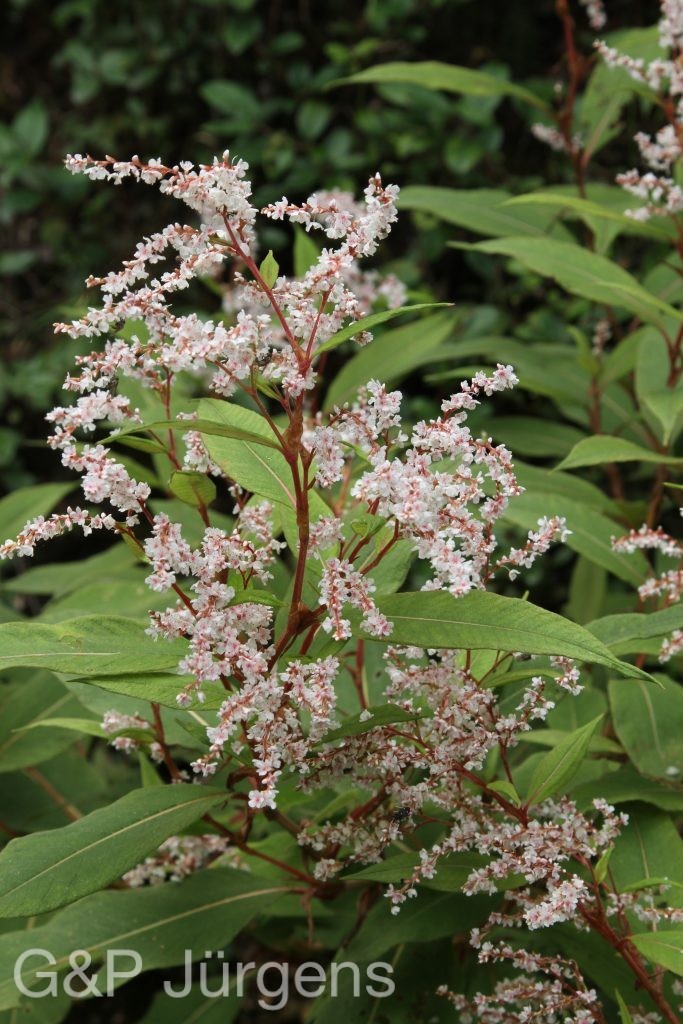
Bhutan2012 20
Bhutan Shele-La, 3200m September
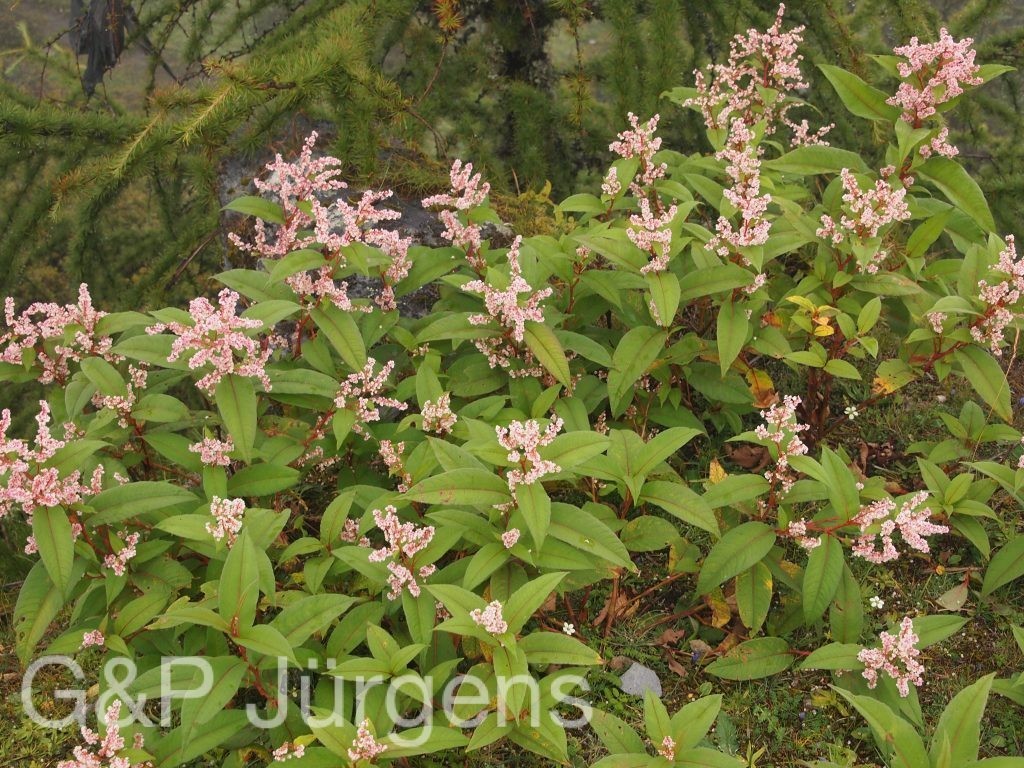
Bhutan2012 91
Bhutan Shele-La, 3200m September

Description

Persicaria campanulata is a clump-forming perennial of the eastern Himalaya and western China, also widely naturalised in temperate gardens elsewhere. GBIF records show its native range across China, Nepal and Bhutan, together with introduced populations in Ireland, Britain, Denmark and New Zealand, totalling around 66 occurrences. It grows on damp, shaded banks, woodland margins, streamsides and moist montane meadows, favouring cool, humid sites with reliable moisture. The photographed plant from the Shele-La in Bhutan at 3200 m, recorded in September, is characteristic of its occurrence in the upper temperate forest and subalpine zone, where it flowers into the late summer and autumn. GBIF lists the name as a synonym (the species having previously been placed in Aconogonon and Polygonum), but Persicaria campanulata is the currently accepted combination.

It is a rhizomatous, spreading herb with erect to ascending, branched stems. The leaves are ovate to elliptic-lanceolate, acuminate, often softly tomentose and pale beneath, with the membranous, tubular ochreae sheathing the nodes characteristic of the family. The flowers are small and bell-shaped, fragrant, borne in dense, branched terminal panicles; the campanulate perianth, from which the epithet derives, is pink to white with five lobes, enclosing eight stamens and a three-styled ovary. The fruit is a small, trigonous, brown achene.

The genus Persicaria comprises knotweeds segregated from a broadly defined Polygonum, distinguished by their fringed ochreae and spicate or paniculate inflorescences. P. campanulata is valued horticulturally for its long autumn flowering, but the same vigorous rhizomatous habit that makes it ornamental has allowed it to escape and naturalise, becoming locally invasive in damp ground in parts of the British Isles and New Zealand.

Author: (Hook.f.) Ronse Decr. · Sources: POWO (Kew), GBIF, Flora of Bhutan, Flora of China (Polygonaceae), Polygonaceae monograph (Brandbyge)

Greuter & Burdet

Bhutan2015 483
Bhutan Pele-La 3100m, October
Sikkim2003 410 G570
Sikkim Zemu Valley 3400m August

Description

Persicaria wallichii (the accepted name under which this taxon is listed, the binomial here being treated as a synonym in GBIF) is a robust perennial knotweed native to the Himalaya and adjacent mountains of China and Myanmar, where it occupies open hillsides, forest margins, riverbanks and disturbed ground in the temperate and subalpine zones. From its Himalayan homeland it has spread widely as an introduced and frequently invasive plant, the GBIF dataset recording it across much of Europe as well as North and South America and New Zealand, totalling well over a thousand occurrences. The illustrated plants from Pele-La in Bhutan at 3100 m, flowering in October, and from the Zemu Valley in Sikkim at 3400 m in August, exemplify its native montane setting.

The plant forms tall, spreading clumps from a vigorous, far-creeping rhizome, with erect to ascending stems that are reddish-tinged and somewhat woody at the base. The leaves are large, ovate-lanceolate to triangular, acuminate, cordate to truncate at the base, often white-tomentose beneath, and subtended by membranous, brownish ochreae sheathing the swollen nodes. The numerous small flowers are borne in much-branched, lax panicles of slender spike-like racemes; each flower has a white to pinkish perianth of five tepals enclosing eight stamens and a trifid style. The fruit is a small, glossy, three-angled (trigonous) achene enclosed by the persistent perianth.

Formerly placed in Polygonum and Aconogonon (reflected in the synonymy and field labels), the species sits within a much-revised section of Persicaria. Its dense rhizomatous growth allows it to form persistent thickets, and outside its native range it behaves as an aggressive colonist of riverbanks and waste ground, prompting management concern in several countries; within the Himalaya it remains a common and ecologically benign component of moist montane vegetation.

Author: Greuter & Burdet · Sources: POWO (Kew), GBIF, Flora of Bhutan, Flora of China (Polygonaceae), Annotated Checklist of the Flowering Plants of Nepal

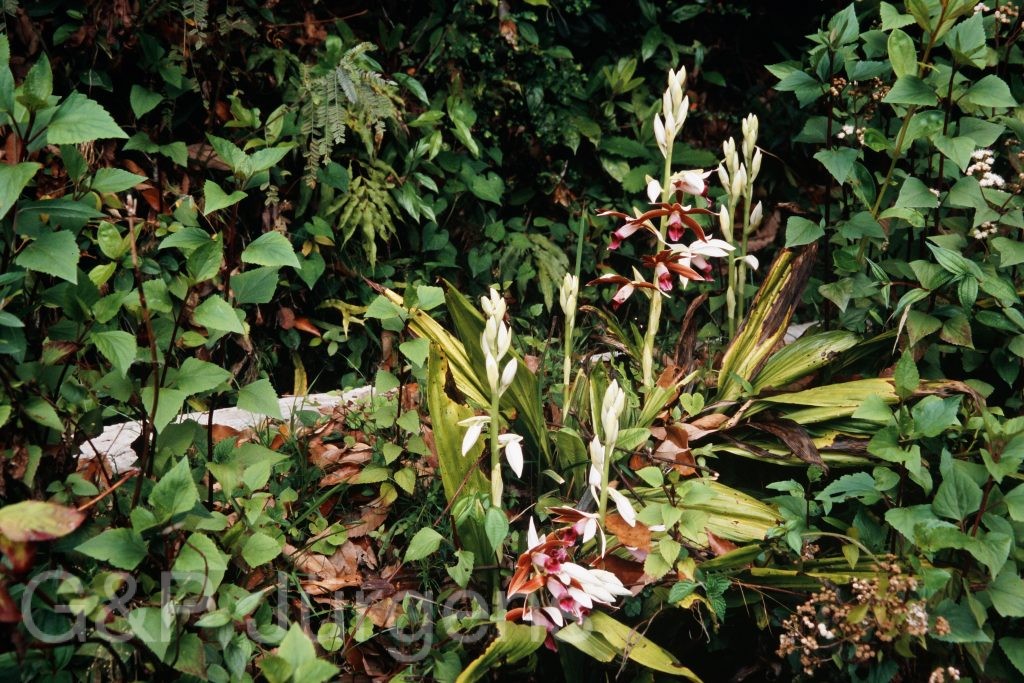
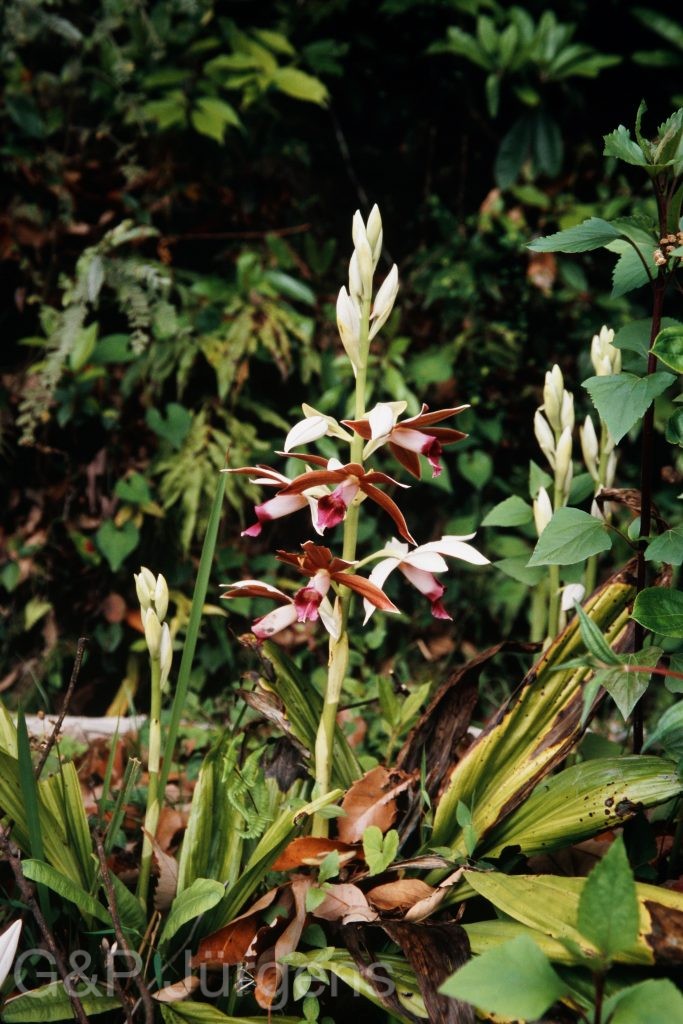
(Banks) Blume

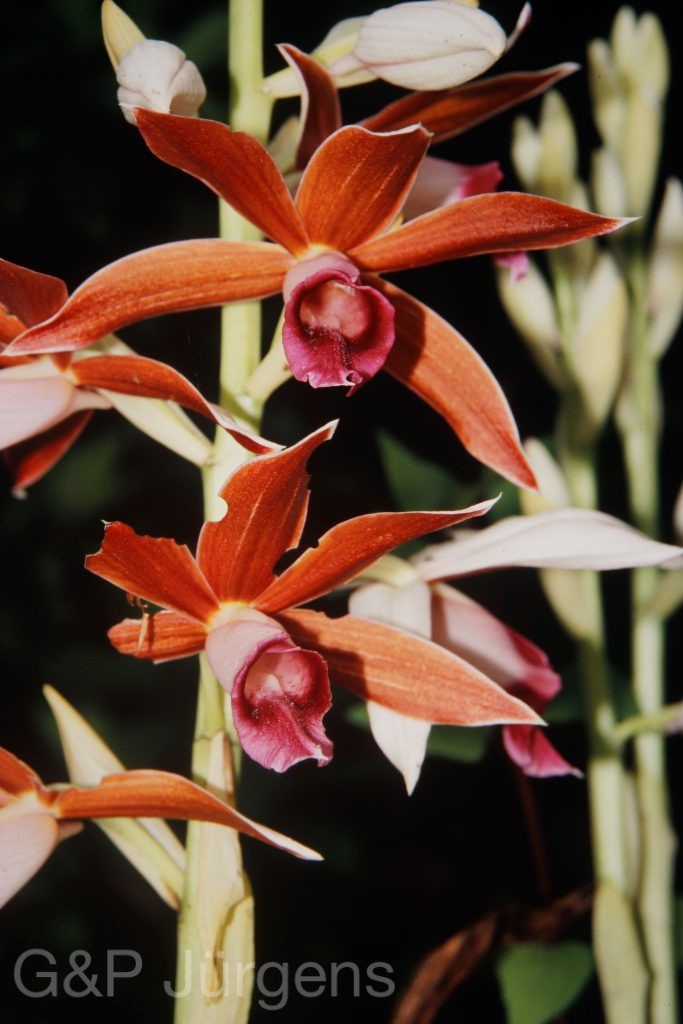
Bh2008 482 G750
Bhutan Samtengang, 2040m April
Bh2008 483 P751
Bhutan Samtengang, 2040m April
Bh2008 485 G753
Bhutan Samtengang, 2040m April

Description

Phaius tankervilleae, the nun's-hood or swamp orchid, is a robust terrestrial orchid with an exceptionally wide Old World tropical and subtropical distribution, recorded from China, India, Bhutan, Indonesia, Malaysia, Papua New Guinea, Australia, the Pacific islands and many other regions, with around 660 occurrence records (some, as in the Americas and Caribbean, reflecting introduction). It grows in damp grassland, marsh margins, swampy forest clearings and moist roadside banks from the lowlands into the lower hills. The photographed plant from Samtengang in western Bhutan at 2040 m, flowering in April, lies toward the upper part of its montane range.

It is a large terrestrial orchid arising from clustered, conical pseudobulbs partly buried in the substrate. The leaves are few, large, broadly lanceolate, plicate (longitudinally pleated) and tapered to a sheathing base. The inflorescence is a tall, erect raceme bearing many showy flowers; the sepals and petals are similar, brownish-red to maroon within and silvery-white outside, while the prominent labellum is tubular and rolled, white flushed with rose-purple and yellow in the throat, with a short basal spur. The fruit is a pendulous capsule releasing innumerable dust-like seeds.

The accepted name Phaius tankervilleae, based on Banks's epithet and combined by Blume, is treated as current despite synonym status in the source dataset; the input family spelling "Orchideaceae" is a variant of the correct Orchidaceae. Like nearly all orchids it depends on mycorrhizal fungi for seed germination. Widely grown as an ornamental and broadly distributed in the wild, it is nonetheless locally threatened by wetland drainage and over-collection in parts of its range.

Author: (Banks) Blume · Sources: POWO (Kew), GBIF, Flora of China (Orchidaceae), Grierson & Long Flora of Bhutan, The Orchids of Bhutan (Pearce & Cribb), Seidenfaden's revisions of mainland Asian Orchidaceae

(Wight & Arn.) Benth.

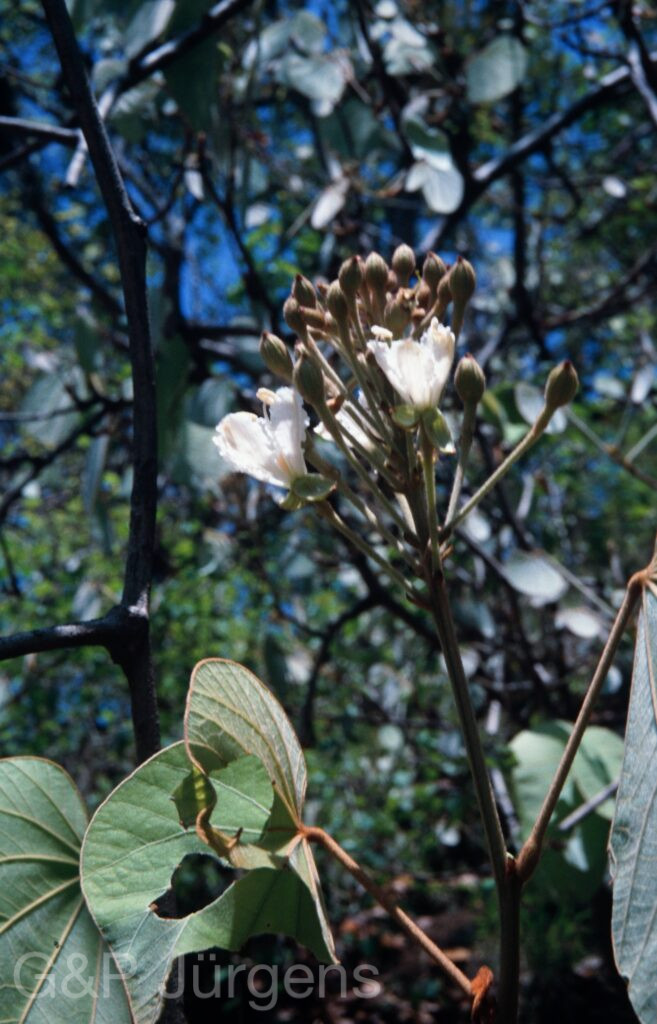
Nepal 2001 184 ergebnis ergebnis
East-Nepal Sabha-Khola 2000m, May
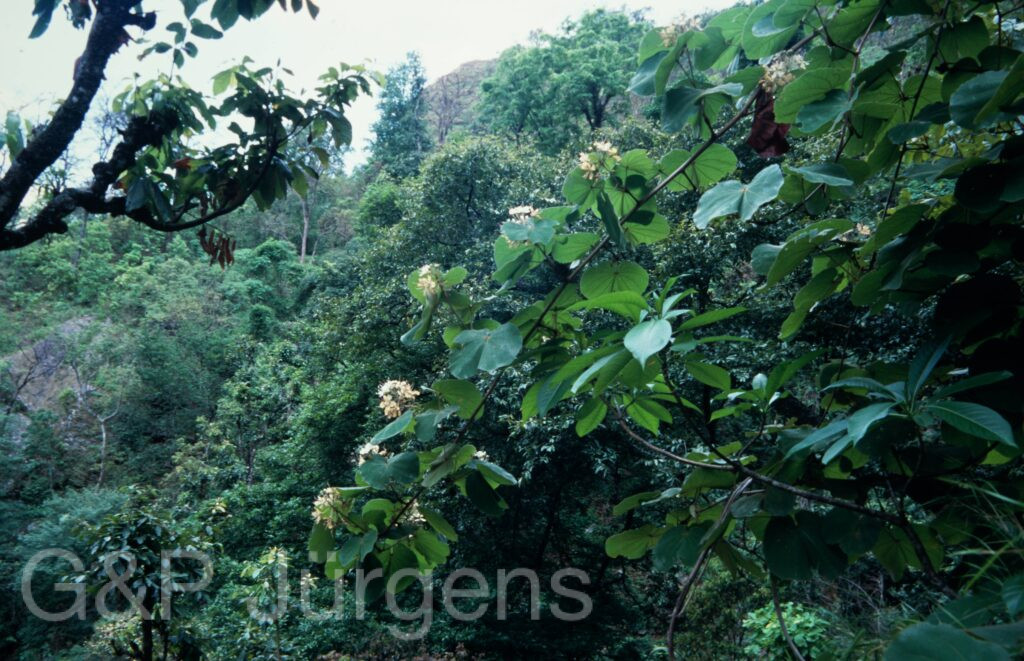
Nepal 2001 476 ergebnis ergebnis
Nepal (Gorkha) Labubhesi 1200m, May

Description

Phanera vahlii (formerly placed in Bauhinia) is a massive woody climber of the Indian subcontinent and Indo-Burmese region, native to India, Nepal, Bhutan, Bangladesh, Myanmar, Laos, Vietnam and China, with over 400 georeferenced records and many further occurrences reflecting cultivation and naturalisation elsewhere. It is a liana of subtropical forests, riverine thickets and forest edges. The Nepalese populations documented from the Sabha Khola in the east at about 2000 m and from Labubhesi in Gorkha at about 1200 m, both flowering in May, span its broad altitudinal tolerance from foothill valleys into temperate forest.

The plant is a gigantic, high-climbing leguminous vine ascending by paired, coiled tendrils, with stems and young parts clothed in dense ferruginous tomentum. The leaves are large, broadly orbicular and conspicuously bilobed at the apex, deeply notched between two rounded lobes in the manner characteristic of the Bauhinia alliance, the lower surface rusty-pubescent. The flowers are borne in large terminal panicles; each has a campanulate calyx and five cream to yellowish-white, clawed petals, with fertile stamens and reduced staminodes. The fruit is a large, woody, oblong pod densely covered with brown velvety hairs and containing several flattened seeds.

The segregation of Phanera from Bauhinia, based on tendrillate climbing habit, stamen number and pollen characters, is now widely followed though some authorities retain a broadly circumscribed Bauhinia. The species is economically important: its tough fibre yields cordage and its very large leaves are used as plates and for wrapping. Widespread and frequently exploited, it is not considered threatened.

Author: (Wight & Arn.) Benth. · Sources: POWO (Kew), GBIF, Flora of Nepal, Flora of British India, Flora of China, Wunderlin's revision of Bauhinia and Phanera

(Benth.) Kamelin & Makhm.

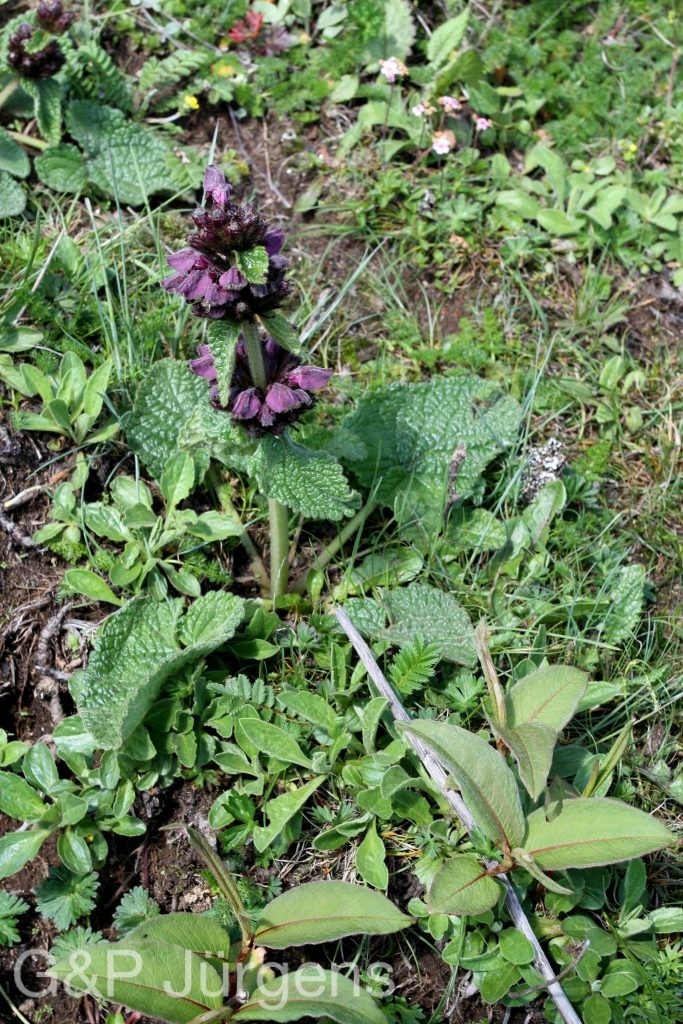
BhutanPG2011 781 01 01
Bhutan Chele-La, 3800m July

Description

Phlomoides breviflora is a perennial herb of the Himalaya and adjacent mountains, recorded from Bhutan, Myanmar, Nepal, India and China. Its roughly 24 georeferenced collections indicate a fairly restricted, infrequently gathered species. It grows in subalpine and alpine meadows, open slopes, dwarf-shrub margins and grazed pasture, typically at about 3000-4200 m. The Bhutanese material from Chele-La at 3800 m in July is characteristic, the plant flowering through the high-summer monsoon on cool, open mountain turf at the upper limit of meadow vegetation.

It is an erect, more or less hairy perennial arising from a woody rootstock, the stems quadrangular as is typical of the mint family. The leaves are opposite, ovate to oblong with a cordate base and crenate margins, rugose above and paler and pubescent beneath, the upper leaves grading into floral bracts. The flowers are crowded in dense axillary verticillasters subtended by stiff bristly bracteoles; the tubular calyx is ribbed and the two-lipped corolla is comparatively short, hence breviflora, with a hooded, bearded upper lip and a spreading three-lobed lower lip, pink to purplish in colour. The four didynamous stamens lie beneath the upper lip, and the fruit comprises four smooth nutlets.

The species, based on the basionym described by Bentham and transferred by Kamelin and Makhmedov, belongs to Phlomoides, a genus segregated from the broadly defined Phlomis and characterised by its herbaceous habit and root structure; the original web placement under the Phlomis name reflects that earlier treatment. The dense bracteate verticillasters channel pollination by long-tongued bumblebees of the high Himalaya. No formal conservation assessment exists, but its relatively narrow range and dependence on intact alpine meadow leave it potentially sensitive to overgrazing and climate-driven habitat shifts.

Author: (Benth.) Kamelin & Makhm. · Sources: POWO (Kew), GBIF, Flora of China, Flora of Bhutan, Revision of Phlomoides (Lamiaceae) monograph

Phlomoides rotata

by GP Jürgens

(Benth. ex Hook.f.) Mathiesen

BhutanPG2011 369
Bhutan Jule-Tso, 4000m June

Description

Phlomoides rotata (formerly Phlomis rotata) is a distinctive stemless mint of the high Himalaya and Tibetan plateau. GBIF records it from China, Nepal, India, Bhutan and Pakistan, with around 700 occurrences spanning the alpine zone of the Sino-Himalayan region. It grows on open stony slopes, gravelly alpine turf, screes and pasture between roughly 3700 and 5200 m. The plant illustrated was photographed at Jule-Tso in Bhutan at 4000 m in June, forming a flattened rosette pressed against the ground, the characteristic habit by which the species hugs the substrate in the windswept high-alpine environment.

It is an acaulescent (stemless) perennial arising from a thick rootstock, the leaves forming a low basal rosette appressed to the soil. The leaves are ovate to orbicular, crenate, rugose with impressed venation and clothed in greyish indumentum. As the epithet rotata (wheel-like) implies, the verticillasters are condensed into a dense, radiating, disc-like terminal head sessile in the centre of the rosette. The bilabiate corollas are purple to violet, the hooded upper lip protecting the four didynamous stamens; the fruit comprises four smooth nutlets enclosed in the persistent tubular calyx.

The genus Phlomoides was reinstated and broadened to absorb much of Phlomis following molecular phylogenetic studies in subfamily Lamioideae, hence the binomial transfer. The ground-hugging rosette habit is a classic adaptation to alpine cold, wind and grazing, minimising exposure while exploiting the warmer boundary layer at soil level. Widely used in Tibetan medicine, the species is collected from the wild; it remains common across its broad high-altitude range and is not considered threatened.

Author: (Benth. ex Hook.f.) Mathiesen · Sources: POWO (Kew), GBIF, Flora of China, Flora of Pakistan, Annotated Checklist of the Flowering Plants of Nepal, Phylogeny and classification of subfamily Lamioideae (Lamiaceae)

(L.) Desv.

Bhutan2015 553
Bhutan Moshu 1400m, October
Bhutan2015 554
Bhutan Moshu 1400m, October

Description

Phyllodium pulchellum (L.) Desv. is a widely distributed subtropical to tropical legume of South and Southeast Asia and Australasia, with an extensive GBIF range (including CN, TW, IN, ID, TH, PH, AU, PG, VN, MM, LA, LK, KH, NP, JP, MY and BD, among others) and around 2442 occurrences. It inhabits open forest, woodland margins, savanna, grassy slopes and disturbed roadside thickets at low to moderate elevations. The image record from Moshu in southern Bhutan at 1400 m, in October, places it in the warm subtropical foothill zone at the lower margin of the Himalayan flora, well below the alpine taxa with which it is here grouped.

It is a shrub or subshrub with erect, branched and often tomentose stems. The leaves are pinnately trifoliolate, the terminal leaflet markedly larger than the laterals and ovate to elliptic with an entire margin. The inflorescence is highly distinctive: an elongate terminal raceme in which the small flowers are borne in clusters concealed between pairs of large, rounded, conspicuously veined bracts arranged like the leaves of a fern frond, the feature for which the genus Phyllodium is named. The flowers are typical papilionate legumes, small and whitish to pale yellow. The fruit is a small flattened lomentum, breaking transversely into one-seeded segments.

Phyllodium belongs to the tribe Desmodieae of subfamily Faboniodeae (Papilionoideae), allied to Desmodium, and the paired foliaceous bracts are a hallmark of the genus. The lomentum segments, with their hooked or sticky surfaces, promote epizoochorous dispersal. As a nitrogen-fixing legume it is significant in early-successional and grassland communities, and is used in traditional medicine across its range; it is widespread and not of conservation concern.

Author: (L.) Desv. · Sources: POWO (Kew), GBIF, Flora of China (Fabaceae: Desmodieae), Flora of Bhutan, Ohashi monograph of the Desmodium group (Leguminosae)

(DC.) M.L.Zhang & Podlech

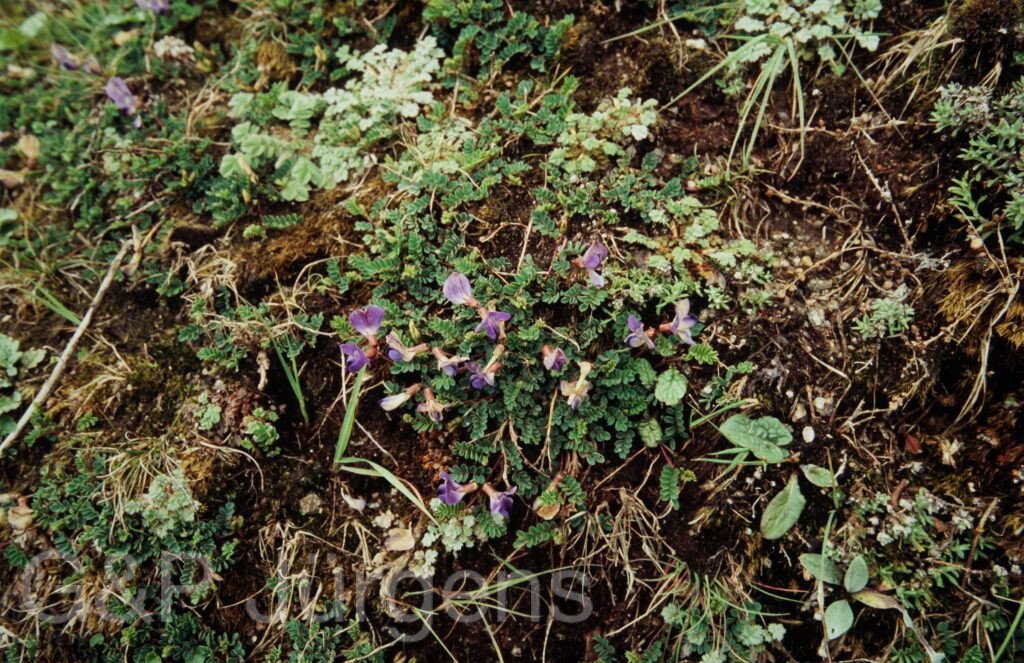
Nepal 2009 27 ergebnis
Nepal Helambu Koktrok 3000m, May

Description

Phyllolobium donianus (correctly P. donianum, the accepted spelling), formerly placed in Astragalus, is a Sino-Himalayan legume distributed from Nepal through northern India, Sikkim and Bhutan into south-western China, with 256 GBIF records concentrated in the central and eastern Himalaya. It grows on open grassy slopes, forest clearings, banks and stony alpine pastures in the temperate to subalpine zone. The cited collection from Koktrok in the Helambu region of Nepal at 3000 m in May places its flowering in the late-spring period on warm-temperate mountain grassland before the onset of the summer monsoon.

It is a perennial herb with slender, ascending to trailing stems arising from a woody rootstock, the herbage thinly clothed in appressed medifixed (dolabriform) hairs typical of the genus. The leaves are imparipinnate with several pairs of small elliptic to obovate leaflets. The flowers are pea-shaped (papilionaceous), borne in axillary racemes on long peduncles, the corolla purplish to violet-blue with a notched standard, oblong wings and a blunt keel, subtended by a campanulate, hairy calyx with short teeth. The fruit is a small, membranous to leathery legume, somewhat inflated and stipitate, dehiscing to release several reniform seeds.

Phyllolobium was segregated from the vast genus Astragalus by Zhang and Podlech on the basis of molecular and morphological evidence, comprising a distinctive Asian clade of milkvetches. P. donianum, transferred from Astragalus donianus DC., exemplifies this realignment. Like other milkvetches it is nitrogen-fixing through rhizobial symbiosis and bee-pollinated; it is widespread and not of conservation concern.

Author: (DC.) M.L.Zhang & Podlech · Sources: POWO (Kew), GBIF, Flora of China, Annotated Checklist of the Flowering Plants of Nepal, Flora of Bhutan, Zhang & Podlech monograph of Phyllolobium

(DC.) C. Norman

Sikkim2003 247 P340
Sikkim Dzongri 4100m 08.2003

Description

Physospermopsis obtusiuscula is an alpine umbellifer of the eastern and central Himalaya, distributed across China (Tibet and adjacent provinces), Nepal, northern India and Bhutan, the roughly 136 GBIF records tracing this high-mountain arc. It inhabits open alpine meadows, moist grassy slopes, scree margins and the edges of dwarf-rhododendron and juniper scrub, characteristically between about 3500 and 4800 m. The photographed plant from Dzongri in Sikkim at 4100 m in August illustrates its late-summer flowering on a damp, high-alpine pasture, where it grows among cushion plants and short turf.

It is a small to medium perennial herb arising from a slender taproot or short rhizome, with one to few erect, ribbed, sometimes purplish stems. The leaves are mostly basal, with sheathing petioles, the blade ternately to pinnately dissected into narrow, obtuse ultimate segments. The inflorescence is a compound umbel subtended by conspicuous, often leafy bracts and bracteoles; the small flowers bear white to pinkish petals. The fruit is a mericarp pair, ovoid and somewhat laterally compressed, with prominent ribs, the genus name alluding to the inflated or bladder-like fruit character within the Apioideae.

The genus Physospermopsis comprises a small group of high-Asian umbellifers centred on the Himalaya and the Hengduan Mountains, allied to Pleurospermum and segregated chiefly on fruit and vittae characters. P. obtusiuscula, distinguished by its blunt leaf segments, is a typical element of the wet alpine flora at the upper limit of vascular plant growth. It is not formally assessed for conservation but, like other narrowly distributed alpine umbellifers, is potentially sensitive to grazing pressure and climate-driven upslope shifts.

Author: (DC.) C. Norman · Sources: POWO (Kew), GBIF, Flora of China, Flora of Bhutan, Annotated Checklist of the Flowering Plants of Nepal, Umbelliferae of the Himalaya (revision)