
(L.) Desv.
Description
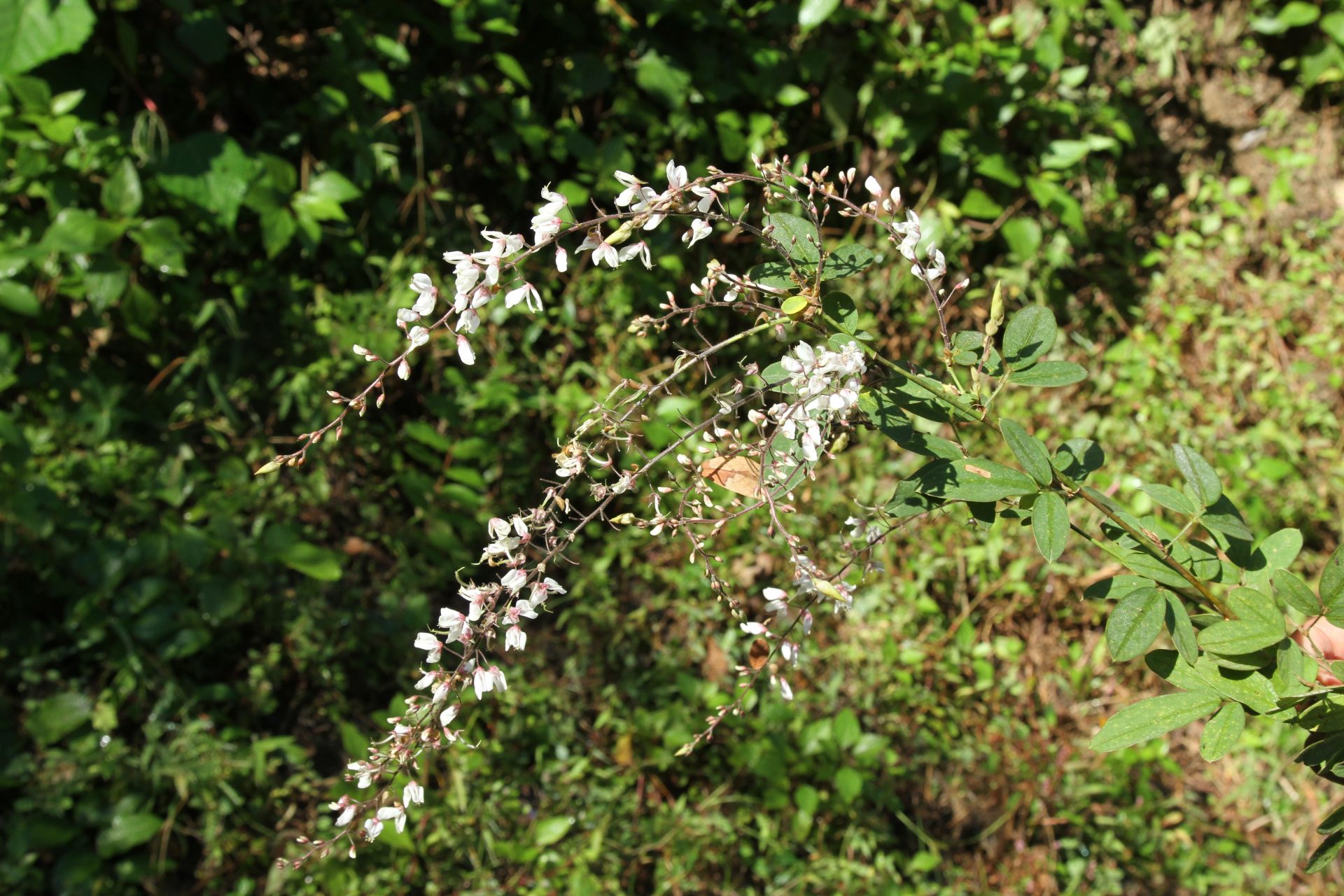
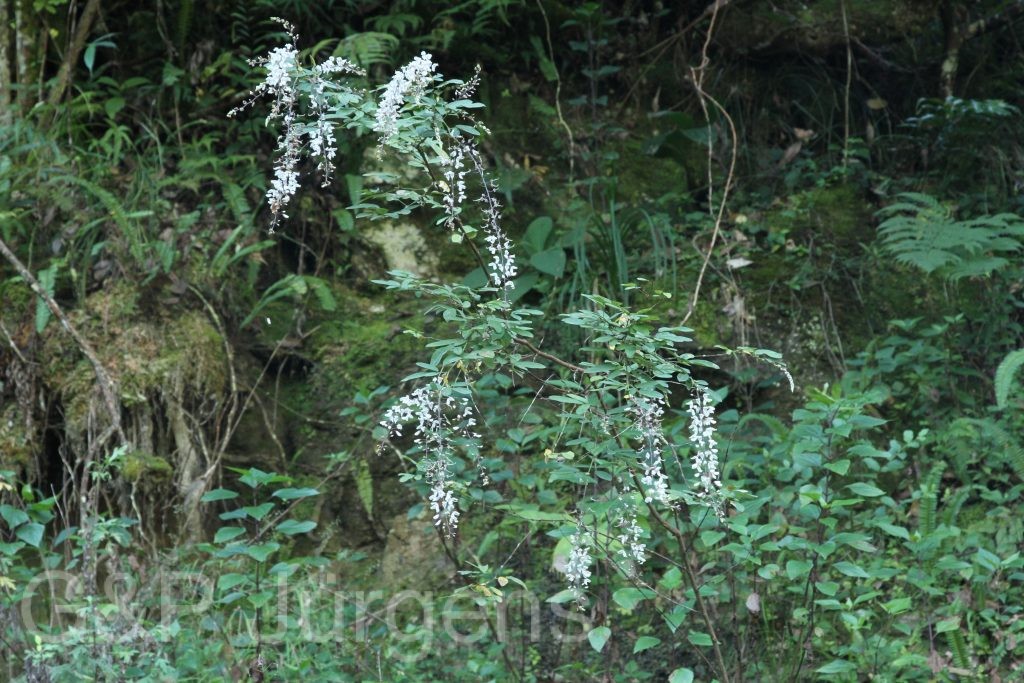
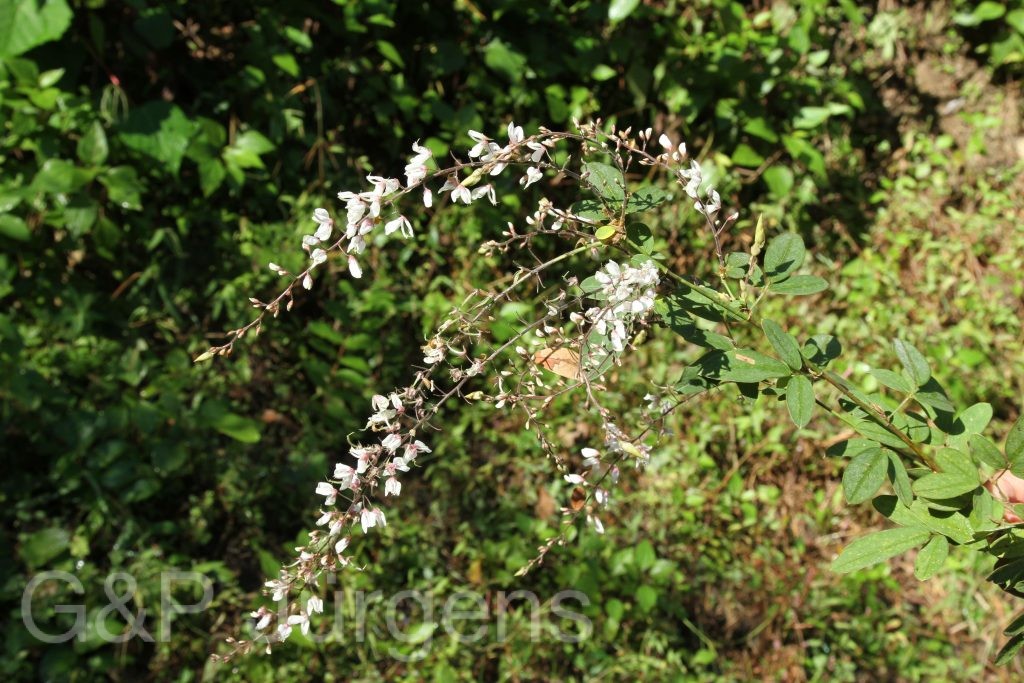
Phyllodium pulchellum (L.) Desv. is a widely distributed subtropical to tropical legume of South and Southeast Asia and Australasia, with an extensive GBIF range (including CN, TW, IN, ID, TH, PH, AU, PG, VN, MM, LA, LK, KH, NP, JP, MY and BD, among others) and around 2442 occurrences. It inhabits open forest, woodland margins, savanna, grassy slopes and disturbed roadside thickets at low to moderate elevations. The image record from Moshu in southern Bhutan at 1400 m, in October, places it in the warm subtropical foothill zone at the lower margin of the Himalayan flora, well below the alpine taxa with which it is here grouped.
It is a shrub or subshrub with erect, branched and often tomentose stems. The leaves are pinnately trifoliolate, the terminal leaflet markedly larger than the laterals and ovate to elliptic with an entire margin. The inflorescence is highly distinctive: an elongate terminal raceme in which the small flowers are borne in clusters concealed between pairs of large, rounded, conspicuously veined bracts arranged like the leaves of a fern frond, the feature for which the genus Phyllodium is named. The flowers are typical papilionate legumes, small and whitish to pale yellow. The fruit is a small flattened lomentum, breaking transversely into one-seeded segments.
Phyllodium belongs to the tribe Desmodieae of subfamily Faboniodeae (Papilionoideae), allied to Desmodium, and the paired foliaceous bracts are a hallmark of the genus. The lomentum segments, with their hooked or sticky surfaces, promote epizoochorous dispersal. As a nitrogen-fixing legume it is significant in early-successional and grassland communities, and is used in traditional medicine across its range; it is widespread and not of conservation concern.
Author: (L.) Desv. · Sources: POWO (Kew), GBIF, Flora of China (Fabaceae: Desmodieae), Flora of Bhutan, Ohashi monograph of the Desmodium group (Leguminosae)