Author

G & P Jürgens

Kurz

BhutanPG2011 91
Bhutan Chogcham, 3100m June

Sikkim 2006 162 ergebnis
India West-Bengal, Molley 3000m, May

Description

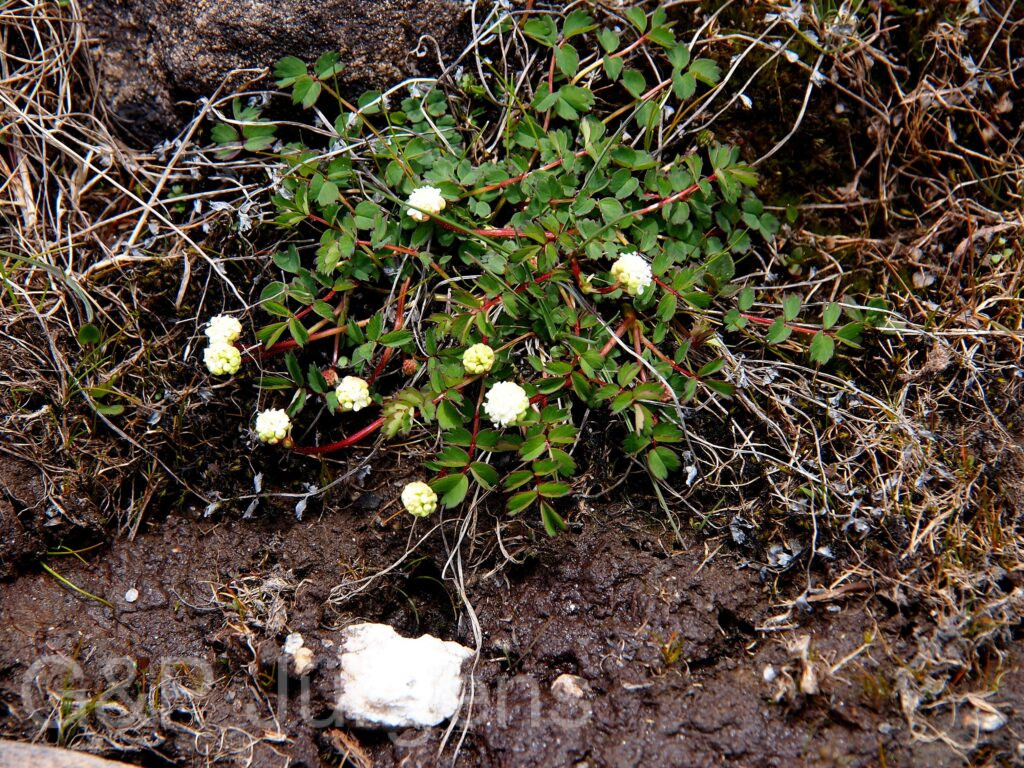
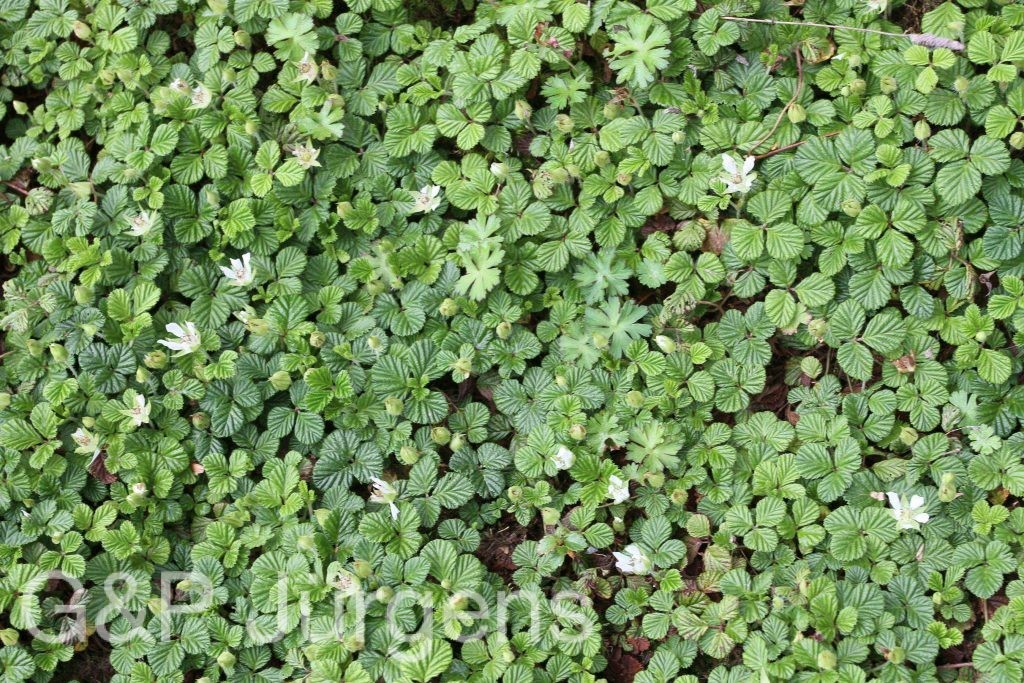
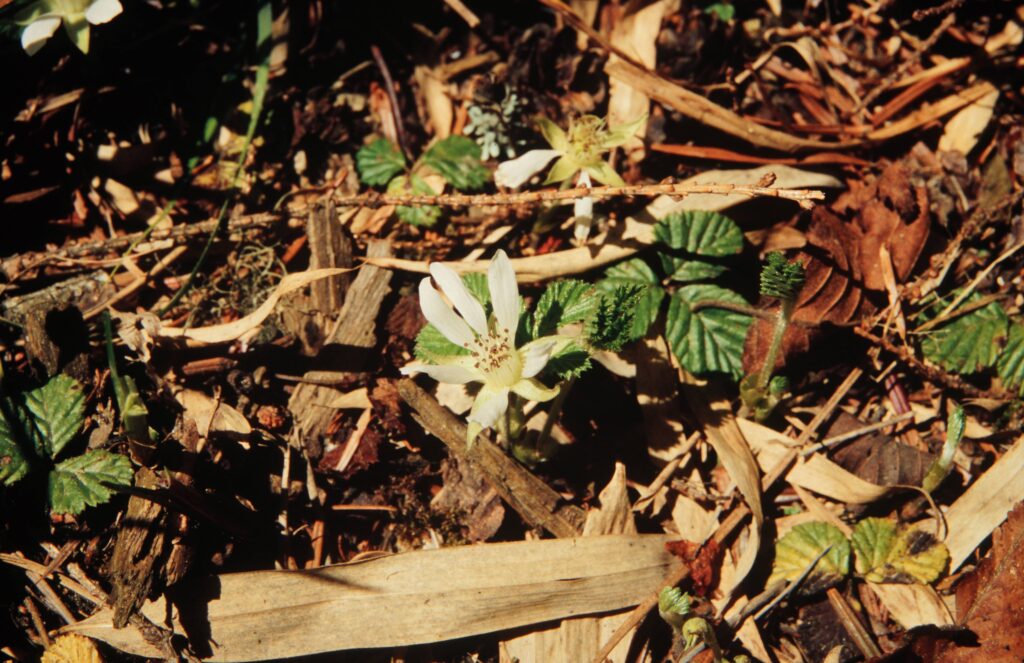
Rubus fockeanus is a diminutive, creeping bramble of the high mountains of Asia, ranging through China, Nepal, Bhutan, India, Afghanistan and Myanmar, with GBIF recording over 400 occurrences; the records from Great Britain and New Zealand represent introduced or cultivated material. It grows in damp alpine and subalpine meadows, mossy forest floors, streamsides and the margins of rhododendron scrub, broadly between 2500 and 4000 m. The two illustrated gatherings, from Chogcham in Bhutan at 3100 m in June and from Molley in West Bengal at 3000 m in May, are typical of its preference for cool, moist, sheltered montane ground.

Unlike the woody, arching brambles of the lowlands, R. fockeanus is a slender, herbaceous to subherbaceous perennial creeper, rooting at the nodes of prostrate stems to form mats, and unarmed or nearly so. The leaves are ternate (trifoliolate), with rounded, crenate-toothed leaflets. The flowers are small, solitary and white, with five petals, five sepals and numerous stamens surrounding an apocarpous gynoecium. The fruit is a small, red, aggregate drupelet cluster (an etaerio of drupelets) typical of Rubus, edible and dispersed by birds and mammals.

Within the immense and taxonomically intricate genus Rubus, this species belongs to a group of small, herbaceous, creeping alpine brambles (allied to subgenus Chamaebatus / Cylactis), distinguished by their ternate leaves, solitary flowers and matted habit. Widespread and locally common across the high Asian mountains, it is of no conservation concern and contributes to alpine ground cover and to the diet of montane fauna.

Author: Kurz · Sources: POWO (Kew), GBIF, Flora of Bhutan, Flora of China, Rubus monographic treatments
D.Don

Garh 07 77 ergebnis
India Garhwal Sana at Mandakini 1750m, June

Description

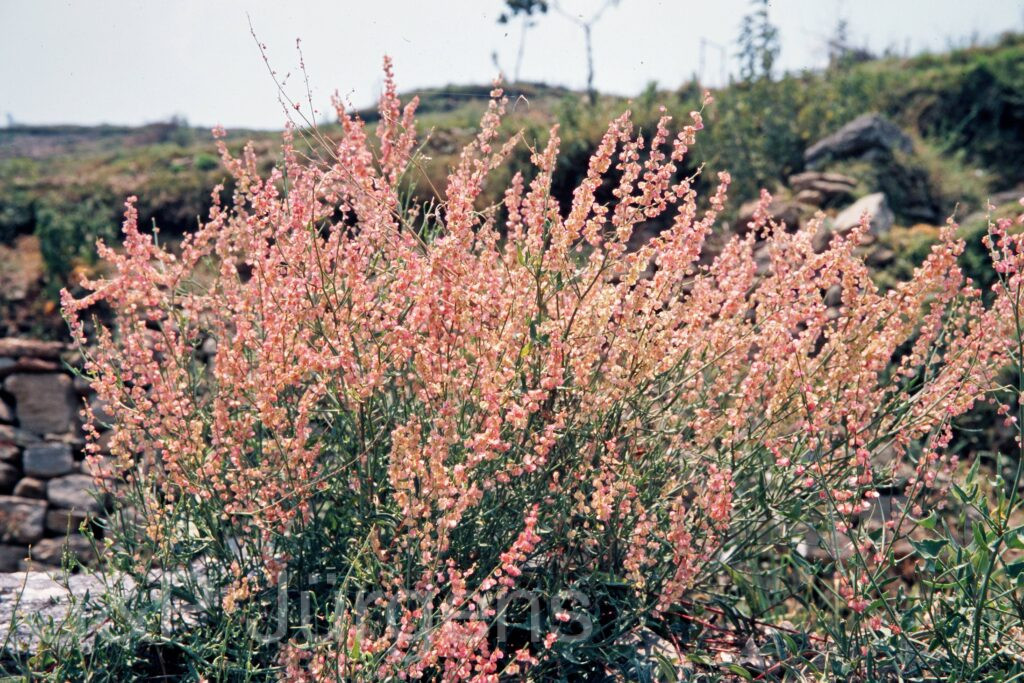
Rumex hastatus is a widespread sub-shrubby dock distributed across the Himalaya and adjacent uplands, with GBIF documenting some 756 occurrences spanning China, India, Pakistan, Nepal, Afghanistan, Bhutan and Myanmar, alongside scattered introduced records in New Zealand and North America that mark it as a casual alien beyond its native range. It is a colonist of dry, sunny, often disturbed ground: rocky banks, terraced field margins, road cuttings, riverine gravels and open hillsides, ranging from around 700 m to over 3000 m. The plant photographed at Sana on the Mandakini in Garhwal, India, at about 1750 m in June, represents a typical warm-temperate montane locality where the species forms conspicuous reddish-tinged stands on stony slopes.

Morphologically it is a much-branched, woody-based perennial or subshrub reaching 30 to 100 cm, the slender intricate branches glabrous and often reddish. The leaves are characteristically hastate, the small narrow blade bearing a pair of spreading basal lobes, hence the epithet; lower leaves may be obovate, and the foliage is somewhat fleshy and grey-green. As in all Rumex the stem is sheathed at the nodes by membranous ochreae. The inflorescence is a large, lax, much-branched terminal panicle of small dioecious or polygamous flowers. The fruiting perianth develops three enlarged, rounded, membranous and often rose-tinted inner valves (wings) without conspicuous tubercles, enclosing a small trigonous brown nutlet and aiding wind dispersal.

The species sits within Rumex subgenus Acetosa, the sorrels, distinguished by their hastate or sagittate leaves, sour oxalate-rich sap and unisexual flowers. R. hastatus is valued locally as a pot-herb and in traditional medicine, the acidic foliage used as a refreshing condiment and astringent. Ecologically it is a hardy pioneer of degraded and eroding substrates, tolerant of drought and grazing, which underlies both its abundance throughout the Himalayan foothills and its capacity to naturalise elsewhere. It is of no conservation concern, being common and adaptable across a broad altitudinal and geographic span.

Author: D.Don · Sources: POWO (Kew), GBIF, Flora of China Vol. 5, Flora of Pakistan, Flora of Nepal, Rechinger Monograph of Rumex

Wall. ex Andersson

Garh 07 395 2 ergebnis
India Garhwal Khiar Kutti 3950m, June

Description

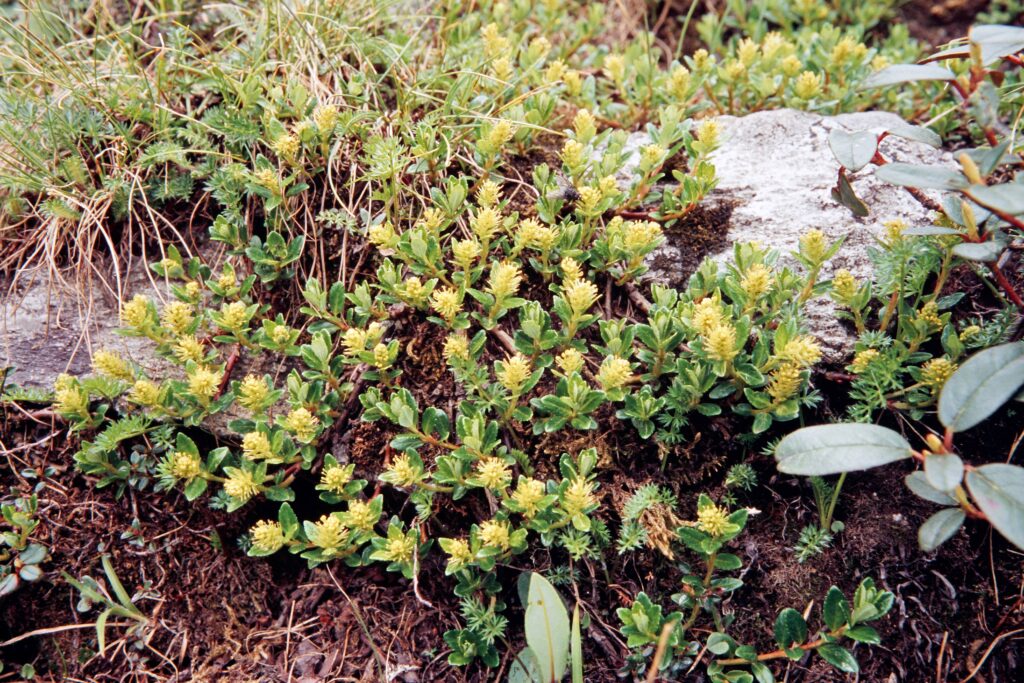
Salix lindleyana is a high-altitude dwarf willow distributed across the Himalayas from Pakistan through northern India, Nepal, and Bhutan to southwest China (Xizang, Yunnan) and northern Myanmar. GBIF records approximately 773 occurrences, concentrated in the alpine zones of the western and central Himalayas. The species is a characteristic element of subnival and alpine habitats at 3,500–5,200 m elevation, growing on moraines, scree slopes, stream margins, and moist alpine meadows. At Khiar Kutti in Garhwal at 3,950 m, it forms prostrate mats on gravelly substrates near glacial meltwater channels, flowering in June as the snowpack recedes and summer warmth permits a brief growing season.
Salix lindleyana is a prostrate, creeping deciduous shrub rarely exceeding 5–15 cm in height. Stems are slender, woody, rooting at the nodes, spreading laterally to form dense mats up to 1 m or more across. Leaves are small, elliptic to obovate, 5–15 mm long, entire or obscurely crenulate, glabrous at maturity, bright green above and slightly glaucous beneath. Catkins are terminal, erect, 1–3 cm long, appearing with or just after the leaves; male catkins bear stamens with purple-tipped filaments and yellow anthers, while female catkins develop into capsules 3–5 mm long containing minute, comose seeds that are dispersed by wind. The entire growth form is adapted to minimise exposure to desiccating alpine winds and to capture warmth from the ground surface.
Salix lindleyana is one of the highest-growing woody plants in the Himalayas and an important pioneer species in alpine and subnival ecosystems. Its prostrate, mat-forming habit stabilises loose substrates on moraines and scree slopes, facilitating soil development and subsequent colonisation by other alpine plants. The species is named after the English botanist John Lindley and was formally described by Andersson based on Wallich's Himalayan collections. It belongs to the section Chamaetia, a group of arctic-alpine dwarf willows, and is closely related to S. serpyllifolia of the European Alps — a biogeographical parallel reflecting Tertiary migration routes between the Alpine and Himalayan orogens.

Author: Wall. ex Andersson · Sources: POWO (Kew), GBIF, Flora of China Vol. 4, Flora of Pakistan Vol. 203, Polunin & Stainton: Flowers of the Himalaya (1984)

Royle ex Benth.

Nepal 99 867 ergebnis
West-Nepal Sanu Bheri 3500m, July

Description

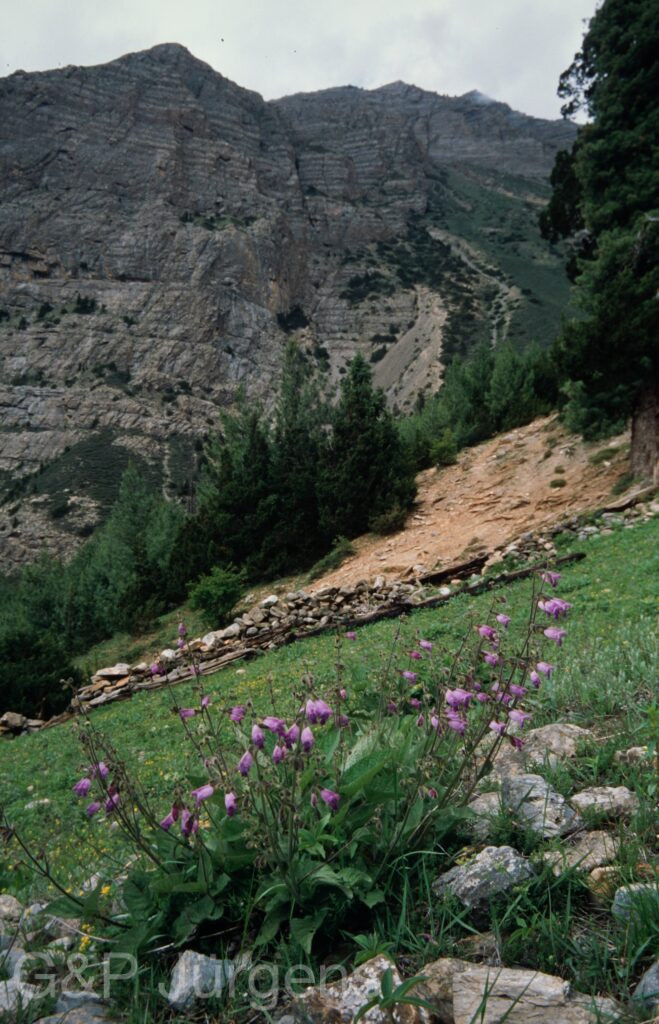
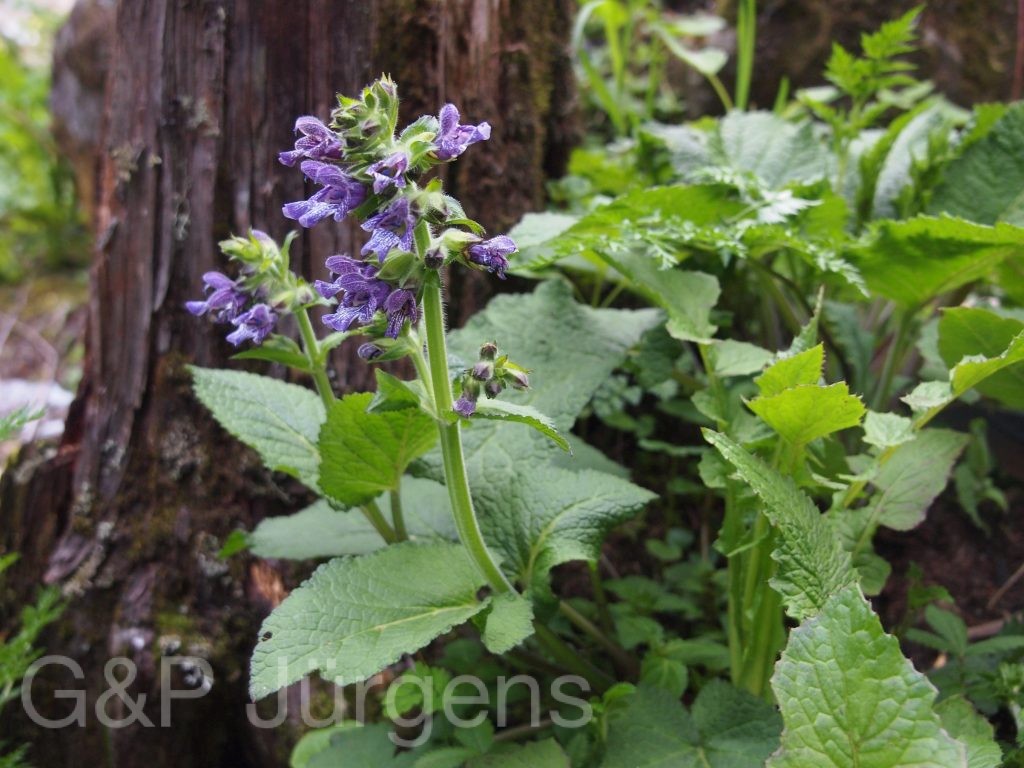
Salvia hians is a Himalayan herbaceous perennial of the temperate to subalpine belt of the western and central Himalaya, with occurrences in India, Nepal, Pakistan and adjacent China; its c. 217 georeferenced records (further reports from Europe and North America reflect cultivated material). It favours open grassy slopes, forest margins, alpine meadows and moist rocky banks, typically between 2400 and 4000 m. The photographed plant from the Sanu Bheri valley in West Nepal at 3500 m, flowering in July, is characteristic of its summer-flowering subalpine habitat among tall herbs in the monsoon-watered turf.

It forms an erect, somewhat sticky-pubescent herb 30-90 cm tall arising from a stout rootstock, with mostly basal, long-petioled, ovate-cordate leaves bearing crenate to doubly serrate margins and a rugose surface. The inflorescence is a lax terminal raceme of distant verticillasters. The corolla is showy, c. 3-5 cm long and deep violet-blue to purple, conspicuously bilabiate with a strongly hooded, gaping (hence "hians") upper lip and a broad lower lip. The calyx is bell-shaped and two-lipped, and the two fertile stamens bear the characteristic lever mechanism of Salvia. The fruit comprises four smooth ovoid nutlets enclosed in the persistent calyx.

Described by Royle ex Bentham, S. hians belongs to the large, near-cosmopolitan genus Salvia, the most species-rich genus of Lamiaceae, and represents the showy Himalayan element of the subgenus Sclarea-group. The flowers are pollinated by long-tongued bees and bumblebees exploiting the staminal lever. Locally the species enters folk medicine and is occasionally grown ornamentally. It remains widespread and is not currently regarded as threatened, though habitat degradation through grazing and tourism affects some populations.

Author: Royle ex Benth. · Sources: POWO (Kew), GBIF, Flora of Nepal, Flora of Pakistan, Flora of China, Hedge's revision of Himalayan Salvia (Lamiaceae)

Wall. ex Benth.

Nepal 99 913 ergebnis
West-Nepal Roha 2800m, July

Description

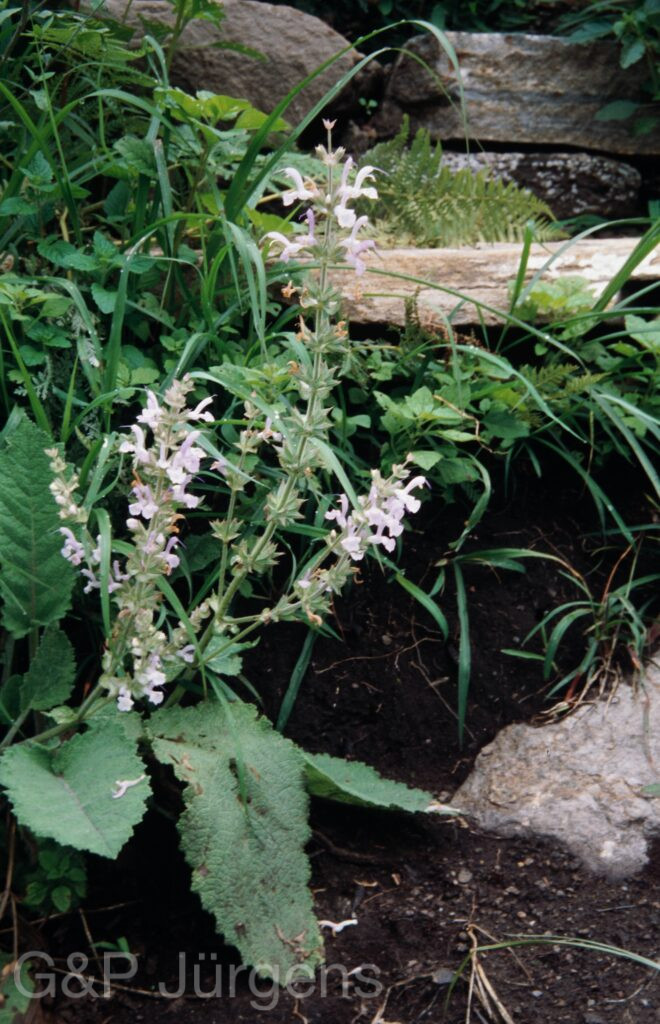
Salvia moorcroftiana is a stout perennial sage of the western and central Himalaya, ranging from Afghanistan and Pakistan through northern India into Nepal, with cultivated and adventive records noted from Iran, Britain, Brazil and the United States. GBIF holds some 403 occurrences, concentrated in Pakistan, India, Afghanistan and Nepal. It is a plant of dry, open hillsides, overgrazed pastures, road banks, fallow fields and stony waste ground, generally between about 1500 and 3000 m, often forming conspicuous stands on degraded land. The specimen illustrated was recorded in West Nepal at Roha at 2800 m in July, flowering during the monsoon on open montane slopes.

The plant forms a large basal rosette of broadly ovate to oblong, rugose, wavy-margined leaves that are densely white-woolly beneath and borne on long petioles. From this rises a tall, branched, glandular inflorescence axis bearing well-separated verticillasters of large flowers subtended by coloured bracts. The two-lipped corolla is white to pale lilac, often flushed or veined with purple, the hooded upper lip enclosing two stamens with the characteristic lever-like connective of Salvia. The calyx is bell-shaped and persistent, and the fruit comprises four smooth nutlets retained within the dry calyx until dispersed.

Salvia, the largest genus of the Lamiaceae, is defined by its specialised staminal lever mechanism promoting precise pollen placement on visiting bees. S. moorcroftiana, named for the explorer William Moorcroft, is a long-established medicinal plant of the Himalayan foothills, its mucilaginous seeds and leaves used in traditional remedies for skin and digestive ailments. Tolerant of grazing and disturbance, it is widespread and of no conservation concern; indeed it often increases on degraded rangeland.

Author: Wall. ex Benth. · Sources: POWO (Kew), GBIF, Flora of Pakistan, Flora of British India, An Annotated Checklist of the Flowering Plants of Nepal, Salvia: The Genus Salvia

Bennet & Raizada

Garh 07 18 ergebnis
India Garhwal Uniana at Mandakini 1350m, June

Description

Salvia mukerjeei is a Himalayan endemic distributed along the southern flank of the western and central ranges, with georeferenced records spanning Pakistan, northern India and Nepal (GBIF documents 91 occurrences across these three countries). It favours shaded banks, forest margins and disturbed slopes in the warm-temperate to lower montane belt; the illustrated material was gathered in India, Garhwal, at Uniana near the Mandakini valley at about 1350 m in June, a setting typical of the moist mid-elevation gorges where the species recurs. Within this zone it grows on humus-rich soils beneath broad-leaved canopy and along streamsides flushed by the early monsoon.

The plant is an erect herb arising from a fibrous-rooted base, the quadrangular stems clothed in spreading eglandular and shorter glandular hairs. Leaves are opposite, petiolate and ovate to broadly cordate, with a crenate-serrate margin, an acuminate apex and a rugose, prominently veined lamina pubescent on both faces. The inflorescence is a lax terminal raceme of distant verticillasters, each subtended by deciduous bracts. Flowers show the characteristic bilabiate calyx and a two-lipped corolla with a hooded upper lip and spreading lower lip; the two fertile stamens bear the elongated connective lever diagnostic of the genus. The fruit comprises four smooth nutlets enclosed in the persistent calyx.

Described from Garhwal collections, the species honours the botanist Mukerjee and belongs to a complex of Asian Salvia centred on the Himalaya. POWO and GBIF treat the name as the accepted taxon. Its restricted range and dependence on undisturbed shaded habitats make it sensitive to forest clearance, though no formal IUCN assessment has been published.

Author: Bennet & Raizada · Sources: POWO (Kew), GBIF, Flora of Pakistan, Flora of British India, A Revision of Salvia in Asia (Lamiaceae monograph), Annotated Checklist of the Flowering Plants of Nepal

Maxim.

Sikkim2003 359 P502 ergebnis
India Sikkim Lachen 2840m, August

Description

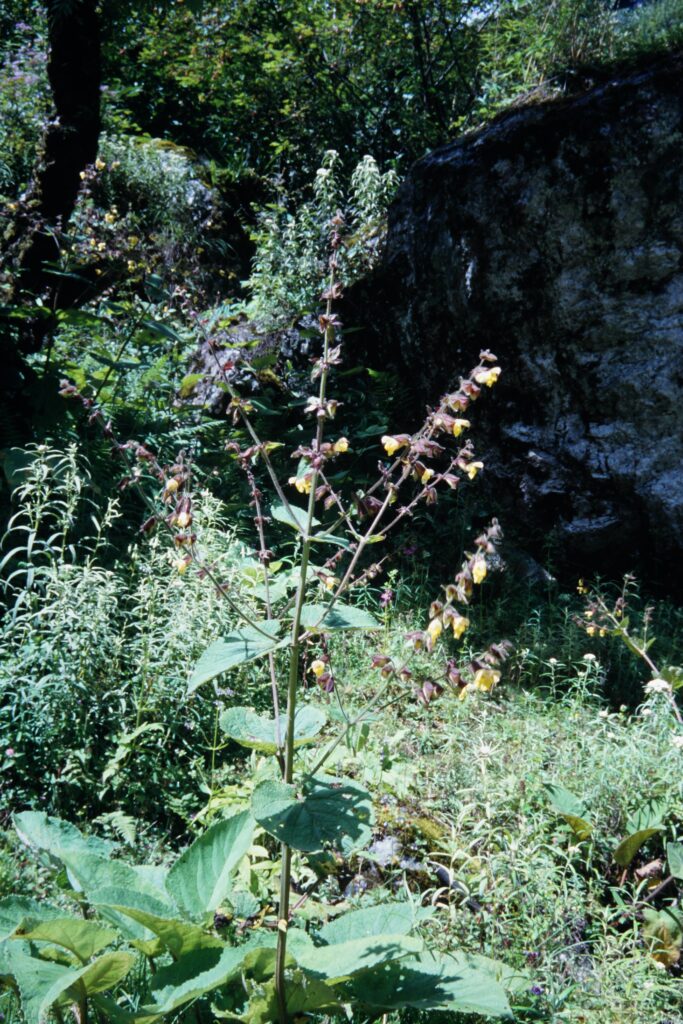
Salvia roborowskii is a perennial herb distributed from the Himalayas across the Sino-Himalayan region to western China. Its range encompasses Nepal, northeast India (Sikkim), Bhutan, and China (Xizang, Yunnan, Sichuan, Qinghai, Gansu). The species inhabits montane forest clearings, grassy slopes, thicket margins, and alpine meadows at elevations of 2,400–4,200 m. It has been recorded from the Lachen Valley in Sikkim at 2,840 m, flowering profusely in August during the monsoon season, where it grows in open, herbaceous vegetation along stream margins and disturbed ground.
The plant produces erect, square stems 30–80 cm tall from a perennial rootstock, often branched in the upper portion. The stems are pubescent with short, retrorse hairs. The basal and lower cauline leaves are pinnately compound to pinnatisect, with 1–3 pairs of lateral lobes and a larger terminal lobe, the lobes ovate to oblong, irregularly crenate-serrate, sparsely pilose on both surfaces. The upper leaves are progressively reduced. The inflorescence is a series of verticillasters arranged in elongate, terminal, spike-like racemes. The calyx is bilabiate, glandular-pubescent. The corolla is blue to violet-purple, 8–12 mm long, bilabiate with an arched upper lip and a spreading, trilobed lower lip. The nutlets are ovoid, smooth, dark brown.
Salvia roborowskii was described by Maximowicz from material collected during Przewalski's expeditions in the Sino-Tibetan borderlands. With over 400 occurrence records in GBIF, it is one of the more frequently collected high-altitude salvias in the region. The species is ecologically significant as a nectar source for montane bumblebees and other long-tongued pollinators. Its broad elevational range and tolerance of disturbed habitats suggest a degree of ecological resilience, though it remains dependent on the persistence of open montane grasslands and forest margins. Taxonomically, it is placed within Salvia subgenus Salvia and is allied to other pinnate-leaved species of the Sino-Himalayan region.

Author: Maxim. · Sources: POWO (Kew), GBIF, Flora of China Vol. 17, Flora of Bhutan Vol. 2, Hedge: Salvia in Flora Iranica (1982)

(E.Peter)

BhutanPG2011 130
Bhutan Kupang 3550m, June

Description

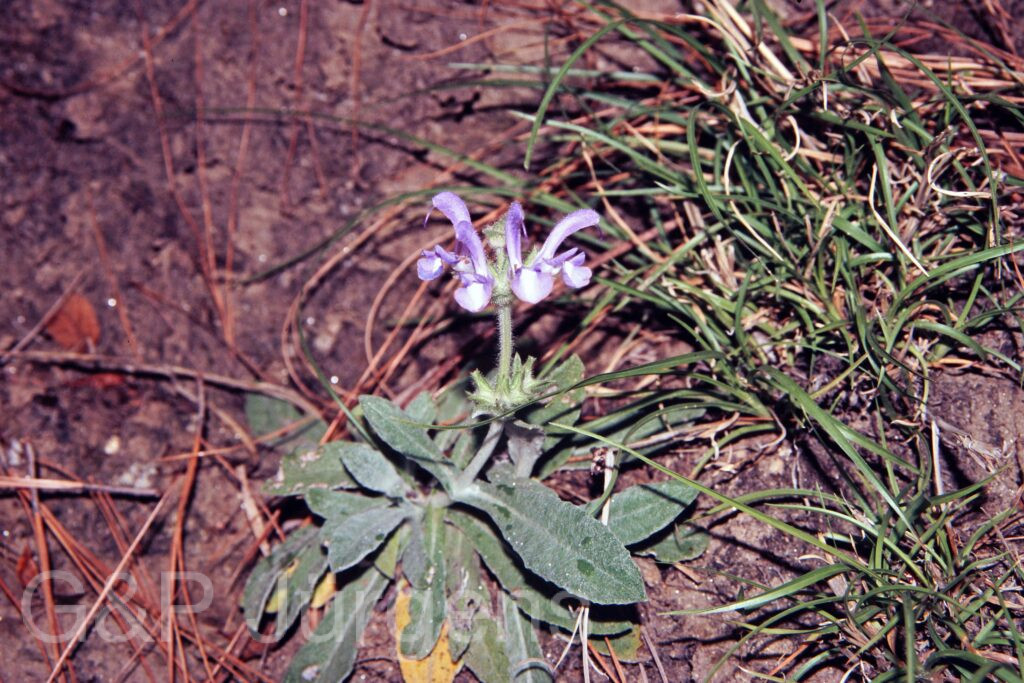
Salvia wardii is a Sino-Himalayan sage distributed across the eastern Himalaya and adjacent China, recorded from southern China (the Tibetan borderlands), Bhutan, Nepal and India, with an outlying record from Sri Lanka and only around 73 GBIF occurrences, a comparatively narrowly known species. It is a plant of subalpine and alpine habitats, growing on open grassy slopes, scrub margins, rocky banks and meadow clearings in the upper temperate to subalpine zone. The image documents the species at Kupang in Bhutan at about 3550 m in June, where it flowers among summer meadow vegetation alongside other perennial herbs of the high pastures.

It is an erect perennial herb arising from a woody rootstock, with quadrangular, pubescent stems. The leaves are mostly basal and lower-cauline, ovate to oblong, cordate to truncate at the base, crenate-serrate, rugose and softly hairy, on long petioles. The inflorescence is a lax terminal raceme of widely spaced verticillasters, each with few flowers. The calyx is bilabiate and glandular-pubescent; the corolla is showy, deep violet to purple-blue, with an exserted upper lip and a broad spreading lower lip, and the connective of the two fertile stamens is elongated and lever-like, characteristic of Salvia. The fruit comprises four smooth nutlets.

Named for the plant collector Frank Kingdon-Ward, Salvia wardii belongs to the Asian section of Salvia centred on the Sino-Himalayan mountains, a centre of diversity for the genus. The staminal lever mechanism promotes outcrossing by long-tongued bees and bumblebees foraging in the brief alpine summer. Its restricted range and small number of records suggest it warrants monitoring, though no formal threat assessment has been made.

Author: (E.Peter) · Sources: POWO (Kew), GBIF, Flora of China, Flora of Bhutan, Salvia: Flora Sinica account, World Checklist of Lamiaceae

(Hook.f.) Hand.-Mazz.

Sikkim2011 119
Sikkim Chopta-valley 4100m, June
Sikkim2011 118
Sikkim Chopta-valley 4100m, June

Description

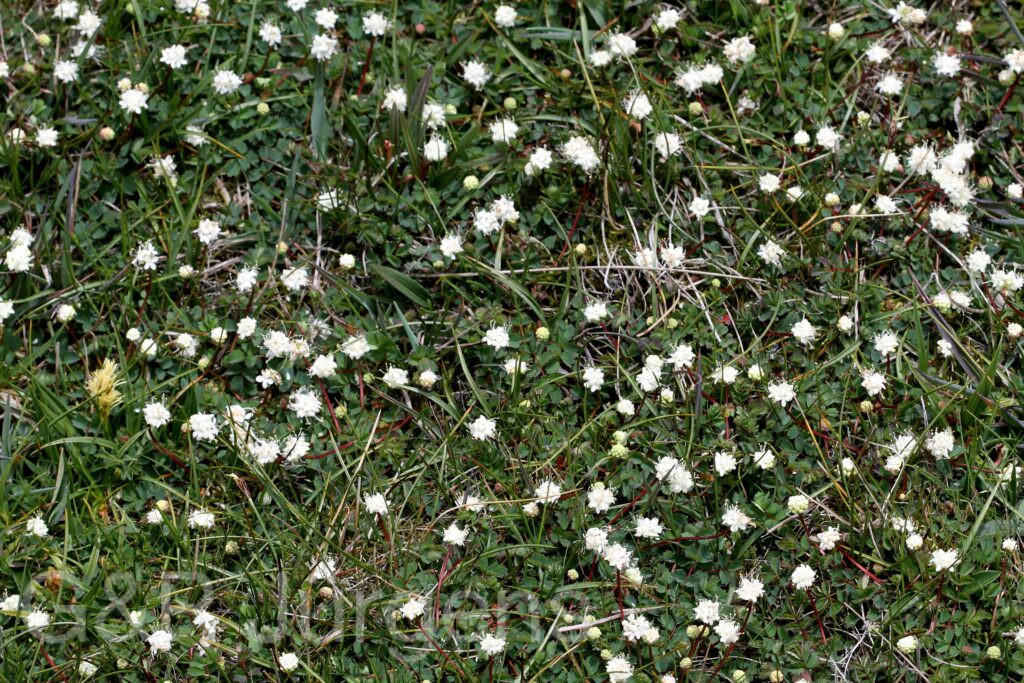
Sanguisorba filiformis (Hook.f.) Hand.-Mazz. is a slender, alpine perennial herb of the Rosaceae, distributed across the eastern and central Himalaya and the mountains of southwestern and central China. Its documented range encompasses China, Bhutan, India and the Korean Peninsula, with GBIF recording 471 georeferenced occurrences. The species is a characteristic component of moist alpine meadows, streamsides, seepage slopes and open turf at elevations of roughly 3,500–4,800 m. The photographed material from the Chopta valley in Sikkim at 4,100 m in June represents typical high-altitude habitat, where the plant flowers as the snow-melt season advances.

The plant develops a short, woody rhizome bearing a basal rosette of pinnately compound leaves; the leaflets are small, ovate to oblong, crenate-serrate at the margins, glabrous and somewhat glaucous beneath. From this rosette arise wiry, filiform, often nodding flowering stems that give the species its epithet. The inflorescence is a small, loose, capitate to shortly oblong head of few flowers; unlike most Sanguisorba the perianth is comparatively reduced, with whitish to pale pink segments, four stamens, and exserted filaments. The fruit is a small dry achene enclosed within the persistent hypanthium.

Formerly placed in the segregate genus Poterium and the subgenus Sanguisorbella, the taxon is sometimes treated under Sanguisorba filiformis as the accepted name, reflecting its distinctive reduced floral architecture. Its restriction to high-altitude wetland and meadow habitats makes it a useful indicator of intact alpine hydrology, and like many Himalayan turf species it may be sensitive to grazing pressure and climate-driven shifts in snowpack.

Author: (Hook.f.) Hand.-Mazz. · Sources: POWO (Kew), GBIF, Flora of China Vol. 9, Flora of Bhutan Vol. 2, Nordborg: Sanguisorba — a monographic study (1966)

Müll.Arg.

Garw 2005 432 ergebnis
India Garhwal Barqargay 2100m, September

Description

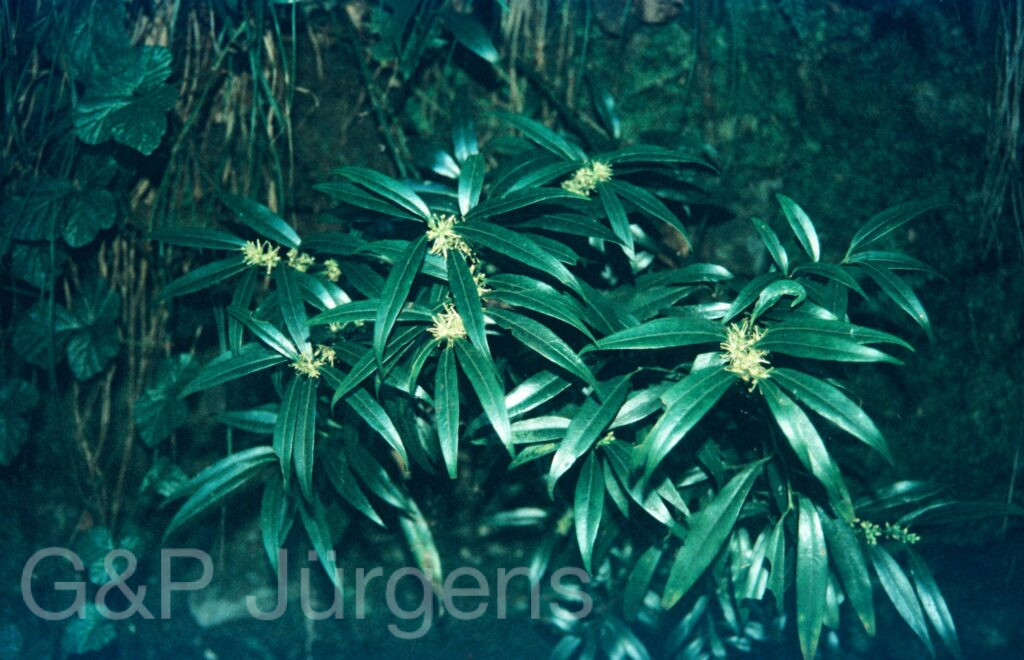
Sarcococca saligna (Müll.Arg.), the willow-leaf sweet box, is an evergreen shrub of the family Buxaceae native to the Himalaya and adjacent uplands, ranging from Afghanistan and Pakistan through northern India and Nepal to China, with related records extending into Southeast Asia. The fewer than 400 GBIF occurrences point to a scattered montane distribution, supplemented by cultivated material in Europe and North America where the plant is grown as an ornamental. It inhabits shady, moist temperate forest, ravine slopes and the understorey of oak and conifer woodland, generally between 1,500 and 2,800 m, as shown by the Garhwal collection from Barqargay at 2,100 m in September.

The plant is a glabrous, much-branched shrub up to about 2 m tall, with slender green stems. The leaves are alternate, narrowly lanceolate to oblong-lanceolate, leathery, entire-margined, acuminate at the apex and tapering to a short petiole, the venation prominent beneath, distinguishing this species from its broader-leaved congeners. The small, fragrant, apetalous flowers are unisexual and borne in short axillary spikes or clusters, the plant being monoecious with the few female flowers placed below the more numerous male flowers; the male flowers display creamy-white stamens. The fruit is a small, globose, fleshy drupe ripening from red to purplish-black.

Sarcococca belongs to the same family as Buxus and Pachysandra, sharing the reduced, unisexual, perianth-simple flowers characteristic of the Buxaceae. The species is rich in steroidal alkaloids that have attracted pharmacological interest for their cholinesterase-inhibitory activity, and it is used in regional traditional medicine. Valued in gardens for its glossy foliage and intensely sweet winter fragrance, S. saligna is widely cultivated; in the wild it remains locally common and is not considered threatened.

Author: Müll.Arg. · Sources: POWO (Kew), Flora of Pakistan, GBIF, Flora of China Vol. 11, Köhler & Brückner: Buxaceae in The Families and Genera of Vascular Plants