
Wall. ex Benth.
Description
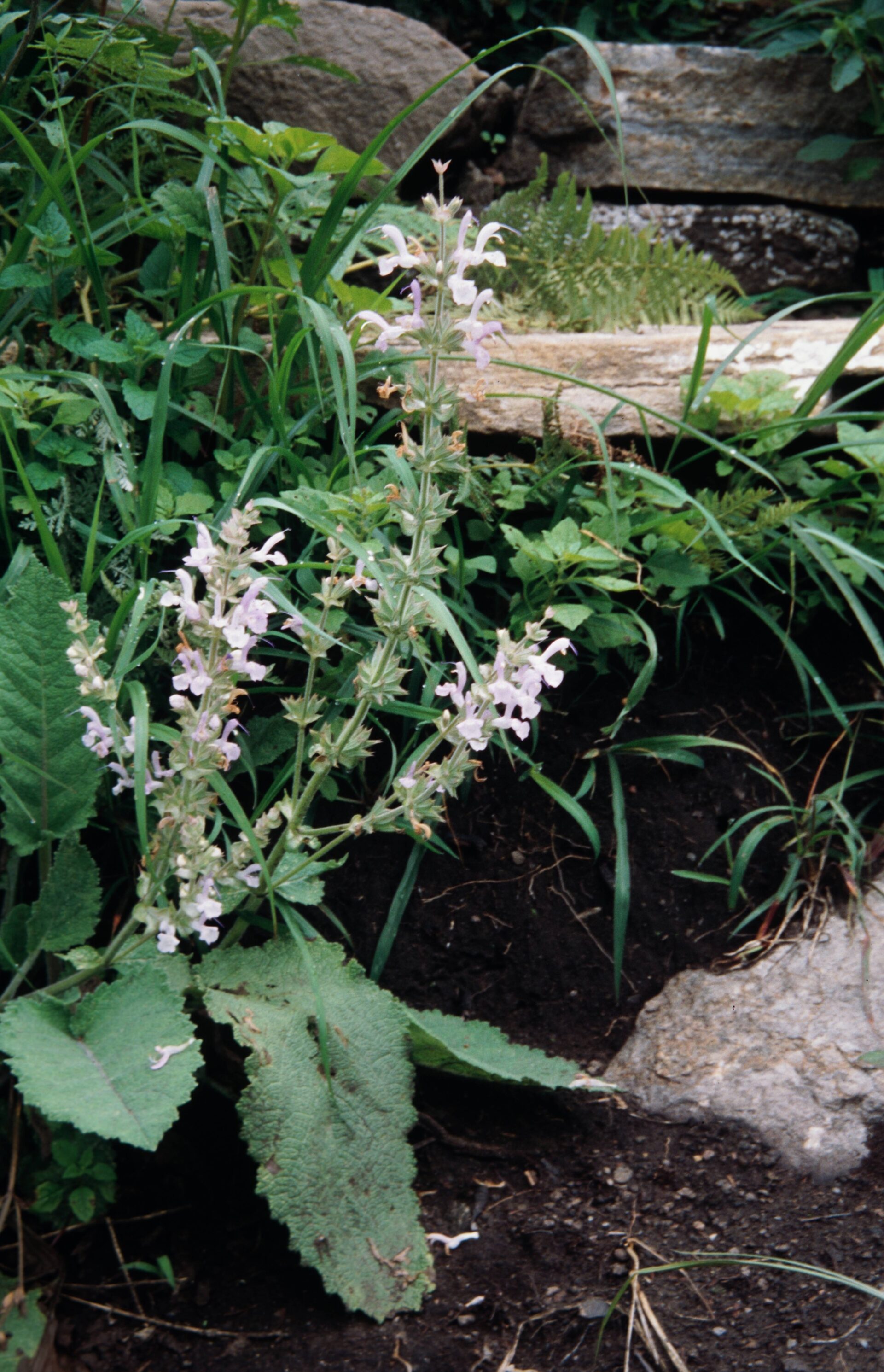
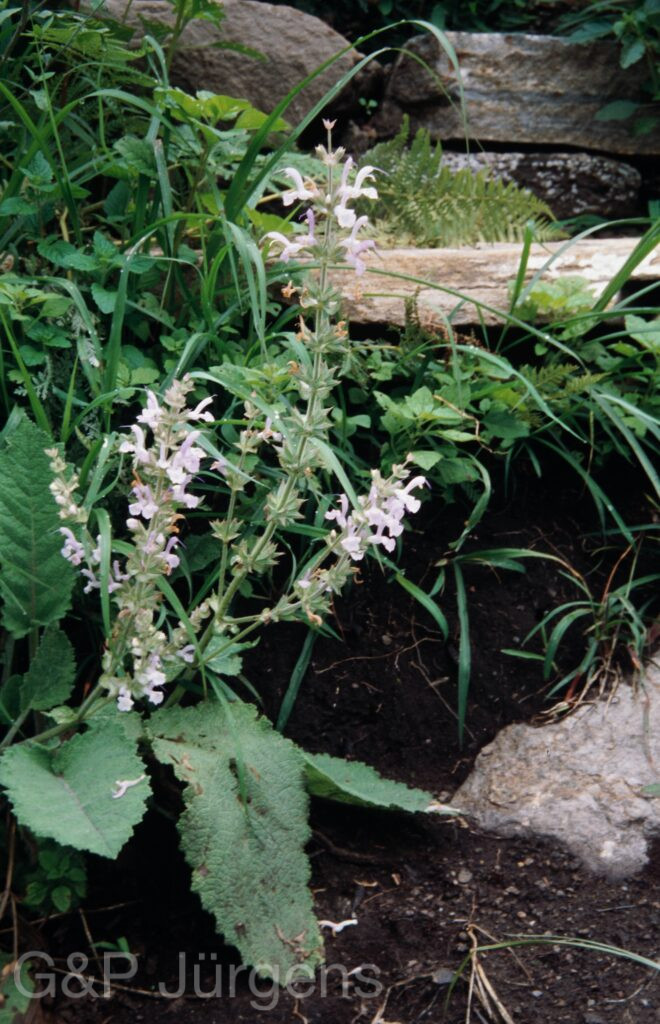
Salvia moorcroftiana is a stout perennial sage of the western and central Himalaya, ranging from Afghanistan and Pakistan through northern India into Nepal, with cultivated and adventive records noted from Iran, Britain, Brazil and the United States. GBIF holds some 403 occurrences, concentrated in Pakistan, India, Afghanistan and Nepal. It is a plant of dry, open hillsides, overgrazed pastures, road banks, fallow fields and stony waste ground, generally between about 1500 and 3000 m, often forming conspicuous stands on degraded land. The specimen illustrated was recorded in West Nepal at Roha at 2800 m in July, flowering during the monsoon on open montane slopes.
The plant forms a large basal rosette of broadly ovate to oblong, rugose, wavy-margined leaves that are densely white-woolly beneath and borne on long petioles. From this rises a tall, branched, glandular inflorescence axis bearing well-separated verticillasters of large flowers subtended by coloured bracts. The two-lipped corolla is white to pale lilac, often flushed or veined with purple, the hooded upper lip enclosing two stamens with the characteristic lever-like connective of Salvia. The calyx is bell-shaped and persistent, and the fruit comprises four smooth nutlets retained within the dry calyx until dispersed.
Salvia, the largest genus of the Lamiaceae, is defined by its specialised staminal lever mechanism promoting precise pollen placement on visiting bees. S. moorcroftiana, named for the explorer William Moorcroft, is a long-established medicinal plant of the Himalayan foothills, its mucilaginous seeds and leaves used in traditional remedies for skin and digestive ailments. Tolerant of grazing and disturbance, it is widespread and of no conservation concern; indeed it often increases on degraded rangeland.
Author: Wall. ex Benth. · Sources: POWO (Kew), GBIF, Flora of Pakistan, Flora of British India, An Annotated Checklist of the Flowering Plants of Nepal, Salvia: The Genus Salvia