Author

G & P Jürgens

Wall.

Bhutan2012 676
Bhutan Galephu 900m, September

Description

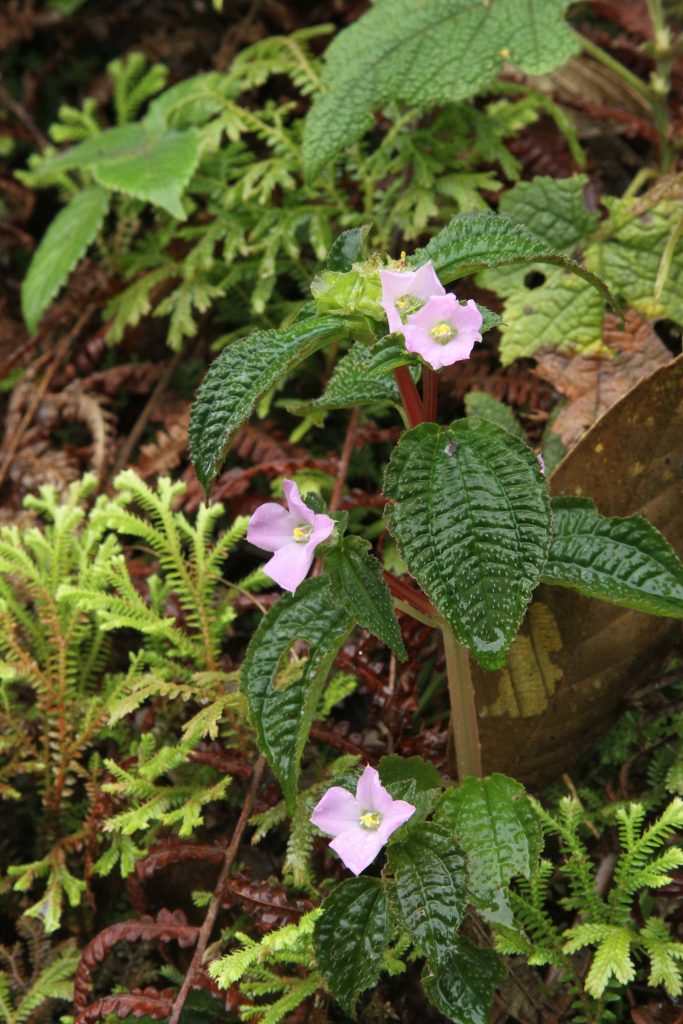
Sarcopyramis nepalensis Wall. is a small, delicate herb of the Melastomataceae distributed through the eastern Himalaya and Southeast Asia. Its several hundred records range across Nepal, northeast India, Bhutan, southern China, Taiwan, Myanmar, Vietnam, Malaysia, Indonesia and the Philippines. The species is a denizen of cool, shaded, perpetually moist habitats, growing on damp humus-rich banks, mossy rocks, ravine sides and the forest floor of evergreen broad-leaved and subtropical forests. It generally occupies low to mid elevations, and the plant photographed near Galephu in southern Bhutan at 900 m in September, late in the monsoon when these herbs flower, is typical of its preference for humid, dripping microsites.

The plant is a small, succulent, low annual or short-lived perennial with weak, ascending, four-angled stems that often root at the lower nodes. The leaves are opposite, membranous, broadly ovate to elliptic, with the three to five arcuate, longitudinally curved veins characteristic of the family, the margins finely toothed and sometimes reddish beneath. The flowers are borne singly or in few-flowered terminal cymes; they have a distinctive urceolate, four-angled hypanthium with prominent crested or winged angles, four pink to pale rose-purple petals, and eight stamens with conspicuously appendaged connectives. The fruit is a small, four-lobed, cup-shaped capsule crowned by the persistent calyx.

Sarcopyramis is a small Asian genus closely allied to Bredia and Phyllagathis within tribe Sonerileae, and the species has at times been treated as a variable complex with several segregate taxa and varieties. Its dependence on humid, shaded forest microhabitats makes it a useful indicator of intact, moisture-rich forest understorey. While not currently regarded as threatened across its broad range, local populations are sensitive to deforestation and the drying of streamside and seepage habitats.

Author: Wall. · Sources: POWO (Kew), GBIF, Flora of China Vol. 13, Flora of Bhutan Vol. 2, Renner et al.: Melastomataceae systematics

DC.

Bhutan2012 757
Bhutan Zemgang 1200m, October
Bhutan2012 758
Bhutan Zemgang 1200m, October

Description

Saurauia napaulensis is a subtropical tree or large shrub widely distributed through the southern Himalaya and Southeast Asia, with abundant GBIF occurrences in China, Nepal, India, Bhutan, Bangladesh, Myanmar, Thailand, Laos, Vietnam, Malaysia and Sri Lanka. It is a frequent component of moist subtropical broad-leaved forest, secondary forest, ravines and stream sides, generally between 600 and 2,100 m. The photographed individual was recorded at Zhemgang in central Bhutan at about 1,200 m in October, within the warm mid-hill belt where the species is a conspicuous understorey and gap-colonising tree.

The plant is a small evergreen tree, typically with stout twigs and young parts clothed in scaly or bristly indumentum characteristic of the genus. The leaves are large, alternate, oblanceolate to elliptic, leathery, with serrate margins and prominent lateral venation, the lower surface bearing scattered scales or appressed setae. The flowers are borne in branched axillary panicles; each is five-merous with white to pink, somewhat cup-shaped petals, numerous stamens, and several distinct or basally united styles. The fruit is a small, fleshy, depressed-globose, greenish to whitish berry containing many minute seeds, attractive to birds and other animal dispersers.

Saurauia is the only genus of Actinidiaceae with a wide Old World tropical distribution, the family also containing the kiwifruit genus Actinidia, and the scaly indumentum and many-styled flowers are diagnostic. Saurauia napaulensis is among the most common and widespread Asian species, used locally for fuel, fodder and edible fruit. It is abundant, regenerates readily in disturbed ground, and is not of conservation concern.

Author: DC. · Sources: POWO (Kew), GBIF, Flora of China Vol. 12 (Actinidiaceae), Grierson & Long: Flora of Bhutan Vol. 2, Hunter: Revision of the Asian species of Saurauia

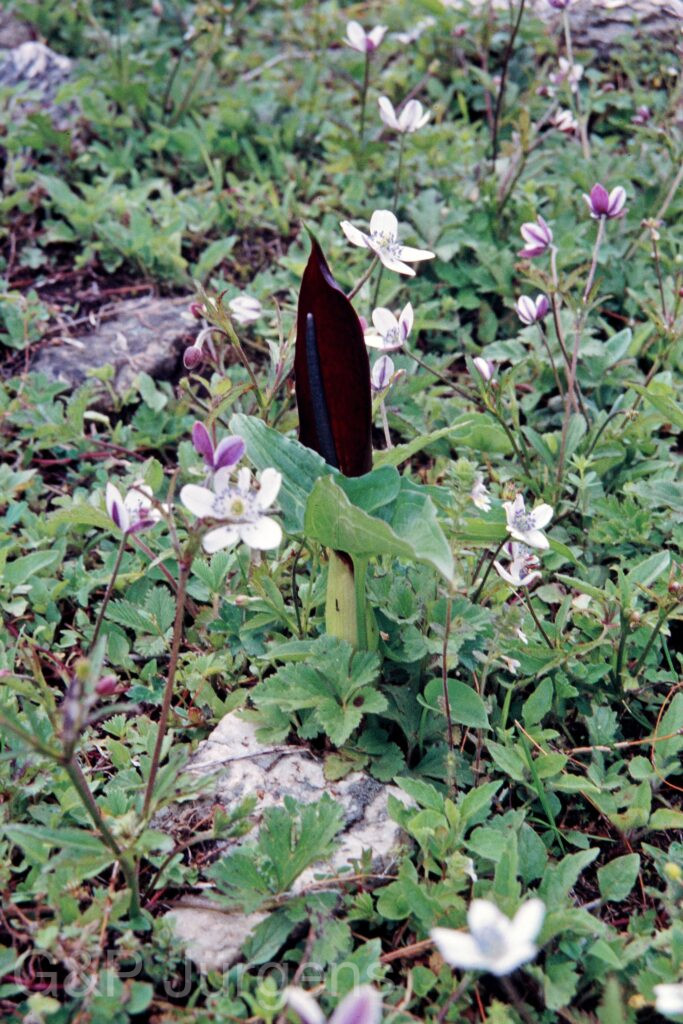
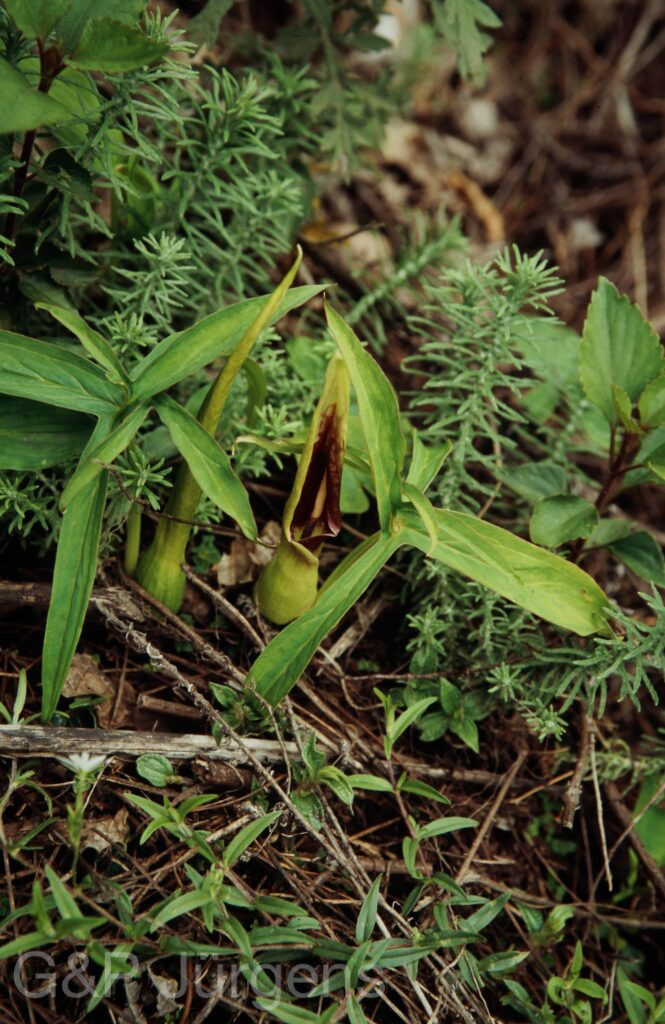
(Wall. ex Schott) Cusimano & Hett.

Nepal 99 241 ergebnis
West-Nepal Tallekh 3000m, June
Nepal 2009 97 ergebnis
Nepal Helambu Samathang 2410, May

Description

Sauromatum diversifolium is a tuberous aroid of the Himalaya and adjacent uplands, distributed through India, China, Nepal, Bhutan, Myanmar and Thailand, with around 146 recorded occurrences. It grows in moist temperate forest, on shaded banks, in open grassy slopes and among rocks where seasonal soil moisture is reliable, emerging with the onset of the warm season and dying back to its tuber during the dry winter. In Nepal it occupies the middle to upper montane zone, as shown by collections from Tallekh in the west at about 3000 m in June and from Samathang in the Helambu region at 2410 m in May, the latter dates coinciding with its early-season flowering.

The plant arises from a subglobose, depressed tuber and typically produces a single long-petiolate leaf whose blade is deeply pedately divided into several lanceolate to elliptic segments, the lobes acuminate and the petiole often mottled. The inflorescence is a typical aroid spadix subtended by a spathe, the spathe tube convolute and the limb expanded, lanceolate and often dull purple or marked within. The spadix bears a sterile terminal appendix above separated zones of female and male flowers, and emits a faint odour at anthesis to attract small dipteran and beetle pollinators. The fruiting head is a cluster of small berries.

The species was transferred to Sauromatum by Cusimano and Hettich on molecular and morphological evidence that united the former Typhonium diversifolium with the saururoid lineage. The genus is protogynous and largely sapromyophilous, with thermogenic spadices that volatilise scent to lure pollinators into the floral chamber. Widespread and locally frequent in suitable montane habitat, S. diversifolium is not regarded as threatened, though like many tuberous aroids it is sensitive to grazing pressure and the loss of forest-edge microhabitats.

Author: (Wall. ex Schott) Cusimano & Hett. · Sources: POWO (Kew), GBIF, Flora of China Vol. 23, Flora of Bhutan Vol. 3, Flora of Nepal, Cusimano et al. molecular phylogeny of Areae (Araceae)

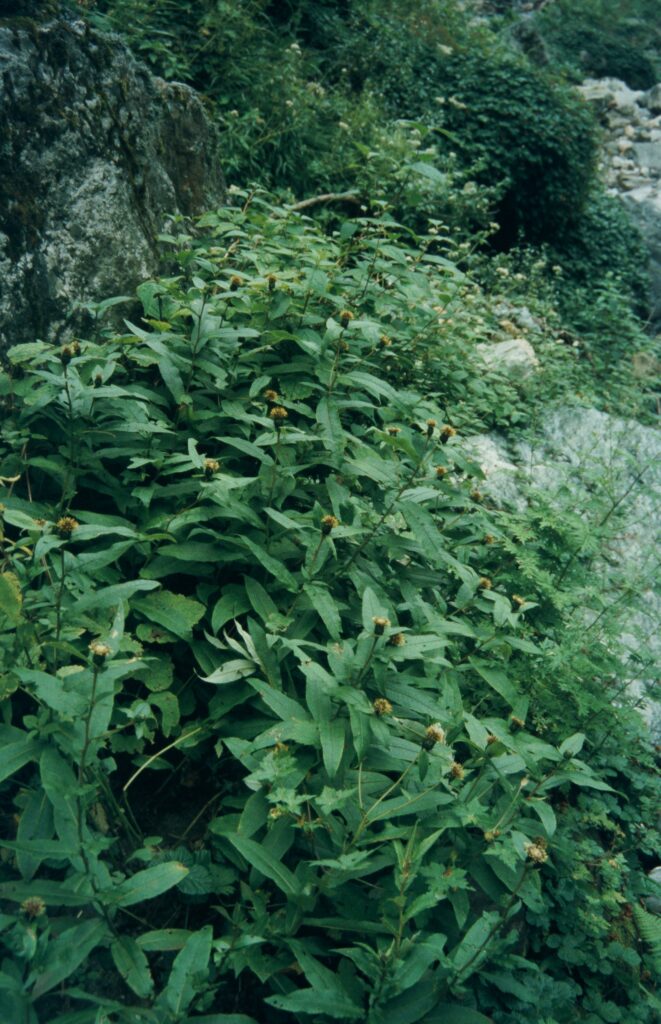
(Decne.) Sch.Bip.

Garw 2005 170 ergebnis
India Garhwal Simka 2800m, October

Description

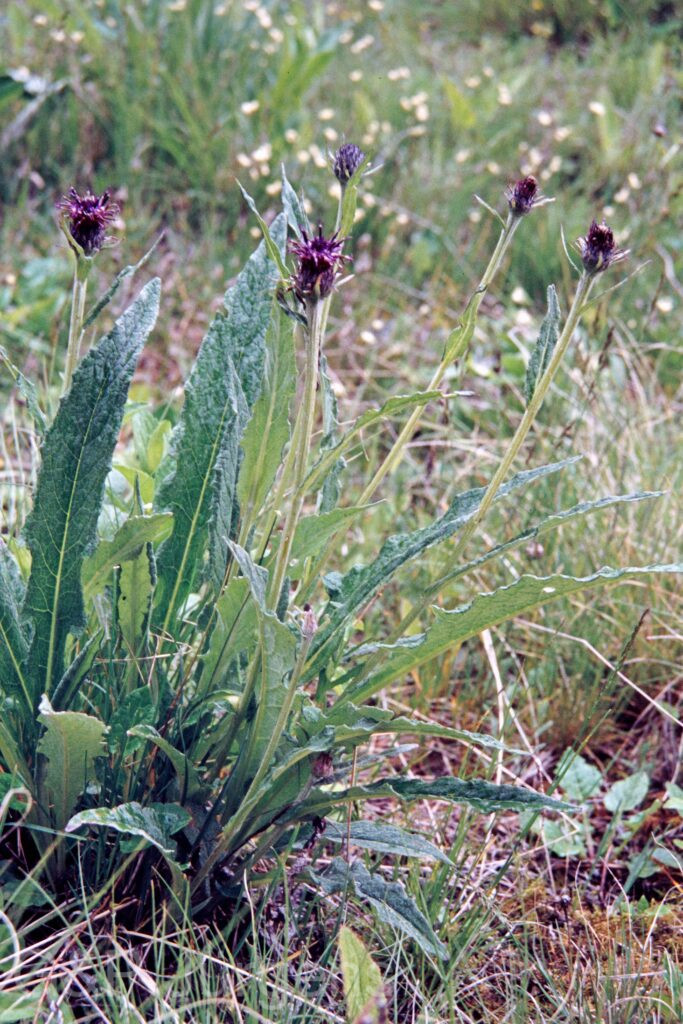
Saussurea fastuosa is a Sino-Himalayan species distributed across the high mountain ranges of China, India, Nepal and Bhutan, with around 94 georeferenced occurrences documenting a coherent eastern Himalayan to southwest Chinese range. It is a plant of temperate and subalpine zones, favouring forest margins, moist grassy slopes, scrub and stream banks, typically between roughly 2500 and 3800 m. The photographed material from Simka in Indian Garhwal at 2800 m, flowering in October, is representative of its autumn-flowering behaviour in the western part of its range, where it occupies cool, humid clearings within mixed conifer and broad-leaved forest.

It is a robust perennial herb with an erect, leafy, often glandular-pubescent stem arising from a stout rootstock. The leaves are alternate, the lower ones petiolate and lyrate-pinnatifid to broadly ovate, the upper progressively smaller, sessile and somewhat amplexicaul, with dentate margins and a thinly arachnoid-hairy lamina beneath. The capitula are medium-sized and aggregated in a corymbose synflorescence, each surrounded by an ovoid to campanulate involucre of imbricate, often purple-tinged, frequently squarrose phyllaries. The florets are all tubular and purple; the achenes are glabrous and crowned by a double pappus, the outer row scabrid and caducous, the inner of plumose, basally connate bristles.

Within the very large and taxonomically complex genus Saussurea, this species belongs to the broad-leaved, lowland-to-subalpine assemblage rather than the cushion-forming snow lotuses of the highest alpine zone. The name S. fastuosa (Decne.) Sch.Bip. is the accepted name. As an entomophilous late-season nectar source it is visited by bumblebees and other long-tongued insects, and like its congeners it disperses by anemochory via the plumose pappus. It is locally frequent and not regarded as threatened.

Author: (Decne.) Sch.Bip. · Sources: POWO (Kew), GBIF, Flora of China Vol. 20-21, Flora of Bhutan Vol. 2, Flora of Nepal, Lipschitz Genus Saussurea (monograph)

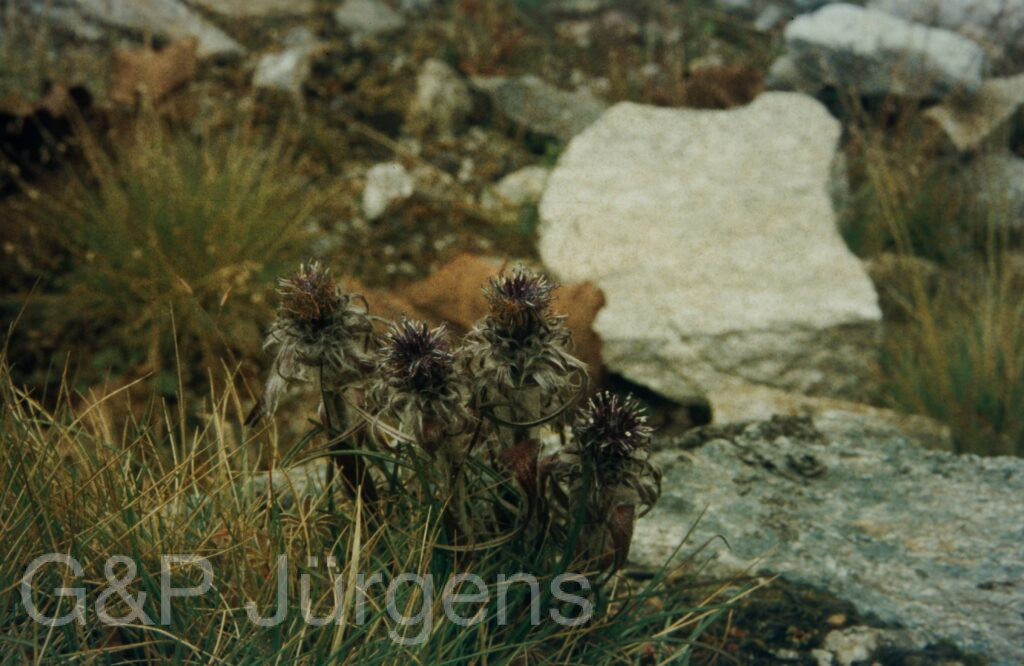
Wall. ex DC.

Garw 2005 328 ergebnis
India Garhwal Bagubasa 4100m, September

Description

Saussurea graminifolia is a high-alpine composite of the Himalaya and Tibetan borderlands, distributed across Nepal, India, China and Bhutan, with about 127 GBIF occurrences. It is a true plant of the upper alpine zone, occupying screes, fine gravel, glacial moraine, stony meadows and exposed ridges generally above 4000 m and reaching well over 4500 m. The collection from Bagubasa in Garhwal, India, at 4100 m in September corresponds to its late-season flowering, when these wind-swept slopes near the limit of vascular plant life carry the characteristic cushion and rosette flora of the region.

It is a low, tufted perennial herb growing from a stout rootstock, with very narrow, grass-like (graminifolious) basal leaves that form a dense rosette, the epithet alluding to this distinctive linear foliage. One or few short scapes bear a cluster of capitula crowded among the leaves and often partly enveloped by them. The flower heads are discoid, containing only tubular florets that are purple to violet, surrounded by overlapping involucral bracts. As in Saussurea generally the fruit is an achene topped by a pappus of feathery (plumose) inner bristles and shorter outer ones.

Saussurea belongs to tribe Cardueae of the Asteraceae and is a hallmark genus of the Sino-Himalayan alpine zone, where many species show adaptations such as woolly indumentum or translucent bracts (the "snowball" and "glasshouse" plants) that buffer the harsh, cold, high-radiation environment. Though not formally threatened, such specialised high-elevation endemics are sensitive to climate warming and to harvesting where Saussurea species are used medicinally.

Author: Wall. ex DC. · Sources: POWO (Kew), GBIF, Flora of China, Flora of Bhutan, Saussurea monograph (Lipschitz)

Hook.f.

Sikkim2003 307 P433
Sikkim Saniti-Lake 4250m August

Description

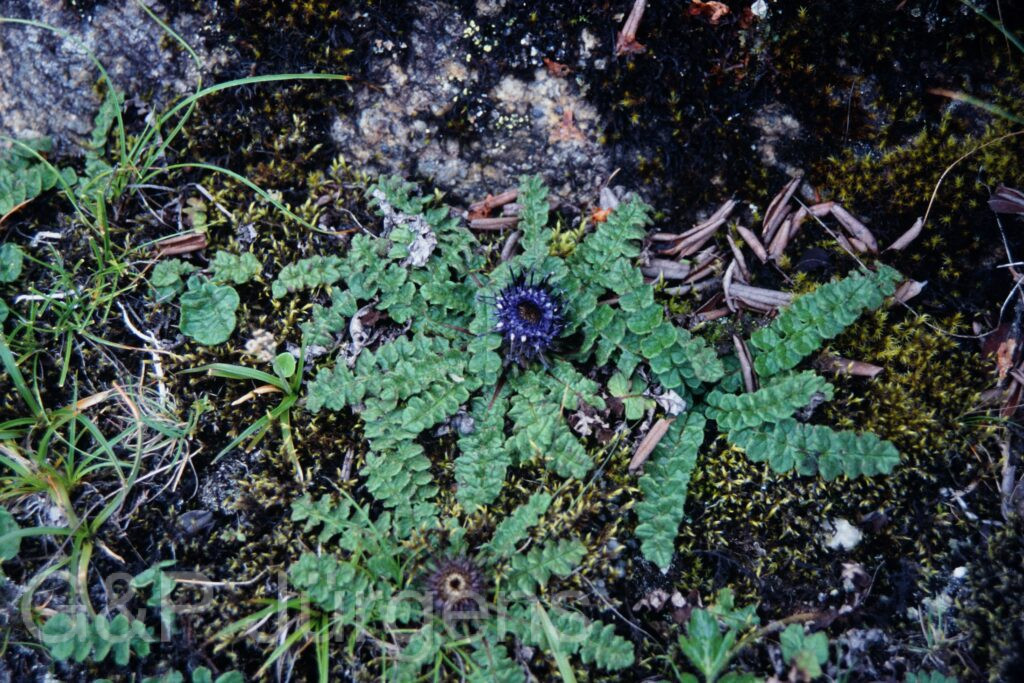
Saussurea polystichoides is a high-alpine perennial herb of the eastern and central Himalaya, recorded from Nepal, northern India, Bhutan and adjacent south-western China, with a small documented base of about 43 occurrences consistent with its restricted, high-elevation habitat. It grows on open alpine turf, screes, moraines and rocky slopes, typically between roughly 4000 and 4800 m. The specimen shown was photographed near Saniti Lake in Sikkim at about 4250 m in August, when these short-season alpines flower during the brief post-monsoon window above the treeline.

The plant is a low, cushion-forming or tufted herb arising from a stout caudex clothed in old leaf bases, the name polystichoides alluding to the fern-like, many-ranked rosette of finely divided leaves. The leaves are pinnately lobed to pinnatisect, narrow and densely arranged, often white-woolly to give protection against cold and intense radiation. The capitula are sessile or shortly stalked and aggregated within the leaf rosette; each head bears tubular, purple to violet disc florets enclosed by imbricate, often lanate phyllaries. The fruit is a glabrous cypsela crowned by a feathery, plumose pappus.

Saussurea (Asteraceae, tribe Cardueae) is a large Asian genus particularly diversified in the high Himalaya and Tibetan Plateau, where many species have evolved dense indumentum or translucent bracts as adaptations to extreme alpine conditions. S. polystichoides belongs to the group of cushion- or rosette-forming saw-worts of the highest screes. Pollinated by alpine insects and wind-dispersed via its plumose pappus, it is a narrow-range, habitat-specialist endemic of conservation interest given its limited area and sensitivity to climatic warming.

Author: Hook.f. · Sources: POWO (Kew), GBIF, Flora of China, Flora of Bhutan, Annotated Checklist of the Flowering Plants of Nepal, Lipschitz monograph of Saussurea

C.B.Clarke

Nepal 99 480 ergebnis
West-Nepal Churta-Khola 3600m, June

Description

Saussurea roylei is an alpine composite of the western and central Himalaya, distributed through India, Nepal, Pakistan and adjacent China (IN, NP, PK, CN), with about 223 recorded occurrences. It grows in open alpine meadows, on grassy and stony slopes, screes and rocky ground in the subalpine to alpine zone, broadly between about 3000 and 4500 m. The plant shown here was photographed at Churta Khola in West Nepal at 3600 m in June, an elevation and early-summer flowering season typical of the species, where it occupies the herb-rich turf and gravelly margins of high pastures shortly after snowmelt.

The plant is a low perennial herb arising from a stout rootstock, with a simple or sparingly branched, often leafy stem. The leaves are elliptic to lanceolate, the basal ones narrowed to a winged petiole, the margins entire to toothed and the lower surface frequently thinly woolly. The flower heads (capitula) are clustered in a dense terminal corymb, each head an involucre of imbricate, often purplish-tipped bracts enclosing numerous small, tubular, purple to violet disc florets; ray florets are absent, as throughout the genus. The fruit is a glabrous cypsela (achene) crowned by a pappus of feathery inner and shorter, scabrid outer bristles aiding wind dispersal.

Saussurea (tribe Cardueae, the thistle alliance of the Asteraceae) is a large and taxonomically intricate genus that reaches spectacular diversity in the high Sino-Himalaya, including the woolly and bracteate 'snow lotus' alpines. S. roylei belongs to the assemblage of meadow-dwelling, non-cottony species and is pollinated by bumblebees and other alpine insects drawn to the discoid heads. Widespread across the western Himalaya and locally common in alpine grassland, it is not of conservation concern, although high-altitude Saussurea species generally face pressure from grazing and harvesting.

Author: C.B.Clarke · Sources: POWO (Kew), GBIF, Flora of Nepal, Flora of China, Saussurea: A Monograph (Lipschitz)

Sternb.

Nepal 99 677 ergebnis
West-Nepal, Kagmara-La 4800m, July
Nepal 99 678 ergebnis
West-Nepal, Kagmara-La 4800m, July

Description

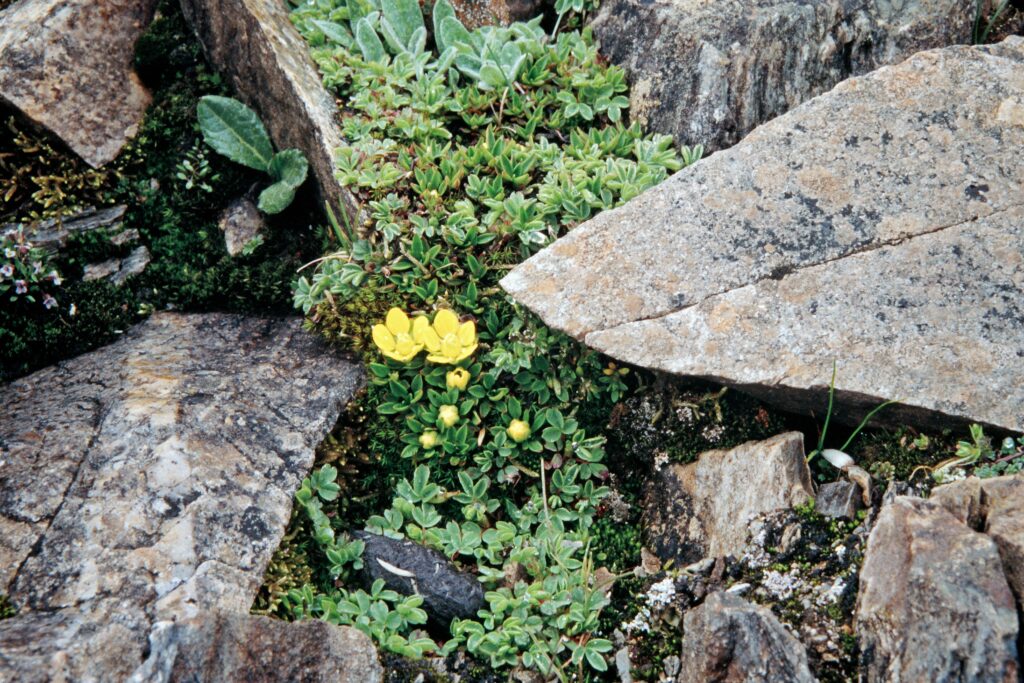
Saxifraga asarifolia is a high-alpine perennial of the Himalaya, recorded from India, Nepal, Bhutan and Pakistan, with GBIF listing about 62 occurrences (the US record reflecting cultivated or herbarium material). It grows on moist, rocky alpine turf, scree margins, moraine and damp ledges in the upper subalpine to alpine belt, generally between 3500 and 5000 m. The illustrated plant was collected in West Nepal at the Kagmara-La at 4800 m in July, near the upper limit of vascular plant life, where it flowers during the brief monsoon-warmed summer amid snowmelt ground.

It is a small, mat- or cushion-forming herb with a slender branching rhizome rooting at the nodes. The leaves are mostly basal, long-petiolate, with reniform to orbicular-cordate, somewhat fleshy blades reminiscent of Asarum, hence the epithet, the margins shallowly crenate or entire and often ciliate. The flowering stems are short and few-flowered, bearing solitary or sparingly cymose flowers. Each flower has five spreading, ovate, yellow to greenish-yellow petals frequently dotted with orange, five sepals, ten stamens, and a superior to half-inferior ovary of two connate carpels. The fruit is a two-beaked capsule dehiscing to release numerous small seeds.

The species belongs within the large and taxonomically intricate genus Saxifraga, associated with the predominantly Asian sections of yellow-flowered alpine saxifrages. Its restriction to high, cold, moist microhabitats makes it a useful indicator of intact alpine ecosystems. While not currently assessed as threatened owing to remote and extensive habitat, populations are vulnerable to climate-driven upward shifts of the alpine zone and to grazing pressure on accessible pastures.

Author: Sternb. · Sources: POWO (Kew), GBIF, Flora of Nepal, Flora of Pakistan, Saxifrages of the World (Webb & Gornall)

W.W.Sm.

Nepal 99 657 ergebnis
Nepal Kagmara-La 4200m, July

Description

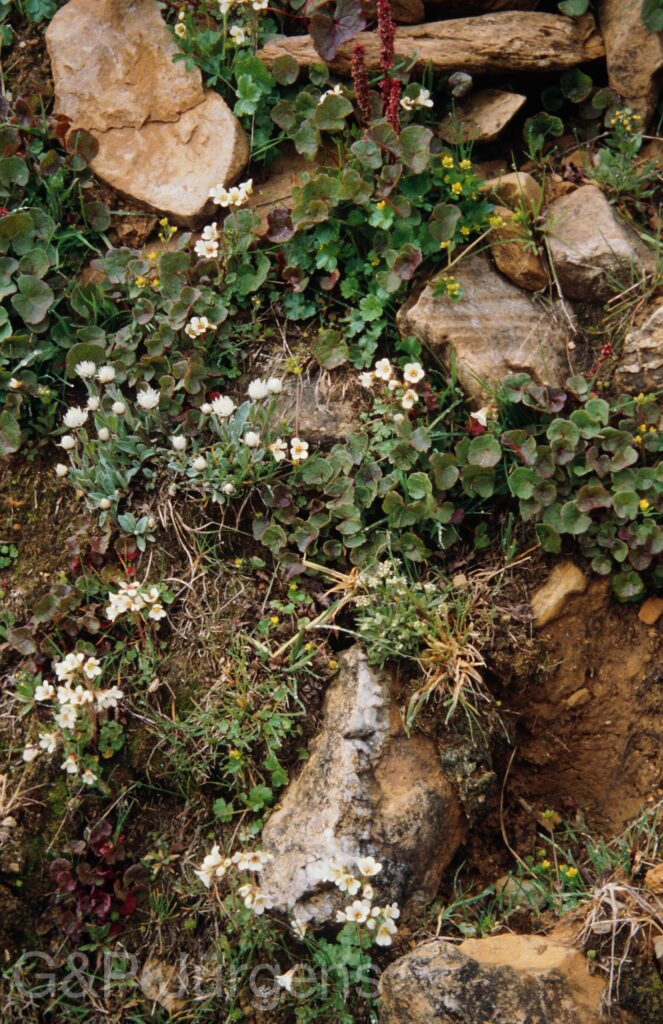
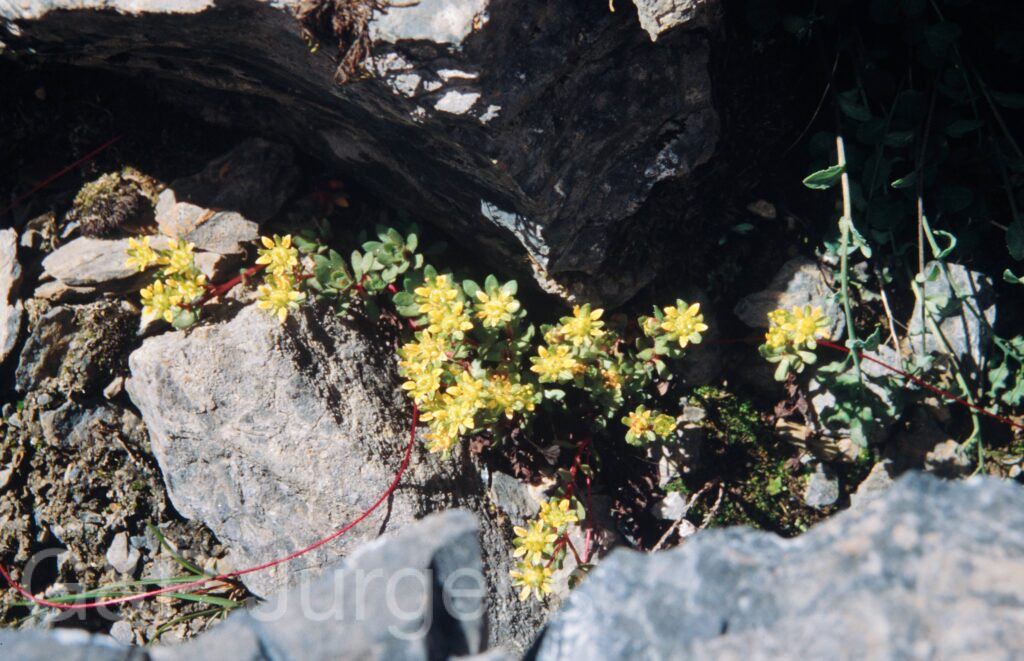
Saxifraga caveana W.W.Sm. is a high-alpine cushion saxifrage endemic to the Sino-Himalayan region, with GBIF records (c. 48 occurrences) from Bhutan, Nepal, China and India. It occupies the upper alpine zone, growing among rocks, on stony slopes, screes and in crevices of moist cliffs, typically between about 4,000 and 5,000 m. The photographed plant from the Kagmara-La in west Nepal at roughly 4,200 m, flowering in July, illustrates its habitat well: a cold, exposed, snow-fed pass environment where the short summer monsoon period coincides with peak flowering.

The species is a small perennial herb forming low tufts or loose cushions from a branched caudex. The leaves are mostly basal, rosulate, small, oblong to spathulate, often somewhat fleshy and ciliate at the margins, and may bear lime-secreting hydathode pores characteristic of many saxifrages. Flowering stems are short, glandular-pubescent, and bear one to few flowers. The flowers are typically pentamerous, with five free sepals and five obovate petals that are pale yellow to whitish, sometimes finely spotted; the ovary is more or less superior with two carpels developing into a capsule that dehisces apically to release numerous minute seeds.

Within the large and intricate genus Saxifraga, S. caveana belongs to the assemblage of Himalayan alpine species whose taxonomy has been clarified mainly through the work on section Ciliatae and related groups. As a narrow-range, high-elevation specialist, it is potentially vulnerable to climate-driven upward shifts of the alpine zone, though its remote habitat affords protection from direct human disturbance.

Author: W.W.Sm. · Sources: POWO (Kew), Flora of China Vol. 8, Flora of Nepal, Flora of Bhutan Vol. 1, GBIF, Pan Jintang & Gornall: Saxifragaceae revisions

W.W. Sm.

Nepal 99 793 ergebnis
West-Nepal Baga-La-Phedi 4500m, July
Nepal 99 792 ergebnis
West-Nepal Baga-La-Phedi 4500m, July

Description

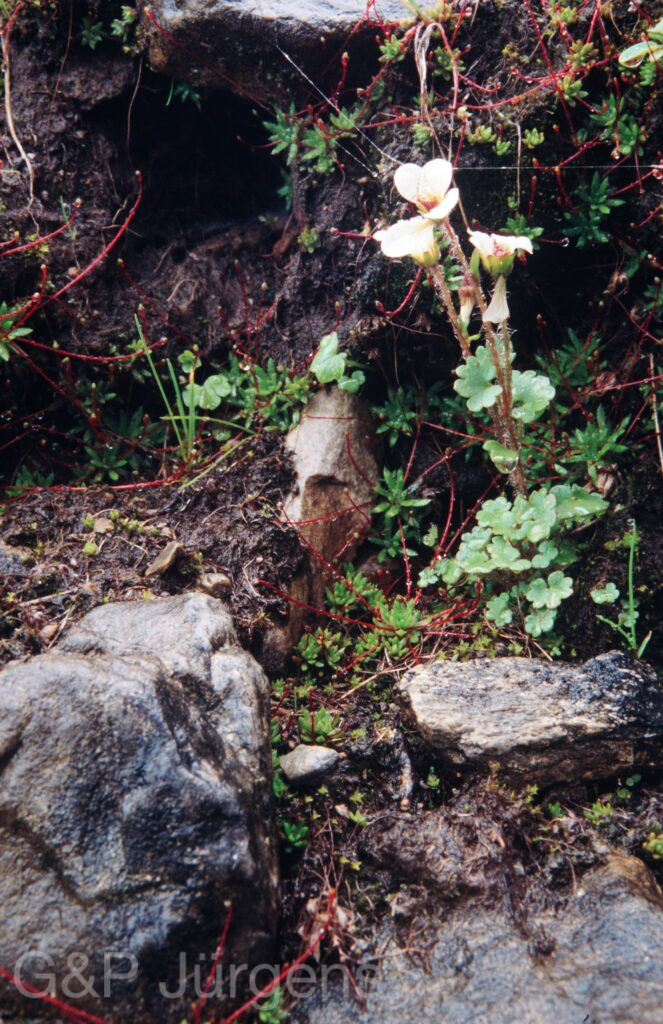
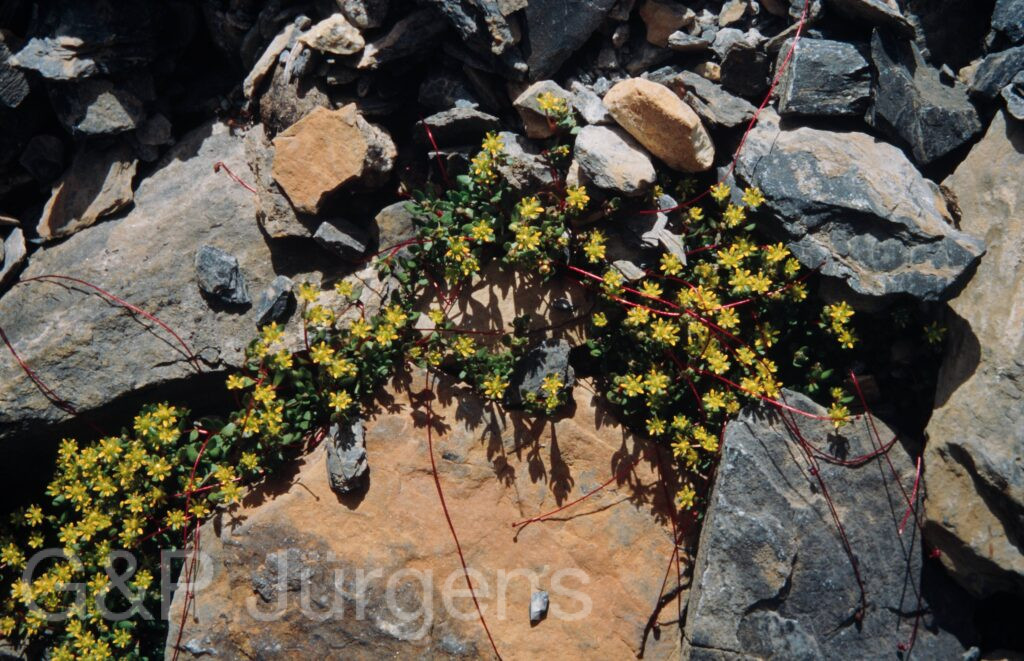
Saxifraga consanguinea W.W.Sm. is a small alpine perennial of the high Himalaya, narrowly distributed and documented by GBIF (163 occurrences) only from China and Nepal. It is a true high-mountain plant of moist alpine turf, rocky slopes, screes and the margins of snowbeds, generally well above the treeline. The cited collection from Baga-La-Phedi in west Nepal at 4500 m in July typifies its habitat in the cold, open alpine zone, where it grows on damp, gravelly ground kept moist by lingering snowmelt during the brief summer flowering season.

The species is a cushion- to tuft-forming herb arising from a slender rootstock, with short stems and crowded, small, sessile leaves that are oblong to linear, entire and often somewhat fleshy, frequently with marginal or apical hydathodes. The flowering stems are short and few-flowered to solitary-flowered; the flowers have five free, yellow petals, a partly inferior, bicarpellate ovary with two short divergent styles, and ten stamens. The fruit is a small bilocular capsule dehiscing between the persistent styles to liberate numerous tiny seeds, the whole plant adapted to the brief, cold growing season of the high alpine.

Saxifraga consanguinea belongs to the predominantly yellow-flowered, alpine sections of this large, taxonomically complex circumboreal and Sino-Himalayan genus, in which species delimitation rests on fine cushion, leaf and floral characters. Its restriction to China and Nepal makes it a genuine high-Himalayan endemic of conservation interest; though no major threats are recorded, its narrow range and dependence on snowmelt-fed alpine habitats render it potentially sensitive to climatic warming and shifting snow regimes.

Author: W.W. Sm. · Sources: POWO (Kew), GBIF, Flora of Nepal, Flora of China, The Saxifragaceae of the Sino-Himalaya, Saxifrages of the World (Webb & Gornall)