
C.B.Clarke
Description
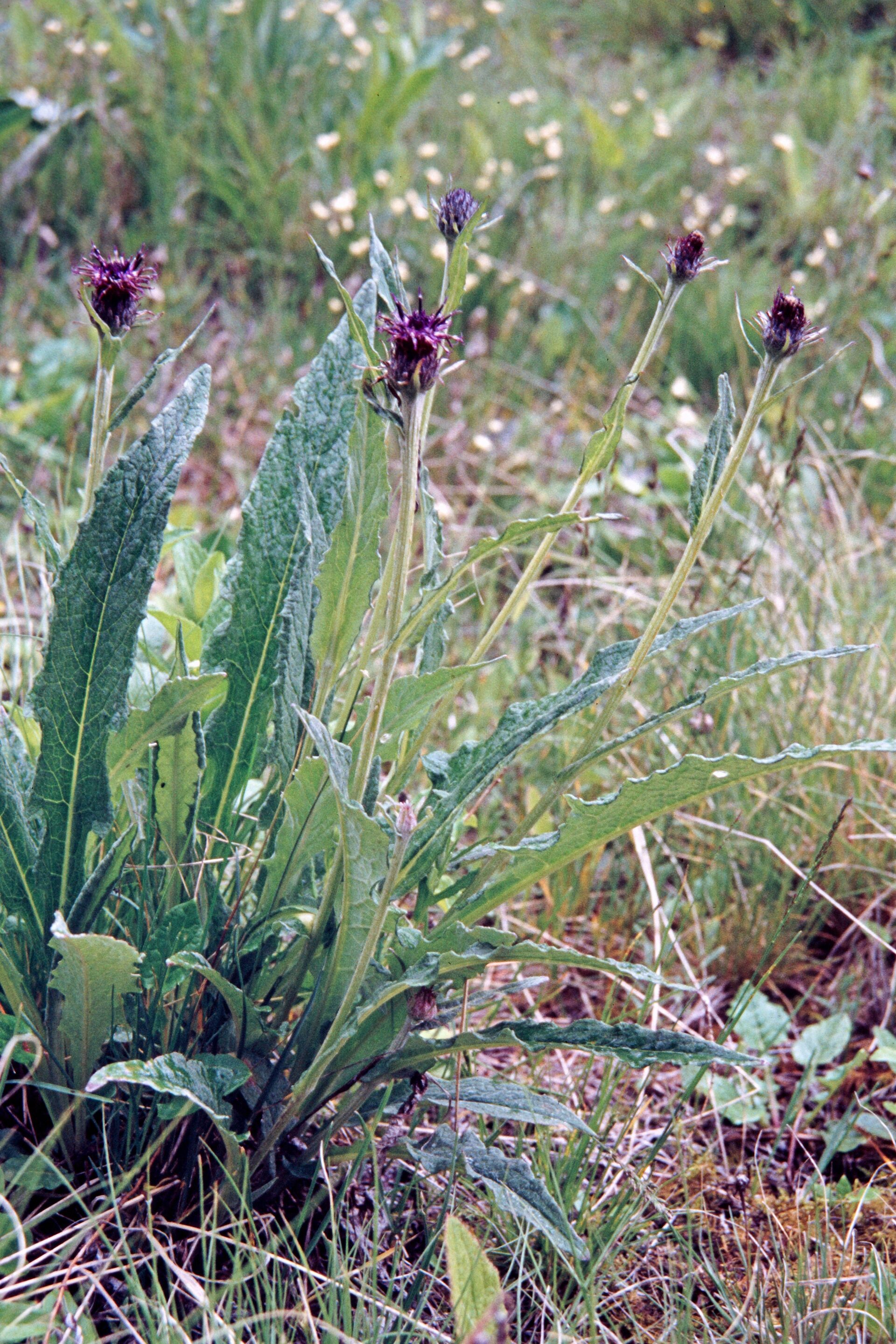
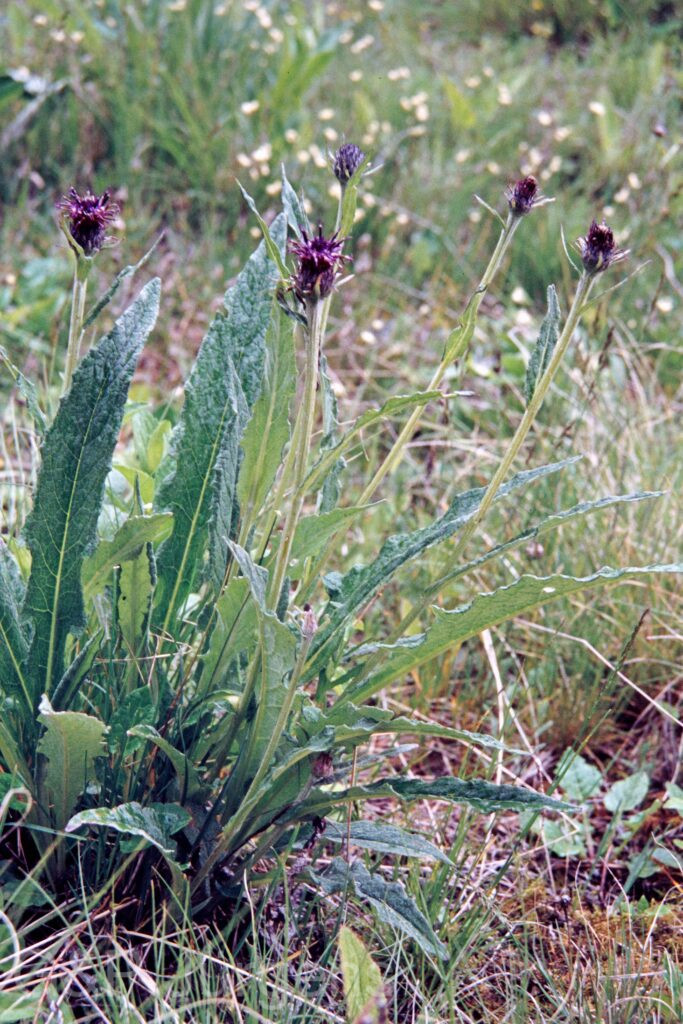
Saussurea roylei is an alpine composite of the western and central Himalaya, distributed through India, Nepal, Pakistan and adjacent China (IN, NP, PK, CN), with about 223 recorded occurrences. It grows in open alpine meadows, on grassy and stony slopes, screes and rocky ground in the subalpine to alpine zone, broadly between about 3000 and 4500 m. The plant shown here was photographed at Churta Khola in West Nepal at 3600 m in June, an elevation and early-summer flowering season typical of the species, where it occupies the herb-rich turf and gravelly margins of high pastures shortly after snowmelt.
The plant is a low perennial herb arising from a stout rootstock, with a simple or sparingly branched, often leafy stem. The leaves are elliptic to lanceolate, the basal ones narrowed to a winged petiole, the margins entire to toothed and the lower surface frequently thinly woolly. The flower heads (capitula) are clustered in a dense terminal corymb, each head an involucre of imbricate, often purplish-tipped bracts enclosing numerous small, tubular, purple to violet disc florets; ray florets are absent, as throughout the genus. The fruit is a glabrous cypsela (achene) crowned by a pappus of feathery inner and shorter, scabrid outer bristles aiding wind dispersal.
Saussurea (tribe Cardueae, the thistle alliance of the Asteraceae) is a large and taxonomically intricate genus that reaches spectacular diversity in the high Sino-Himalaya, including the woolly and bracteate 'snow lotus' alpines. S. roylei belongs to the assemblage of meadow-dwelling, non-cottony species and is pollinated by bumblebees and other alpine insects drawn to the discoid heads. Widespread across the western Himalaya and locally common in alpine grassland, it is not of conservation concern, although high-altitude Saussurea species generally face pressure from grazing and harvesting.
Author: C.B.Clarke · Sources: POWO (Kew), GBIF, Flora of Nepal, Flora of China, Saussurea: A Monograph (Lipschitz)