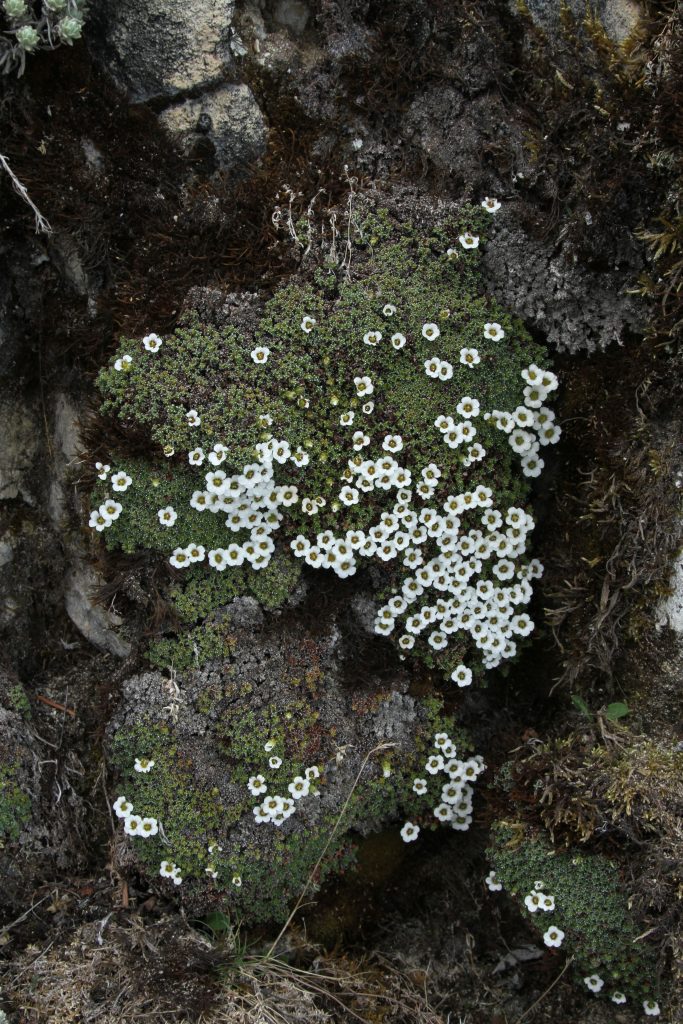
Author

G & P Jürgens

Harry Sm.

Bhutan2014 929
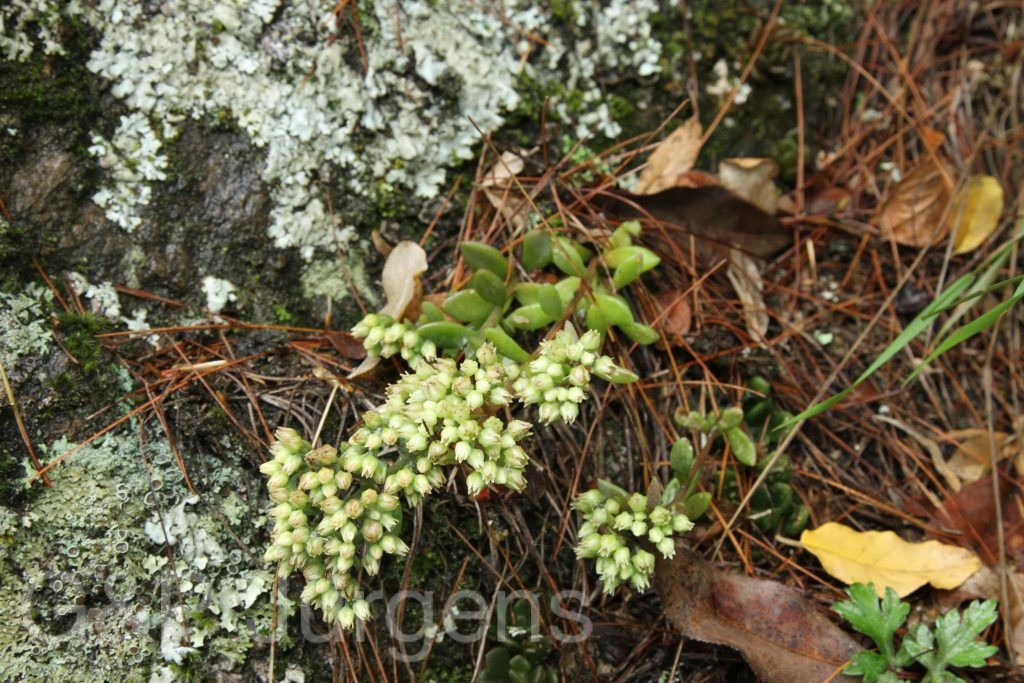
Bhutan Chele-La 4100m, May
Bhutan2014 928
Bhutan Chele-La 4100m, May

Description

Saxifraga vacillans Harry Sm. is a high-alpine cushion- to mat-forming saxifrage of the eastern Himalaya, known from only a handful of georeferenced collections, all from Bhutan. It is a plant of the upper alpine zone, growing among rocks, on stabilised scree, in moist turf and in the crevices of cliffs and moraines well above the treeline. The single documented locality at Chele-La, photographed at 4,100 m in May, is characteristic of its narrow elevational preference for sites between about 3,800 and 4,500 m, where it endures intense insolation, freeze-thaw cycles and a short snow-free growing season.

The species forms low, compact tufts or loose cushions from a branched, somewhat woody caudex. The leaves are small, crowded into basal rosettes, narrowly spathulate to oblong and entire or obscurely toothed, often slightly fleshy and ciliate at the margins, adaptations reducing water loss in the desiccating alpine environment. Flowering stems are short and few-flowered, bearing solitary or few yellow flowers; each flower has five spreading petals, often dotted with orange near the base, ten stamens, and a bicarpellate, partly inferior ovary maturing into a capsule that releases numerous minute seeds.

Saxifraga vacillans belongs to the large and taxonomically complex genus Saxifraga, the yellow-flowered Himalayan members of which (section Ciliatae and allies) form a notoriously difficult species complex. Its apparent rarity and restriction to Bhutan may partly reflect under-collection in remote alpine terrain rather than genuine narrow endemism. Nonetheless, as a specialised high-elevation taxon it is potentially vulnerable to upslope habitat compression driven by climate warming, underscoring the value of continued botanical survey in the Bhutanese high passes.

Author: Harry Sm. · Sources: POWO (Kew), GBIF, Flora of Bhutan Vol. 1, Flora of China Vol. 8, Pan et al.: Monograph of Saxifraga (Saxifragaceae)
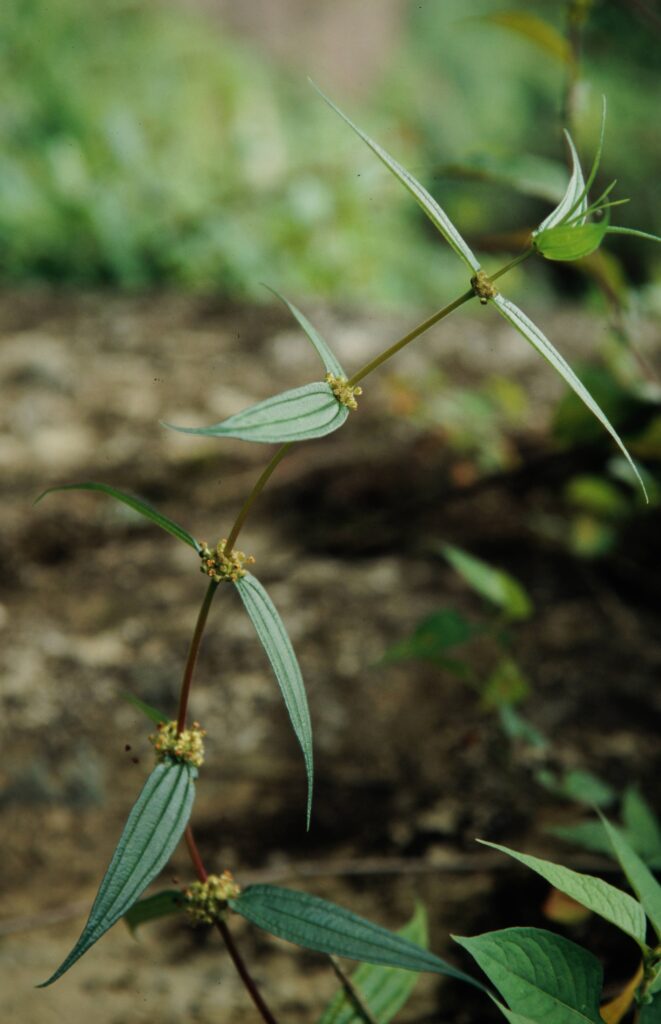
(L.) R.J.Wang

Sikkim 2006 280 ergebnis
India West-Bengal, Chaana 1650m, May

Description

Scleromitrion verticillatum is a widespread herb of tropical and subtropical Asia, with 629 GBIF occurrences spanning India, Nepal, China, Taiwan, Japan and a broad swathe of Southeast Asia from Myanmar and Vietnam through Malaysia, Indonesia and the Philippines. It grows as a weedy annual or short-lived perennial of open, disturbed and seasonally moist ground, including roadsides, grassy banks and waste places from the lowlands into the lower hills. The plant recorded at Chaana in West Bengal at 1650 m in May reflects its presence in the eastern Himalayan foothills, where it flowers with the onset of the warm, pre-monsoon season.

The species is an erect to ascending herb with quadrangular, often scabrid stems that may be roughened on the angles. The leaves are opposite, sessile or nearly so, linear-lanceolate to lanceolate, with entire, frequently scabrid margins and interpetiolar stipules bearing setae characteristic of the tribe Spermacoceae. The small white flowers are borne in dense axillary clusters or verticillate glomerules, each with a four-lobed calyx, a tubular four-lobed corolla, four epipetalous stamens and a bifid style. The fruit is a small, subglobose to ellipsoid capsule that dehidces septicidally to release numerous minute, angular seeds.

Scleromitrion was segregated from the broadly circumscribed Hedyotis-Oldenlandia complex on the basis of molecular and capsular characters, and S. verticillatum was formerly placed in Hedyotis and Oldenlandia. The genus belongs to the tribe Spermacoceae within Rubioideae. As a ruderal coloniser of open habitats, the species is ecologically successful and locally common, posing no conservation concern across its extensive range.

Author: (L.) R.J.Wang · Sources: POWO (Kew), GBIF, Flora of China Vol. 19, Flora of Bhutan Vol. 2, Flora of Nepal, Flora of Pakistan, Wang's revision of Scleromitrion and Spermacoceae

Fröd.

Bhutan2012 148
Bhutan Haarvalley 3500m, October

Description

Sedum correptum is a rare stonecrop with a restricted distribution in the eastern Himalaya, known from Bhutan and adjacent areas of southwestern China (southern Tibet). GBIF records only nine occurrences, indicating the species is infrequently collected and poorly documented. It inhabits rocky ledges, cliff faces, stony ground, and mossy boulders in the upper temperate to subalpine zone, at elevations of approximately 3,000–4,000 m. The photograph from the Haar Valley in Bhutan at 3,500 m, taken in October, captures the species in fruit or late flowering in its characteristic rocky subalpine habitat.
The plant is a perennial succulent herb, 5–15 cm tall, with ascending to decumbent stems arising from a slender rootstock. Leaves are alternate, sessile, fleshy, oblong-elliptic to obovate, 8–15 mm long, entire, glabrous, often tinged reddish-purple especially under high light conditions. The inflorescence is a compact, terminal, corymbose cyme with few to several flowers. Flowers are pentamerous with lanceolate, fleshy sepals and yellow to pale yellow petals, 4–6 mm long, lanceolate to elliptic, acute. Stamens 10, in two whorls. Carpels five, erect, ripening into divergent follicles containing minute, oblong seeds.
Sedum correptum was described by the Swedish botanist Harald Fröderström, who monographed the genus extensively in the early twentieth century. The species belongs to the large and taxonomically difficult genus Sedum, which has undergone significant reclassification in recent decades as molecular phylogenetics have revealed polyphyly in its traditional circumscription. The placement of S. correptum within current infrageneric classifications requires further study. Its limited collection record and restricted range suggest it may be uncommon, though it likely remains undercollected due to the remoteness and inaccessibility of its subalpine habitats in Bhutan and Tibet.

Author: Fröd. · Sources: POWO (Kew), GBIF, Grierson & Long: Flora of Bhutan Vol. 1, Fu & Ohba: Crassulaceae in Flora of China Vol. 8

Hemsl. ex F.B. Forbes & Hemsl.

Bhutan2012 150
Bhutan Haarvalley 3500m, October

Description

Sedum filipes Hemsl. ex F.B.Forbes & Hemsl. is a slender, succulent herb of the Sino-Himalayan mountains, recorded by GBIF from China, Nepal, India, Bhutan and Myanmar. It is a plant of moist, shaded rock ledges, mossy boulders, stream banks and forest margins in the subalpine and lower alpine belts, occurring from around 2,500 to 4,000 m. The October collection from the Haa valley in western Bhutan at 3,500 m reflects its preference for cool, humid microhabitats, where it often grows in thin soil pockets over rock alongside ferns, bryophytes and other small montane herbs at the close of the monsoon season.

The species is a delicate, glabrous annual or short-lived perennial with thread-like, often reddish, ascending or decumbent stems, as the epithet filipes (slender-stalked) implies. The fleshy leaves are alternate, flat to slightly terete, spathulate to obovate, narrowed to the base and entire. The inflorescence is a lax, few-flowered cyme bearing small, yellow, star-shaped flowers; each flower is typically five-merous, with lanceolate sepals, narrowly lanceolate petals, ten stamens and free or basally united carpels that ripen into erect, beaked follicles releasing minute seeds.

Within Crassulaceae the genus Sedum in its broad traditional sense is highly polymorphic, and slender Himalayan taxa such as S. filipes have at times been segregated into genera such as Sinocrassula or treated within narrowly defined sections. Its succulent CAM-related physiology allows survival on exposed, drought-prone rock surfaces, making it a characteristic colonist of rocky subalpine habitats and a useful indicator of undisturbed montane rock communities.

Author: Hemsl. ex F.B. Forbes & Hemsl. · Sources: POWO (Kew), GBIF, Flora of China Vol. 8, Flora of Bhutan Vol. 1, 't Hart & Eggli: Evolution and Systematics of the Crassulaceae

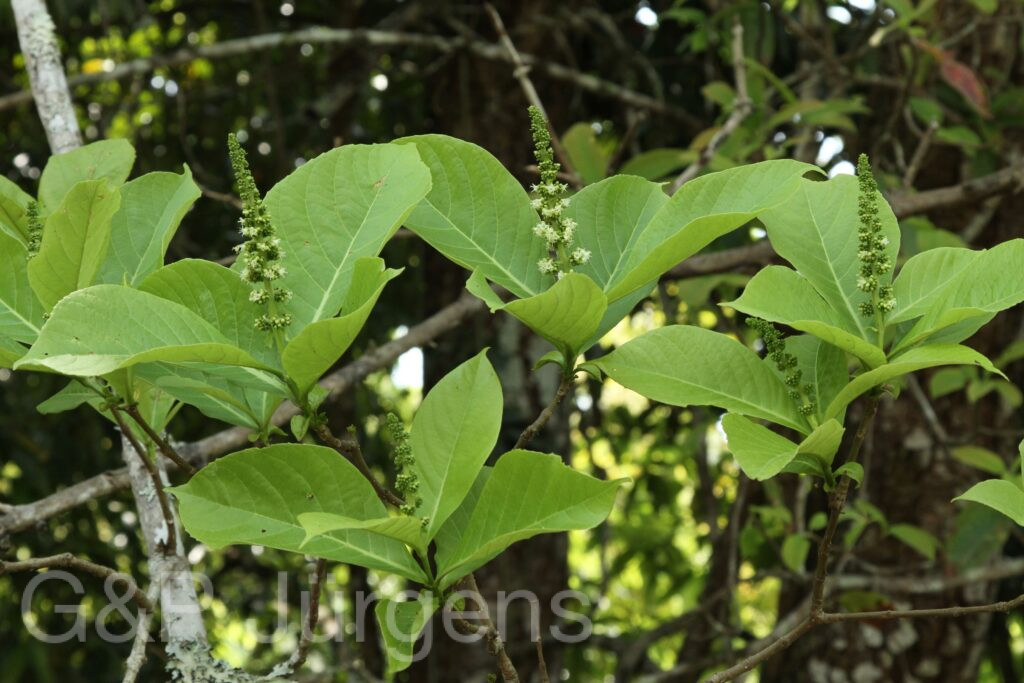
L.f.

Bhutan2014 678
Bhutan Wangdi Phodrang 1100m, June
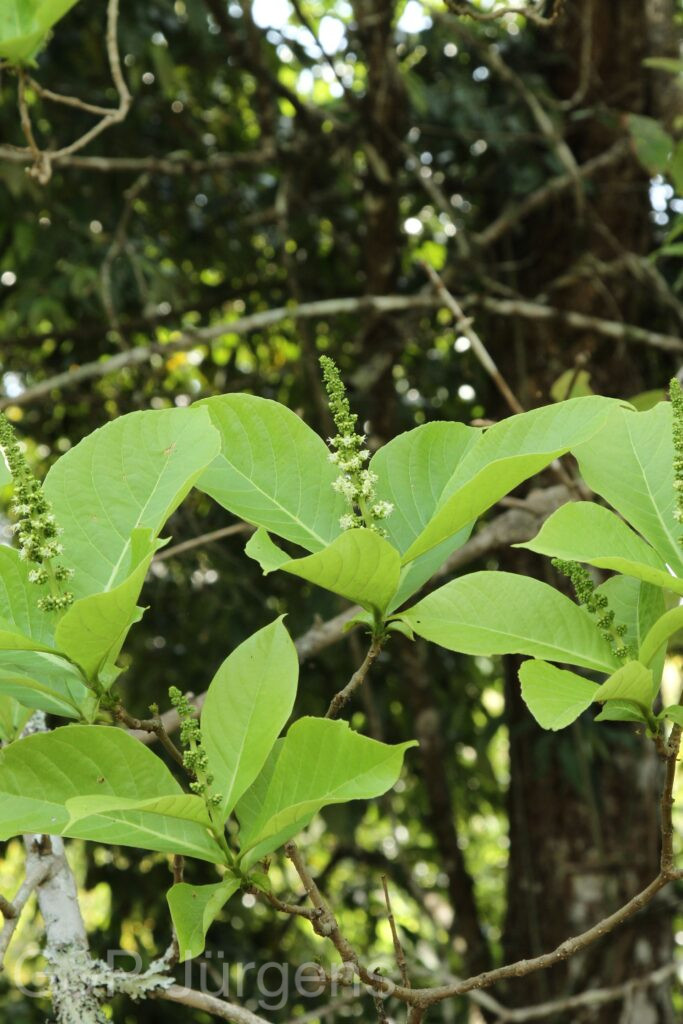
Bhutan2014 677
Bhutan Wangdi Phodrang 1100m, June

Description

Semecarpus anacardium, the marking-nut tree, is a tree of the South and Southeast Asian tropics extending into the southern Himalayan foothills. GBIF (some 1,524 occurrences) records it natively from India, Nepal, Bhutan, Myanmar, Bangladesh, Sri Lanka, Vietnam, Indonesia, the Philippines and Papua New Guinea, with cultivated or introduced material in the Neotropics and on islands such as Mauritius. It grows in deciduous and semi-evergreen forest, savanna woodland and forest margins, mostly below 1,200 m. The photographed tree is from Wangdue Phodrang in western Bhutan at about 1,100 m, in June, near the upper limit of its subtropical range along the inner Himalayan valleys.

It is a medium-sized deciduous tree with a spreading crown and grey bark exuding an acrid, blackening resin. The leaves are large, simple, obovate to oblong, clustered towards the branch ends, coriaceous and rounded at the apex, with prominent venation. The flowers are small, greenish-white and borne in terminal panicles. The fruit is a drupe seated on a fleshy, orange, swollen hypocarp (the enlarged receptacle); the drupe itself is ovoid and turns black, its pericarp containing the caustic resin.

The black juice is the source of the indelible "marking-nut" dye used traditionally to mark cloth, and the nut is important in Ayurvedic medicine, though the resin is a potent contact irritant rich in urushiol-type phenolics, like others in the Anacardiaceae. The fleshy hypocarp is edible when roasted. The species is common across its range and of no conservation concern, exemplifying the Indo-Malesian tropical element penetrating the lower Himalaya.

Author: L.f. · Sources: POWO (Kew), Flora of Bhutan Vol. 2, Flora of Nepal, GBIF, Ding Hou: Anacardiaceae (Flora Malesiana)

(DC.) Raab-Straube & Yu J.Wang

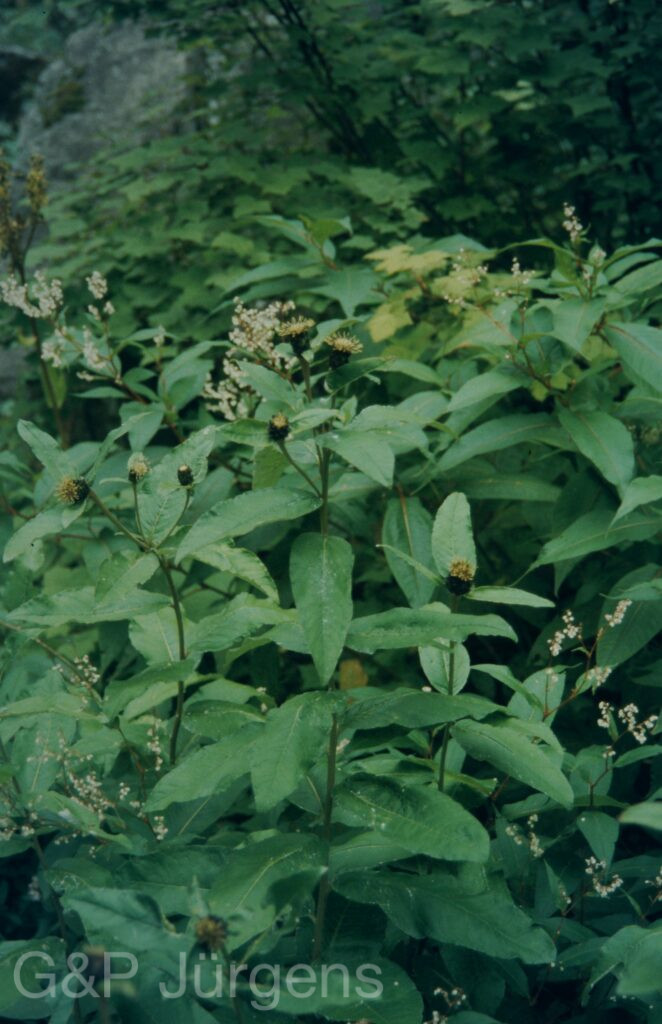
Garw 2005 64 ergebnis ergebnis
India Garhwal Valley of flowers 3400m, September
Garw 2005 170 ergebnis ergebnis
India Garhwal Shertoli 3100m, September

Description

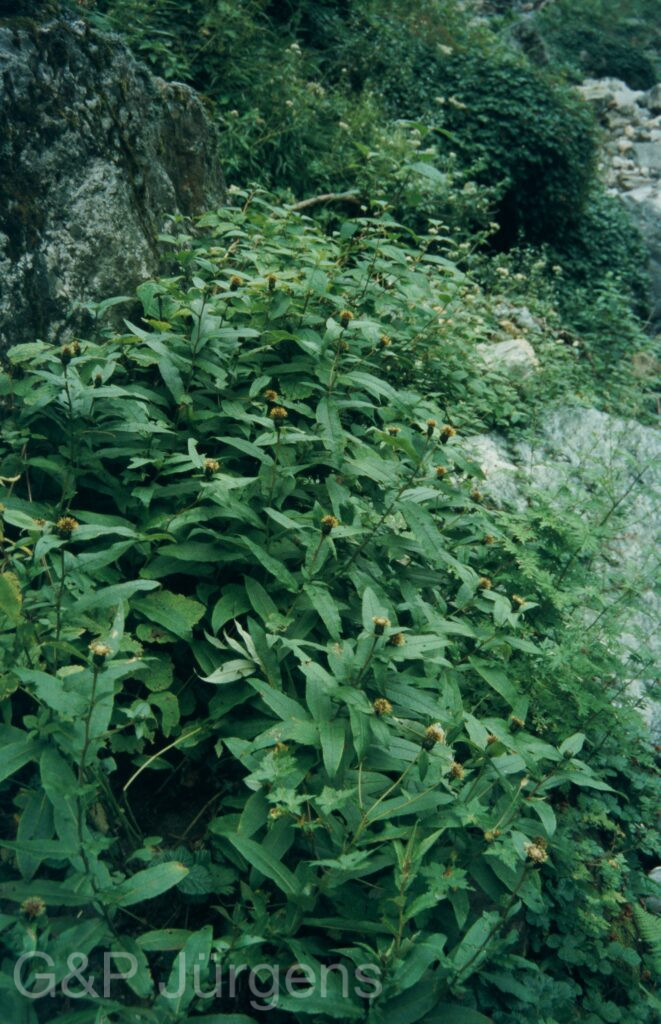
Shangwua denticulata is an alpine perennial herb of the Himalaya and the Tibetan plateau region, recorded from China, Nepal, India and Bhutan, with about 170 occurrences in GBIF. It is a plant of high open habitats, growing on alpine and subalpine slopes, in meadows, on screes and among rocks, generally above the treeline. The photographed plants come from the Garhwal Himalaya of India, at the Valley of Flowers (3400 m) and at Shertoli (3100 m), both recorded in September as the late-summer alpine flora comes into flower and fruit, an elevation and setting characteristic of this cold-mountain specialist.

The plant arises from a perennial rootstock and produces erect or ascending stems bearing alternate leaves; the leaves are oblong to lanceolate with toothed (denticulate) margins, as the epithet records, and are often somewhat hairy. The flower heads (capitula) are borne singly or in small clusters and are surrounded by a many-rowed involucre of bracts, the latter frequently tinged dark or purplish as in many alpine composites. As a member of the tribe Cardueae the capitula are discoid, composed wholly of tubular, purplish florets, and the achenes are crowned by a pappus of fine bristles that aids wind dispersal.

Shangwua is a small genus recently segregated from Saussurea on molecular and morphological grounds, the species formerly treated under that genus; the recombination by Raab-Straube and Wang reflects modern phylogenetic revision of the Saussurea complex. As a high-alpine thistle relative, S. denticulata is adapted to short growing seasons, intense radiation and cold, and its specialised montane distribution makes it of biogeographic interest within the rich Sino-Himalayan Cardueae flora.

Author: (DC.) Raab-Straube & Yu J.Wang · Sources: POWO (Kew), GBIF, Flora of China, Flora of Bhutan, Saussurea and allies revision (Raab-Straube)

(Edgew.) Pusalkar & D.K.Singh

Garw 2005 333 ergebnis
India Garhwal Bagubas 4000m, October

Description

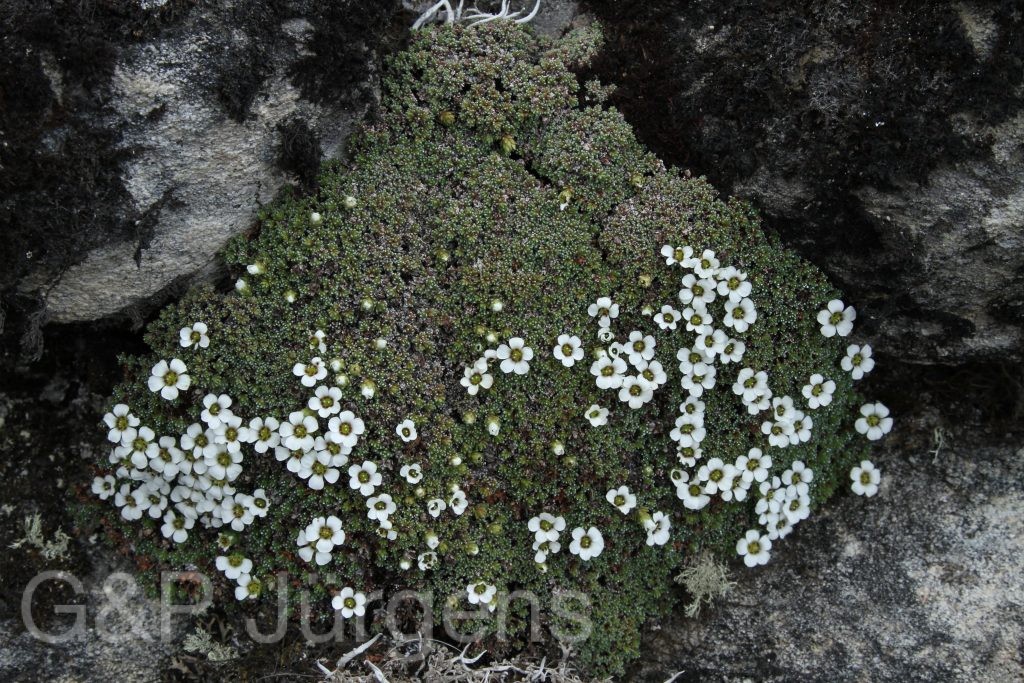
Shivparvatia glanduligera is an alpine herb of the Caryophyllaceae distributed across the Himalaya from northern India (Kashmir, Himachal Pradesh, Uttarakhand) through Nepal and Bhutan to southwestern China (Tibet). GBIF records 256 occurrences, making it one of the more frequently collected high-altitude caryophylls in the region. The species inhabits alpine meadows, moist scree, rocky slopes, and gravel flats at elevations of 3,500–5,200 m. The photograph from Bagubas in the Garhwal Himalaya at 4,000 m, taken in October, shows the species in the western part of its range during its late-season flowering.
The plant is a low, tufted perennial herb, 3–12 cm tall, with ascending stems that are characteristically glandular-pubescent throughout — the feature referenced in the epithet glanduligera. Leaves are opposite, linear-lanceolate to narrowly elliptic, 5–15 mm long, acute, with glandular hairs on both surfaces and margins. Flowers are solitary or in few-flowered terminal cymes. Sepals five, ovate-lanceolate, glandular-hairy, 3–5 mm long. Petals five, white, obovate, slightly exceeding the sepals, entire or shallowly emarginate at the apex. Stamens 10. Styles three. The capsule is ovoid, dehiscing by six teeth, containing numerous small, reniform, tuberculate seeds.
This species was long placed in Arenaria as A. glanduligera Edgew. before molecular phylogenetic analyses revealed that the traditional genus Arenaria was massively polyphyletic. Pusalkar and D.K. Singh transferred it to the newly erected genus Shivparvatia, named after the Hindu deities Shiva and Parvati in reference to the Himalayan home of these plants. The reclassification reflects a broader reorganisation within Caryophyllaceae tribe Arenarieae based on molecular evidence. The species is ecologically significant as a component of high-alpine plant communities and is not currently assessed as threatened.

Author: (Edgew.) Pusalkar & D.K.Singh · Sources: POWO (Kew), GBIF, Pusalkar & Singh (2015) in Phytotaxa, Flora of China Vol. 6, Naithani: Flora of Chamoli Vol. 1

(Bertol.) Paule & Soják

Bhutan2012 910
Bhutan Tumching-La 4000m, October
Sikkim2011 27
Bhutan Lachen 2800m, June

Description

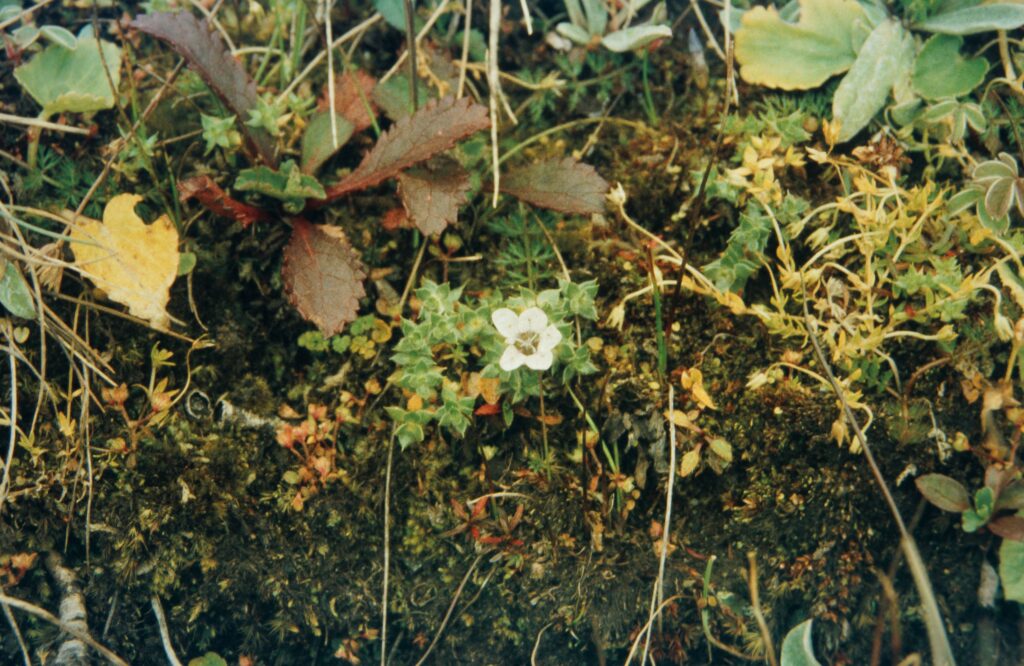
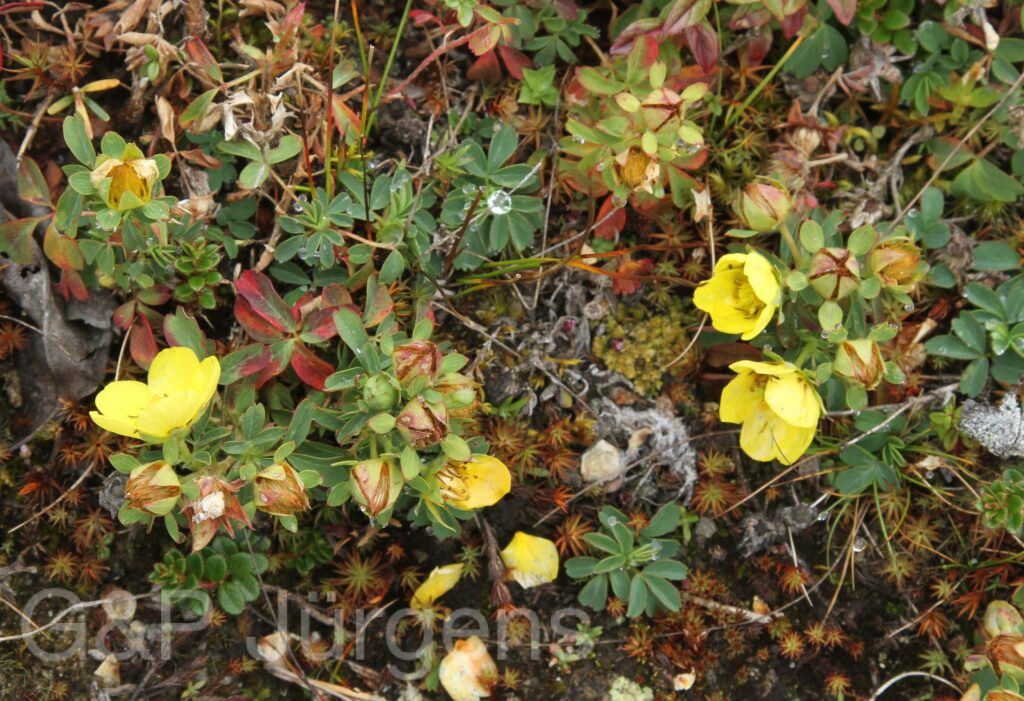
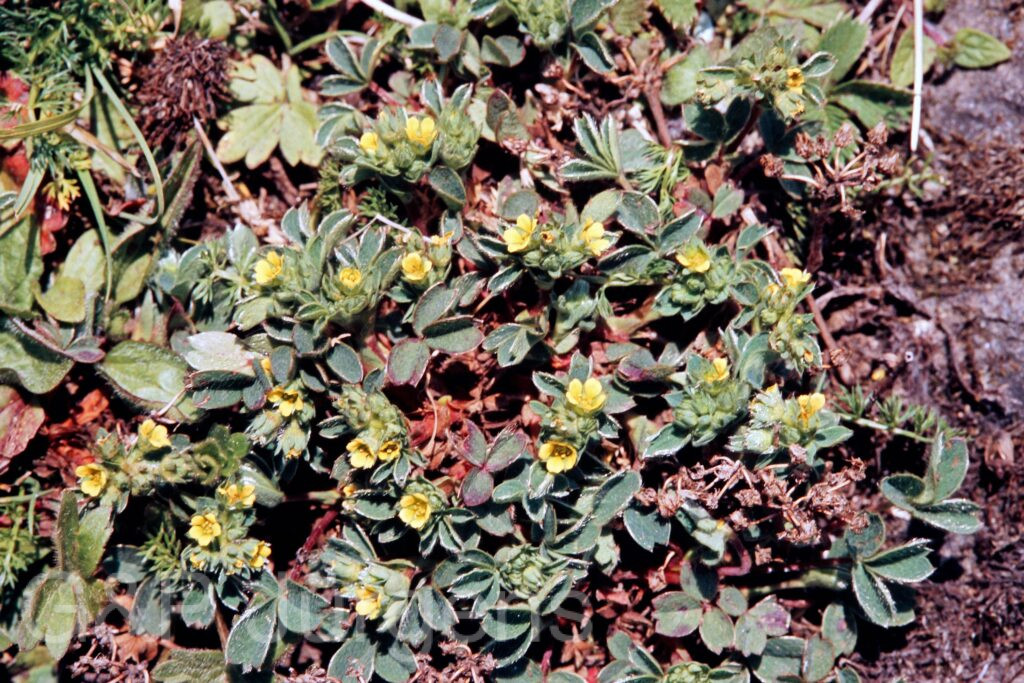
Sibbaldia cuneifolia (Bertol.) Paule & Soják is a cushion-forming perennial of the high Himalaya and adjoining Central Asian mountains, distributed across India, Nepal, Bhutan, Pakistan and SW China, with additional records from temperate Europe (Austria, Switzerland, Britain, Sweden, Finland) reflecting both a wide alpine range and naturalised or rock-garden occurrences; the roughly 184 georeferenced collections concentrate in the Sino-Himalayan alpine belt. It inhabits open stony slopes, screes, glacial moraine, alpine turf and the margins of late-melting snowbeds. The species ascends to considerable altitude, as the photographed material from the Tumching-La pass in Bhutan at about 4,000 m in October and from Lachen at 2,800 m in June illustrates, spanning the subalpine to high-alpine zones.

It is a low, mat-forming herb arising from a woody, branched rootstock and slender creeping rhizome. The leaves are trifoliolate and basal in dense rosettes, the obovate-cuneate leaflets wedge-shaped at the base and conspicuously few-toothed at the truncate apex, often somewhat fleshy and sparsely strigose. Short cymes bear small flowers with five green sepals alternating with smaller epicalyx segments, and five minute yellow petals shorter than the calyx; stamens are typically five, and the carpels few, ripening into small dry achenes seated on a dry receptacle.

The genus Sibbaldia is closely allied to Potentilla, into which it is sometimes merged, and the basionym links this taxon to the Potentilla ambigua complex referenced on the source page. Adapted to short growing seasons, intense insolation and frost, these prostrate cushions exemplify alpine stress tolerance. The species is widespread and not considered threatened, though high-altitude populations are sensitive to grazing pressure and climate-driven upslope shifts.

Author: (Bertol.) Paule & Soják · Sources: POWO (Kew), Flora of China Vol. 9, Flora of Bhutan Vol. 1, GBIF, Soják: Notes on Potentilla and allied genera (2008)

Willd.

Garh 07 206 ergebnis
India Garhwal Panwali 3300m, June

Description

Sibbaldia parviflora is a low alpine herb with a broad distribution spanning the Caucasus, Anatolia, Iran, Central Asia and the Himalaya, recorded from Russia, Georgia, Armenia, Turkey, Azerbaijan, Iran, Afghanistan, India, Nepal, Bhutan and China, with scattered European and other collections reflecting cultivation and herbarium material. Its roughly 662 georeferenced records mark a common and wide-ranging mountain species. It grows in alpine meadows, short grassy turf, stony slopes and grazed pasture, typically at about 2700-4500 m. The collection from Panwali in Garhwal, India at 3300 m in June is representative of its early-summer flowering on open Himalayan pasture.

It is a small, tufted, somewhat hairy perennial growing from a stout, branched, woody rootstock that gives rise to crowded rosettes. The leaves are trifoliolate with obovate to cuneate leaflets that are toothed at the truncate apex, often silky-pubescent and greyish-green. The small flowers are clustered in compact cymes on short scapes; each has five sepals alternating with an epicalyx and five small, narrow, pale yellow to whitish petals shorter than the sepals, hence parviflora, with five to ten stamens and few carpels seated on a slightly hairy receptacle. The fruit is a small cluster of dry glabrous achenes.

Sibbaldia is a small genus of cushion- and mat-forming alpine herbs closely allied to Potentilla, and recent molecular work has both narrowed and reshaped its limits; S. parviflora remains among its core species. The dwarf rosette habit and reduced flowers are adaptations to cold, grazed, high-radiation alpine environments, and pollination is by generalist alpine insects. Given its very wide trans-Asian range and tolerance of grazing, it is of least conservation concern.

Author: Willd. · Sources: POWO (Kew), GBIF, Flora of China, Flora of Pakistan, Sibbaldia phylogeny (Smedmark) monograph

Royle

Nepal 99 315 ergebnis
West-Nepal Kalmura 4200m, June
Garh 07 454 ergebnis
India Garhwal Khiar Kutti 3900m, June

Description

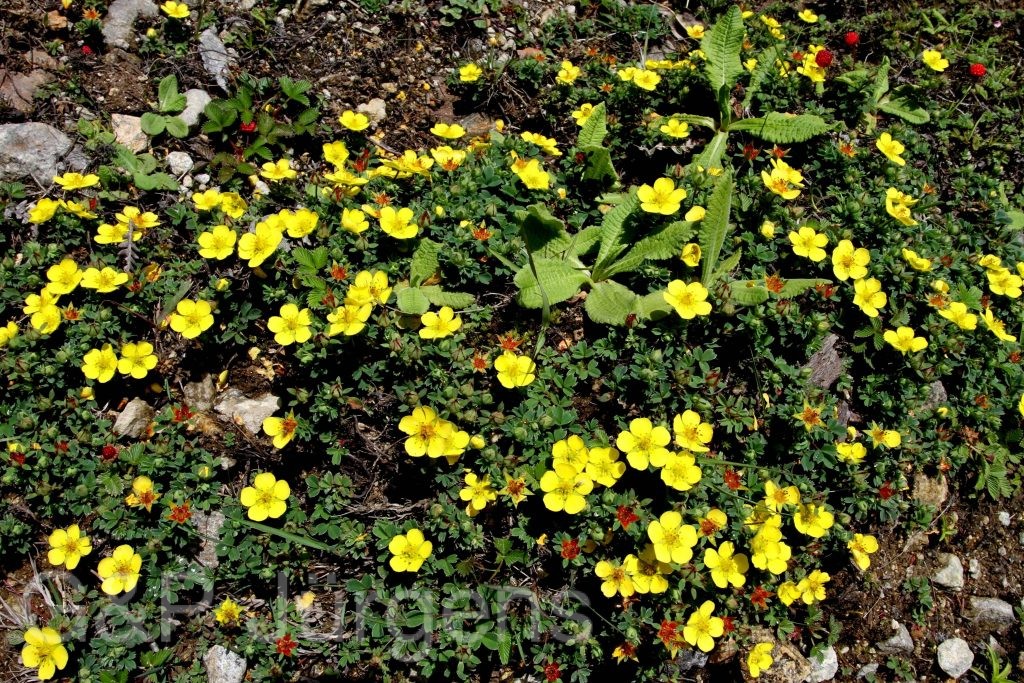
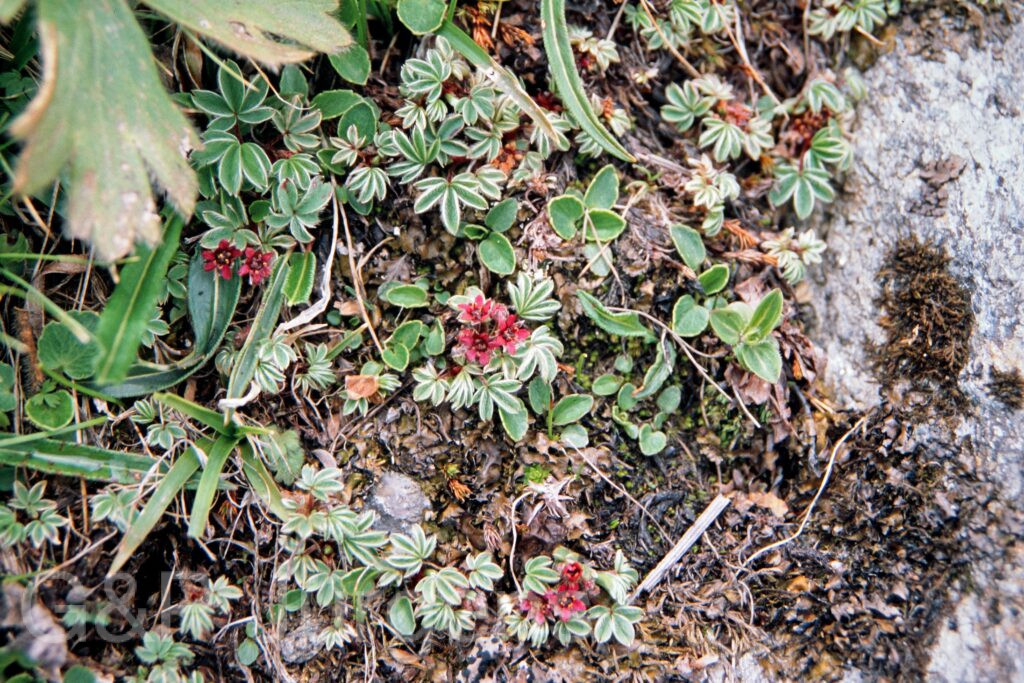
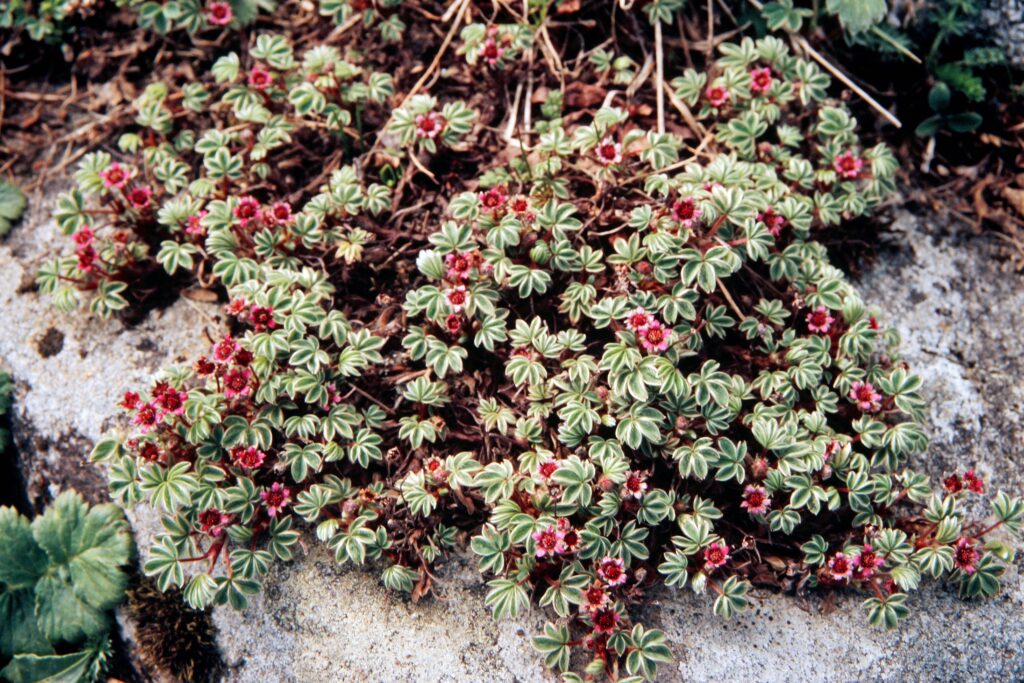
Sibbaldia purpurea is a low, cushion-forming alpine perennial of the high Himalaya and adjacent Tibetan ranges, recorded from China, India, Nepal, Bhutan and Pakistan (gbif_countries: CN, IN, NP, BT, ZZ, PK), with some 252 GBIF occurrences. It inhabits open alpine turf, gravelly slopes, screes and stony pastures, typically above the treeline in cold, well-drained, exposed sites. The illustrated gatherings come from Kalmura in West Nepal at about 4200 m and Khiar Kutti in Garhwal, India, near 3900 m, both flowering in June as the brief high-alpine growing season opens. In GBIF the name is treated under gbif_status SYNONYM, with Sibbaldia purpurea itself given as the accepted name.

The plant forms dense mats or low tufts from a branched woody caudex, with prostrate to ascending stems and crowded leaves. The leaves are trifoliolate, the leaflets small, wedge-shaped and toothed at the apex, frequently silky-hairy. The flowers are small and borne singly or in few-flowered cymes; they are distinctive within the genus for their reddish-purple to purple petals, contrasting with the yellow flowers of most Sibbaldia, set against a persistent calyx with an epicalyx. The fruit is a cluster of small, dry achenes.

Sibbaldia is a small genus of the rose family closely allied to Potentilla, from which it is segregated chiefly by its reduced stamen and carpel number, and recent molecular studies have repeatedly examined the boundary between the two; some treatments subsume part of Sibbaldia into Potentilla, accounting for the synonymy noted above. S. purpurea is a hardy cushion plant well adapted to alpine extremes. Widespread across the high Himalaya, it is of no conservation concern.

Author: Royle · Sources: POWO (Kew), GBIF, Flora of Nepal, Flora of China, Annotated Checklist of the Flowering Plants of Nepal, Eriksson et al. phylogenetic studies of Potentilleae