
L.f.
Description
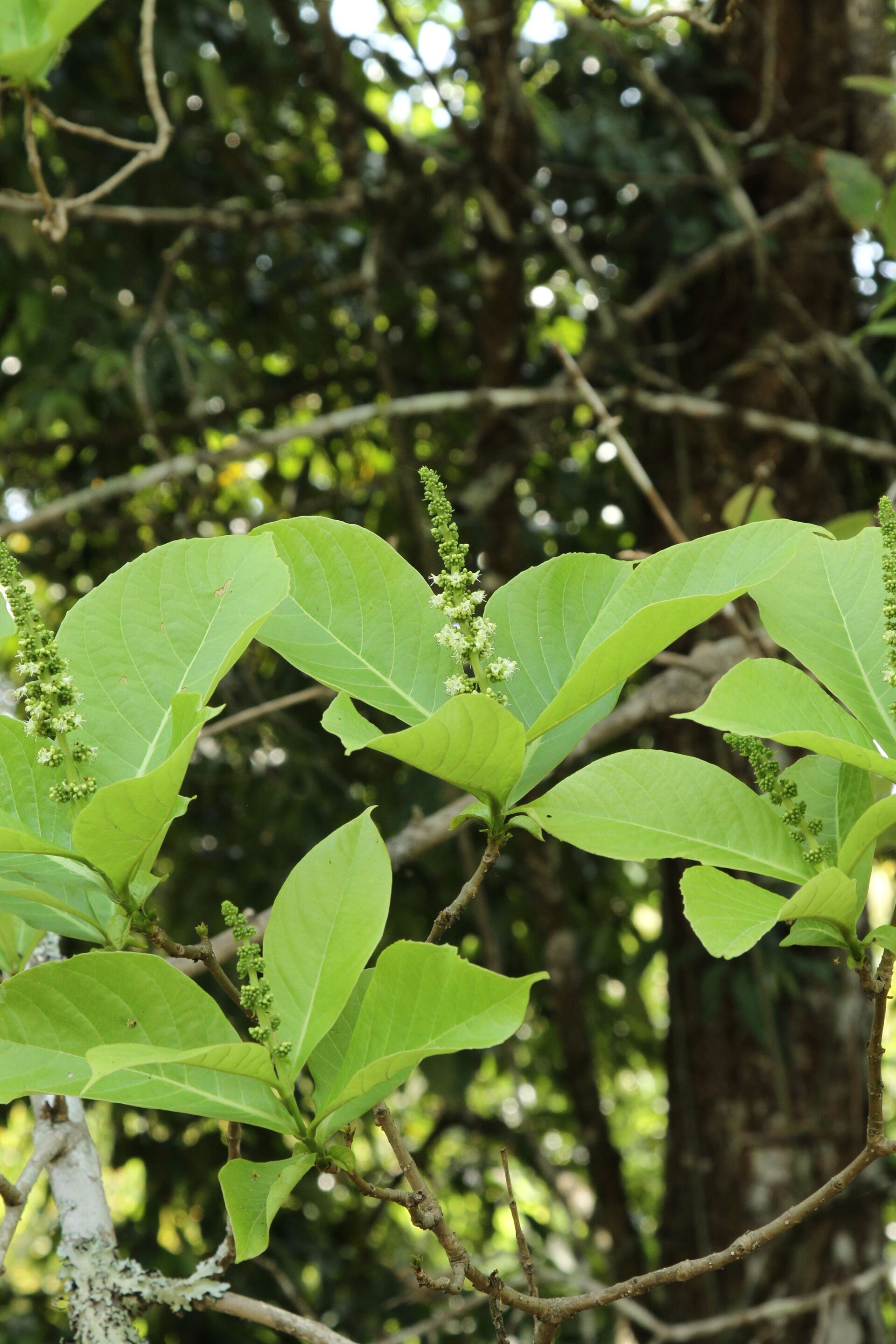
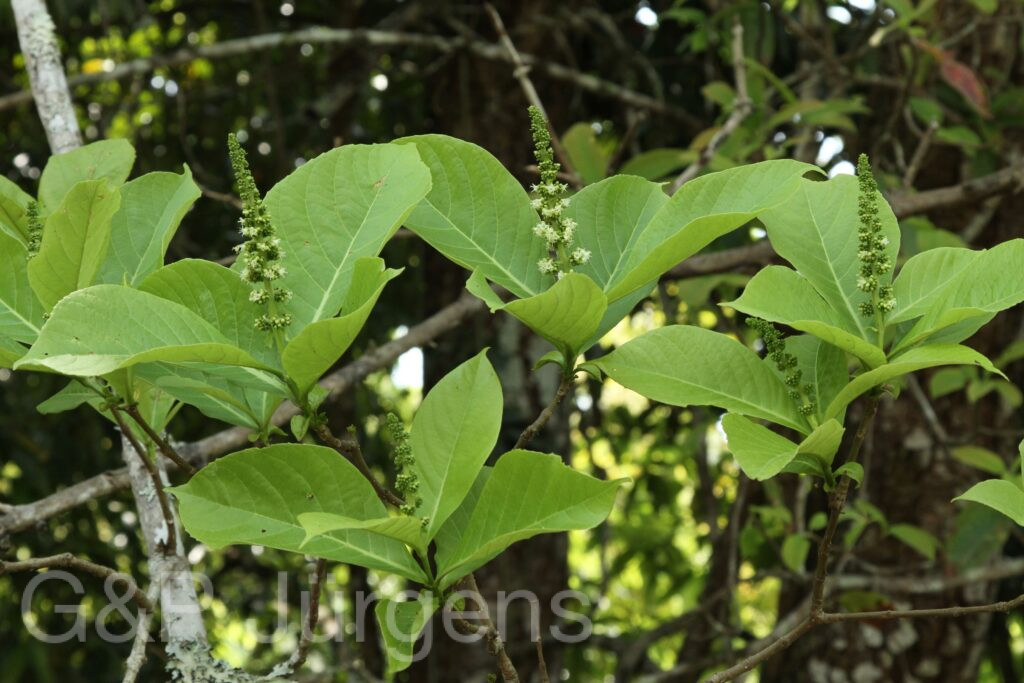
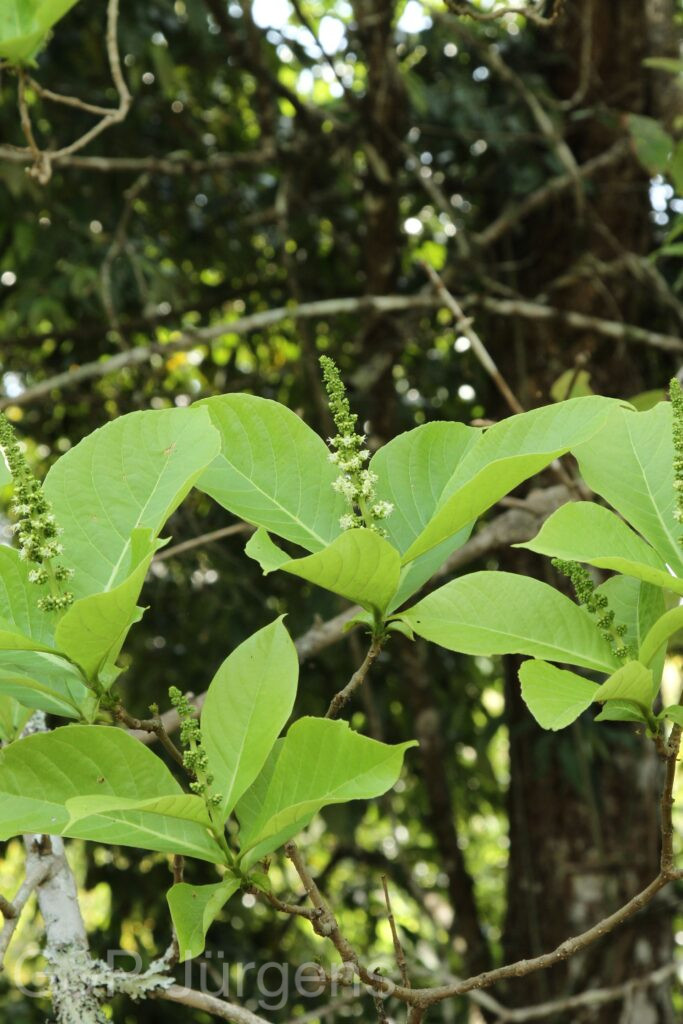
Semecarpus anacardium, the marking-nut tree, is a tree of the South and Southeast Asian tropics extending into the southern Himalayan foothills. GBIF (some 1,524 occurrences) records it natively from India, Nepal, Bhutan, Myanmar, Bangladesh, Sri Lanka, Vietnam, Indonesia, the Philippines and Papua New Guinea, with cultivated or introduced material in the Neotropics and on islands such as Mauritius. It grows in deciduous and semi-evergreen forest, savanna woodland and forest margins, mostly below 1,200 m. The photographed tree is from Wangdue Phodrang in western Bhutan at about 1,100 m, in June, near the upper limit of its subtropical range along the inner Himalayan valleys.
It is a medium-sized deciduous tree with a spreading crown and grey bark exuding an acrid, blackening resin. The leaves are large, simple, obovate to oblong, clustered towards the branch ends, coriaceous and rounded at the apex, with prominent venation. The flowers are small, greenish-white and borne in terminal panicles. The fruit is a drupe seated on a fleshy, orange, swollen hypocarp (the enlarged receptacle); the drupe itself is ovoid and turns black, its pericarp containing the caustic resin.
The black juice is the source of the indelible "marking-nut" dye used traditionally to mark cloth, and the nut is important in Ayurvedic medicine, though the resin is a potent contact irritant rich in urushiol-type phenolics, like others in the Anacardiaceae. The fleshy hypocarp is edible when roasted. The species is common across its range and of no conservation concern, exemplifying the Indo-Malesian tropical element penetrating the lower Himalaya.
Author: L.f. · Sources: POWO (Kew), Flora of Bhutan Vol. 2, Flora of Nepal, GBIF, Ding Hou: Anacardiaceae (Flora Malesiana)