
Mill.
Description
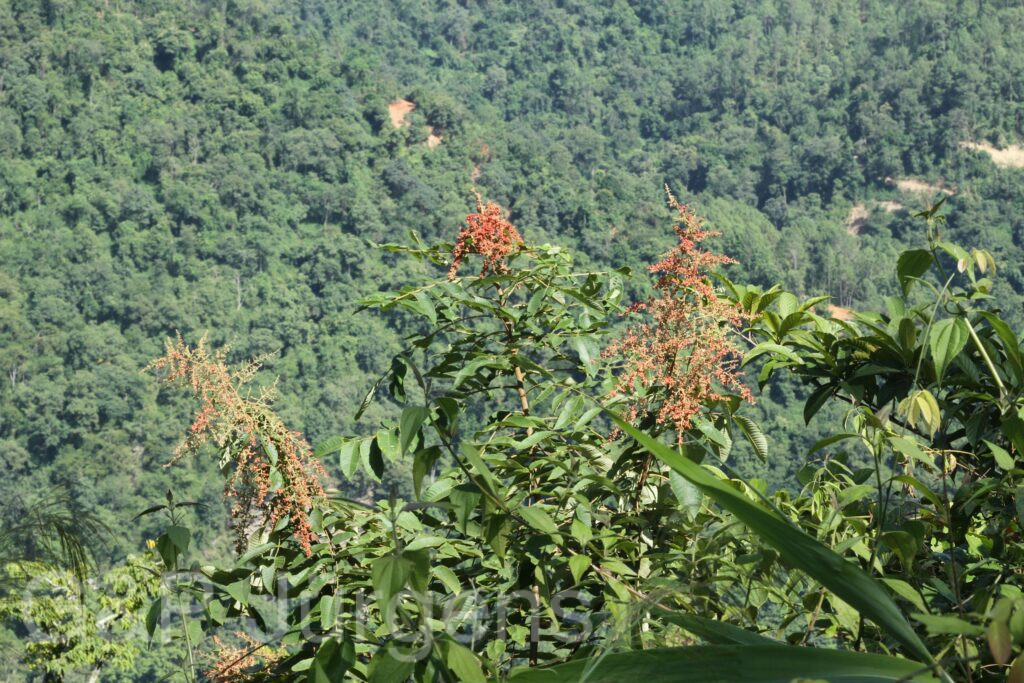
Rhus chinensis is a widespread deciduous shrub or small tree of East and South Asia, recorded across China, Taiwan, Japan, Korea, India, Vietnam, Thailand, Myanmar, Nepal, Bhutan and beyond, with more than ten thousand documented occurrences making it one of the most frequently collected sumacs in the region. It is a pioneer of open and disturbed ground, colonising forest margins, clearings, roadsides, scrub and abandoned cultivation from the lowlands into the montane zone. In Bhutan it ranges over a wide elevational band, as shown by collections near Wangdi at about 2600 m in September and at Zhemgang at 900 m in October, the autumn dates corresponding to fruiting.
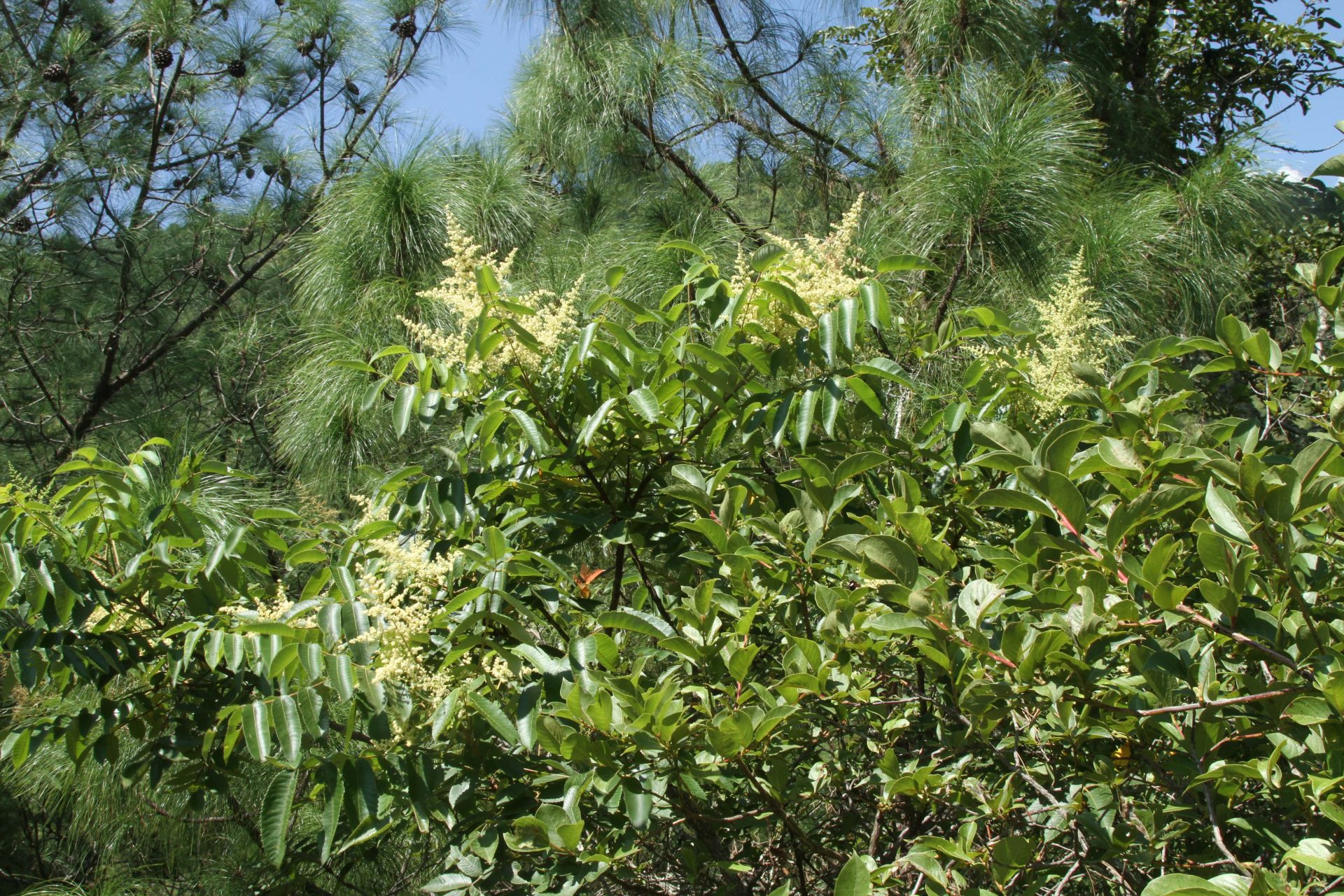
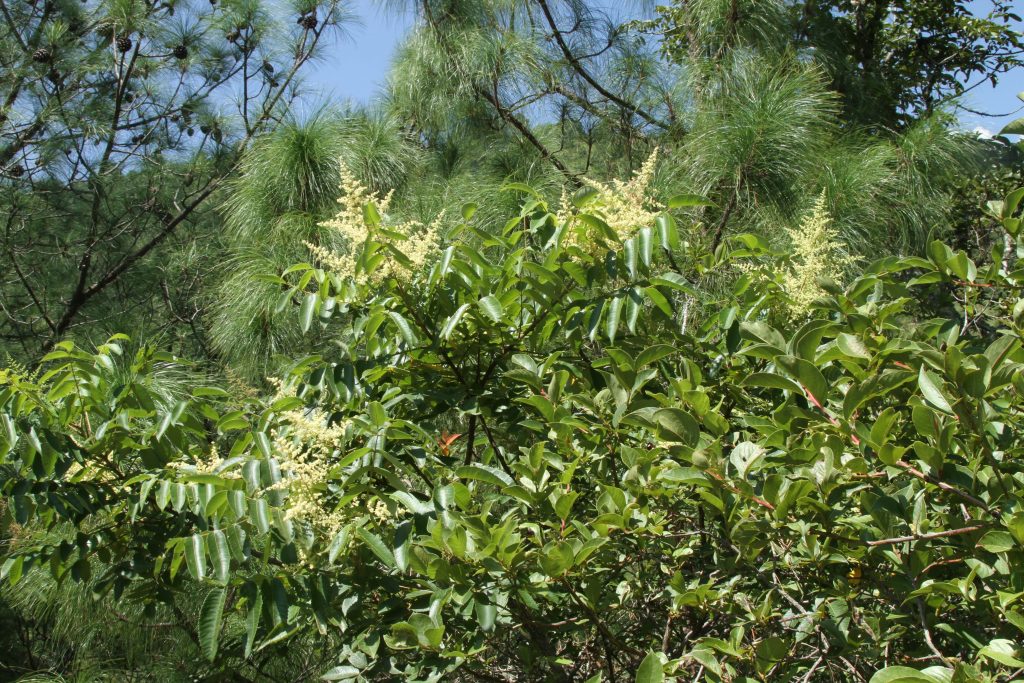
The plant is a shrub to small tree with greyish bark and stout, often warted branchlets. The leaves are alternate and odd-pinnate, the rachis characteristically winged between the leaflets; the leaflets are ovate to oblong, coarsely serrate, acuminate, and tomentose beneath, turning red in autumn. The inflorescence is a large terminal pubescent panicle of numerous small whitish to greenish-yellow flowers, the plant functionally dioecious. The fruit is a small, flattened, reddish drupe covered with short hairs and a sour, salty surface bloom.
Rhus chinensis is the principal host of the Chinese sumac aphid Schlechtendalia chinensis, whose feeding induces large hollow leaf galls extraordinarily rich in tannins; these galls, known as Chinese galls or wubeizi, are harvested as a major commercial source of gallotannic acid and are valued in traditional medicine and dyeing. Wax from the fruit and the tannin-laden tissues have long been utilised economically. Hardy, fast-growing and broadly tolerant of disturbance, the species is abundant throughout its range and faces no conservation concern, functioning ecologically as an early-successional colonist.
Author: Mill. · Sources: POWO (Kew), GBIF, Flora of China Vol. 11, Flora of Bhutan Vol. 2, Flora of Nepal, Flora of Pakistan, Min & Barfod treatment of Anacardiaceae