Author

G & P Jürgens

L.

Bhutan2012 804
Bhutan Zemgang 1950m, October

Description

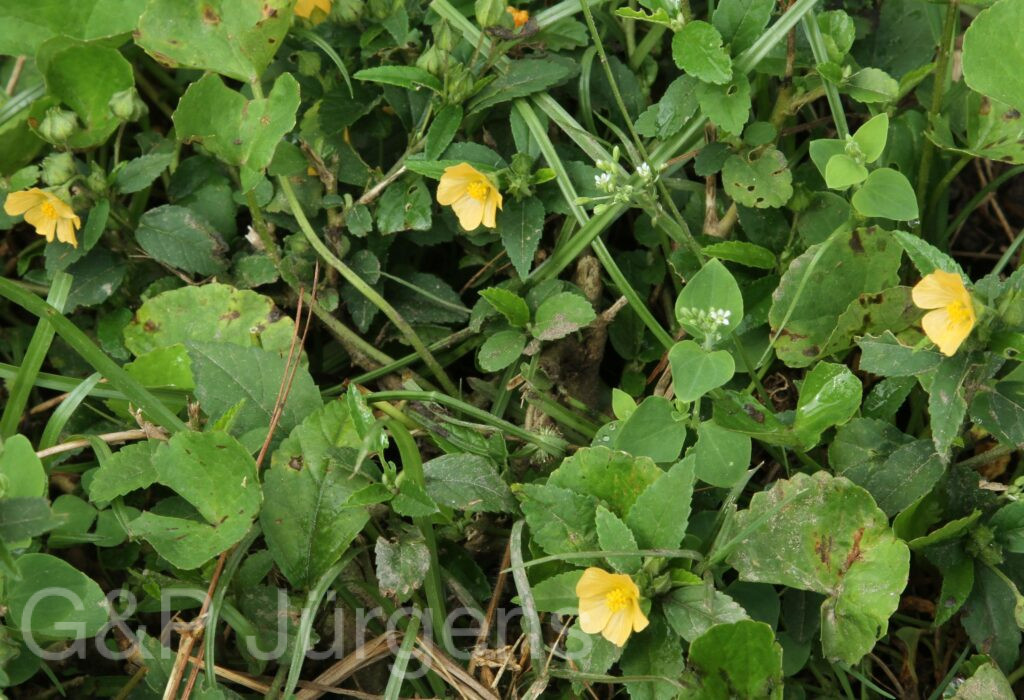
Sida rhombifolia L. is a near-cosmopolitan subshrub of tropical and warm-temperate regions, one of the most widely distributed weeds in the Malvaceae. GBIF documents over 50,000 records from every inhabited continent — Australia, the Americas (USA, Brazil, Mexico, Colombia, Argentina, Bolivia, Ecuador), Africa (South Africa, Cameroon, DR Congo), and Asia including China, India, Taiwan and Japan. In the Himalaya it occurs on roadsides, fallow fields, waste ground and open slopes; the photographed plant is from Bhutan, Zemgang, 1,950 m, in October. It thrives on disturbed, well-drained soils from sea level to around 2,000 m and is a pioneer of ruderal and pastoral habitats.

The plant is an erect, much-branched perennial subshrub 30–100 cm tall with tough, fibrous stems bearing stellate to simple appressed hairs. Leaves are alternate, shortly petiolate, rhombic to lanceolate (rhombifolia), 1.5–5 cm long, serrate in the upper half, entire toward the cuneate base, paler and pubescent beneath. Flowers are solitary in the leaf axils on slender, jointed pedicels, the corolla pale yellow to orange-yellow, 5–10 mm across, with five obovate petals; the staminal column is characteristic of the family. The schizocarpic fruit is a flattened ring of 8–12 mericarps, each with two short apical awns.

A polymorphic and taxonomically complex aggregate, S. rhombifolia has yielded numerous infraspecific taxa and segregates. The stem yields a strong bast fibre used for cordage and brooms, and the plant is widely employed in traditional medicine. Owing to its weedy vigour it is naturalised and sometimes invasive far beyond its presumed Old World tropical origin.

Author: L. · Sources: POWO (Kew), GBIF, Flora of China Vol. 12, Flora of Bhutan Vol. 2, Flora of Nepal, Borssum Waalkes: Malesian Malvaceae revised (Blumea)
(Rupr.) Bocquet

Nepal 99 320 ergebnis
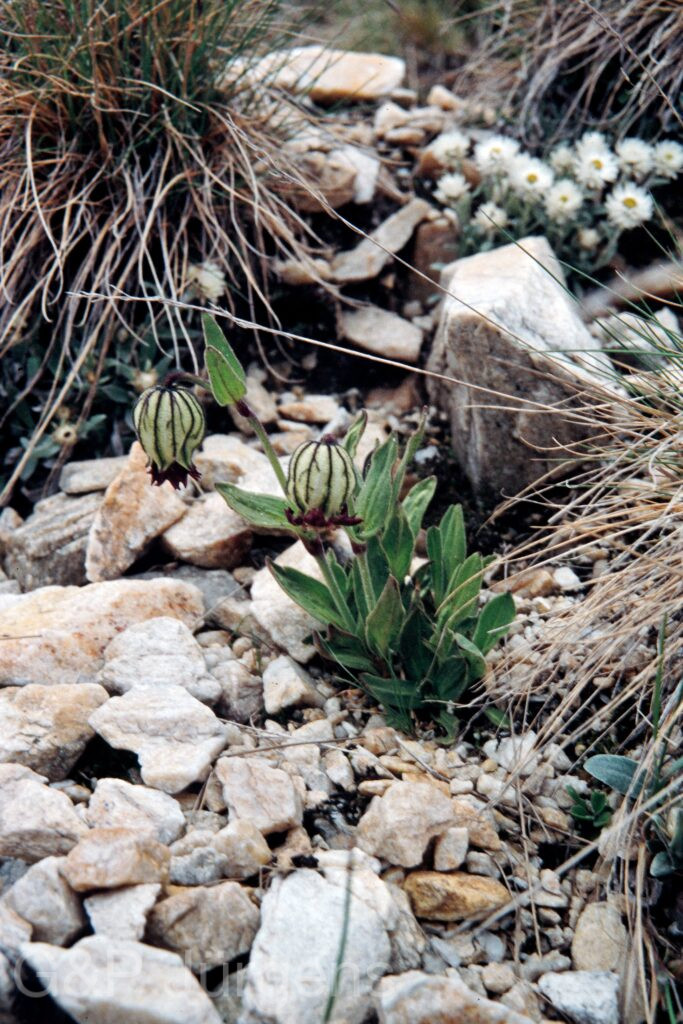
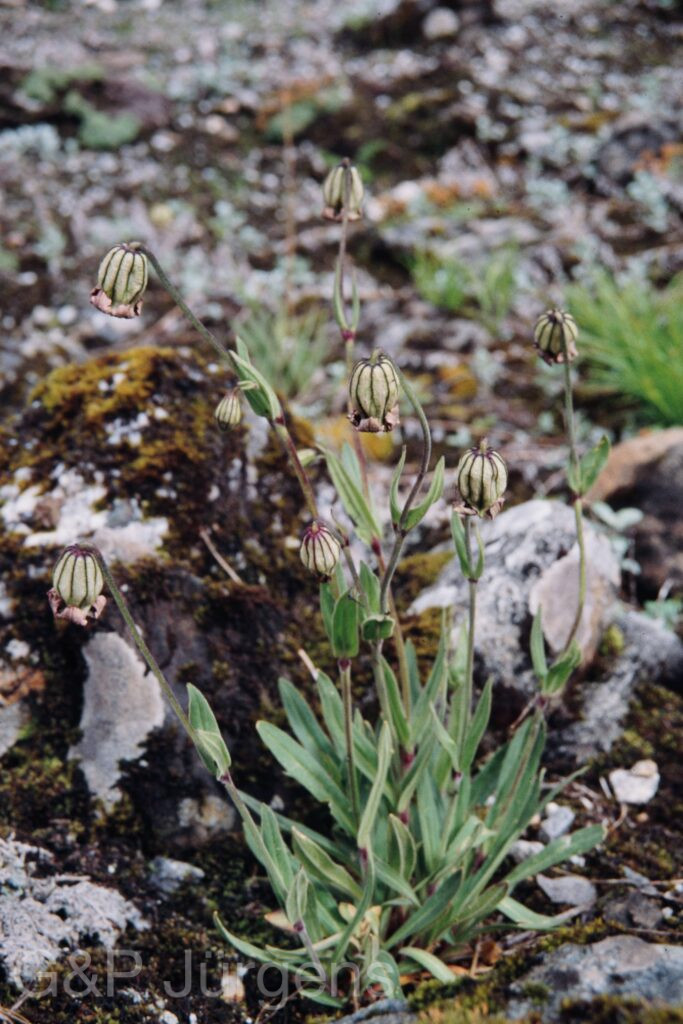
West-Nepal Kalmura 4200m, June

Description

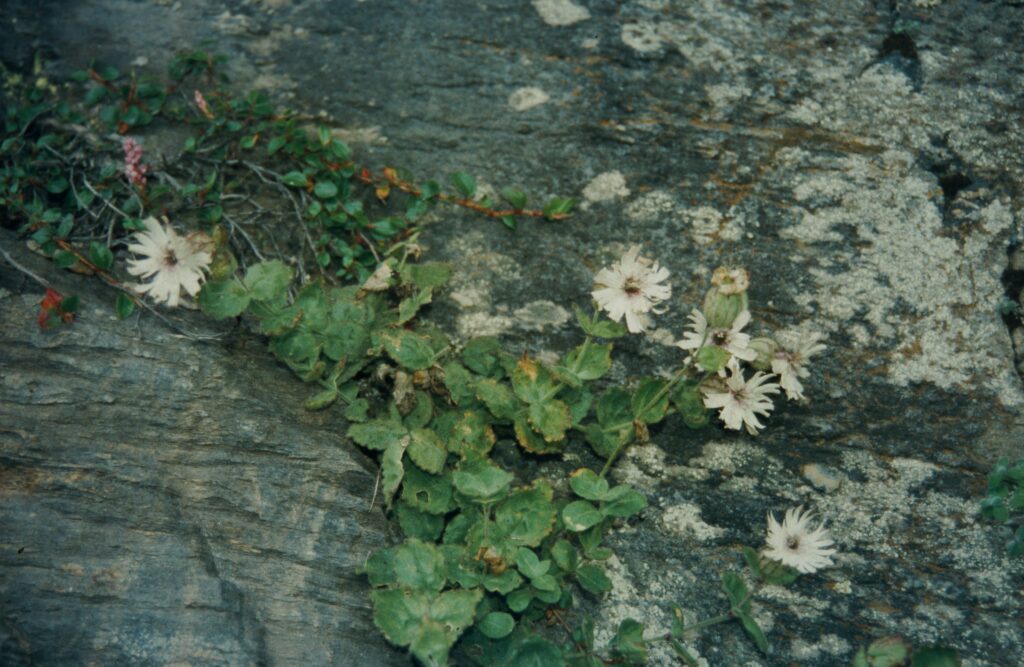
Silene gonosperma is a high-mountain perennial campion with a wide Central Asian, Himalayan and boreal distribution, recorded from Afghanistan, Tajikistan, Kyrgyzstan, Kazakhstan, Pakistan, the Himalaya (India, Nepal, Bhutan), Mongolia, Russia, China and even reaching Sweden in the broad sense. GBIF aggregates around 657 occurrences spanning this trans-Asiatic range. It is a plant of the alpine zone, growing in stony and grassy meadows, screes, moraines and exposed slopes, commonly above 3500 m and reaching well over 4000 m. The West-Nepal population photographed at Kalmura (4200 m, June) typifies its occurrence in cold, open high-alpine turf near the upper limit of flowering plants.

The species forms small tufts or cushions from a branched woody caudex, producing short, ascending, often glandular-hairy flowering stems. The leaves are opposite, linear to narrowly oblanceolate, the basal ones crowded and the cauline pairs few and reduced. The flowers are usually solitary or few, often nodding, with a tubular to inflated, many-nerved calyx frequently flushed dark purple, and five clawed petals, pink-purple to dull violet or greenish, with shallowly emarginate to bifid laminae. Ten stamens and three styles are present. The fruit is an ovoid capsule opening by six teeth and bearing the distinctive angular, often winged seeds that give the epithet.

Silene gonosperma, transferred by Bocquet from earlier placements in Melandrium and Wahlbergella, exemplifies the taxonomic flux around the boreal-alpine campions, and several subspecies and varieties have been described across its enormous range. Its cushion habit, dark calyx and angular seeds aid identification among co-occurring high-alpine Silene. As a widespread, locally frequent species of remote high-mountain habitats it faces no significant threats, though its uppermost populations may be sensitive to warming.

Author: (Rupr.) Bocquet · Sources: POWO (Kew), GBIF, Flora of China, Flora of Pakistan, Flora of USSR, Annotated Checklist of the Flowering Plants of Nepal, Caryophyllaceae monograph of Silene (Bocquet)

(Rohrb.) Majumdar

Nepal 99 517 ergebnis
West-Nepal Churta-Khola 3800m, June

Description

Silene himalayensis is a perennial campion widely distributed across the high mountains of Central and South Asia, ranging from Afghanistan and Tajikistan through Pakistan and the Himalaya (India, Nepal, Bhutan) into south-western China. GBIF records around 817 occurrences, concentrated in the Himalayan arc and the Chinese borderlands. It grows in alpine and subalpine habitats, favouring open meadows, grassy and stony slopes, screes and streambanks, generally between about 3000 and 4500 m. The West-Nepal population photographed at Churta-Khola (3800 m, June) is characteristic of its occurrence in moist alpine turf at the height of the short montane summer.

The species forms tufts from a branched woody rootstock, producing several ascending to erect, slender, often glandular-pubescent stems. The leaves are opposite, linear-lanceolate to oblanceolate, the basal ones tapering to the base and the cauline pairs sessile. The inflorescence is few-flowered, the flowers solitary or in lax dichasia and frequently nodding in bud. Each flower has a tubular to clavate, ten-nerved, glandular calyx, often suffused with purple, and five clawed petals, pink to purplish or whitish, the laminae bifid and bearing small coronal scales. Ten stamens and three styles are present; the fruit is an ovoid capsule opening by six apical teeth on a short carpophore, releasing reniform, tuberculate seeds.

The genus Silene is taxonomically complex in the Himalaya, and this species was transferred by Majumdar from Melandrium, reflecting uncertainty about generic limits between Silene and its segregates. Its glandular indumentum, nodding flowers and high-elevation ecology aid recognition among the many regional campions. As a broadly distributed, locally frequent alpine perennial it is not considered threatened, although high-altitude grazing and warming may locally affect marginal populations.

Author: (Rohrb.) Majumdar · Sources: POWO (Kew), GBIF, Flora of China, Flora of Pakistan, Flora of Bhutan, Annotated Checklist of the Flowering Plants of Nepal, Caryophyllaceae monograph of Silene (Bocquet)

(Bocquet) Y.J.Nasir

Garw 2005 312 ergebnis
India Garhwal Bagubas 3800m, October

Description

Silene indica var. edgeworthii is a western Himalayan campion recorded from Pakistan, India and Nepal, known from a small set of around 18 georeferenced occurrences that together delimit a fairly narrow distribution along the inner ranges. It is a plant of open, high-elevation habitats, favouring alpine and subalpine meadows, stony slopes, grassy hollows and the margins of moraines where snowmelt provides seasonal moisture. The individual illustrated near Bagubas in Garhwal (India) at about 3800 m in October exemplifies this affinity for the upper alpine zone, where it flowers and fruits late in the growing season as the surrounding turf begins to senesce. According to GBIF, the name carries a SYNONYM status, with Silene indica edgeworthii treated as the accepted name.

It is a perennial herb arising from a stout rootstock, producing erect to ascending stems that are often glandular-pubescent in the upper parts. The leaves are opposite and entire, the basal ones spathulate to oblanceolate and the cauline pairs narrower and sessile. The flowers are borne in a lax, few-flowered cyme; each is subtended by a tubular, prominently ten-nerved calyx that is frequently inflated and contracted at the mouth. The five petals are pink to whitish, clawed, and bear a bifid or shallowly lobed limb with a small coronal scale at the throat. The fruit is a many-seeded capsule dehiscing by apical teeth, the seeds reniform and minutely tuberculate.

Within Silene, this taxon belongs to a Himalayan complex in which infraspecific variation in calyx form, indumentum and petal limb has prompted repeated reassessment, hence its fluctuating rank as a variety versus an accepted entity. Its restricted range and dependence on intact alpine grassland make it a useful indicator of high-pasture condition, while heavy summer grazing and trampling along transhumance routes represent the principal pressures on its populations.

Author: (Bocquet) Y.J.Nasir · Sources: POWO (Kew), GBIF, Flora of Pakistan, Flora of Nepal, Flora of Bhutan Vol. 1, Bocquet Revision der Gattung Silene (Caryophyllaceae)

S.C.Chen

Sikkim 2006 446 ergebnis
India West-Bengal, Kishong 2700m, May

Description

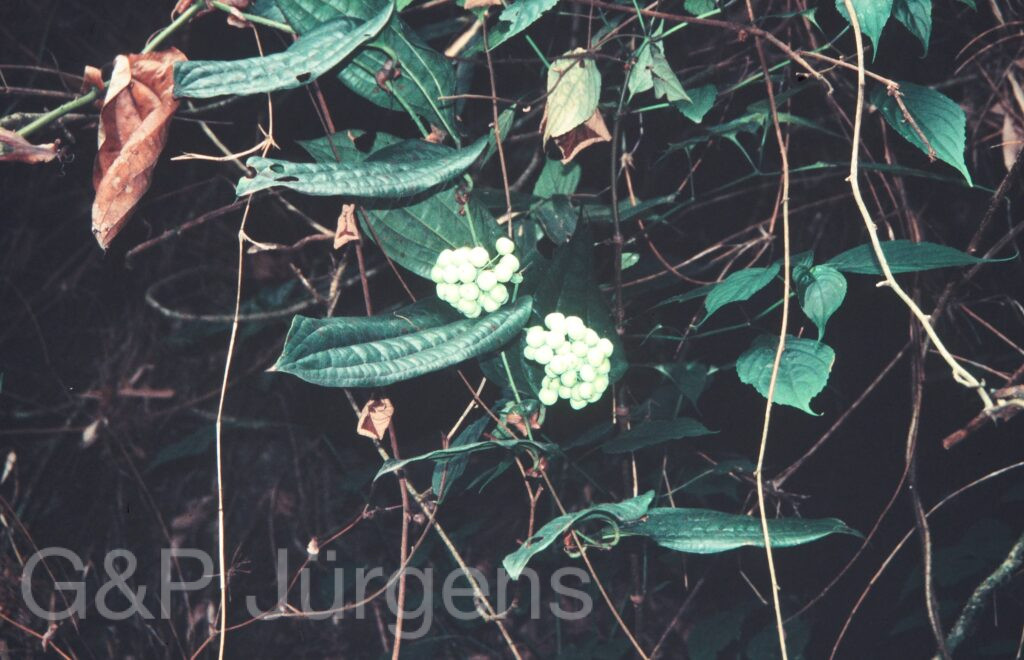
Smilax munita is an eastern Himalayan greenbrier distributed from Nepal through Sikkim and West Bengal in India to Bhutan, north-eastern Myanmar and adjacent China, with around 90 GBIF records reflecting a fairly restricted montane range. It is a climber of temperate broad-leaved and mixed forest, forest margins and thickets, scrambling over shrubs and small trees, typically between about 2,000 and 3,000 m. The plant photographed at Kishong in West Bengal, India, at 2,700 m flowering in May is characteristic of the cool, humid Sikkim-Himalayan forest belt where the genus is well represented.

The plant is a dioecious, woody to subwoody perennial climber arising from a creeping rhizome, the stems armed with stout, scattered prickles (reflected in the epithet munita, "armed"). The leaves are alternate, simple, leathery, ovate to elliptic with several prominent arcuate-convergent main veins, and bear a pair of slender tendrils at the base of the petiole that serve for climbing. The flowers are small, unisexual and greenish, borne in axillary umbels; the perianth consists of six tepals, with six stamens in male flowers and a superior three-locular ovary in female flowers. The fruit is a small globose berry, ripening dark, containing few seeds.

Smilax is the sole large genus of the monocot family Smilacaceae, a lineage of vining herbs and lianas with reticulate-veined leaves and basal tendrils unusual among monocots. Many congeners yield the medicinal "sarsaparilla," and Himalayan species are locally used. The combination of prickly stems, coriaceous tri- to multiveined leaves and the high-montane distribution distinguishes S. munita within the eastern Himalayan members of the genus.

Author: S.C.Chen · Sources: POWO (Kew), Flora of China Vol. 24, Flora of Bhutan Vol. 3, GBIF, Koyama: Smilacaceae of Eastern Asia

Kunth

Sikkim 2006 278 ergebnis
Sikkim India Tolung-Chu 1530m, May

Description

Smilax wallichii is a woody, scrambling climber of the Smilacaceae, distributed through the eastern Himalaya. GBIF records are sparse (13 occurrences) and confined to Nepal, India and Bhutan, indicating a comparatively restricted, undercollected range. The species is a plant of subtropical to lower temperate broadleaved forest, where it climbs through trees and shrubs at forest margins, along streams and on ravine sides. The collection from the Tolung-Chu valley in Sikkim at 1,530 m in May exemplifies its occurrence in the humid, evergreen-forested foothill and lower montane belt of the region.

The plant develops from a stout, woody rhizome and produces tough, climbing stems that are often armed with scattered prickles. As in all Smilax, the leaves are alternate, simple, with a characteristic suite of curved-convergent main veins and a reticulate venation, the petiole bearing a pair of tendrils derived from stipular appendages that grip surrounding vegetation. The plants are dioecious; the small, greenish, six-tepalled flowers are borne in axillary umbels, the staminate flowers with six stamens and the pistillate flowers with a three-locular ovary. The fruit is a small, globose berry, ripening dark, containing few seeds.

Smilax is the principal genus of the otherwise small, exclusively climbing family Smilacaceae, distinguished within the monocots by its net-veined leaves, tendrillar petioles and dioecious umbels. Several species are sources of sarsaparilla and are used medicinally, and the rhizomes of Himalayan taxa enter local pharmacopoeias. The limited records of S. wallichii reflect both genuine rarity and under-sampling; as a forest-dependent liana, it is sensitive to the clearance and fragmentation of mid-elevation broadleaved forest.

Author: Kunth · Sources: POWO (Kew), Flora of China Vol. 24, Flora of Bhutan Vol. 3, GBIF, Koyama: Smilacaceae of the Himalaya and Eastern Asia

(Hook.f. & Thomson) Botsch.

BhutanPG2011 204
Bhutan Tsochenchen 3700m, June

Description

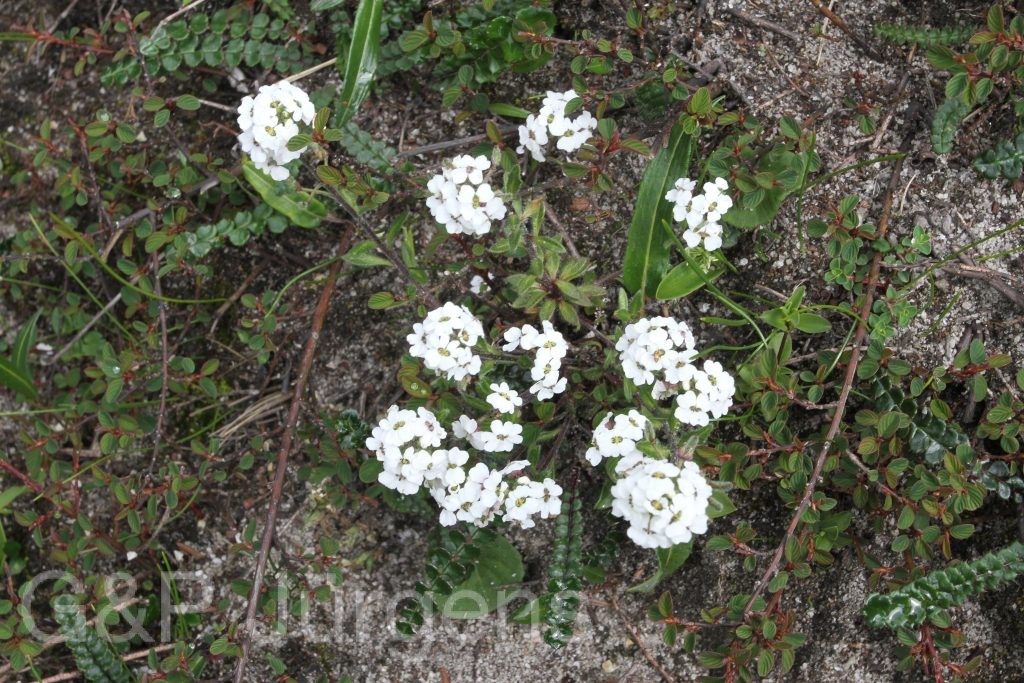
Solms-laubachia platycarpa is a high-alpine crucifer of the eastern Himalaya and the Hengduan-Tibetan region, recorded from China, India and Bhutan, with only about 26 GBIF occurrences reflecting its restricted, hard-to-reach habitat. It is a true cushion-plant of the upper alpine zone, growing among scree, gravel, rock crevices and stony turf, typically above about 3500 m and often to well over 4000 m. The plant shown from Tsochenchen in Bhutan at 3700 m, flowering in June, occupies the exposed, frost-prone substrates characteristic of the genus.

It is a low, densely tufted perennial herb with a stout, branched woody caudex clothed in the persistent petiole-bases of former leaves and topped by rosettes of small, entire, fleshy, oblanceolate to spathulate leaves. The flowers are borne singly or few on short scapes scarcely exceeding the leaf cushions and have four white to pale lilac or purplish petals in the typical cruciferous arrangement. The diagnostic fruit is a flattened, broadly elliptic to orbicular, latiseptate silicula with a persistent style and a few large seeds, the broad flat silique giving the epithet platycarpa.

Solms-laubachia (combined by Botschantzev from Hooker & Thomson's basionym) is a small genus centred on the Qinghai-Tibetan Plateau, allied to Desideria and the alpine Crucifereae; molecular work has clarified its boundaries within tribe Euclidieae. Restricted to fragile high-alpine substrates, such narrowly distributed cushion crucifers are potentially vulnerable to climate-driven habitat contraction and merit monitoring.

Author: (Hook.f. & Thomson) Botsch. · Sources: POWO (Kew), GBIF, Flora of Bhutan, Flora of China, Yue et al. systematics of Solms-laubachia

(Lindl.) Rehder

Garh 07 304 ergebnis
India Garhwal Bebra 1400m, June

Description

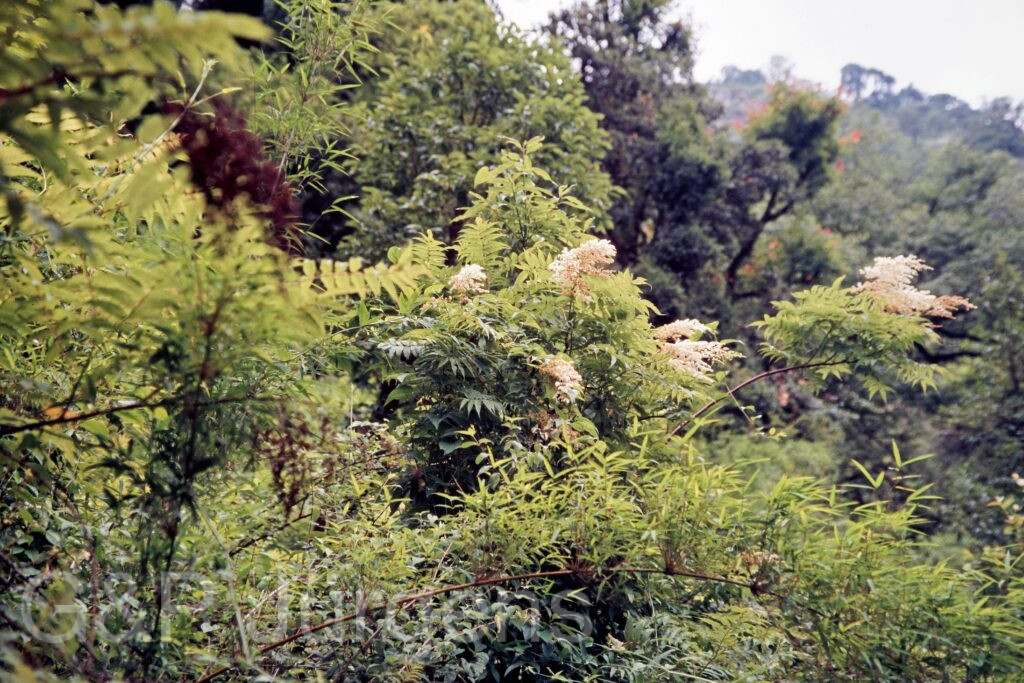
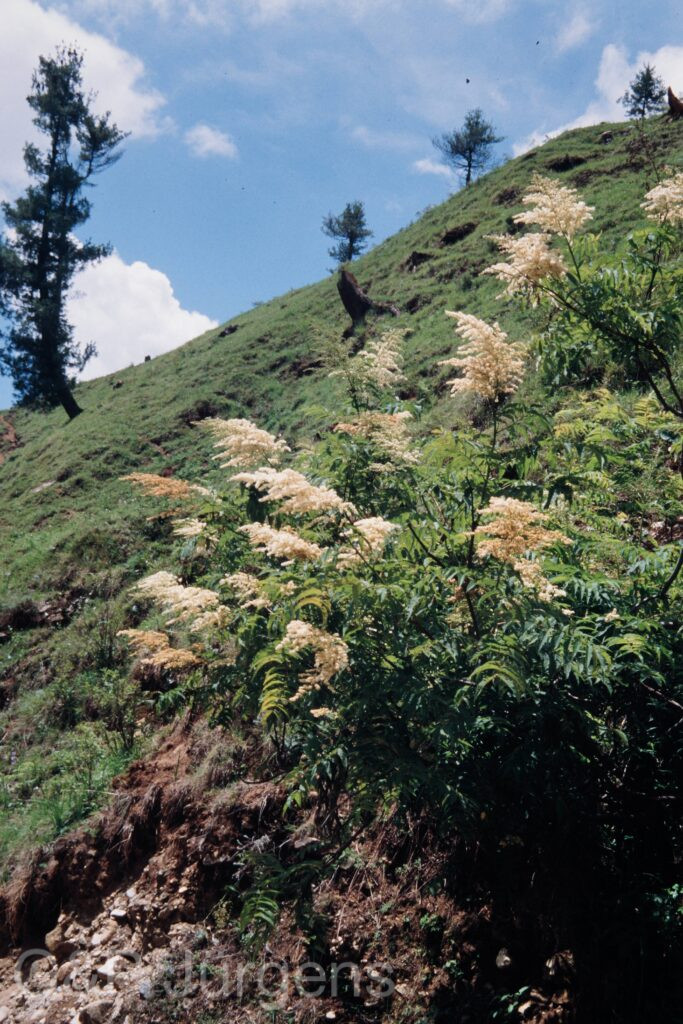
Sorbaria tomentosa is a deciduous shrub distributed along the temperate Himalaya from Afghanistan and Pakistan eastward through northern India and Nepal into south-western China, with the GBIF record (730 occurrences) further documenting naturalised and cultivated populations across Europe and North America. It favours moist, well-drained slopes, stream banks, forest margins and open thickets, generally between about 1200 and 3000 m. The plant photographed at Bebra in the Garhwal Himalaya at 1400 m in June represents the lower montane part of its native range, where it flowers in early summer in disturbed, sunny situations.

The species forms an erect, multi-stemmed shrub 1-3 m tall, with arching branches and stems that are tomentose when young, becoming glabrescent. The leaves are imparipinnate, comprising numerous lanceolate, doubly serrate leaflets that are densely greyish- to whitish-tomentose beneath, giving the foliage a soft, felted texture. The flowers are small and white, borne in large, dense, terminal pyramidal panicles; each has five sepals and five petals, with numerous exserted stamens conspicuously longer than the petals and a gynoecium of five carpels. The fruit is a small follicle, the carpels dehiscing to release minute seeds.

The genus Sorbaria (Spiraeoideae) is distinguished within Rosaceae by its compound leaves and apocarpous follicular fruits, features uniting it with Spiraea relatives. Sorbaria tomentosa is widely grown as an ornamental for its feathery foliage and showy inflorescences, which accounts for its broad extralimital occurrence. Within its native montane habitat it is a pioneer of forest edges and landslip scars, contributing to early successional vegetation and soil stabilisation.

Author: (Lindl.) Rehder · Sources: POWO (Kew), GBIF, Flora of China Vol. 9, Flora of Bhutan Vol. 2, Flora of Nepal, Flora of Pakistan, Robertson's monograph of Rosaceae genera

Hedl.

Nepal 99 397 ergebnis
West-Nepal Talphi 2830m, June

Description

Sorbus tomentosa is a Sino-Himalayan tree of the temperate forest belt, distributed along the central and western Himalaya. Although GBIF records remain sparse, with the photographed material gathered at Talphi in West Nepal at about 2830 m in June, the species is characteristic of the upper temperate zone between roughly 2500 and 3500 m. It occupies the canopy gaps and margins of mixed broad-leaved and conifer forest, frequently associating with Quercus, Acer, Betula and Abies, and favouring cool, humid, well-drained slopes where it acts as a light-demanding component of montane woodland.

It is a small deciduous tree or large shrub with pinnate leaves bearing numerous oblong-lanceolate, serrate leaflets that are densely white- or grey-tomentose beneath, giving the foliage a markedly hoary aspect that lends the species its epithet. The young shoots, petioles and rachis are likewise woolly-pubescent. Flowers are small, white, five-petalled and borne in flattened terminal corymbs in early summer; the gynoecium develops into small subglobose pome fruits that ripen red to orange-red in autumn, each crowned by the persistent calyx and containing few seeds.

The species belongs to Sorbus subgenus Sorbus (the pinnate-leaved "true" rowans), a taxonomically intricate group in which apomixis and hybridisation have generated numerous microspecies and rendered circumscriptions difficult. Ecologically its fruits are an important autumn food for thrushes and other frugivorous birds, which act as the principal dispersal agents. Though not presently regarded as threatened, populations are localised and vulnerable to forest clearance and grazing pressure across the Himalayan range.

Author: Hedl. · Sources: POWO (Kew), GBIF, Flora of Nepal, Flora of Bhutan, Flora of China, McAllister – The Genus Sorbus: Mountain Ash and Other Rowans

Sorbus ursina

by G & P Jürgens

(Wall. ex G.Don) S.Schauer

Garh 07 557 ergebnis
India Garhwal Seema 3450m, June

Description

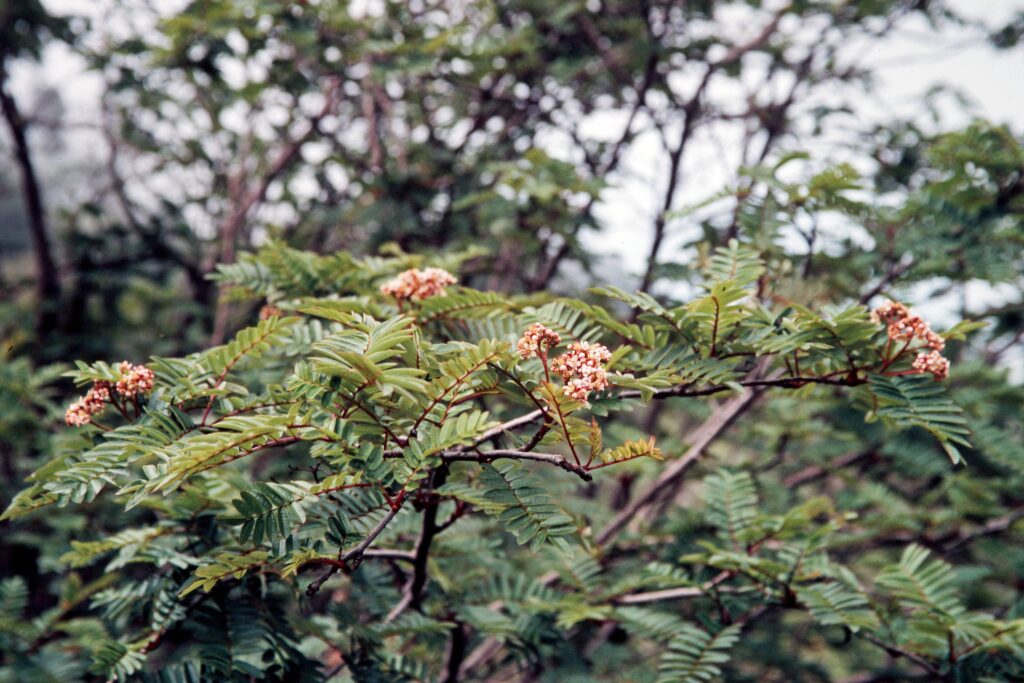
Sorbus ursina is a Himalayan rowan distributed along the southern margins of the high mountains, with documented occurrences in Nepal, India, China, Myanmar and Bhutan, and a comparatively modest record base of around 126 georeferenced collections. It is a tree of the upper temperate to subalpine forest belt, typically occupying the transition between mixed broadleaved-coniferous woodland and the open shrub zone, where it grows on cool, humid, often steep slopes and along forest margins. The plant photographed at Seema in Garhwal (India) at about 3450 m in June reflects this characteristic elevational preference, where the species ascends to the upper limit of arborescent vegetation amid Abies, Quercus and ericaceous undergrowth.

It forms a small deciduous tree or large shrub with a spreading crown, the young twigs initially tomentose and becoming glabrescent and dark with age. The leaves are imparipinnate (pinnately compound), comprising numerous oblong to lanceolate leaflets that are sharply serrate along the margins, glabrous and green above and conspicuously paler, frequently whitish-tomentose, beneath. The flowers are borne in many-flowered terminal corymbs and are small, pentamerous and white, with five free petals, numerous stamens and a partly inferior ovary. The fruit is a small subglobose pome, ripening through pink to deep red and often persisting on the branches after leaf-fall.

Within the large and taxonomically intricate genus Sorbus, S. ursina belongs to the pinnate-leaved (subgenus Sorbus) assemblage, a group complicated across the Himalaya by hybridisation and apomixis. The conspicuous autumn fruiting renders it ecologically important as a food source for thrushes, accentors and other montane frugivorous birds, which act as the principal seed dispersers. Although not presently regarded as threatened given its broad range, populations are tied to intact subalpine forest and are therefore sensitive to grazing pressure, fuelwood collection and the upward shift of timberlines.

Author: (Wall. ex G.Don) S.Schauer · Sources: POWO (Kew), GBIF, Flora of China Vol. 9, Flora of Bhutan Vol. 2, Flora of Nepal, McAllister The Genus Sorbus: Mountain Ash and Other Rowans