Author

G & P Jürgens

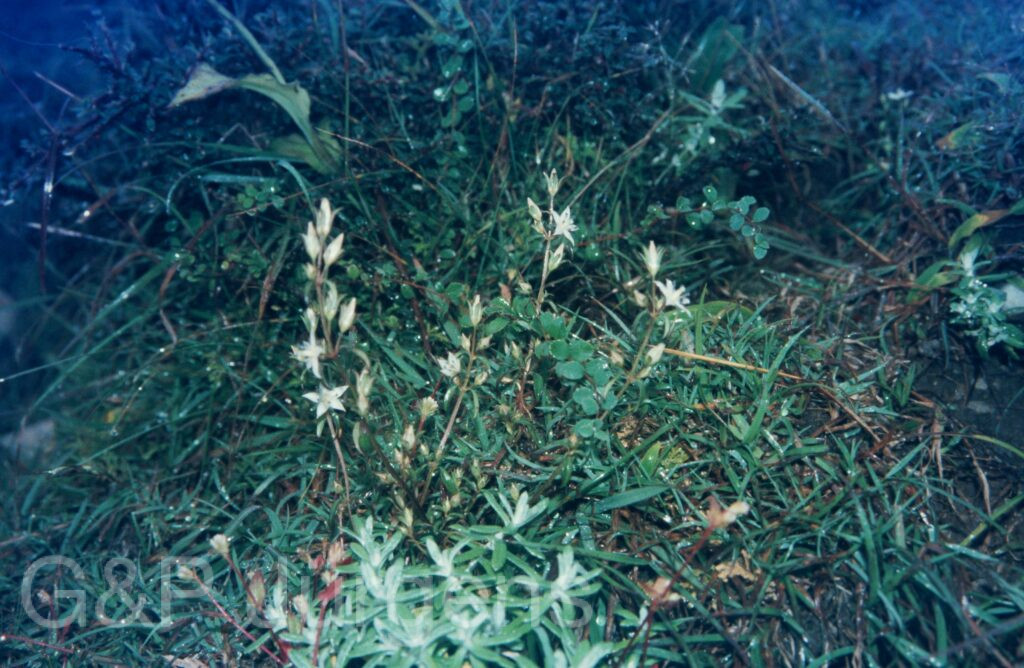
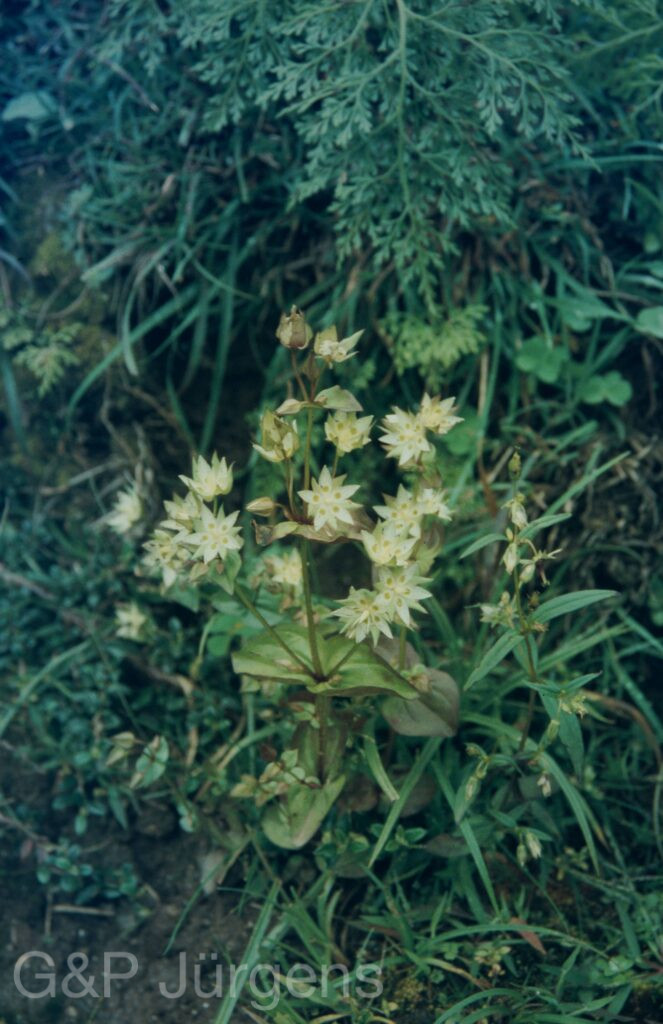
Buch.-Ham. ex D.Do

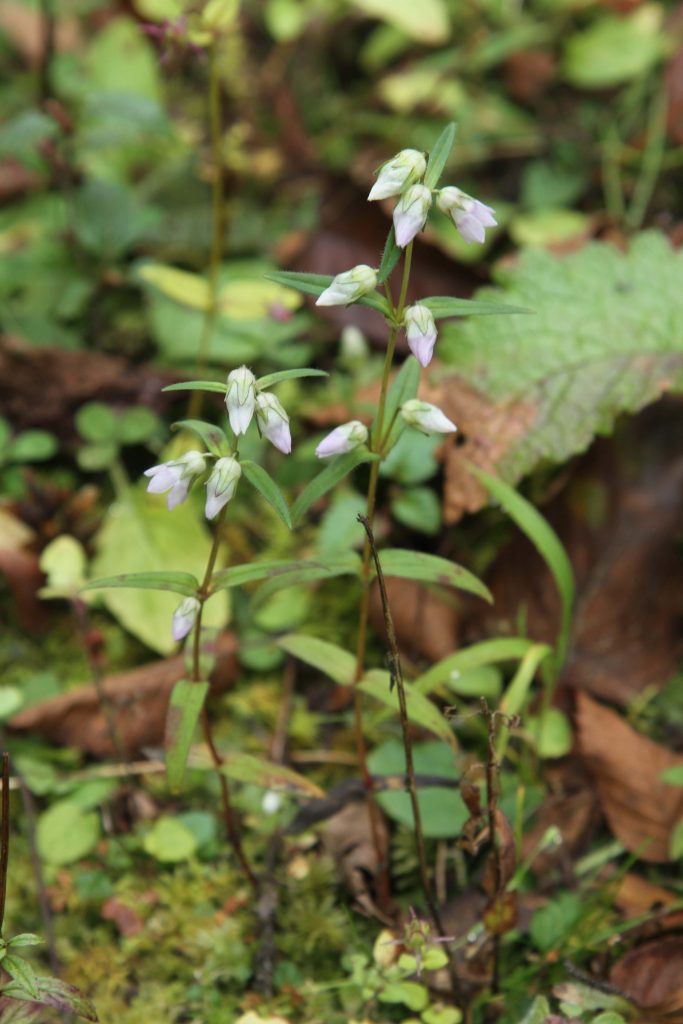
Bhutan2012 415
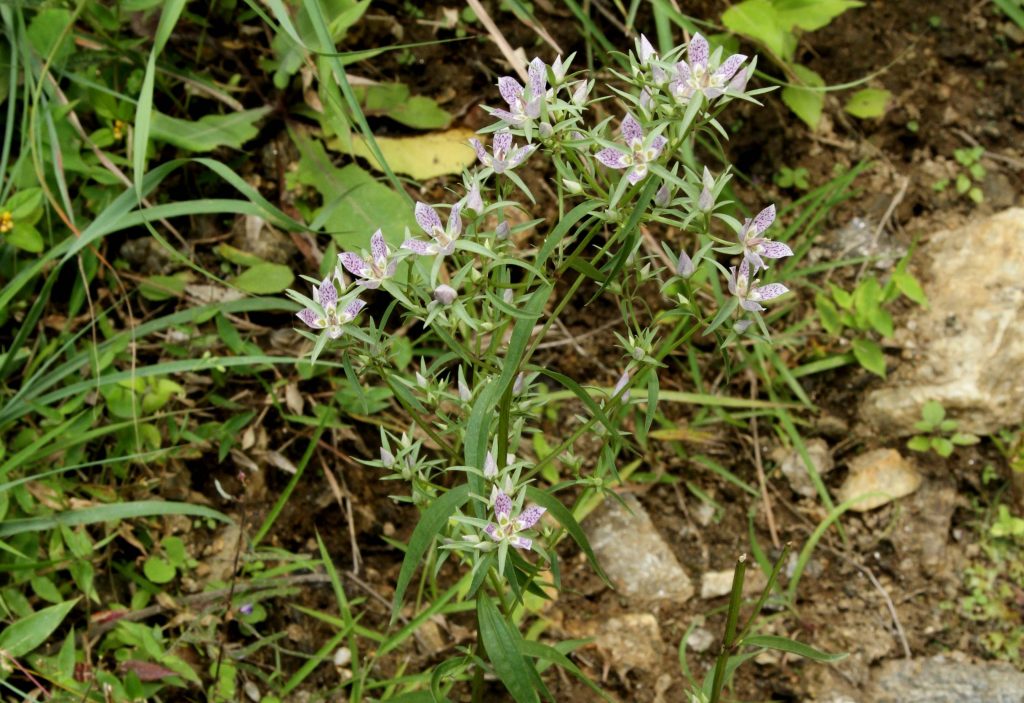
Bhutan Wangdi 2700m, September
Bhutan2012 416
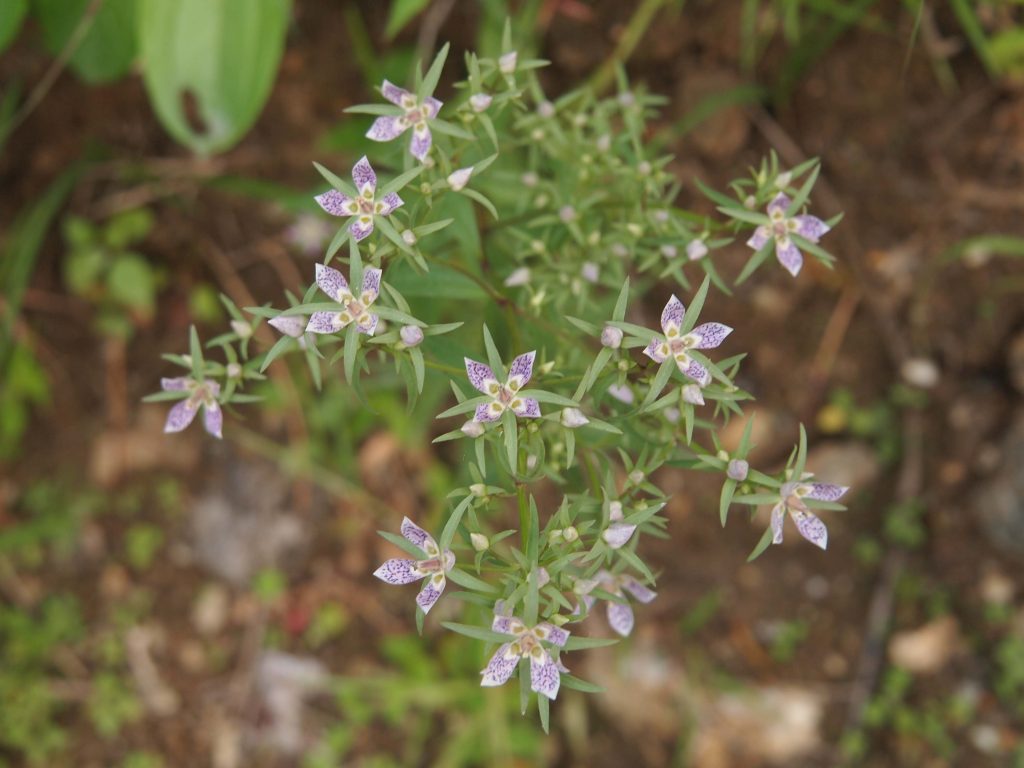
Bhutan Wangdi 2700m, September

Description

Swertia angustifolia is a slender annual or biennial herb widespread across the Himalaya and montane Asia, recorded from China, India, Nepal, Myanmar, Thailand, Pakistan, Bhutan and beyond, with peripheral records (KR, ZA, SG, US) reflecting introduction or cultivated material. Its roughly 1,000 georeferenced collections make it one of the better-documented species in this group, ranging through the subtropical to temperate hill belt. It grows on open grassy slopes, fallow fields, roadsides, forest margins and disturbed ground, often as a pioneer of seasonally moist sites. The photographed plant from Bhutan near Wangdi at 2700 m, flowering in September, is characteristic of its autumn flowering at the close of the monsoon.

It is an erect, glabrous herb with a slender, quadrangular, usually much-branched stem arising from a thin taproot. The opposite leaves are narrowly lanceolate to linear, sessile, entire and acute, the epithet angustifolia referring to their narrowness. The flowers are numerous, small and borne in a lax, leafy, paniculate cyme. The corolla is rotate and typically four- or five-merous, white to pale greenish or purplish, each lobe bearing one or two nectary glands (foveae) fringed with hairs near its base, a diagnostic feature of the genus. Stamens equal the corolla lobes in number, and the superior, one-celled ovary develops into a many-seeded capsule.

Swertia is a large genus of the gentian family, richest in the Sino-Himalayan region, and many species (notably the chiretta group) are economically important in traditional medicine for their intensely bitter secoiridoid glycosides. S. angustifolia is a common, weedy, wide-ranging species of no conservation concern, frequently colonising agricultural and disturbed land. Its small, fly- and bee-pollinated flowers and prolific seed set underpin its success as a montane ruderal.

Author: Buch.-Ham. ex D.Do · Sources: POWO (Kew), GBIF, Flora of China Vol. 16, Flora of Bhutan Vol. 2, Flora of Nepal, Clarke's Monograph of Asiatic Gentianaceae
(D.Don) C.B.Clarke

Nepal 95 109 P195 ergebnis
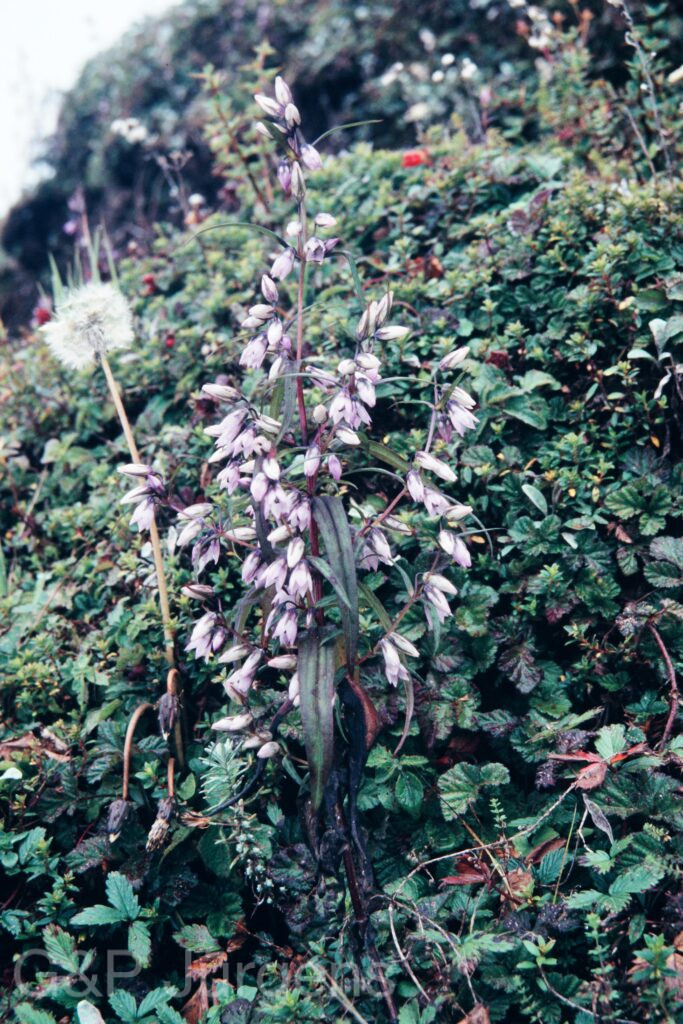
Nepal below Rupien La 3100m October
Bhutan2012 857

Description

Swertia purpurascens is a Himalayan gentian distributed across Nepal, India, Pakistan, Afghanistan, Bhutan and adjacent China, with around 322 occurrences recorded in GBIF. It grows on open grassy slopes, in subalpine scrub, along forest margins and in moist montane meadows, generally between about 1800 and 3600 m. The individual illustrated below the Rupien La in Nepal at 3100 m, flowering in October at the close of the monsoon, reflects the species' characteristic late-season phenology, when many Himalayan swertias bloom on rain-moistened upper slopes before the onset of cold and the senescence of the herb layer.

The plant is an erect annual or short-lived herb 20–80 cm tall, with a slender, four-angled, often branched stem arising from a thin taproot. The leaves are opposite, sessile or shortly petiolate, lanceolate to ovate-lanceolate, three- to five-nerved and entire-margined. The inflorescence is a lax, narrow panicle of numerous flowers. Each flower is typically four-merous, the corolla rotate and divided nearly to the base into lobes that are pale purplish to greenish, often purple-tinged or veined, each lobe bearing one or two nectary pits fringed with characteristic fimbriae. The four stamens alternate with the corolla lobes, and the superior ovary develops into a many-seeded septicidal capsule.

Swertia is a large genus of the Gentianaceae centred on the Sino-Himalayan region, where it has radiated extensively, and the nectary fimbriae of the corolla provide key diagnostic characters separating its species. The nomenclatural history of this taxon is entangled with that of S. ciliata, with which it has frequently been confused; the source page links it to that name, but POWO and GBIF treat S. purpurascens as the accepted entity. As with other swertias, the plant has a reputation in Himalayan ethnomedicine as a bitter febrifuge. It remains widespread and is not considered threatened across its broad montane range.

Author: (D.Don) C.B.Clarke · Sources: POWO (Kew), GBIF, Flora of Nepal, Flora of Bhutan Vol. 2, Flora of Pakistan, A Revision of the Genus Swertia (Gentianaceae) in Asia

T.N.Ho & S.W.Liu

Garw 2005 227 ergebnis ergebnis
India Garhwal Simkarok 2600m, September

Description

Swertia rotundiglandula is a temperate montane herb originally described from China, where the bulk of its 15 georeferenced records are concentrated, indicating a comparatively restricted and infrequently collected range. The species inhabits moist, humus-rich situations along forest margins, shaded banks, and open grassy slopes within the temperate zone. The collection illustrated from Simkarok in Garhwal, India, at 2600 m in September extends knowledge of its occurrence westward into the Western Himalaya and documents its late-summer to autumn flowering, when the genus typically reaches peak bloom on cool, well-watered slopes.

The plant is a slender erect herb arising from a fibrous root system, with quadrangular to terete stems that may be simple or branched above. The leaves are opposite, sessile or shortly petiolate, lanceolate to elliptic, entire, and three- to several-veined. The flowers are borne in lax terminal and axillary cymes, the corolla rotate and typically four- or five-merous with lobes that are deeply divided nearly to the base. The defining feature, reflected in the epithet, is the pair of rounded, fringed nectary glands seated at the base of each corolla lobe. The androecium consists of stamens alternating with the lobes, and the superior ovary matures into a septicidal capsule containing numerous small seeds.

Swertia is a large genus of the Gentianaceae distinguished from Gentiana by its rotate corolla and conspicuous lobe-borne nectaries, characters used extensively in delimiting its many Sino-Himalayan species. Numerous Swertia are valued in traditional medicine for bitter secoiridoid compounds. The narrow documented distribution and low occurrence count of S. rotundiglandula suggest it is genuinely localised or under-collected, warranting further field survey to clarify its conservation status.

Author: T.N.Ho & S.W.Liu · Sources: POWO (Kew), GBIF, Flora of China, Flowers of the Himalaya (Polunin & Stainton), Ho & Liu monograph of Swertia (Gentianaceae)

G.Don

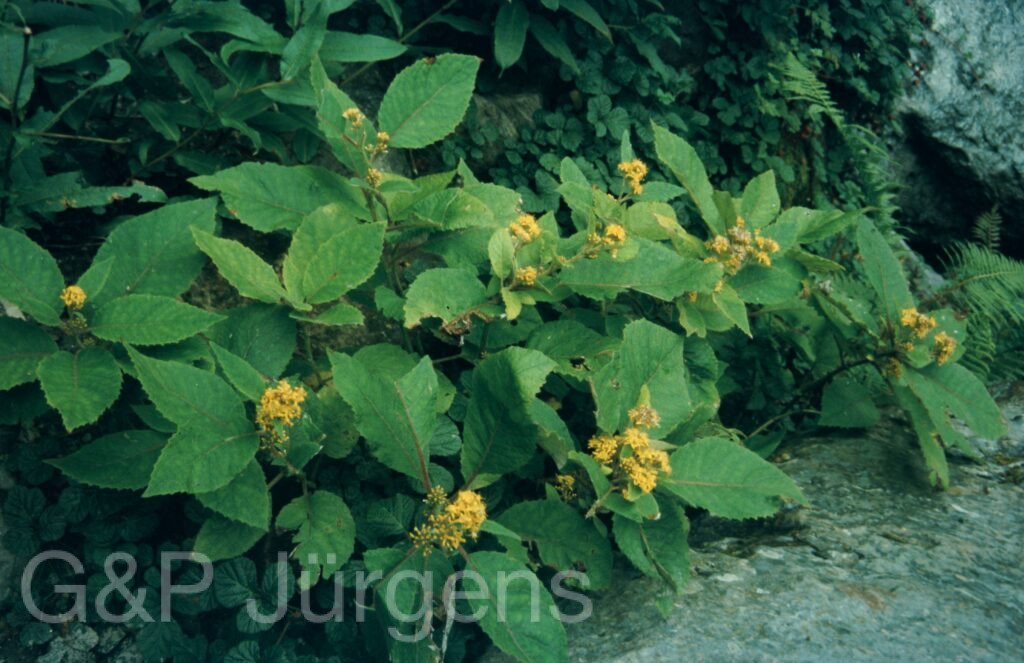
Garw 2005 59 ergebnis ergebnis
India Garhwal Valley of flowers 3400m, September

Description

Swertia speciosa is a robust Himalayan gentian distributed through India, Pakistan, Nepal and China, the roughly 132 georeferenced records spanning the moist temperate and subalpine zones of the western and central Himalaya. It favours damp, open situations: tall-herb meadows, forest clearings, streamsides, shrubberies and grassy slopes, generally between about 2700 and 3900 m. The plant was photographed in the Garhwal Valley of Flowers at 3400 m in September, a habitat typical of the species, where it flowers in the late monsoon among lush herbaceous vegetation on cool, humus-rich soils.

It is one of the largest swertias, a stout erect biennial or short-lived perennial herb reaching well over a metre, with a hollow, often purple-tinged, four-angled stem. The leaves are large, ovate to elliptic, prominently several-nerved, the basal ones petiolate and the cauline ones sessile and opposite. The inflorescence is a broad, leafy, much-branched panicle of numerous flowers. Each flower is four- or five-merous with a rotate, greenish-yellow corolla conspicuously veined and dotted with dark purple, the lobes bearing paired fringed nectary pits (foveolae) near the base. The fruit is a many-seeded ovoid capsule splitting septicidally.

Swertia (tribe Gentianeae) is a large Old World genus in which species are separated chiefly by nectary number, position and the form of their marginal fringes, and S. speciosa is distinguished by its great stature and richly veined corolla. Like its relatives it is rich in bitter secoiridoid glycosides and is gathered in Himalayan folk medicine as a tonic and febrifuge, sold under the trade complex of "chiretta." Though widespread and not formally assessed as threatened, such medicinal harvesting warrants monitoring of wild stands.

Author: G.Don · Sources: POWO (Kew), GBIF, Flora of China, Annotated Checklist of the Flowering Plants of Nepal, Flowers of the Himalaya (Polunin & Stainton)

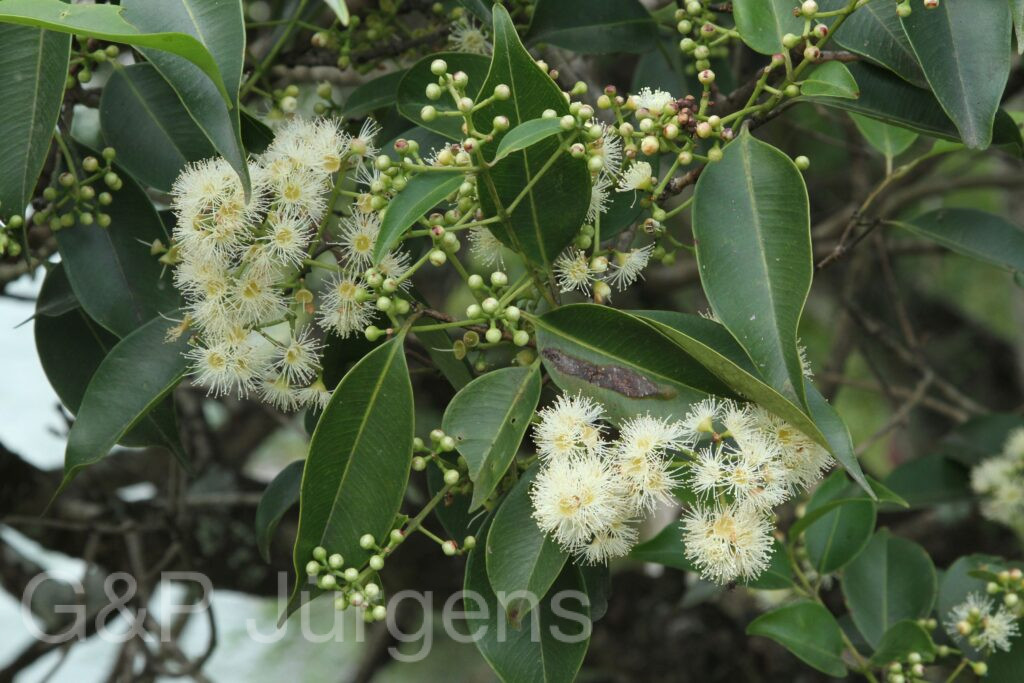
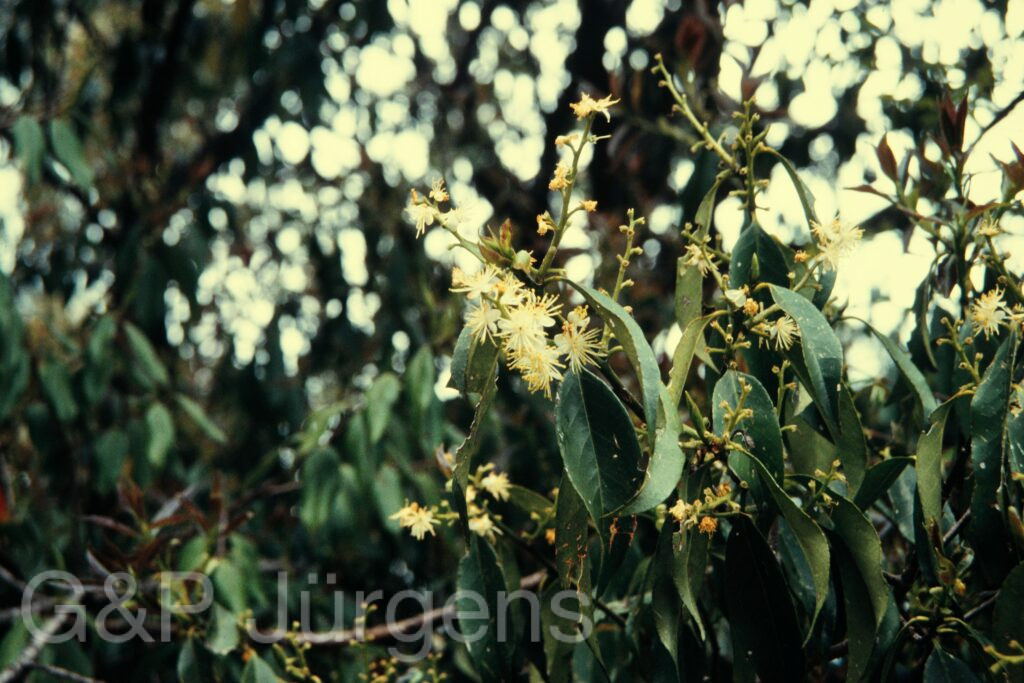
Miq.

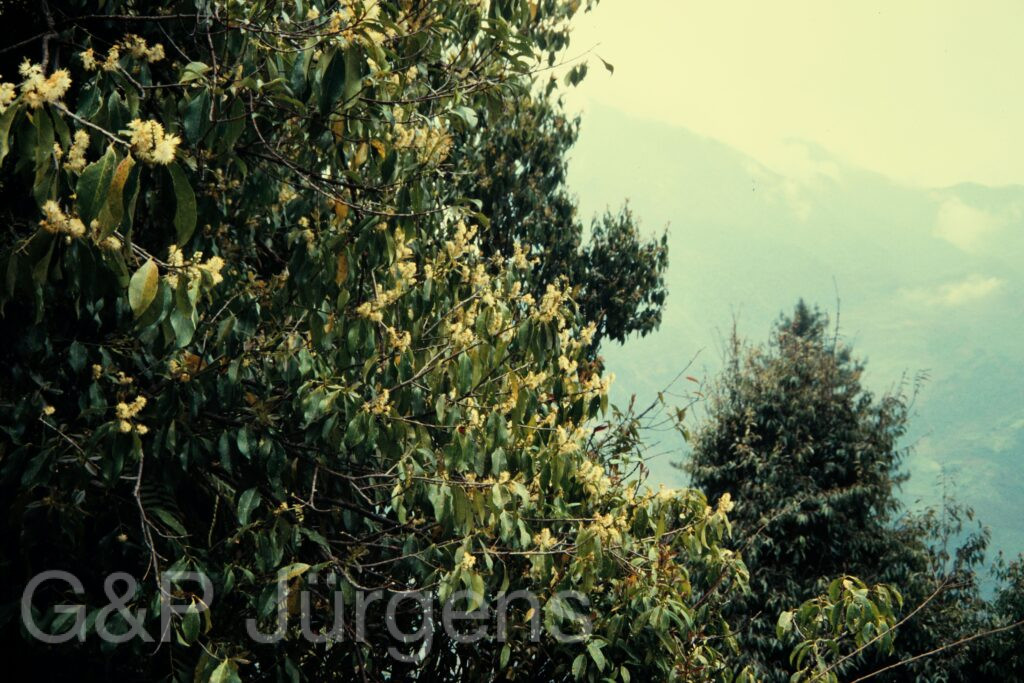
Bhutan2015 532
Bhutan Punaka 1400m, October
Bhutan2015 533
Bhutan Punaka 1400m, October

Description

Symplocos acuminata Miq. is an evergreen shrub or small tree of the Symplocaceae, widely distributed across tropical and subtropical Asia. Its substantial GBIF record (over 4,100 occurrences) spans China, Taiwan, India, the Himalaya, Indochina, Sri Lanka, Japan, and the Malesian archipelago, reflecting a broad Indo-Malayan range. The species was recorded near Punakha in Bhutan at 1,400 m in October; it characteristically inhabits broad-leaved evergreen and mixed mesophytic forests, forest margins, and secondary woodland from the lowlands up to around 2,000 m, favouring moist, well-drained slopes.

The plant forms a much-branched crown with coriaceous, alternate leaves that are elliptic to oblong-lanceolate and conspicuously acuminate at the apex, the margins finely serrate and the surfaces glabrous. The flowers are small, white, and fragrant, with numerous stamens arranged in fascicles, borne in short axillary racemes or spikes. The ovary is inferior, developing into an ovoid to ellipsoid drupe that ripens dark blue-black, crowned by the persistent calyx and attractive to frugivorous birds, which act as the principal dispersal agents.

Symplocos is the sole genus of its family and is taxonomically complex, with acuminata representing part of a variable, widely circumscribed species aggregate that has accumulated numerous synonyms across its vast range. Members of the genus are notable for accumulating aluminium, and several have historically been used as natural mordants in dyeing. Given its wide distribution and tolerance of disturbed forest, the species is not considered threatened.

Author: Miq. · Sources: POWO (Kew), Flora of China Vol. 15, Flora of Bhutan Vol. 2, GBIF, Nooteboom: Symplocaceae (Flora Malesiana, 1977)

S.Moore

Nepal 97 95 P157
Nepal Dongen 2300m April
Nepal 97 94 P155
Nepal Dongen 2300m April

Description

Symplocos cochinchinensis is one of the most widely distributed members of the Symplocaceae, with an extraordinary pantropical range extending from West Africa across Madagascar and the Indian subcontinent through mainland and insular Southeast Asia, China, Japan, Taiwan, the Philippines, Papua New Guinea, Australia, and into the western Pacific islands. GBIF records nearly 5,840 occurrences from more than 20 countries. In the Himalayas, the species inhabits subtropical and warm-temperate evergreen broadleaved forests at 800–2,500 m elevation. At Dongen in eastern Nepal at 2,300 m, it occurs in the canopy and sub-canopy layer of Schima–Castanopsis forests, where it flowers in the pre-monsoon month of April.
Symplocos cochinchinensis is an evergreen tree or large shrub, typically 5–15 m tall, occasionally reaching 25 m. The bark is smooth, greyish-brown. Leaves are alternate, elliptic to oblong-elliptic, 7–15 cm long, with an acuminate apex, cuneate base, and serrate to crenate-serrate margins; the upper surface is glabrous and dark green, while the lower surface may be sparsely pubescent along the midrib. The inflorescence is an axillary raceme or panicle, 3–8 cm long, bearing numerous small, fragrant white flowers. Each flower has a five-lobed calyx, five petals fused at the base, and numerous stamens (20–60) in several series. The fruit is a cylindric to ovoid drupe, 5–8 mm long, dark blue to black at maturity, crowned by the persistent calyx lobes.
The vast geographical range of Symplocos cochinchinensis has led to considerable infraspecific taxonomic complexity, and numerous varieties and subspecies have been described. The treatment in POWO recognises several subspecies, with the Himalayan populations generally referred to subsp. laurina. The species is ecologically significant as a component of mid-elevation broadleaved forests across the Old World tropics and plays a role in forest regeneration on disturbed sites. In parts of South and Southeast Asia, the leaves and bark have traditional uses as a mordant in textile dyeing owing to their high aluminium content.

Author: S.Moore · Sources: POWO (Kew), GBIF, Flora of China Vol. 15, Flora of Nepal Checklist, Nooteboom: Symplocaceae in Flora Malesiana Ser. I, Vol. 8 (1977)

(Wall. ex DC.) C.Jeffrey & Y.L.Chen

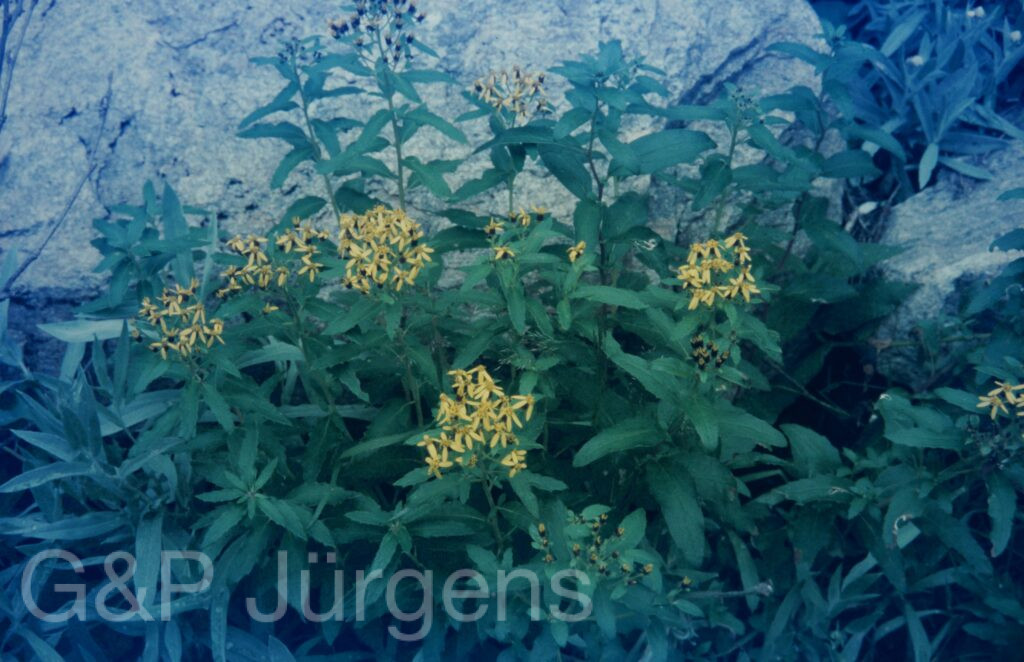
Garw 2005 172 ergebnis ergebnis
India Garhwal Shertoli 3100m, September

Description

Synotis alata is a robust ragwort-allied composite of the Himalaya and southwestern China, documented by GBIF (330 occurrences) from Nepal, India, Bhutan, Myanmar and China. It grows in forest clearings, shrubberies, along streamsides and on grassy slopes within the upper temperate and subalpine zones, typically between about 2500 and 3500 m. The plant photographed at Shertoli in Garhwal, India, at 3100 m in September captures its late-monsoon to autumn flowering, when these tall herbs come into bloom along moist montane margins after the rains.

The species is a perennial herb with erect, often winged or narrowly alate stems, a feature reflected in the epithet "alata". The leaves are alternate, ovate to elliptic-lanceolate, sharply toothed and frequently decurrent down the stem to form the characteristic wings, with a thinly hairy lower surface. The capitula are numerous and arranged in a broad terminal corymbose panicle; each head is radiate with a few yellow ligulate ray florets surrounding a disc of yellow tubular florets, subtended by an involucre of uniseriate phyllaries with small calyculate bracts. The fruit is a cylindrical, ribbed cypsela bearing a copious white pappus of fine barbellate bristles that aids wind dispersal.

Synotis was segregated from the vast genus Senecio by C. Jeffrey and Y. L. Chen, who recognised its distinctive style and pollen characters; S. alata is a typical member of this Sino-Himalayan group. The wind-borne pappus permits rapid colonisation of disturbed and successional ground, and the bright capitula attract a range of generalist butterfly and bee pollinators. The species is common and widespread across its range and is not considered to be of conservation concern.

Author: (Wall. ex DC.) C.Jeffrey & Y.L.Chen · Sources: POWO (Kew), GBIF, Flora of China, Flora of Bhutan, Annotated Checklist of the Flowering Plants of Nepal, The Senecioneae of the Himalaya (Jeffrey)

(Wall. ex DC.) C.Jeffrey & Y.L.Chen

Garw 2005 51 ergebnis ergebnis
India Garhwal Valley of flowers 3400m, September

Description

Synotis kunthiana is a Sino-Himalayan composite distributed across the central and eastern Himalaya, with verified records from India, Nepal and Bhutan and roughly 56 georeferenced occurrences in GBIF. It is a plant of the upper temperate and subalpine zones, typically occupying moist forest margins, shrubberies, streamsides and open herb-rich slopes between about 2800 and 3800 m. The photographed population in the Garhwal Himalaya, in the renowned Valley of Flowers at around 3400 m, flowering in September, exemplifies its late-season phenology in tall-herb communities flushed by the receding monsoon.

It is a perennial herb with erect, often somewhat woody-based stems arising from a short rhizome, the stems leafy and frequently floccose-tomentose when young. The leaves are alternate, ovate to elliptic-lanceolate, acuminate, with a serrate to denticulate margin and a thinly arachnoid-pubescent abaxial surface. The capitula are numerous, small and arranged in lax terminal corymbose-paniculate cymes; each head bears an involucre of uniseriate phyllaries subtended by a few calyculate bracteoles, with yellow radiate ray florets surrounding the disc. The fruit is a cylindrical, ribbed cypsela crowned by a copious white pappus of fine barbellate bristles.

The genus Synotis was segregated from Senecio sensu lato by C. Jeffrey and Y. L. Chen on the basis of style-branch and capitular characters, and S. kunthiana is based on the Wallichian Senecio kunthianus. The species remains locally common across its range and is not considered threatened, though its dependence on intact subalpine tall-herb meadows makes it a useful indicator of grazing pressure and habitat continuity.

Author: (Wall. ex DC.) C.Jeffrey & Y.L.Chen · Sources: POWO (Kew), GBIF, Flora of Bhutan, Flora of China, Jeffrey & Chen revision of Asiatic Senecioneae (Synotis)

Wall. ex Royle

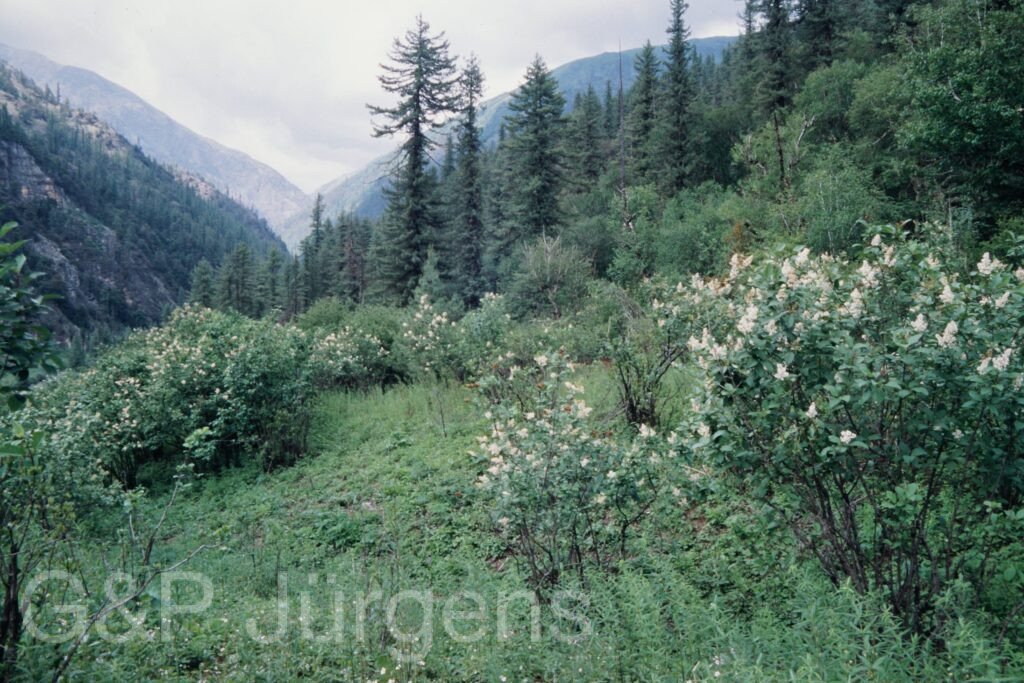
Nepal 99 390 ergebnis
West-Nepal, Sallibagar-Khola, Juni

Description

Syringa emodi, the Himalayan lilac, is a deciduous shrub native to the western and central Himalaya, distributed from Afghanistan and Pakistan through Kashmir and India into Nepal, with records extending toward southwestern China. GBIF documents well over three hundred occurrences, though a substantial share derive from cultivated plantings across Europe and North America, where the species has long been grown as an ornamental and used in lilac breeding. In the wild it inhabits open coniferous and mixed forest, forest margins, shrubberies, ravine slopes and streamsides in the temperate zone, generally between about 2400 and 3600 m. The plant photographed in West Nepal along the Sallibagar Khola in June reflects this habitat preference for moist, partly shaded montane valleys where it flowers in early summer.

The plant is a robust, erect shrub reaching three to four metres, with stout, lenticellate branches and a coarse aspect. The leaves are simple, opposite, elliptic to oblong and acuminate, glabrous and dark green above but conspicuously pale and often finely hairy along the veins beneath, distinguishing it from most other lilacs. The flowers are borne in large, erect terminal panicles; the corolla is pale lilac to nearly white, with a slender tube abruptly expanding into four spreading lobes, and the blooms are notably less fragrant, or even faintly unpleasant in scent, compared with the common lilac. Two stamens are inserted within the corolla tube. The fruit is a smooth, oblong, somewhat warty loculicidal capsule splitting to release winged seeds.

Syringa belongs to the olive family and is centred on temperate Asia, with S. emodi representing the genus's principal Himalayan outpost. Its distinctive pale leaf undersides and warty capsules render it readily identifiable, and it has contributed to horticulture both directly and as a parent of hybrid lilacs valued for foliage and hardiness. As a widespread and adaptable species occupying a broad elevational range, it is not considered threatened; its ecological tolerance and capacity to colonise forest edges and disturbed slopes underpin its persistence, while its ornamental and breeding value sustains continued ex situ cultivation worldwide.

Author: Wall. ex Royle · Sources: POWO (Kew), GBIF, Flora of China Vol. 15, Flora of Bhutan Vol. 2 Part 1, Flora of Nepal, Flora of Pakistan, Lilacs: The Genus Syringa (John L. Fiala)

Hand.-Mazz.

Sikkim2003 512 G712 2 ergebnis
Sikkim Yumedzandong 4500m, August

Description

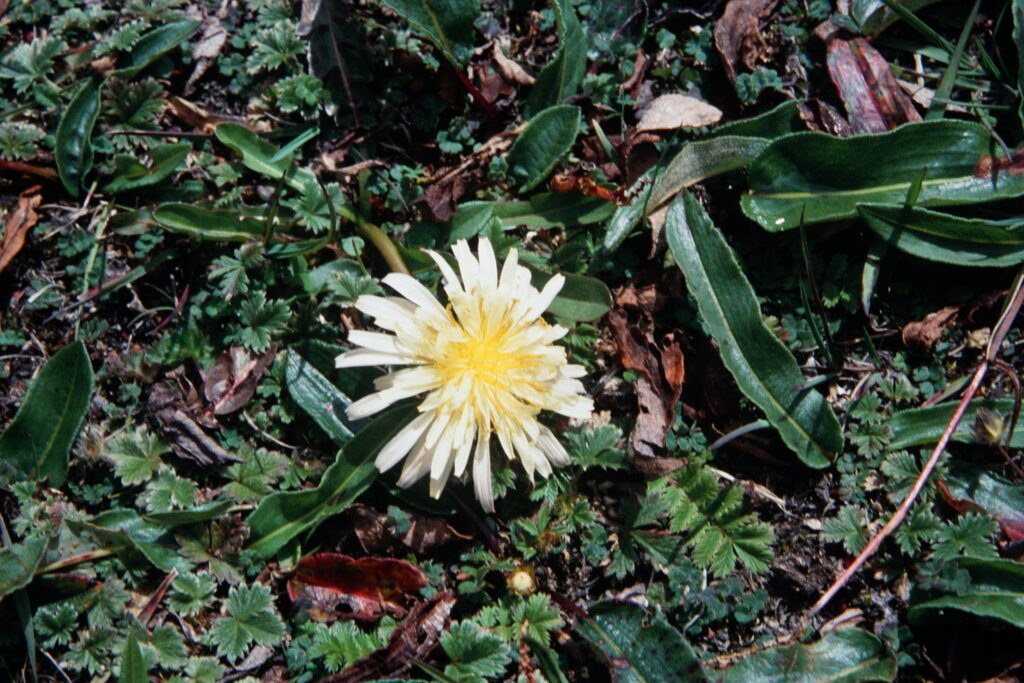
Taraxacum sikkimense is a high-alpine dandelion of the Himalaya and Tibetan Plateau margins, recorded from China, India, Nepal, Bhutan and Pakistan, with a modest set of records (c. 128 in GBIF) reflecting its restricted high-elevation range. It occupies alpine meadows, turfy slopes, moist gravelly ground and the surrounds of snowmelt flushes, typically between about 4000 and 4800 m. The photographed plant from Yumedzandong in Sikkim, at 4500 m and flowering in August, exemplifies the species in its short alpine growing season, when warmth and meltwater briefly permit growth and flowering near the upper limit of vascular plant life.

The plant is a small, acaulescent, rosette-forming perennial herb with a thick, often blackened taproot and a milky white latex characteristic of the tribe Cichorieae. The leaves are all basal, runcinate to pinnatifid or shallowly toothed, sometimes nearly entire in dwarfed alpine forms. The flowering scapes are short, each bearing a single capitulum subtended by an involucre of imbricate phyllaries, the outer often appressed or recurved with a coloured margin. The capitulum is homogamous, composed entirely of yellow ligulate (ray) florets; the fruit is a ribbed, spinulose-muricate cypsela narrowed above into a slender beak that bears a pappus of simple white bristles, dispersed by wind.

Taraxacum is a taxonomically formidable genus owing to widespread apomixis (agamospermy) and polyploidy, which generate innumerable stable microspecies; the Himalayan high-elevation taxa form a distinctive assemblage that remains incompletely revised. Taraxacum sikkimense belongs to this alpine radiation. As a specialised high-altitude plant with a naturally fragmented distribution, it is potentially sensitive to alpine habitat change, though it has not been formally assessed.

Author: Hand.-Mazz. · Sources: POWO (Kew), GBIF, Flora of China (Asteraceae), Flora of Bhutan, Taraxacum: A monograph (Richards)