
Wall. ex Royle
Description
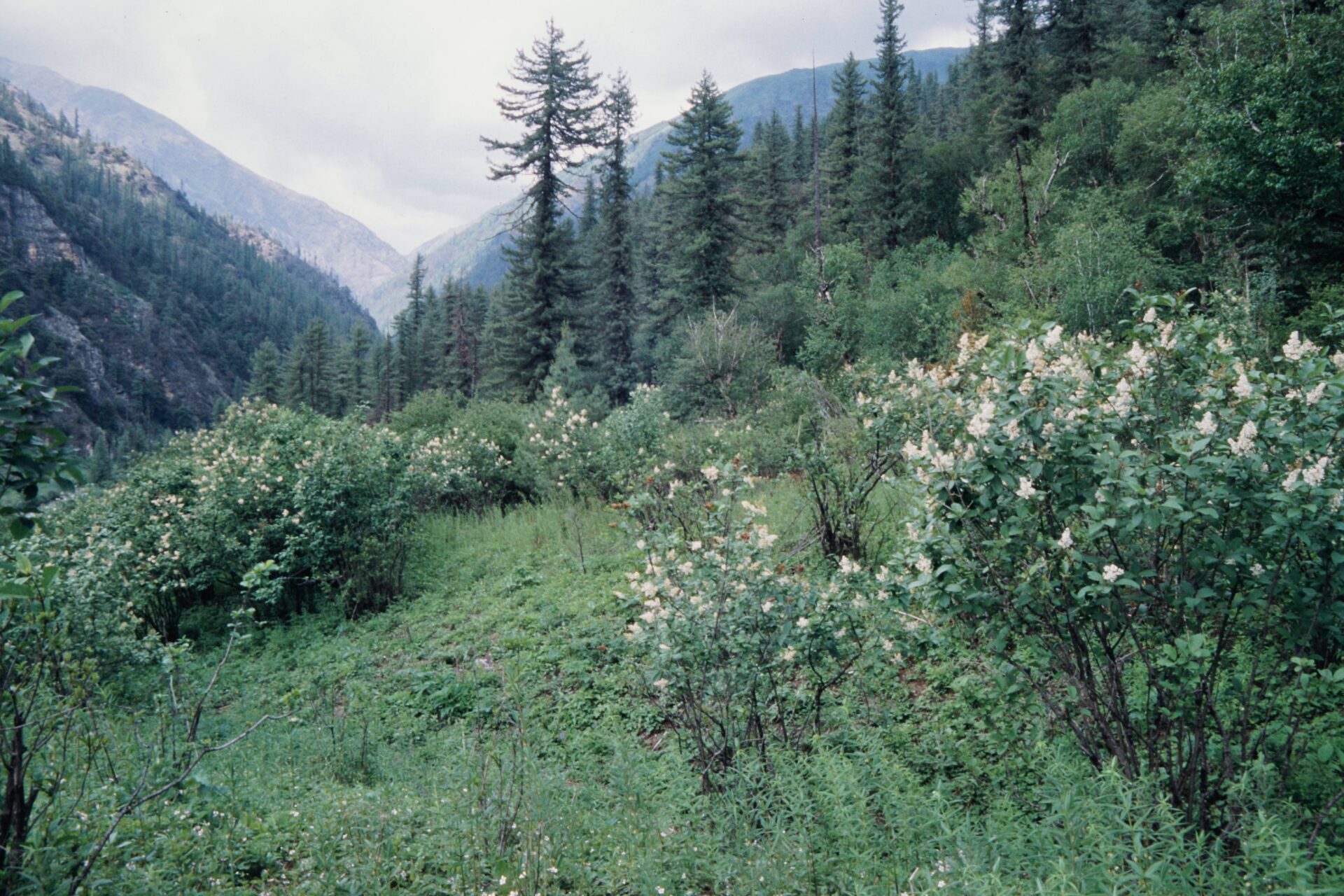
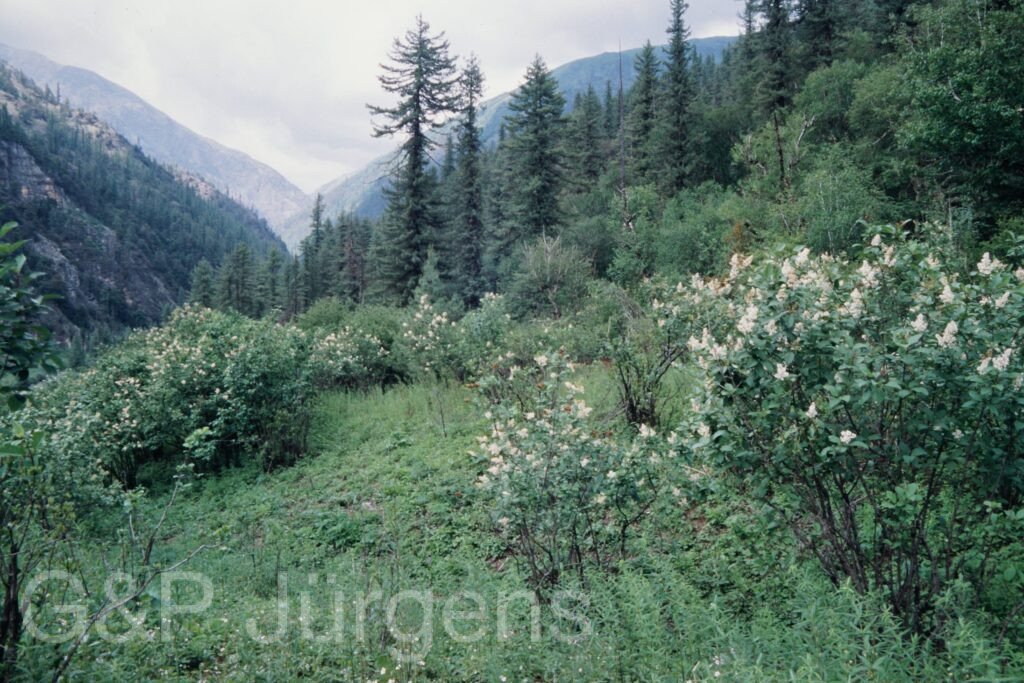
Syringa emodi, the Himalayan lilac, is a deciduous shrub native to the western and central Himalaya, distributed from Afghanistan and Pakistan through Kashmir and India into Nepal, with records extending toward southwestern China. GBIF documents well over three hundred occurrences, though a substantial share derive from cultivated plantings across Europe and North America, where the species has long been grown as an ornamental and used in lilac breeding. In the wild it inhabits open coniferous and mixed forest, forest margins, shrubberies, ravine slopes and streamsides in the temperate zone, generally between about 2400 and 3600 m. The plant photographed in West Nepal along the Sallibagar Khola in June reflects this habitat preference for moist, partly shaded montane valleys where it flowers in early summer.
The plant is a robust, erect shrub reaching three to four metres, with stout, lenticellate branches and a coarse aspect. The leaves are simple, opposite, elliptic to oblong and acuminate, glabrous and dark green above but conspicuously pale and often finely hairy along the veins beneath, distinguishing it from most other lilacs. The flowers are borne in large, erect terminal panicles; the corolla is pale lilac to nearly white, with a slender tube abruptly expanding into four spreading lobes, and the blooms are notably less fragrant, or even faintly unpleasant in scent, compared with the common lilac. Two stamens are inserted within the corolla tube. The fruit is a smooth, oblong, somewhat warty loculicidal capsule splitting to release winged seeds.
Syringa belongs to the olive family and is centred on temperate Asia, with S. emodi representing the genus's principal Himalayan outpost. Its distinctive pale leaf undersides and warty capsules render it readily identifiable, and it has contributed to horticulture both directly and as a parent of hybrid lilacs valued for foliage and hardiness. As a widespread and adaptable species occupying a broad elevational range, it is not considered threatened; its ecological tolerance and capacity to colonise forest edges and disturbed slopes underpin its persistence, while its ornamental and breeding value sustains continued ex situ cultivation worldwide.
Author: Wall. ex Royle · Sources: POWO (Kew), GBIF, Flora of China Vol. 15, Flora of Bhutan Vol. 2 Part 1, Flora of Nepal, Flora of Pakistan, Lilacs: The Genus Syringa (John L. Fiala)