
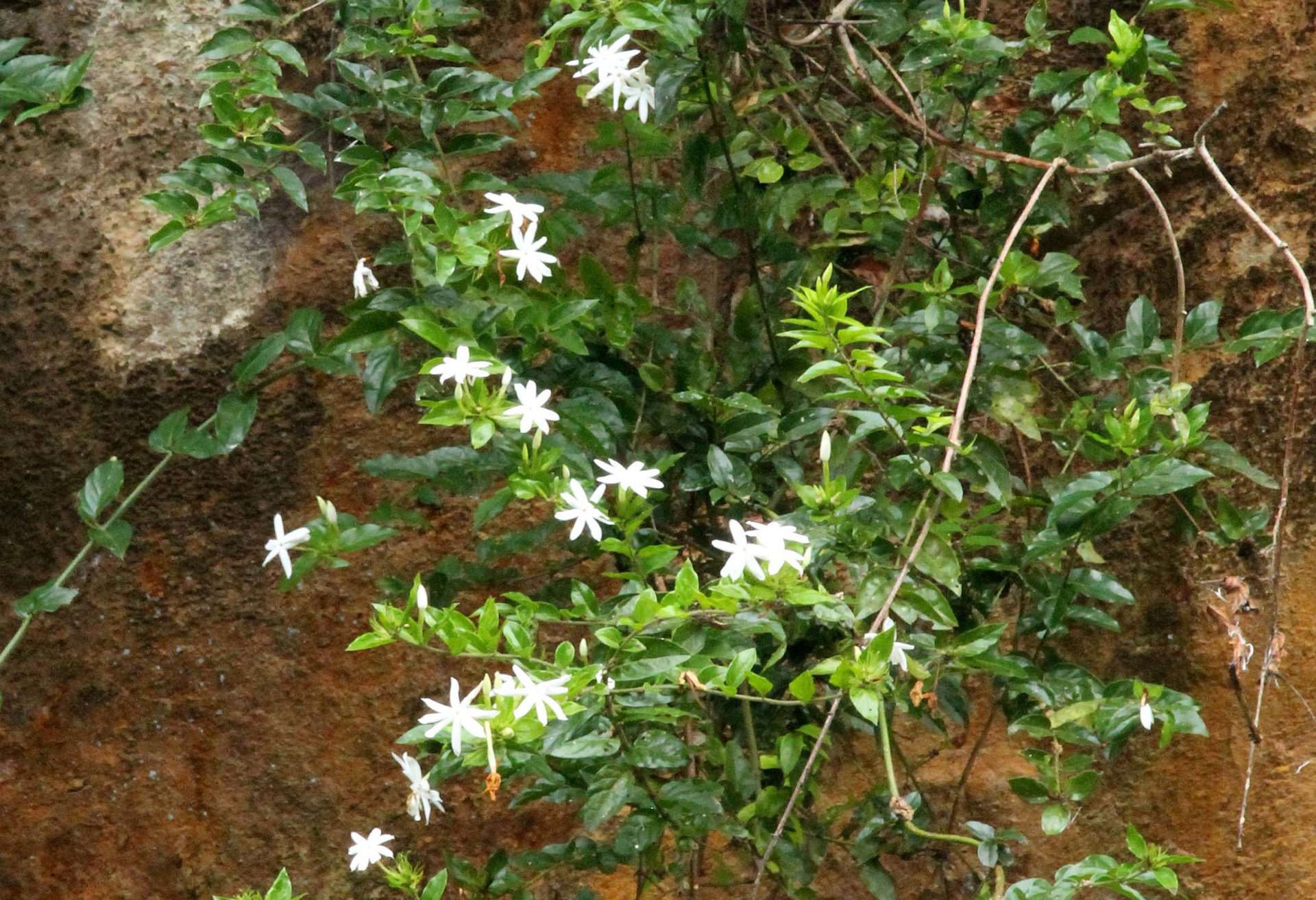
(P.J.Bergius) Willd.
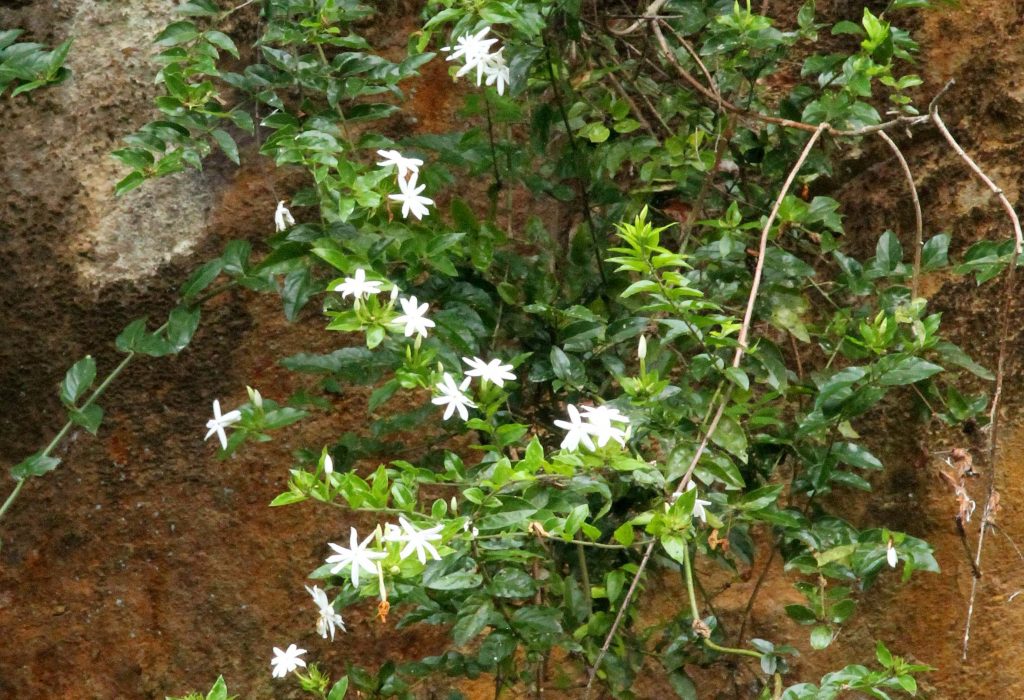
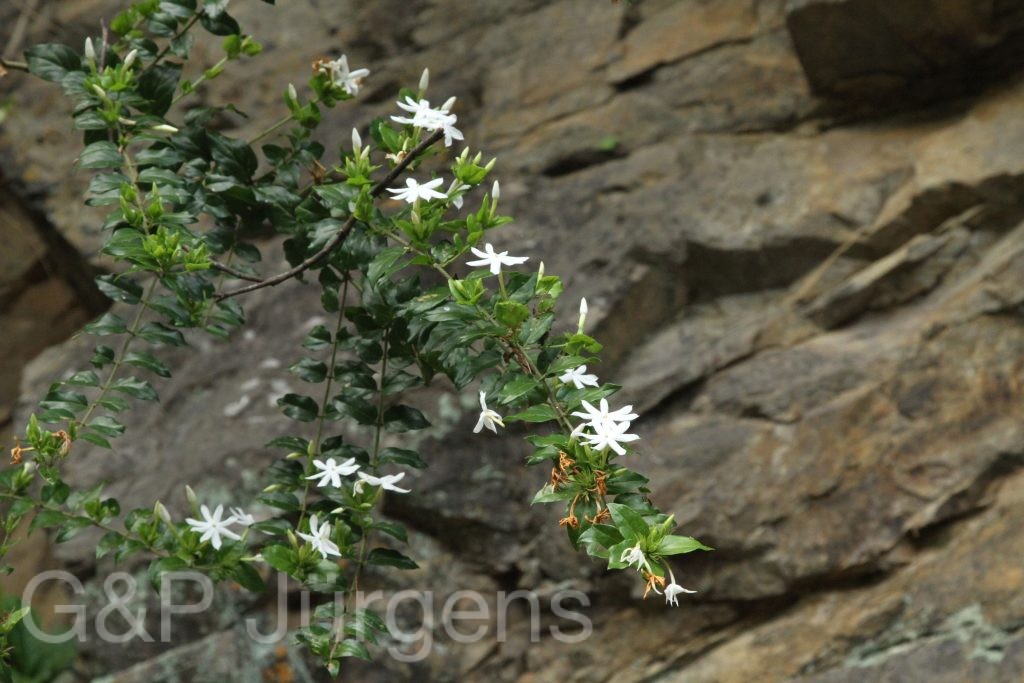
Description
Jasminum elongatum is a scrambling jasmine of broad Indo-Pacific distribution, recorded by GBIF from Australia, Indonesia, China, Malaysia, the Philippines, New Guinea, Thailand, Vietnam and the eastern Himalaya, with over 2270 occurrences. It grows in subtropical and tropical forest margins, secondary thickets, riverine scrub and clearings, often climbing over shrubs and small trees on warm, well-watered slopes. The illustrated plants come from Bhutan in the Zhemgang district between about 1000 and 1900 m, flowering in October; across its range the species spans the lowlands to roughly 2000 m in the warm submontane belt.
The plant is a woody climber or sprawling shrub with slender, terete to slightly angled, pubescent twigs. The leaves are opposite and simple, ovate to ovate-lanceolate, acuminate, rounded to subcordate at the base, with appressed hairs especially along the veins beneath. The flowers are borne in terminal and axillary cymes, white and fragrant, with a slender corolla tube much longer than the calyx (the epithet elongatum referring to this elongated tube) opening into several spreading lobes; the calyx bears narrow, elongate teeth. The fruit is a black, two-lobed berry.
Jasminum is a large Old World genus of the Oleaceae whose white-flowered, opposite-leaved species form the core lineage distinct from the segregated yellow jasmines. Jasminum elongatum is variable in indumentum and leaf shape across its wide range, prompting a long synonymy. Its fragrant flowers are moth- and bee-pollinated and the berries bird-dispersed. Common, weedy and adaptable, it is of least concern and is occasionally grown for its scented blossom in tropical gardens.
Author: (P.J.Bergius) Willd. · Sources: POWO (Kew), GBIF, Flora of China, Flora of Bhutan, Jasminum monograph (Green)