Tag:

Autumn

Prain

Bhutan2012 925
Bhutan Tumching-La 3800m, October
Bhutan2012 926

Description

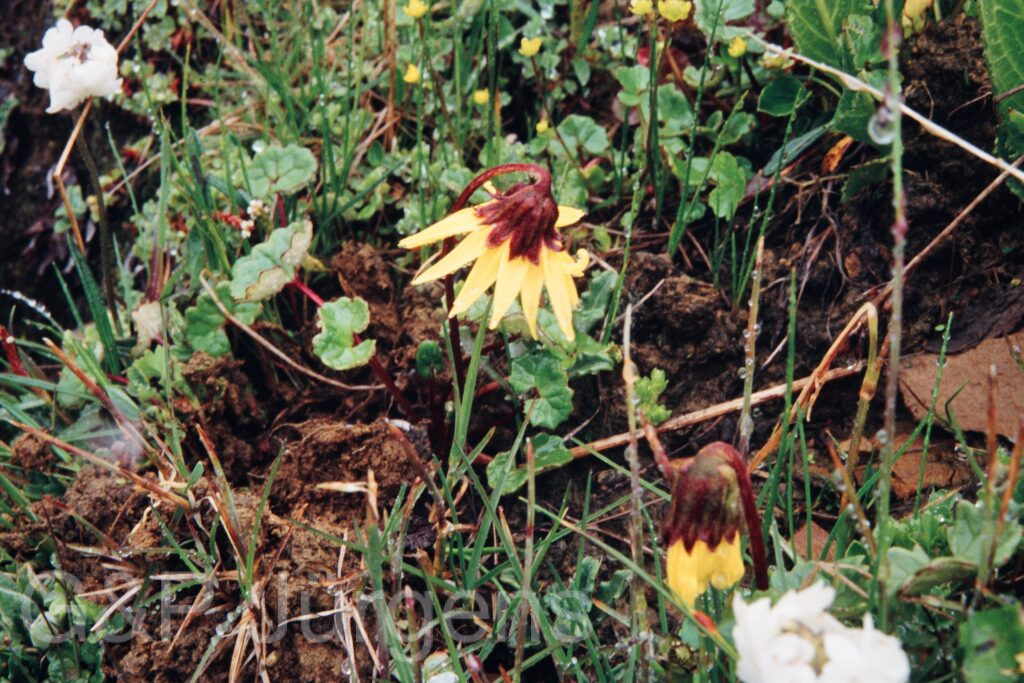
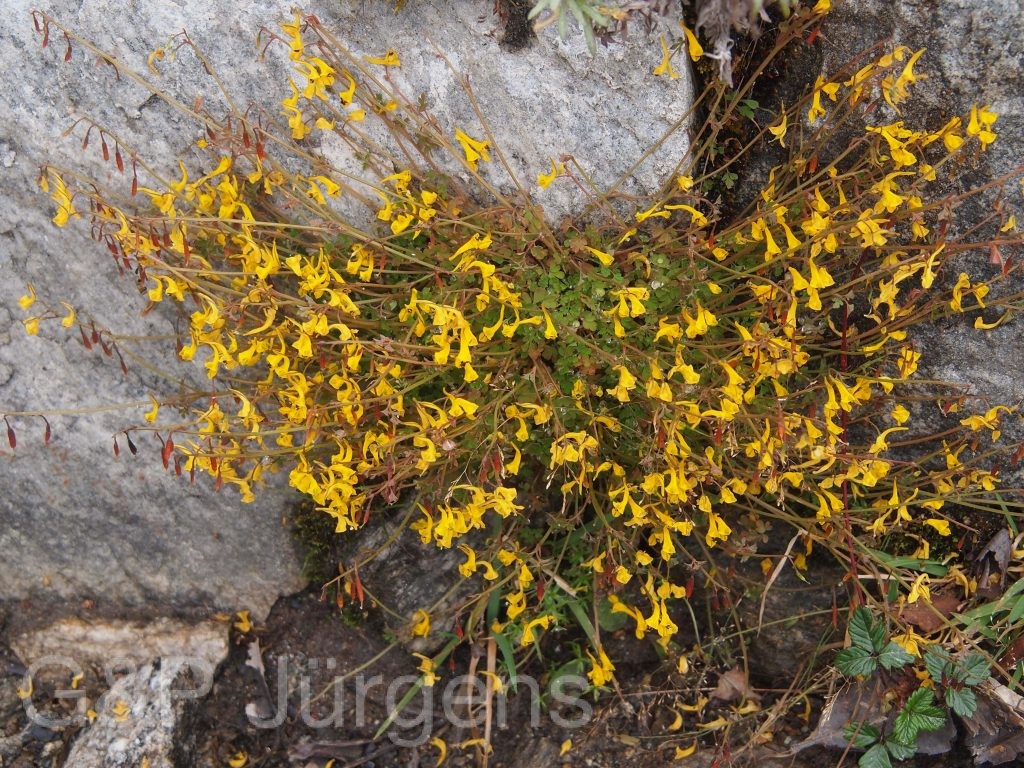
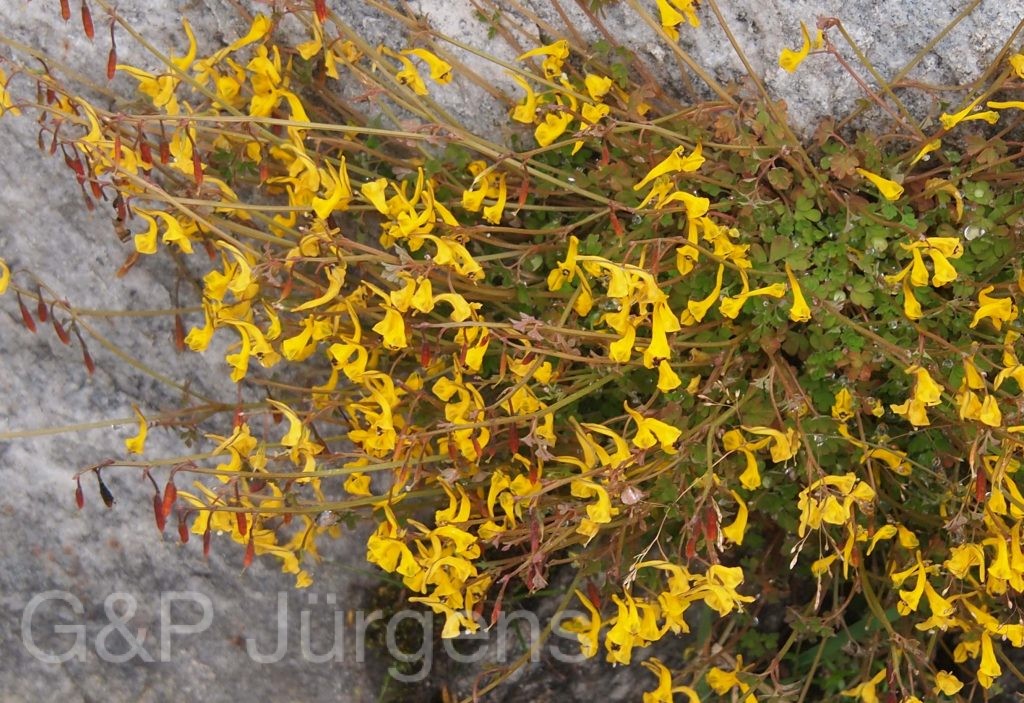
Corydalis lathyroides Prain is an Eastern Himalayan species known from Nepal, Bhutan and northeastern India (gbif_countries: NP, BT, IN), represented by only 28 occurrences in GBIF, indicative of a narrow range and limited collection. It is a plant of high subalpine to alpine habitats, occurring on open slopes, scree margins, scrub and rocky meadows, with a documented occurrence at Tumching-La in Bhutan at 3800 m, where it was photographed in October. This late-autumn record reflects an extended flowering season at the upper forest-to-alpine transition of the monsoonal eastern ranges.

It is a glabrous, glaucous herb with brittle, somewhat fleshy stems and a deep root or tuberous rootstock. The leaves are alternate, pinnately or ternately divided into oblong to obovate segments, the epithet lathyroides alluding to a vetch-like (Lathyrus) aspect of the foliage. The flowers are borne in terminal racemes; each is strongly zygomorphic with four petals, the upper petal prolonged backward into a conspicuous nectar spur, the colour typically yellow to purplish. The fruit is a slender dehiscent capsule (siliquiform) containing several shining seeds, often with an oil-rich elaiosome.

Corydalis, placed in subfamily Fumarioideae of an expanded Papaveraceae, is an exceptionally large and taxonomically complex genus richly developed in the Sino-Himalaya. The spurred flowers are adapted to long-tongued bees, while elaiosome-bearing seeds promote ant dispersal (myrmecochory). Given its restricted distribution and sparse records, the species merits monitoring, though no formal conservation assessment has been published.

Author: Prain · Sources: POWO (Kew), GBIF, Flora of Bhutan, Annotated checklist of the flowering plants of Nepal, Lidén & Zetterlund monograph of Corydalis
Royle

Garw 2005 427 ergebnis
India Garhwal Didina 2470m, September

Description

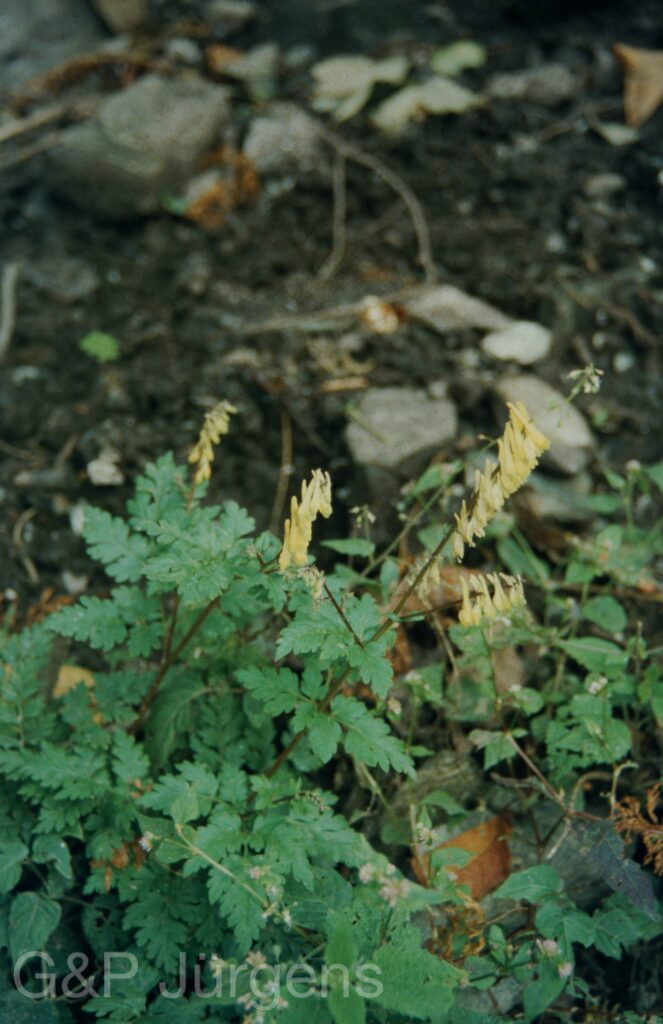
Corydalis vaginans is a Sino-Himalayan herb of the western and central Himalaya, with georeferenced collections concentrated in India, Pakistan and Nepal; GBIF records some 164 occurrences. It is a plant of cool, humid temperate to subalpine zones, favouring shaded forest margins, moist rocky banks, stream sides and clearings within Quercus and Abies forest. The image, taken near Didina in Garhwal (India) at about 2470 m in September, illustrates its typical late-season flowering in this moist mid-montane belt, where it grows among ferns and tall herbs on humus-rich, well-drained slopes.

The plant is a slender, glaucous, glabrous annual or short-lived perennial arising from a slender taproot. Stems are erect to ascending, somewhat fleshy and ribbed, branched above. The leaves are alternate, the lower long-petiolate and conspicuously sheathing at the base (the epithet vaginans referring to these dilated sheaths), the blades two- to three-pinnately divided into ovate to cuneate, lobed segments. Flowers are borne in lax terminal and axillary racemes, zygomorphic and yellow, with two outer petals one of which is spurred and the inner petals connate and crested. The fruit is a slender, dehiscent siliquiform capsule containing several shining black seeds with an elaiosome.

Within the large, taxonomically intricate genus Corydalis, this species belongs to the predominantly Asian assemblage of mesophytic, sheathing-leaved annuals, distinct from the tuberous spring-flowering groups. Its ant-dispersed seeds (myrmecochory) and shade-tolerant habit allow colonisation of disturbed forest soils. Though not assessed as threatened, populations are localised and dependent on intact temperate forest cover, sensitive to deforestation and grazing in the western Himalaya.

Author: Royle · Sources: POWO (Kew), GBIF, Flora of Pakistan, Flowers of the Himalaya (Polunin & Stainton), Lidén & Zetterlund monograph of Corydalis
Wall. ex Lindl.

Bhutan2012 894
Bhutan Tumching-La 3850m, October
Bhutan2014 410
Bhutan Yatong-La 2900m, May
Bhutan2014 409
Bhutan Yatong-La 2900m, May

Description

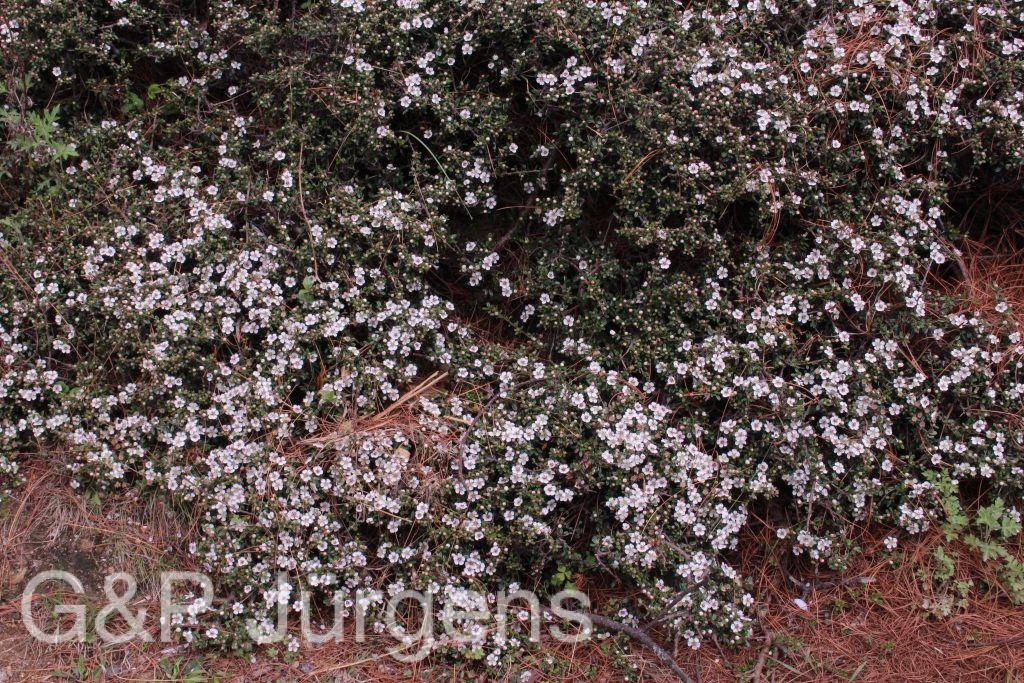
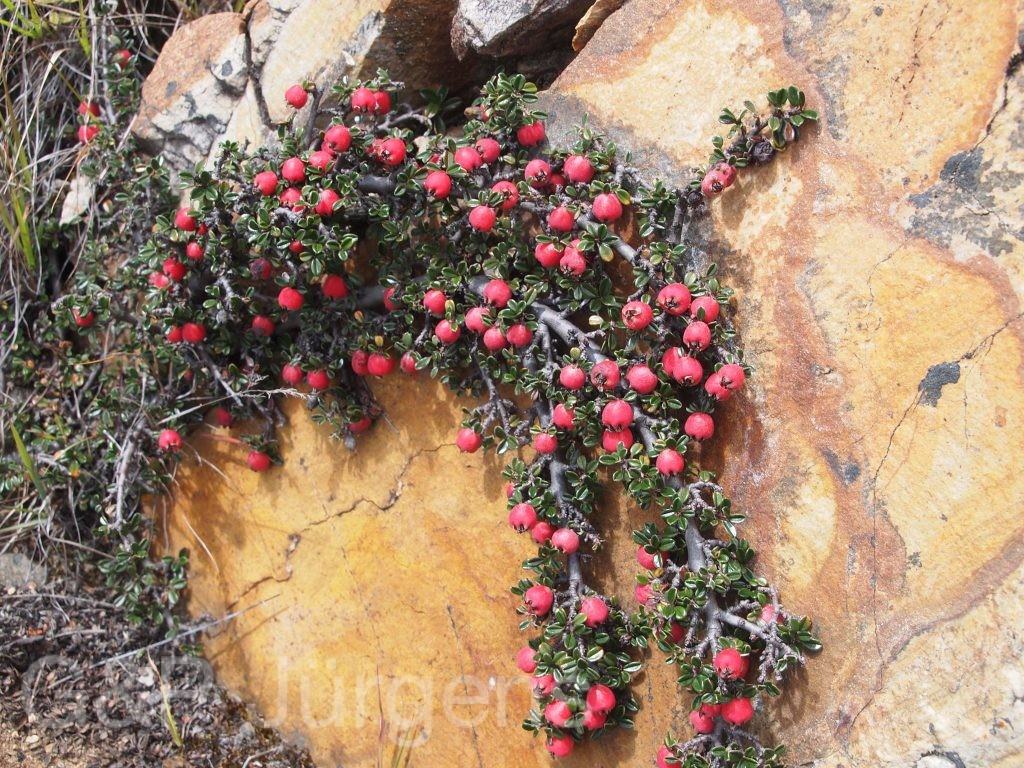
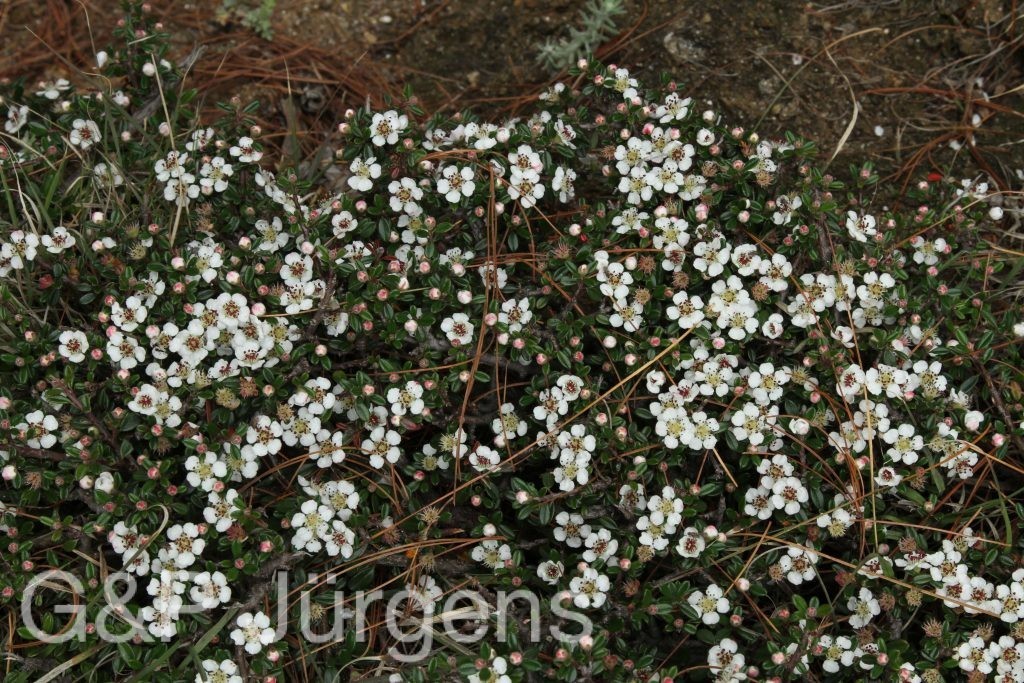
Cotoneaster microphyllus is a small-leaved, prostrate to spreading shrub native to the Himalaya and western China, recorded from Pakistan, Nepal, India, Bhutan and China; extensively grown as a groundcover and rock-garden plant, it has naturalised widely, giving GBIF records from Great Britain, Ireland, France, Germany, the United States, Australia and New Zealand among some 2800 occurrences. In its native range it grows on rocky slopes, cliff ledges, open hillsides and amid alpine scrub from the temperate to subalpine zone. The images document it in Bhutan at Tumching-La near 3850 m in October, when the fruit is ripe, and at Yatong-La around 2900 m in May at flowering.

It is an evergreen, much-branched shrub with rigid, spreading to procumbent branches, the young shoots strigose. The leaves are small, 4-10 mm, obovate to elliptic, dark glossy green and glabrescent above, grey-tomentose beneath, with revolute margins. The flowers are solitary or in pairs, with white, spreading petals, numerous stamens with reddish anthers, and two carpels. The fruit is a globose pome 5-8 mm in diameter, bright crimson to scarlet, crowned by the persistent calyx, conspicuous against the dark foliage and persisting into winter.

Cotoneaster microphyllus belongs to a taxonomically intricate, largely apomictic complex within the genus, in which many microspecies have been segregated and circumscriptions remain contentious; much horticultural material formerly under this name belongs to related taxa. Apomixis fixes minor variants as discrete lineages. The bird-dispersed fruit accounts for its frequent escape and naturalisation, and in some regions it is regarded as a minor invasive. The wild species is common and of least conservation concern.

Author: Wall. ex Lindl. · Sources: POWO (Kew), GBIF, Flora of China, Flora of Bhutan, Flora of British India, Fryer & Hylmö Cotoneasters: A Comprehensive Guide

Wall. & Griff. ex C.B.Clarke

Bhutan2012 1153
Bhutan Tashiyangtse 1850m, October
Bhutan2012 1155
Bhutan Tashiyangtse 1850m, October

Description

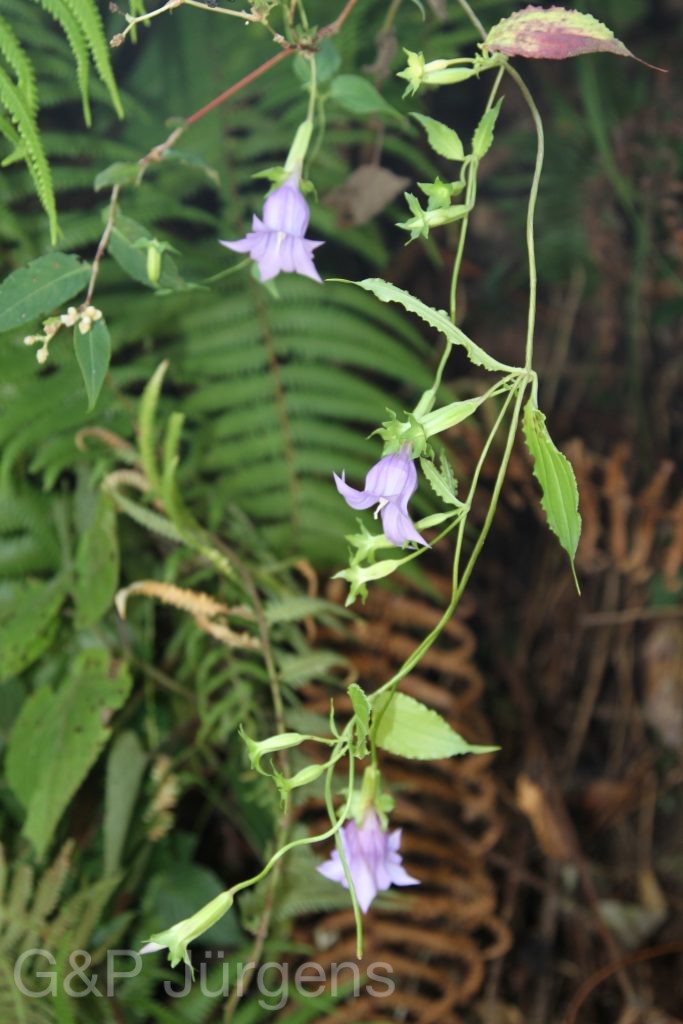
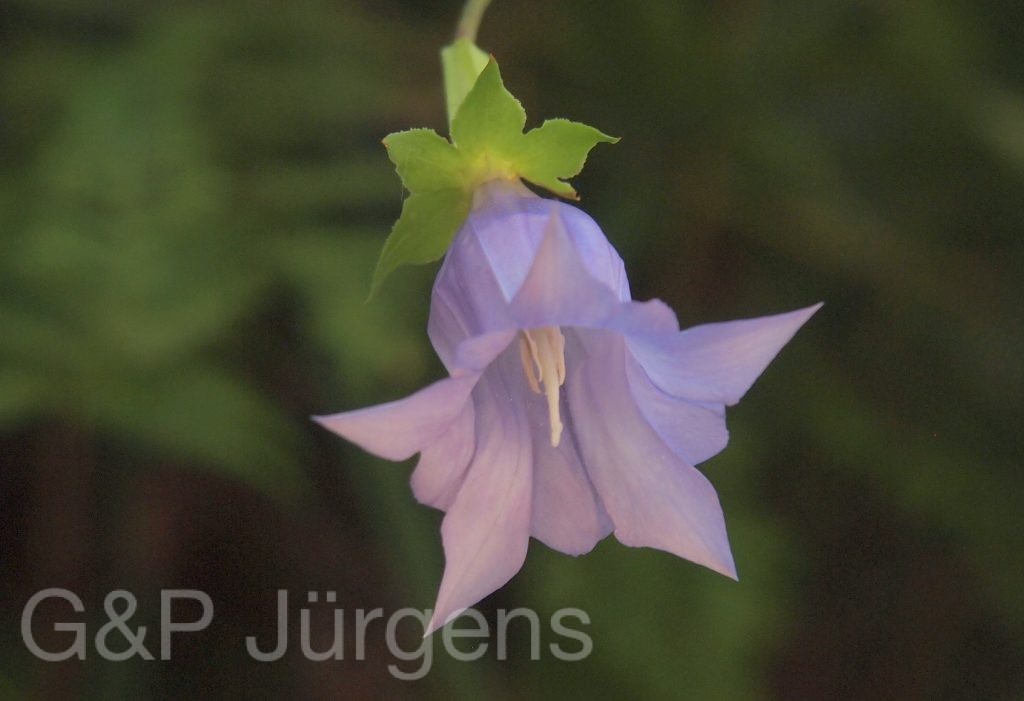
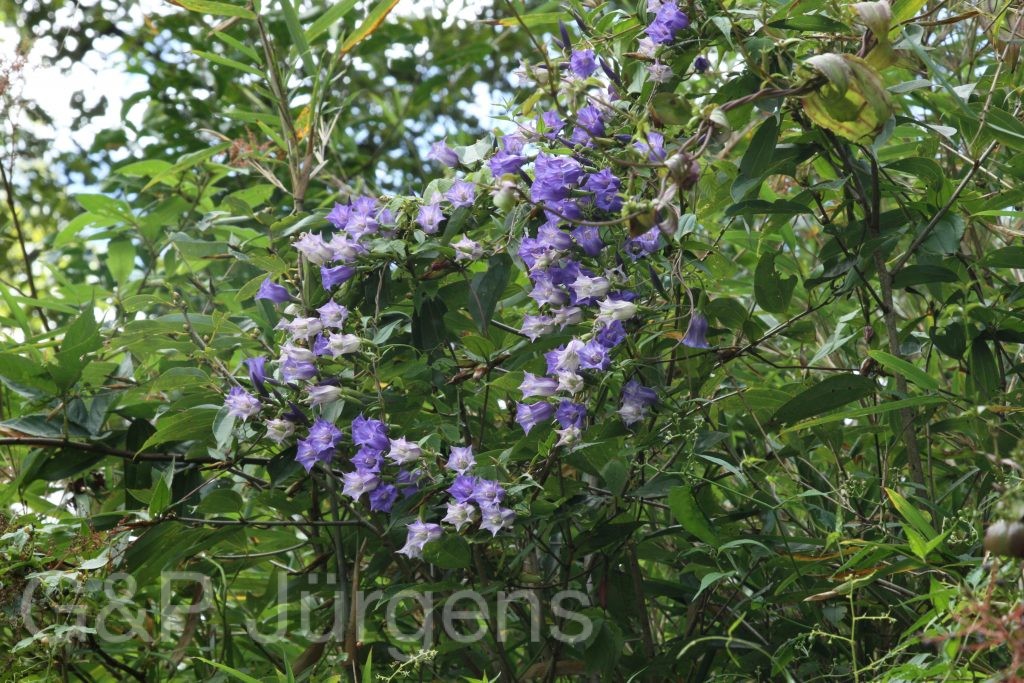
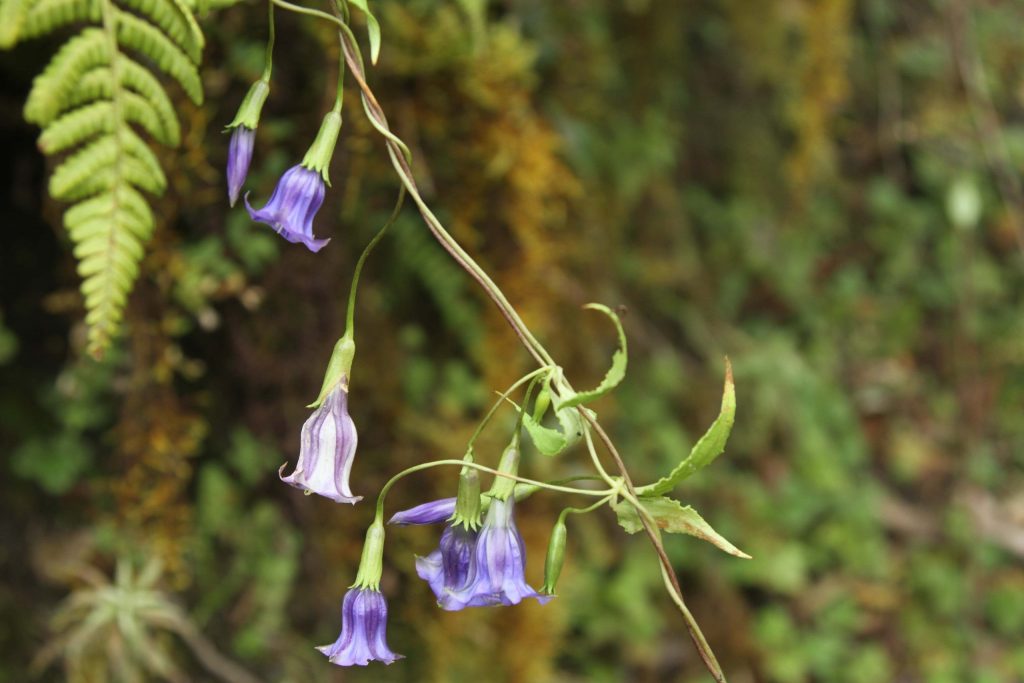
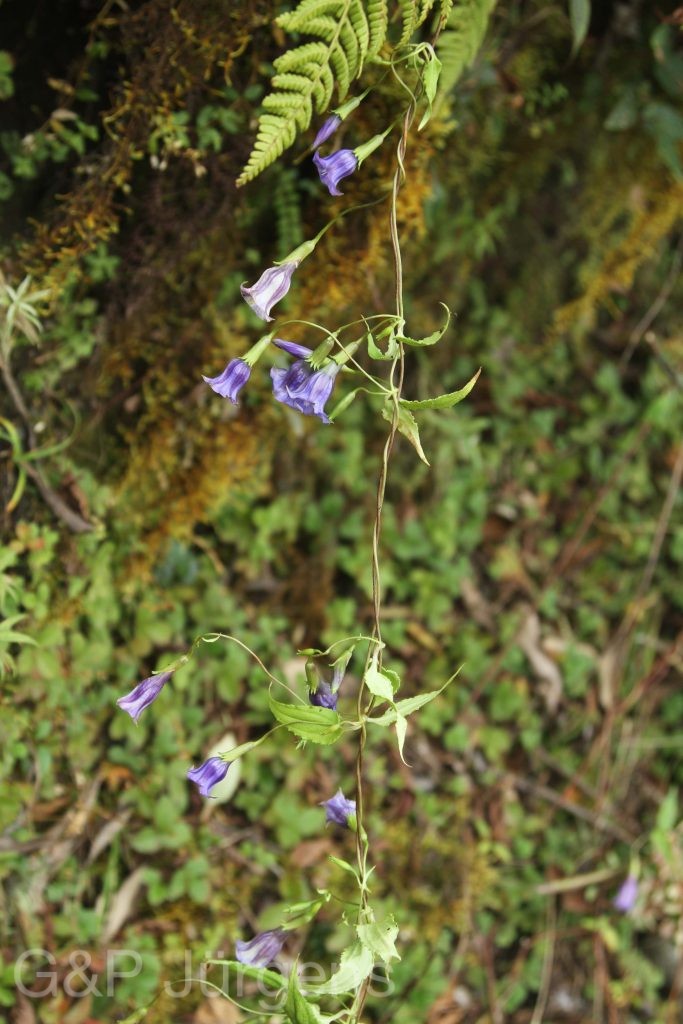
Crawfurdia campanulacea is a twining gentian of the eastern Himalaya and adjacent China, distributed from north-eastern India through Bhutan and Bangladesh into Myanmar, Vietnam and south-western China; its roughly 220 georeferenced occurrences (CN, IN, MM, BD, BT, VN) mark it as a regional element of the moist subtropical-to-temperate forest belt. It is a climbing herb of forest margins, thickets, shaded slopes and stream banks, generally between about 1500 and 2800 m, flowering in the autumn. The plant photographed at Tashiyangtse in eastern Bhutan at 1850 m in October illustrates this late-season blooming within humid broad-leaved forest.

It is a perennial herbaceous climber with slender, twining stems scrambling over surrounding vegetation. The leaves are opposite, ovate to ovate-lanceolate, acuminate, three- to five-nerved and short-petiolate, with entire margins. The conspicuous flowers are solitary or few in the upper axils, the corolla broadly campanulate (bell-shaped, as the epithet records), bluish-purple to violet, with five lobes and small plicate folds in the sinuses typical of the gentian alliance; there are five epipetalous stamens and a superior, stalked (stipitate) ovary. The fruit is a stipitate, ellipsoid capsule containing numerous small, flattened and often winged seeds.

Crawfurdia is a small Asian genus closely allied to Gentiana and Tripterospermum, distinguished by its twining habit and stipitate, winged-seeded capsules; some authors have submerged it within those genera, and its limits remain debated. Adapted to scrambling through forest understorey, C. campanulacea depends on intact woodland and is not regarded as threatened, though it is restricted to undisturbed montane forest across its range.

Author: Wall. & Griff. ex C.B.Clarke · Sources: POWO (Kew), GBIF, Flora of China, Flora of Bhutan, Flora of India, Ho & Pringle's treatment of Gentianaceae

C.B.Clarke

Bhutan2015 592
Bhutan Mo-Chu 1900m, October
Bhutan2015 594
Bhutan Mo-Chu 1900m, October
Bhutan2012 938 scaled
Bhutan Tumching-La 3200m, October
Bhutan2012 936
Bhutan Tumching-La 3200m, October

Description

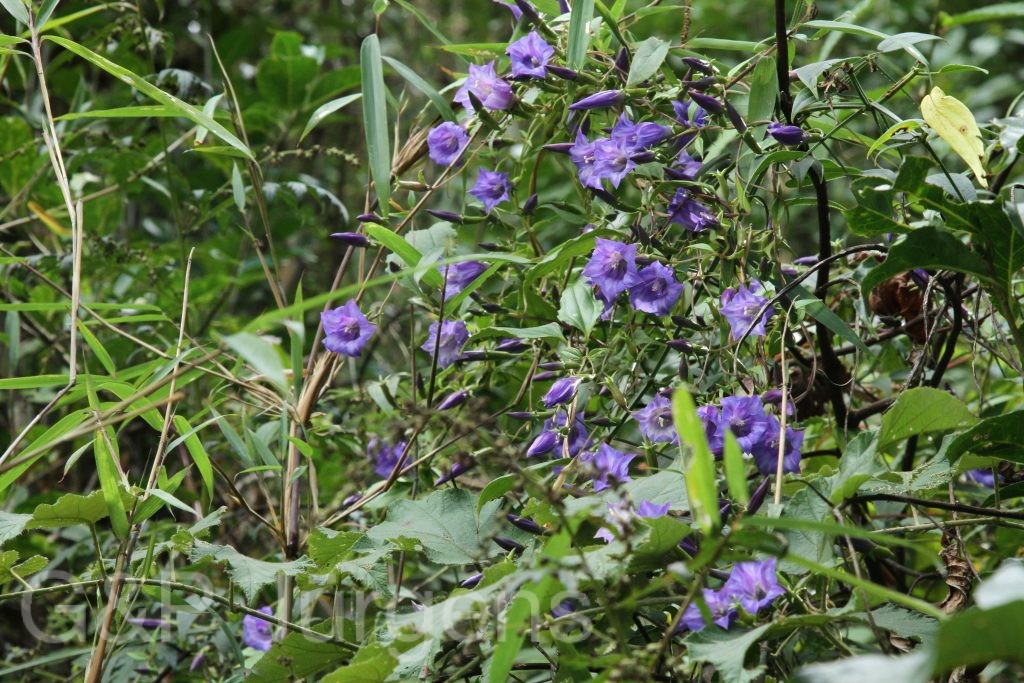
Crawfurdia speciosa C.B.Clarke is a climbing perennial gentian of the eastern and central Himalaya, distributed through Nepal, north-east India, Bhutan, south-west China and into northern Vietnam, with scattered records from Bangladesh and Pakistan. It is a plant of moist, shaded temperate forest, scrambling through shrubs and over the herbaceous understorey along forest margins, stream banks and clearings. The two photographed Bhutanese populations bracket its altitudinal span, from the warm Mo-Chu valley at 1900 m to the cool Tumching-La pass at 3200 m, both flowering in October. This autumn flowering, well after the monsoon, is characteristic of the twining Asian gentians and exploits the late-season window before the onset of winter.

Unlike the familiar erect, rosette-forming gentians, Crawfurdia is a slender, herbaceous, twining climber with weak quadrangular stems and opposite, ovate to ovate-lanceolate leaves tapering to an acuminate tip and bearing prominent palmate-curved venation. The flowers, solitary or few in the upper leaf axils, are showy and pendent; the campanulate to tubular corolla is blue to blue-purple, with short spreading lobes and conspicuous plicate folds (plicae) between them, a hallmark of the gentian family. The fruit is a stalked, flattened capsule that protrudes from the persistent corolla on an elongating gynophore, releasing numerous small, winged, wind-dispersed seeds.

The genus Crawfurdia is closely allied to Gentiana and Tripterospermum, and has at times been merged with them; molecular studies confirm the twining Sino-Himalayan gentians as a distinct lineage. The pendent blue corolla suggests pollination by late-season bees. Though not currently regarded as threatened, its dependence on intact mid- to high-elevation forest makes it sensitive to deforestation across its eastern Himalayan range.

Author: C.B.Clarke · Sources: POWO (Kew), GBIF, Flora of China (Gentianaceae), Flora of Bhutan, Annotated Checklist of the Flowering Plants of Nepal, Gentianaceae: Systematics and Natural History (Struwe & Albert)

R.D.Good

Garw 2005 46 ergebnis ergebnis
India Garhwal Valley of flowers 3300m, September

Description

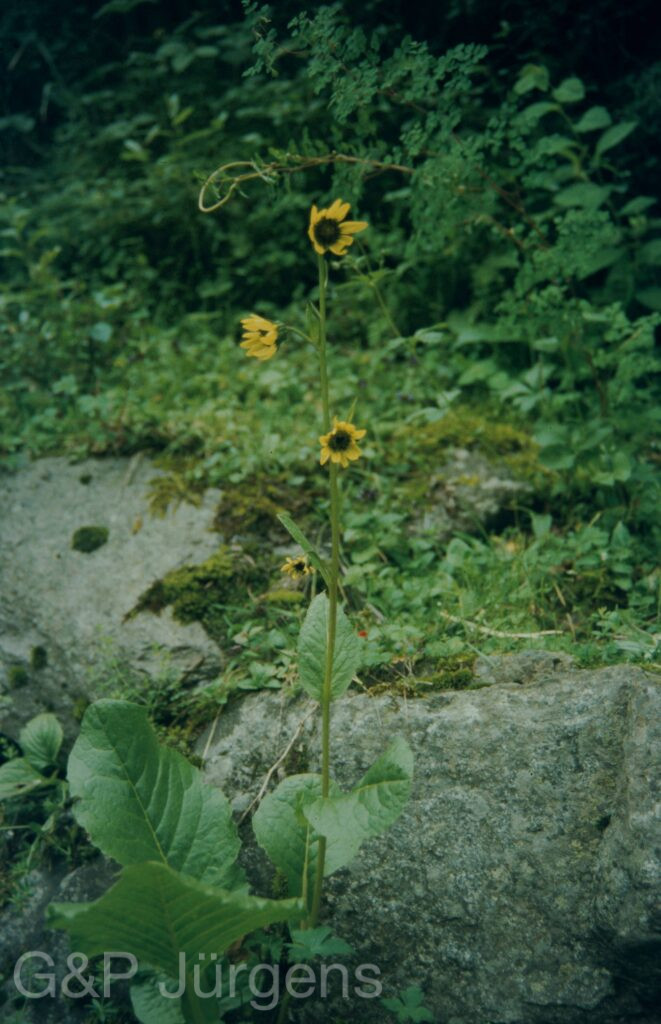
Cremanthodium arnicoides is a Sino-Himalayan alpine composite recorded from Nepal, India and China, with additional herbarium-based occurrences abroad; GBIF lists about 268 records concentrated along the high ranges. It inhabits alpine meadows, moist grassy slopes, scree margins and streamsides, generally between roughly 3000 and 4500 m. The plant photographed in the Valley of Flowers, Garhwal (India), at about 3300 m in September captures its characteristic montane meadow habitat at the close of the monsoon flowering season, when its nodding golden capitula are conspicuous among late summer herbage.

The species is a tufted perennial herb arising from a short rhizome with fibrous roots. The basal leaves are long-petiolate with reniform to cordate, palmately veined blades and dentate margins, forming a rosette, while the stem leaves are smaller and progressively sessile. The erect, sparsely arachnoid-hairy scape bears solitary, nodding radiate capitula; the involucral bracts are blackish-green and somewhat hairy, the ligulate ray florets are yellow and elongate, and the central disc florets are tubular. The cylindrical achenes are glabrous and crowned by a copious white pappus of soft barbellate bristles.

Cremanthodium is a genus of about seventy alpine species characteristic of the Himalaya and Hengduan Mountains, distinguished from related Ligularia and Senecio by its typically solitary, nodding capitula adapted to cold, high-altitude conditions, the pendent heads protecting the florets from rain and intense radiation. Many species are narrow endemics; C. arnicoides has a moderately wide Himalayan range and is not regarded as threatened, though as a high-elevation specialist it is potentially sensitive to climate warming and habitat shifts in the alpine zone.

Author: R.D.Good · Sources: POWO (Kew), GBIF, Flora of China, Flora of Bhutan, Annotated Checklist of the Flowering Plants of Nepal, Good's revision of Cremanthodium

(Hook.f.) Kitam.

Nepal 95 164 P266 ergebnis
Nepal Rupien La 3900m October

Description

Cremanthodium ellisii is an alpine perennial of the Himalaya and the eastern Tibetan plateau, recorded from China, India, Nepal, Pakistan and Bhutan, with 754 occurrences in GBIF. It is a plant of high, open habitats: alpine meadows, scree, moraine, rocky slopes and stream margins, characteristically between 3500 and 5600 m, ranking among the highest-ascending composites of the region. The Nepalese collection figured, from Rupien La at 3900 m in October, reflects its occupancy of cold, exposed pass environments and its persistence into late autumn at the lower edge of its altitudinal span, on stony, well-drained alpine soils.

It forms a stout perennial rootstock from which arise erect, often woolly or purplish flowering stems 10-40 cm tall. The basal leaves are petiolate with ovate to reniform, dentate to lobed blades, while the stem leaves become smaller and amplexicaul upward. The stems are crowned by one to several large, nodding (cernuous) capitula, the nodding habit characteristic of the genus; the involucral bracts are densely covered with dark or pale hairs. Ray florets are golden-yellow, ligulate and female, surrounding numerous tubular yellow disc florets. The fruit is a glabrous cylindrical achene bearing a pappus of soft white bristles.

Cremanthodium (Asteraceae, tribe Senecioneae) is a Sino-Himalayan genus of roughly seventy species, closely allied to Ligularia and Senecio and distinguished by its nodding heads, an adaptation protecting florets from rain and intense alpine irradiance. C. ellisii is a variable, widespread species, broadly distributed and not threatened, though as a true alpine specialist it is potentially vulnerable to upward habitat compression under climate warming.

Author: (Hook.f.) Kitam. · Sources: POWO (Kew), GBIF, Flora of China, Flora of Bhutan, Monograph of Cremanthodium (Compositae, Senecioneae)

(DC.) Benth. 

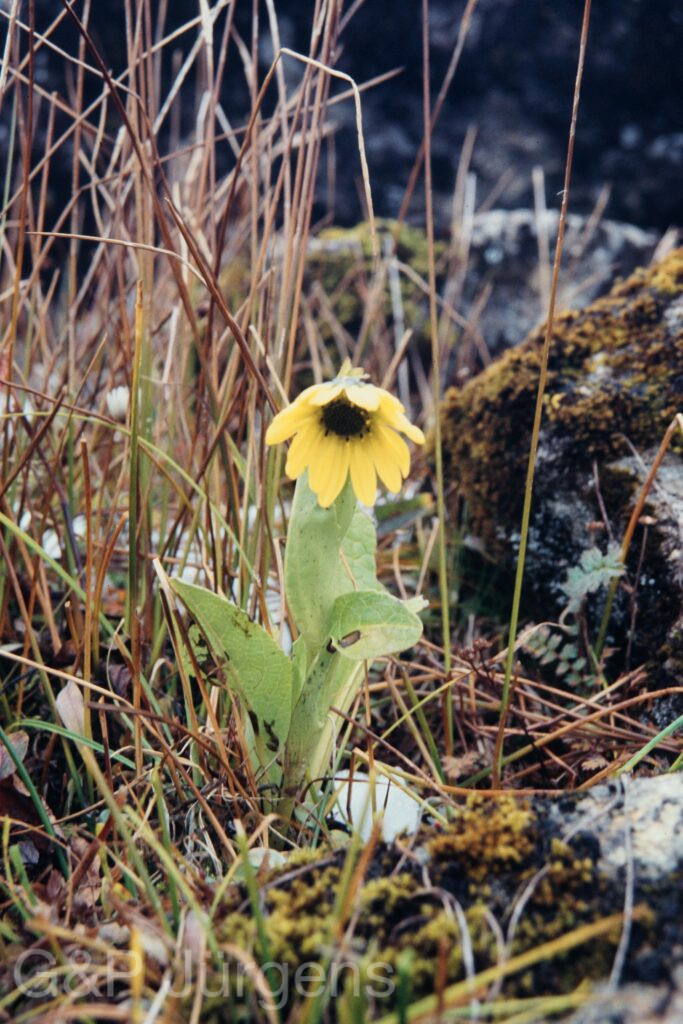
BhutanPG2011 282
Bhutan Jule-Tso, 4100m June
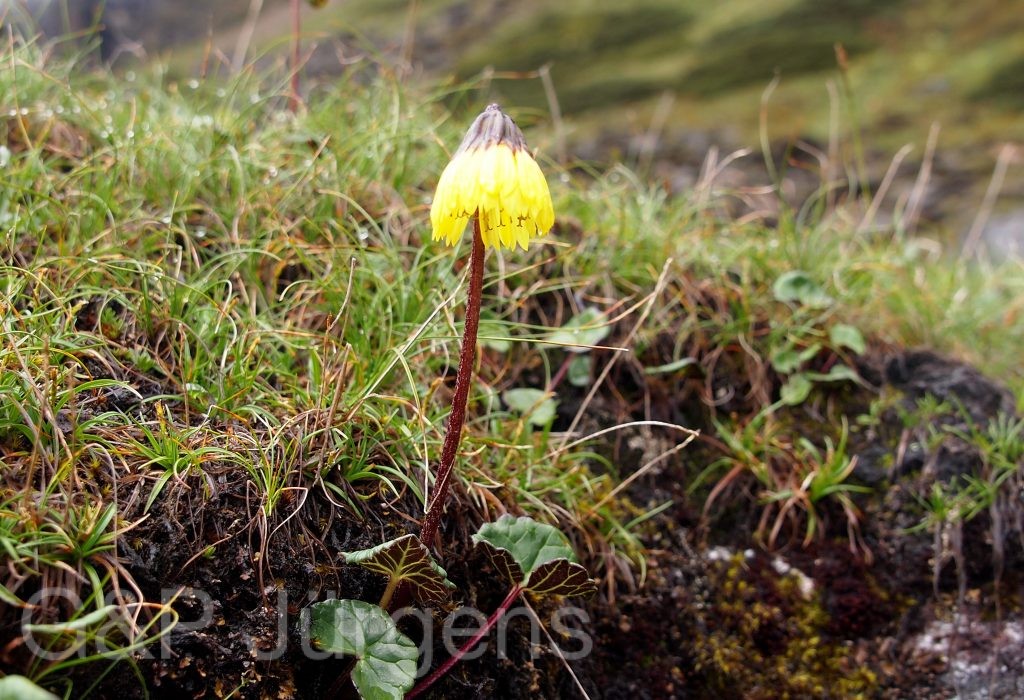
Sikkim2003 110 P149
Sikkim Dzongri 3900m August
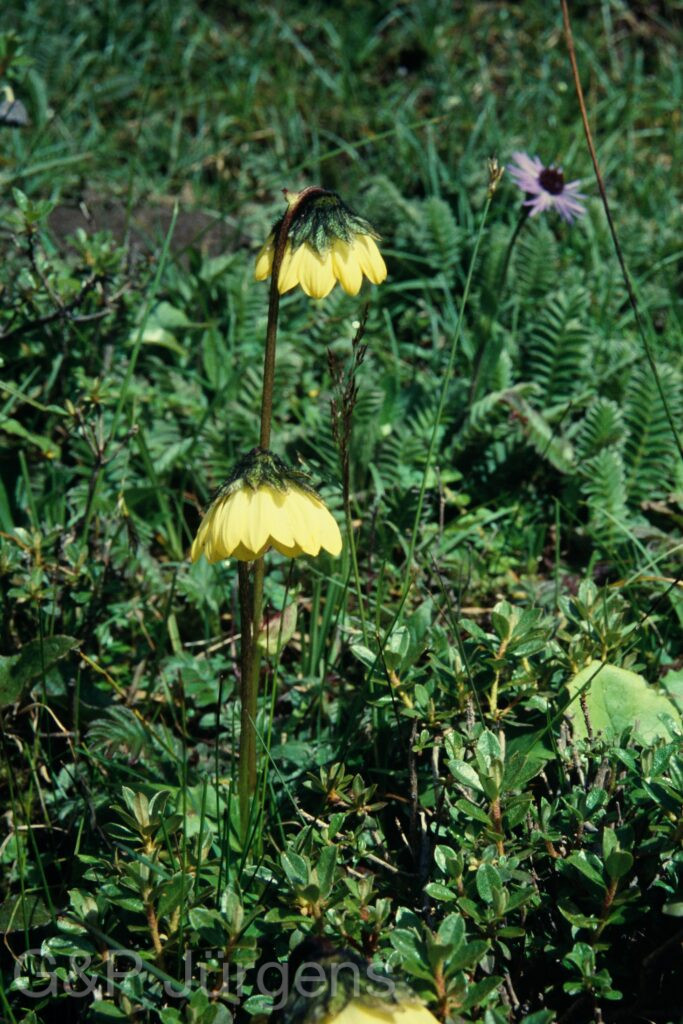
Nepal 95 161 P262 ergebnis
Nepal Rupien La 3900m October
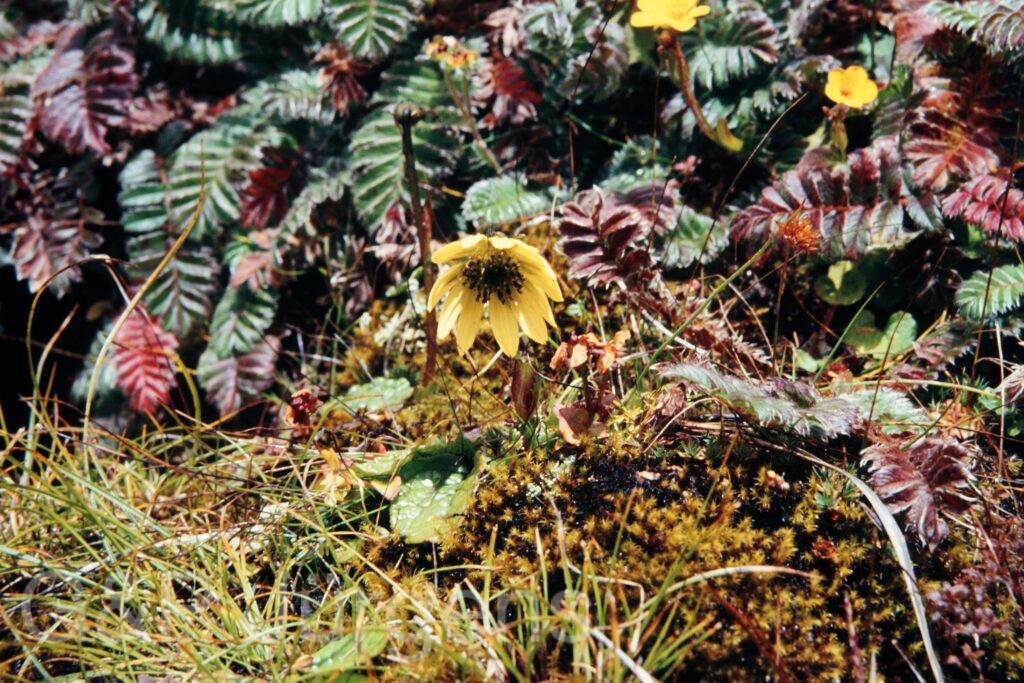
Nepal 99 619 ergebnis
West-Nepal Kagmara-La 4300m, July

Description

Cremanthodium reniforme is a high-alpine herb of the central and eastern Himalaya, distributed through Nepal, India (Sikkim), Bhutan and adjacent China; the 294 occurrences map a continuous Himalayan arc, with outlying records in New Zealand reflecting cultivated material. It grows on moist alpine meadows, rocky slopes, screes and streambanks, characteristically between about 3500 and 4800 m. The collated localities, from Bhutan's Jule-Tso at 4100 m and Sikkim's Dzongri at 3900 m to the Rupien La and the Kagmara-La in west Nepal at 3900–4300 m, span June to October, illustrating its strictly high-elevation distribution and protracted summer flowering in the snow-melt zone.

The species is a perennial herb with a short rhizome bearing fleshy roots and erect, often purplish, arachnoid scapose stems. The basal leaves are conspicuous, long-petiolate and reniform to cordate-orbicular, with a palmately veined, dentate blade; the cauline leaves are few and reduced. The capitula are large, solitary and nodding, radiate, with an involucre of blackish-hairy phyllaries. The ray florets are female and golden-yellow, the disc florets tubular and yellow. The cypselae are oblong and glabrous, bearing a pappus of soft, brownish or whitish barbellate bristles roughly equalling the corolla.

Cremanthodium is a Sino-Himalayan genus of about seventy species centred on the Hengduan Shan and Himalaya, segregated from Ligularia chiefly by its solitary nodding capitula, an adaptation that shields pollen and developing achenes from rain and intense alpine radiation. The reniform basal leaves make C. reniforme distinctive among its congeners. Restricted to high alpine habitats yet wide-ranging, it is not currently regarded as threatened, though such species are sensitive to climatic warming and upslope habitat compression.

Author: (DC.) Benth. · Sources: POWO (Kew), GBIF, Flora of China Vol. 20-21, Flora of Bhutan, Flora of Nepal, Good Revision of Cremanthodium

Thoth.

Bhutan2012 190
Bhutan Haar-Valley, 3300m September
Bhutan2012 362
Bhutan Dochu-La 2700m, September

Description

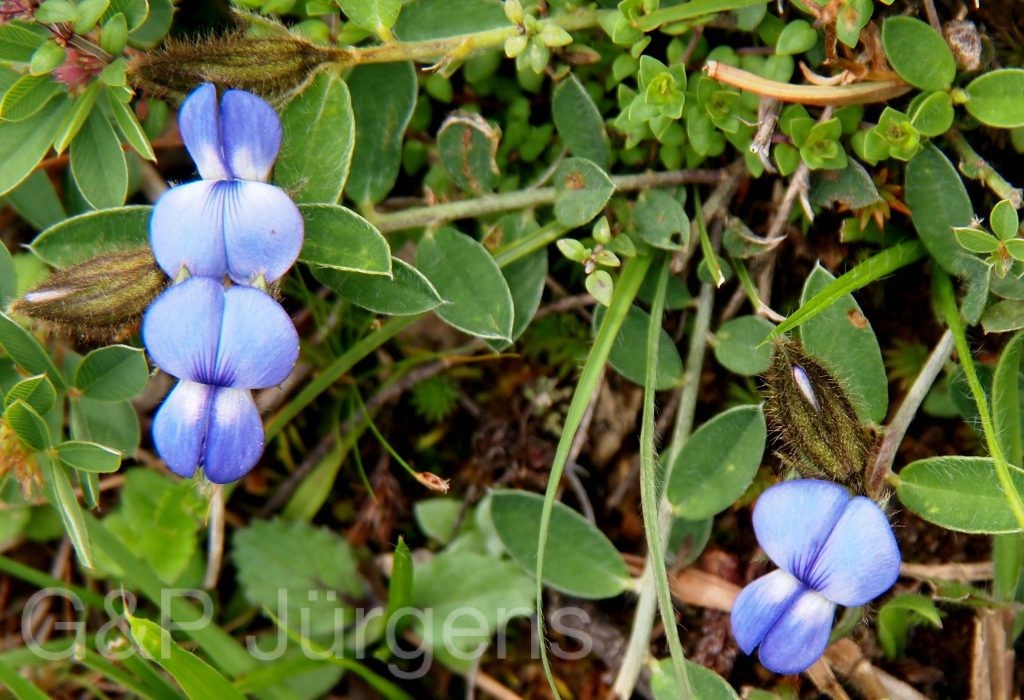
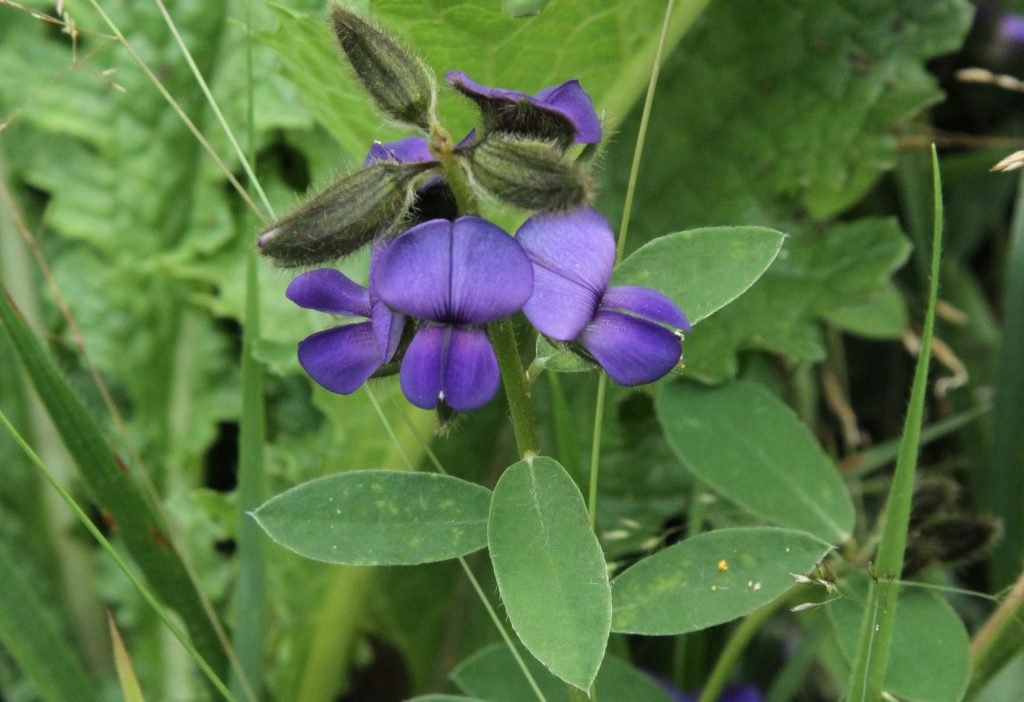
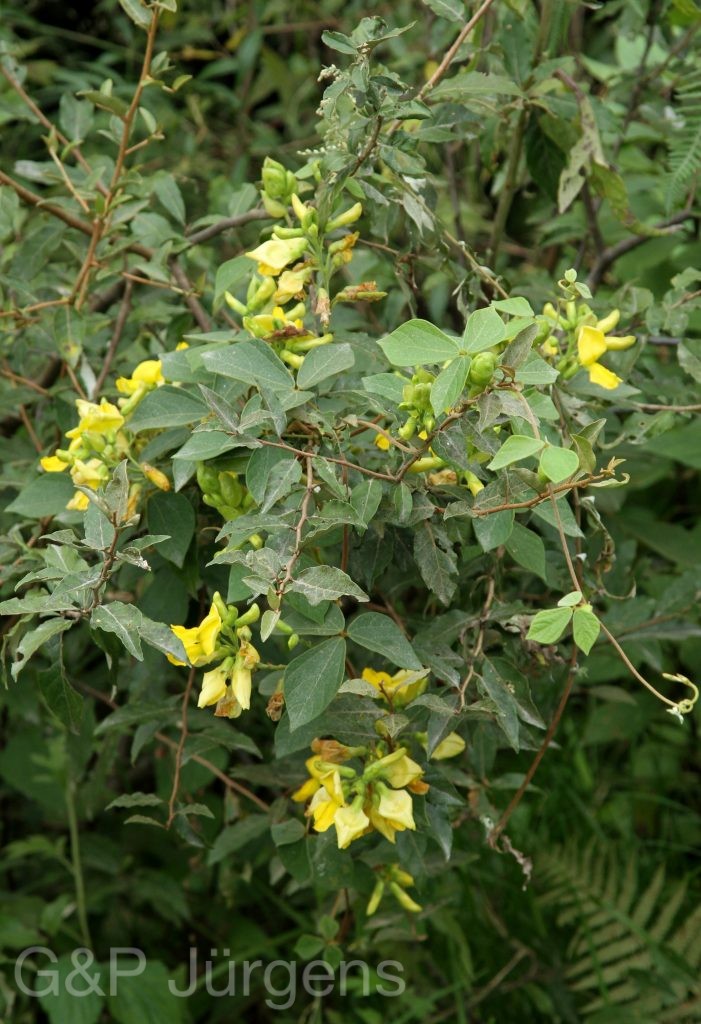
Crotalaria bhutanica is a narrowly distributed legume of the eastern Himalaya, described from and centred on Bhutan; it has no georeferenced records in GBIF, underscoring how poorly documented and locally restricted this taxon remains. It is a plant of open grassy slopes, scrub and disturbed montane ground, and the two collection sites given, the Haar valley at about 3300 m and Dochu-La at 2700 m, both in September, place it in the cool temperate to subalpine zone of western and central Bhutan, where it flowers and fruits in the late monsoon and early autumn.

Like others of its genus, the species is a herb or small subshrub with simple or trifoliolate leaves and stems bearing the appressed hairs characteristic of Crotalaria. The flowers are arranged in terminal or leaf-opposed racemes and have the typical papilionaceous structure of the genus, with a large rounded standard, two lateral wings and a beaked keel enclosing the stamens and style; the corolla is yellow, sometimes veined or flushed with brown or purple. The fruit, as in all Crotalaria, is an inflated, bladder-like pod in which the loosened seeds rattle when ripe, the feature that gives the genus its name (from the Greek krotalon, a rattle).

Crotalaria (tribe Crotalarieae, subfamily Faboideae) is a large pantropical genus, and C. bhutanica is one of its restricted Himalayan endemics, distinguished within the regional flora by its combination of habit, indumentum and floral detail. Like most papilionoid legumes it forms nitrogen-fixing root nodules with rhizobia and is pollinated by bees adapted to tripping the keel mechanism. Given its apparently very limited range, the absence of occurrence data, and ongoing pressures on Himalayan grassland habitats, the species warrants targeted survey and a formal conservation assessment.

Author: Thoth. · Sources: POWO (Kew), GBIF, Flora of Bhutan, Polhill Crotalaria in Africa and Madagascar, Legumes of the World (Lewis et al.)

DC.

Bhutan2012 822 Kopie
Bhutan Trongsa 2100m, October
Bhutan2012 823
Bhutan Trongsa 2100m, October

Description

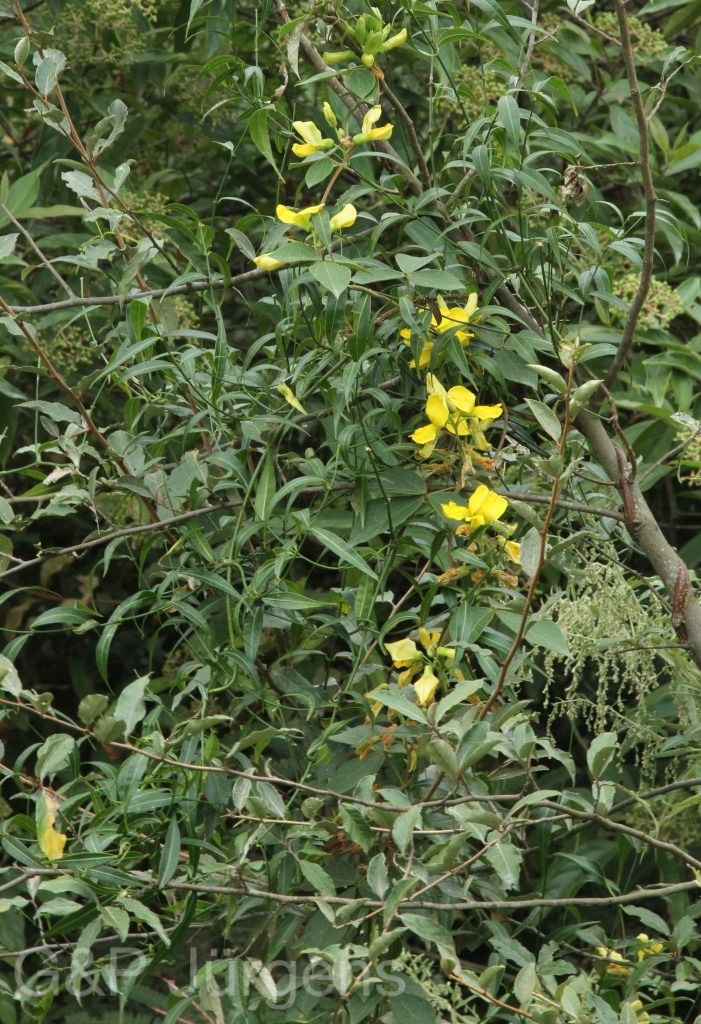
Crotalaria cytisoides is a shrubby rattlepod of the Himalaya and into Southeast Asia. GBIF records it from China, India, Nepal, Myanmar, Thailand, Bhutan, Laos, Malaysia and Indonesia, with further occurrences extending to Madagascar and Uganda, totalling over 400 records. It grows on open hill slopes, scrub, grassy banks, forest margins and roadsides at lower to middle elevations, broadly between 1000 and 2700 m. The plant shown was photographed near Trongsa in central Bhutan at 2100 m in October, flowering in the post-monsoon period along the warm temperate hill zone where this species is a frequent component of disturbed scrub.

It is a much-branched shrub or undershrub with silky-pubescent young branches. The leaves are trifoliolate, the obovate to elliptic leaflets softly hairy beneath, subtended by small stipules. The flowers are borne in terminal and leaf-opposed racemes; the papilionaceous corolla is yellow, sometimes veined or flushed reddish-brown on the standard, with the keel beaked as is typical of the genus. The fruit is an inflated, oblong legume in which the loosened ripe seeds rattle when shaken, the feature giving Crotalaria its English name rattlepod.

Crotalaria is a large pantropical legume genus, and like its relatives it forms root nodules with nitrogen-fixing rhizobia, enriching poor soils and contributing to its success as a coloniser of disturbed ground. Many species, including this one, contain pyrrolizidine alkaloids that deter herbivores and can be toxic to livestock. With its wide distribution, ruderal tendency and abundant seed production, C. cytisoides is common and of no conservation concern across its broad range.

Author: DC. · Sources: POWO (Kew), GBIF, Flora of China, Flora of Bhutan, Annotated Checklist of the Flowering Plants of Nepal, A revision of the genus Crotalaria (Leguminosae)